Kumrat Valley
Kumrat Valley, Pakistan
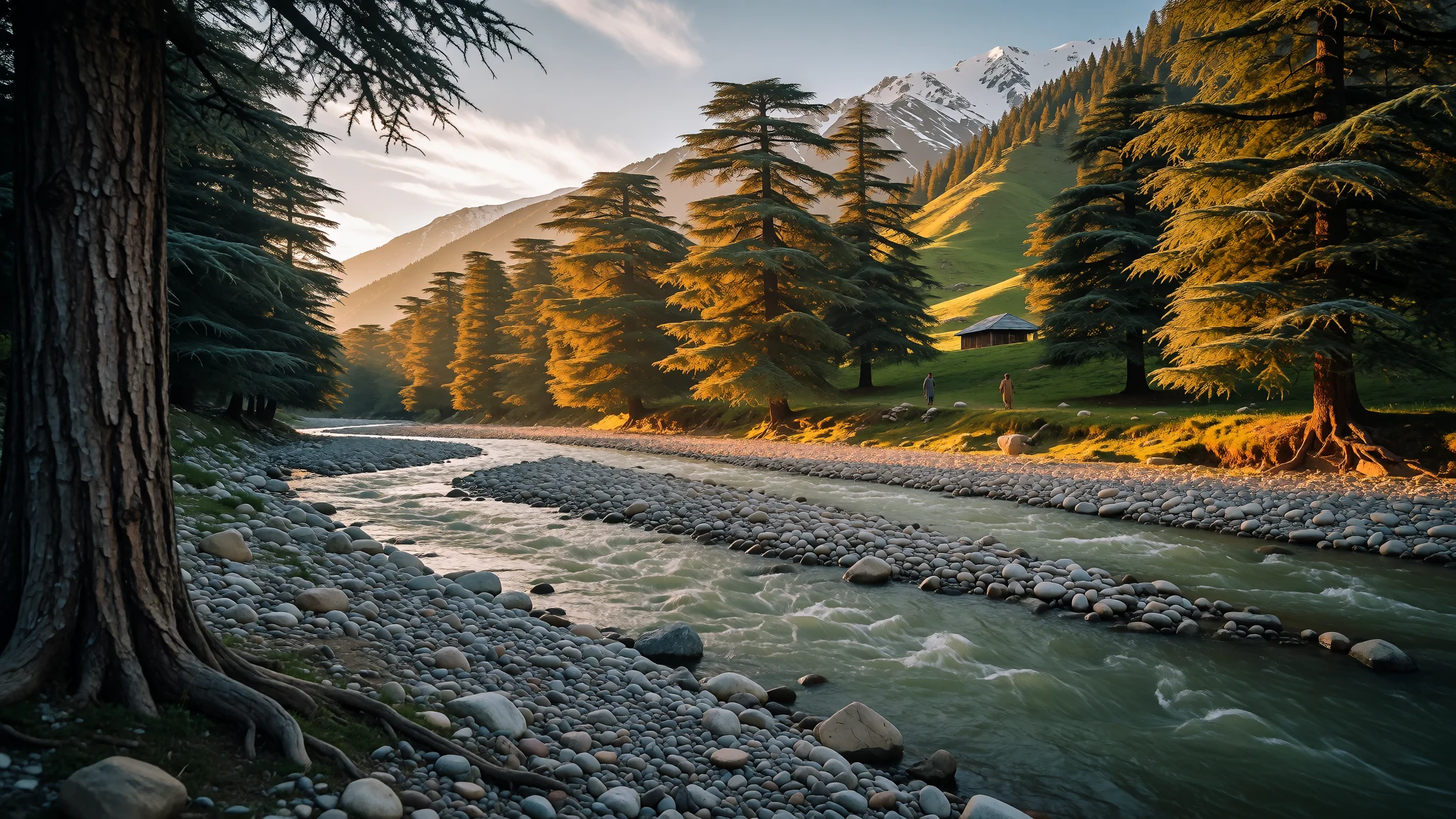
Kumrat Valley offers deodar forest, riverside camping and cool mountain air in Pakistan's far north, reached by a bumpy jeep road.
The place
Kumrat Valley is the upper stretch of the Panjkora river valley, in Upper Dir District of Khyber Pakhtunkhwa, Pakistan. Gawri speakers make up most of the population, and the valley sits in the Dir Kohistan highlands, with the Gabral area of Swat Kohistan on the far side of the ridges. The landscape is built around the river. The Panjkora runs fast and cold, splitting into several channels in places, and tall deodar trees stand on flat ground along its banks. Above the forest are green pastures and, for much of the year, snow on the peaks. Waterfalls drop from the side valleys, and a spot called Kala Chashma, the Black Spring, is a regular stop for visitors. Accommodation is informal. Along the river there are makeshift camping sites and a few simple rest houses, so a stay feels closer to camping than to a resort. The road in is unmetalled, so only four-wheel-drive vehicles manage it, and a jeep ride is part of the trip for nearly everyone. Summer is when families from across Pakistan arrive in numbers, drawn by shade and cool air after the heat of the plains. Around Eid holidays the road and campsites become badly congested, and quieter weekdays are far more pleasant. Winter brings snow and few visitors. The valley has no real town, only villages, fields and forest, and facilities are thin. Phone signal is patchy, and supplies are best bought in the last larger town.
Its story
Kumrat Valley has little written history of its own, so its story is best told through the country around it. The Gawri people have long farmed and grazed livestock in the upper valleys of Dir, tying village fields to high summer pasture. Under the British Raj the wider region was called the Northwest Frontier. British writers called its Pashto-speaking people Pathans, a term that has given way to Pashtun. The frontier was thought of as a trouble spot, yet it also supplied many recruits, including whole regiments of irregular cavalry, and Pashtuns continue to serve in Pakistan's army. After independence the area was divided between a province and a set of tribal agencies. Those areas were later combined to form the current Khyber Pakhtunkhwa province. Kumrat's modern chapter is tourism. Families from the cities began driving up in summer for greenery and cool weather, and local people answered with campsites, jeep services and rest houses. That growth has brought income, and also rubbish, crowding at holiday peaks and pressure on the riverbank forest. How the valley balances those things is still being worked out, and the answer will decide whether the place keeps the quiet that drew people there in the first place.
What to see
- Deodar forest on the Panjkora — Upper Dir District
The deodar forest is Kumrat's signature scene: tall conifers standing on flat ground beside the Panjkora, with room between the trunks for tents. Early morning, before day-trippers arrive, is quiet and cool. Camping among the trees is popular, though sites are makeshift, so bring a warm sleeping bag and carry out your rubbish.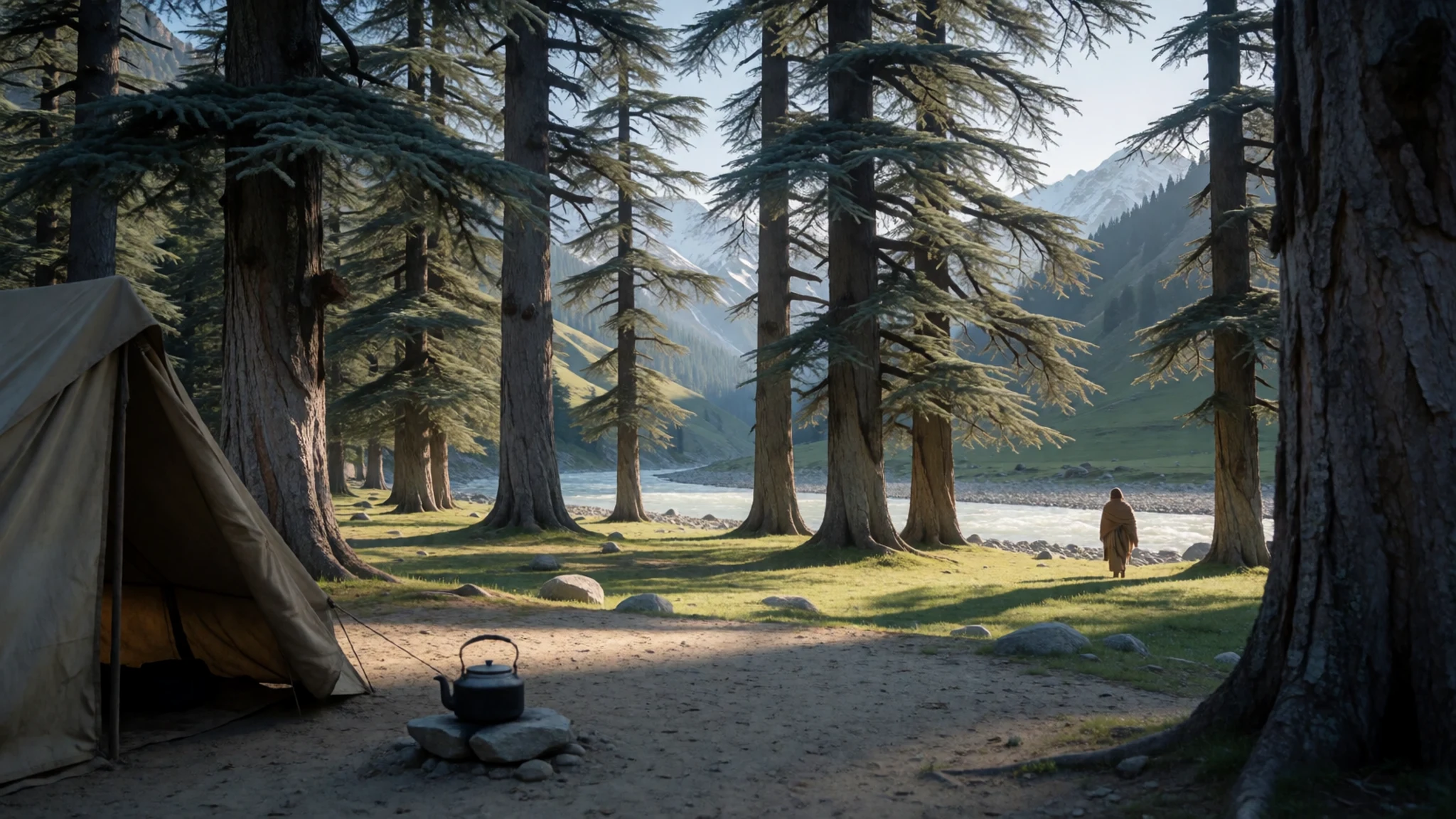
- Kala Chashma (Black Spring) — Kumrat, Upper Dir
Kala Chashma, the Black Spring, is a natural spring within reach of the main camping area by a short drive or walk. It is a pleasant halt on a day of jeep travel. Ask in the village about current access, since tracks and water levels change through the season.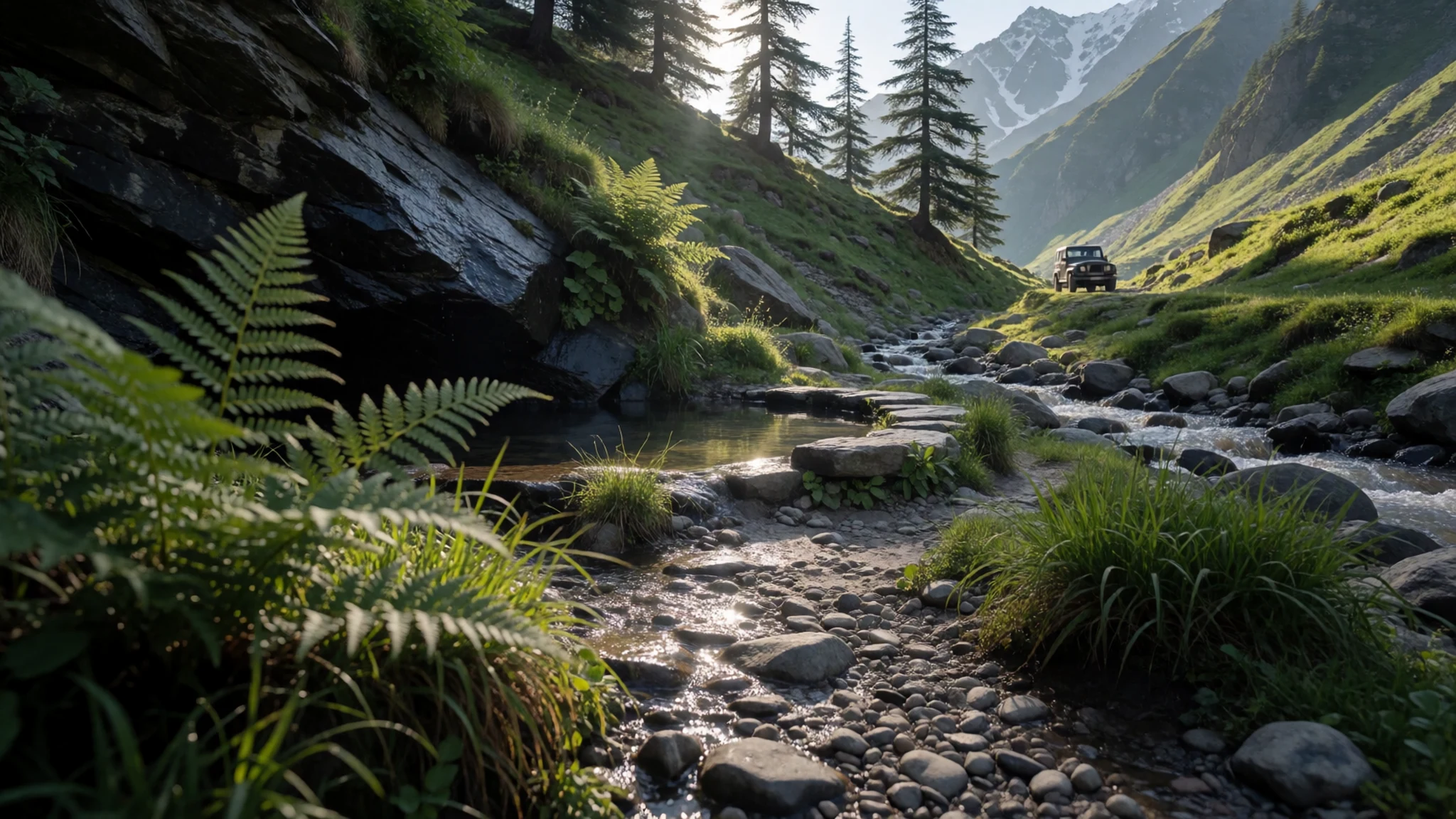
- Waterfalls of the side valleys — Side valleys above Kumrat
Several waterfalls feed the Panjkora from the side valleys around Kumrat. Flow is heaviest in early summer, when snowmelt peaks, and thinner by autumn. Reaching them usually means a jeep ride followed by a walk over loose stones, so sturdy footwear matters more than stamina. Hire a local guide if the weather looks unsettled.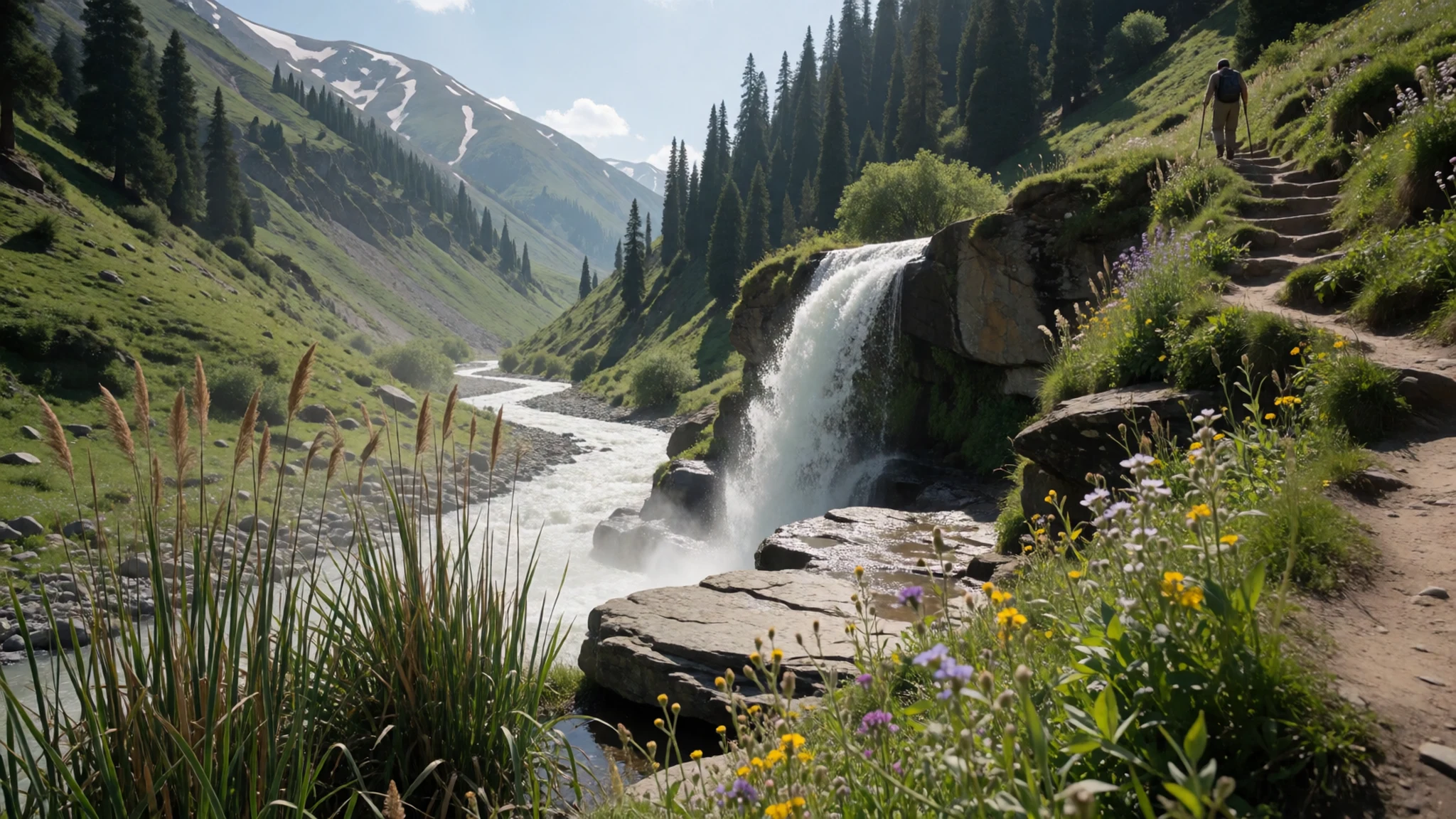
- Badogai Pass to Utror — Between Kumrat and Utror
The Badogai Pass is a rough jeep-and-foot route linking Kumrat with Utror in Swat. It crosses open mountain country and makes a serious day out, dependent on weather and rough underfoot. Conditions change quickly, so ask local drivers and guides before setting off, and do not start late or alone.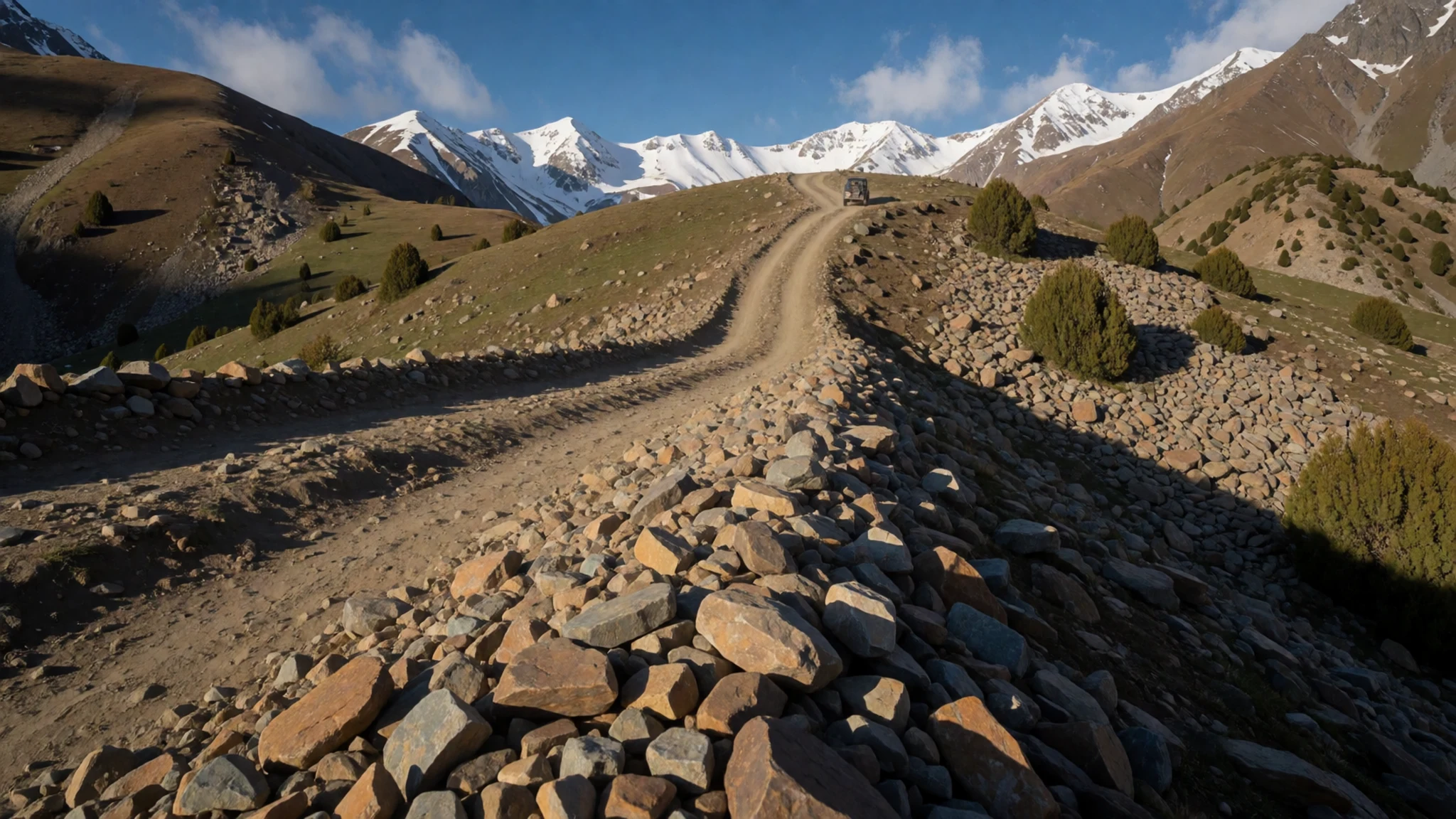
- Meadows above the river — Slopes above the Panjkora
The green pastures above the river are where Kumrat feels most like an alpine valley. In summer, yellow wildflowers spread across the slopes, with snow-streaked ridges behind. Reaching the grassy shelves takes a modest climb from the river, and the view rewards an unhurried half-day with a picnic and a warm layer for the wind.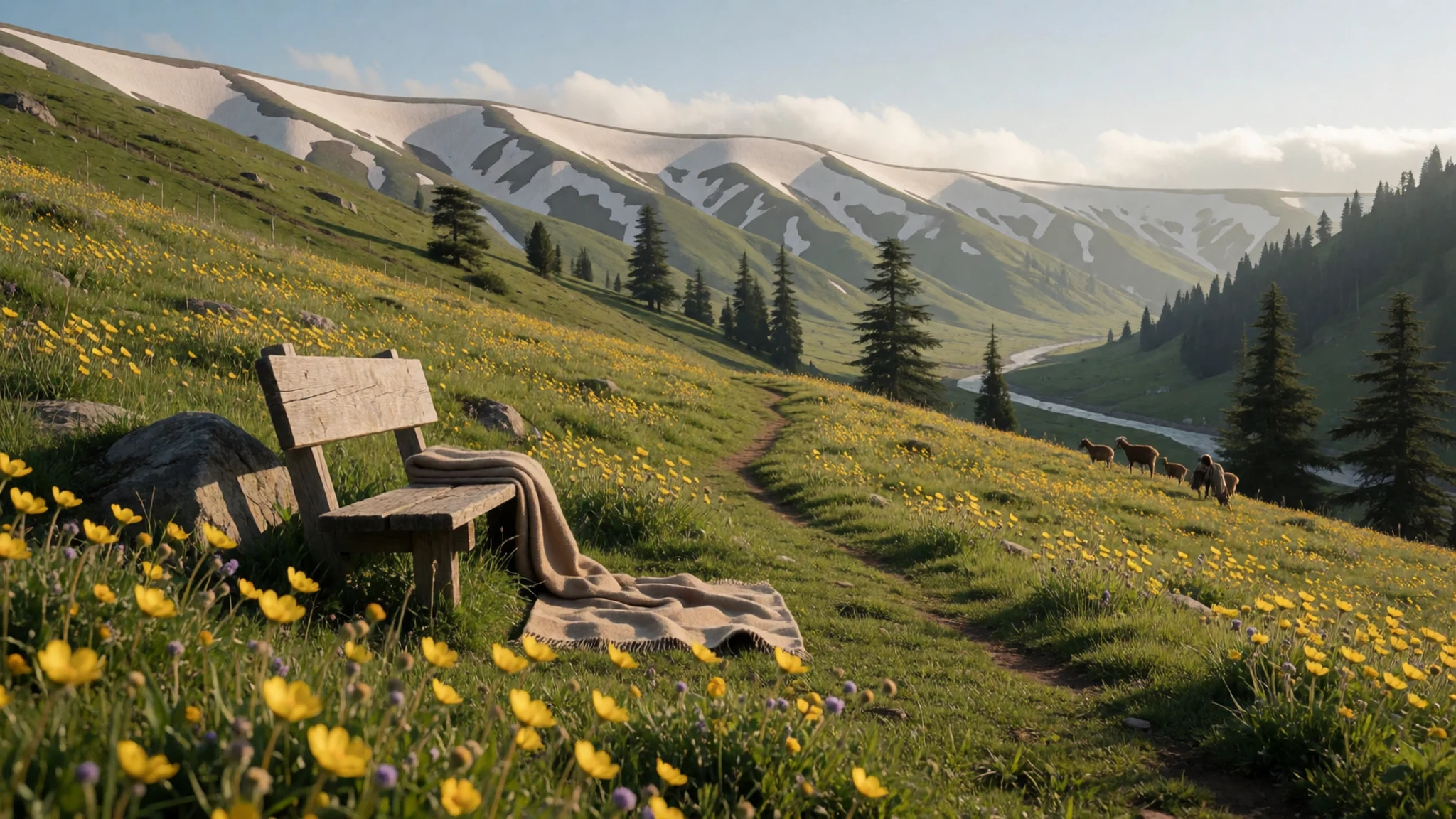
Culture
Kumrat Valley sits in conservative Khyber Pakhtunkhwa, and village life follows Pashtun and Kohistani customs of hospitality, modesty and family privacy. Gawri families farm small fields, keep livestock and, in summer, move animals to higher grazing. Tourism is now an important income, and many local men work as drivers, guides and campsite hosts. Visitors who arrive with patience and a few words of Urdu or Pashto usually find tea offered quickly. Islam shapes the daily rhythm: the call to prayer carries down the valley, and work and travel often pause around it. Domestic space matters. Women are often out of public view, and family compounds are private, so wandering into a yard to look around is not acceptable. The valley is also a place where residents are weighing growth against what tourism does to the river and forest, and local advice on rubbish, fires and where to camp is worth following. Weekend crowds from the cities can change the mood, with loud groups and speakers, while midweek the valley is calmer. When a family does invite visitors in, the usual form is to accept tea, remove shoes at the door and follow the host's lead. Ask permission before photographing anyone, and do not photograph women or family compounds unless you have been clearly invited to.
What to wear
Traditional dress around Kumrat Valley follows the wider Pashtun and Kohistani pattern. Men wear shalwar kameez, a long loose shirt over wide trousers, in cotton for summer and wool for the cold months, often with a woollen waistcoat, a patu (a heavy wool blanket-shawl) and the pakol, a rolled wool cap. Women wear long dresses over trousers with a large dupatta or chadar over the head, and many households add embroidery at cuffs and necklines; details vary by family and village. Some women wear a burqa or full shawl outside the home. Everyday wear now mixes old and new: shalwar kameez remains standard for men and women, with sweaters, fleece jackets, trainers or rubber boots added for cold and mud, and younger men sometimes wear jeans and a jacket. A visitor should dress for mountain weather and local norms. Pack layers, because days can be warm, nights cold and rain quick to arrive. Wear sturdy shoes with grip for loose stone and river crossings. Women should bring loose long-sleeved tops, long trousers or a long skirt, and a dupatta or scarf; men should avoid shorts and sleeveless tops in villages. A shalwar kameez bought cheaply in Peshawar or a Dir bazaar is practical, comfortable and warmly noticed.
What to eat
- Chappal kabab — Kebab shops across Peshawar; ask a local guide for current favourites
A spiced beef patty shaped like the sole of a sandal and fried flat, the best-known dish of Peshawar. Eat it hot with flatbread and chutney. Most visitors to Kumrat pass through Peshawar, so a kebab shop there makes a good first or last meal.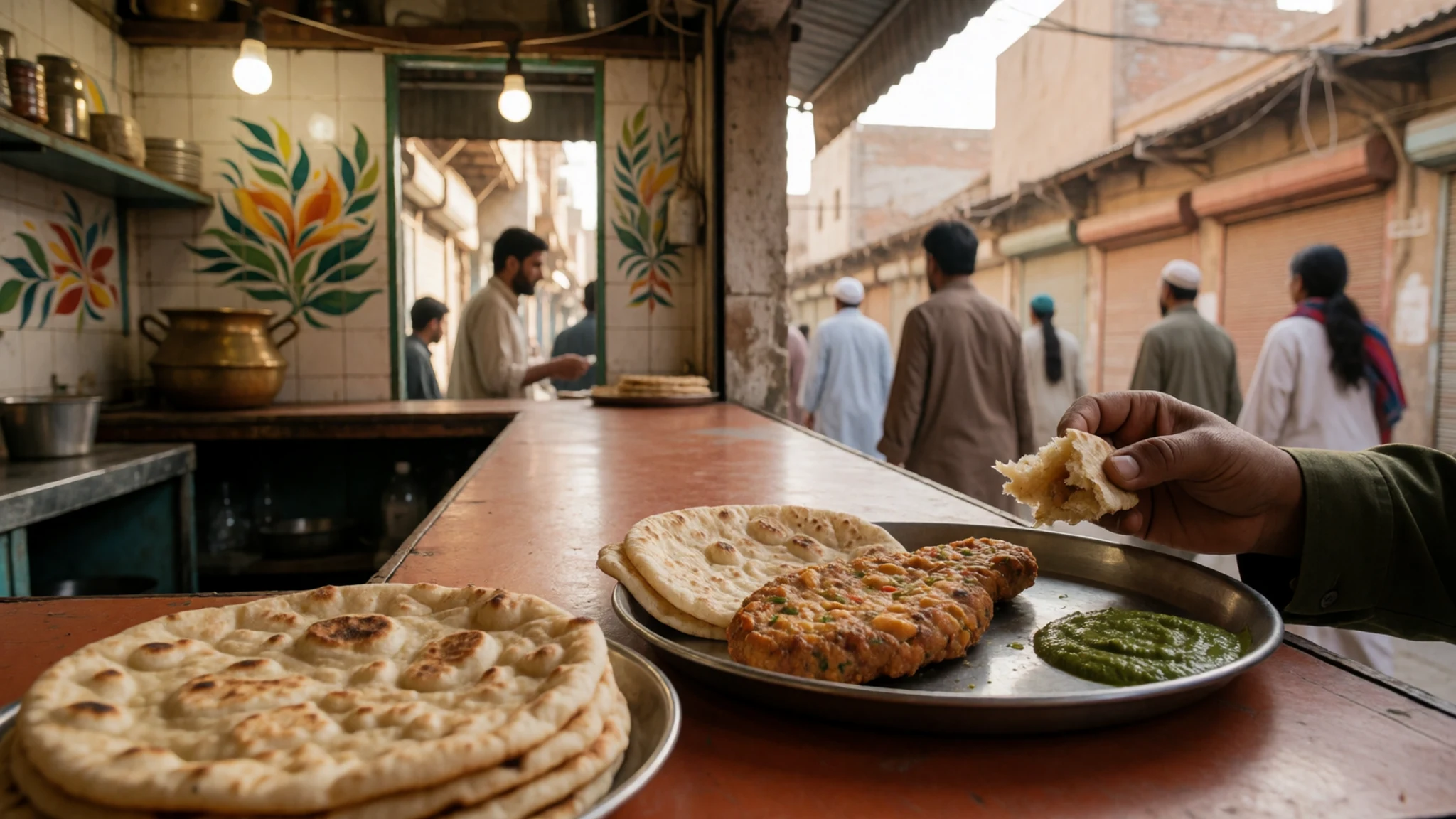
- Tikka and karai — The grill eateries of Namak Mandi, Peshawar
Meat is ordered by weight and cooked to preference, either as tikka, barbecued over charcoal, or as karai, an oil-rich stew of tomato and chilli. Both come with fresh naan. Portions are generous, so go in a group.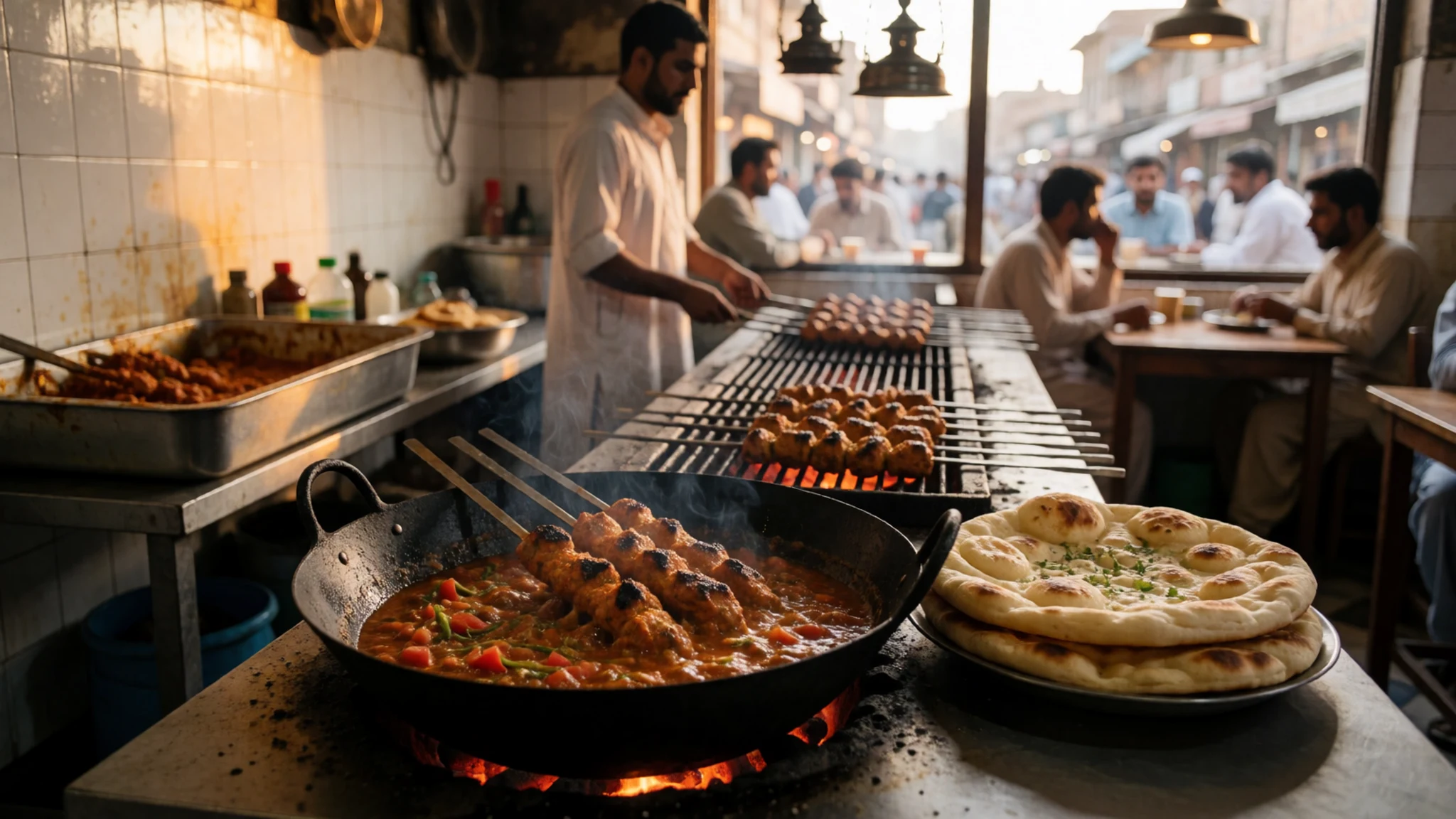
- Faluda — Markets and bazaars of Peshawar, especially Qissa Khwani Bazaar
A sweet, cold dessert of vermicelli, rose-flavoured milk and ice, sold from stalls and small shops. It is a welcome relief on a hot city afternoon before the drive up into the cooler mountains. - Kawa green tea — Tea stalls and bazaars across Peshawar and the Dir road
Peshawar's green tea, kawa, has a distinct flavour and is usually served sweet. It is the usual welcome in homes and tea stalls across the region, and a flask of it is welcome on a cold evening at camp. - Sharbat-e-sandal — Summer market stalls, Peshawar
A sweet, non-fizzy summer drink of yellowish-green colour with dark seeds floating in it, served ice cold. It is sold mostly in summer and is easy to find in busy markets when the weather is hot. - Simple valley meals — Campsites and roadside eateries in the valley
In Kumrat itself, food is basic: rice, lentils, flatbread, eggs and chicken dishes cooked at campsites and small roadside eateries. Menus are short and supplies depend on the road, so carry snacks, and expect meals to be filling rather than fancy.
Plan it
Best time. June to September, when the valley is green, the road is usable and nights stay cool. Winter brings snow and very limited access. Eid holidays and summer weekends are heavily crowded, so midweek is calmer.
How long. 2–3
Getting there. Fly to Peshawar International Airport (PEW), served by Pakistani carriers and several Middle Eastern airlines, with onward connections via Lahore, Karachi and Islamabad. From Peshawar, continue by road into Upper Dir, then the last leg to Kumrat on an unmetalled track that needs a four-wheel-drive vehicle.
Budget. mid
Tips
- Check your government's travel advisory before booking, and fill in the online registration form from the Khyber Pakhtunkhwa Tourism Authority before entering the province
- Travel on midweek days outside Eid and school holidays to avoid long queues of vehicles on the track
- Arrange a four-wheel-drive jeep with a local driver, and confirm the return arrangement before setting off
- Carry cash and snacks, since card machines and reliable phone signal are not guaranteed in the valley
- Pack warm layers and a rain jacket, as mountain evenings are cold even in summer
Etiquette
- Dress modestly in villages and follow local advice on where women and families may be photographed
- Take all rubbish away and keep campfires small and away from the deodar trees
- Keep music low near villages and at prayer times
Nearby
Sources
- Wikidata Q20728685 (CC0)
- Wikipedia: Kumrat Valley (rev 1376570651) (CC BY-SA 4.0)
- Wikivoyage: Kumrat Valley (rev 5385033) (CC BY-SA 4.0)
- Photo: Kumrat Valley Dir upper KPK, Salman Shah (CC BY 3.0)
- Photo: Evening shades, Ali Rasheed (CC BY-SA 4.0)
- Photo: Kumrat, Umair khan (CC BY-SA 4.0)
- Photo: Entering kumrat valley, Haris akhon (CC BY-SA 4.0)
- Photo: building of a rest house in a kumrat, Aqsa sardar (CC BY-SA 4.0)
- Photo: Badogai Pass, Ali Rasheed (CC BY-SA 4.0)
- Photo: Blooms of yellow flowers, Mubashirkhan111 (CC BY-SA 4.0)
- Photo: Broken slabs, Mubashirkhan111 (CC BY-SA 4.0)


