Katas Raj Temples
Katas Raj Temples, Pakistan
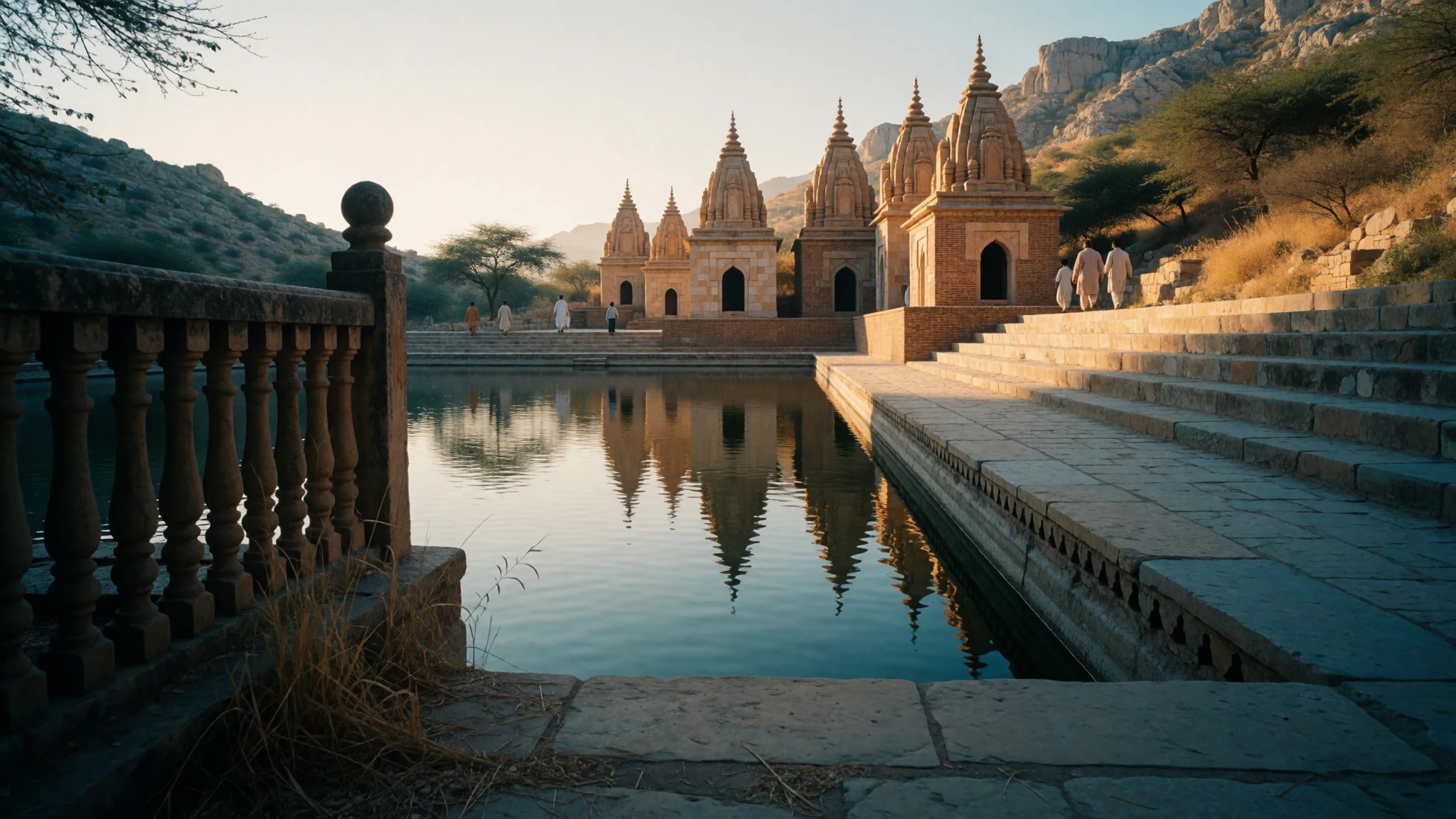
Katas Raj Temples is a cluster of Hindu shrines around a sacred pool in Pakistan's Salt Range, with Buddhist and Sikh history woven in.
The place
Katas Raj Temples is a cluster of Hindu shrines in the Salt Range of northern Punjab, Pakistan, set on a low, dry hillside near the town of Kallar Kahar. The ground sits at about 610 m, high enough that the air feels a little clearer than on the plains below, though the landscape is scrubby limestone country rather than anything lush. The heart of the site is a pool called Katas, and the main temples stand around it, tied together by walkways and steps. Hindus regard the water as sacred, and tradition links the place to stories from the Mahabharata and the Puranas. A second group of shrines, known as Satghara, stands some distance to the south-west and is usually visited as a separate stop. The oldest surviving temple is generally placed in the 6th century CE. Most of the buildings are small and built of stone and brick, with spired shikhara tops and arched doorways rather than grand halls. The scale is human, and the pleasure lies in wandering between them and looking down at the water. The complex lies close to the M2 Motorway in the Chakwal District, which makes it a realistic day out from Islamabad or Lahore, though it feels rural once the car doors close. It is roughly 100 km by road from Tilla Jogian, another Hindu pilgrimage site in the same hills. Visitors are a mix of Pakistani families, school groups, history enthusiasts and, on festival days, Hindu pilgrims. Facilities are modest, and the level of the pool has varied with the water table in recent years.
Its story
Katas Raj Temples has a layered past, and the earliest layer is not Hindu at all. Tools, terracotta bangles and pottery dug up here show people living on the site long before any shrine; the pottery resembles finds from Harappa, though it has never been dated. Chinese pilgrims passed through the Salt Range later. Faxian, in the 4th century CE, mentions a temple here, and Xuanzang, in the 7th, recorded a Buddhist stupa from the age of the emperor Ashoka, ringed by ten springs. Hindu building followed under the Shahi rulers of Gandhara, and the surviving temples are placed between the mid 7th and 10th centuries, though the 19th-century archaeologist Alexander Cunningham argued for a much earlier date. Tradition links the pool to Shiva, whose grief at the death of his wife Sati is said to have shed the tears that filled it. Guru Nanak is believed to have visited, and the Sikh ruler Ranjit Singh came on pilgrimage, including for Vaisakhi in 1806. Before Partition in 1947, large crowds gathered for Maha Shivaratri. Most local Hindus then left for India, and Indian pilgrims were barred after the 1965 war until 1984. Neglect followed: litter in the pool, wall paintings lost. Restoration began in 2006, and in 2017 new shikhara spires and a water filtration system arrived. The pond itself stayed fragile; by 2012 it was drying as groundwater went to industry, and a nearby cement factory was briefly shut to let the level recover.
What to see
- Katas Pond — Katas village, Chakwal District
The sacred pool at the centre of Katas Raj Temples is a large basin ringed by walkways and shrines. Hindu tradition holds that it formed from the tears of Shiva. Water levels have swung in recent years, so it may look full or low depending on the season. Walk the full edge slowly.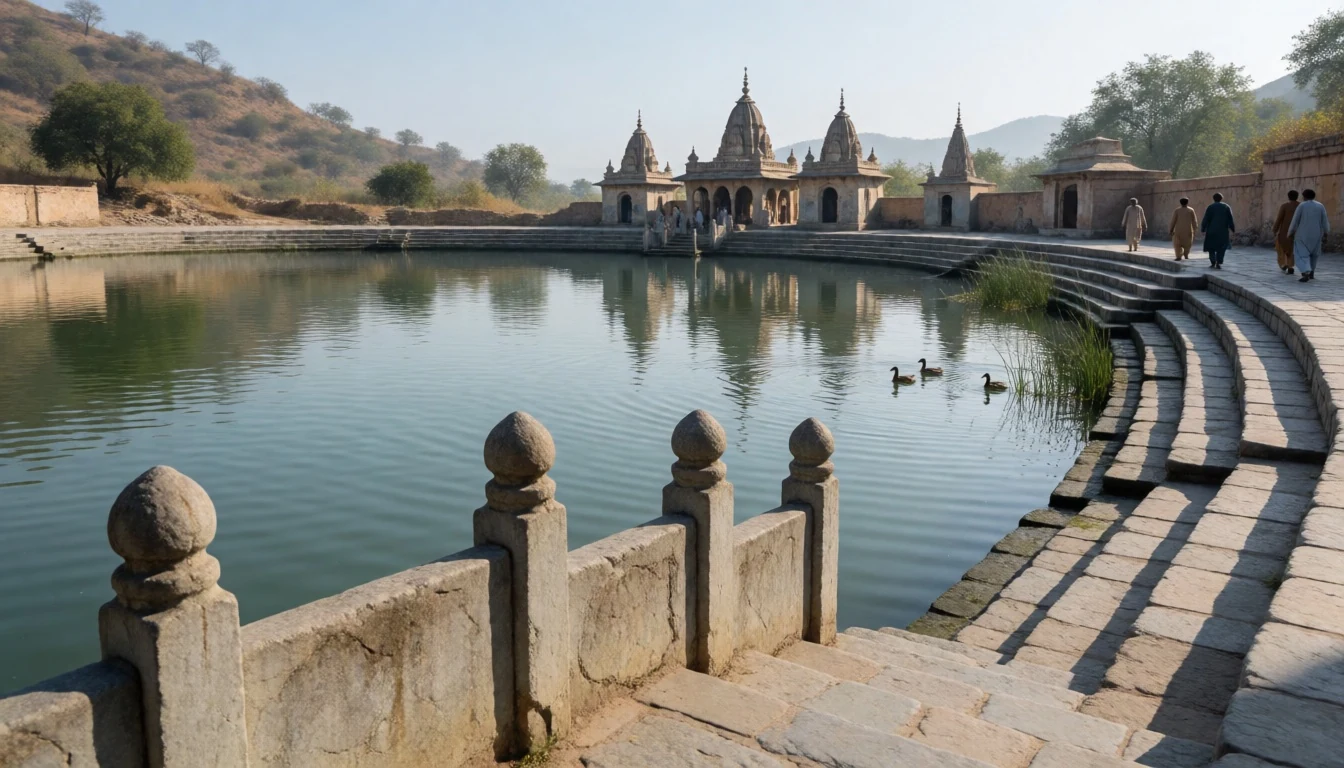
- The main temple group — Katas village, Chakwal District
The main group of temples stands on the hillside around the pond, linked by walkways. Small stone shrines with spired shikhara tops and arched doors sit side by side, and several shikharas were added from 2017 onwards. Idols of Hindu gods now stand inside the seven temples.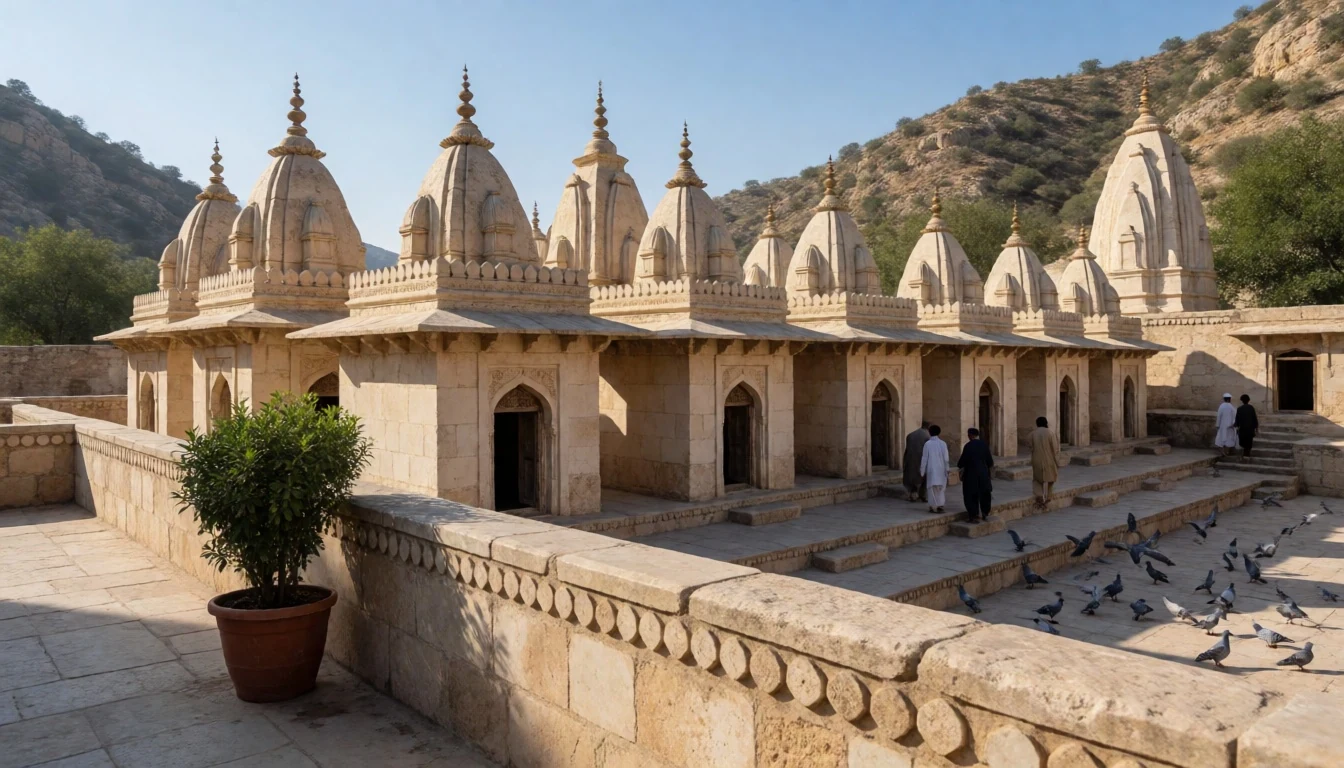
- Satghara — South-west of Katas, Chakwal District
Satghara, meaning roughly seven houses, is a second cluster of shrines to the south-west of the main pool. It lies some distance away, so it is a separate stop, and it tends to be quieter than the main group. The weathered brickwork and worn arches suggest how the wider site looked before restoration.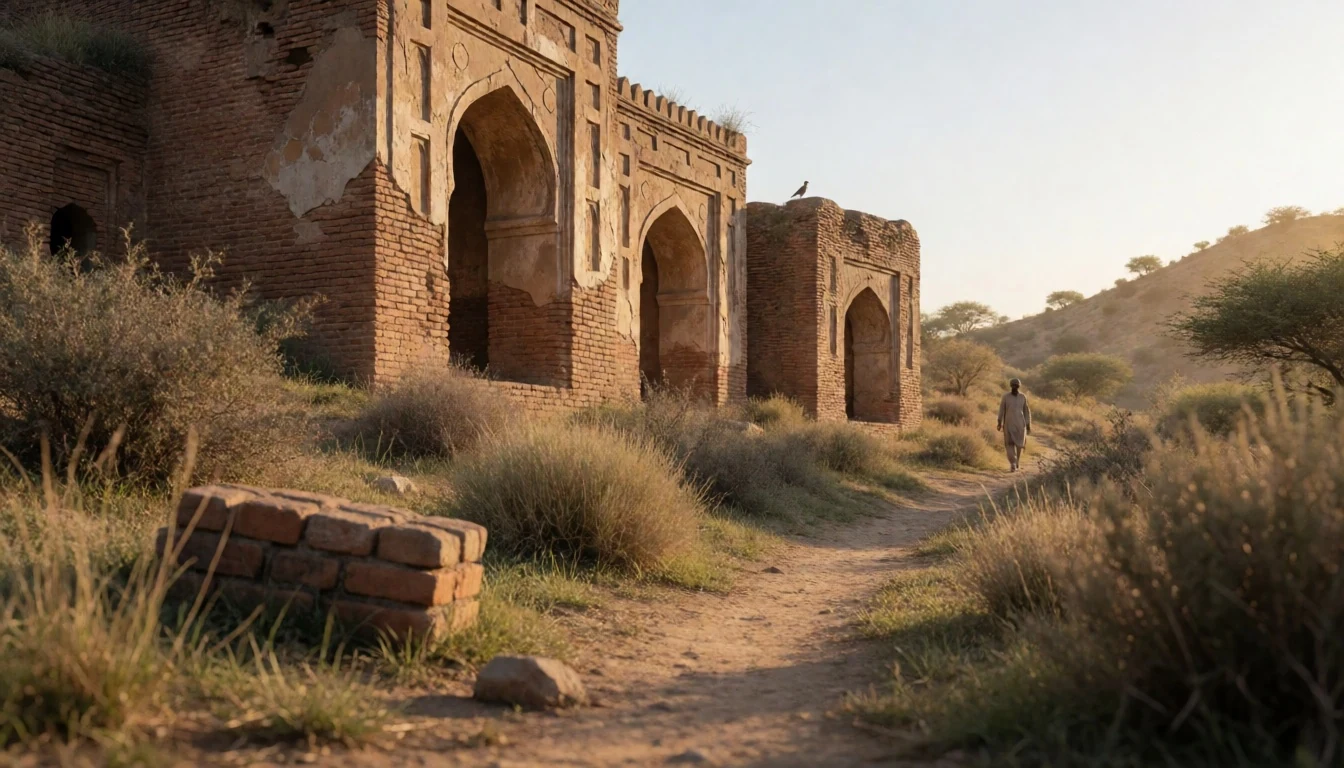
- Hari Singh's Haveli — Katas village, Chakwal District
The building known as Hari Singh's Haveli, beside the temple group, is tied locally to the Sikh period. A haveli is a courtyard mansion, and this one is worth a look for its thick walls and the view it offers over the pond and the dry hills around.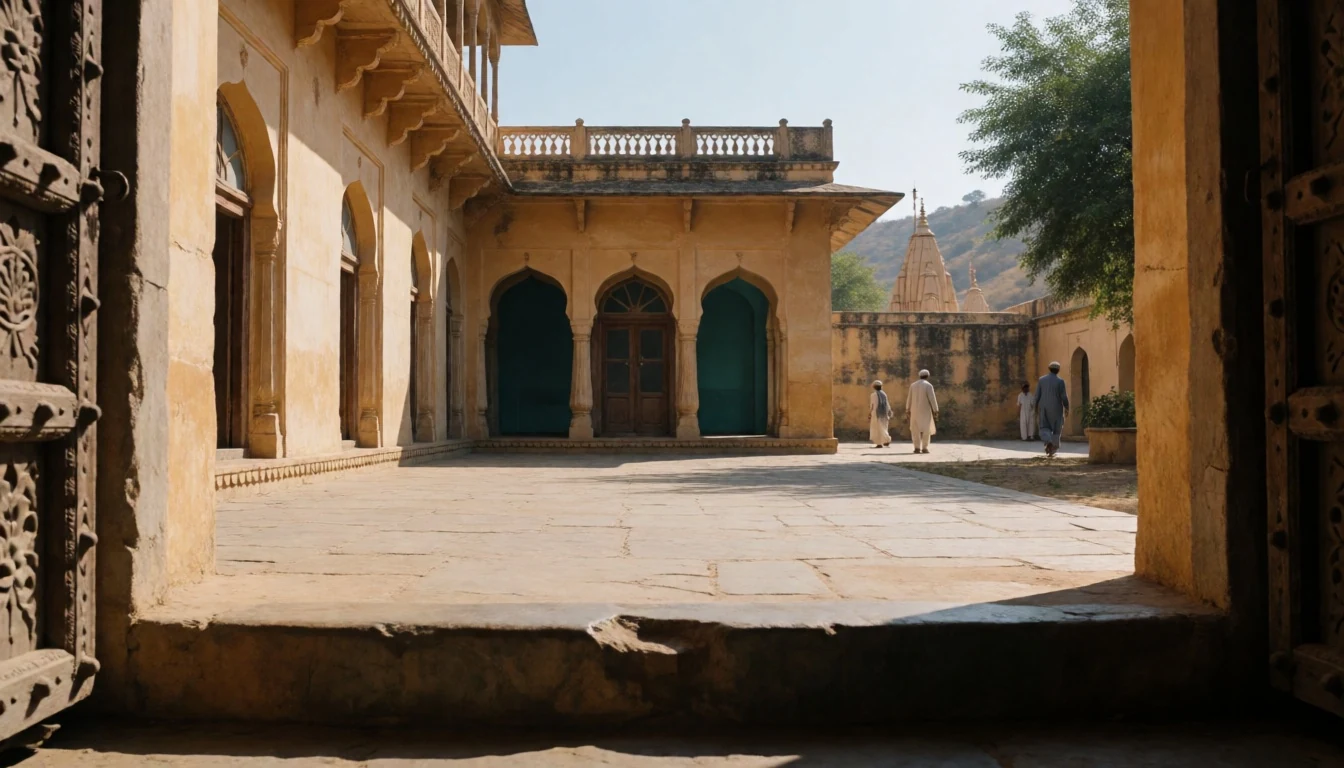
- Salt Range viewpoints — Hills around Katas, Salt Range
The low hills around Katas Raj Temples are worth a few minutes away from the shrines. From the edges of the complex the ground falls away into dry, scrubby country, with Kallar Kahar and its lake a short drive away. Late afternoon light turns the stone warm and softens the harsh midday glare.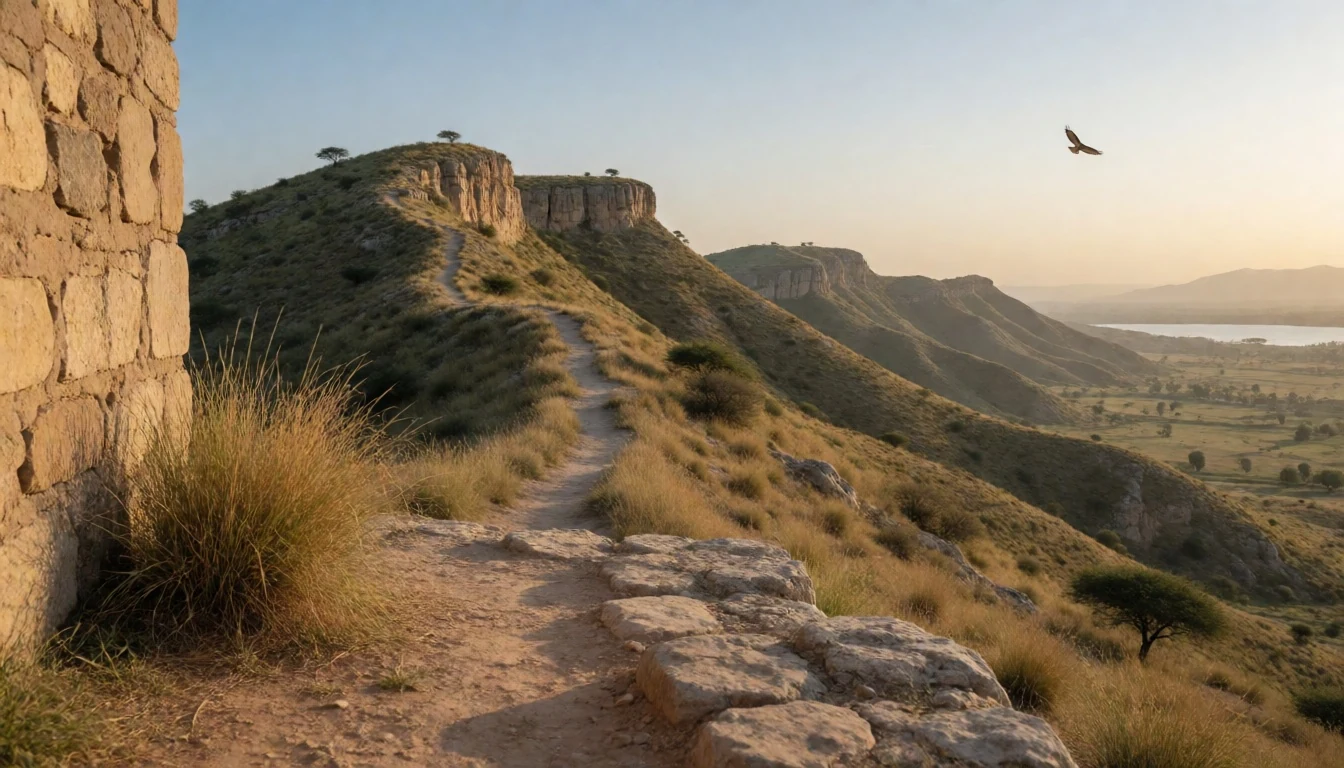
Culture
Katas Raj Temples is a working place of worship as well as a monument, and the two roles sit side by side. Hindus regard the pool as sacred, and the site is bound up with Shiva, whose festival Maha Shivaratri has long been the main date in its calendar. Before 1947 large crowds gathered for it; afterwards most local Hindus moved to India, and pilgrims from India were able to return only in some years, with long gaps. The place also carries older and wider layers of belief. Chinese Buddhist travellers recorded a stupa here, Guru Nanak is believed to have visited, and the Sikh ruler Ranjit Singh came on pilgrimage more than once. Many visitors today are Pakistani families, school parties and people interested in history. The restoration begun in 2006 replaced idols, repaired shrines and added new spires, so what stands today is partly new work on old foundations. Reading it as a layered, repaired place, rather than a pristine ruin, is the more truthful way to see it. Remove your shoes before stepping onto any temple platform, keep your voice low near the pool, and ask permission before photographing anyone who is praying.
What to wear
Katas Raj Temples lies in Punjab, where traditional and everyday dress largely overlap. The standard outfit for men and women is the shalwar kameez, loose trousers under a long tunic, sewn in light cotton or lawn for summer and in wool or khaddar, a coarse handwoven cotton, for winter. Women add a dupatta, a long scarf, and men may wear a shawl or a turban on formal days. Hindu women have also traditionally worn the sari, and the embroidered lehenga skirt for weddings and festivals. Today most people wear the shalwar kameez daily, with jeans and shirts common among the young in towns and shawls or sweaters in the cold months. A visitor should dress for heat and for a religious site. Choose loose cotton that covers shoulders and knees, and carry a scarf to cover the head if asked. Shoes come off at temple platforms, so wear sandals or trainers that slip off easily, with socks for hot stone. Bring a hat and sun cream, as shade is limited around the pool.
What to eat
- Daal with tandoori roti — Roadside eateries near Kallar Kahar
Slow-cooked lentils finished with a sizzle of garlic and cumin, scooped up with a roti blistered in a clay oven. It is the practical lunch of the Salt Range, filling, vegetarian and easily found at roadside eateries near Kallar Kahar.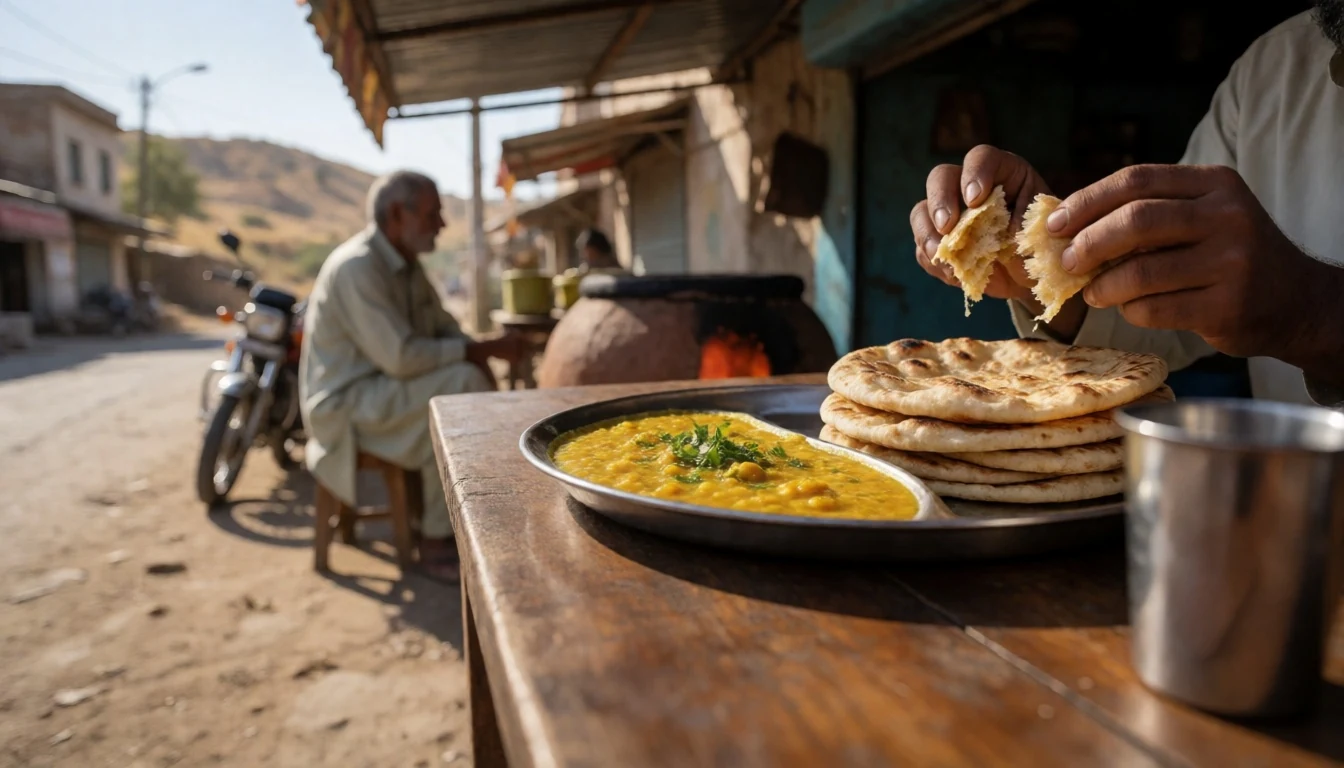
- Lassi — Dairy shops and stalls in Kallar Kahar
A thick churned yoghurt drink, served salted or sweet in a tall steel glass, often with a spoonful of cream on top. It cools you down after a hot walk around the pool. Look for dairy shops and roadside stalls in Kallar Kahar town.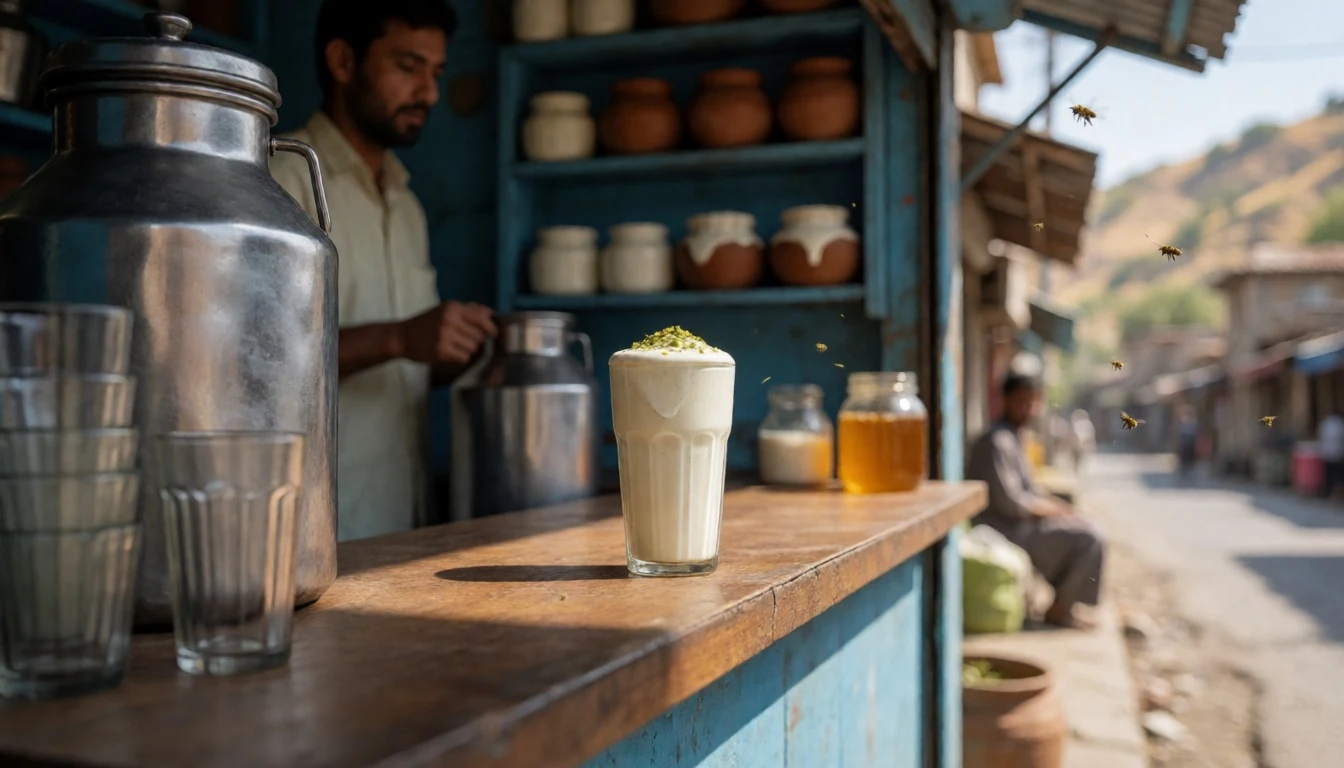
- Chicken karahi — Roadside eateries along the M2 corridor and in Chakwal
Chicken cooked in a wok-shaped pan with tomatoes, ginger, green chillies and little else, so the flavours stay sharp. It is shared from the middle of the table with naan. Roadside eateries along the M2 corridor and in Chakwal serve it. - Chana chaat — Hand carts in the bazaars of Kallar Kahar and Choa Saidanshah
Boiled chickpeas tossed with onion, tomato, green chilli, lemon and chaat masala, a sharp, salty snack that suits the dry heat. Look for hand carts and small stalls in the bazaars of Kallar Kahar and Choa Saidanshah. - Doodh patti chai — Tea stalls and dhabas along the road
Tea boiled together with milk and sugar until strong and creamy, poured into small cups. It is the standard pause on any Punjab road trip, and a good way to sit and talk after the walk. Tea stalls and dhabas along the route serve it.
Plan it
Best time. October to March, when days are mild and walking the hillside is comfortable; Maha Shivaratri, which falls in February or March, brings pilgrims. May and June are very hot, and the monsoon months of July and August are humid.
How long. 1
Getting there. Islamabad is the nearest large airport, with Lahore the other main gateway. From either, take the M2 Motorway towards Kallar Kahar and the Choa Saidanshah area, then finish by road to the temples. Hiring a car or taxi for the day is the simplest way.
Budget. low
Tips
- Check current access, security advice and opening arrangements with local authorities before you travel, as no official website is listed for the site
- Go in the morning, before the heat builds and while the light is soft
- Carry drinking water and sun protection, as shade around the pool is limited
- Carry cash for snacks and small purchases in the nearby towns
- Combine the visit with Kallar Kahar and its lake rather than rushing back
Etiquette
- Remove shoes before stepping onto temple platforms
- Ask before photographing worshippers or families
- Keep noise low and do not litter near the pool
Nearby
Sources
- Wikidata Q3629175 (CC0)
- Wikipedia: Katas Raj Temples (rev 1383965231) (CC BY-SA 4.0)
- Wikivoyage: Katas Raj Temples (CC BY-SA 4.0)
- Photo: Katas Raj Temples 2, ClicksByMohammadOmer (CC BY 3.0)
- Photo: Possible painting of the pool and temples of the Katas Raj Temple Complex during Sikh rule (Public domain)
- Photo: Katasraj temple (Sardar of Hari Singh's Haveli) 07, Uzair889 (CC BY-SA 4.0)
- Photo: Katas Raj Temples 09, Shahzaib Damn Cruze (CC BY-SA 4.0)
- Photo: Katas Raj Temples 18, ClicksByMohammadOmer (CC BY 3.0)
- Photo: SatGarhaTemple, Talha Yasin (CC BY-SA 4.0)
- Photo: Katas Raj Temple Punjab, Mhtoori (CC BY-SA 4.0)
- Photo: Katas Raj Temple, Lahore, Pakistan13, Zhyusuf (CC BY-SA 4.0)


