Harappa
Harappa, Pakistan
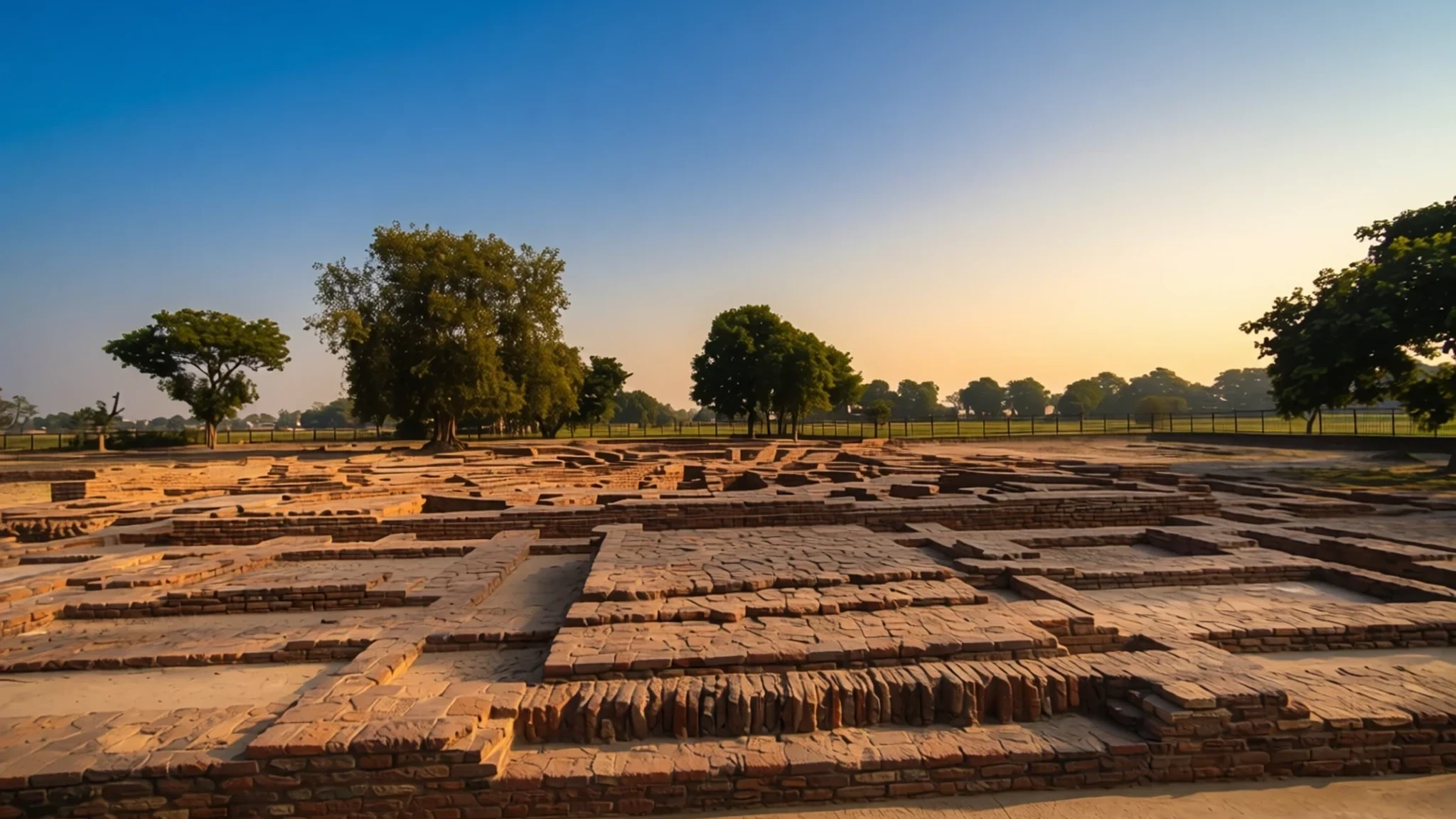
Harappa is where one of the world's first urban civilisations left its brick streets, wells and craft quarters, in quiet Punjab farmland.
The place
Harappa sits in the flat farming country of Punjab, Pakistan, west of the city of Sahiwal and a short drive from it. The site takes its name from a small modern village close by, and the Ravi River, which once flowed beside the ancient city, has since shifted its course and now runs several kilometres to the north. That shift is a reminder that the whole landscape here is a floodplain, green with crops in winter and baking in summer.
The ruins are low mounds of fired brick rather than standing monuments. At its fullest, in the Mature Harappan period, the city is thought to have held around 23,500 people across roughly 150 hectares, which was substantial for its day. Today the nearby town is a modest crossroads of about 15,000 residents, with a railway station left over from the colonial era.
The railway is also part of the site's story, because the line's builders quarried the old city for ballast. What remains is therefore partial, and a visit asks for some imagination. A site museum and the excavated lanes, wells and drains help. Pakistan put Harappa on its tentative list for World Heritage status in 2004, and a plan for an amusement park on the grounds was dropped in 2005 after builders turned up artefacts. Expect few visitors, little shade and a slow, contemplative morning rather than a spectacle.
Its story
Harappa belongs to the Indus Valley, or Harappan, civilisation, whose roots reach back to farming communities such as Mehrgarh, around 5200 BC. Along the Indus and its neighbouring rivers, towns grew into planned cities with brick houses, drainage and standard weights. Harappa and Mohenjo-daro, in Sindh, are the two best known.
Harappa's own story begins with the Ravi Phase, when people first settled here. Excavators once placed that beginning near 3300 BC, though newer work pushes it earlier. In the Kot Diji Phase, from about 2800 to 2600 BC, the settlement gained massive mud-brick walls and platforms, broad north–south streets, and separate zones for living and for craft work. The mature city followed, trading widely along the Indus towards the Persian Gulf and Mesopotamia.
The modern chapter is a painful one. When Alexander Cunningham visited in the 1850s the mounds were still in good shape, but engineers building the Lahore–Multan railway soon carted away brick in enormous quantities, enough for a long stretch of track bed. Even so, the civilisation was recognised as such in the 1920s, after digging at Mohenjo-daro and Harappa. Early seasons yielded hundreds of stamp seals and inscribed objects, carved with animals and a script that nobody has yet fully read. Excavation has continued on and off since, and each decade shifts the dates a little.
What to see
- The excavated mounds — Harappa archaeological site
The main mounds hold the exposed brick lanes, house foundations and drains of the old city. Walk them slowly and look at how the bricks are laid and how the streets run north to south. Signage is limited, so read up beforehand or hire a local guide.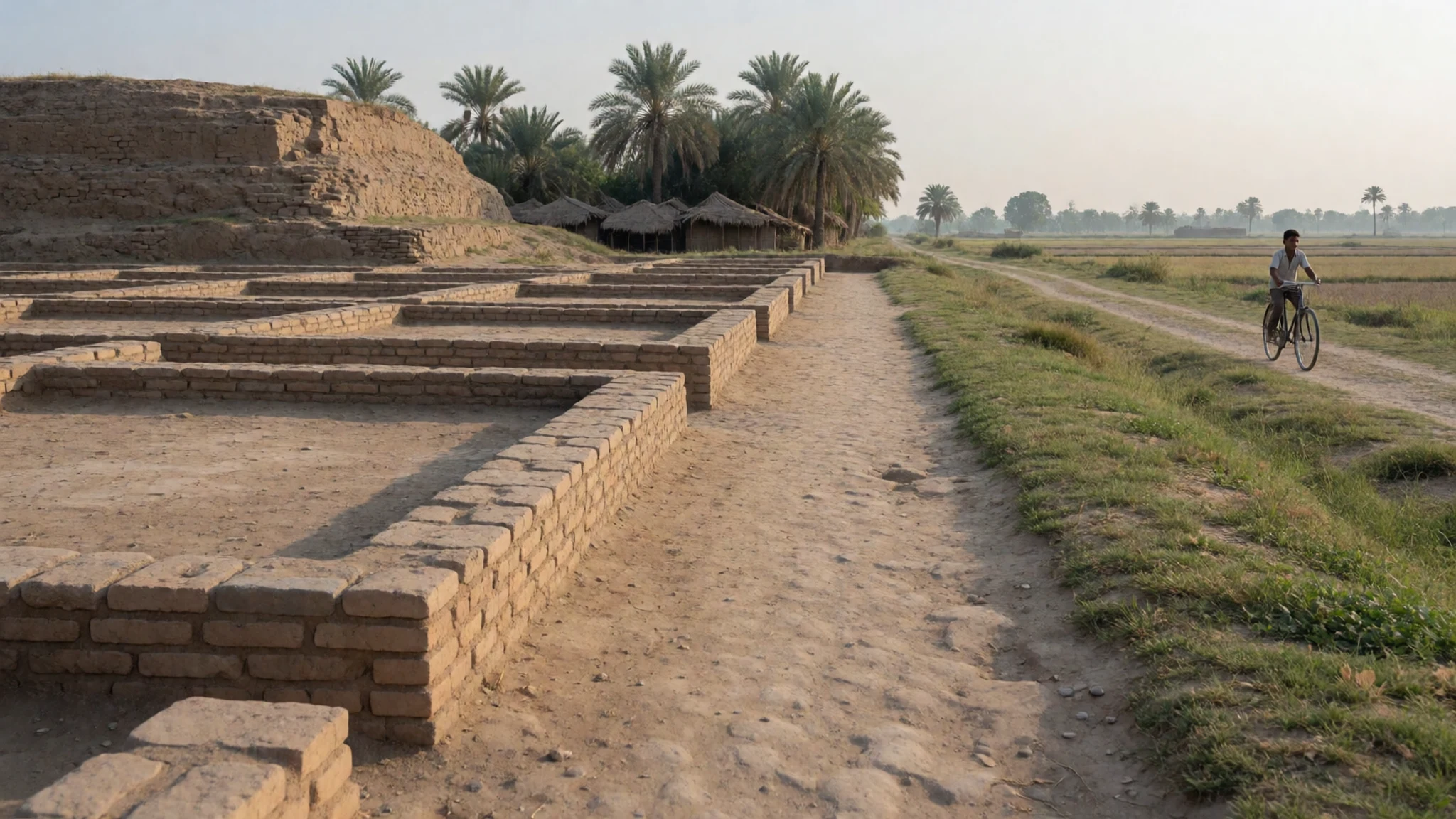
- Well and bathing platforms — Excavated area, Harappa
A large brick-lined well and neighbouring bathing platforms show how seriously the city treated water and washing. The curved brickwork is the clearest sign of skill on site. Late afternoon light brings out the colour of the fired bricks, and it is also the best time for photographs.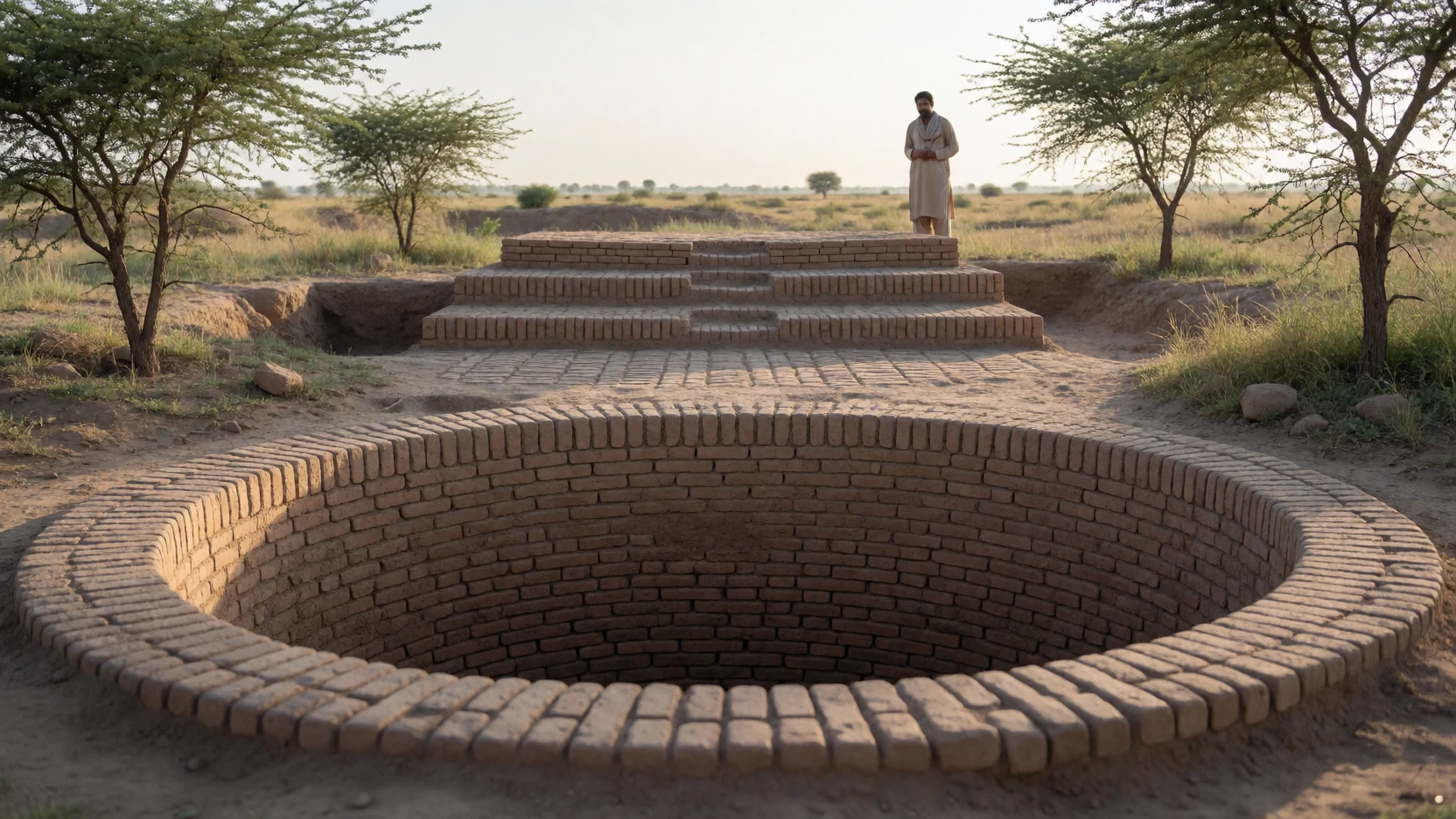
- Site museum — Beside the ruins
The small on-site museum displays pottery, stamp seals, beads, tools and figurines recovered here. It gives context to the empty-looking mounds outside. Opening times can change, so check locally or on the official project site before travelling, and ask staff whether photography is permitted.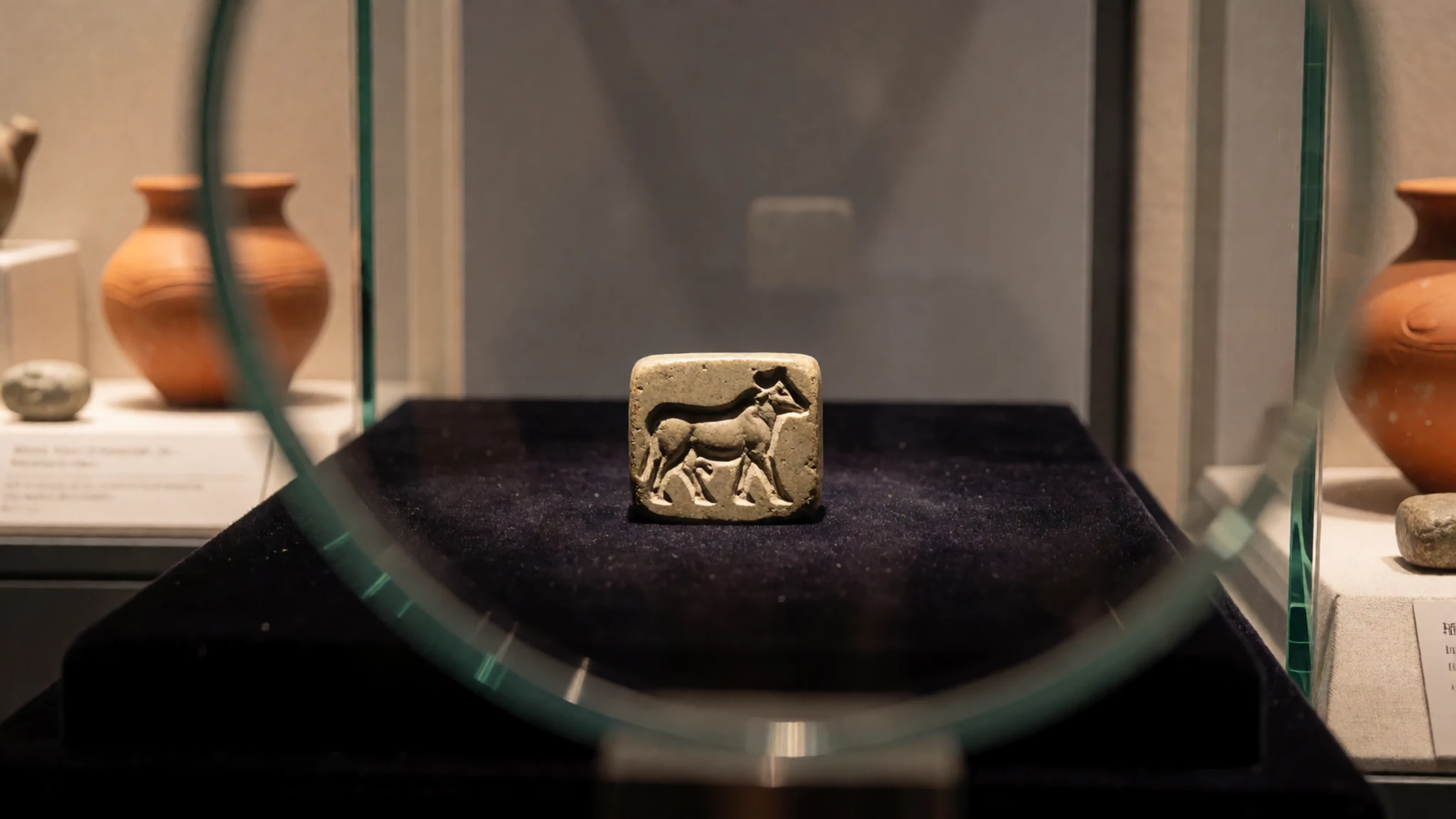
- Fortified Mound AB and the citadel area — Western part of the site
The raised western mound was the administrative and ritual heart of the city, a platform above the surrounding houses. Its height gives a view across the plain to farmland and the village. Imagine walls and gateways here, then compare them with the thin remains today.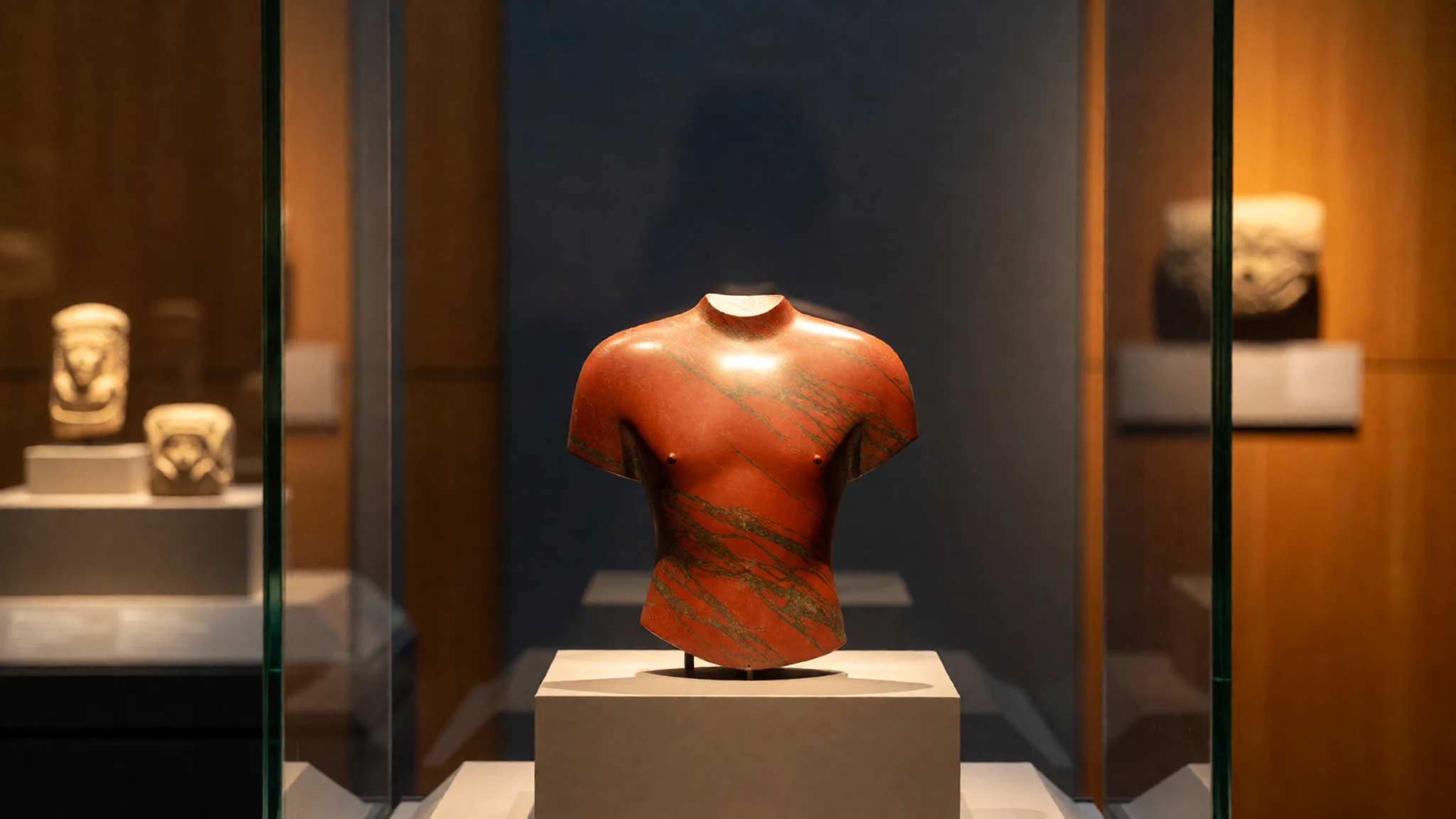
- Harappa village and railway station — Modern Harappa
The village is a few minutes from the ruins, with a colonial-era railway station that quietly explains the site's damage. A short wander shows everyday Punjab life: tea stalls, tractors, brick kilns and schoolchildren. It is a good place to pause, drink something and chat.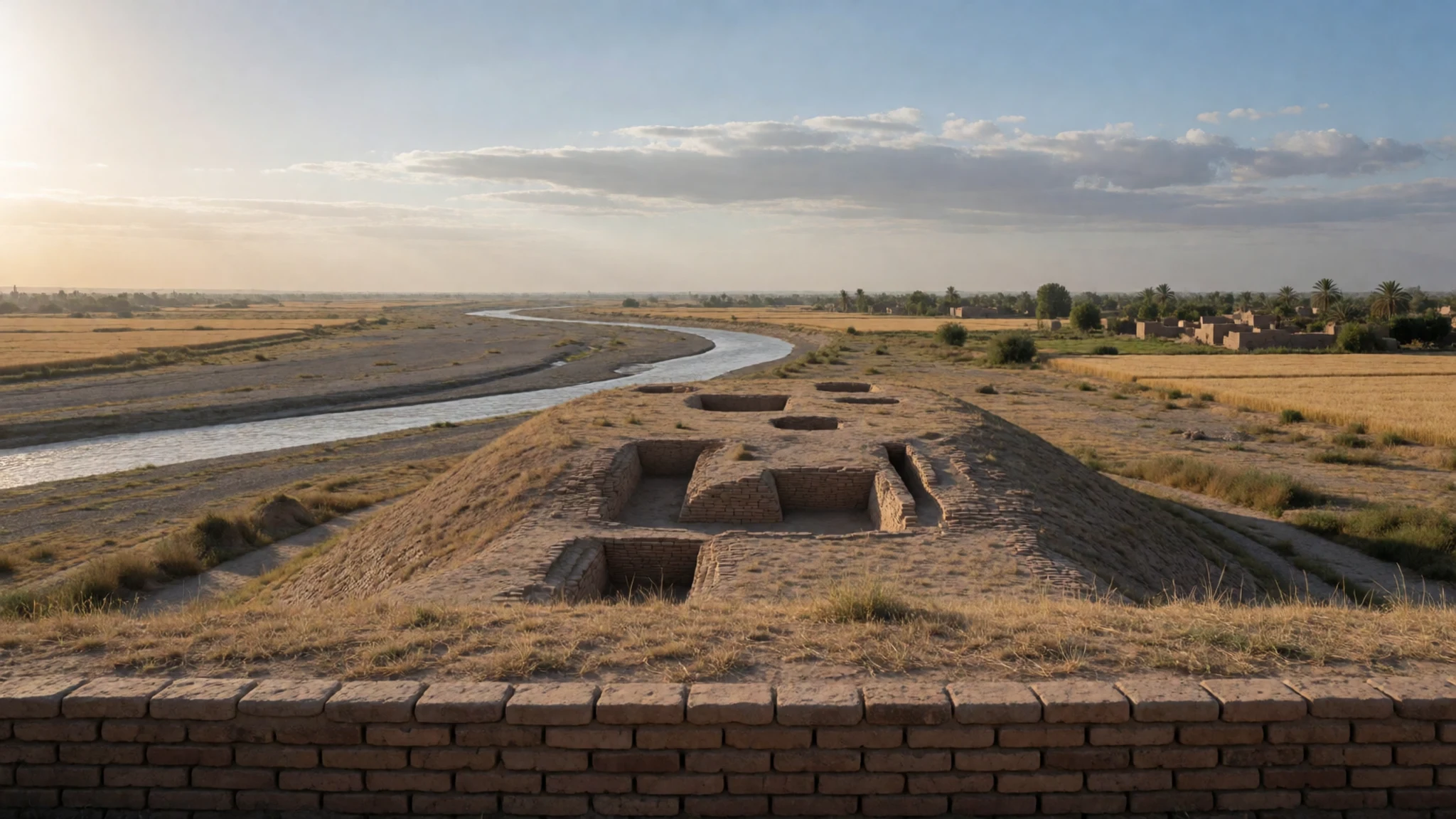
Culture
Harappa's culture is mostly read from objects, because the writing on its seals remains undeciphered. The evidence points to an urban society built on farming surplus and trade. People grew wheat and other crops, kept cattle including humped bulls, wove and dyed cotton, and made wheel-turned pottery painted with animals and geometric patterns. Standardised weights and carved stamp seals suggest organised commerce, probably used to mark ownership of goods sent along river routes towards the Gulf and Mesopotamia.
What visitors notice is how ordinary the details feel: drains in the lanes, wells in houses, workshops set apart from homes. Archaeologists still argue about who governed these cities, and whether power rested with merchants, priests or a mix of both. Nobody has found a clear royal palace or tomb, which is part of the fascination.
The living culture around the site is that of rural Punjab: hospitable, curious about visitors, and mostly Punjabi- and Urdu-speaking. Tea is offered readily and conversation is easy. Many local families take pride in the ruins as heritage, and several arrive on weekends and school trips.
Walk only on marked paths and never climb on or remove bricks, sherds or beads from the mounds, as even small pieces belong to the record and taking them is an offence.
What to wear
Harappa's ancient dress is known from figurines, jewellery and a few textile traces. Cotton was woven and dyed, so lightweight wraps and draped cloth were probably usual in the heat. Figurines show elaborate headdresses, layered bead necklaces, bangles and girdles, and the jewellery was made of carnelian, shell, faience, copper and gold. Such ornaments survive far better than cloth.
Today, people in and around Harappa wear the shalwar kameez, a long tunic over loose trousers, usually in cotton, with a dupatta scarf for many women and a waistcoat or shawl for men in winter. Farmers may tie a cotton turban or wear a lungi. Fabrics tend to be light and plain for work, brighter for weddings and festivals.
Visitors should dress for strong sun and modest norms. Loose cotton or linen with long sleeves and trousers or a long skirt works for everyone, and women may find a light scarf useful for shade and respect. A wide-brimmed hat, sunglasses and sun cream matter more than anything else. Wear sturdy, closed shoes or trainers with grip, because the mounds are uneven, dusty and sometimes slippery after rain. In winter mornings and evenings can be cool, so bring a light jumper or shawl. Avoid shorts and sleeveless tops in the village, where they draw attention.
What to eat
- Chicken or mutton karahi — Roadside eateries in Sahiwal
A Punjabi staple of meat cooked in a wok-like pan with tomatoes, green chillies, ginger and spices, served sizzling with fresh naan. It is rich, peppery and meant for sharing. Order it at the roadside eateries in Sahiwal and along the main route.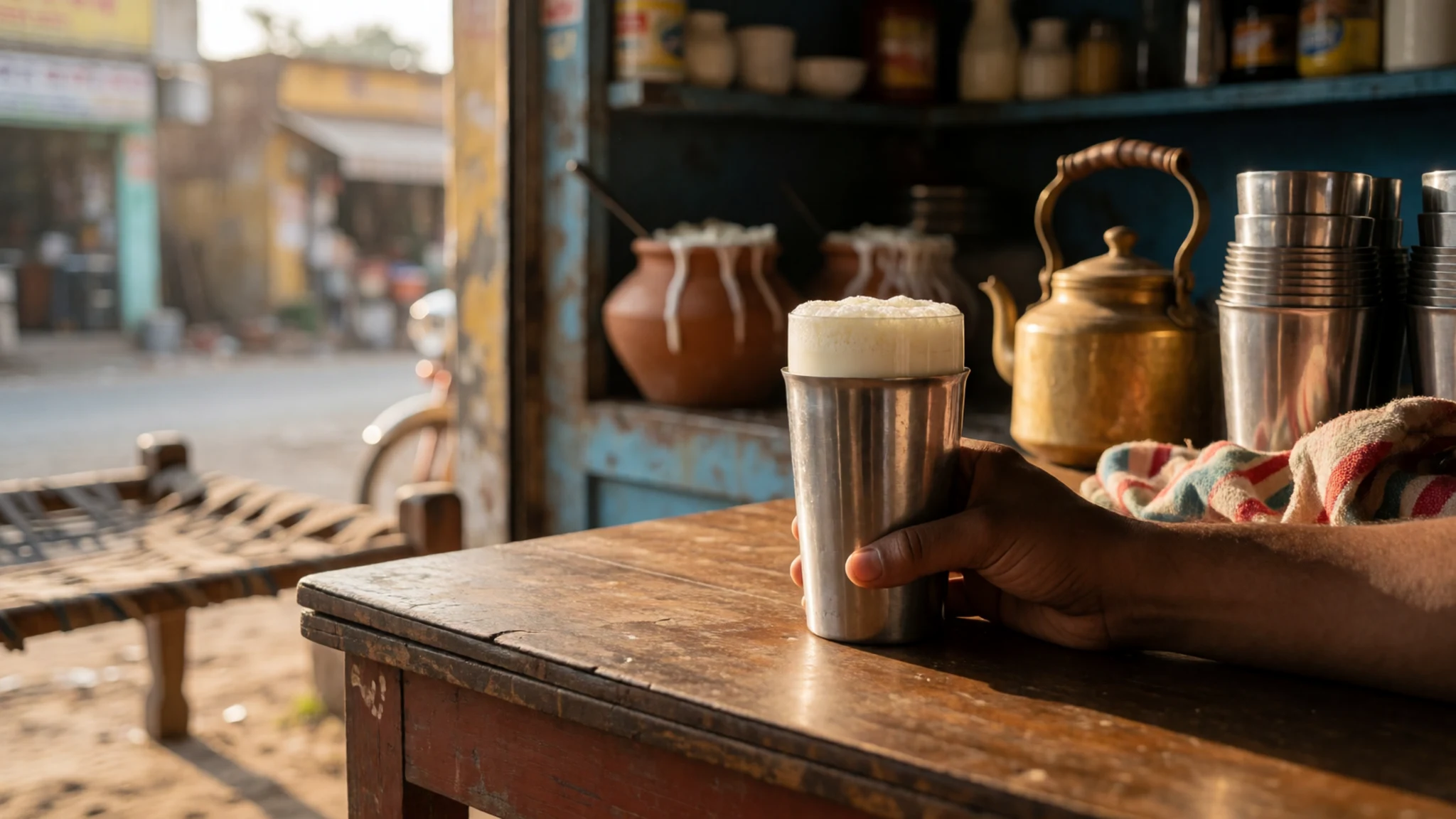
- Dal chawal — Lunch counters in Harappa village
Lentils simmered with garlic and cumin, spooned over plain rice, with pickle and raw onion alongside. It is light, cheap and gentle on the stomach after a hot morning on the mounds. Look for it at simple lunch counters in Harappa village.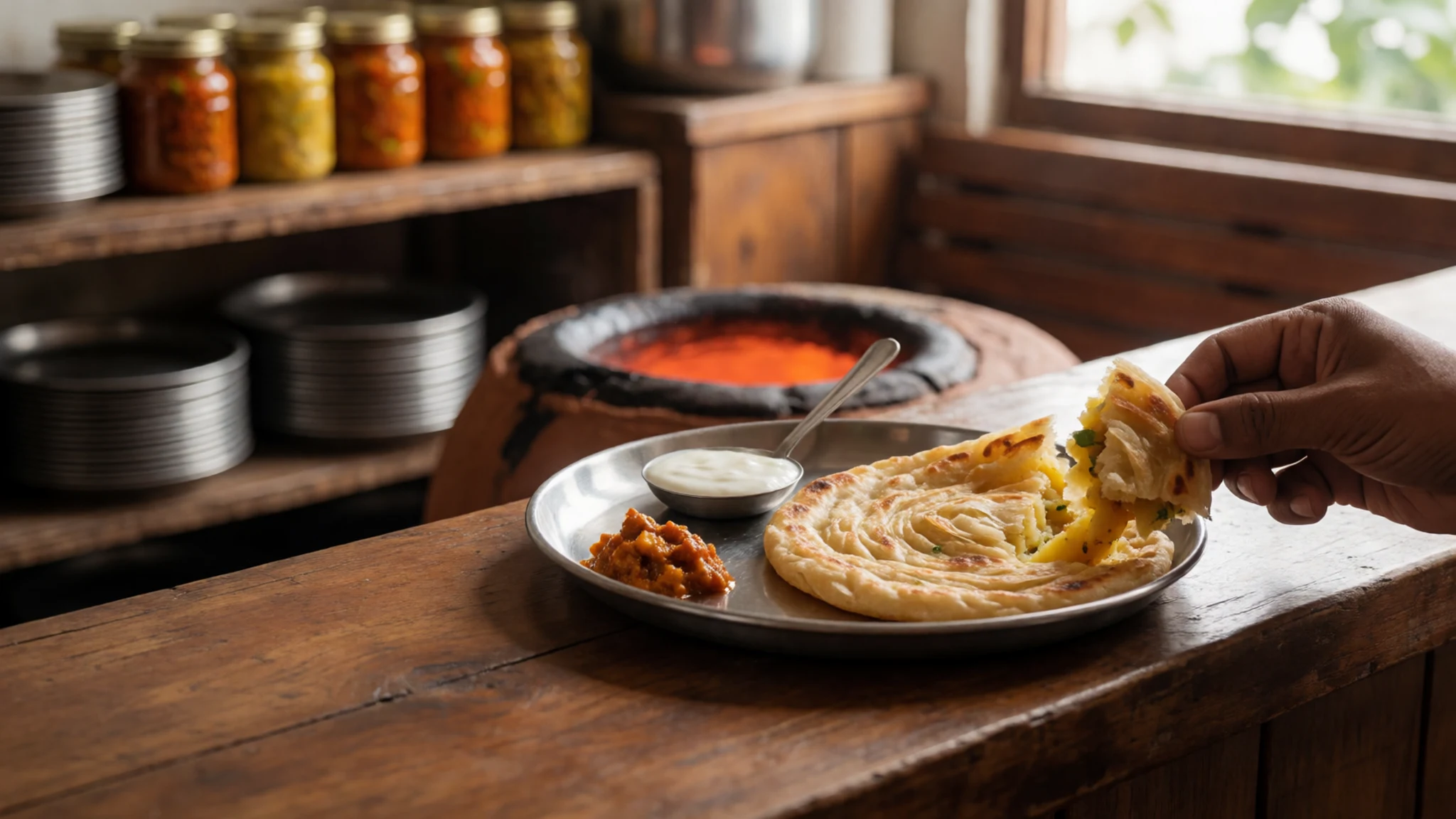
- Saag with makki di roti — Dhabas along the highway
Winter's classic: slow-cooked mustard greens eaten with maize flatbread and a spoon of white butter. It is earthy and filling, and it suits the cool season when most visitors come. Find it at dhabas, the roadside Punjabi cafés, and at home-style eateries.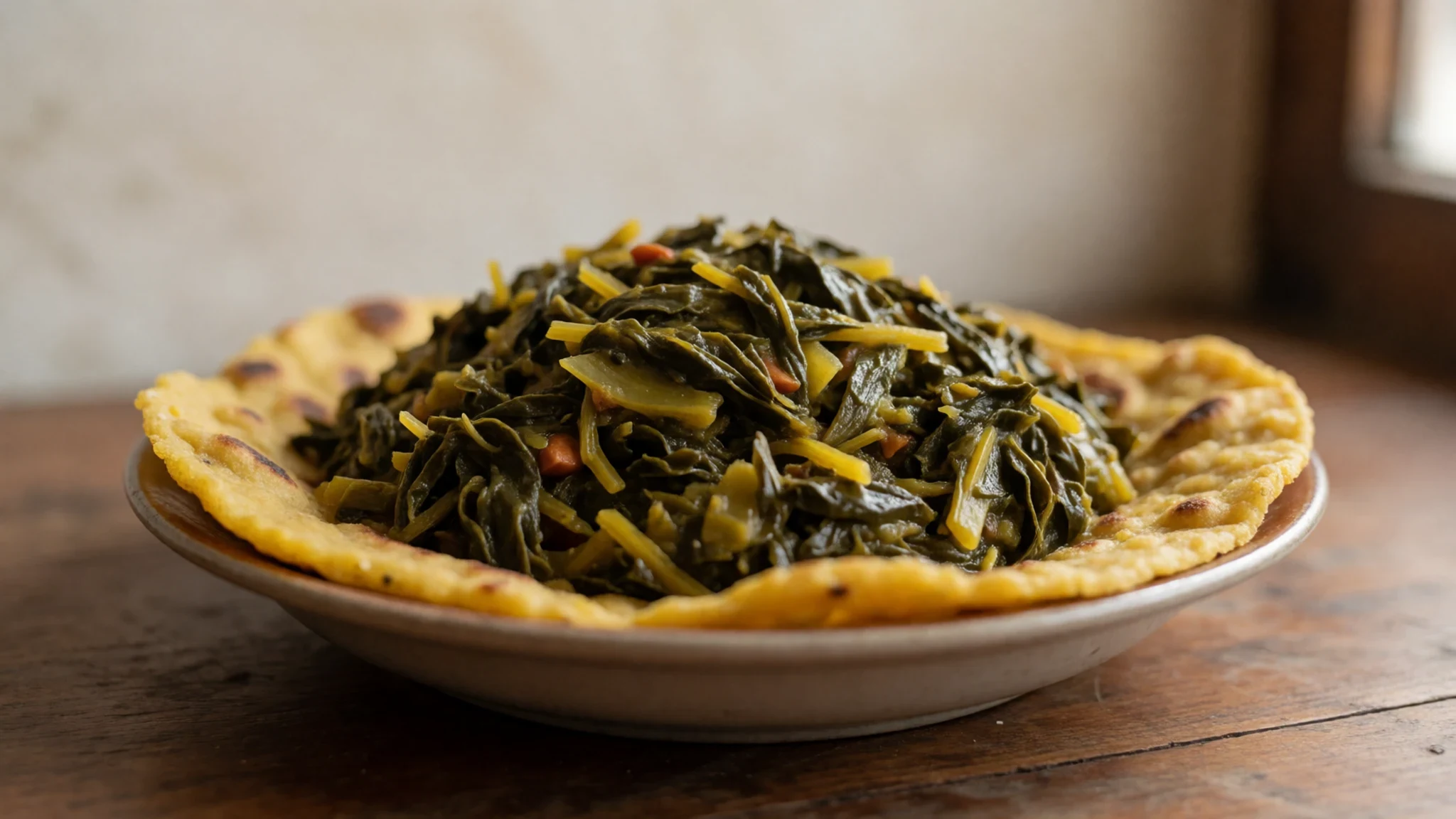
- Lassi — Dairy and sweet shops near the bus stand
A thick, cold yoghurt drink, served salted or sweet, often in a tall steel glass with a skin of cream on top. It is the standard answer to Punjab's heat. Sweet-shop and dairy counters near the bus stand serve it fresh through the day.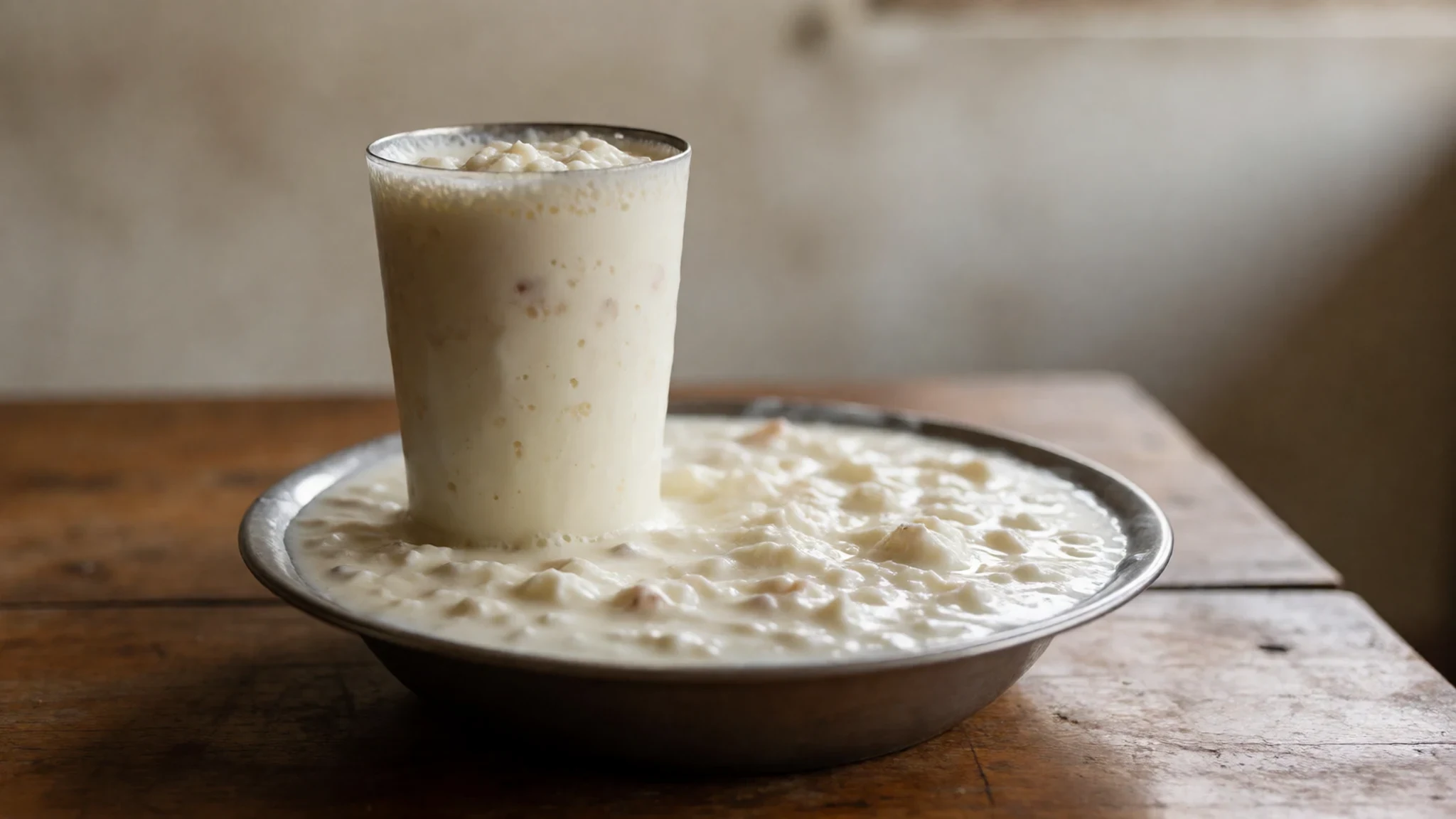
- Chai and fresh pakoras — Tea stalls at the crossroads
Strong, milky tea with cardamom, taken with gram-flour fritters of onion or potato fried to order. It is the natural stop after the site. Tea stalls in the village and at the crossroads keep a pot going from morning, and offer a seat for a chat.
Plan it
Best time. November to March, when days are mild and dry enough to walk the open mounds. May to August is fiercely hot, and the monsoon months bring humidity and mud.
How long. 1
Getting there. Fly to Allama Iqbal International Airport in Lahore, then take a train or bus to Sahiwal, about 170 km away. From Sahiwal, Harappa is roughly 45 minutes by road, by local bus, minibus or a hired autorickshaw or car. Multan's airport is an alternative.
Budget. low
Tips
- Start early to beat the heat and the haze
- Carry water, sun protection and snacks, as shade and shops at the site are limited
- Carry cash in small notes, since cards are rarely accepted outside big towns
- Check the official site (http://www.harappa.com) and ask locally about museum opening times
- Hire a driver for the day if you want to combine Harappa with other stops
Etiquette
- Stay on marked paths and never remove or climb on bricks or fragments
- Ask before photographing local people, especially women
- Dress modestly in the village, with shoulders and knees covered
Nearby
Sources
- Wikidata Q185562 (CC0)
- Wikipedia: Harappa (CC BY-SA 4.0)
- Wikivoyage: Harappa (CC BY-SA 4.0)
- Photo: Well and bathing platforms, Harappa (Obed Suhail) (CC BY 3.0)
- Photo: Major sites of the Indus Valley Civilization (CIA) (Public domain)
- Photo: Harappa red jasper male torso (Gary Todd) (CC0 1.0)
- Photo: Harappa male dancer statuette (Gary Todd) (CC0 1.0)
- Photo: GhadharJari Hai (Niyam Bhushan) (CC BY 2.5)
- Photo: An Ancient Harappan Genome (Shinde et al. 2019) (CC BY-SA 4.0)
- Photo: Sanghol stupa and site (Sripathroy) (CC0 1.0)
- Photo: Sanghol stupa and site (Sripathroy) (CC0 1.0)


