Carchemish
Carchemish, Syria
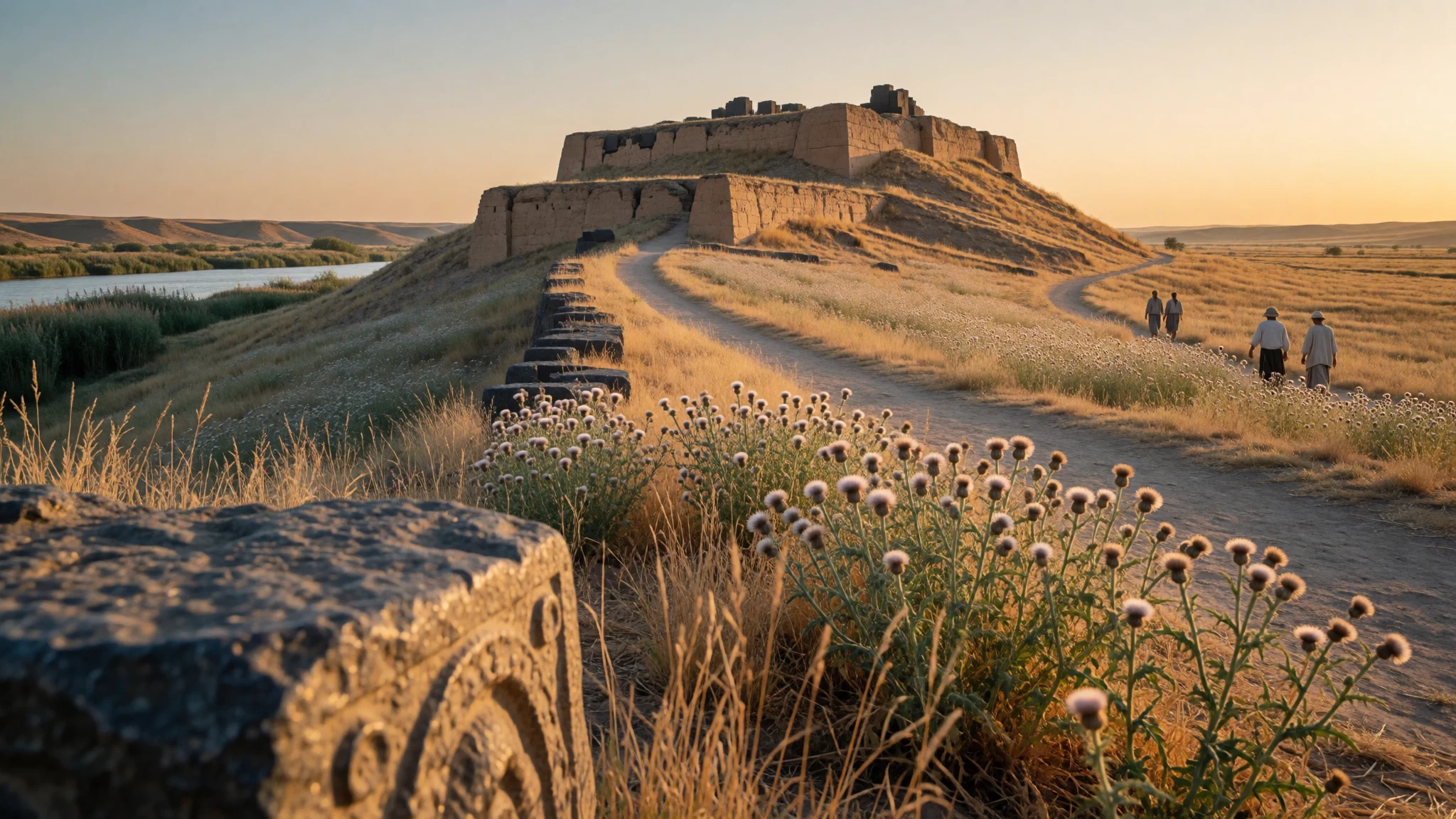
Carchemish is a Bronze and Iron Age capital on the Euphrates, split by a border and best met through its carved stones in museums.
The place
Carchemish sits on the west bank of the Euphrates, where the Turkish town of Karkamış faces the Syrian town of Jarabulus across a frontier. The ruins cover about 90 hectares, and the border runs through them, with the larger share on the Turkish side and the rest in Syria. A railway line, once part of the Berlin–Baghdad route, now marks that boundary. Gaziantep lies to the north-west and Aleppo to the south-west, both within a day's reach in calmer times.
The layout is easy to grasp on paper. An acropolis rises beside the river, an Inner Town is ringed by earthen ramparts, and an Outer Town spreads beyond them, mostly on the Syrian side. Today it looks like low mounds, grass, excavation trenches and fenced ground rather than standing monuments. A Turkish military base occupies part of the site, which shapes everything about access.
The city's names have shifted over time. Karkemish and Karkamış are local forms, and Europos was the Roman name. In its long life it was at times independent and at times held by the Mitanni, the Hittites and the Neo-Assyrian empire. Wikidata gives its founding as 1321 BCE, though people lived here much earlier.
Honest advice: this is a place for the curious and the patient. There is little to see without permission, and the situation near the Syrian border can change quickly. Many travellers will learn more at the archaeology museum in Gaziantep, where the best carvings now sit, than at the site itself.
Its story
Carchemish was known to scholars long before anyone dug there, because the Bible and Egyptian and Assyrian texts all mention it. Its location was argued over for years. A British consul at Aleppo suggested the right mound, and a British Museum scholar later confirmed it. An earlier guess had wrongly placed the city at Circesium, further down the river.
The British Museum began test digs in the late nineteenth century, then ran full excavations in the years just before the First World War. Two names stand out: Leonard Woolley directed the later seasons, and a young T. E. Lawrence, later famous as Lawrence of Arabia, worked beside him. They uncovered defences, temples, palaces and many basalt statues and reliefs carrying Luwian hieroglyphic inscriptions. War stopped the work, and a short final season came after it, before the new Turkish republic's struggles closed the site.
Then came a long silence. For decades the Turkish army mined the ground, and the site stayed off limits. Only when the mines were cleared from the Turkish portion in 2011 could archaeologists return, that same year. A joint team from Italian and Turkish universities, led by Nicolò Marchetti, resumed digging in the Inner and Outer Towns, and later seasons brought new sculpture and a palace linked to a ruler named Katuwa.
The city's most famous moment as a battlefield came around 605 BC, when Babylonian forces defeated the Egyptians here, an event the Bible records. It is a fitting fate for a crossing point on a great river: always contested, always worth holding.
What to see
- The Carchemish ruins — Karkamış, Gaziantep province
The ruins are the point of any journey here: acropolis, ramparts and the Inner Town on the Euphrates bank. Expect mounds and trenches rather than grand walls. Access to the Turkish part depends on military and official permission, so check with Turkish authorities before planning anything around it.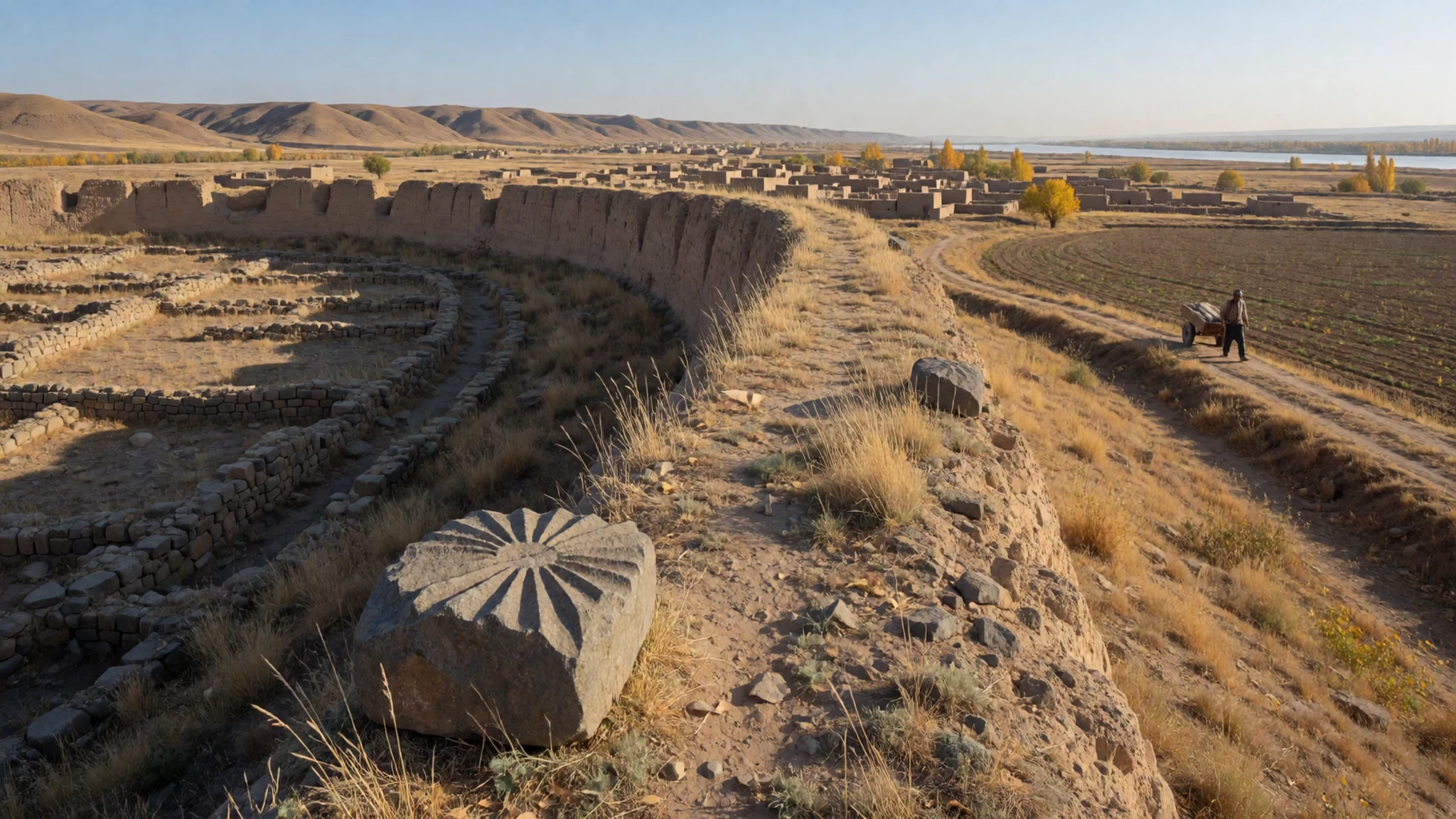
- Karkamış railway station — Karkamış
A small station built in 1913 for the Berlin–Baghdad line. It is modest, almost domestic in scale, and a reminder that the railway cut through the ancient city. No trains have run here since 2011, so it is something to look at, not use.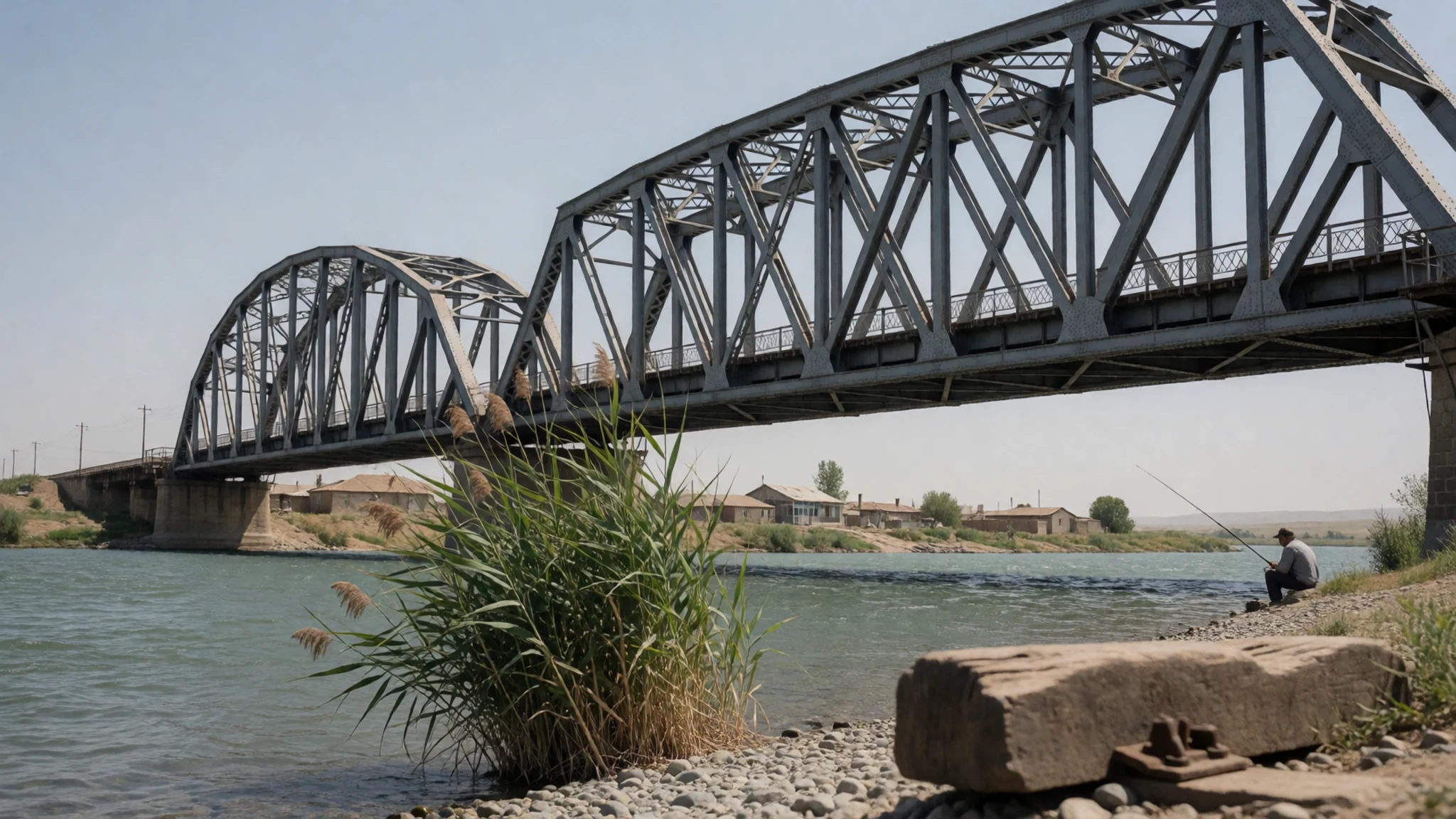
- Karkamış railway bridge — Karkamış, on the Euphrates
A historic truss bridge carrying the old railway over the Euphrates, completed in 1913. Its iron lattice is a good contrast with the basalt carvings nearby. As it stands in a sensitive border zone, view it only from where access is clearly allowed.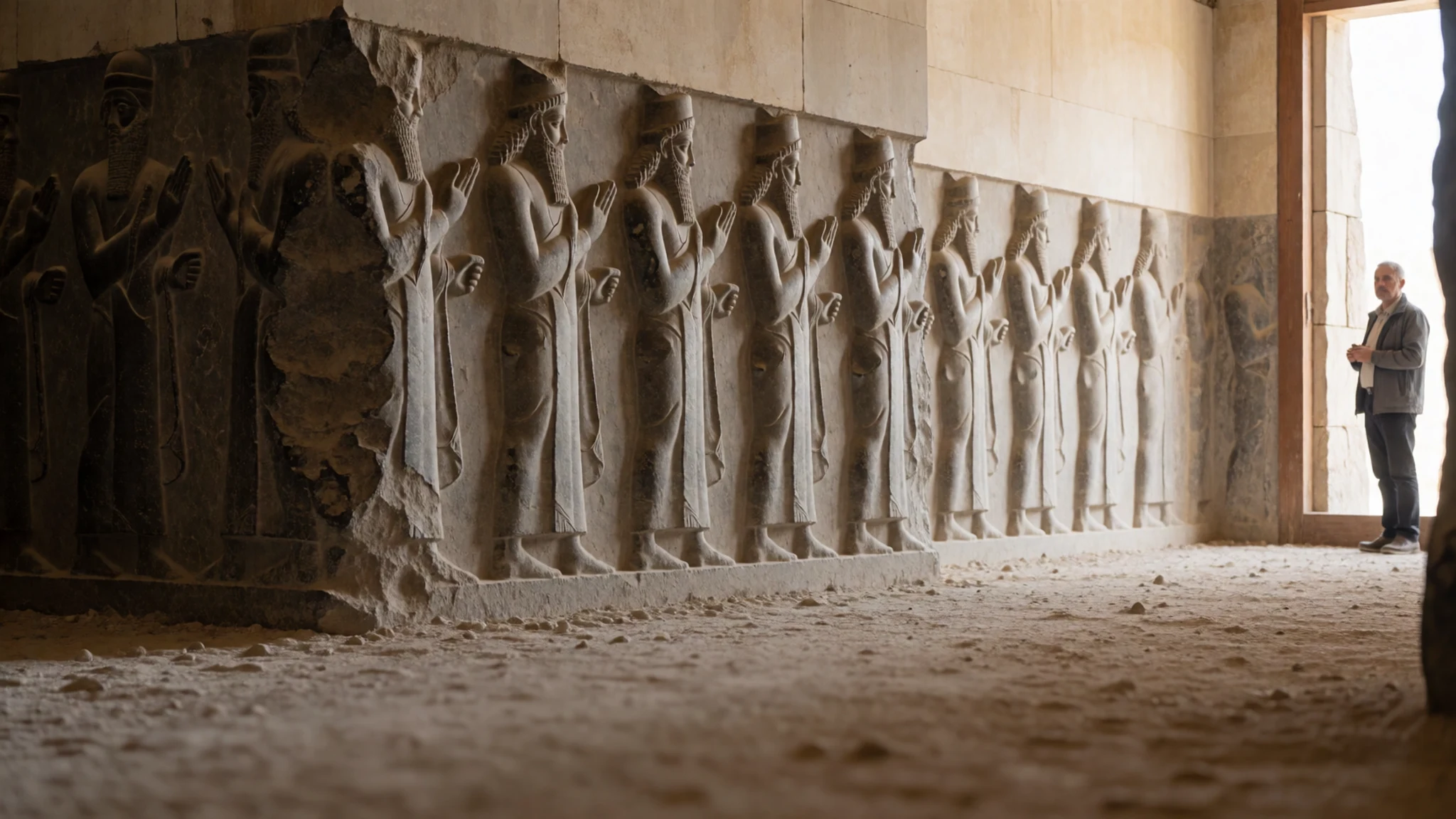
- Carchemish reliefs, Gaziantep Archaeology Museum — Gaziantep city
The carved orthostats from the Royal Buttress, basalt slabs once lining a processional approach, are displayed here. Figures, inscriptions and animals can be seen at close range, with proper labels. For most visitors this is the real way to see Carchemish.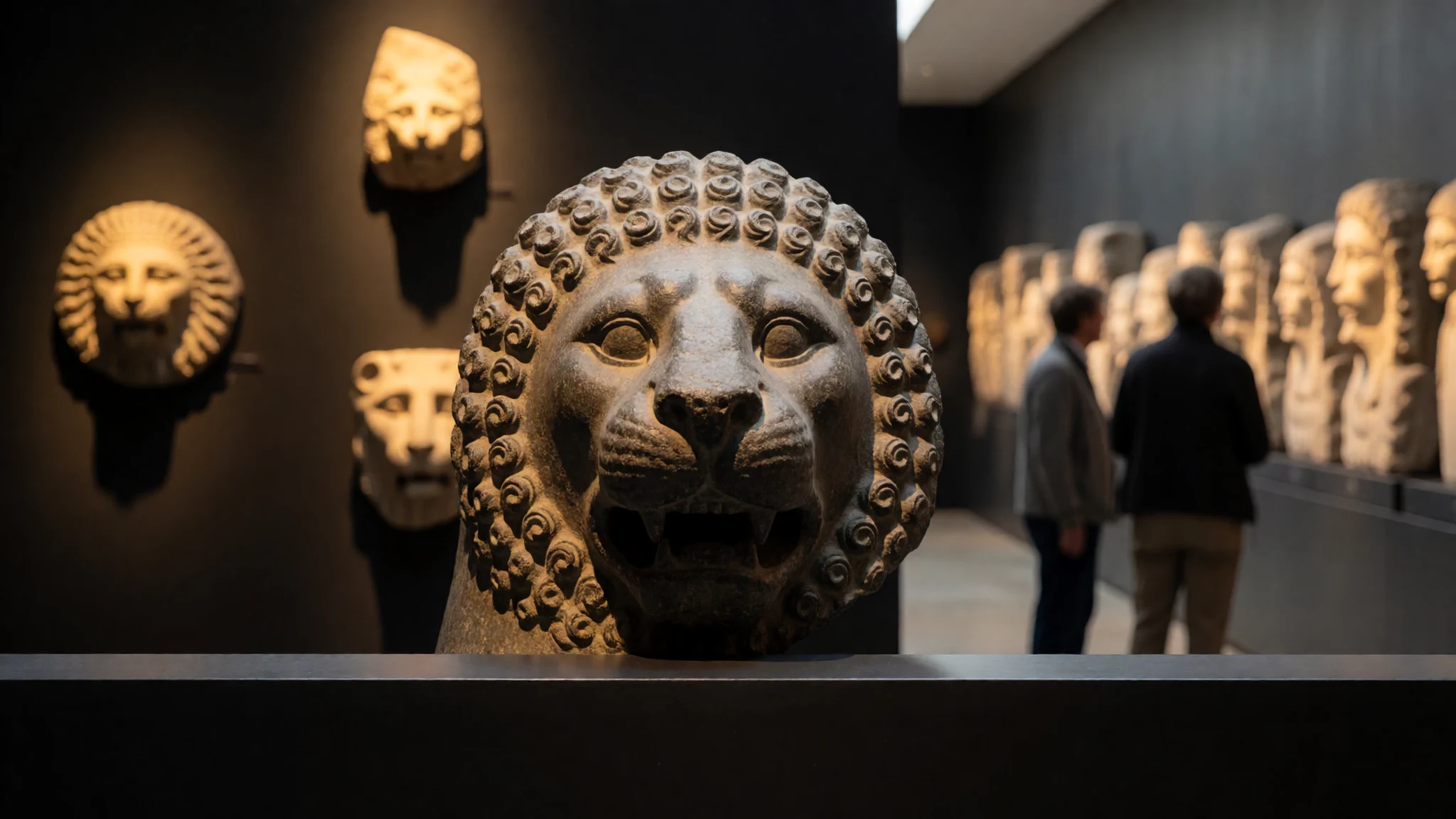
- War chariot relief, Museum of Anatolian Civilisations — Ankara
A Late Hittite carving of a war chariot, 175 cm high, from Carchemish in the second half of the eighth century BC, is held in the Ankara museum. It shows the Assyrian and Aramaean influences that mixed in the city's later art.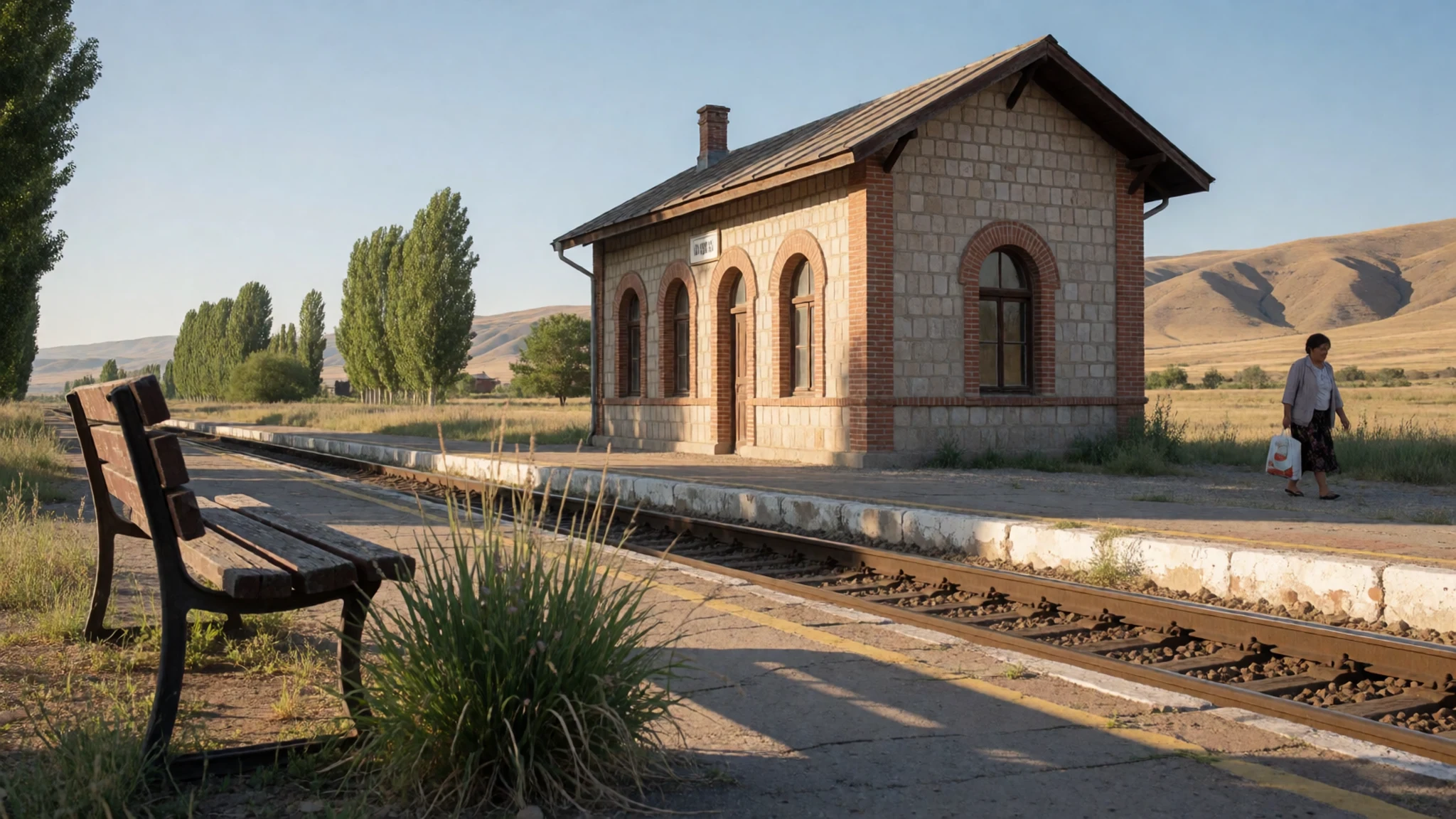
Culture
Carchemish belongs to the Neo-Hittite world, where small kingdoms inherited Hittite traditions and wrote in Luwian hieroglyphs, a picture-based script carved on basalt. Rulers such as Katuwa and Yariri are known from these inscriptions, which praise kings, record building work and invoke gods. The city's art shows people mixing: Hittite dress and posture, Assyrian-style palace decoration, and local Aramaean touches.
The modern culture around the site is shaped by the frontier. Karkamış is a small Turkish border town, and the nearby region around Gaziantep is known for its pride in food, craft and hospitality. Across the line, Jarabulus has a long history of its own, now overshadowed by the Syrian war. Local people may be wary of strangers asking about the military base, and that is understandable.
The archaeology itself has a layered modern story. British excavators, among them T. E. Lawrence, worked here before the First World War, and Italian and Turkish teams work here now. Many finds from the early digs went to London, while newer discoveries stay in Turkish museums, a split that still prompts discussion about who holds the past.
For visitors, patience and courtesy matter more than anything. Do not photograph soldiers, checkpoints or the military base, and ask permission before pointing a camera at local people.
What to wear
Carchemish's ancient dress is known from its carvings. Neo-Hittite figures wear long, belted tunics, often with fringed or patterned hems, and cloaks over the shoulder. Men carry swords at the waist, and rulers wear caps or headbands. The textiles were wool and linen, though the cloth itself has not survived, only its depiction in stone.
In the surrounding region today, traditional dress varies by community. Rural men may wear baggy trousers called şalvar with a jacket, and women may wear long skirts or dresses, patterned headscarves and embroidered vests. Such outfits appear mostly at weddings and festivals. Everyday dress in Karkamış and Gaziantep is simple and modern: trousers or jeans, shirts, and, for many women, a headscarf or long coat.
A visitor should dress for heat and modesty. Summers on the Euphrates plain are very hot, so light cotton or linen with long sleeves and long trousers or skirts protects against sun and suits local norms. Women may want a scarf to hand. Bring a hat and sunglasses, and wear closed, sturdy shoes, since the ground at the ruins is uneven, dusty and sometimes stony. In winter the plain can be cold and wet, so pack a warm layer and a waterproof.
What to eat
- Lahmacun — Bakeries and lahmacun shops across Gaziantep
A thin, crisp flatbread spread with spiced minced lamb, tomato and herbs, baked fast in a hot oven. It is usually rolled around parsley and lemon and eaten by hand. A reliable, inexpensive lunch.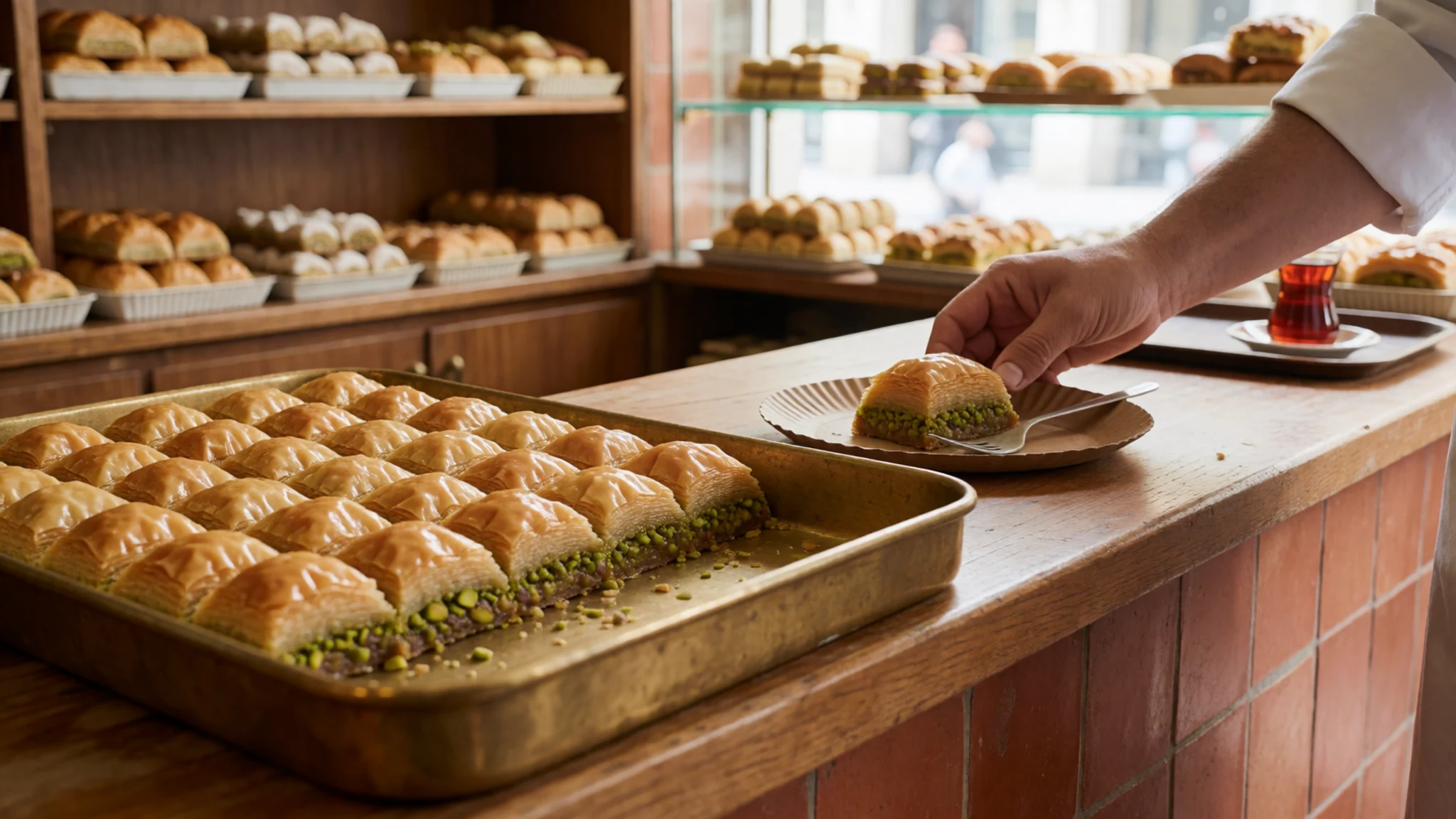
- Baklava — Dedicated baklava shops in central Gaziantep
Gaziantep is famous for pistachio baklava: thin layers of pastry, crushed green pistachios and syrup, cut in diamonds. It is sweet, rich and best with strong tea or Turkish coffee to cut through it.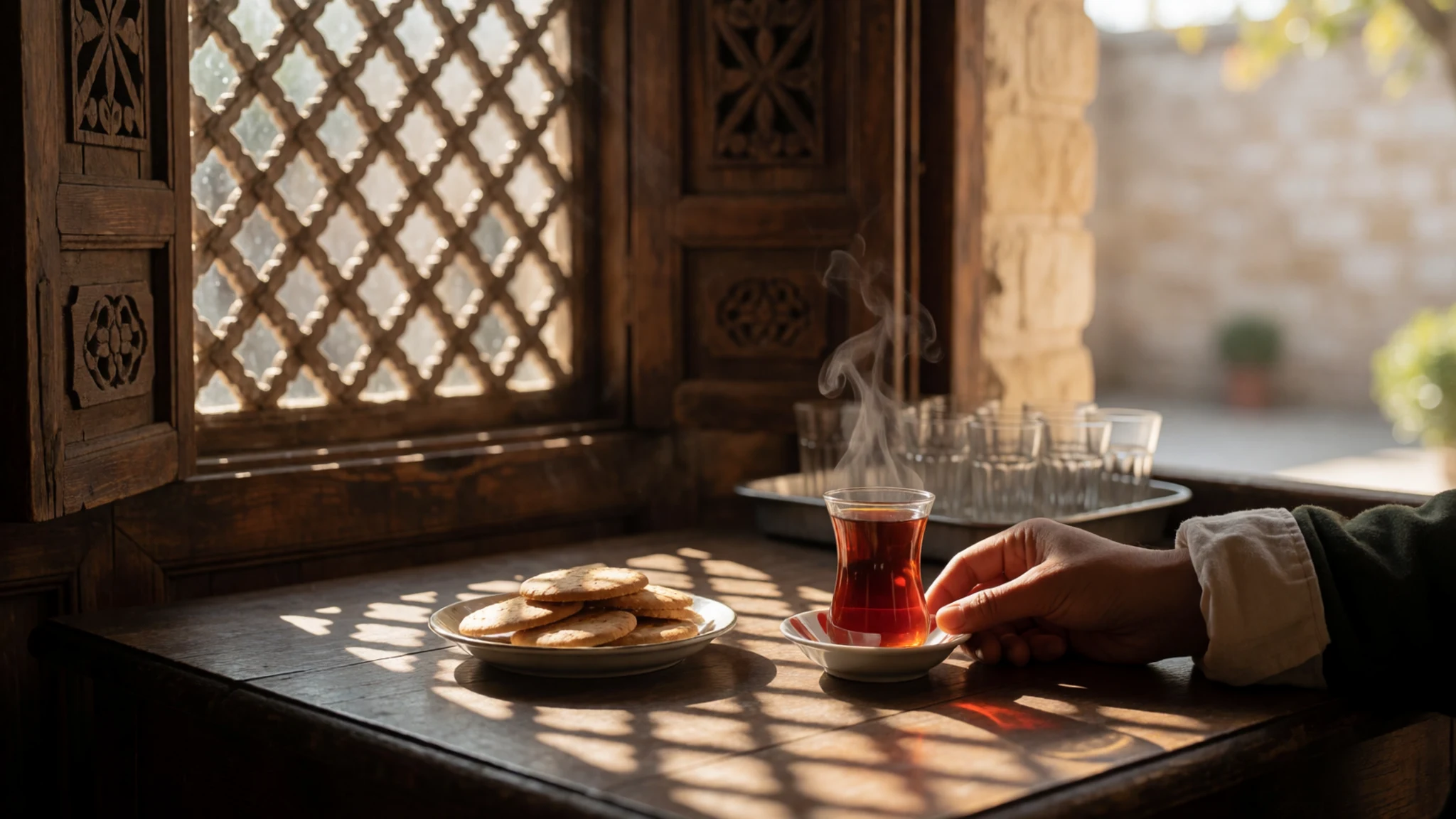
- Kebab and kofte — Kebab restaurants and market eateries in Gaziantep and Karkamış
Grilled minced meat on skewers, often with pepper, onion and flatbread. In this region the meat is typically lamb, and the seasoning leans towards red pepper and sumac. Ask what is freshly cooked.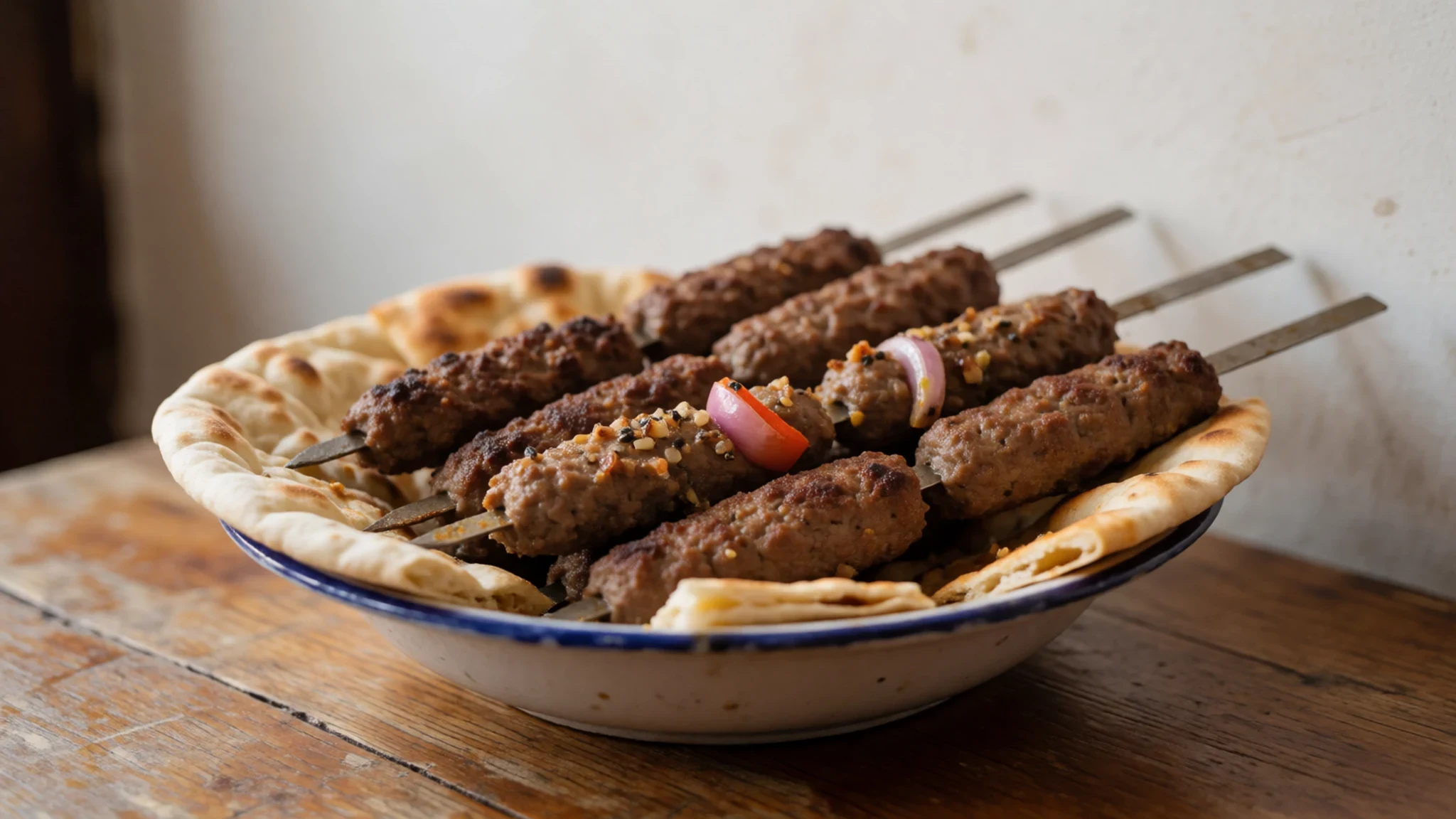
- Yuvarlama — Traditional eateries in Gaziantep
A comforting local soup of small chickpea-and-rice dumplings in a yoghurt or tomato broth. It is a home-style dish, warming in cooler months, and not always on menus, so ask local cooks.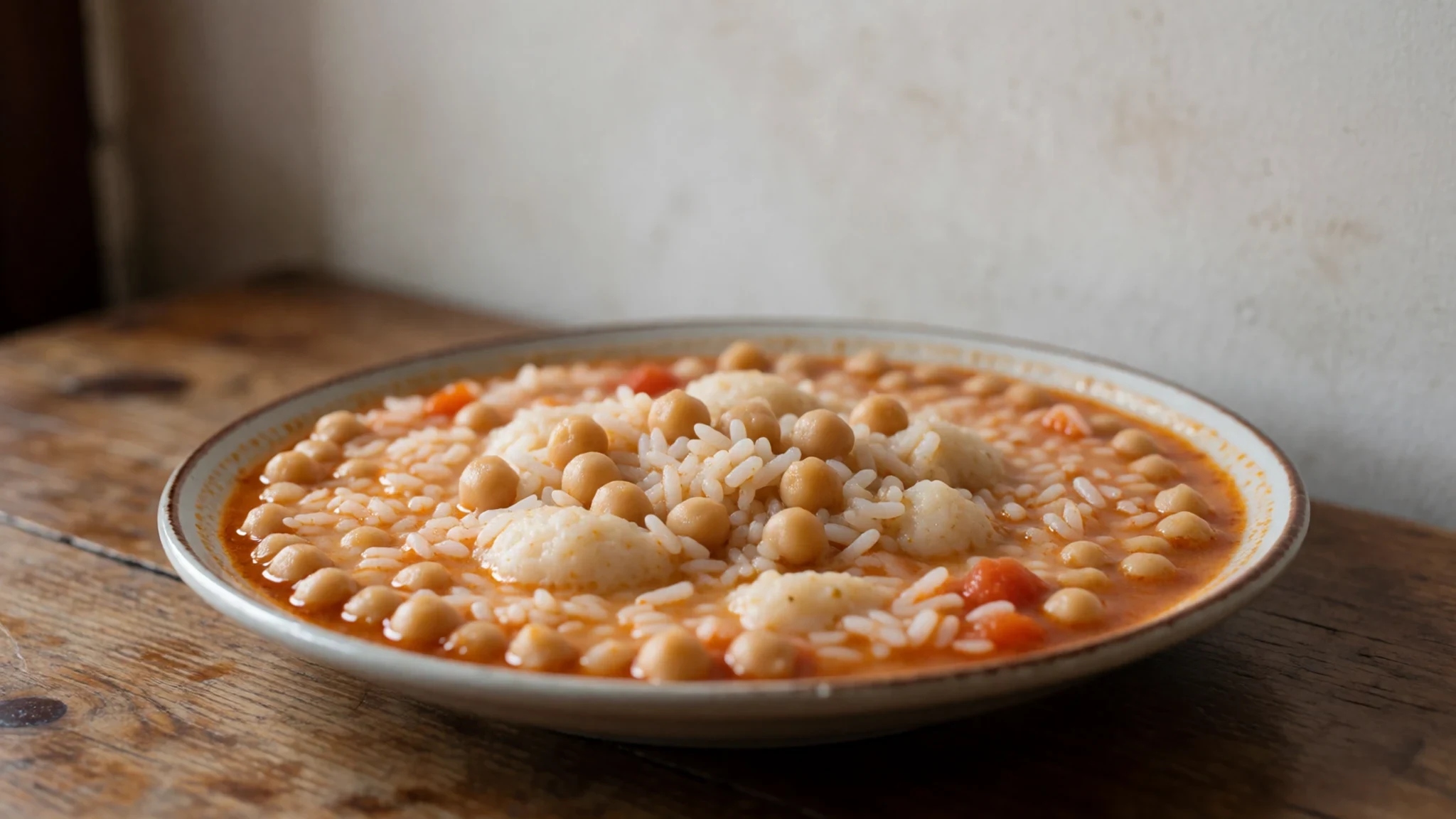
- Menemen and village breakfast — Breakfast cafes and small eateries in Gaziantep
A typical morning spread includes eggs scrambled with tomato and pepper, olives, white cheese, honey, bread and plenty of tea. It is a leisurely meal and good fuel before a day of travel.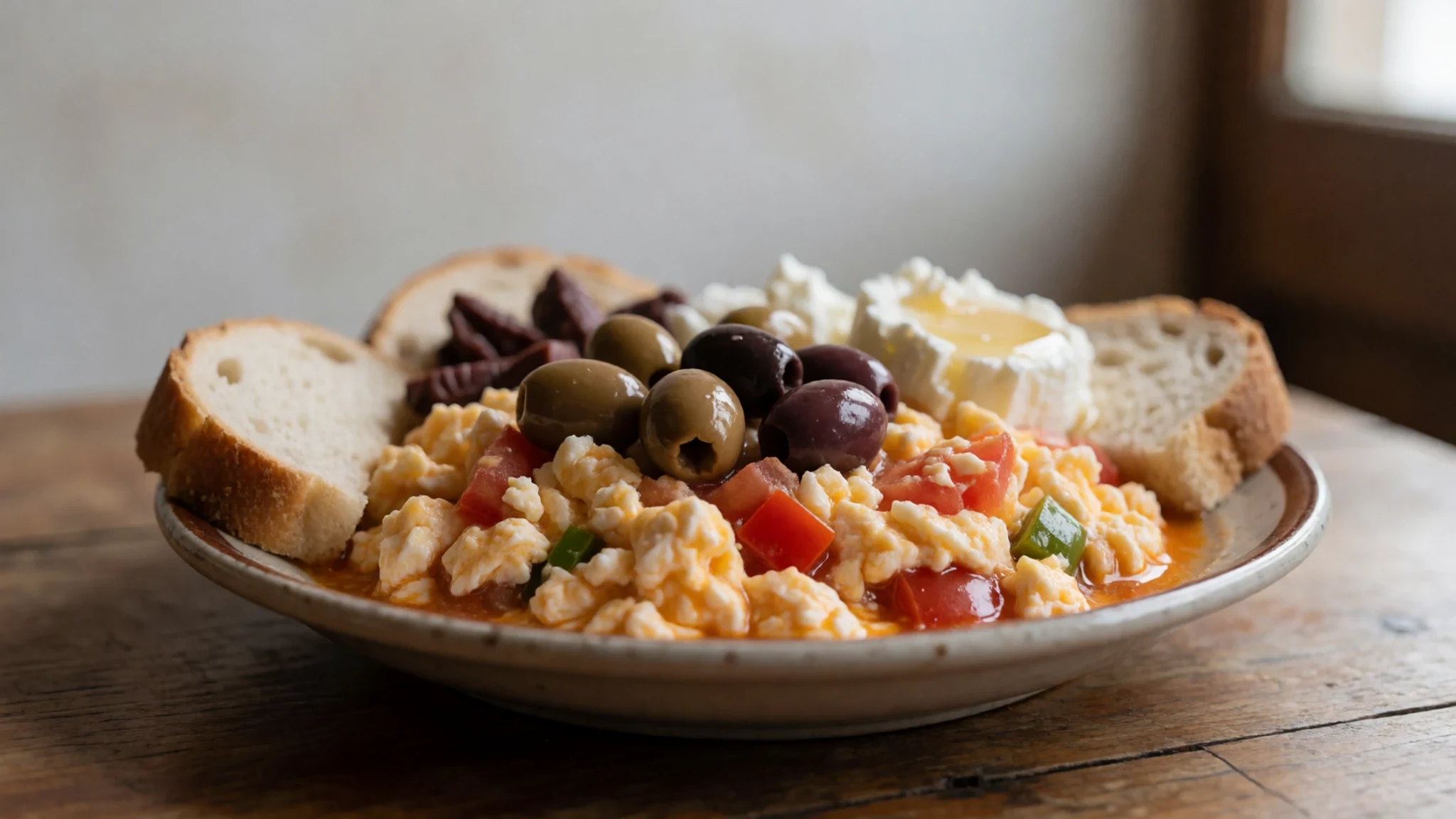
Plan it
Best time. April–May and October–November, when days are warm rather than fierce. July and August on the Euphrates plain are very hot, and winter can be cold and wet.
How long. 1
Getting there. The usual base is Gaziantep, which has an airport with flights from Istanbul and other Turkish cities. From Gaziantep, Karkamış is a road journey of about an hour or so by car or bus. Rail services to Karkamış have not run since 2011.
Budget. mid
Tips
- Check current travel advice before any plan, as the Syrian border is sensitive and access can change without notice
- Ask the Turkish authorities or a local guide about permission to enter the site, since part of it is a military zone
- Visit the Gaziantep Archaeology Museum first, where many Carchemish carvings can be seen safely and up close
- Carry ID, water and sun protection, and keep some cash for small towns
- Check the museum's official site for opening hours, as they vary
Etiquette
- Do not photograph soldiers, checkpoints or military installations
- Dress modestly in small towns and keep voices low near the border
- Ask before photographing people
Nearby
Sources
- Wikidata Q283680 (CC0)
- Wikipedia: Carchemish (rev 1382456345) (CC BY-SA 4.0)
- Wikivoyage: Carchemish (rev 5285786) (CC BY-SA 4.0)
- Photo: War chariot, Museum of Anatolian Civilisations (JoJan) (CC BY-SA 2.5)
- Photo: T. E. Lawrence and L. Woolley at Carchemish, 1913 (Public domain)
- Photo: Lion head of Katuwas statue (Rama) (CC BY-SA 3.0 fr)
- Photo: Relief of Yariri and Kamani (Hajo-Muc) (CC BY-SA 4.0)
- Photo: Ancient Near Eastern Collection, MFA Boston (Marcus Cyron) (CC BY-SA 4.0)
- Photo: Carchemish orthostats, Gaziantep museum (Dosseman) (CC BY-SA 4.0)
- Photo: Terracotta octagon of Tiglath-pileser I (Osama Shukir Muhammed Amin) (CC BY-SA 4.0)
- Photo: Terracotta octagon of the Assyrian king Tiglath-pileser I (Osama Shukir Muhammed Amin) (CC BY-SA 4.0)


