Bosra
Bosra, Syria
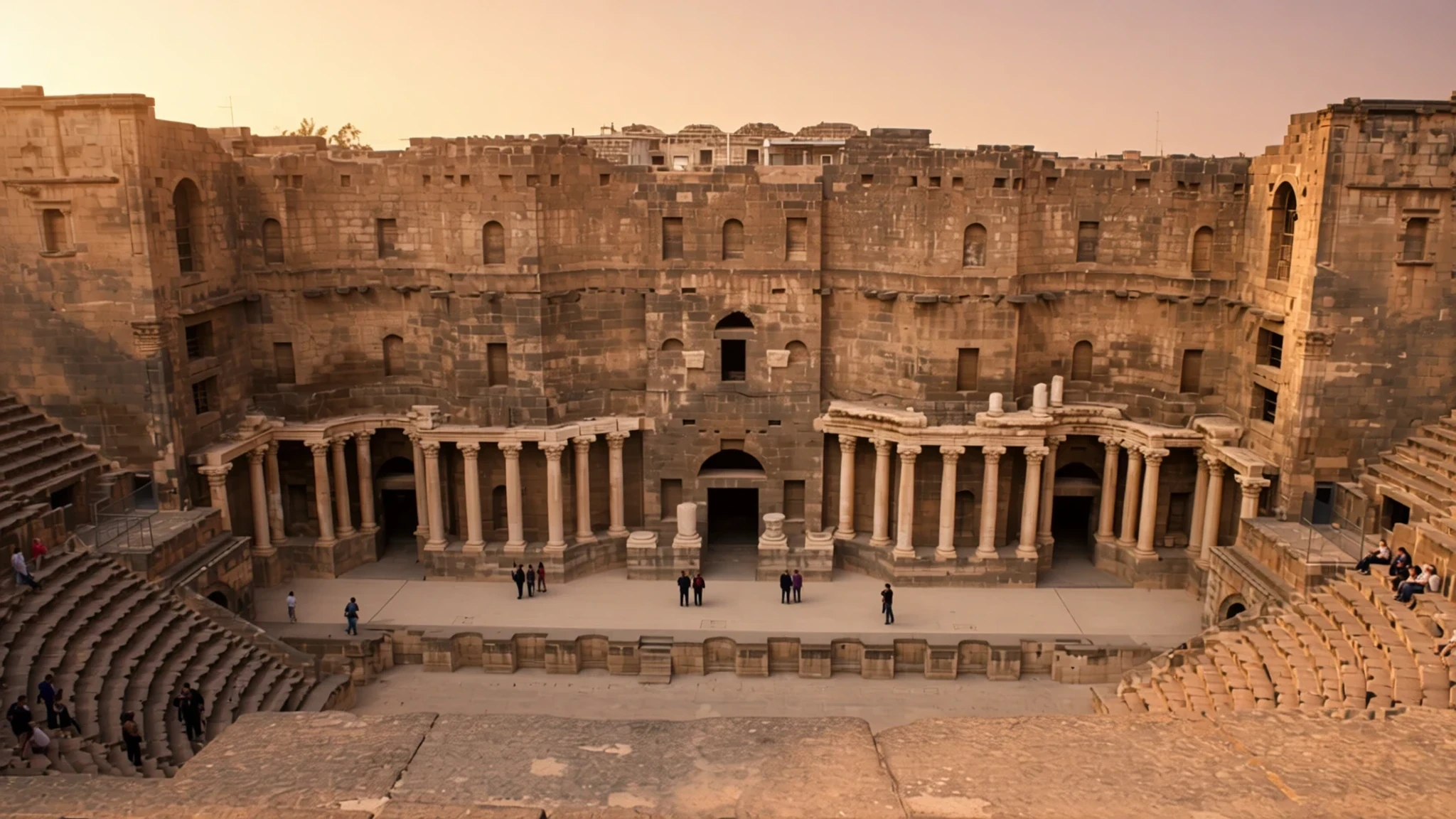
Bosra is a Nabataean and Roman city in southern Syria, with a theatre still standing inside its walls and a quiet, dusty old town.
The place
Bosra sits on the Hauran plain in the Daraa Governorate of southern Syria, a region of farmland and old stone villages. The official name is Busra al-Sham, though most people use the shorter form. The town lies at about 850 metres above sea level, and its climate is cold and semi-arid: most of the rain falls in winter, summers are dry and hot, and the annual average temperature is around 16 °C. The modern town is small, with a population of 19,683 at the 2004 census, and most residents are Sunni Muslims. The real draw is the ancient city woven through the present-day streets. Roman-era masonry, Nabataean foundations and Ayyubid-era fortifications stand within a short walk of one another, so the place feels layered rather than staged. Much of the old town is still lived in, which means shopkeepers, children and the occasional goat share the lanes with visitors. The heritage has also suffered from the civil war, and Bosra has been on UNESCO's List of World Heritage in Danger since 2013, so conditions can change quickly. Foreign visitors are uncommon, and current government travel advice should be checked before any plans are made.
Its story
Bosra was already a Nabataean city in the second century BC, and it served as the northern capital of that desert kingdom, whose traders controlled the routes through the region. Rome brought the Nabataean state under its control in 106 AD, and the city was refounded as Nova Trajana Bostra under Trajan. It became the base of the legion Legio III Cyrenaica and the capital of the province of Arabia Petraea. Its position where several caravan and military roads met, including the Via Traiana Nova linking Damascus with the Red Sea, brought it wealth. Under Philip the Arab the city began striking its own coins, and two regional church councils met here in 246 and 247 AD. Talmudic writings describe a town on the border with a sizeable Jewish population and mention a synagogue there. In the Byzantine period, from the fifth century, Christianity became dominant, and a large cathedral was raised in the sixth century. Later Muslim rulers kept the town as the southern gateway to Syria, and it became a centre of learning and charitable endowments. The Ottoman era reduced it to a village. It revived only in the twentieth century, when the Hijaz railway reached it and archaeologists began studying the ruins in earnest. The Syrian government then developed the site for tourism. Since 2013 the site has been listed by UNESCO as in danger, because of the civil war.
What to see
- Roman Theatre — Old town, the theatre quarter
The Roman theatre is the town's centrepiece, built in the second half of the second century AD and still ringed by its defensive walls. Climb the tiers of the cavea for a view across the stage and the ruined town beyond. Wear sturdy shoes, because the stone steps are uneven and worn smooth in places. It is the best place to spend an unhurried hour early in the day.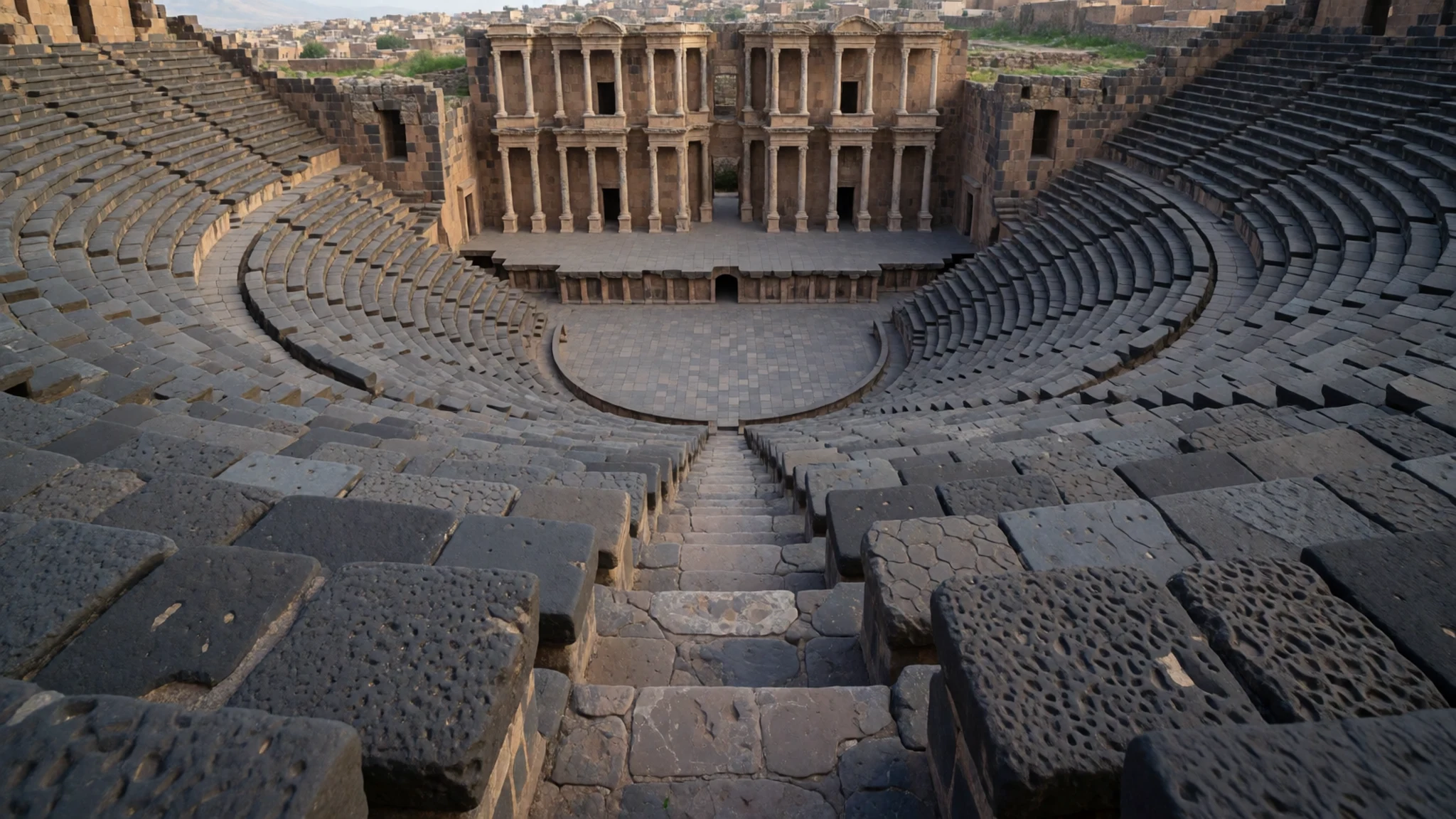
- East Gate (Nabataean Door) — Eastern side of the old town
The East Gate, sometimes called the Nabataean Door, is a stone entrance on the eastern side of the old town. Stand in front of it and compare its masonry with the Roman and Ayyubid work nearby. It is worth photographing from the east, where the gate sits in its own setting. It is quieter here than at the theatre, so it suits a slower walk.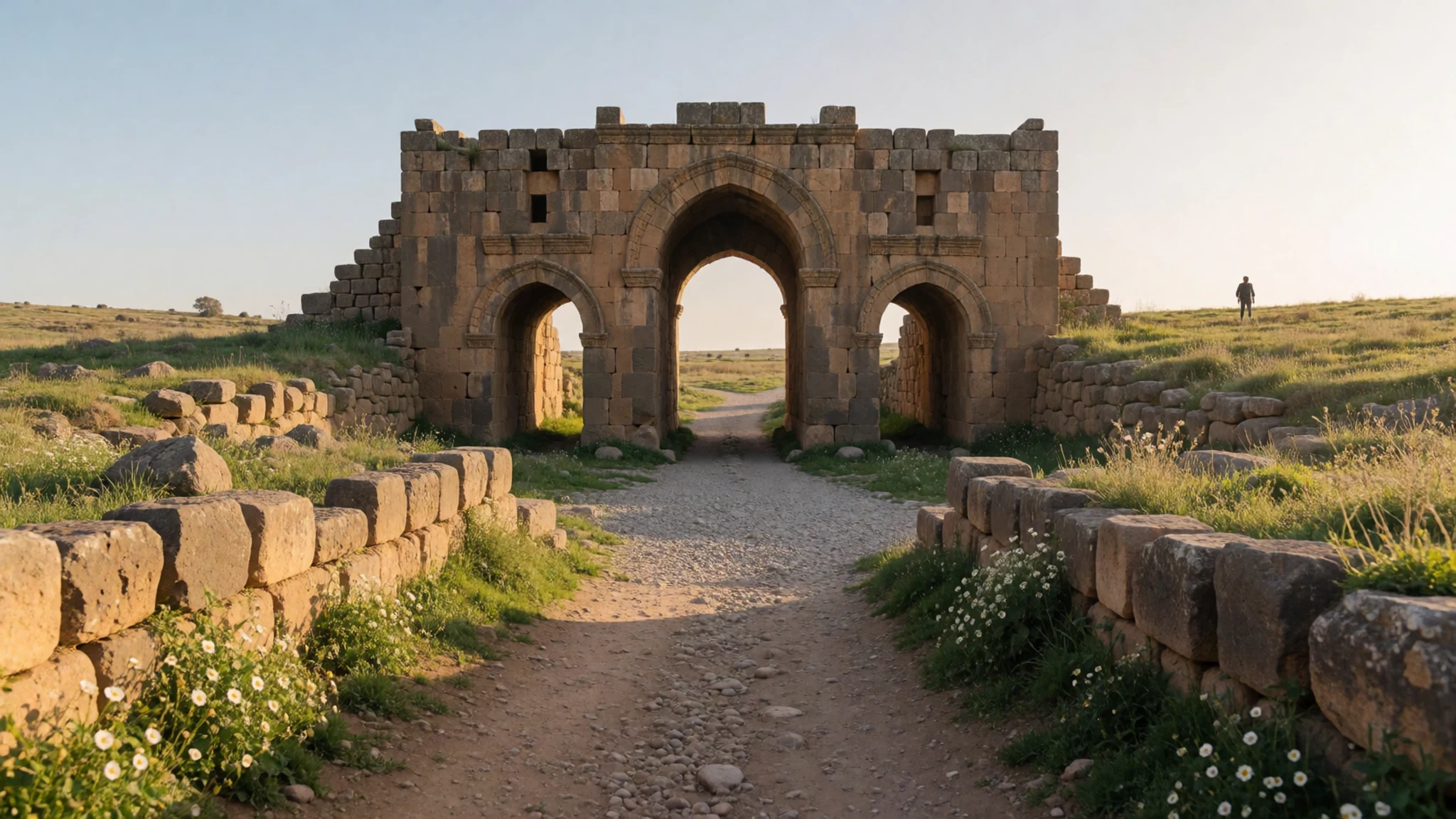
- Mosque of Umar (Al-Omari Mosque) — Old town, near the central streets
The Mosque of Umar, also known as Al-Omari, is named after the second caliph, Umar. It is one of the oldest surviving mosques in the town and still serves a local congregation. Visit outside prayer times, keep your voice low and dress modestly. Remove your shoes before entering the prayer hall, and ask the caretaker before taking photographs inside.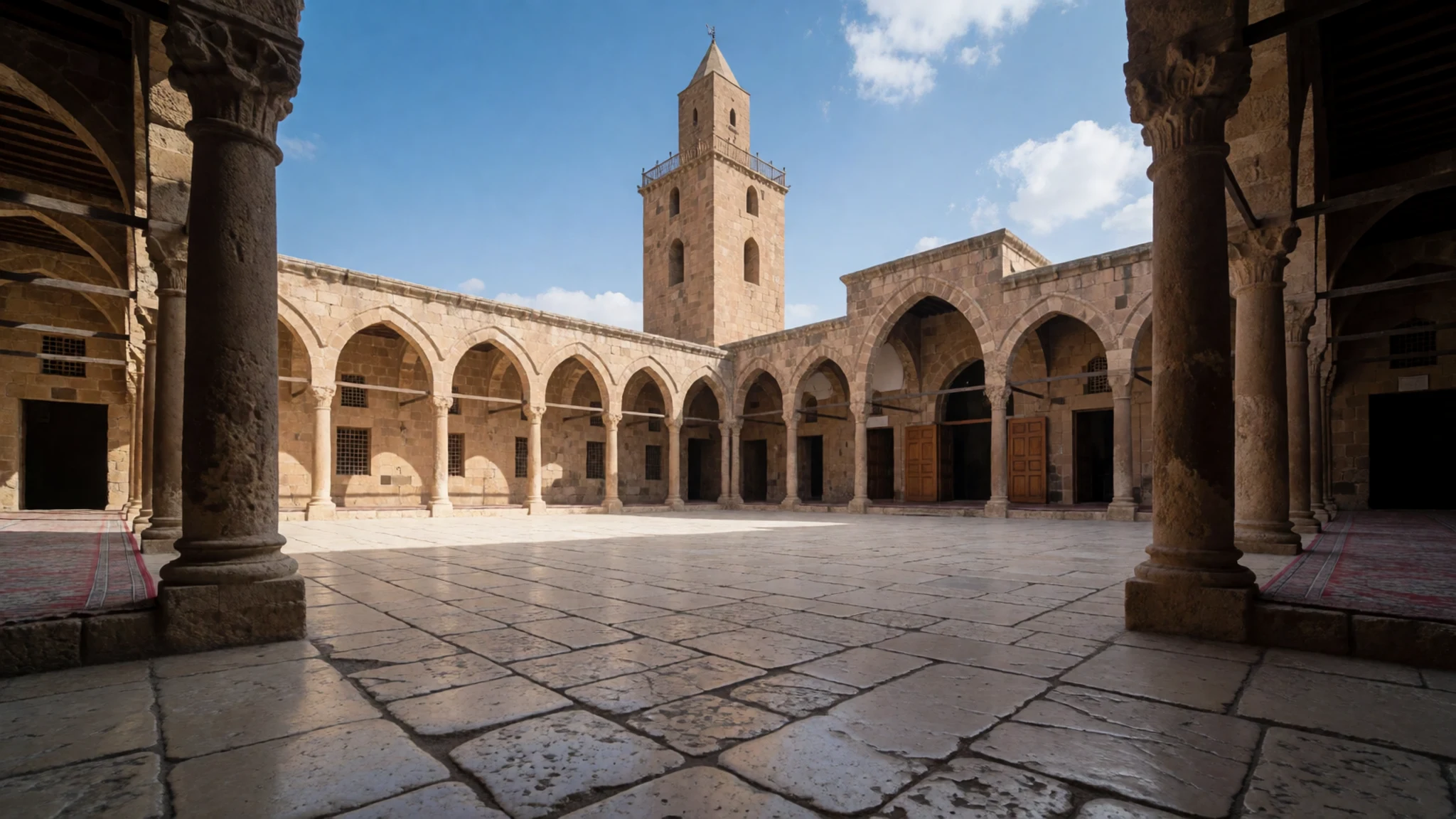
- Birket el-Haj cistern — Within the old town walls
The large rectangular cistern at Birket el-Haj was a Nabataean or Roman water store that was later restored in Ayyubid times. Its scale is best appreciated by standing on the upper edge and looking down. The site is open to the sky, so carry water and a hat in warmer months. It makes a good stop between the theatre and the eastern gate.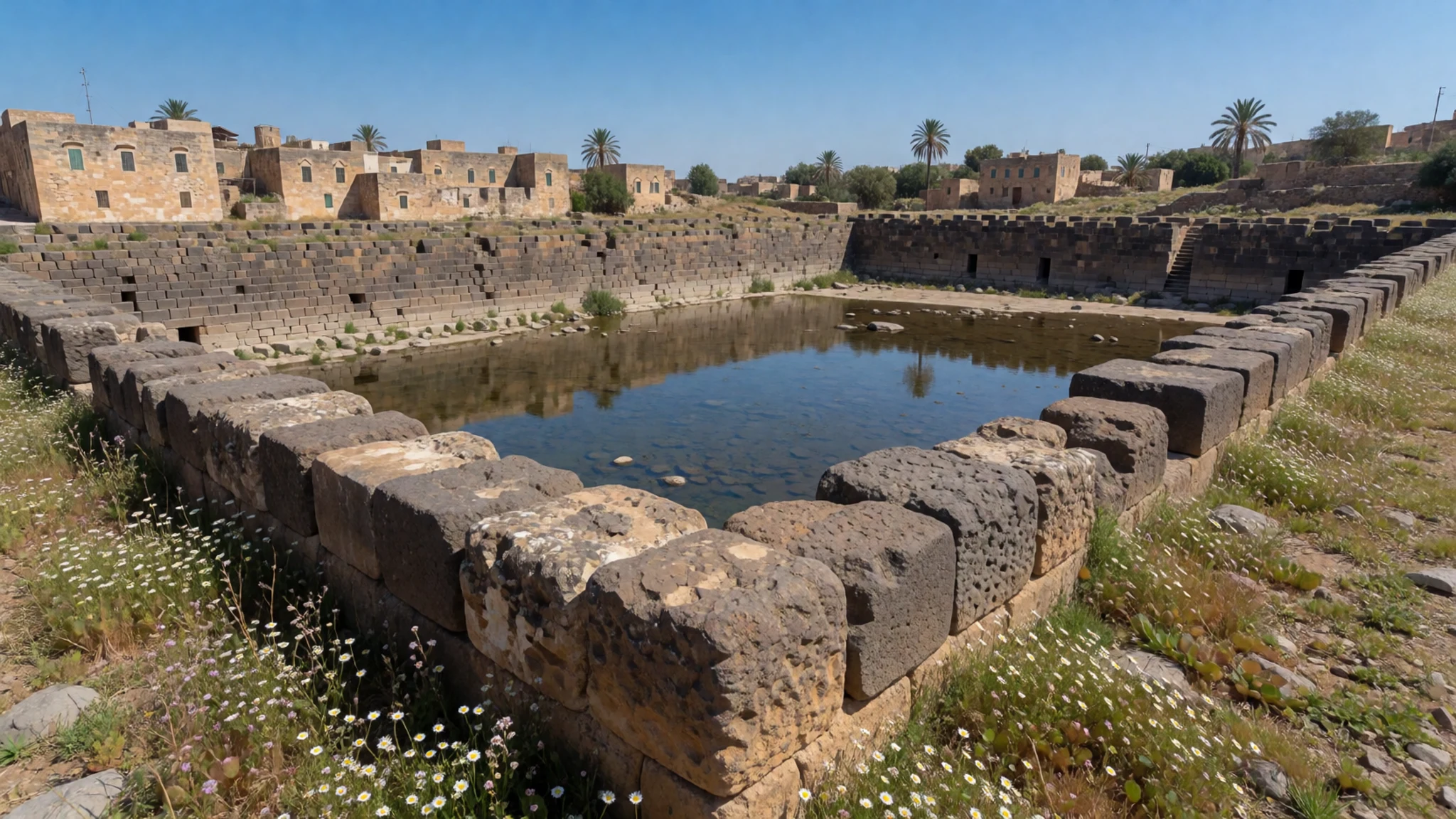
- Ayyubid walls by the theatre — Outer walls beside the theatre
The Ayyubid fortifications run alongside the theatre, with a wide street on one side and defensive walls on the other. Walking the outer walls gives a clear sense of how the medieval builders reused Roman stone. Keep to marked paths, because parts of the walls are unstable and damaged by the war. The walk is pleasant in the early morning, before the heat builds.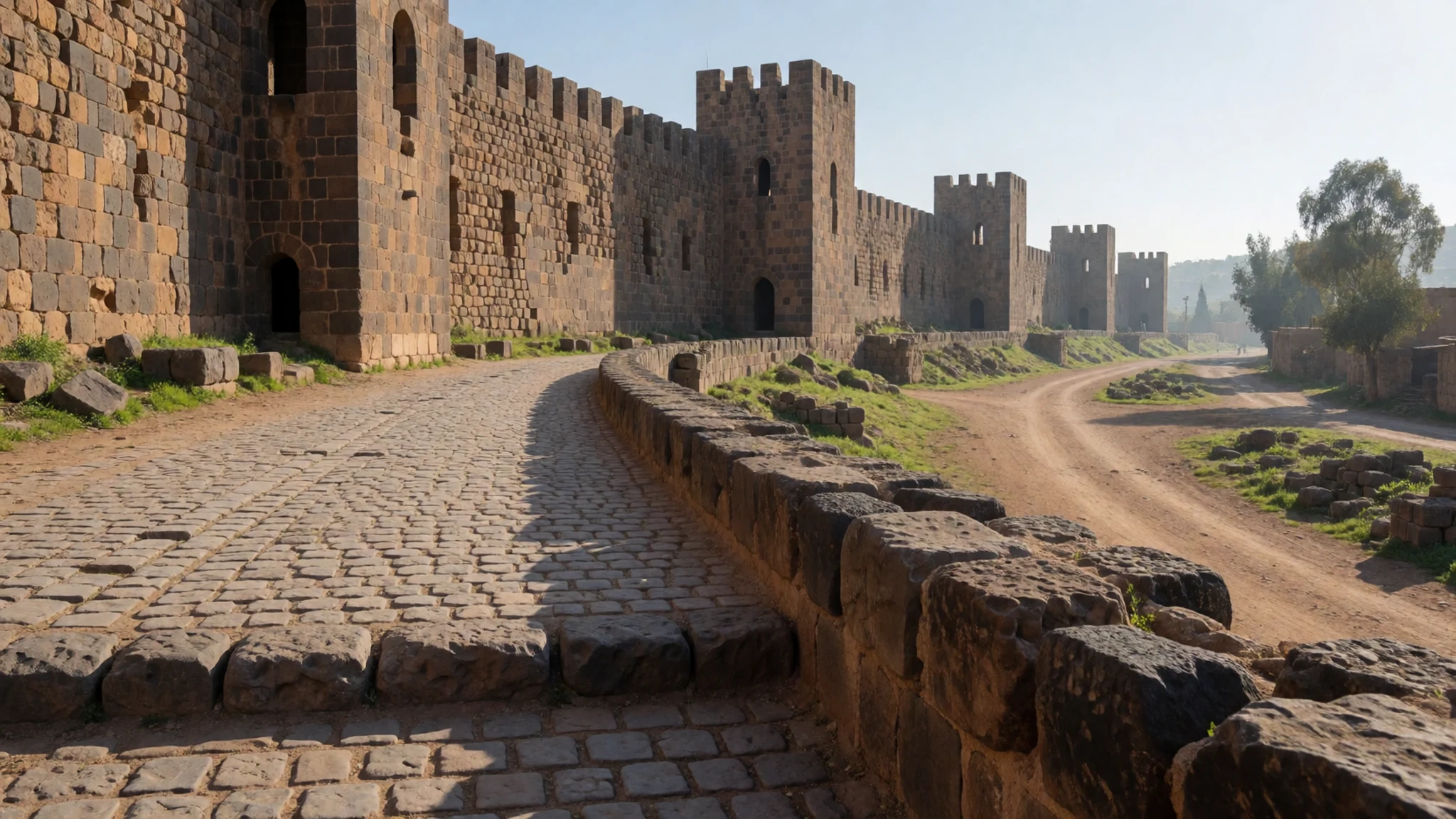
Culture
Bosra is a living town as well as an archaeological site, and most of its residents are Sunni Muslims. The mosques here are working places of prayer, and the call to prayer sets the rhythm of the day, so visits are best planned around prayer times. Christian history runs just as deep, because the Byzantine cathedral and later bishoprics made the town an important church centre. Jewish life is also part of the story, recorded in Talmudic sources. Visitors are still an unusual sight in the old lanes, so people may be curious rather than wary, and a greeting goes a long way. Hospitality is a strong value, and an invitation to tea is often sincere. Women will find it more comfortable to cover shoulders and knees in the lanes. The ruins are fragile after the civil war, so stay off unstable walls and keep to marked paths. Ask before photographing anyone in the lanes or at a shop counter, and take your shoes off before stepping onto the prayer carpets in a mosque.
What to wear
Traditional dress around Bosra is best learned from local people and craft shops, because published material on the Hauran villages is thin. In general, older rural clothing across southern Syria used long, loose garments, with embroidered cloth for headwear and celebrations, and cotton and wool as common materials. Bosra's residents dress much as people do in other Syrian towns. Modern clothing is common, while longer sleeves and skirts or trousers are more typical in the older streets and near the mosques. Visitors should dress modestly for the town as a whole. A lightweight long-sleeved shirt and loose trousers keep off the sun on the open ruins, and a scarf is useful for women entering mosques. In spring and autumn, layers make sense because evenings can be cool. Choose closed, flat shoes with good grip, since the theatre steps and the old lanes are uneven.
What to eat
- Flatbread (khubz) — Any neighbourhood bakery in the old town
Thin, soft flatbread is baked in the bakeries of most Syrian towns and is torn to scoop up everything else on the table. Buying it warm from a bakery in the morning is the simplest way to start a day of walking. It is cheap, filling and eaten with almost every meal.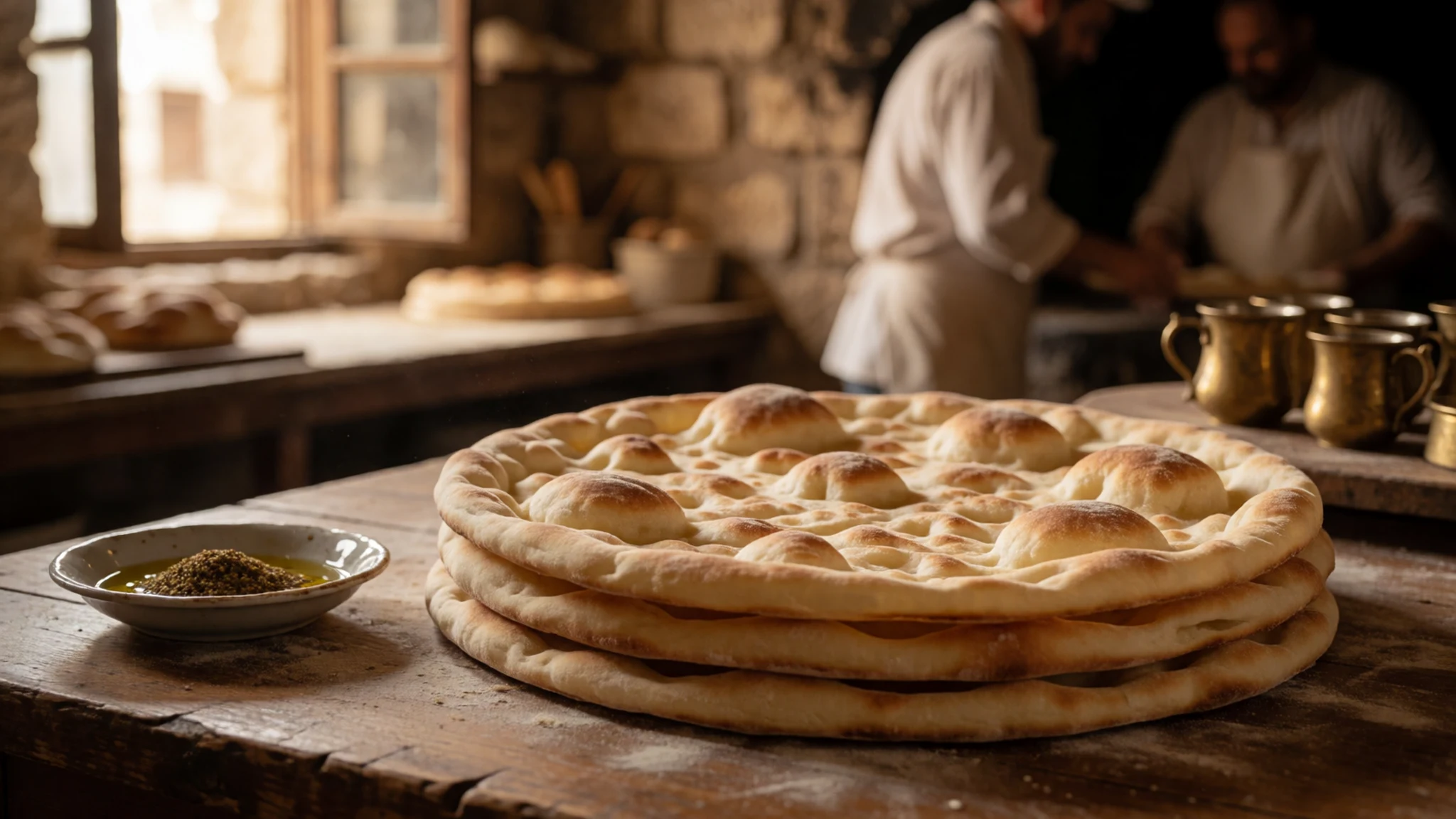
- Hummus and fresh salads — Small family eateries on the main streets
Chickpea hummus, often topped with olive oil and a little paprika, is served as a starter with bread and fresh chopped salad. Simple eateries near the central streets are the easiest places to find it. Order a plate to share, as it is designed for the whole table.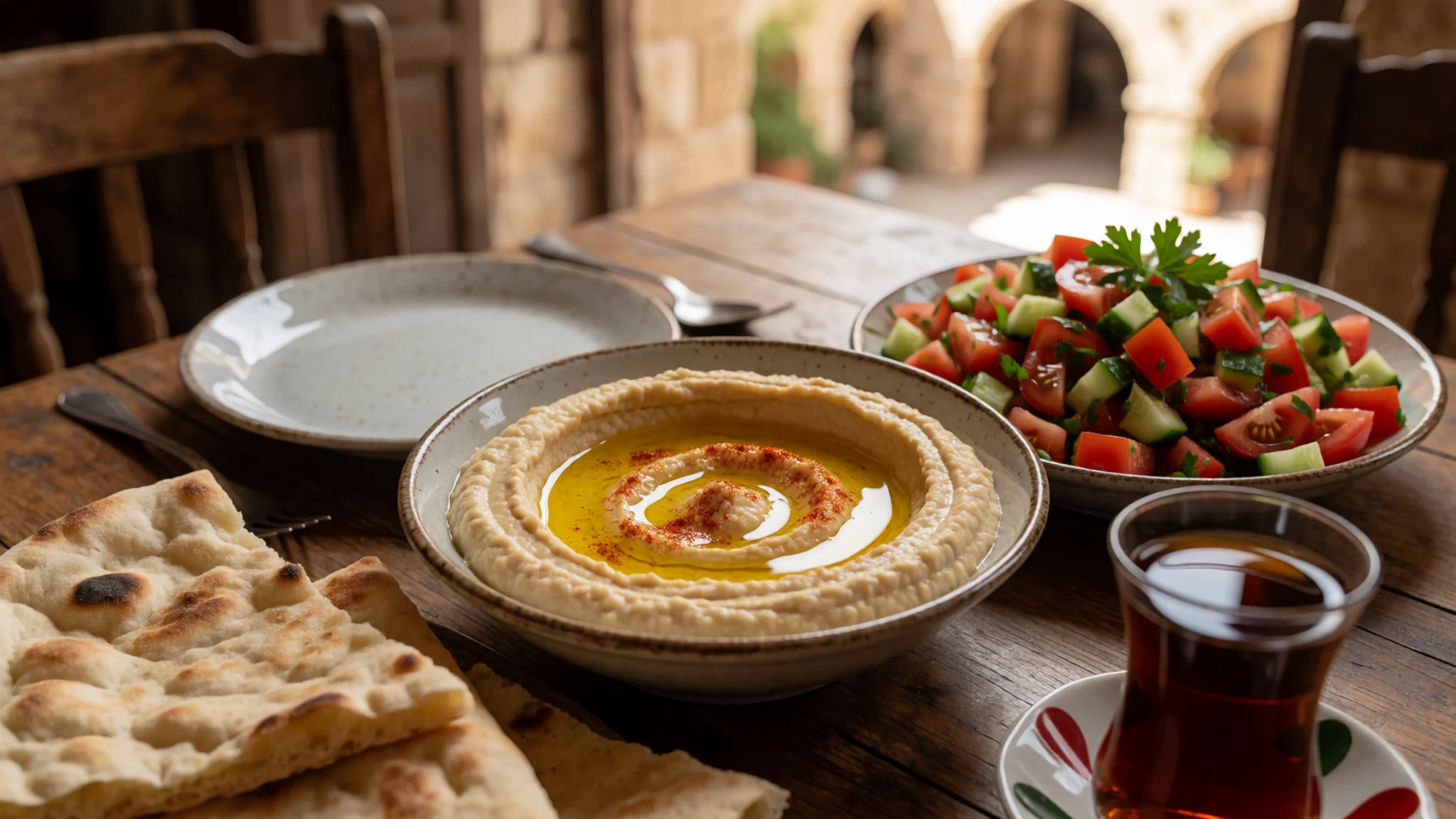
- Kibbeh — Lunchtime eateries near the market
Kibbeh is a dish of finely ground bulgur wheat and meat, shaped and fried or baked. It is widely served across the Levant and is a good midday choice after a morning among the ruins. Look for it at lunchtime eateries, where it is often sold fresh. - Grilled meat skewers — Street stalls near the bus stops
Skewered and grilled chicken or lamb, served with bread and garlic sauce, is a staple of roadside stalls across southern Syria. These stalls are cheap and quick, and they work well for a late lunch between sights. Eat them while they are hot, straight from the grill. - Sweet pastries — Sweet shops near the central square
Layered pastries soaked in syrup and nuts are sold in small sweet shops across Syrian towns. A box from a shop near the square makes a good gift to take back to a guesthouse. Eat them in the afternoon, when a sugary pause suits the midday heat.
Plan it
Best time. April and May, and October and November, are the most comfortable months, with mild days and little rain. Winter is cold and wetter, and summer is dry and hot, so midday sun on the open stone can be tough. The climate is cold semi-arid, averaging around 16 °C across the year.
How long. 1–2
Getting there. Fly into Damascus, then take a road transfer south to Bosra as the last leg. Check the current state of the road and your travel insurance before committing to the journey.
Budget. low
Tips
- Check current government travel advice and insurance before booking anything
- Carry cash in Syrian pounds, because cards are unreliable in small towns
- Visit the theatre early, before the midday heat builds on the open ruins
- Bring water and a hat, as there is little shade among the stone
- Arrange a local guide or a driver through a reputable contact in advance
Etiquette
- Dress modestly in the town and cover shoulders and knees in the lanes
- Ask before photographing people in the streets and shops
- Keep to marked paths and avoid climbing on damaged walls
Nearby
Sources
- Wikidata Q272680 (CC0)
- Wikipedia: Bosra (rev 1382565783) (CC BY-SA 4.0)
- Wikivoyage: Bosra (rev 5239003) (CC BY-SA 4.0)
- Photo: Walls of the Roman theatre, Vyacheslav Argenberg (CC BY 4.0)
- Photo: Bosra Central Square, upyernoz (CC BY 2.5)
- Photo: East or Nabatean Gate 0752, Dosseman (CC BY-SA 4.0)
- Photo: Mosque of Umar 0706, Dosseman (CC BY-SA 4.0)
- Photo: Ayyubid fortifications at theatre 0504, Dosseman (CC BY-SA 4.0)
- Photo: Cistern Birket el-Haj 0771, Dosseman (CC BY-SA 4.0)
- Photo: Theatre cavea 0675, Dosseman (CC BY-SA 4.0)
- Photo: East or Nabatean Gate 0767, Dosseman (CC BY-SA 4.0)


