Palmyra
Palmyra, Syria
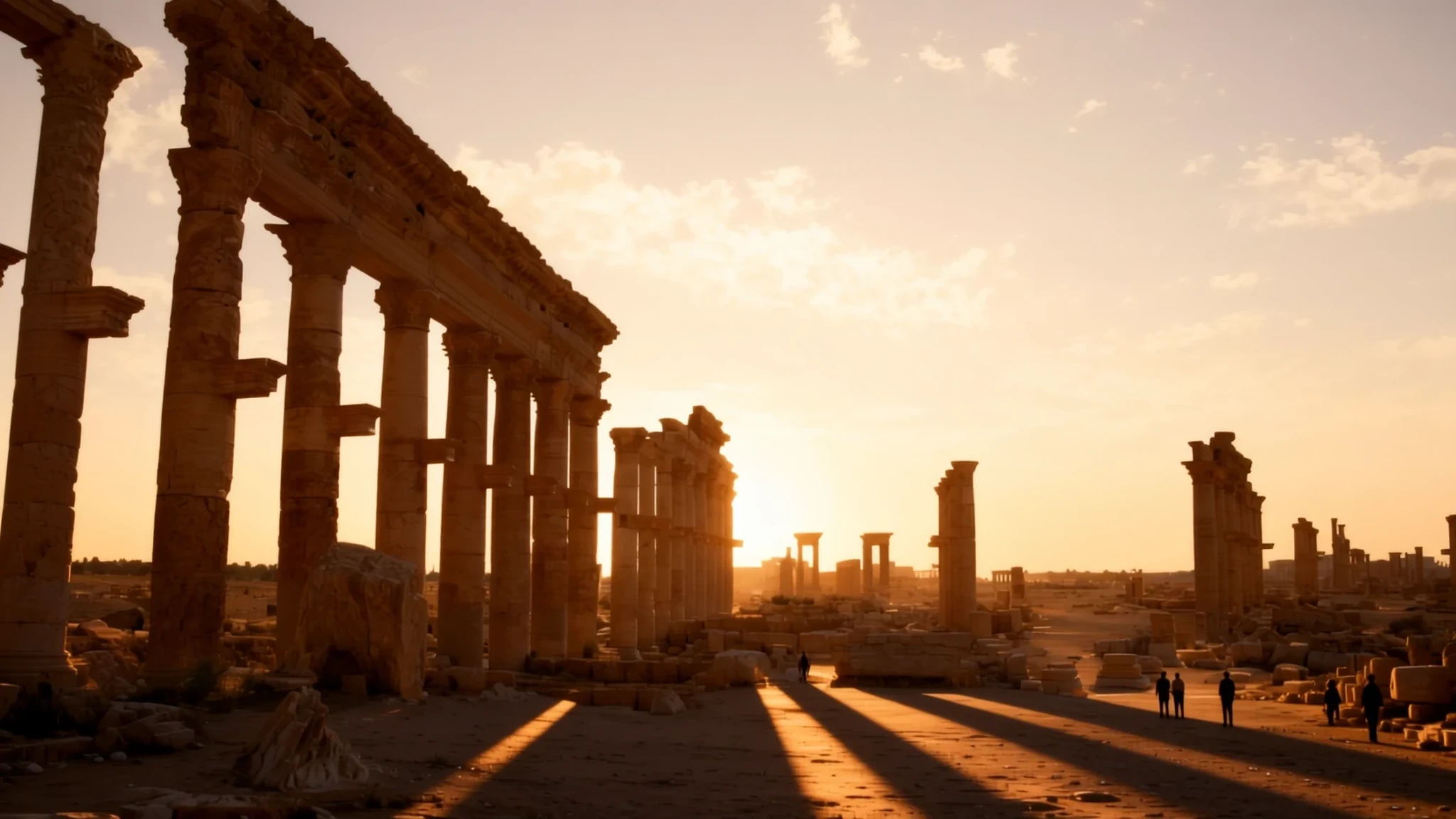
Walk among monumental stone columns and ancient desert tombs where caravan routes once shaped the wealth of a legendary Syrian crossroads.
The place
Palmyra stands in the central Syrian desert, an ancient oasis settlement whose position in the eastern Levant turned it into a legendary nexus for desert trade. Long before classical colonnades rose from the sand, human groups gathered here around natural water sources such as the Efqa Spring. Archaeological traces reveal continuous habitation from early prehistoric periods, laying the groundwork for an enduring settlement known locally as Tadmor. By turning its geography into an advantage, the city evolved into a bustling waypoint for caravans carrying goods across West Asia.
The population of Palmyra grew uniquely diverse, blending Amorite, Aramean, and Arab heritages into a distinct regional identity. Merchants established trade outposts across distant territories, generating immense fortunes that funded ambitious civic architecture. The urban landscape flourished with long stone avenues, grand places of worship, and ornate multi-storey tower tombs designed to house elite families. Culturally, the community absorbed Hellenistic artistic influences while maintaining deep ties to local Semitic and Mesopotamian traditions. Citizens communicated in Palmyrene Aramaic for daily life while adopting Koine Greek for commerce and treaties, creating a cosmopolitan society on the edge of the desert. Although regional empires repeatedly vied for control over its trade routes, the city maintained its autonomy and prosperity through sheer commercial resilience, ultimately leaving behind an archaeological landscape that merges desert austerity with monumental classical splendour.
Its story
The historical record of Palmyra stretches back across millennia, anchored by perennial water sources that made desert survival possible. Early hunter-gatherers and settled communities left behind flint tools, primitive dwellings, and earthen mounds near local springs. Excavations beneath major religious sites have revealed ancient mud-brick structures pointing to continuous habitation cycles during early eras of human expansion.
Written references emerge in early texts from regional archives, where the settlement is recorded as a crucial stop for nomadic tribes and commercial pack trains. Early rulers and neighbouring regional kingdoms frequently campaigned across the surrounding arid plains to secure control over lucrative trade pathways. As centuries progressed, the community navigated shifting political tides involving major imperial powers to the west and east. Its trajectory shifted dramatically when it was integrated into the Roman administrative orbit, initiating an era of extraordinary prosperity. Wealth poured in from protected trade monopolies, enabling local rulers to finance grand public works. The peak of this political trajectory arrived when local leadership successfully challenged rival empires in fierce military campaigns, temporarily shifting the balance of power across the region before imperial counter-offensives altered its destiny forever.
What to see
- Great Colonnade at Palmyra
A monumental stone avenue stretching through the archaeological zone, featuring towering columns, intricate brackets once used for statues, and striking desert vistas framed by ancient masonry.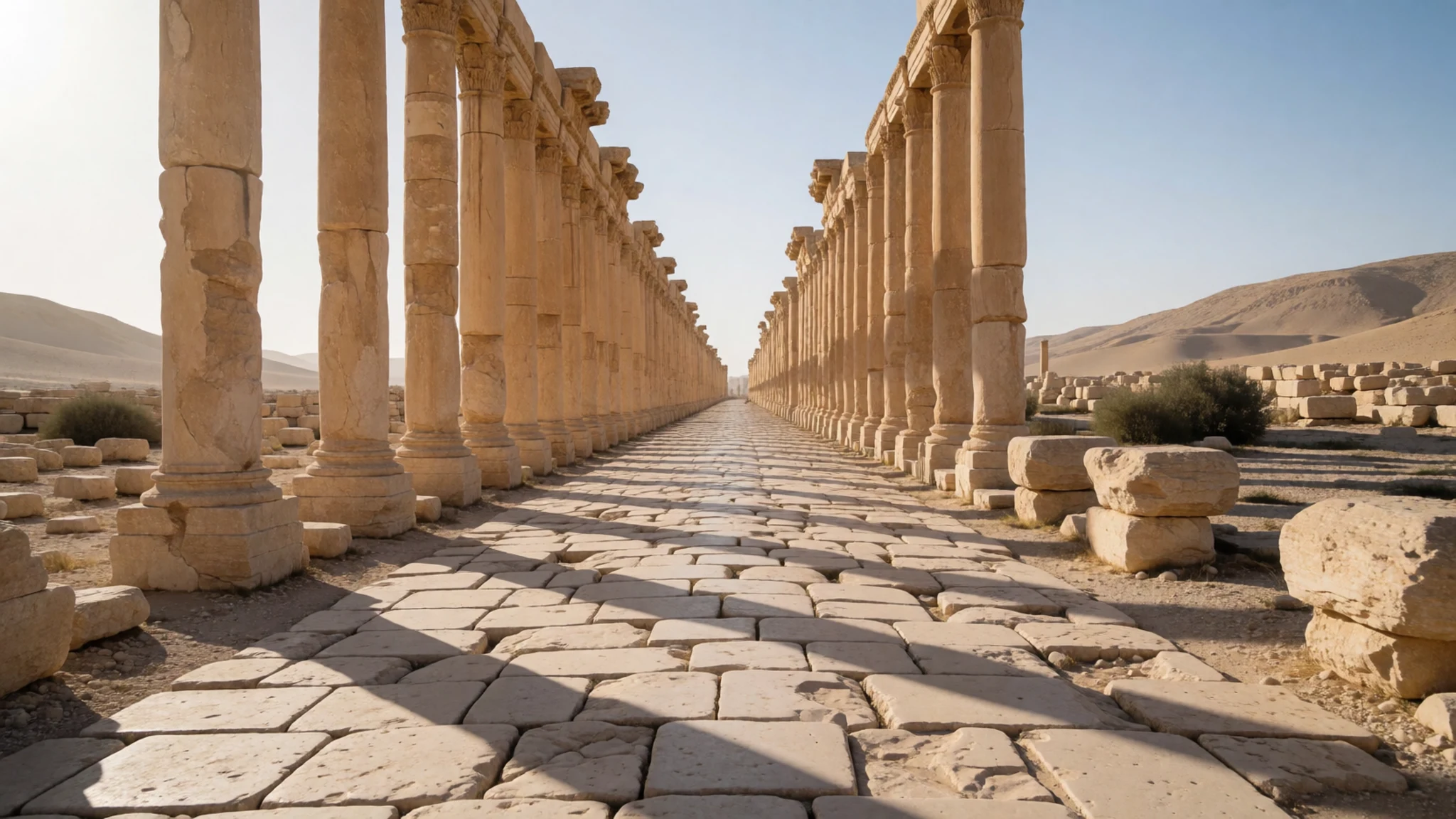
- Temple of Bel
A magnificent ancient sanctuary founded in the early first century AD and dedicated to the chief deity. Severely impacted by modern conflict, the sanctuary was destroyed in 2015, including its massive outer enclosure walls and monumental gateway.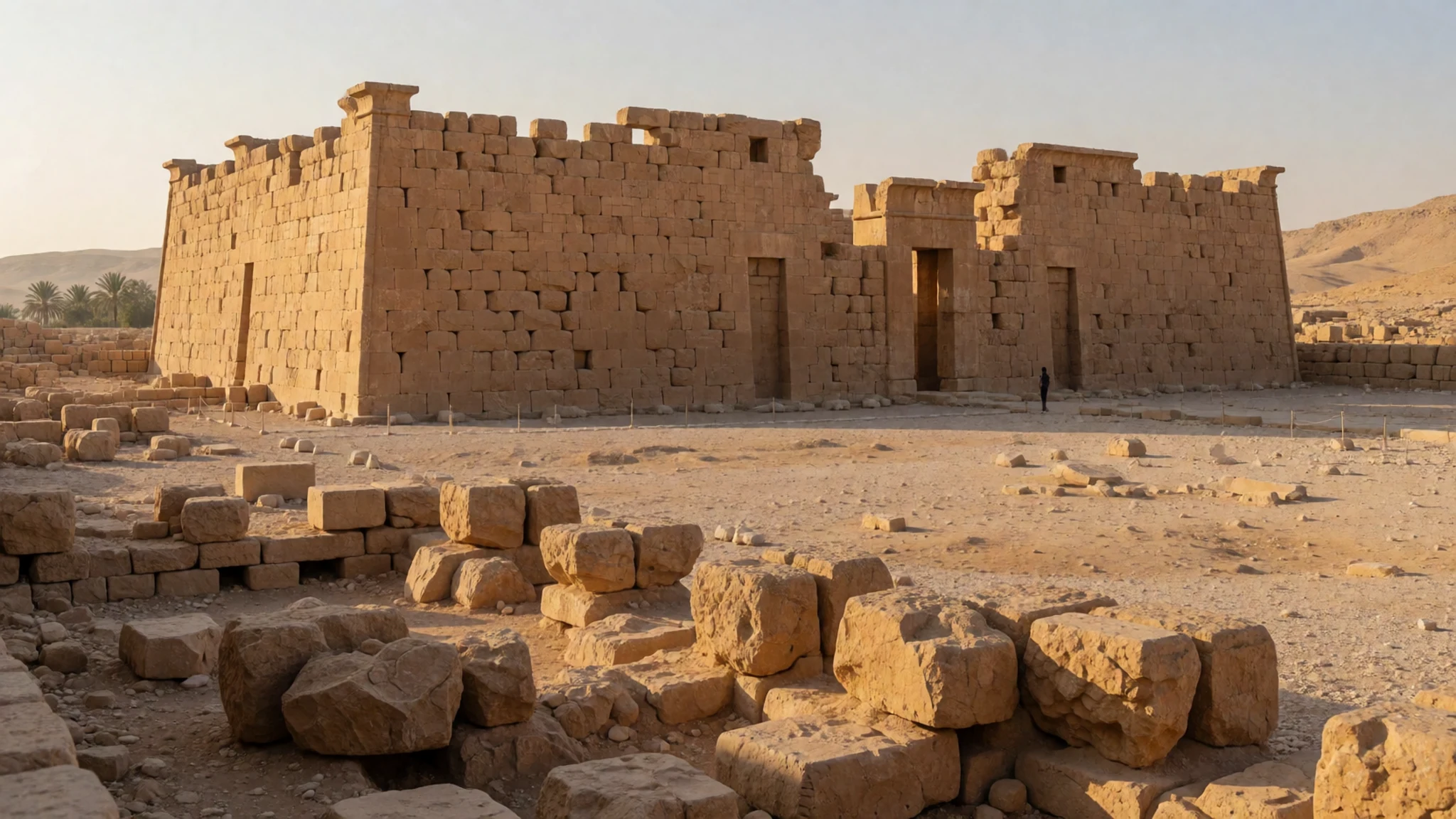
- Palmyra Castle
A commanding fortress constructed by the Mamluks upon a high rocky hill overlooking the ruins and surrounding desert expanses. Despite sustaining damage during recent conflicts, the defensive stone structure retains its formidable silhouette.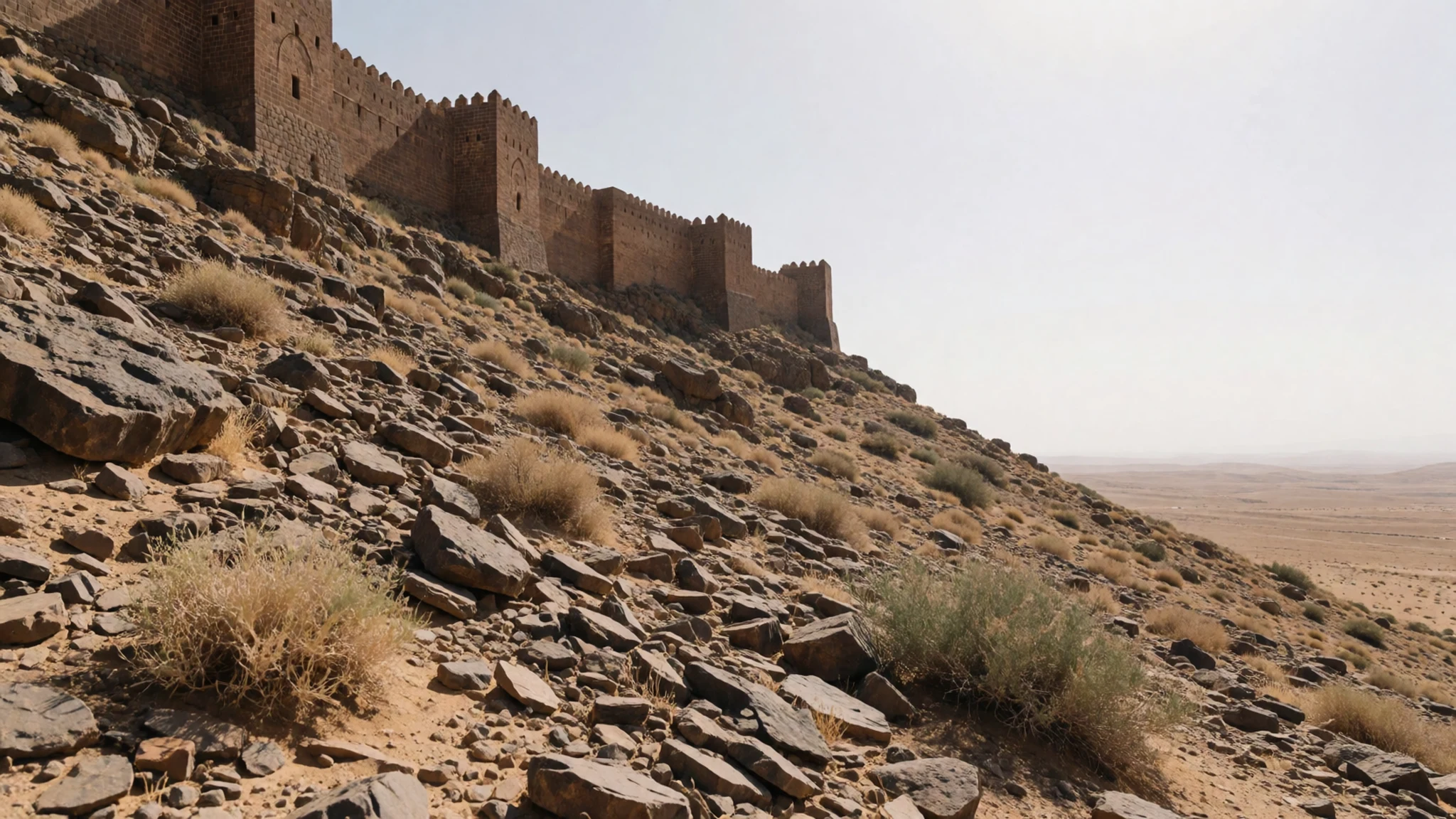
- Roman Theatre at Palmyra
An ancient performance venue featuring a semicircular seating tier facing a broad stage wall, set against the wider backdrop of the desert hills and the grand architectural thoroughfares.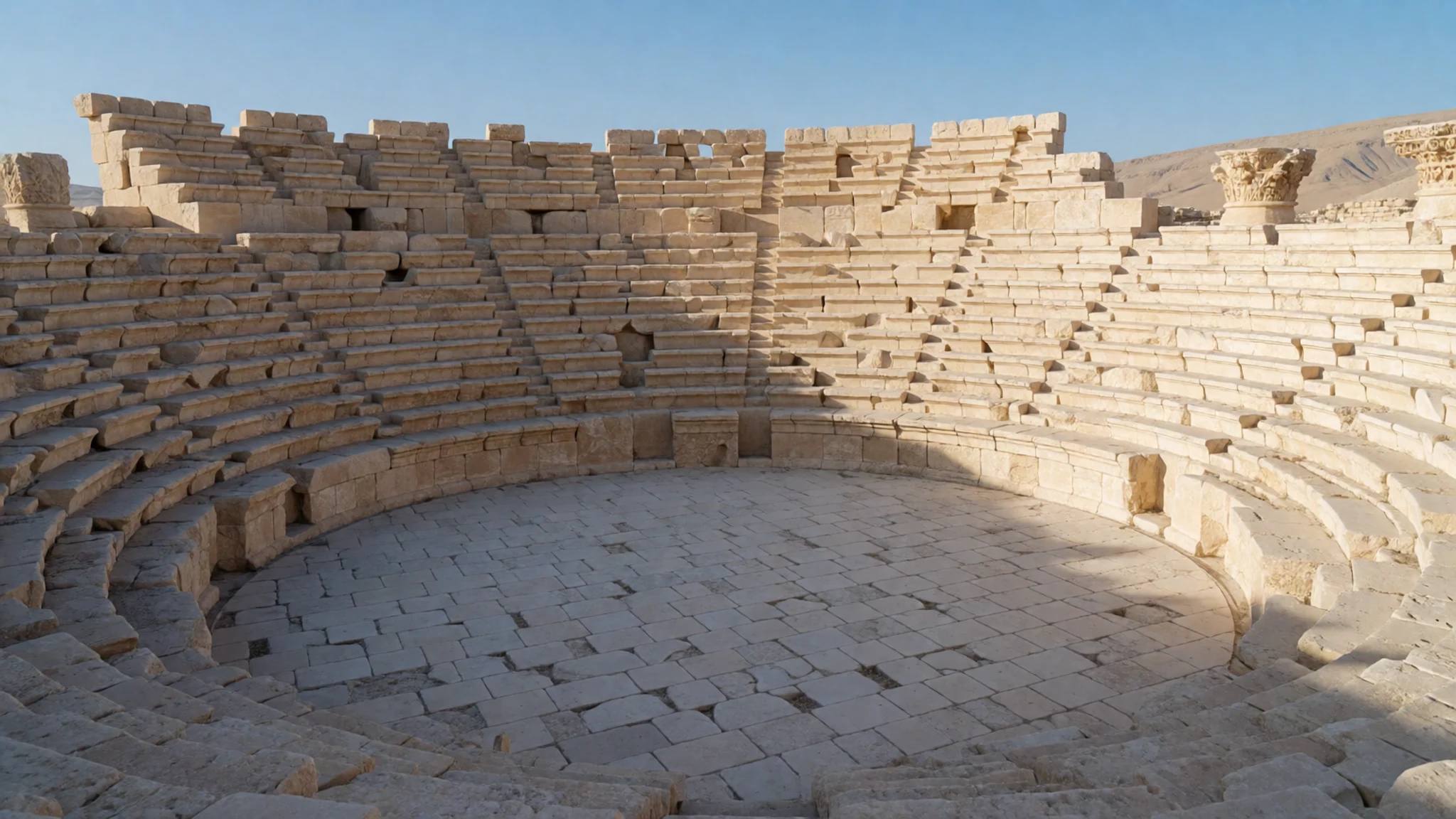
- Funerary Towers
Distinctive multi-storey stone monuments rising across the desert valleys outside the urban centre. These elaborate burial structures housed generations of wealthy families within intricately carved interior chambers and multi-layered loculi.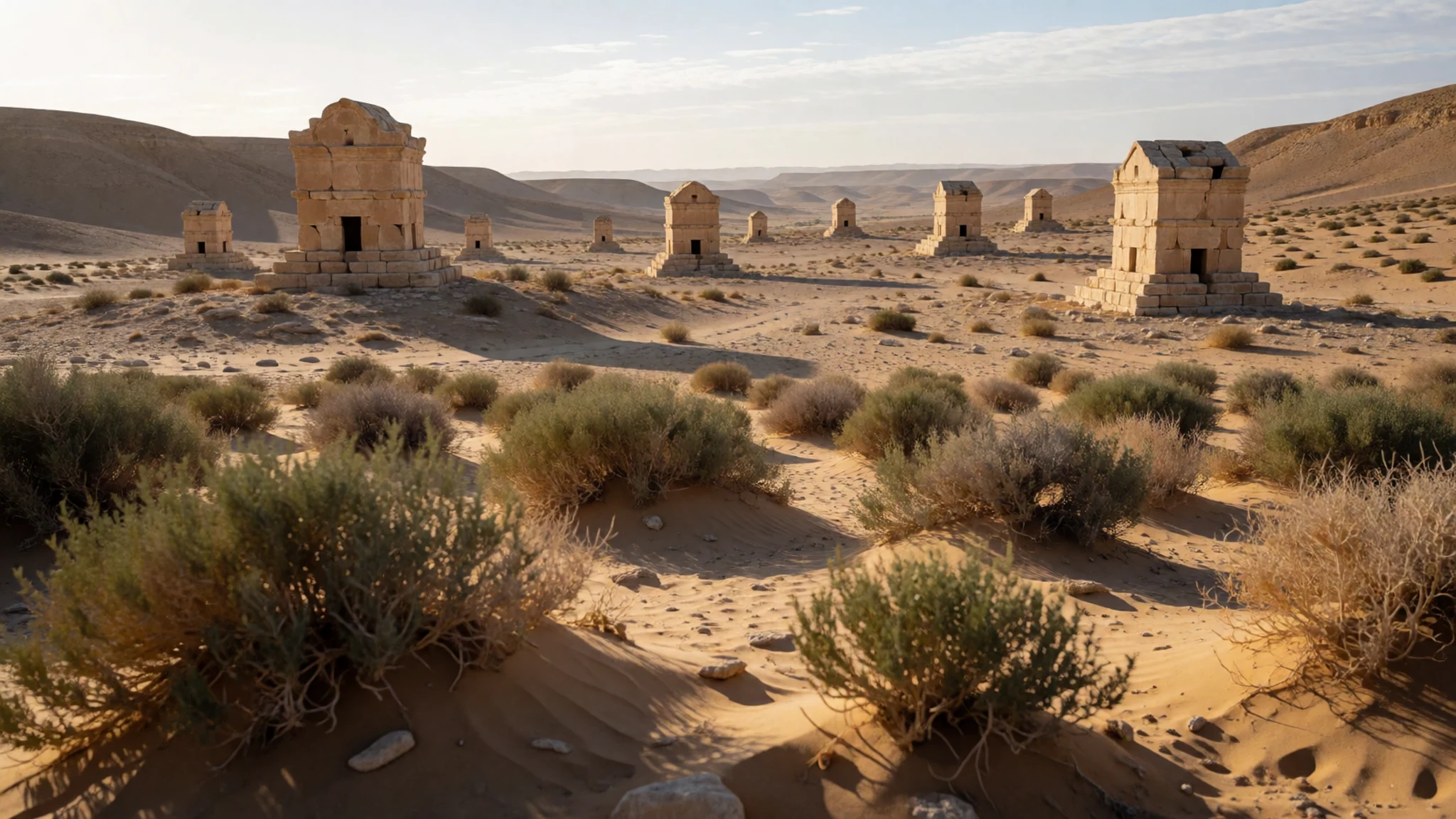
Culture
Religious life in ancient Palmyra revolved around a rich northwestern Semitic pantheon enriched by Mesopotamian and Arab traditions. The supreme deity was initially known by traditional Semitic honorifics before the Babylonian cult of Bel introduced new ceremonial names without replacing underlying indigenous beliefs. Alongside the chief god, worshippers honoured dozens of ancestral clan deities, solar guardians, and protective desert spirits associated with local springs and celestial bodies. This syncretic spirituality reflected the city's position as a cultural crossroads where diverse religious ideas mingled freely among merchants, caravan leaders, and settled farmers.
Modern daily life in the surrounding modern town of Tadmur reflects traditional Syrian rural and desert customs, where hospitality, kinship ties, and community gatherings remain central to social structures. Visitors should dress modestly, covering shoulders and knees out of respect for local customs and traditions.
What to wear
Traditional attire across the central Syrian desert region historically prioritized practical protection against harsh sun, wind, and blowing sand. Local garments typically featured loose-fitting, layered robes spun from durable natural fibres, paired with traditional headscarves secured by woollen bands to shield the face and neck from arid extremes.
Today, residents in the surrounding town wear a practical mix of contemporary Syrian clothing, including trousers and shirts for daily work alongside traditional garments worn by older generations or during community celebrations. Travellers visiting the archaeological site should dress sensibly for desert conditions: lightweight, breathable fabrics in neutral tones are essential to manage daytime heat, while sturdy walking shoes or boots are necessary for navigating uneven stone debris, sandy tracks, and rocky hillsides. Long sleeves and modest hemlines are recommended out of respect for local cultural norms.
What to eat
- Falafel and Syrian Fast Food — Main roads running north through the town area
Crisp chickpea fritters wrapped in flatbread with fresh herbs, pickles, and tahini, available from small street stands and casual roadside eateries along the main northern transport routes.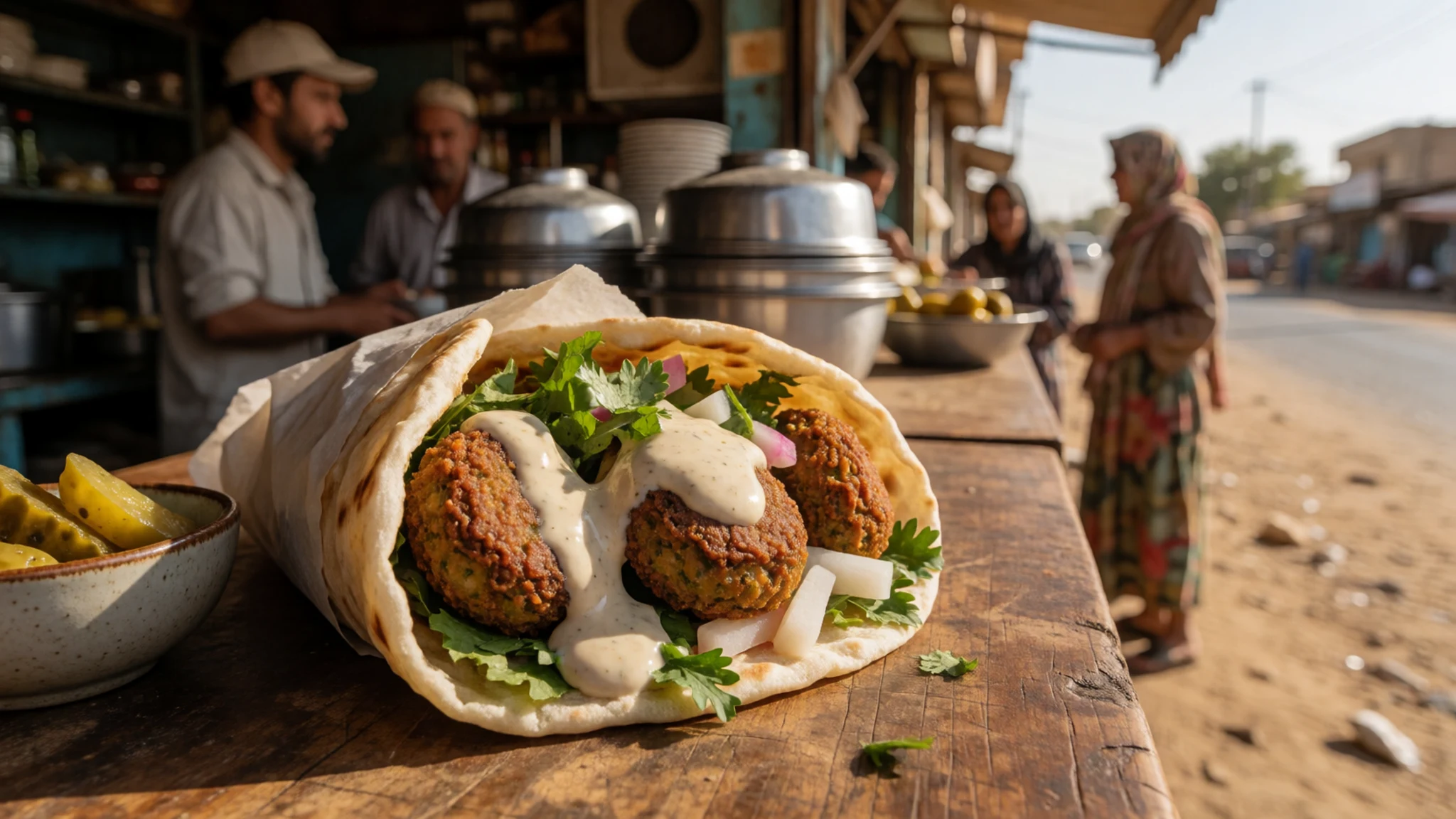
- Roast Chicken — Street-side food stalls along al-Quwatli main street
Whole or portioned spiced chicken roasted on open spits or charcoal grills, served alongside garlic paste, flatbread, and fresh vegetables.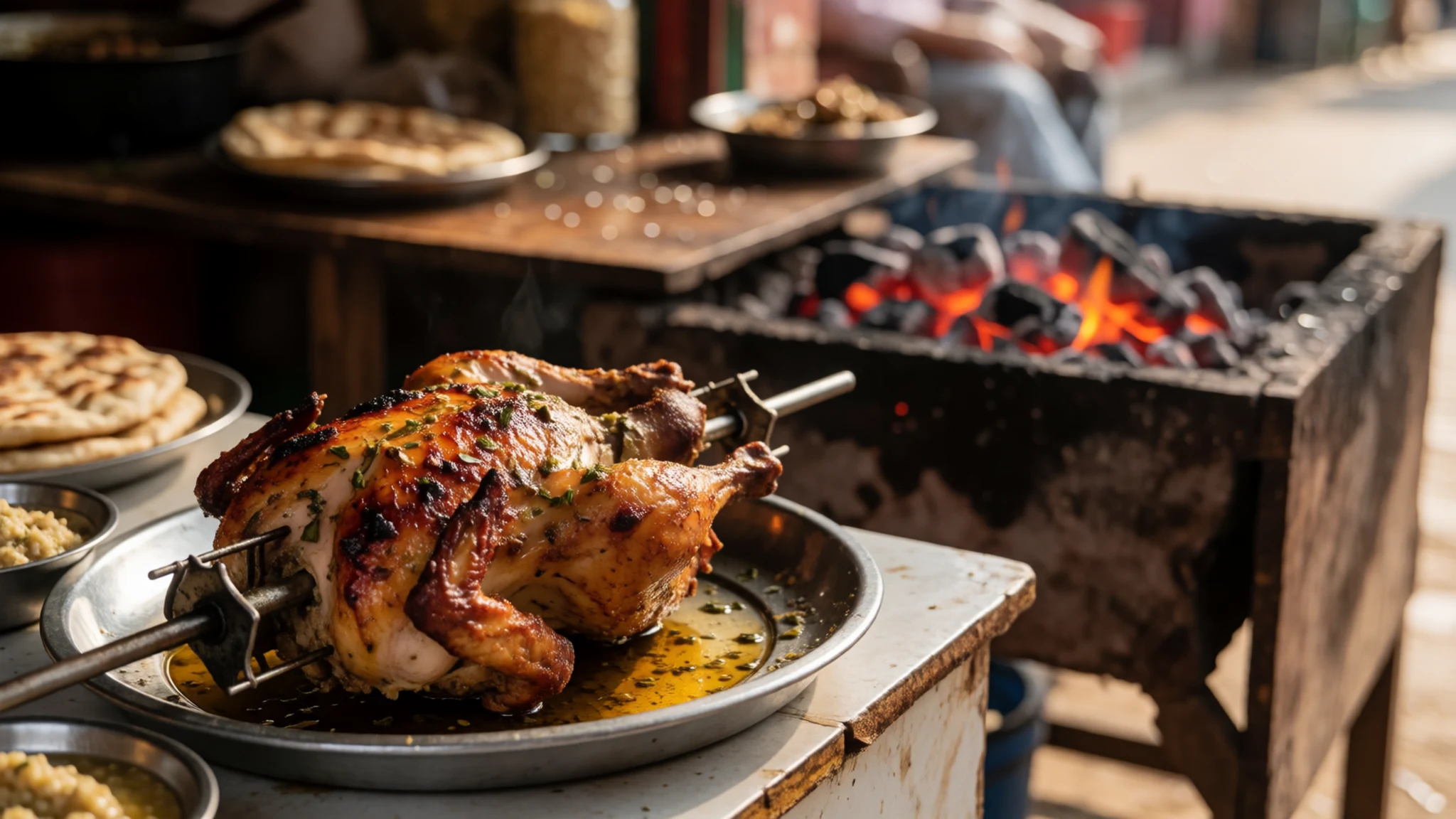
- Syrian Sweets and Pastries — Local bakeries and convenience shops along the main thoroughfares
Traditional syrup-soaked pastries, flaky biscuits, and regional sweet treats prepared by local bakers. - Bedouin Tea and Coffee — Bedouin tents and desert camps outside the ruins
Strong cardamom-spiced coffee or sweet black tea offered as a traditional gesture of hospitality during desert gatherings and camp visits.
Plan it
Best time. November to February for the most comfortable daytime temperatures, though nights still fall below freezing; January is the wettest month and June to August are the hottest.
How long. 2
Getting there. Regular direct minibuses and long-distance buses connect Palmyra from transport stations in Homs, with typical journey times of around two and a half hours.
Budget. mid
Tips
- Check local security advisories and current entry regulations before planning travel
- Arrive early in the morning to explore the archaeological ruins before daytime heat intensifies
- Carry sufficient bottled water and sun protection as shade is limited across the open site
- Confirm transport schedules and road conditions in advance with experienced local operators
Etiquette
- Dress modestly out of respect for local cultural traditions
- Ask permission before photographing local residents
Nearby
Sources
- Wikidata Q5747 (CC0)
- Wikipedia (rev 1382958688) (CC BY-SA 4.0)
- Wikivoyage (rev 5413762) (CC BY-SA 4.0)
- Photo photos/01-palmira-al-capvespre-2495033007.jpg (CC BY-SA 2.0)
- Photo photos/02-palmyra-03.jpg (CC BY 3.0)
- Photo photos/03-palmyra-syria-3.jpg (CC BY 2.5)
- Photo photos/04-palmyra-s-landmarks.png (CC BY-SA 4.0)
- Photo photos/05-palmyrenisch.jpg (Public domain)
- Photo photos/06-palmyrawoman.jpg (CC BY 3.0)
- Photo photos/07-istanbul-museo-archeol-colombario-funebre-da-palmira-foto-g-.jpg (CC BY-SA 2.5 it)
- Photo photos/08-tomba-di-elahbel-palmira.jpg (CC BY-SA 1.0)


