Shell Beach
Shell Beach, Guyana
Shell Beach is a remote Guyanese shoreline where four sea turtle species nest, protected with the Amerindian villages that live beside it.
The place
Shell Beach is a long, thinly settled stretch of the Atlantic coast of Guyana, in the Barima-Waini Region close to the Venezuelan border. It runs for about 120 km, and most of that length has no resort, no town and very little else built by people. What it has is sand, mud flats, palms and surf, and the quiet that comes from being far from anywhere. The beach matters because four of the world's eight sea turtle species nest here: green, hawksbill, leatherback and olive ridley. Females come ashore at night to dig a nest, lay their eggs and slip back into the water, and the hatchlings make the same dash to the waves later on. Most visitors come to witness that, not to sunbathe. The protected area is run together with Amerindian communities along the coast, including those at Almond Beach and Gwennie Beach, so the villages are part of how the place works rather than a backdrop. Facilities are simple, the journey is long and weather and tides decide the plan. The shoreline is also moving: erosion has toppled coconut palms in places, and the coast reshapes itself with storms. The sea is muddy rather than clear, so this is not a snorkelling destination. It suits people who care more about wildlife than comfort, and who are happy to follow a local guide's instructions, wait in the dark and go home with nothing but memories.
Its story
For a long time, the turtles of Shell Beach were food. Local people collected the eggs and hunted the adults for meat, and nobody was thinking about numbers. That began to change in the 1960s, when an English ecologist, Peter Pritchard, started visiting the coast and working on ways to protect the animals and the beaches they depend on. Together with Romeo De Freitas, he helped found the Guyana Marine Turtle Conservation Society. Time magazine later named Pritchard a "Hero of the Planet" in 2000, which brought the coast a little international attention. In 2001 the beach became part of a protected area organised with the World Wide Fund for Nature and local groups, and by 2011 it had formal protected status. What makes the arrangement notable is who does the work. Amerindians from Almond Beach, Gwennie Beach and nine other villages in the area are involved in the programme, which means former egg-gatherers and their neighbours now act as monitors and guides. Tourism is meant to support that, giving people a reason to guard nests rather than raid them. The story is not finished. Erosion, tides and the sheer remoteness of the coast make patrols hard, and results depend on steady funding and community goodwill. Shell Beach shows that conservation can work when the people who live beside a species are given a stake in its survival.
What to see
- Leatherback nesting beaches — Shell Beach nesting sands
Leatherbacks are the turtles most visitors hope to meet, and the sand of Shell Beach is where they haul themselves out at night. Guides lead small groups with dim lights and strict distances. Sightings depend on season and luck, so treat any encounter as a bonus rather than a promise.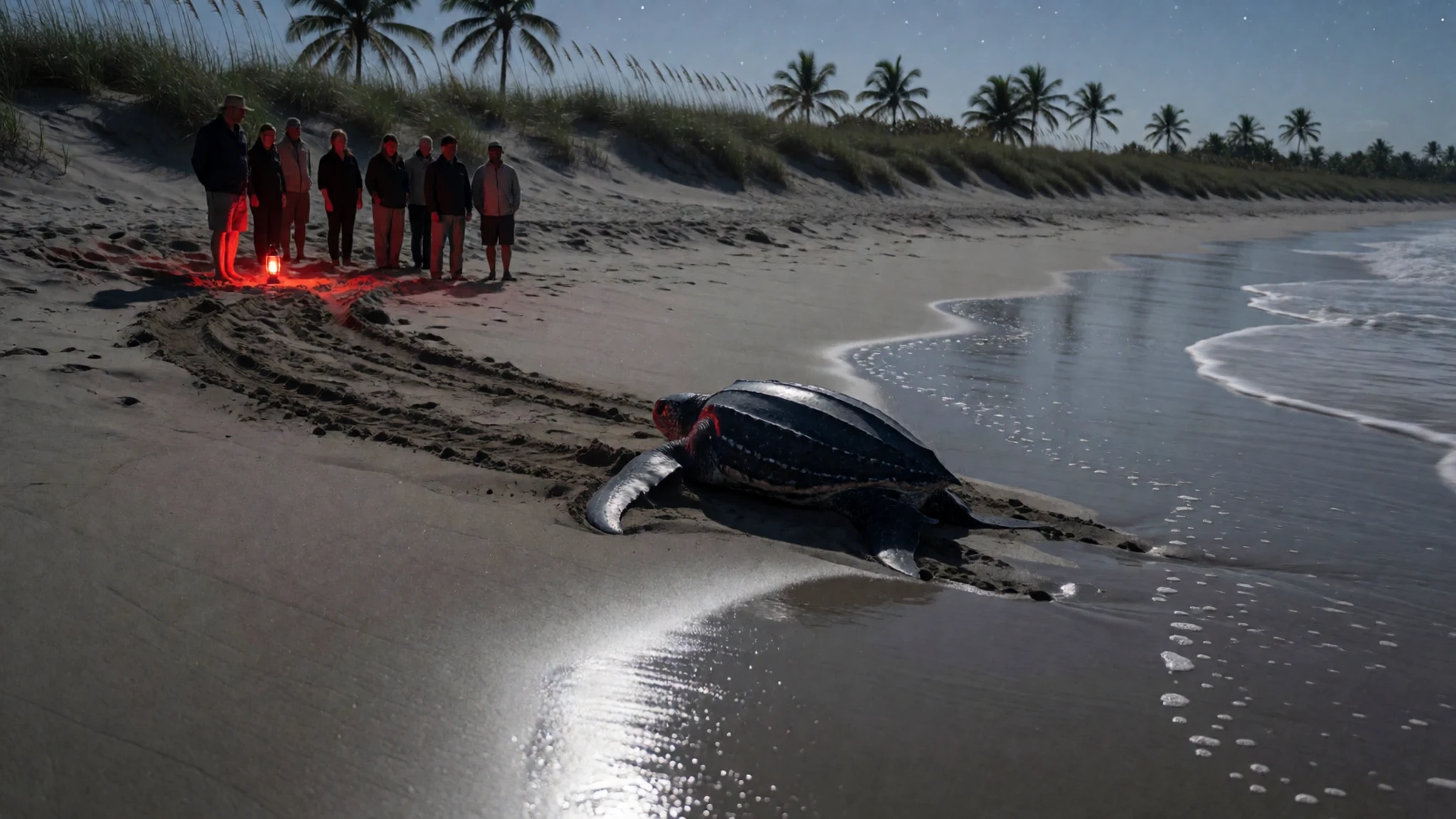
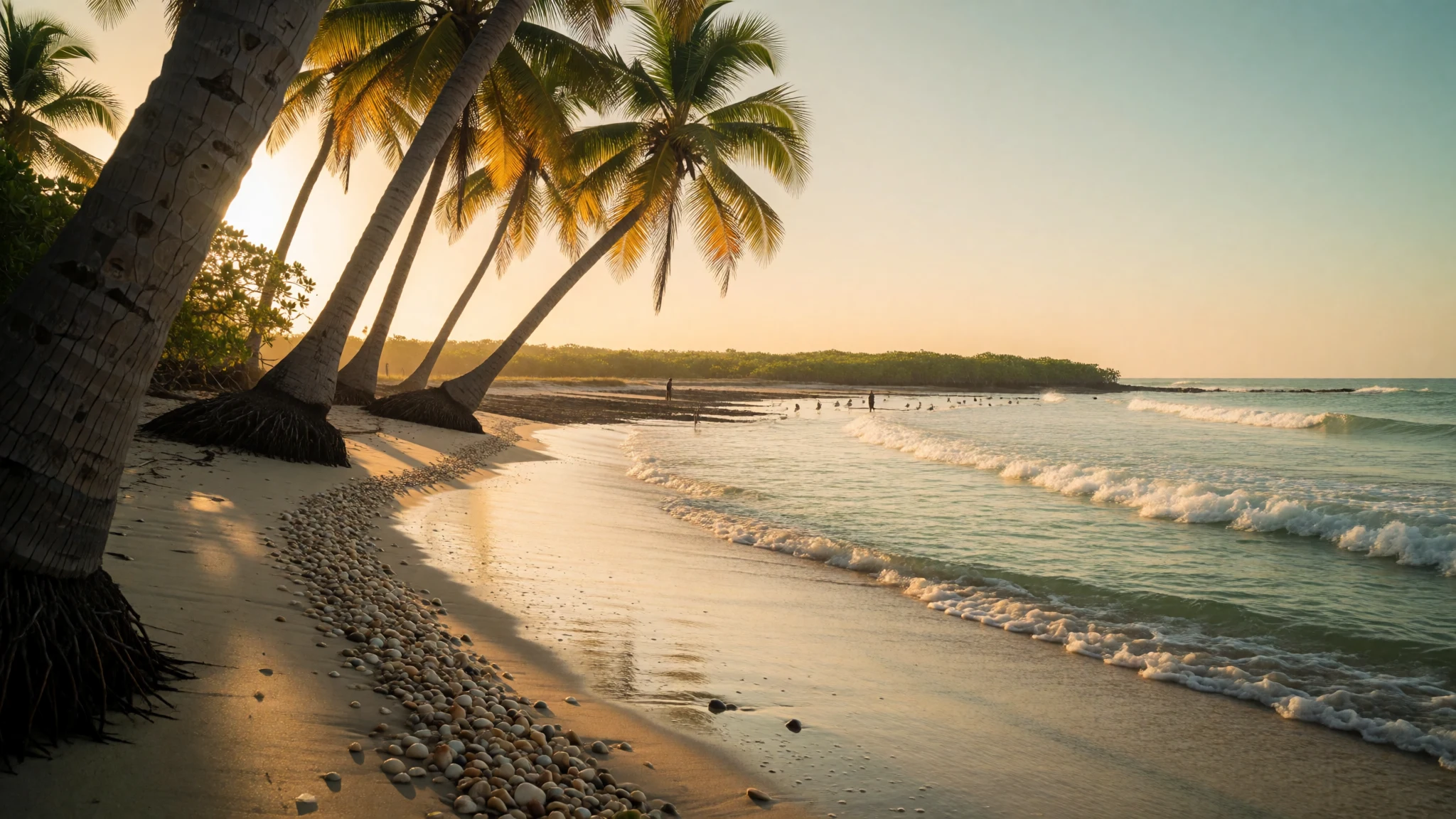
- Coconut palm fringe — Upper beach
Rows of coconut palms line much of the upper beach, giving the only shade for kilometres and a landmark for boats approaching from the sea. Some trees lean at sharp angles, and a few stand with roots exposed, which shows how mobile the coastline is.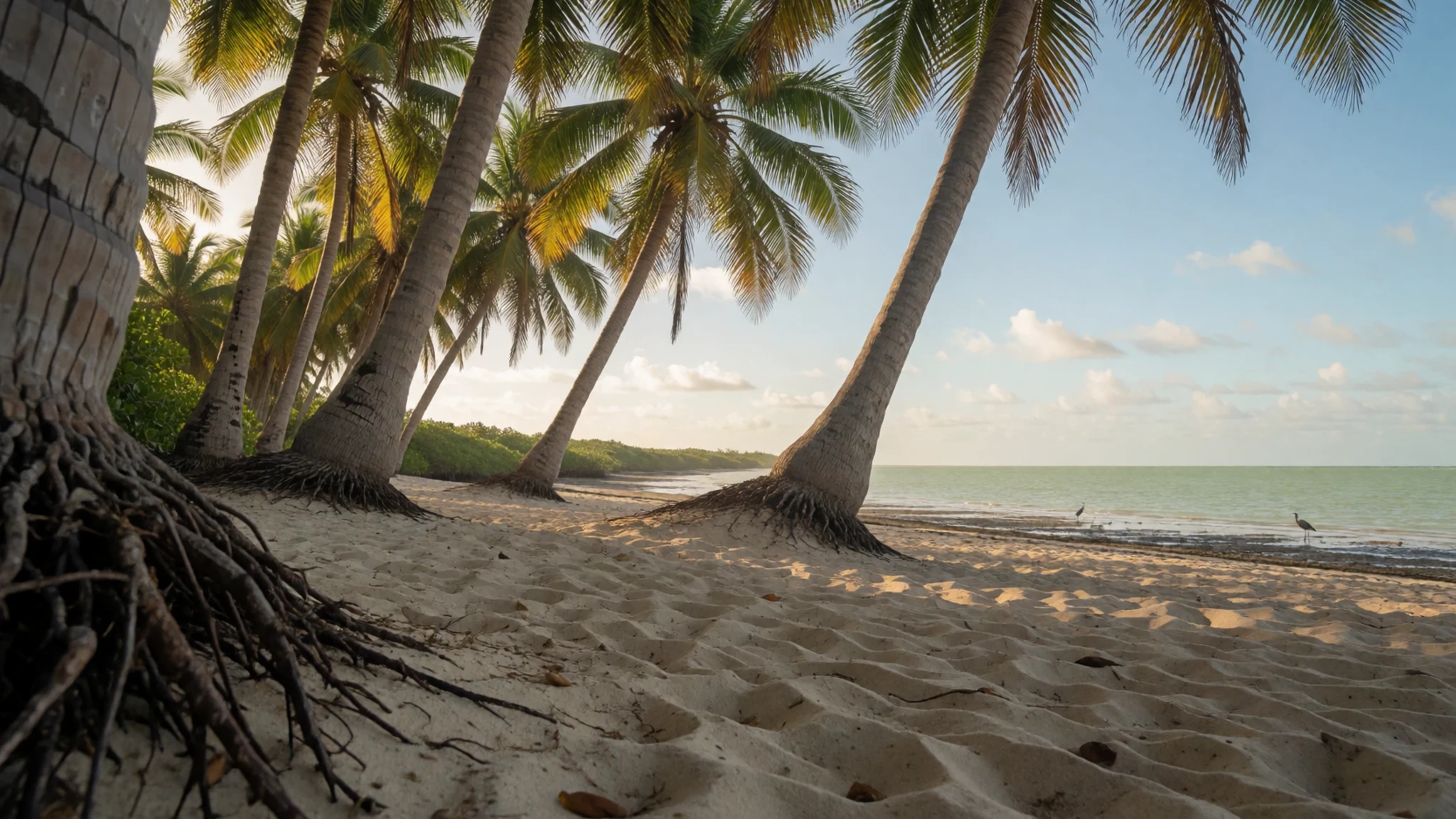
- The eroding shoreline — Eroded sections of the beach
Parts of the coast show palms washed out by the sea, with trunks lying across the sand. It is a plain illustration of how fragile a low Atlantic beach is, and a good moment to ask a guide how the nesting areas shift from one year to the next.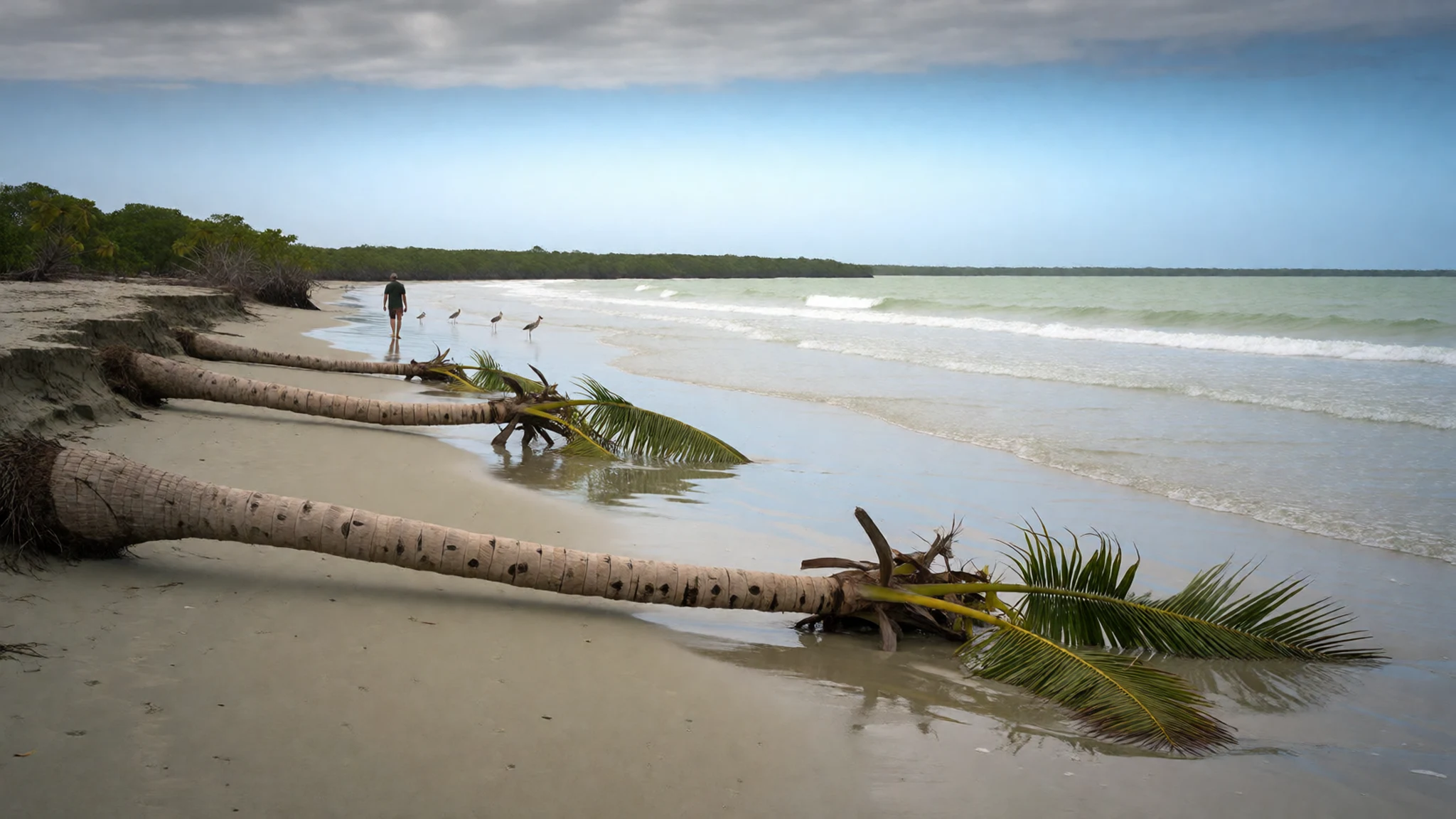
- Arriving by boat — Coastal approach
With so little road access, many visitors reach the beach by speedboat along the coast or through the rivers and creeks behind it. The trip is part of the experience: open water, mangrove edges, wading birds and a first view of a very long, empty shoreline.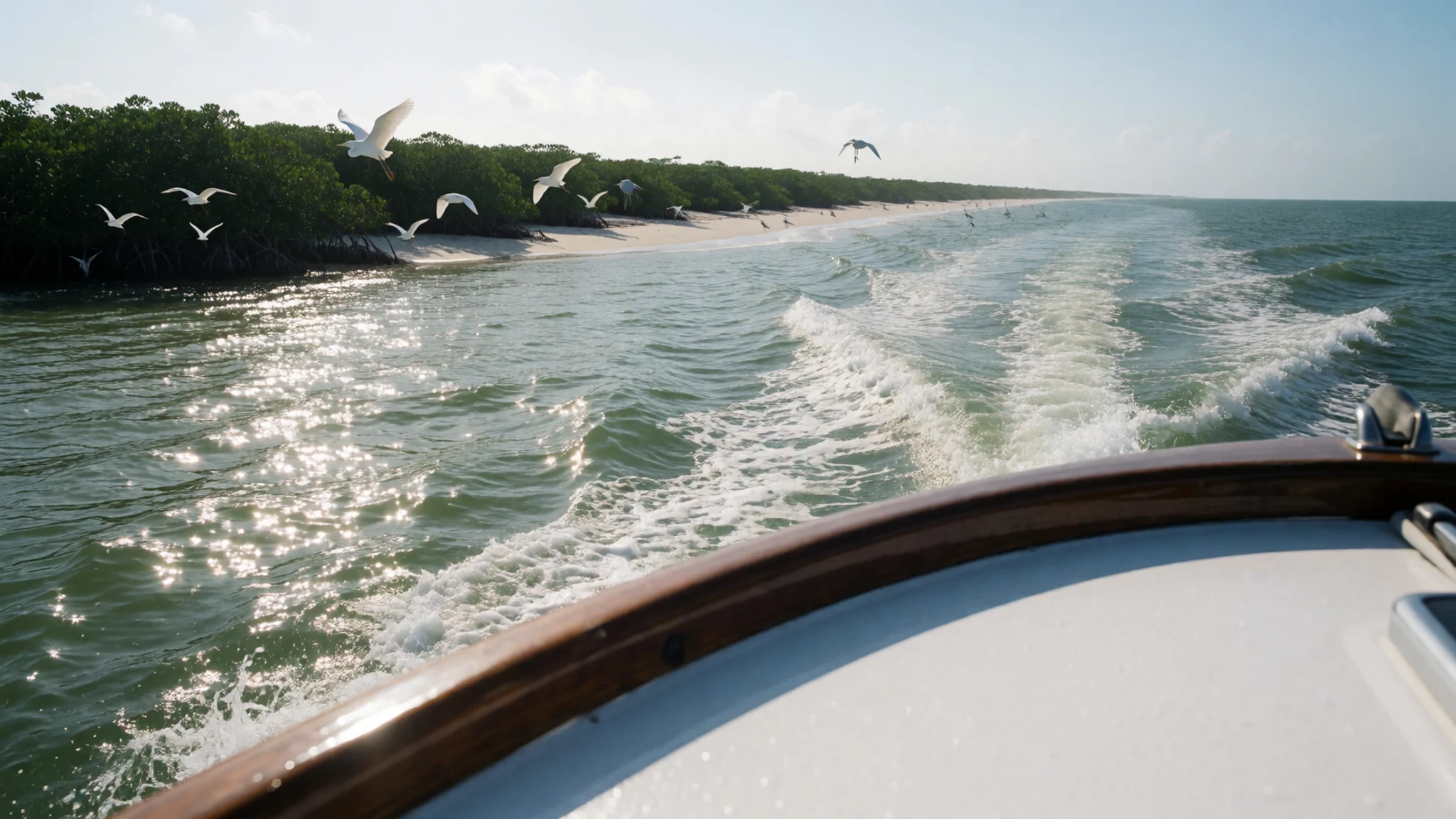
- Almond Beach and Gwennie Beach villages — Barima-Waini Region
These Amerindian communities sit within the protected area and take part in its turtle programme. A visit, arranged through proper channels, gives a sense of daily life on this coast and a chance to hear first-hand how conservation changed local livelihoods.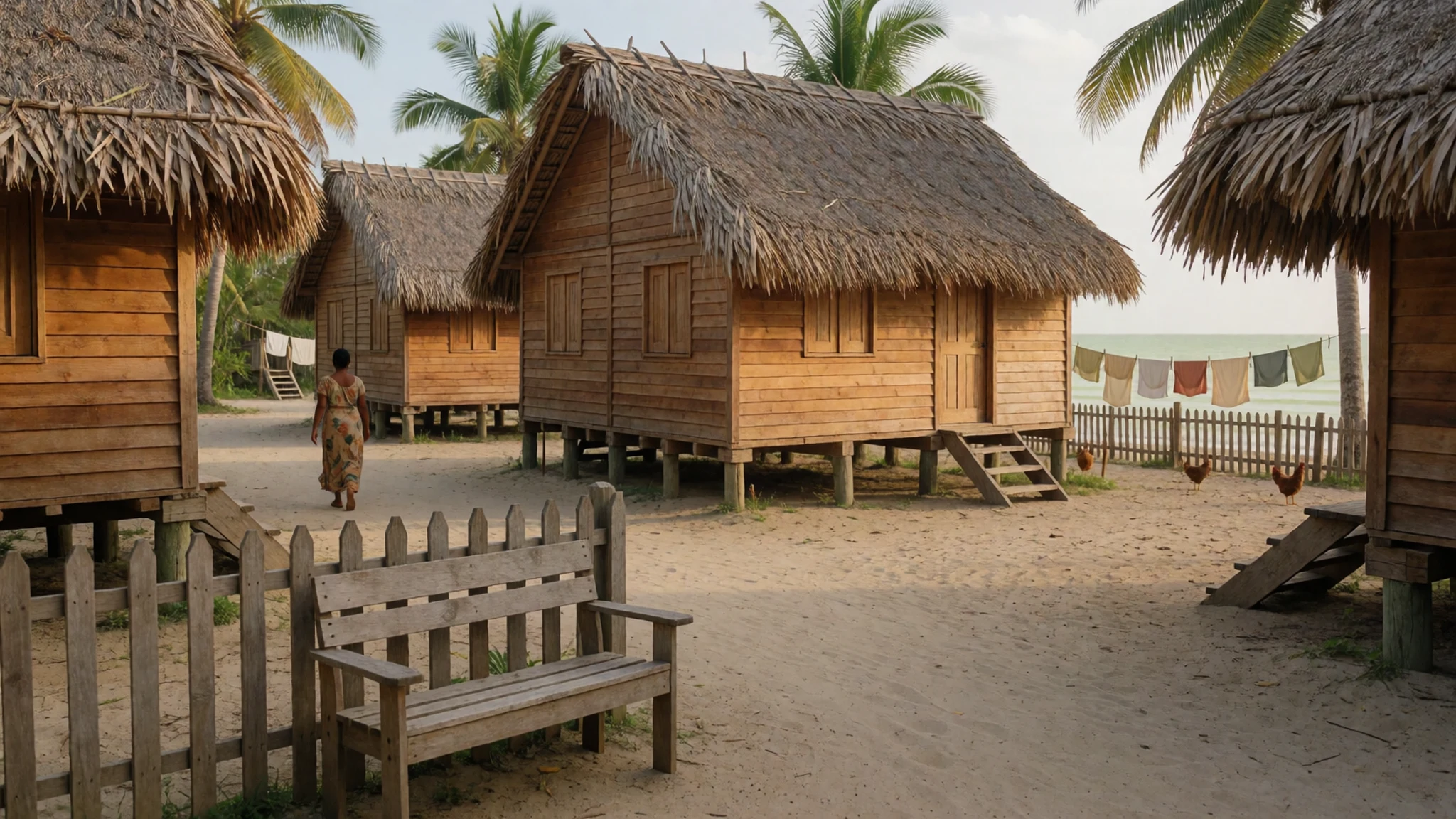
Culture
Culture at Shell Beach is shaped by the Amerindian communities who live along this coast and by the conservation work that now sits alongside their older ways of life. Villages such as Almond Beach and Gwennie Beach rely on fishing, farming and, increasingly, turtle monitoring and visitor hosting. Egg and meat collection was once normal here, so the shift to guarding nests marks a real change of habit, and it was not imposed overnight. Respect for that history matters: guides and rangers are neighbours with their own views, not performers, and the best conversations come slowly. Guyana as a whole mixes Indigenous, African, Indian, European and other heritages, and the coast reflects that in its food, speech and festivals, although Shell Beach itself is quieter and more local than the capital. Life runs on tides, weather and boat schedules rather than clocks, so delays are normal and complaining about them rarely helps. Community decisions are usually made together, and permission to visit, camp or take photographs often depends on a conversation with village leaders or the conservation group. Nights on the beach are for turtles, which means darkness, silence and patience rather than socialising. Respect for the animals is the main rule here, and the villagers who protect them expect the same from visitors. On nesting beaches, keep to your guide's instructions, use no flash or bright torches, stay well back from any turtle, and ask before photographing people.
What to wear
Shell Beach has no single costume, and its fashion story is a quiet one. The Amerindian peoples of Guyana have long made beadwork, woven baskets and plant-fibre items, and feathered or beaded headpieces and ornaments still appear at heritage days and community events rather than in daily life. Materials come from the forest and the river: seeds, fibres, cotton and bead. Everyday dress in the coastal villages is practical and light: cotton T-shirts, shorts or knee-length skirts, loose trousers for evenings, rubber boots or sandals for mud and water. Fishing and farming dictate the wardrobe more than any style. Modesty norms are relaxed on the sand but still real in villages, where covering shoulders and knees is polite. Visitors should dress for heat, humidity, sun, insects and wet landings. Wear quick-drying long sleeves and trousers in muted colours, a wide-brimmed hat, and sturdy sandals or shoes that can get soaked, since boats often land in shallow water. Bring a light rain jacket, as showers arrive quickly. For night turtle watching, dark clothing helps avoid disturbing the animals, and a warm layer is welcome in the small hours. Swimwear suits the beach but should be covered with a shirt or sarong when walking through a village. Pack a hat strap for boat rides, a dry bag for cameras and phones, and insect repellent that suits your skin.
What to eat
- Pepperpot — Village kitchens and community gatherings
A slow-cooked meat stew darkened with cassareep, a sauce made from cassava, and spiced with pepper and cinnamon. It has Amerindian roots and is eaten widely in Guyana, often at celebrations. Look for it in home kitchens and community events along the coast.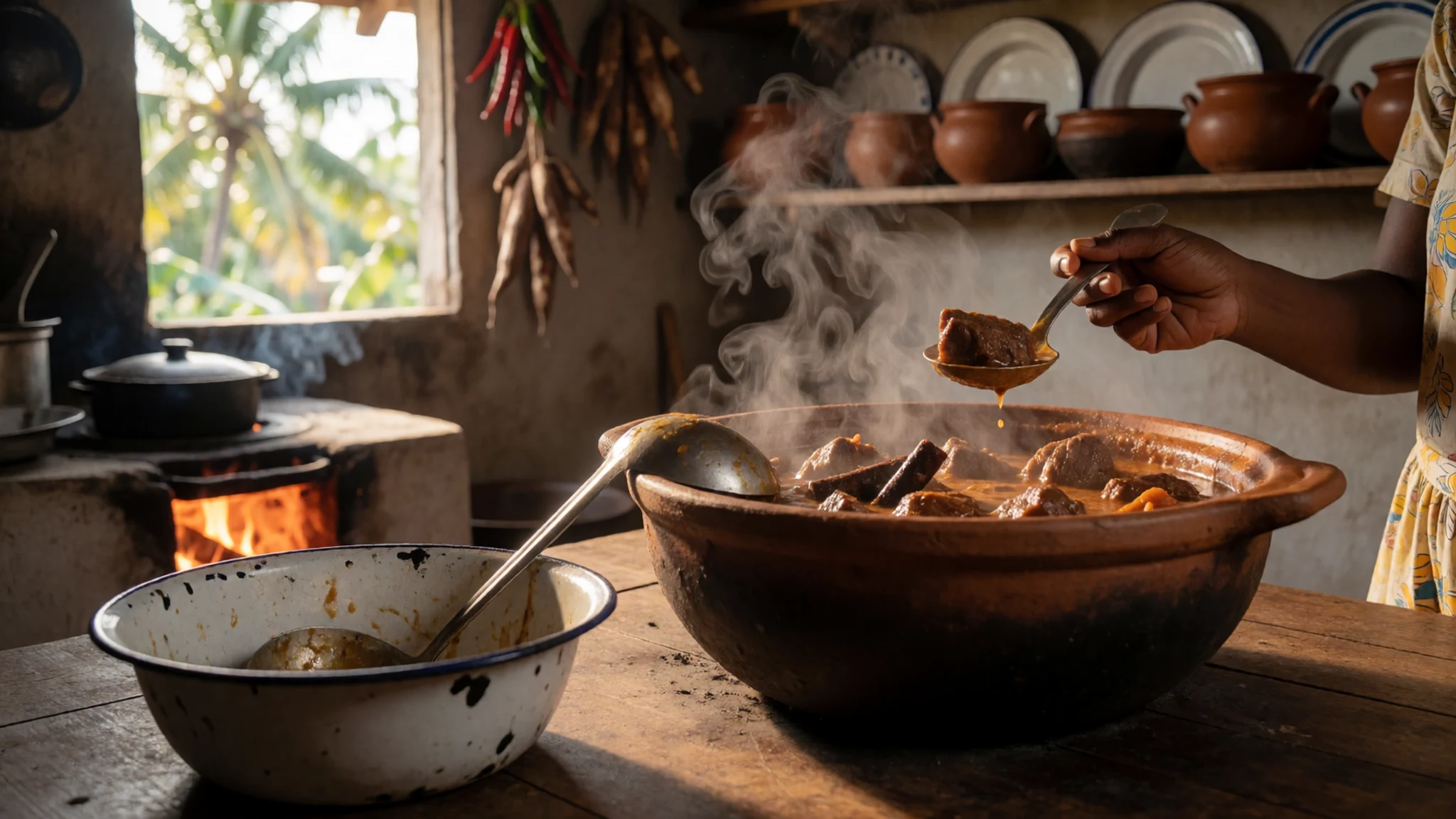
- Cook-up rice — Homes and small eateries on the coast
A one-pot mix of rice, beans or peas and meat or fish, simmered in coconut milk. It is filling, easy to feed a group with and a common dish at coastal gatherings. Versions vary house to house, so ask what goes in.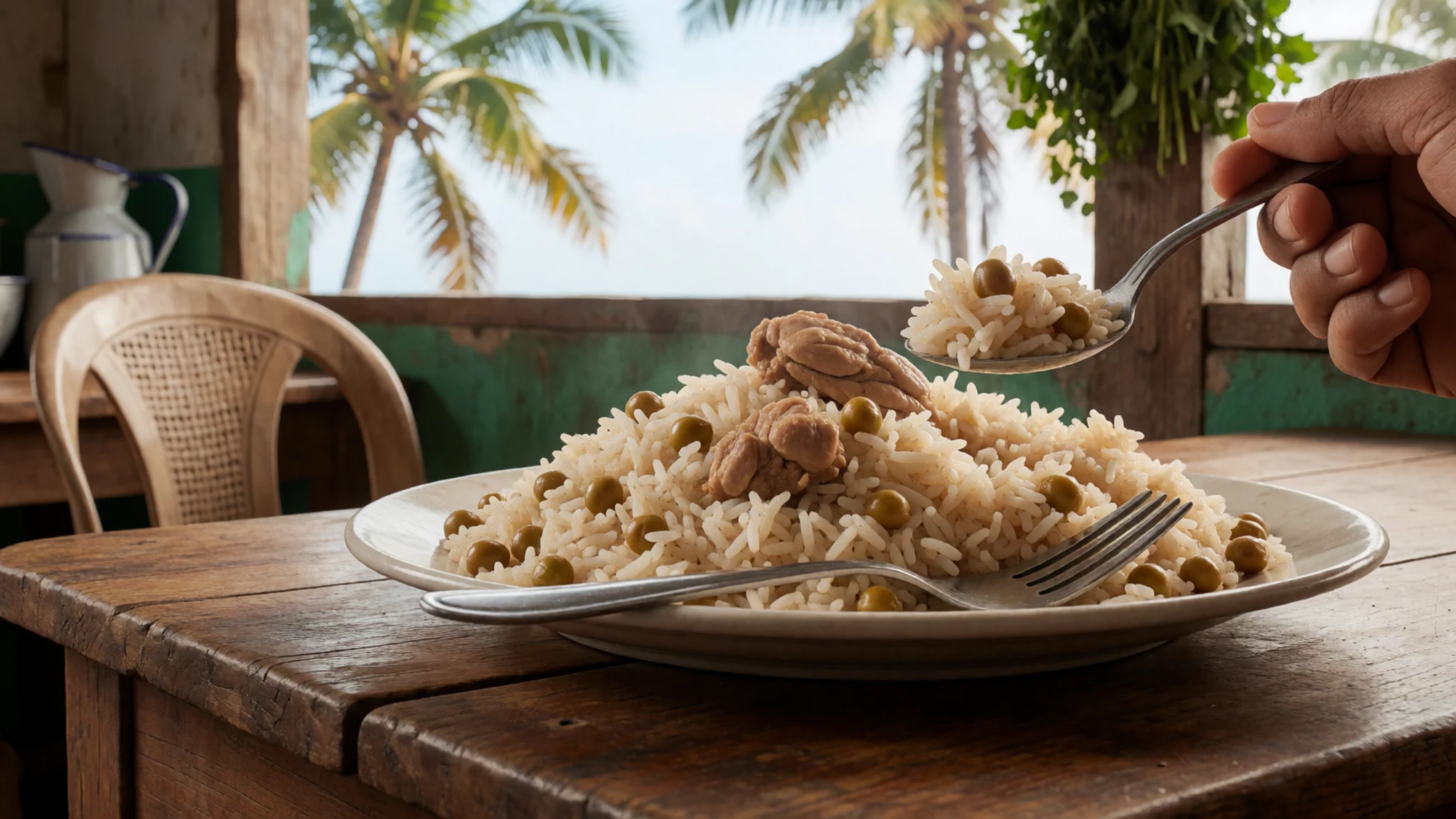
- Fresh fish from the Atlantic — Fishing villages and landing points
Fishing households land a variety of sea and estuary fish, usually fried, curried or steamed with local seasonings. Availability depends on the catch and the tides, so meals are often built around whatever came in that morning. - Cassava bread — Amerindian villages and craft markets
A flat, dry bread made from grated and pressed cassava, a staple of Amerindian cooking in Guyana. It is chewy, plain and keeps well, which suits long journeys. It is often eaten with stews, fish or a spicy pepper sauce. - Coconut water — Beachside stalls and village tracks
Coconut palms line the beach, and a fresh green nut is the simplest drink on a hot day. Vendors and villagers will usually crack one open with a cutlass, and the jelly inside is edible once the water is drunk.
Plan it
Best time. March to July is the turtle nesting season, with leatherbacks usually the main draw, though timing varies by year and species, so confirm with the conservation group before booking. Expect heat and humidity year-round and heavy rain at times.
How long. 2–3
Getting there. Fly to Cheddi Jagan International Airport near Georgetown. The beach is remote, so the last leg is by road and boat, or by a short flight and boat, arranged through a licensed Guyanese operator or the community tourism group; routes and schedules change, so check before you travel.
Budget. mid
Tips
- Book through an operator or the community conservation group well ahead, as access is limited and arranged in advance
- Carry cash in small notes, as cards and cash machines are unlikely to be available near the beach
- Bring insect repellent, sun protection, a head torch with a red setting and plenty of drinking water
- Expect weather and tides to change plans, and leave slack in your itinerary
- Pack camera gear in dry bags, since boat landings are often wet
Etiquette
- Follow your guide at nesting sites: no flash, no bright torches and keep a safe distance from turtles
- Ask village leaders or your guide before photographing people or homes
- Take all rubbish away with you and never remove shells, eggs or hatchlings
Nearby
Sources
- Wikidata Q7493646 (CC0)
- Wikipedia: Shell Beach, Guyana (rev 1367764024) (CC BY-SA 4.0)
- Wikivoyage: Shell Beach (CC BY-SA 4.0)
- Coconut Trees on the Shell Beach, Marco Farouk Basir (CC BY 3.0)
- A Coconut on the Shell Beach, Marco Farouk Basir (CC BY 3.0)
- A Coconut plant on the Beach, Marco Farouk Basir (CC BY 3.0)
- A speed boat on the Shell Beach, Marco Farouk Basir (CC BY 3.0)
- Coconut Trees washed out due to erosion, Marco Farouk Basir (CC BY 3.0)
- Leatherback Sea Turtle Returning to the Sea, Marco Farouk Basir (CC BY 3.0)
- Leatherback Turtle, Marco Farouk Basir (CC BY 3.0)
- Shell Beach, Marco Farouk Basir (CC BY 3.0)


Wildlife
- Green sea turtle (animal)
The green sea turtle is a big, gentle sea reptile that munches seagrass, and it is named for the greenish fat beneath its shell, not for its darker back. It is one of four kinds of turtle that nest on Shell Beach, so this is a place to hope for it rather than to expect it. Watch with a local guide, stay a good way back, keep voices low and lights dim, and never offer it food.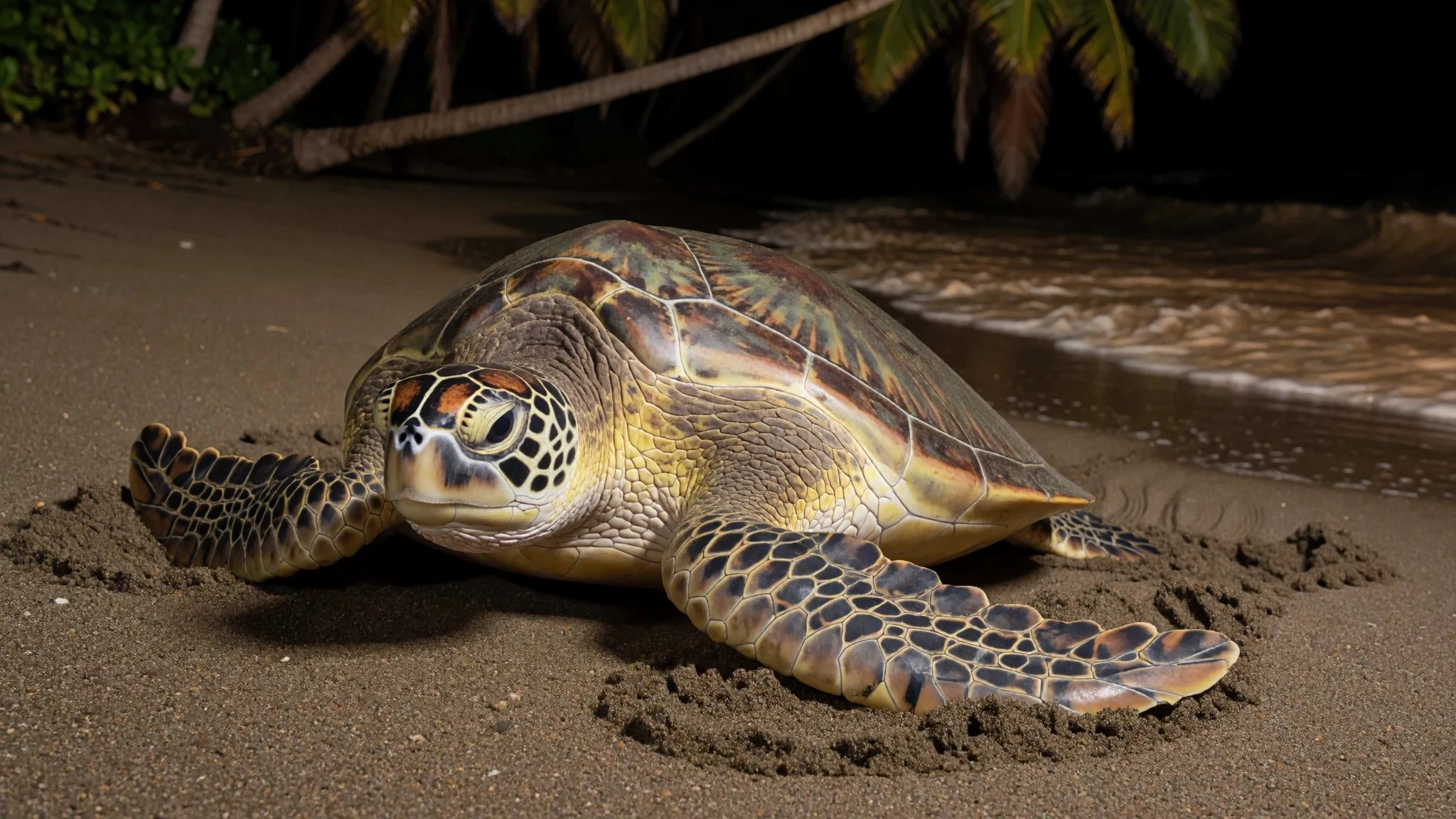
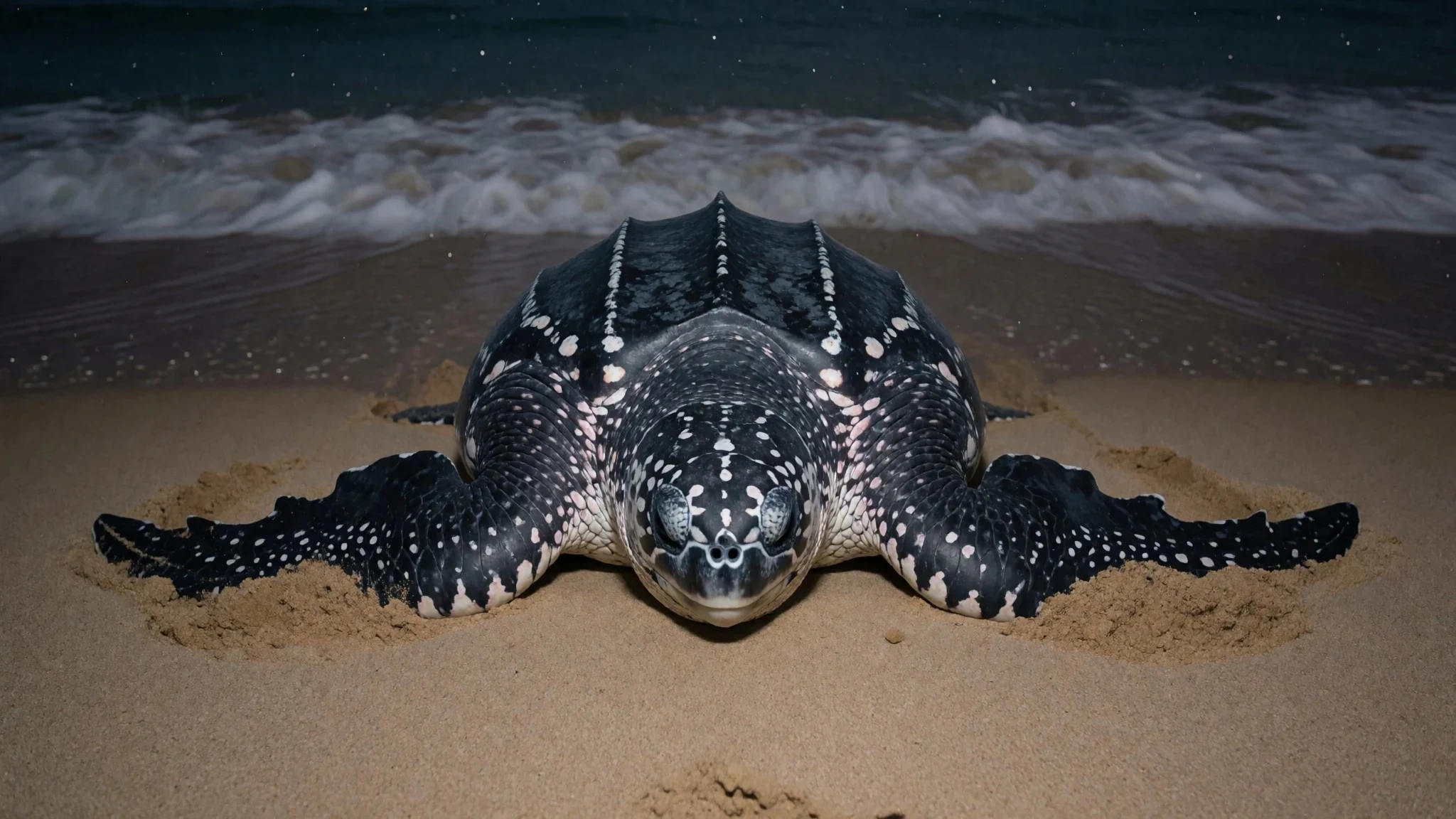
- Leatherback sea turtle (animal)
The leatherback is the giant of the turtle world, with no hard shell, just tough, oily, leathery skin over its back. It is the turtle many travellers long to see, and it drags itself out of the sea onto the sand of Shell Beach after dark. Because the species is vulnerable, give it plenty of space, stay quiet, use no bright lights or flash, watch with a guide, and never touch or feed it.