Kamarang
Kamarang, Guyana
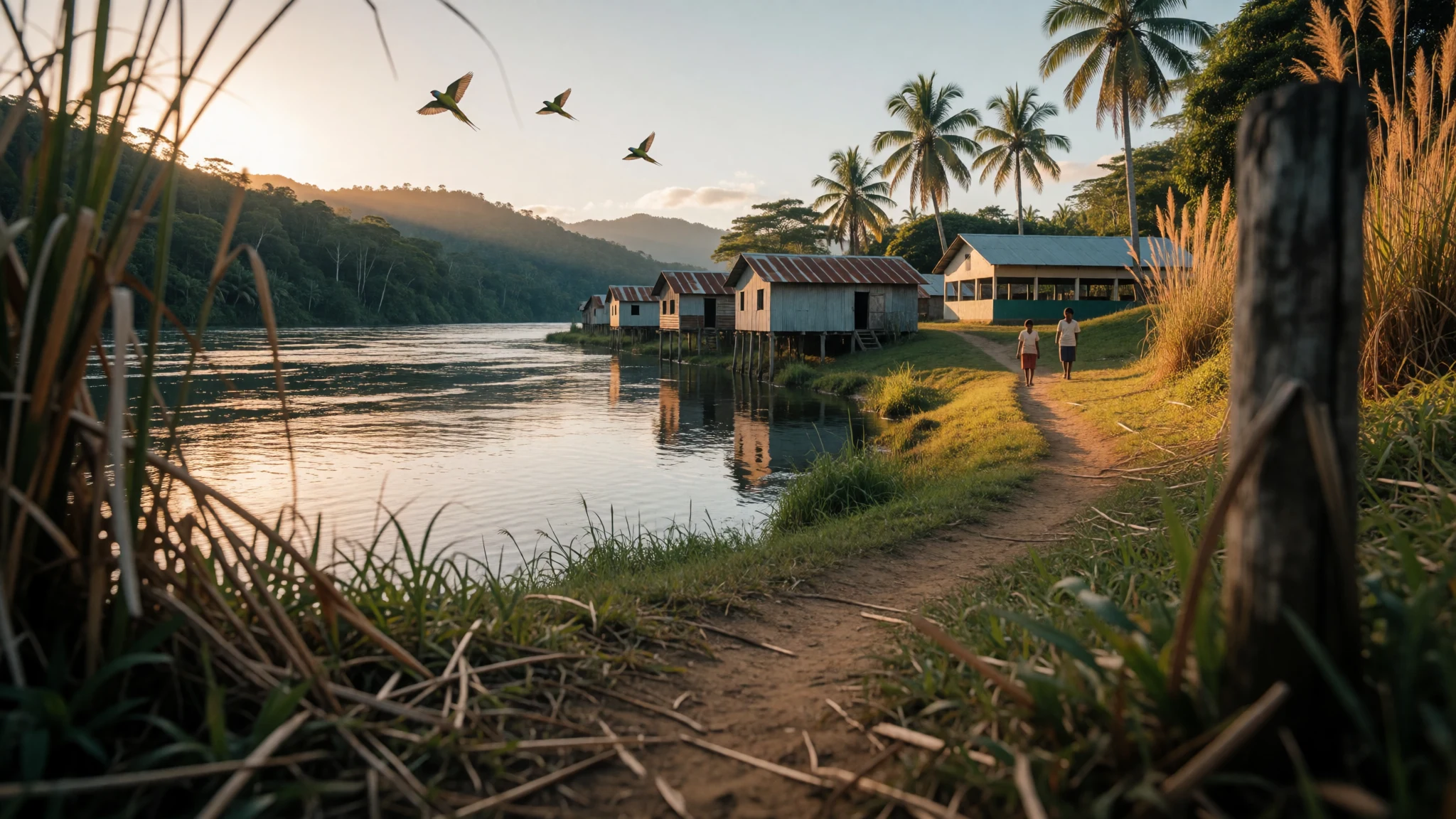
Kamarang is a working Amerindian river village in Guyana's interior, reached by small plane, where two rivers meet below forested highlands.
The place
Kamarang is an Amerindian village in the Cuyuni-Mazaruni Region of Guyana, built where the Kamarang River runs into the Mazaruni River. Its Akawaio name is Kamʉran. The settlement lies in rolling forested highland, far from the Atlantic coast, and the airstrip is the usual way in. Small aircraft land right beside the houses, and the western end of the village can be seen from the edge of the runway. Kamarang has a primary school, a hospital and a police station, so it serves as a base for communities scattered along the rivers around it. Water is the other road. Boats carry people, fuel and supplies, and in this part of Guyana children may reach school by canoe or small motorboat. The climate is tropical, hot and humid, softened a little by the northeast trade winds. Rain arrives in a pair of wet seasons, and flash floods are a constant risk while they last. Kamarang is not a resort and has little in the way of visitor services. It is a functioning river village, and most outsiders pass through on the way to mining camps or upriver trips. Venezuela also claims the territory around it, although the village is run from Guyana and everyday life carries on much as in any other interior settlement. Guyana's own name is usually translated as 'land of many waters', and a confluence like this one shows why.
Its story
Kamarang's story begins with the Akawaio, the Amerindian people whose language gives the village its name and whose settlements have long followed the rivers of this highland country. The meeting of two rivers made a natural place to gather, trade and travel from. Much later, the wider region was drawn into colonial history. Guyana was a Dutch colony, then a British possession, and the interior was governed very differently from the plantation coast. Colonial rulers sometimes used Amerindian communities as scouts and trackers, a legacy that still shades relations between Guyana's peoples. Modern times brought a different pull. Gold and diamond mining grew quickly around the Mazaruni basin, and Kamarang became a supply and flight point for the workings upriver. For a while the village felt real economic growth, with money, workers and aircraft arriving. In recent years, mining output has started to fall, and the village has had to think about what comes next. Mining has also left its mark on the rivers themselves, which many families rely on for water, fish and transport. Meanwhile the old territorial dispute with Venezuela keeps the area on the map for reasons that have little to do with daily village life. The result is a small, changing community that sits between a traditional river way of life and a mining economy that has been uneven.
What to see
- Kamarang village and airstrip — Kamarang village
The village itself is the first sight. Houses stand close to the grass airstrip, and the view from the runway edge takes in the whole western end of the settlement with forest behind. Landing and leaving by small plane is part of the experience. Ask permission before walking around or photographing homes.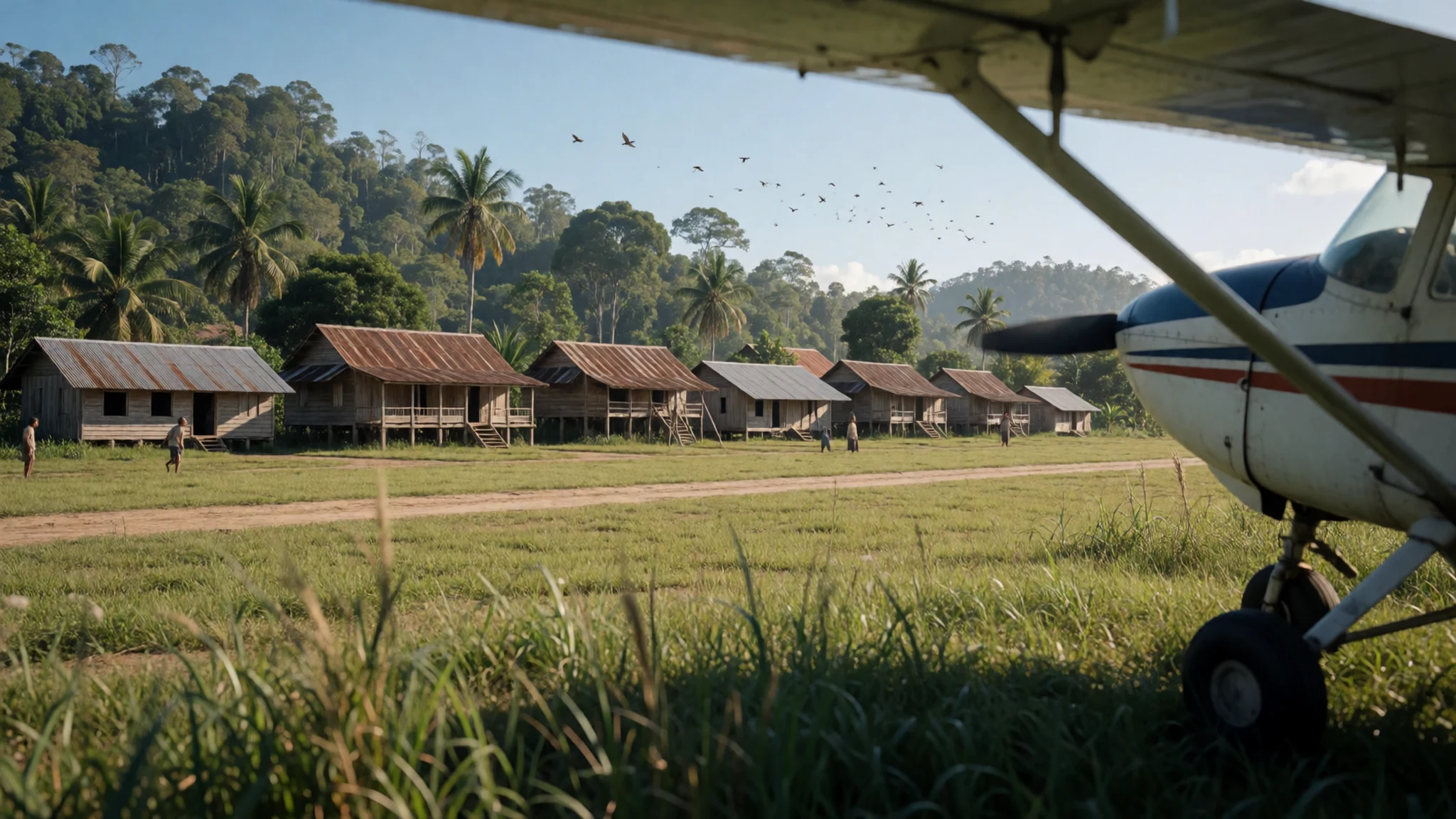
- The river confluence — Edge of the village
The Kamarang River joins the Mazaruni River next to the village, and the meeting of the two is the geographical reason for the settlement. A boat trip with a local guide shows the difference in colour and current, and gives a sense of how people here travel, fish and carry goods.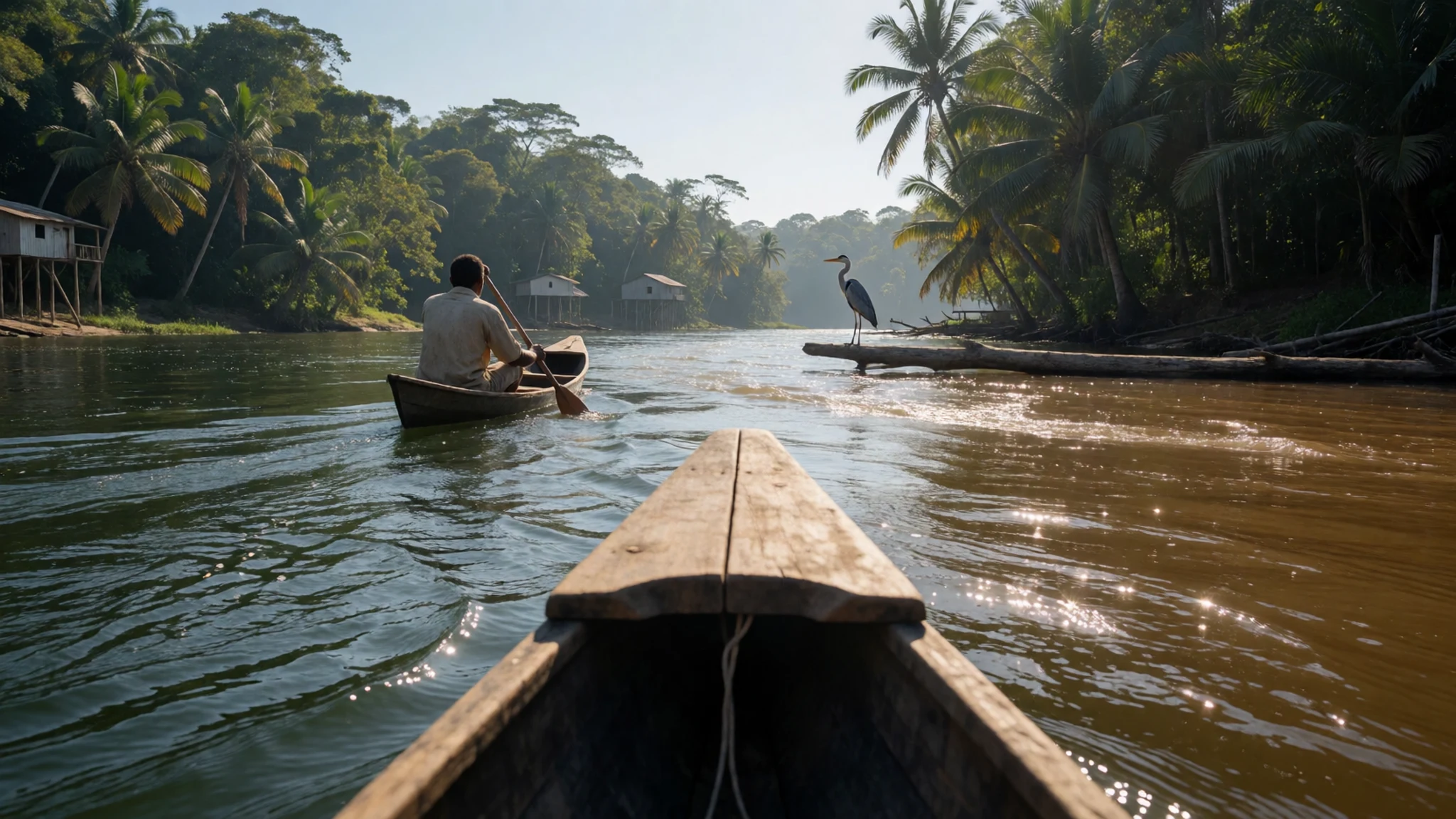
- Mazaruni river trips — Mazaruni River
The Mazaruni is the working highway of this region. Guided boat journeys pass forest banks, small riverside farms and mining camps, and may stop at Amerindian villages. Water levels change a great deal between wet and dry seasons, so route and timing should be agreed locally before setting out.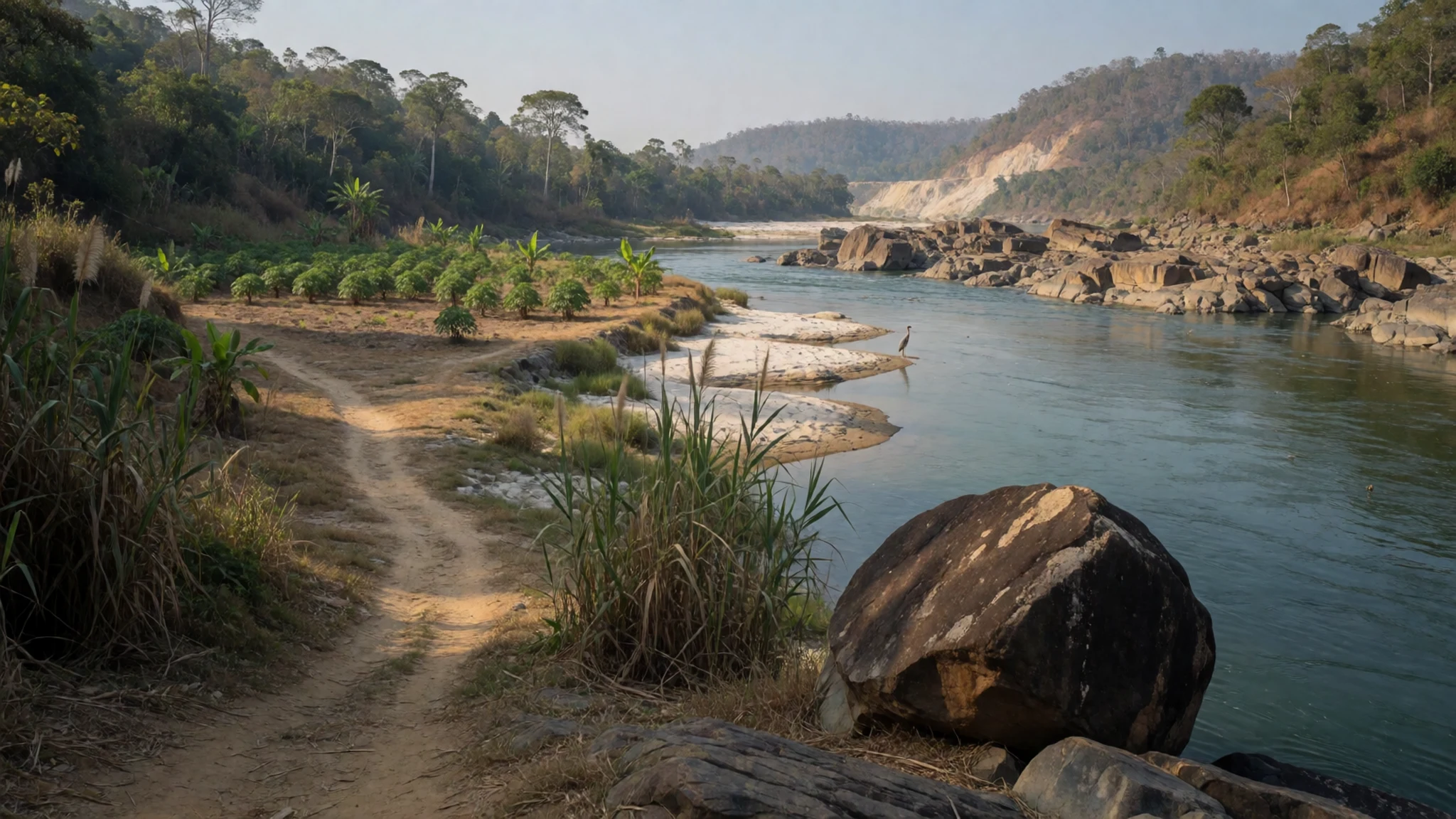
- Orinduik Falls — Ireng River, near the Brazil border
Orinduik is a smaller waterfall on the Ireng River near the Brazilian border, with broad, low steps of water over rock. It is usually visited on flights that also take in Kaieteur. Check with a licensed tour operator for current routes, as flights depend on weather and booking.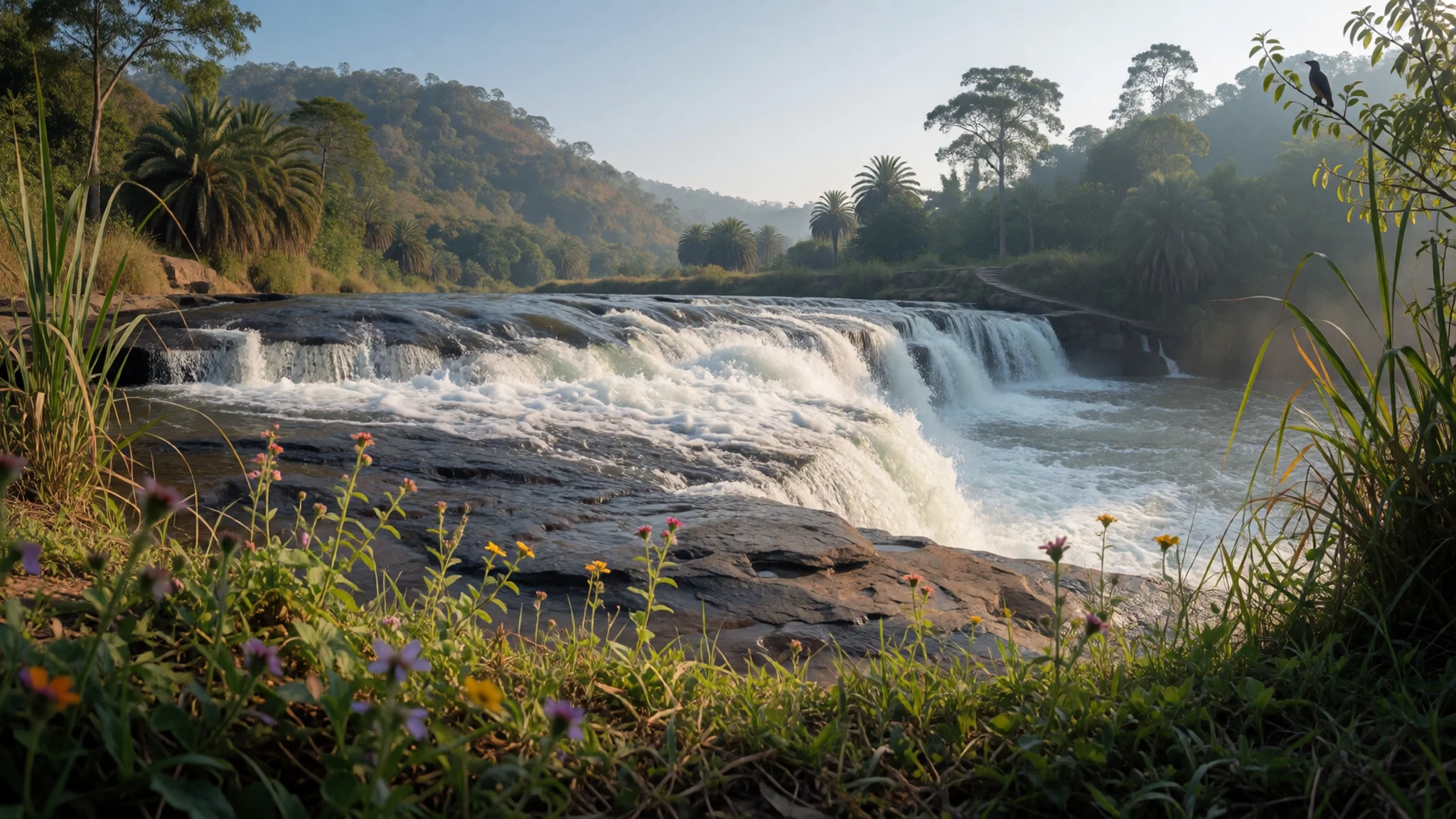
- Kaieteur Falls — Potaro River, Kaieteur National Park
Kaieteur is the great single drop of the Potaro River and the best-known waterfall in Guyana. It is a plane trip from Georgetown rather than from Kamarang, and is usually sold as a day trip. Operators run it on set days, so book ahead and expect weather delays.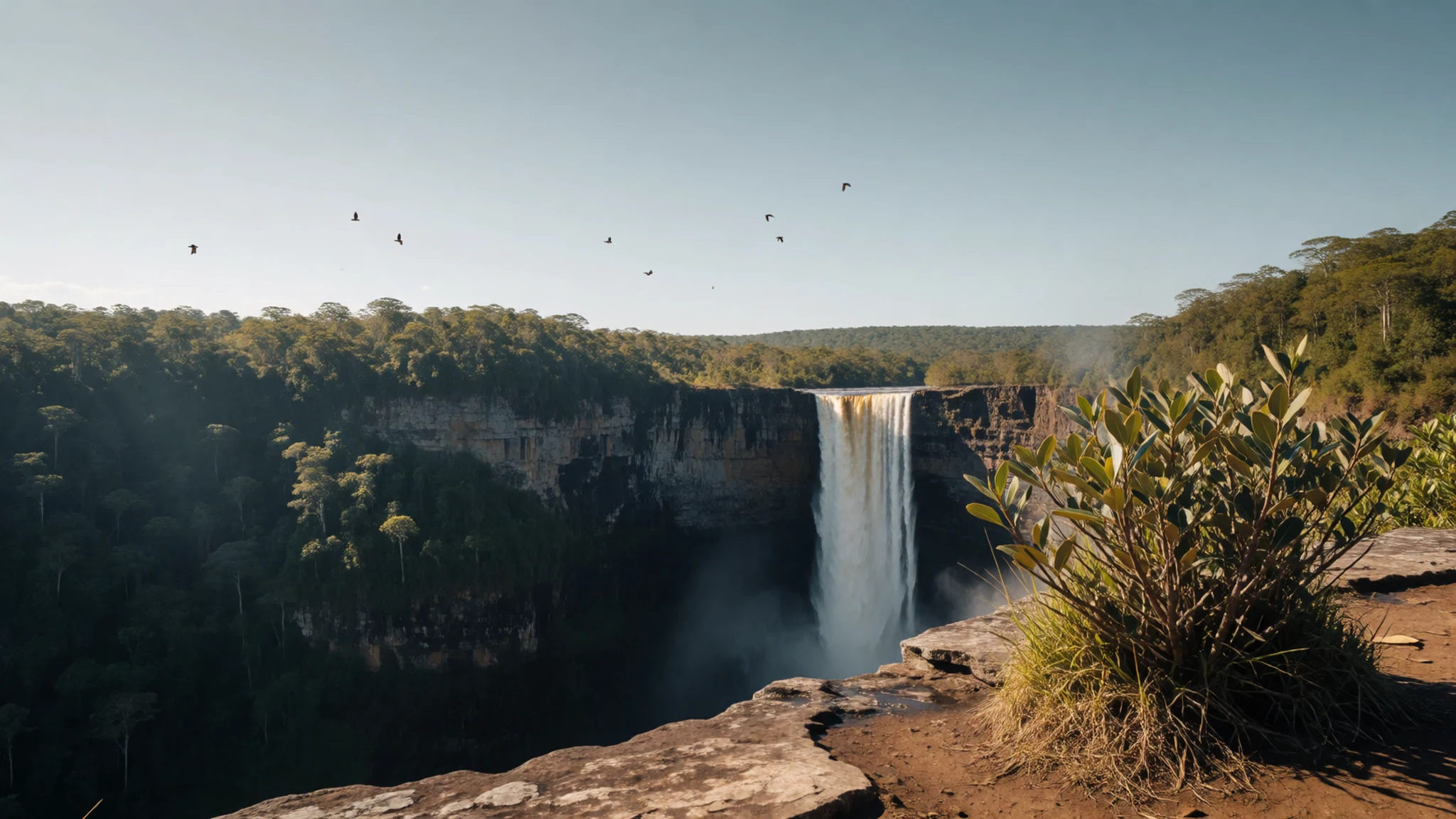
Culture
Kamarang is an Amerindian village, and its home culture is that of the Akawaio, one of several Indigenous peoples of Guyana's interior. Life here is organised around the river, the family farm plot, fishing and hunting, and the cycle of the rains. Community decisions are usually taken locally, often through a village council, so any visit that involves boats, guides or photography should be arranged with that in mind rather than assumed. Guyana as a whole is a mix of peoples, Amerindian, African, Indian, Chinese, European and mixed, and the legacy of colonial rule still shapes politics. Talk about ethnic relations, land or national politics can become heated quickly, and visitors are best advised to listen more than they speak, and to avoid taking sides. Many Guyanese are open and happy to discuss most subjects, but an outsider can be seen as part of the problem. Mining, land rights and the territorial dispute with Venezuela are especially sensitive topics in the interior. Hospitality is real, and offers of food or a place to sit should be accepted with thanks. Visitors who stay in the village should talk to the host about what is expected before they arrive. Take your shoes off at the door of any Guyanese home unless the host tells you otherwise.
What to wear
Kamarang's traditional dress comes from Amerindian practice across Guyana's interior. Beadwork is the best-known craft, made into aprons, necklaces and armbands, alongside woven cotton and plant-fibre items. On festival and ceremonial days, some people wear feather headdresses and decorated garments, though these are for special occasions rather than daily wear. Today, everyday clothing in Kamarang is simple and practical: t-shirts, shorts or skirts, long trousers for work, rubber boots in wet weather and sandals around the house. School children wear uniform. Mining workers wear heavier work clothing and boots. Visitors should dress for heat, humidity, rain and insects. Lightweight long sleeves and trousers in quick-drying fabric work better than cotton, which stays damp. Bring a waterproof jacket, a hat, and sturdy shoes or boots with good grip for muddy paths and boat landings. Sandals suit the village and slippers are handy for taking on and off at doors. Dress modestly in the village, avoiding very short shorts and swimwear away from the river bank, and ask before photographing anyone in traditional dress.
What to eat
- Pepperpot — Georgetown restaurants, or a family kitchen on a feast day
Guyana's national dish is a dark, slow-cooked stew of pork or other meat, red peppers, cinnamon and casareep, a syrup made from cassava. It is often saved for Christmas and special occasions, and is eaten with bread or roti. Expect it in Georgetown more easily than in Kamarang.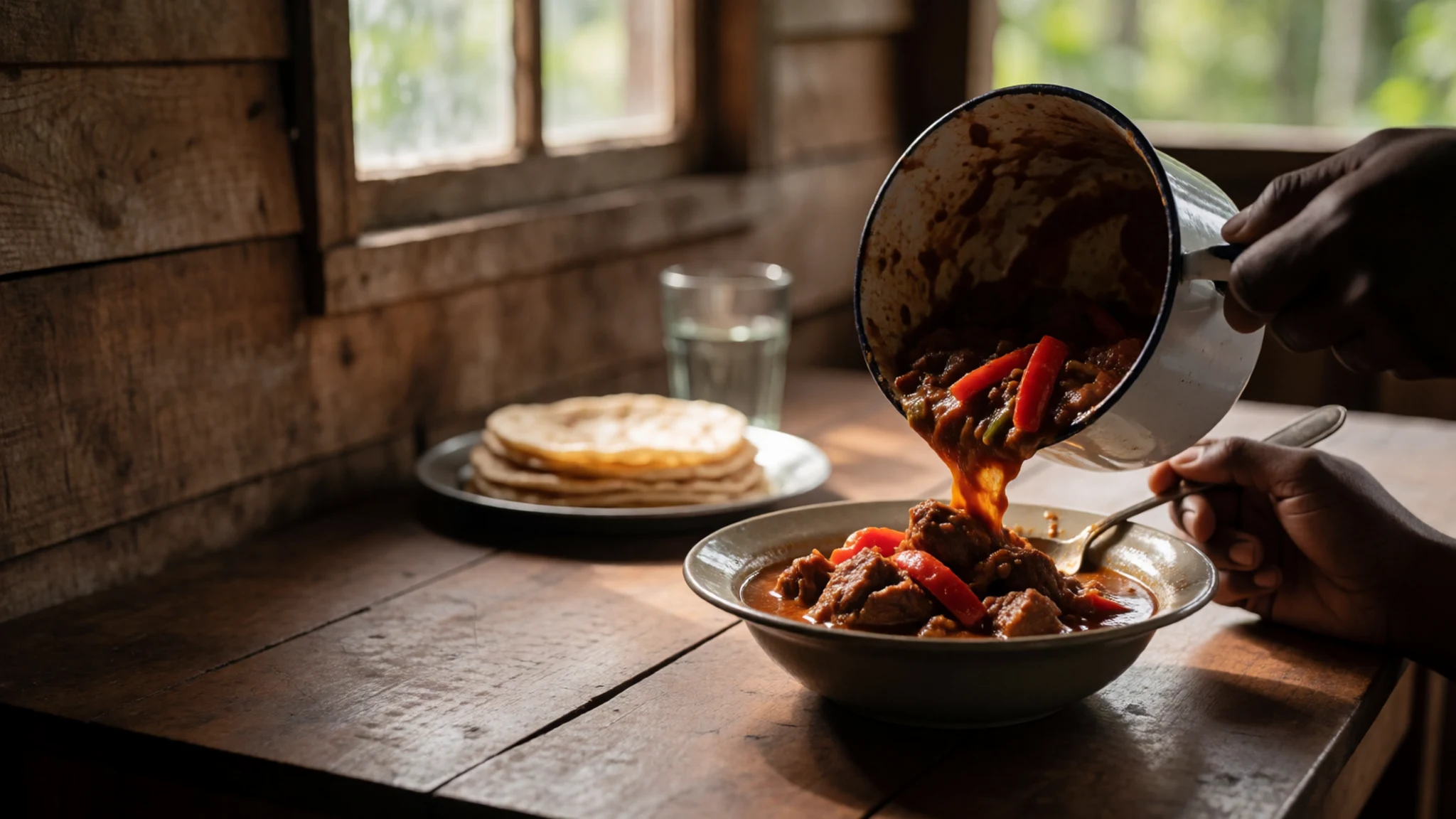
- Curry with roti or rice — Small eateries and roti shops, and village kitchens
Indian-influenced curries are the base of Guyanese cooking, made with chicken, pork, beef, pumpkin or aubergine. They arrive with roti or rice. In small towns and interior villages, a curry is the most dependable hot meal on offer.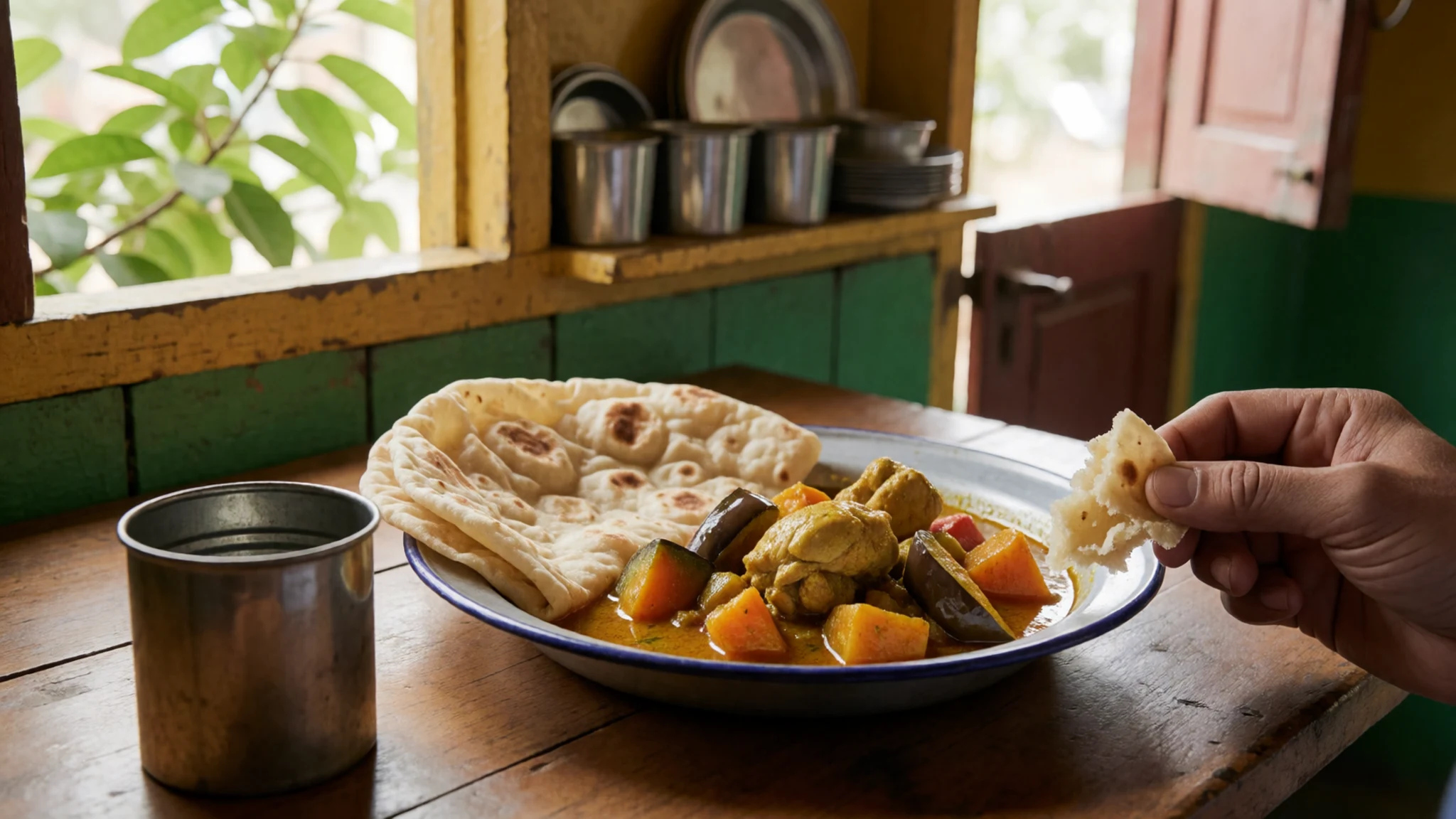
- Chow mein — Chinese restaurants and takeaways in larger towns
Chinese-style noodles are a staple of Guyanese menus, stir-fried with vegetables and chicken, pork or shrimp. A plate of chow mein often appears next to curry as the second choice in smaller towns and is cheap, filling and quick to serve. - River fish with cassava — Village homes and jungle lodges, by arrangement
In the interior, meals draw on what is caught or grown nearby. Freshwater fish is typically boiled or fried and eaten with cassava bread, farine or rice. Availability depends on the season and the catch, so it suits an arranged meal better than a drop-in. - Banks Beer and Guyanese rum — Shops and bars in Georgetown and larger interior towns
Banks is the national beer, made as a lager and as a milk stout. Dark Caribbean-style rum, including the El Dorado range, is the favourite spirit. Both are usually found cold or at room temperature in the shop, rather than in an interior village bar.
Plan it
Best time. February–March and September–October are the drier spells, when river travel and flights are most reliable. Heavy rain falls from late spring through midsummer and again from late autumn into the new year, and flash floods can cut access.
How long. 2–3
Getting there. Fly to Georgetown, then take a small charter or scheduled aircraft to Kamarang Airport, which sits beside the village. Ask a Georgetown tour operator or flight company for current schedules. From the airstrip, onward travel is by boat or on foot.
Budget. mid
Tips
- Arrange guides, boats and a place to stay through a Georgetown operator or the village council before arriving
- Carry cash in small notes, as cards and cash machines are unlikely to be available in the interior
- Bring enough drinking water or purification tablets, plus insect repellent and any medicine you need
- Allow extra days, since weather can delay or cancel small flights
- Pack light, as small aircraft have strict baggage limits
Etiquette
- Ask before photographing people, homes or ceremonies
- Take your shoes off when entering a home
- Avoid arguments about politics or ethnic relations
Nearby
Sources
- Wikidata Q251968 (CC0)
- Wikipedia, Kamarang (CC BY-SA 4.0)
- Wikivoyage, Guyana (CC BY-SA 4.0)
- Photo: Kamarang, by Craptor360, via Wikimedia Commons (CC BY-SA 4.0)
