Kanuku Mountains
Kanuku Mountains, Guyana
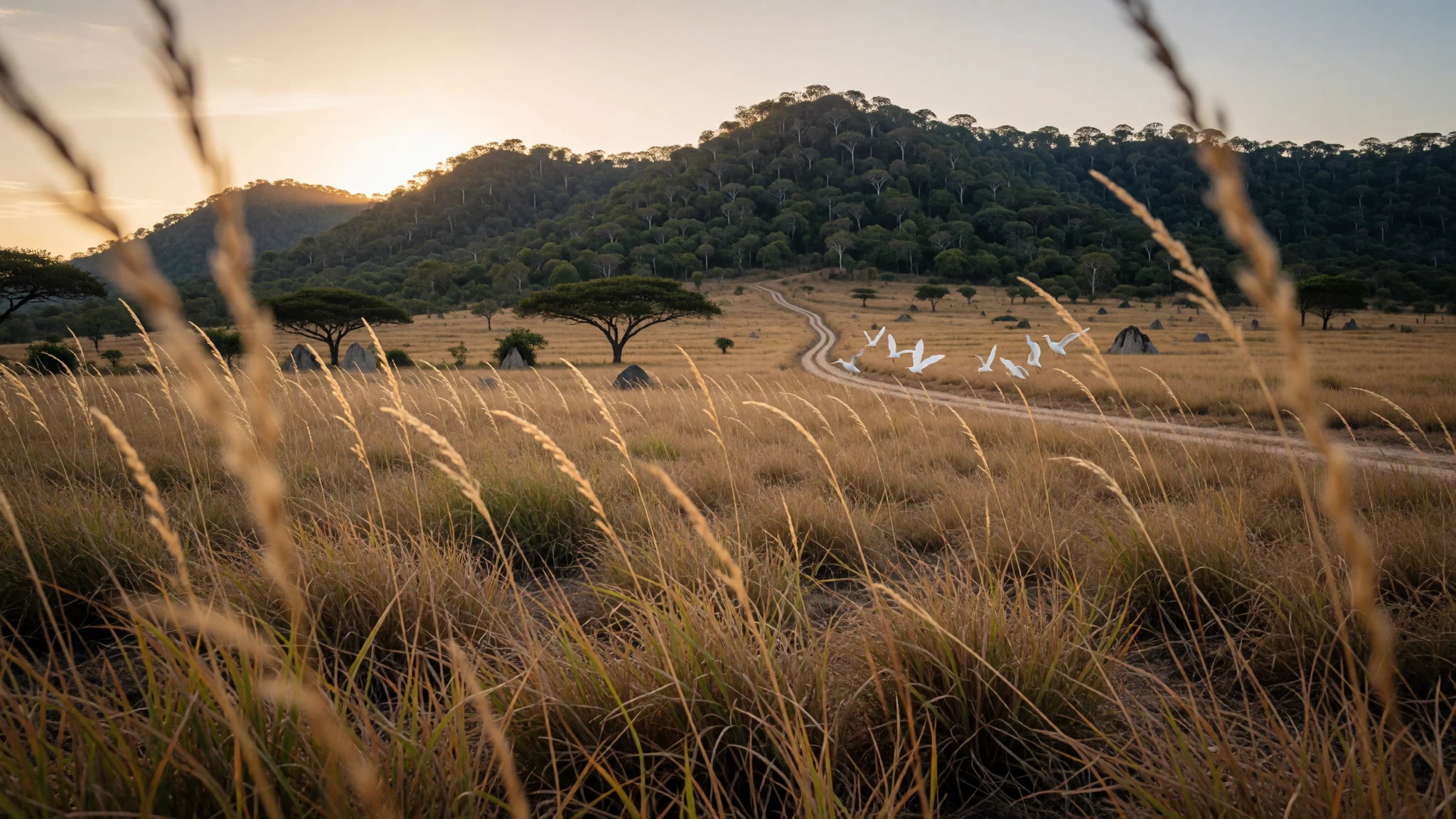
Kanuku Mountains offer forested ridges above open Guyanese savannah, with giant otters, harpy eagles and Indigenous communities who still live from the land.
The place
The Kanuku Mountains stand in southern Guyana, in the Upper Takutu-Upper Essequibo region, in country that feels very far from the coast. The name comes from the Wapishana language and means 'forest', which suits a range whose slopes and lowlands are thick with trees and animals. Two blocks make up the mountains: the Eastern Kanuku and the Western Kanuku, divided by the Rupununi River. The river runs through the gap and out onto the plains.
Those plains, the Rupununi savannah, are the key to understanding the setting. The grassland is flat and wide, broken by termite mounds and scattered trees, and then the ridges lift suddenly from the horizon, blue in the haze and darker green after rain. The highest peak reaches 1,067 metres, so these are modest mountains by world standards, but the savannah around them sits at only 120 to 150 metres, and the contrast makes the range look taller than the figures suggest.
Lethem, the main town of the region, gives a clear view of the mountains across the grass, and many travellers see them first from there. Reaching the area is part of the experience. This is a remote part of the country, with long distances, few roads and small settlements, and the interior is mostly visited through villages and local guides rather than by independent wandering.
The mountains became a National Protected Area in 2011, and that status shapes how visitors are received: access is arranged locally. Expect heat, insects and enormous skies rather than signposted trails and visitor centres.
Its story
The Kanuku Mountains matter most for what lives in them. The lowland forests hold 53% of the bird species known in Guyana, and about 70% of the country's mammals are found in the range. That is a remarkable share for one area, and it explains why conservation here has attracted attention far beyond Guyana. Giant otters work the waterways, harpy eagles hunt in the canopy, and the arapaima, a huge freshwater fish, swims in the rivers and pools of the surrounding lowlands.
The area is mainly uninhabited inside the mountains themselves, but it is not empty country. Around the range live the Macushi and Wapishana peoples, in 21 communities. They use the resources of the mountains and forest for subsistence: hunting, fishing, gathering and farming small plots. Their knowledge of the land is the reason much of the wildlife has survived, and it is also why protection here has to be negotiated with people who live beside it rather than imposed on an empty map.
In 2011 the range was formally protected as a National Protected Area. It covers 611,000 hectares, which is a large block of forest, mountain and savannah edge, and it is looked after through the Kanuku Mountains Project. The protection is recent, and the practical questions, such as how many visitors the area can take and who benefits from them, are still being worked out. For a traveller, that means the place is less polished than a famous park, and more honest about being a working landscape.
What to see
- Kanuku views from Lethem — Lethem, Rupununi
Lethem is the easiest place to see the range, with the ridges standing blue and dark along the horizon beyond open grass. Early morning and late afternoon give the clearest light and the coolest air. It is a viewpoint rather than an excursion, so use it to get your bearings.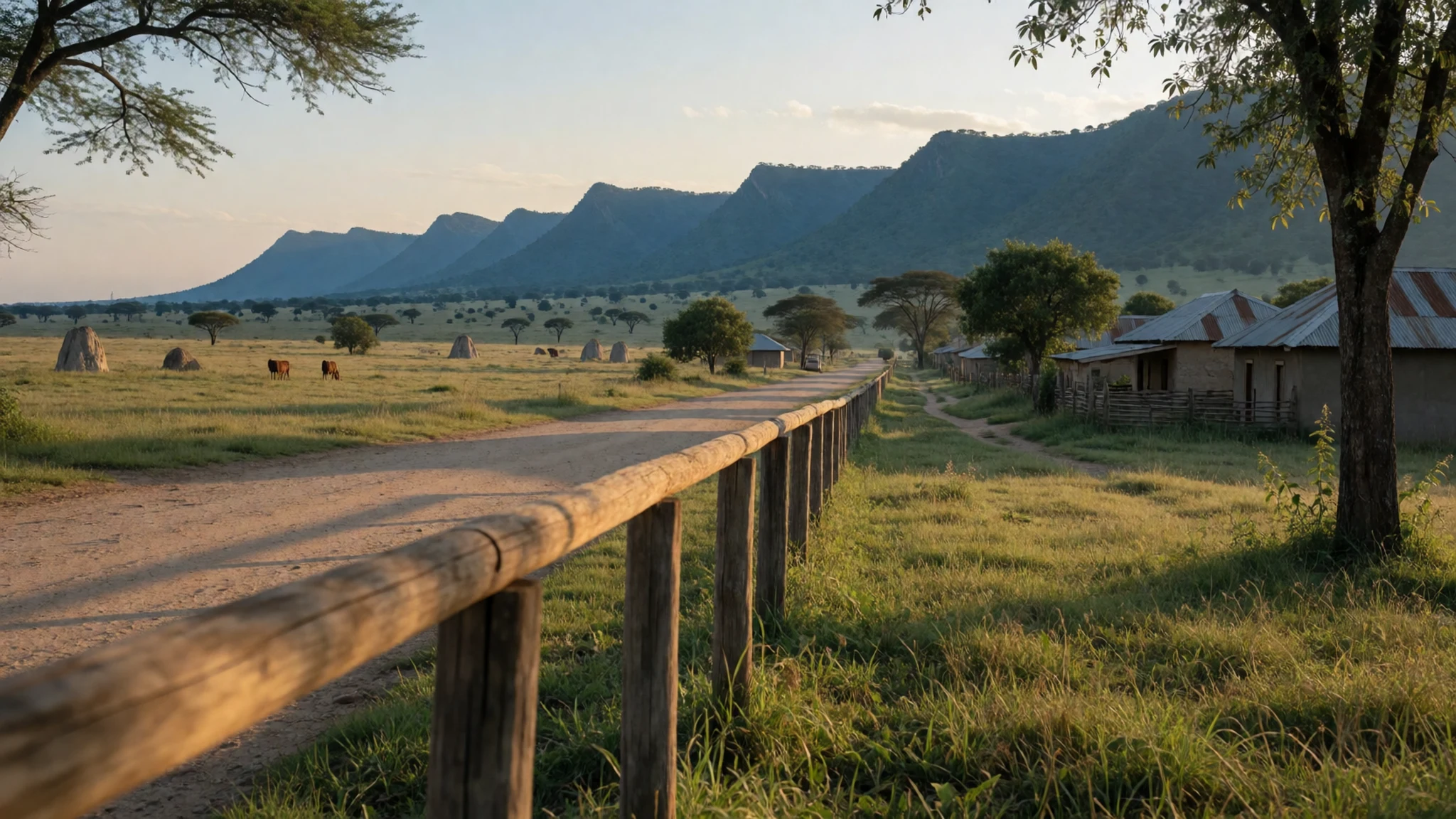
- The Rupununi savannah — Rupununi region
The grassland that surrounds the mountains is a destination in its own right. It is flat, hot and wide, with termite mounds, scattered trees and wetter patches that draw birds. Guided drives or walks at dawn and dusk give the best chance of seeing wildlife, and avoid the fierce midday sun.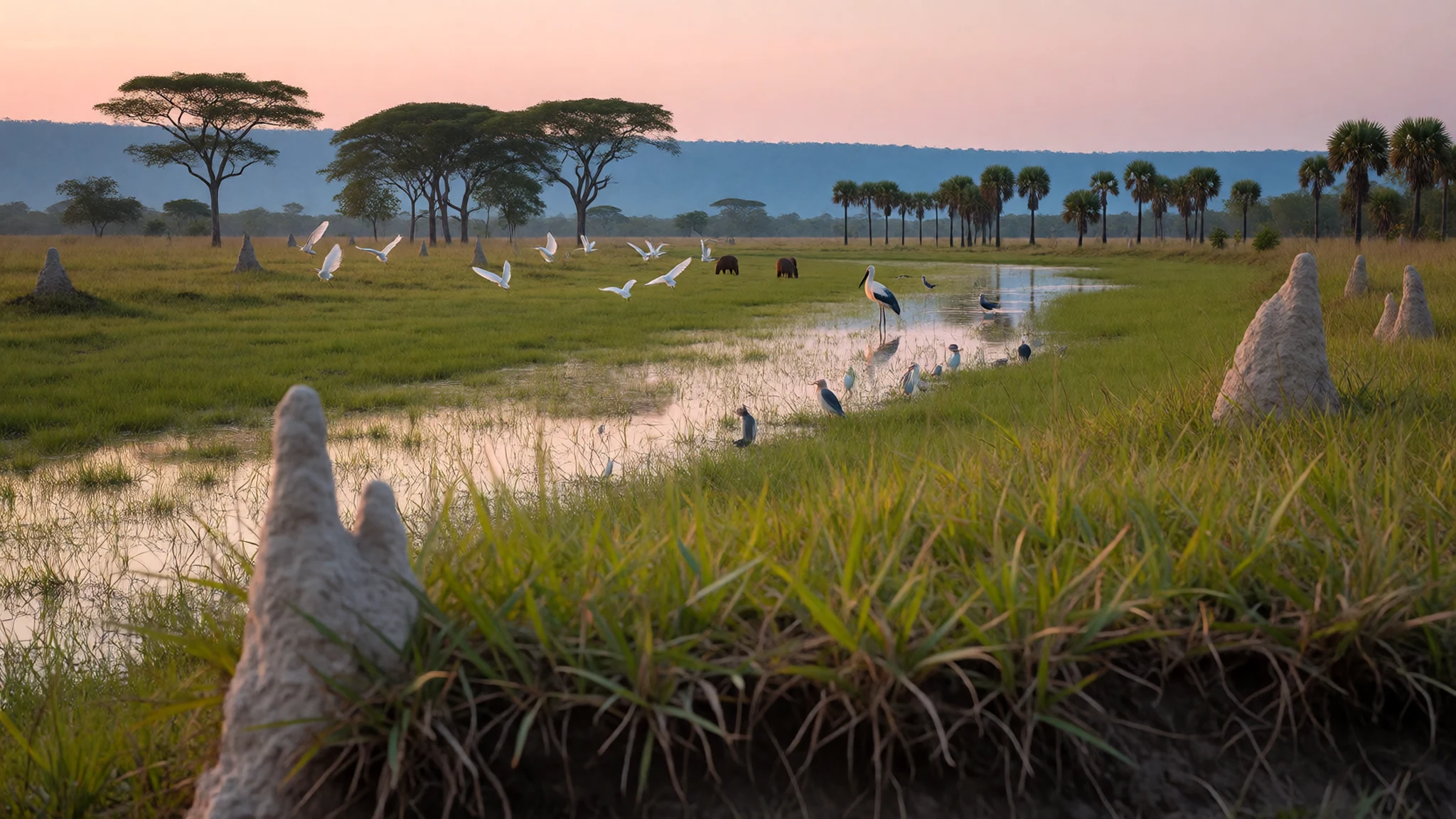
- The Rupununi River gap — Between the Eastern and Western Kanuku
The river that separates the Eastern and Western Kanuku is the natural heart of the range. Boat trips here, arranged through local operators, give a slow way to watch for otters, herons and kingfishers while the forested ridges close in on both sides. Water levels change with the season.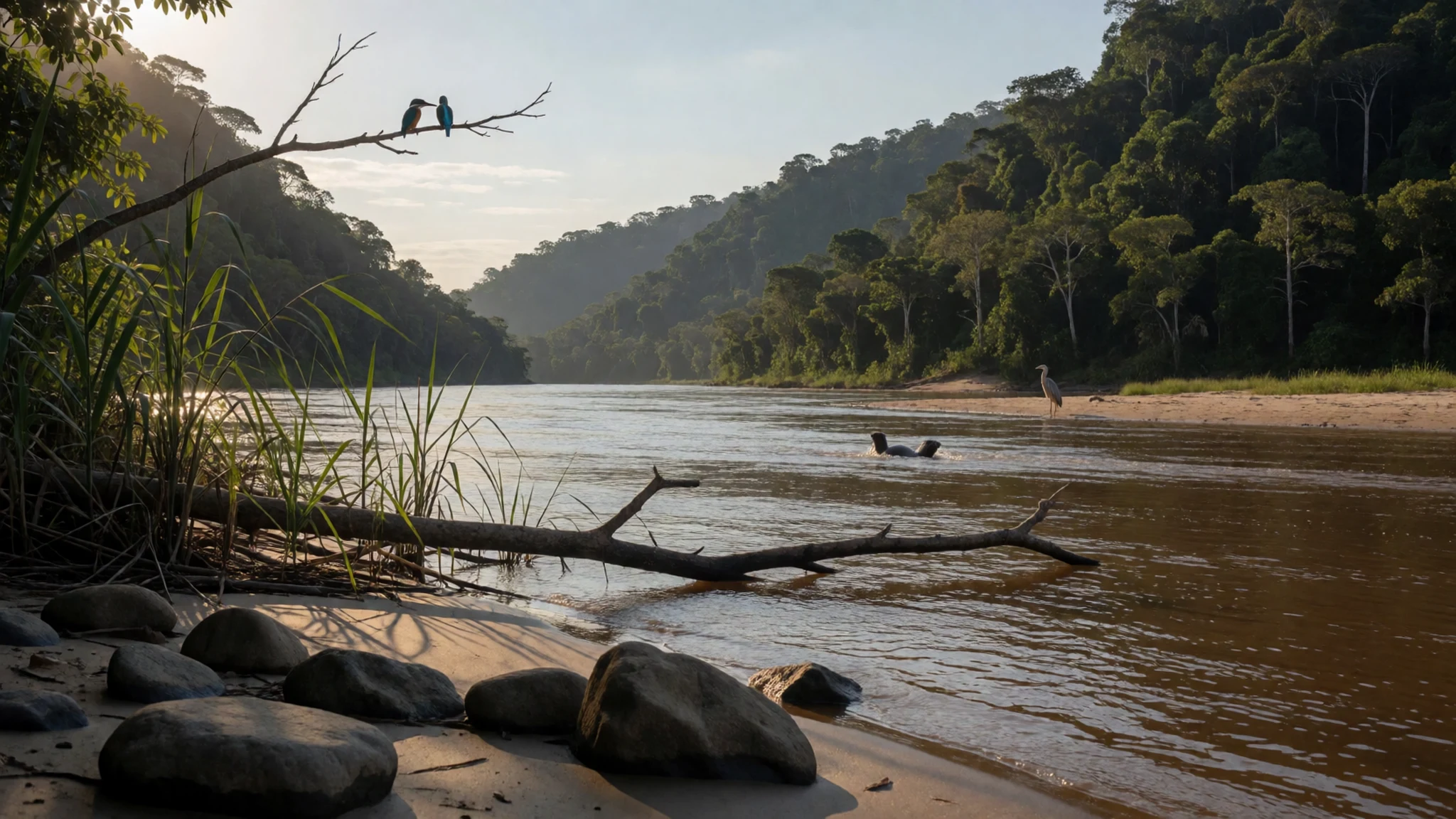
- Lowland forest birdwatching — Lowland forest edge of the range
The forests at the foot of the mountains hold a large share of Guyana's bird species, so a morning with a local guide can produce a long list, from parrots to raptors. Harpy eagles are possible but never guaranteed. Bring binoculars, start before sunrise and accept that patience matters more than luck.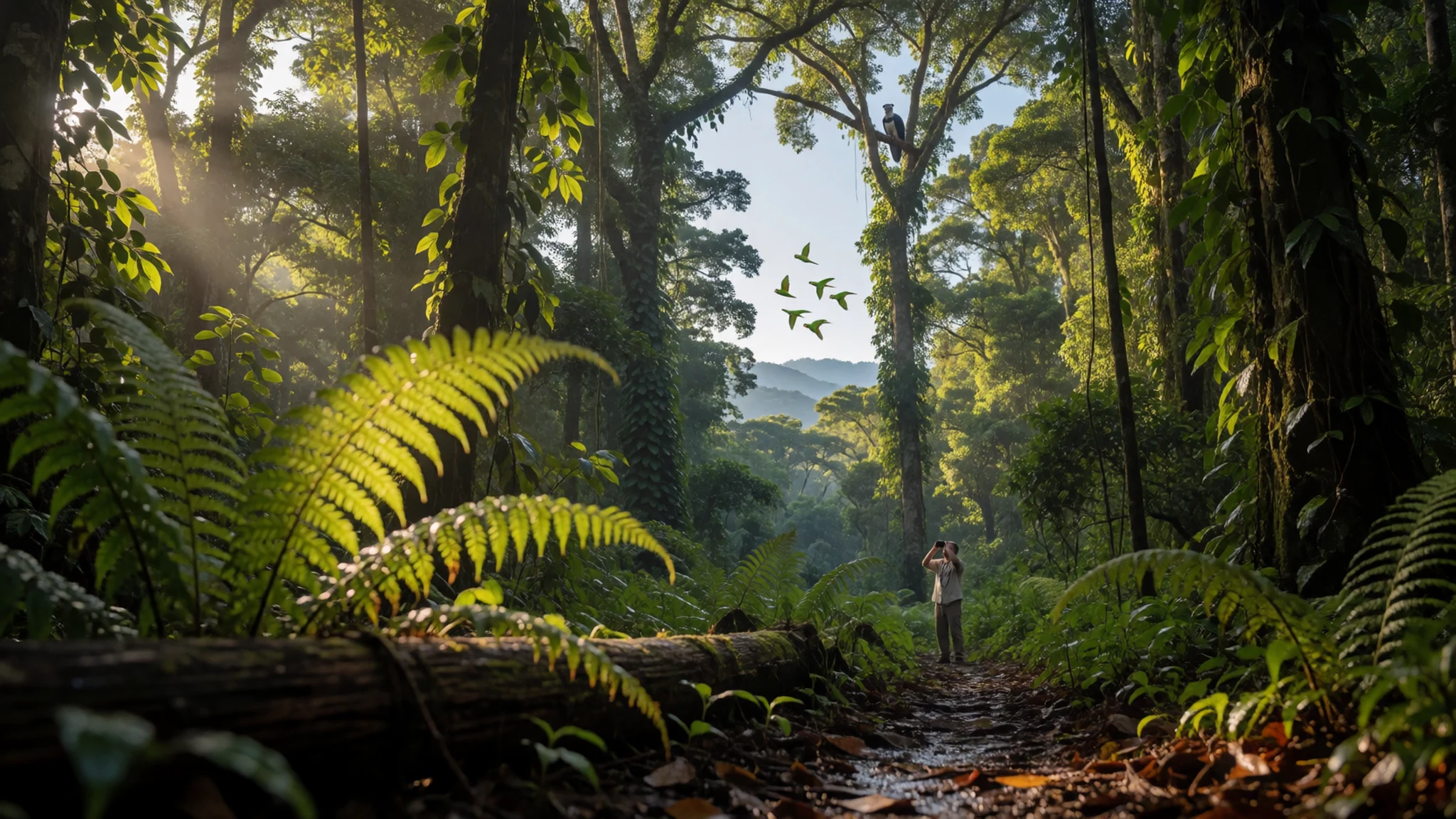
- Macushi and Wapishana communities — Villages around the Kanuku Mountains
Villages around the range are home to the Macushi and Wapishana, and some welcome visitors for guided walks, meals or overnight stays. Arrange this in advance through a local operator or the community itself, so the visit is wanted and the money reaches the village. Expect simple facilities and warm, unhurried company.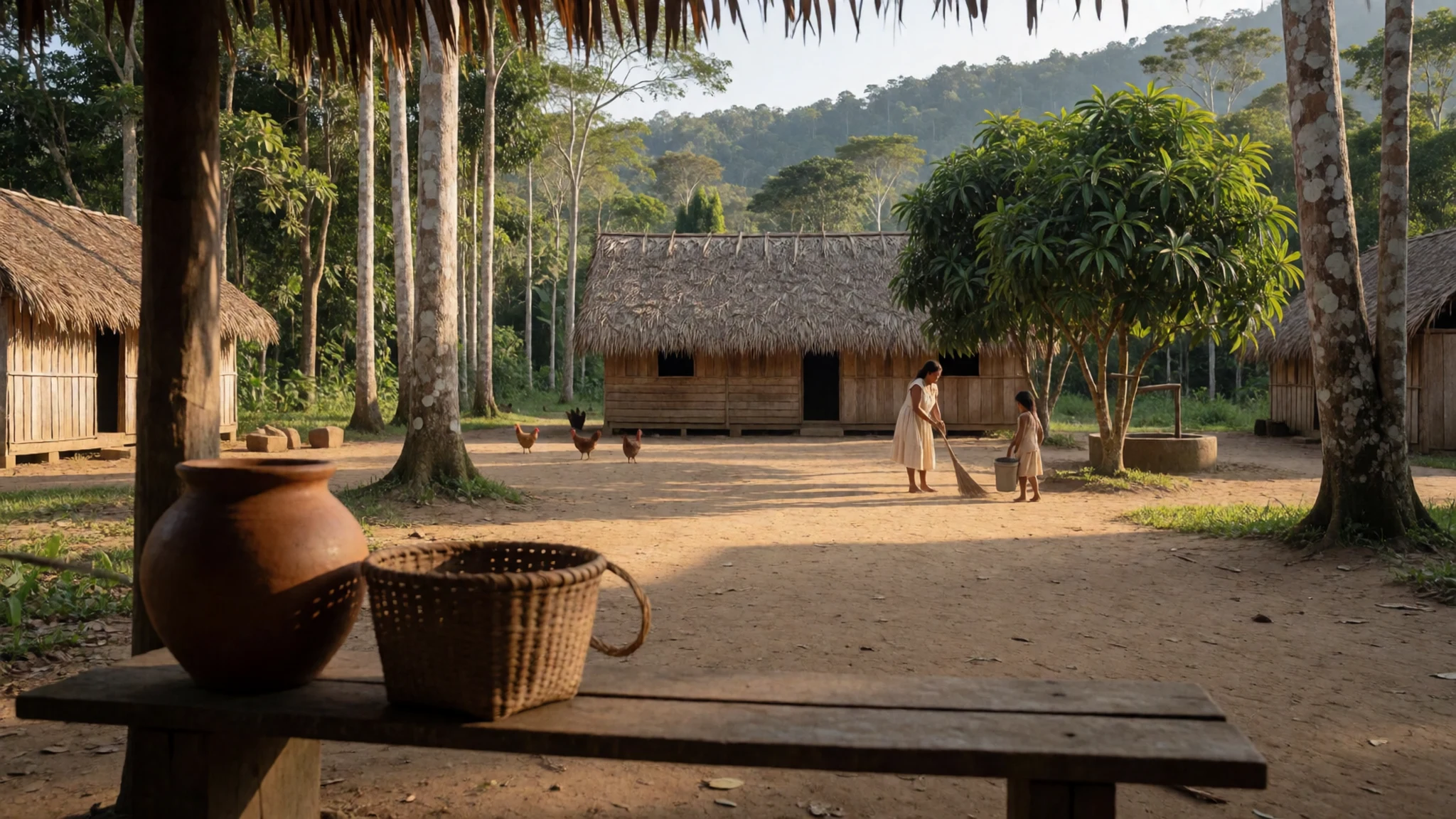
Culture
The Kanuku Mountains sit within the homelands of the Macushi and Wapishana peoples, who live in 21 communities around the range. Their relationship with the mountains is practical and long-standing: the forest provides food, building material and medicine, and the rivers provide fish. The Wapishana name for the range, meaning 'forest', says a good deal about how it is understood, as a living place before it is a scenic one.
Daily life in the villages follows the seasons. Farms of cassava are central, hunting and fishing supplement them, and families share work and food. English is the national language of Guyana and is widely understood, but Wapishana and Macushi are still spoken at home, and visitors who learn a greeting are usually met with real warmth.
The savannah has a second tradition alongside the Indigenous one: cattle ranching, with horses, long distances and a slow, outdoor rhythm. Together these shape a culture that is rural, self-reliant and used to visitors arriving through guides and personal introductions rather than through big tourism businesses.
Because the mountains are a protected area and the villages depend on them, how visitors behave matters. Rubbish, noise and uninvited wandering are noticed. Paying fairly for guiding and hospitality is the simplest way to support the people who look after the land.
Before photographing anyone in a Kanuku-area village, or entering a family's farm or house, ask permission and accept a refusal without argument.
What to wear
Traditional dress in the Kanuku region belongs to the Macushi and Wapishana peoples, and its best-known elements are beadwork and feathers. Beaded ornaments, woven items made from forest fibres and feather headdresses are usually seen at festivals, cultural events and ceremonies rather than every day. Materials come from the forest and farms: seeds, fibres, cotton and feathers, sometimes combined with glass beads. If you are shown such pieces, ask about their meaning instead of treating them as costumes.
What people wear now is practical and much like elsewhere in rural Guyana: T-shirts, shorts, light trousers, dresses, rubber boots for wet ground and wide-brimmed hats on the savannah. Ranch workers often wear long sleeves, jeans and sturdy boots against sun, thorns and insects. Clothing in villages is generally modest, and swimwear is for the river only.
A visitor should dress for heat, sun and bites. Choose light, long-sleeved shirts and long trousers in quick-drying fabric, in muted greens, browns or greys that suit wildlife watching. Bring a hat, good sunglasses and a light rain jacket, especially in the wetter months. Closed shoes or boots with grip are essential for forest paths and muddy tracks, and sandals are useful for boats and camp. Cover shoulders and knees when you enter a village, out of respect for local norms.
What to eat
- Cassava bread — Village kitchens and community meals around the Kanuku Mountains
Flat rounds of bread made from grated and pressed cassava, baked until crisp. It is a staple in Indigenous communities and keeps well on journeys. Eat it with fish, meat or pepperpot, and ask a village cook to show how the cassava is processed.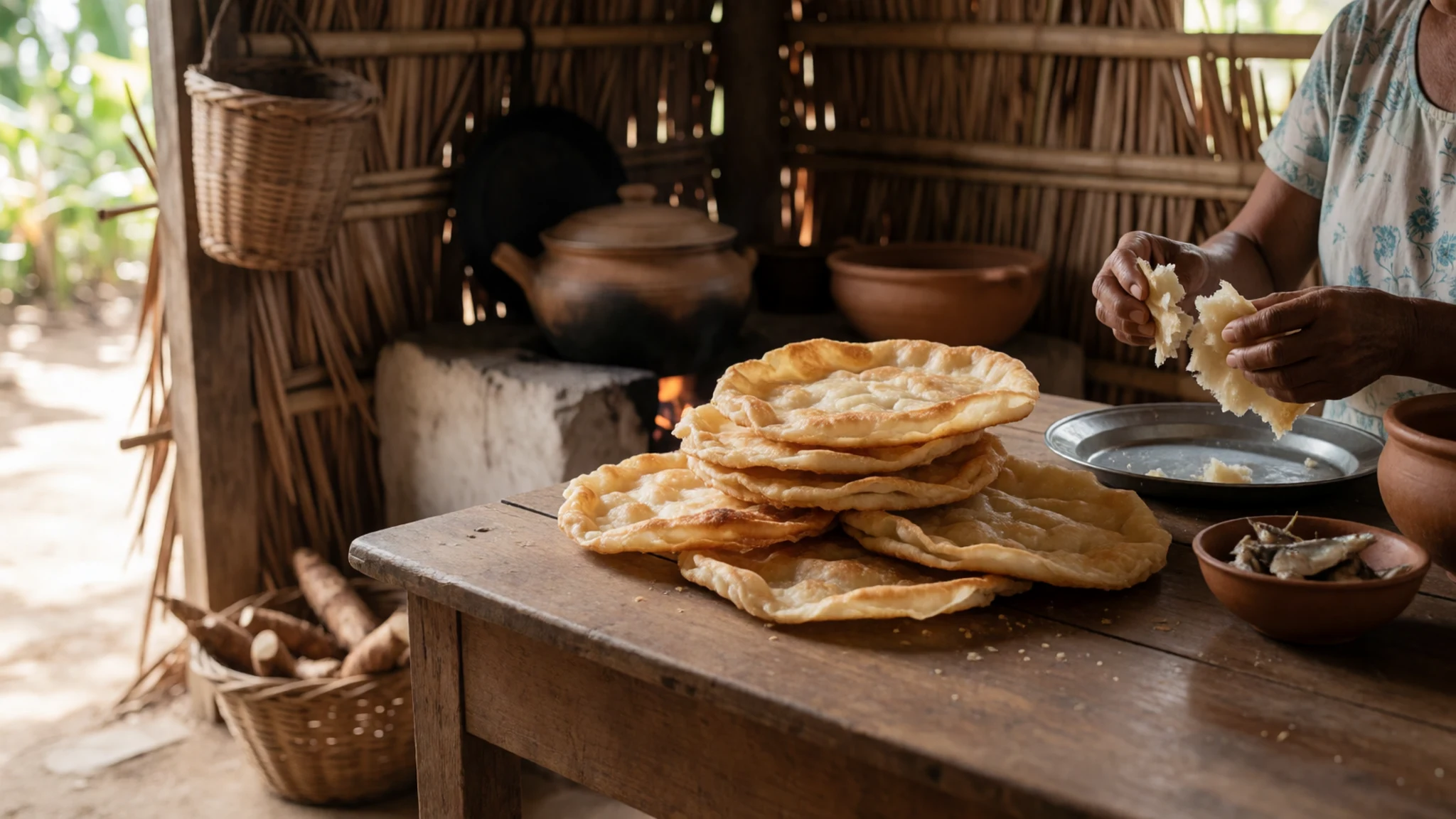
- Pepperpot — Homes, guesthouses and community events in Lethem and nearby villages
A rich, dark stew of meat simmered with cassareep, a sauce from cassava juice, and hot peppers. It is a Guyanese dish with Indigenous roots, and it tastes better after long cooking. Often served at celebrations and family gatherings.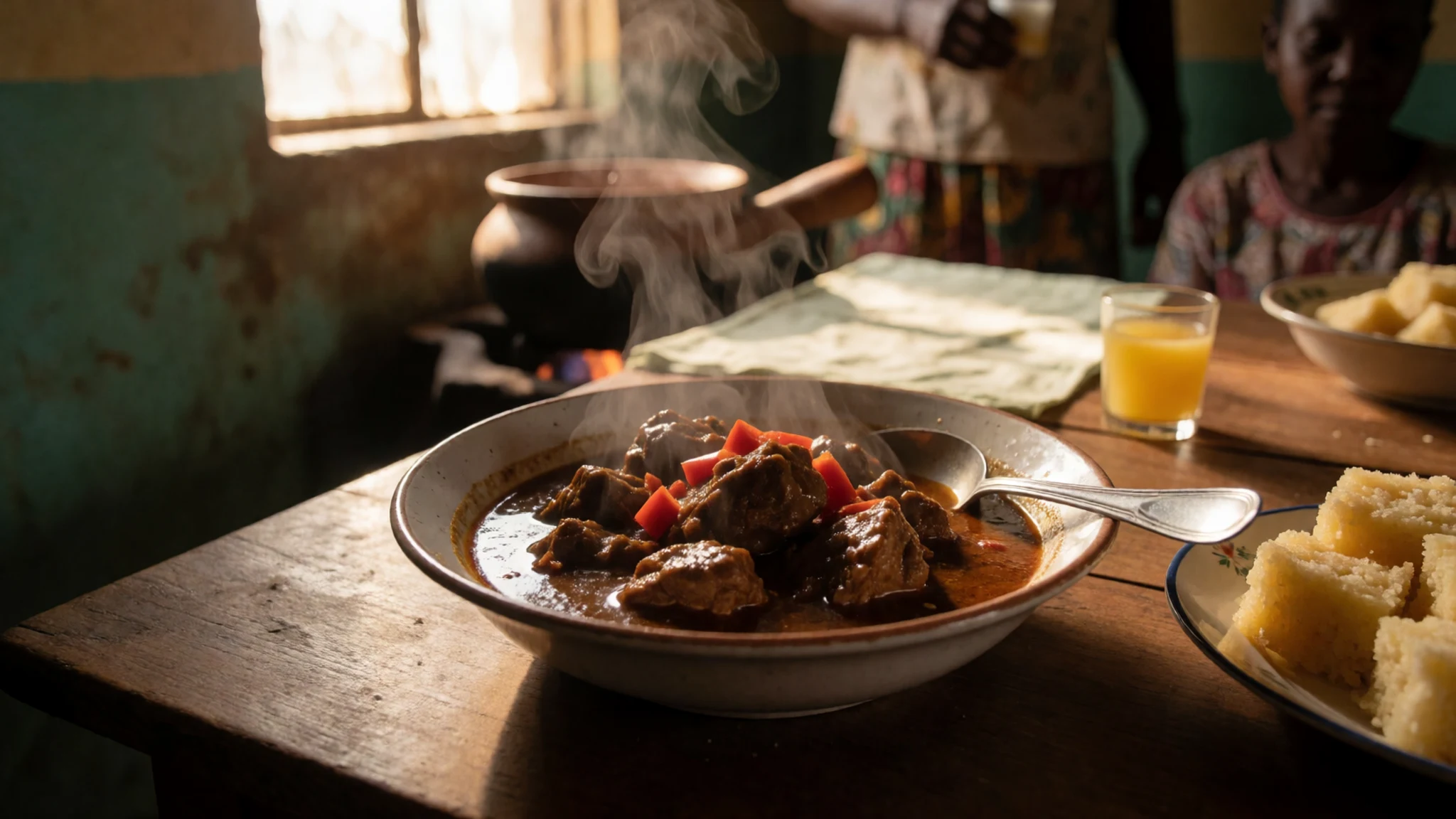
- Farine — Village meals and market stalls in the Rupununi
Toasted cassava granules with a dry, nutty texture, sprinkled over rice, soups or fish for body and crunch. It is simple, filling and made to last. You will often see it on the table beside fish and stews. - Grilled river fish — Riverside villages and lodges reached by boat
Freshwater fish caught locally, usually grilled or stewed with peppers and served with cassava or rice. The species depend on the season and the river, so ask what was caught that day. Check that it comes from sustainable local fishing. - Rupununi beef — Eateries and guesthouses in Lethem and ranch communities
The savannah has cattle ranches, so beef appears in curries, stews and grills across the region. Cuts are often cooked simply over fire or in pots with local seasoning. It is hearty food after a long day outdoors.
Plan it
Best time. November to March is generally the drier part of the year on the Rupununi savannah, which makes tracks easier, rivers calmer and wildlife easier to spot, though days are hot. The middle of the year is wetter, with muddier roads and higher rivers; that suits some boat trips but makes overland travel harder. Check local conditions before booking.
How long. 3–5
Getting there. Fly from Georgetown to Lethem, the main town near the range, or travel overland from Brazil or Georgetown if you have time and a suitable vehicle. Flight schedules change, so check with an operator. From Lethem, reach the mountains and villages by arranged road and boat transfers.
Budget. mid
Tips
- Arrange a local guide or community visit before you go, since access to the protected area is managed locally
- Carry cash in small notes, as cards and cash machines are scarce outside Lethem
- Bring insect repellent, sun protection and more drinking water than seems necessary
- Start wildlife outings at dawn, when the savannah is cooler and animals are more active
- Allow spare days for flights and weather changes, as schedules in the interior can shift
Etiquette
- Ask before photographing people, homes or farms in a village
- Pay guides and hosts fairly and follow their advice on routes and wildlife
- Take all rubbish out with you and keep noise low near wildlife
Nearby
Sources
- Wikidata Q3656188 (CC0)
- Wikipedia: Kanuku Mountains (rev 1367763065) (CC BY-SA 4.0)
- Kunuku Mountains, Lethem — Kevin Gabbert (Public domain)
- Lucy Shepherd during her amazon uncharted expedition — Greenhen23 (CC BY-SA 4.0)
- Lucy Shepherd in deep jungle hunting for food — Greenhen23 (CC BY-SA 4.0)
- Lucy Shepherd smiling in the jungle — Greenhen23 (CC BY-SA 4.0)
- Rupununi savannah Guyana — Treez44est (CC BY-SA 2.0)
- Wikivoyage (CC BY-SA 4.0)


Wildlife
- Harpy eagle (animal)
Picture an eagle so large it rules the treetops: that is the harpy eagle, a mighty bird of the rainforest roof. It hunts among the canopy of the Kanuku region, usually high in the tallest trees, though the notes do not say when it is seen. Scan upward with binoculars from a distance, whisper rather than talk, and trust your guide's patient eyes. Never offer food, and leave its space undisturbed, because this bird has become scarce in many places.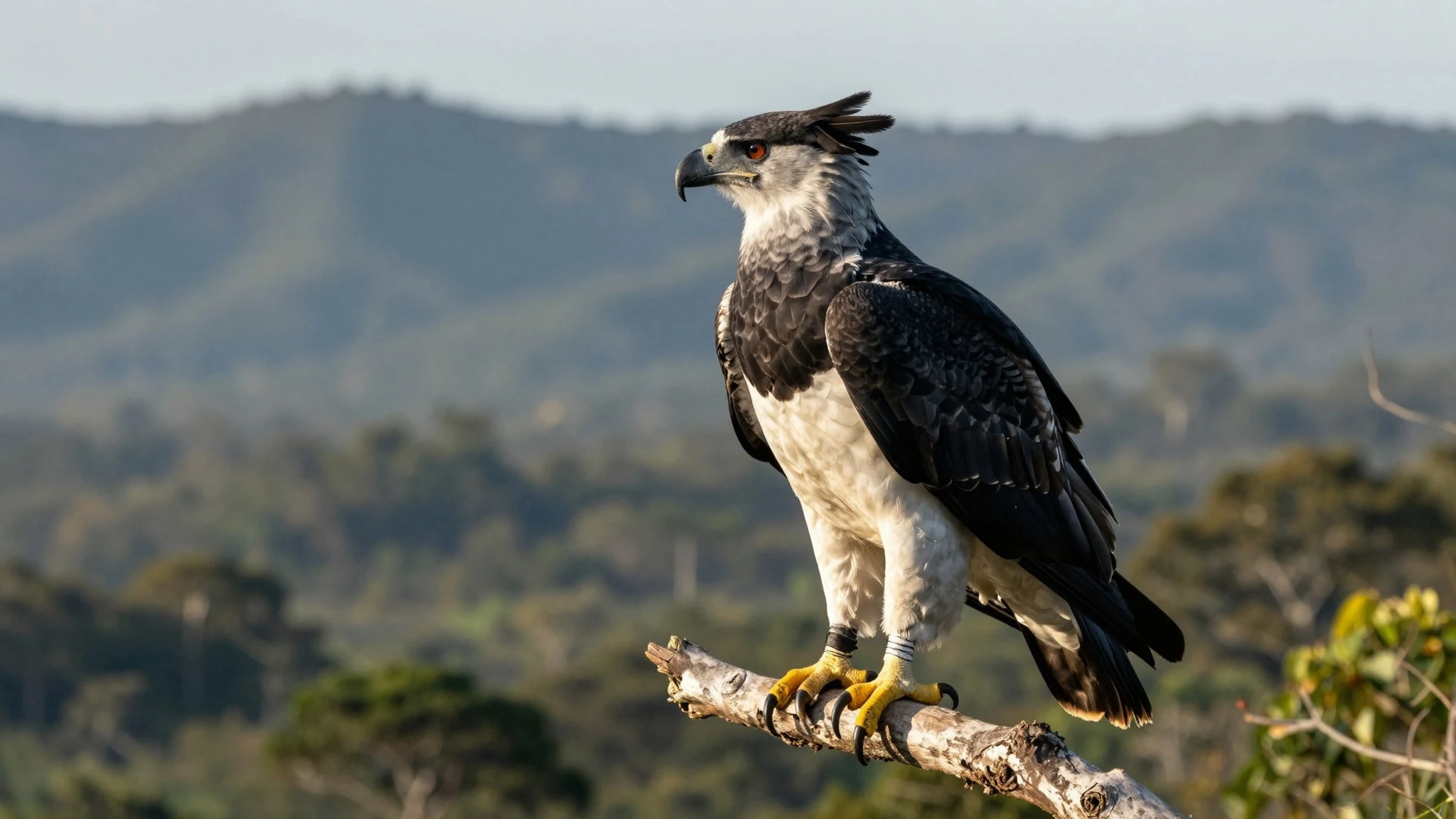
- Harpy eagle (bird)
Picture an eagle so large it rules the treetops: that is the harpy eagle, a mighty bird of the rainforest roof. It hunts among the canopy of the Kanuku region, usually high in the tallest trees, though the notes do not say when it is seen. Scan upward with binoculars from a distance, whisper rather than talk, and trust your guide's patient eyes. Never offer food, and leave its space undisturbed, because this bird has become scarce in many places. - Giant otter (animal)
The giant otter is a huge, chatty river weasel that lives in close family teams. You may meet it along the waterways of the Kanuku lowlands, and because it is active only in daylight, any bright hour offers a chance; the notes name no season. Watch from a respectful distance, keep voices low, and let a local guide read the water, since families guard their stretch and may protest if crowded. Never feed them.