Eagle Beach
Eagle Beach, Aruba
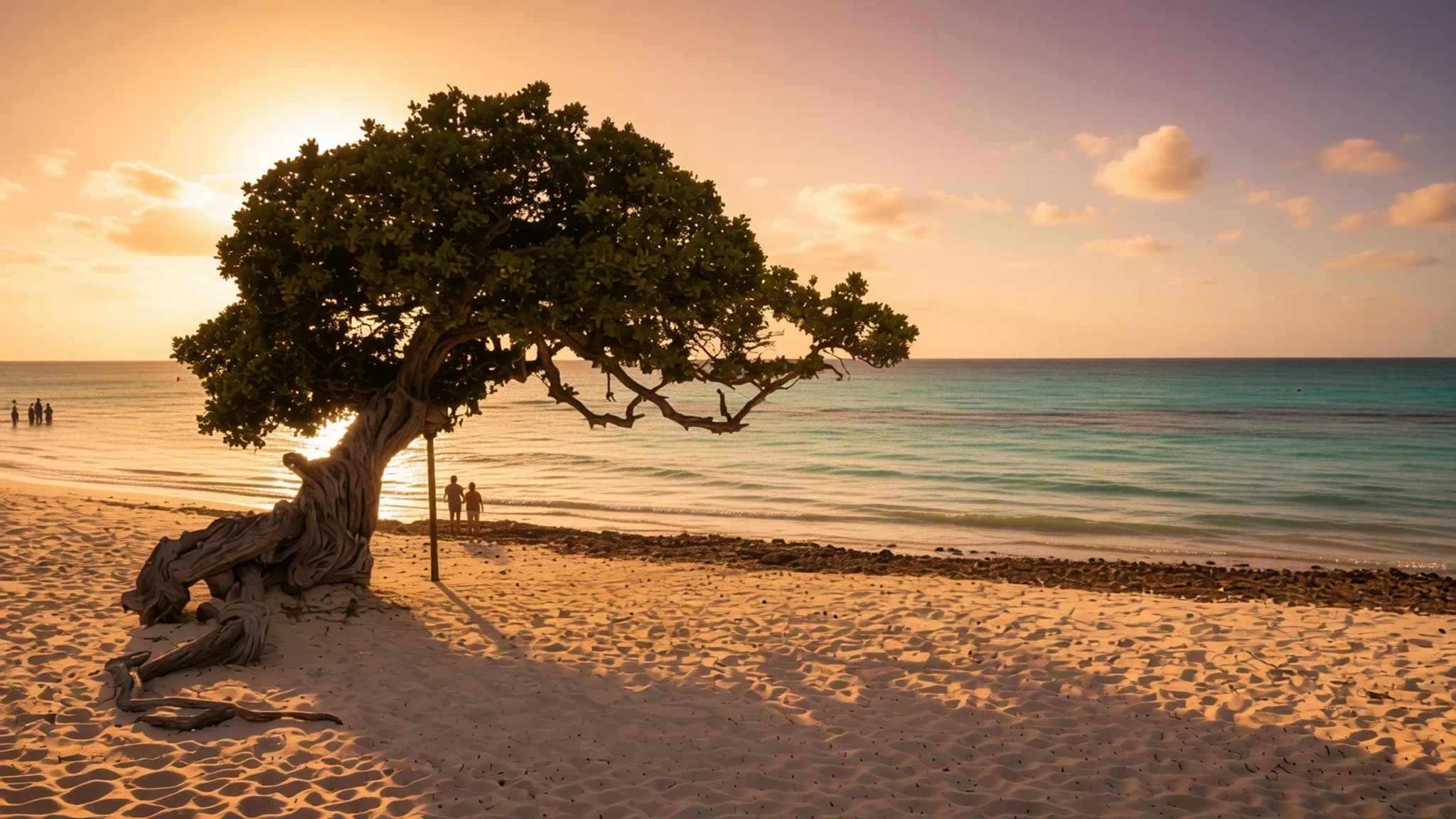
Eagle Beach is a wide, windy public strand of pale sand and calm water on Aruba's southwest coast.
The place
Eagle Beach is the long pale strand on Aruba's sheltered southwest coast, a short ride north of Oranjestad and just south of the taller hotel row at Palm Beach. The sand is broad and fine, and the water on this leeward shore stays a clear blue-green that deepens a little way out from the swimming line. A steady trade wind, the same wind that bends the divi-divi trees toward the southwest, keeps the heat moving even when the sun is high. Low-rise hotels and holiday apartments sit behind a public beach, so the sand is open to anyone: quiet early, then busy with chairs, music and walkers once the day warms. Iguanas bask near the scrub, brown pelicans work the posts and the shallows, and small pieces of coral wash up along the tide line after rougher water. Buttonwood and other salt-tolerant trees mark the back of the beach in places, a reminder that this coast is dry scrub rather than wet forest. There is no cliff path and no harbour wall. The pleasure is the width of the beach, the easy swimming and the view west at the end of the day. It is a resort beach, with hotels close behind the sand and the island's capital near enough for an evening out, and the crowds and the music are part of that bargain.
Its story
Eagle Beach belongs to a dry island whose holiday coast is only the latest layer. Caquetio people lived on Aruba long before European flags, fishing these leeward waters and moving through cactus scrub rather than forest. Spain claimed the island and used it lightly; the Dutch period that followed tied Aruba to Curaçao and Bonaire, with trade, herding and, in time, an aloe crop that families cut and processed for export. The wind-bent divi-divi and the aloe fields were the working landscape, and the southwest shore was a place to land boats, not a row of hotels. Wage work later concentrated around a large oil refinery on the other side of the island. When that employment thinned, swimming tourism took the lead, and the calm water of the southwest, sheltered from the Atlantic swell that hits the north and east, decided where the beaches would grow. Eagle Beach became the low-rise stretch: apartments and smaller hotels set behind a wide public strand, while Palm Beach to the north took the towers. The name now marks both the sand and a neighbourhood attached to Oranjestad's orbit. What remains in view is the mix: Papiamento as the language of home, Dutch in public institutions, a Latin American kitchen, and a beach that stays open even where the buildings behind it are private. The divi-divi at the edge of the sand still leans in the same wind, older than the loungers lined up beneath it.
What to see
- The wide sand — Southwest coast, Eagle Beach
Eagle Beach is a wide public strand of pale sand on Aruba's southwest coast, open in front of the low-rise hotels. Swimming water is usually calm and clear, light turquoise near the shore and deeper blue a little further out. Mornings leave more space for a walk; by afternoon the chairs, music and tide-line strollers fill the sand. Shade is thin away from the trees.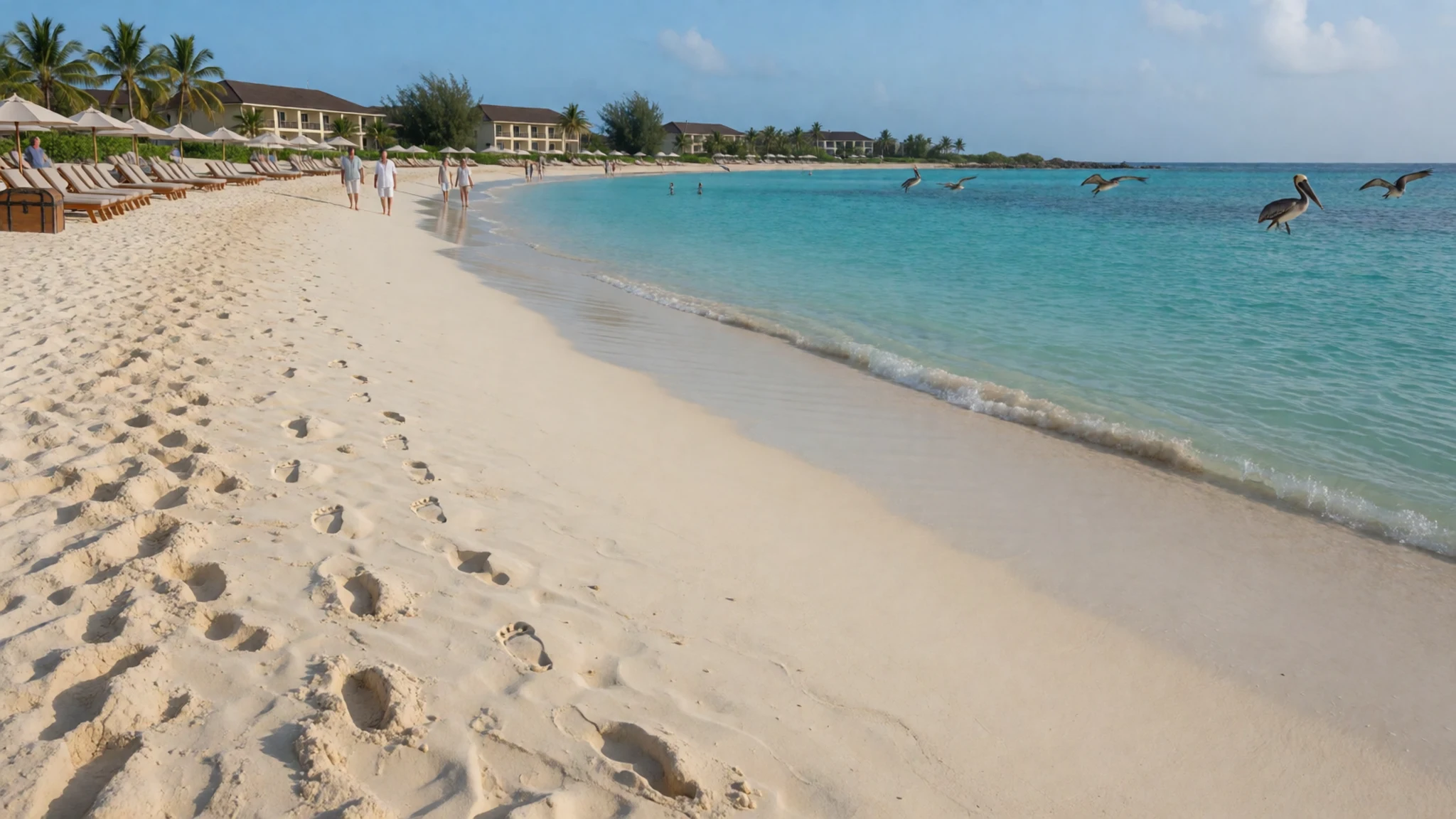
- Divi-divi trees — Back of the sand, Eagle Beach
The divi-divi trees at Eagle Beach lean southwest, their flat crowns pushed over by the constant trade wind. They grow at the back of the sand and on the verges behind the beach, where a little shade collects. Climbing and carving scar trees that grow slowly in dry ground, so the trunks stay untouched.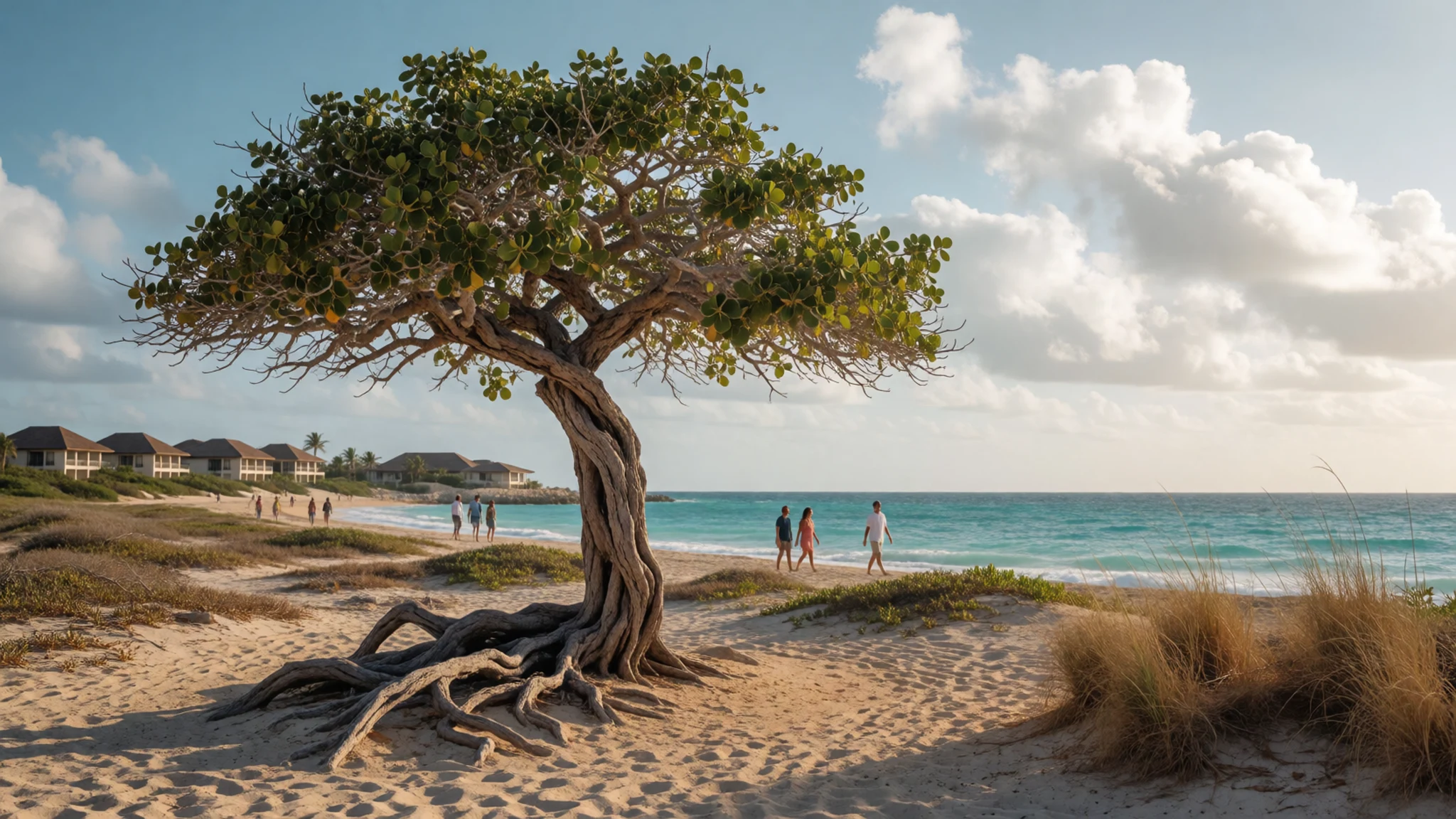
- Green iguanas — Scrub edge behind Eagle Beach
Green iguanas bask on paths and scrub edges behind Eagle Beach, close enough that visitors often meet them before they meet the water. They approach when they expect food, a habit people created. Feeding makes them bold and is poor for their health. A short distance and sealed snacks keep the encounter calm, and handling them helps no one.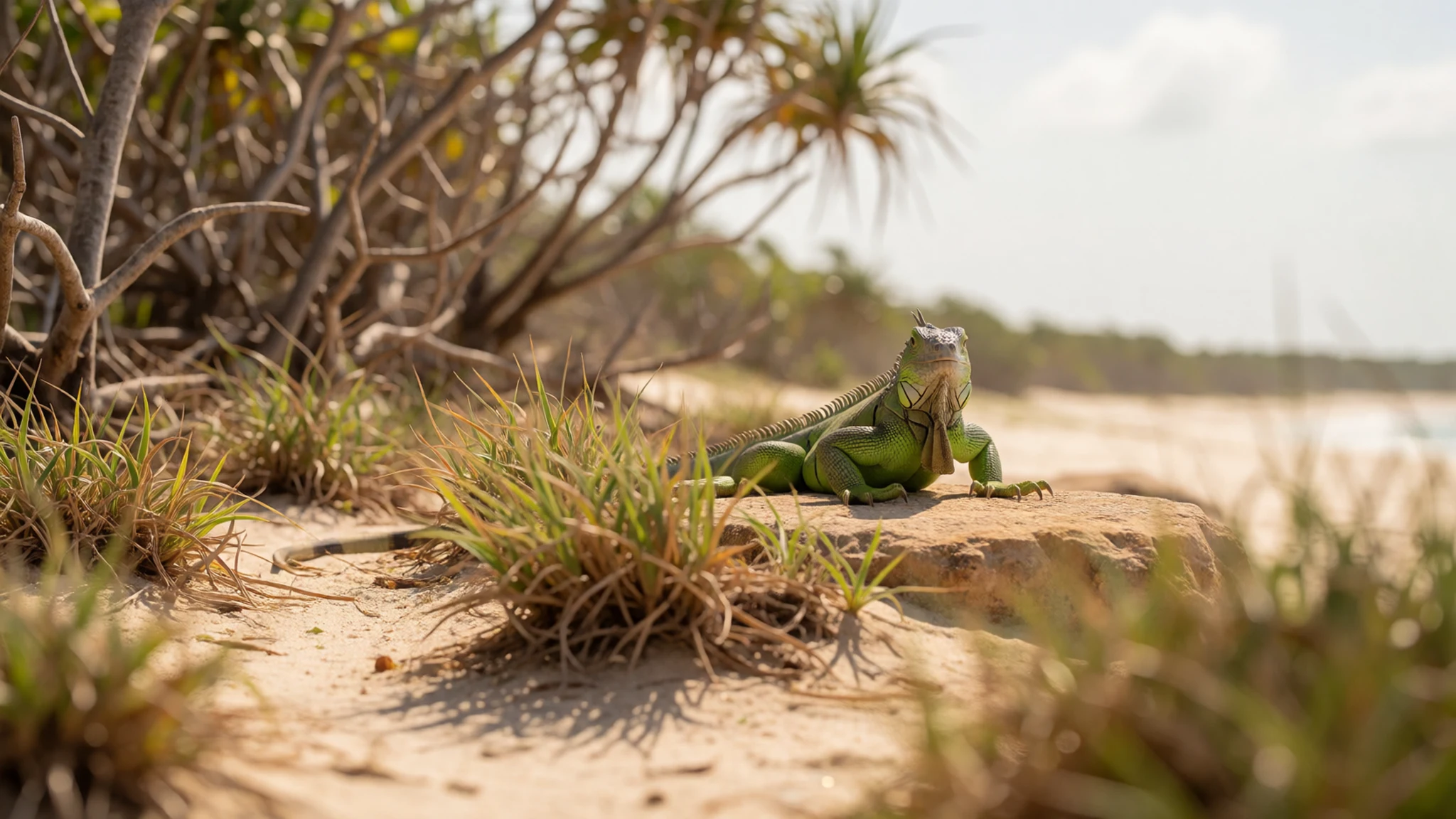
- Pelicans at Eagle Pier — Eagle Pier, Eagle Beach
Brown pelicans work the water at Eagle Beach and rest on posts near Eagle Pier between short flights. They dive for small fish close to shore, so a sudden splash in calm water is often a bird and not a swimmer. The posts and any resting bird need a little room, and bait thrown to draw them in only teaches a bad habit.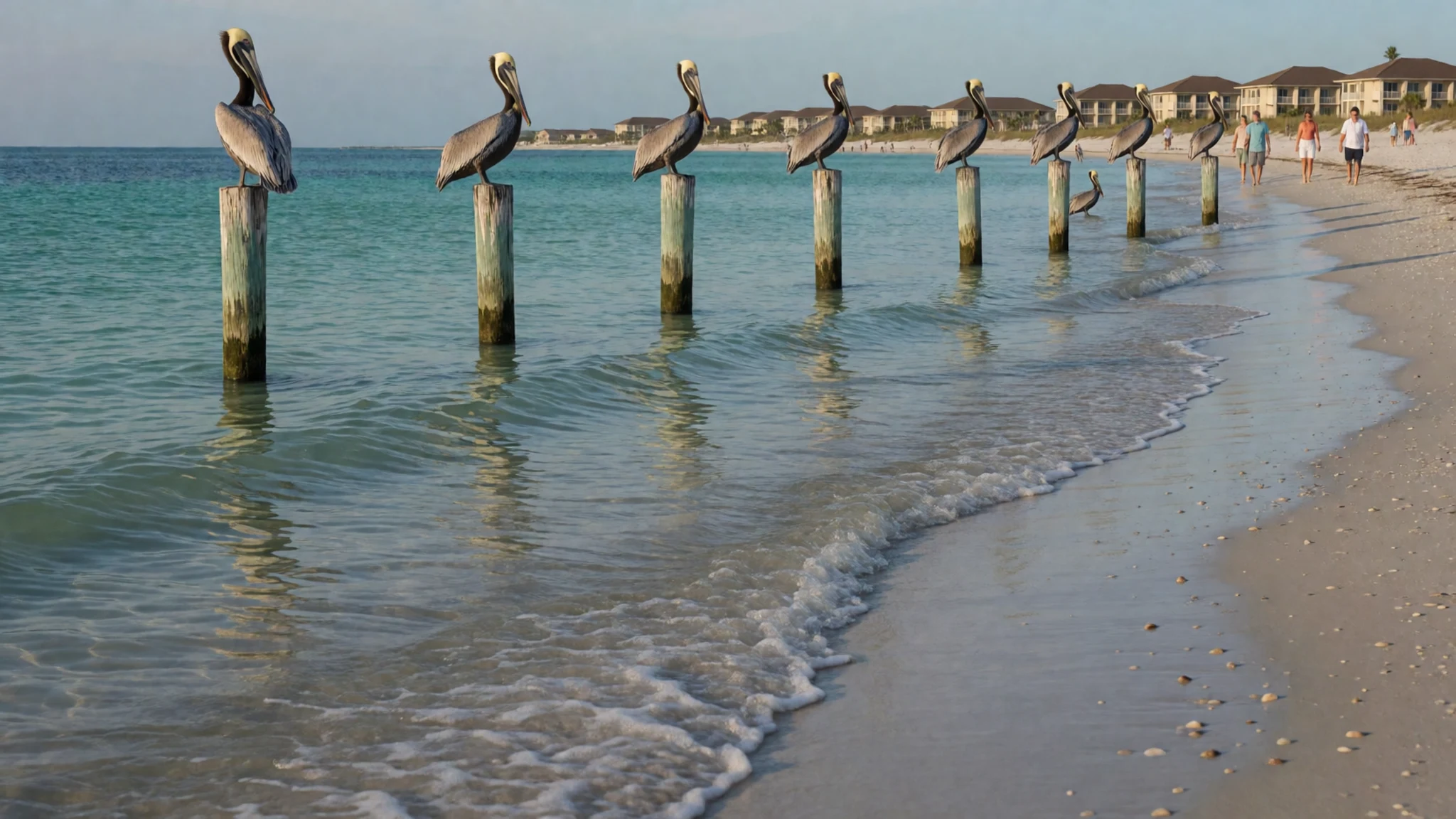
- Coral along the tide line — Tide line, Eagle Beach
Along the tide line at Eagle Beach, small coral fragments and shells collect after the water has been stirred, pale and rough underfoot once the sand dries. They are pieces of a reef that sits mostly offshore, not a garden that can be walked into from this beach. The swimming here is sandy, so this strand is for walking and bathing rather than for looking at a living reef.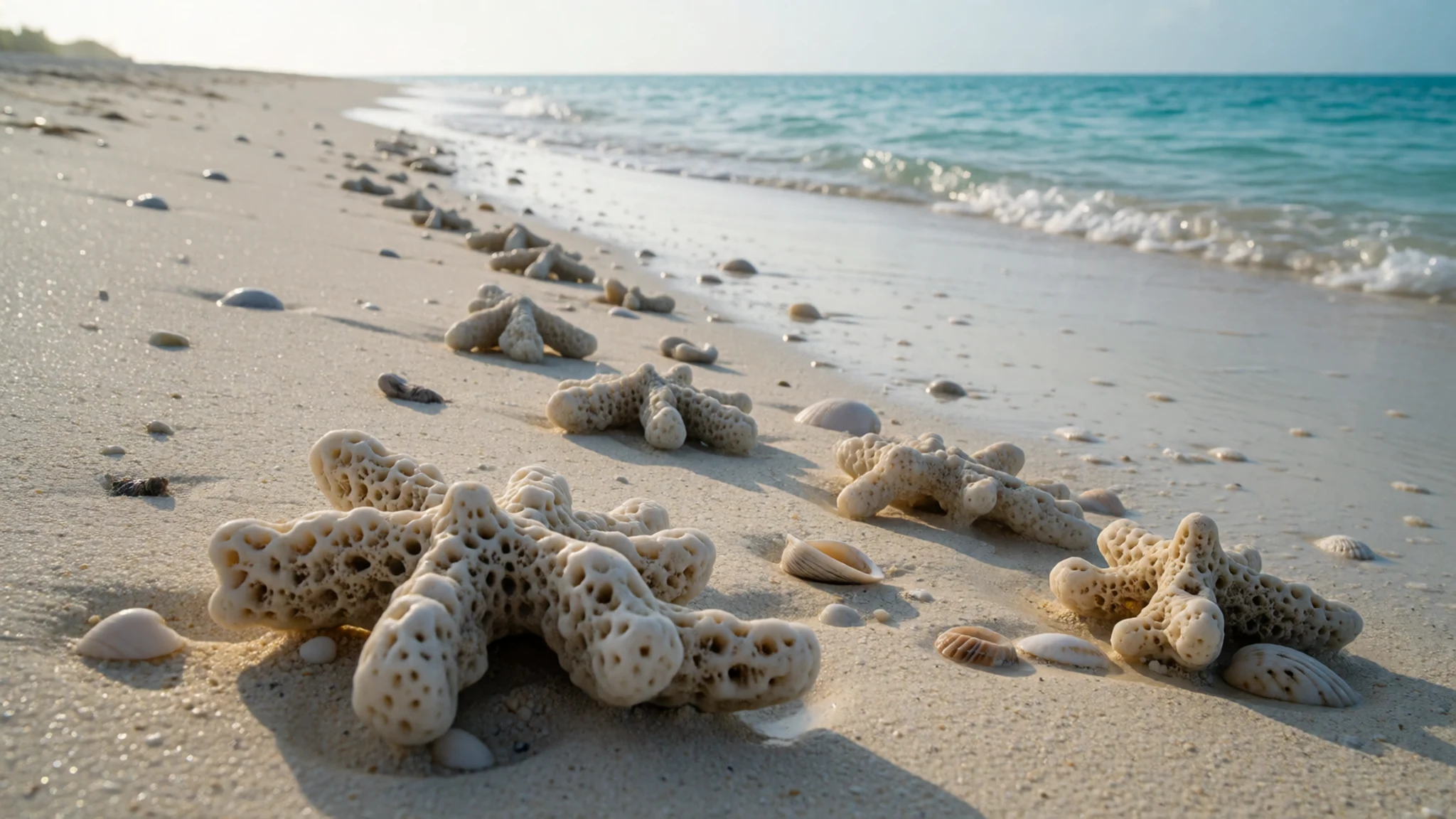
- Buttonwood fringe — Dry fringe behind Eagle Beach
A buttonwood stands in the dry fringe behind parts of Eagle Beach, a coastal tree often grouped with the mangroves. It is not a tall flooded forest; Aruba's southwest shore is arid, and these trees mark the line where salt spray, sand and scrub meet. They help hold that back-beach strip in place and give a landmark for the path back to the road.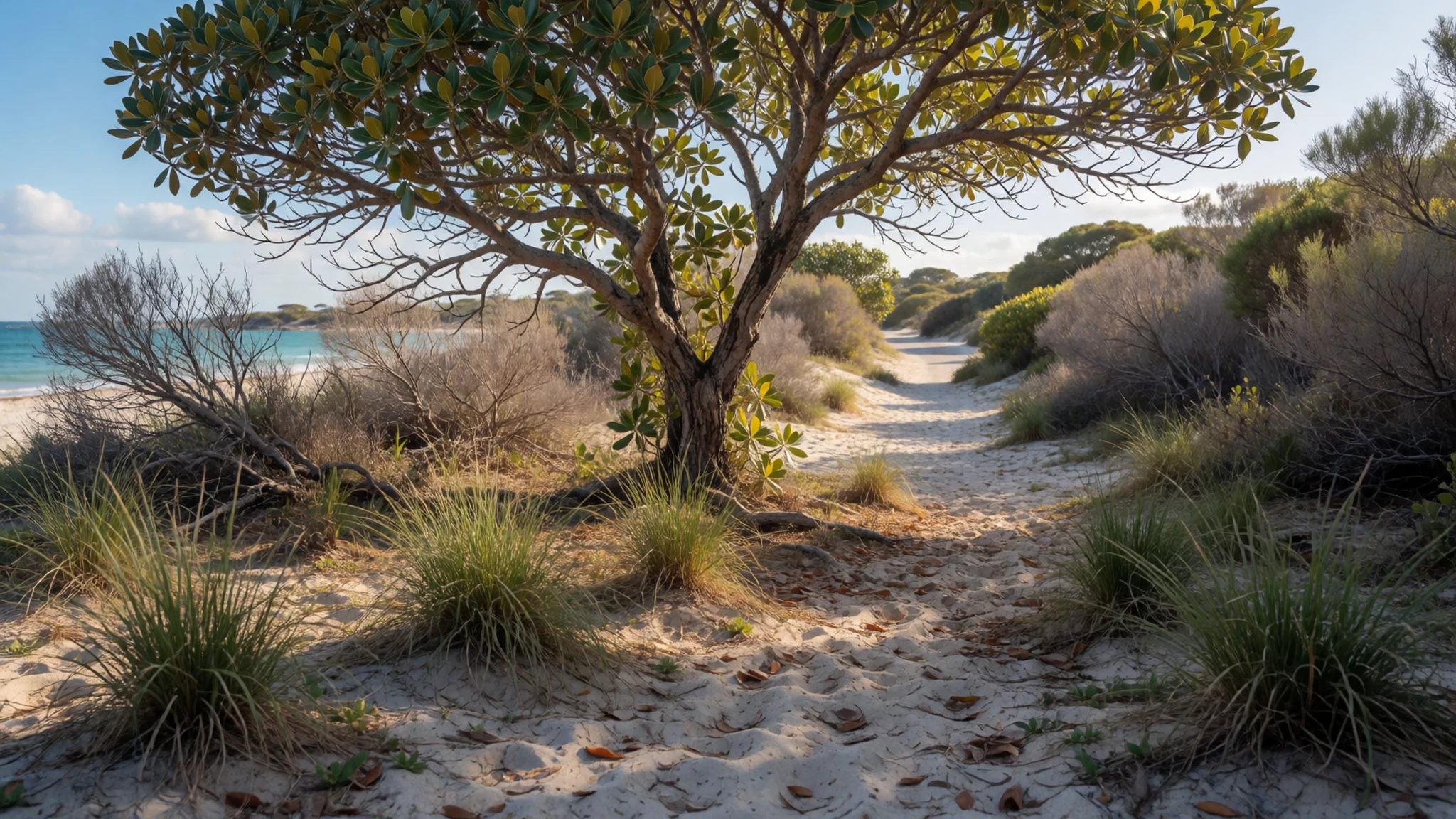
Culture
Eagle Beach shares the island's mixed daily culture rather than a separate village rite of its own. On the sand, speech moves easily among Papiamento, English, Dutch and Spanish, and a simple greeting is enough to start; people who work the beach are used to visitors and answer in whichever language the conversation starts. Carnival is Aruba's great public festival, with parades, drums and costumes that pull hotel guests and Aruban families into the same streets, mostly in town rather than on this strand, but very much part of the social year. Along Eagle Beach the everyday culture is a holiday one: public sand in front of private hotels, music from beach bars, and a pace that drops in the hot middle of the day. Sunset is a social hour, when walkers stop where a divi-divi frames the west and the pelicans settle. Many of the people who set out chairs or serve food live in Oranjestad or further inland, so the beach is a workplace as well as a place to lie down. Iguanas that beg for scraps are not a folk custom; they are animals that have learned a bad habit from picnics. Leave coral and shells where they lie, do not feed the iguanas, and put on a cover-up and shoes before you sit down to eat at Eagle Beach.
What to wear
Fashion at Eagle Beach splits between festival cloth and what the heat will actually allow. Traditional Aruban dress appears at folklore events and Carnival, not at midday on the sand: women in long full skirts, white blouses and a bright headscarf, men in light shirts and trousers, sometimes with a straw hat. The textiles are cotton and similar cool weaves, cut loose for a hot island, and the colour is the point of the costume. It is worn for dance, parade and formal welcome, then put away. What people wear on an ordinary day at Eagle Beach is simpler. Hotel staff are in neat shirts and closed shoes; Aruban families on a day off wear T-shirts, shorts and sundresses; visitors spend the bright hours in swimwear. A shirt or cover-up and a pair of sandals are the clothes that move a person from the tide line to a table. The trade wind and the strong sun set the rest of the wardrobe: a hat, sunglasses and a light layer after dusk are enough, and heavy fabric or brand-new shoes only collect salt and sand. Coral rubble and hot pale sand punish bare feet away from the wet line, so footwear should be something that can be rinsed. Swimwear belongs on the beach itself; restaurants and shops around Eagle Beach expect a cover-up and shoes.
What to eat
- Keshi yena — Aruban eateries in Oranjestad
Keshi yena is a round of cheese hollowed and filled with spiced meat, raisins and vegetables, then baked. It grew from Dutch pantry habits and Caribbean seasoning, and it is a Sunday and celebration plate more than a beach snack. Oranjestad eateries near Eagle Beach serve it.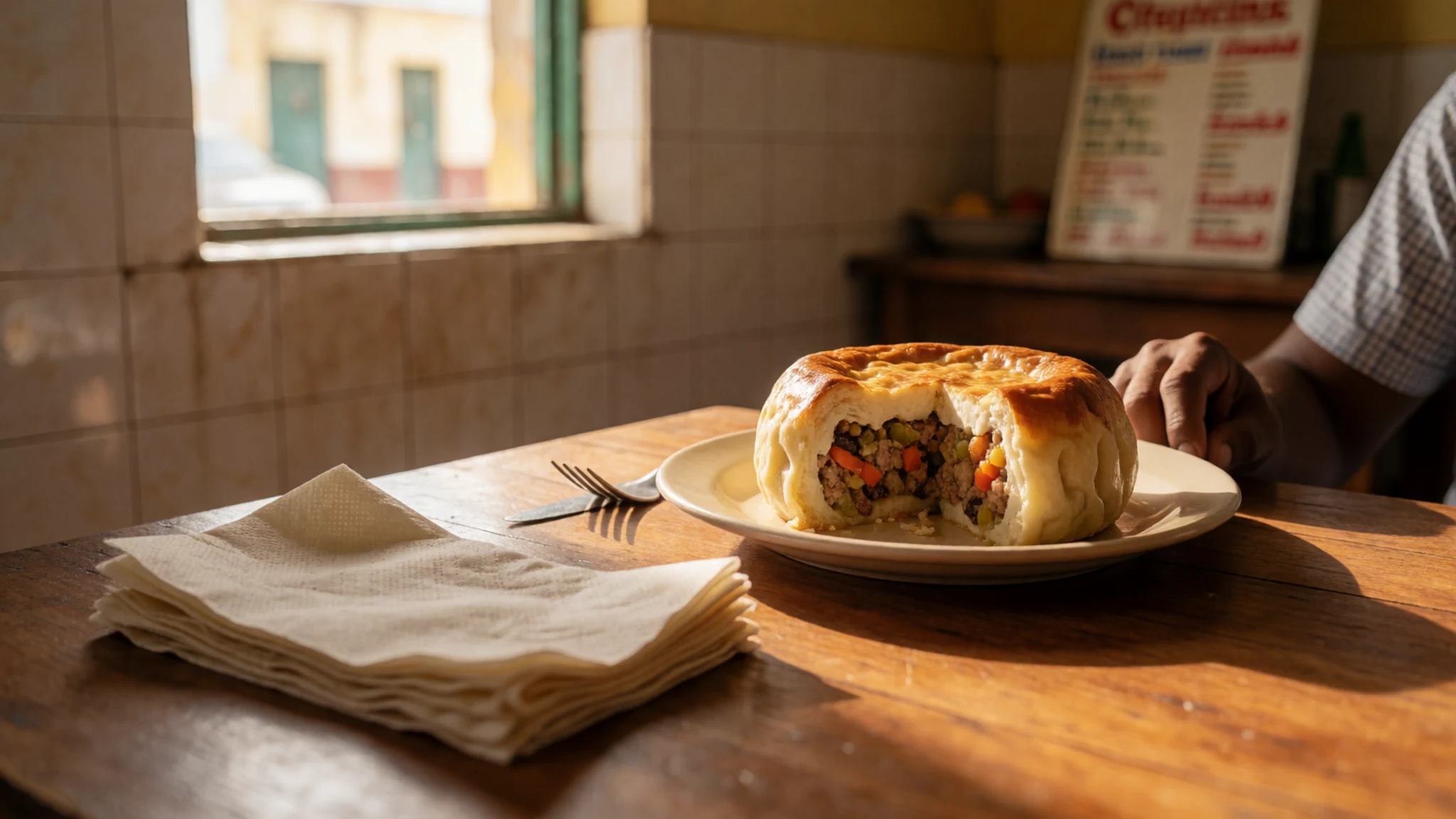
- Pan bati — Family eateries in Oranjestad and casual restaurants near Eagle Beach
Pan bati is Aruba's beaten bread, a soft cornmeal pancake with a little sweetness, served beside soup, stew or fish. It is everyday food rather than a show dish, and it fills the role that bread or rice plays at a local table.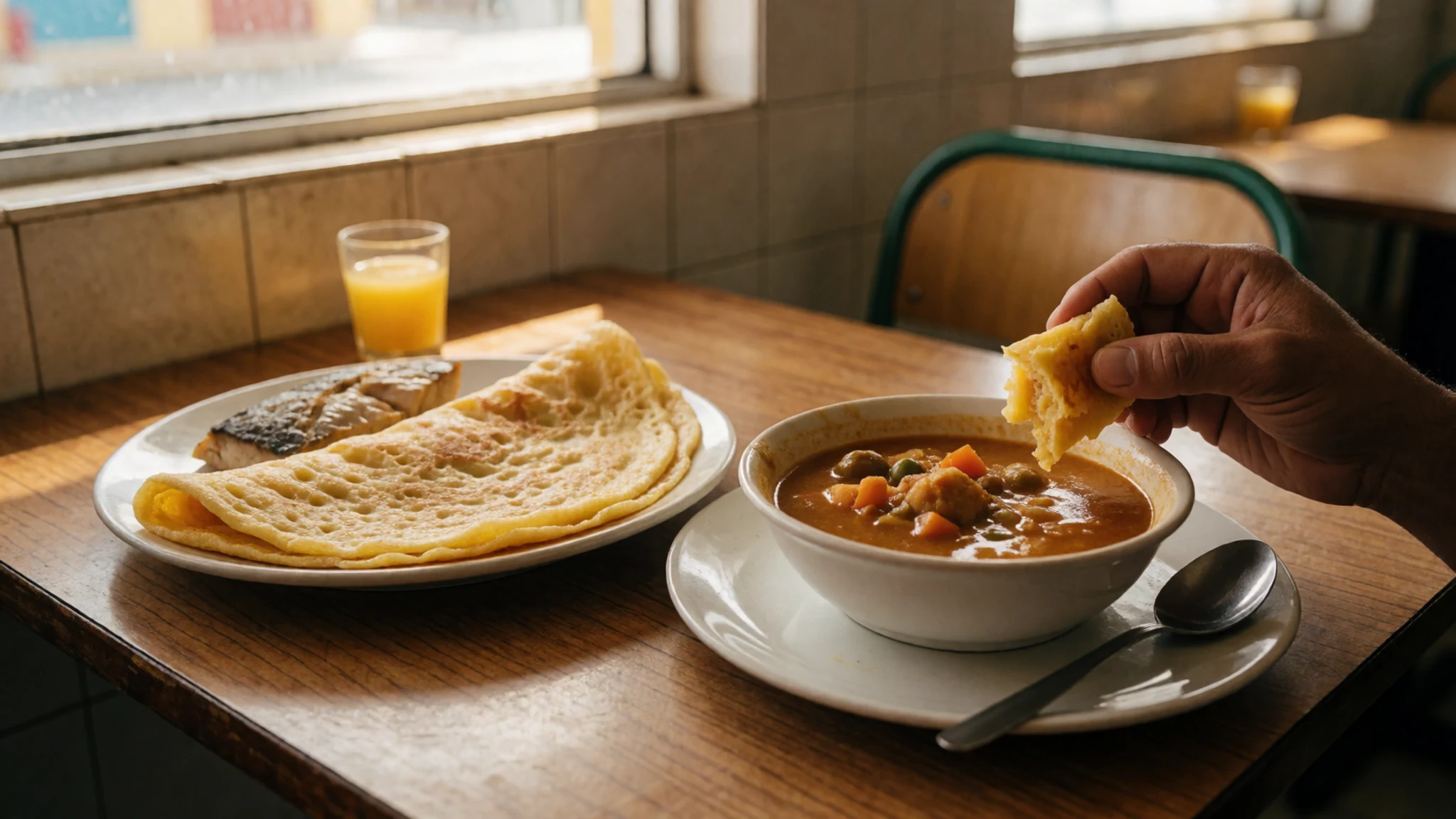
- Funchi with fish — Casual bars along Eagle Beach and simple eateries on the road behind the hotels
Funchi is a firm cornmeal cake, sliced and fried or served soft, usually next to grilled or fried fish and a pepper sauce. On Eagle Beach it is the plate that makes a beach bar feel Aruban rather than generic. - Pastechi — Bakeries and snack counters in Oranjestad
A pastechi is a half-moon of fried dough stuffed with cheese, seasoned meat, tuna or shredded fish. It is breakfast and beach-bag food, eaten hot from a paper bag. Bakeries and snack counters in Oranjestad sell them through the day. - Stoba — Local restaurants in Oranjestad, away from hotel buffets
Stoba is a slow stew, often goat, chicken or conch, with tomato, vegetables and a warm spice level that varies by kitchen. It is the sort of meal that belongs indoors, with funchi or rice, after a day in the wind on Eagle Beach. - Grilled fish of the day — Beach restaurants behind Eagle Beach and simple eateries in Oranjestad
Grilled fish of the day is the straightforward Eagle Beach meal, a firm steak with lime and a side of funchi or rice. Beach restaurants behind the sand and simple eateries in Oranjestad grill whatever the boats have landed. The species depends on what is fresh that day.
Plan it
Best time. January through June are an easier time on Eagle Beach: drier air, a steady trade wind and fewer heavy showers. Later months stay bright but hotter, with short downpours, and year-end holidays draw heavy crowds. Aruba lies south of the usual hurricane tracks.
How long. 2-3
Getting there. Fly into Queen Beatrix International Airport beside Oranjestad, then a taxi, hotel transfer or rental car north along the west-coast road. The last leg is short. There is no railway. A car is useful for the rest of the island; Eagle Beach itself does not require one.
Budget. high
Tips
- Book a low-rise room early if the trip falls in the drier months or over the year-end holidays, when Eagle Beach fills.
- Start the beach day early; shade under the divi-divi trees goes first and the open sand has little cover.
- Bring drinking water. The sun is strong, and cafés behind the sand are not always a short walk from a quiet spot.
- Cards are widely accepted in hotels and restaurants; carry some cash for small beach vendors and snack counters.
Etiquette
- Keep swimwear for the sand and wear a cover-up and shoes in restaurants and shops.
- Do not feed iguanas or leave food unattended on the sand.
- Do not climb, carve or break the divi-divi trees and buttonwoods.
- Leave coral and shells on the beach, and carry rubbish away.
Nearby
Sources
- Wikidata (CC0)
- Wikipedia (CC BY-SA 4.0)
- Wikivoyage (CC BY-SA 4.0)
Wildlife
- Green iguana (animal)
The green iguana is a big, mostly plant-eating lizard that climbs trees and sits in the sun like a small dragon. At Eagle Beach you will often meet one before you even reach the water, resting on the paths and along the scrubby edges behind the sand. Stay a few steps back, move slowly and speak softly so it stays relaxed. A local guide can help you spot them, and please never feed them.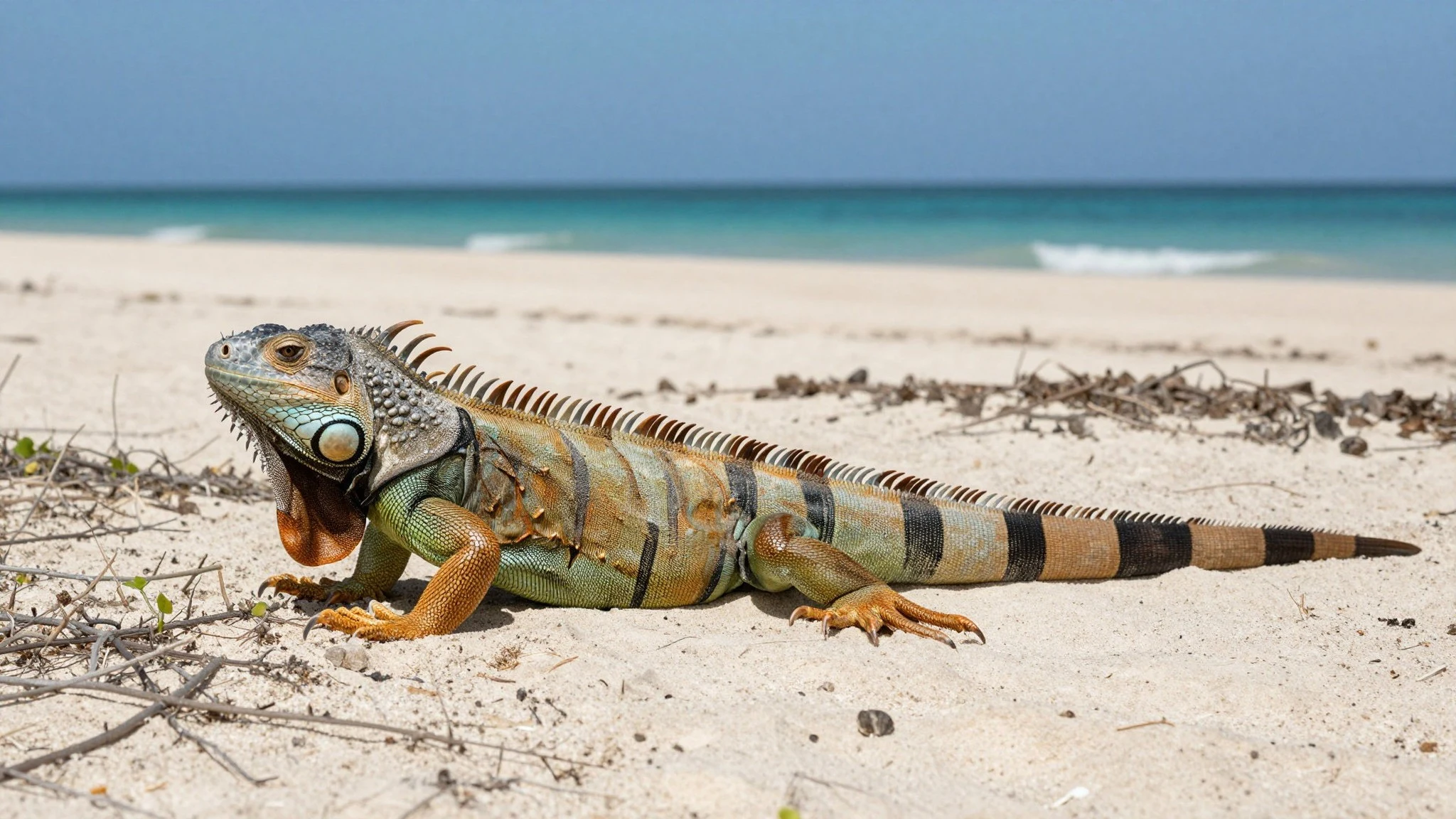
- Brown pelican (animal)
Think of the brown pelican as a diving bird with a big pouch under its bill. Around Eagle Beach it uses the posts of the pier as a resting place between dives, so the pier is a good spot to look for it. Keep well back so it is not disturbed, stay quiet, and consider going with a guide who knows the birds. Never offer it food; wild birds should find their own meals.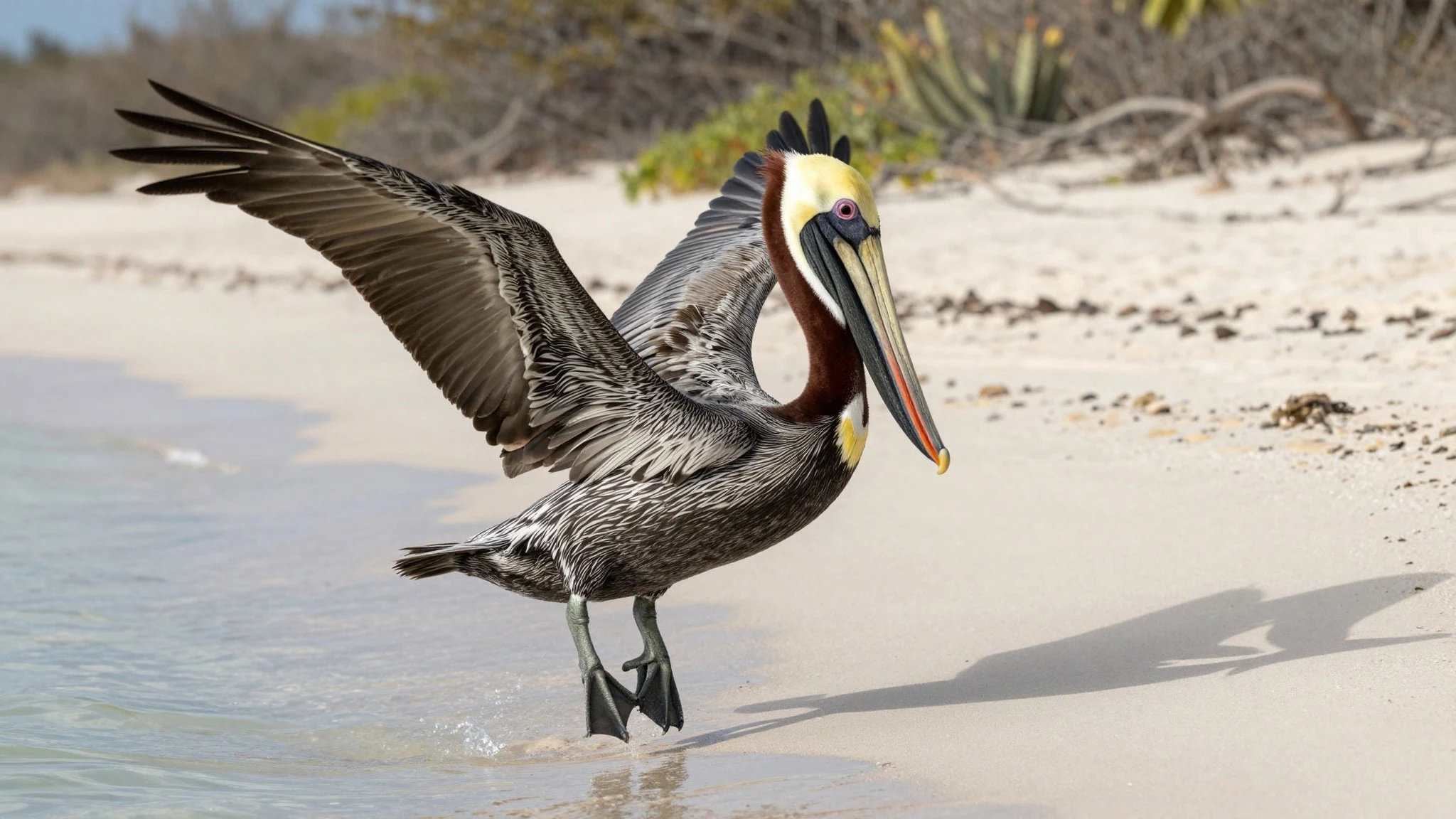
- Brown pelican (bird)
Think of the brown pelican as a diving bird with a big pouch under its bill. Around Eagle Beach it uses the posts of the pier as a resting place between dives, so the pier is a good spot to look for it. Keep well back so it is not disturbed, stay quiet, and consider going with a guide who knows the birds. Never offer it food; wild birds should find their own meals.