Aruba
Aruba, Aruba
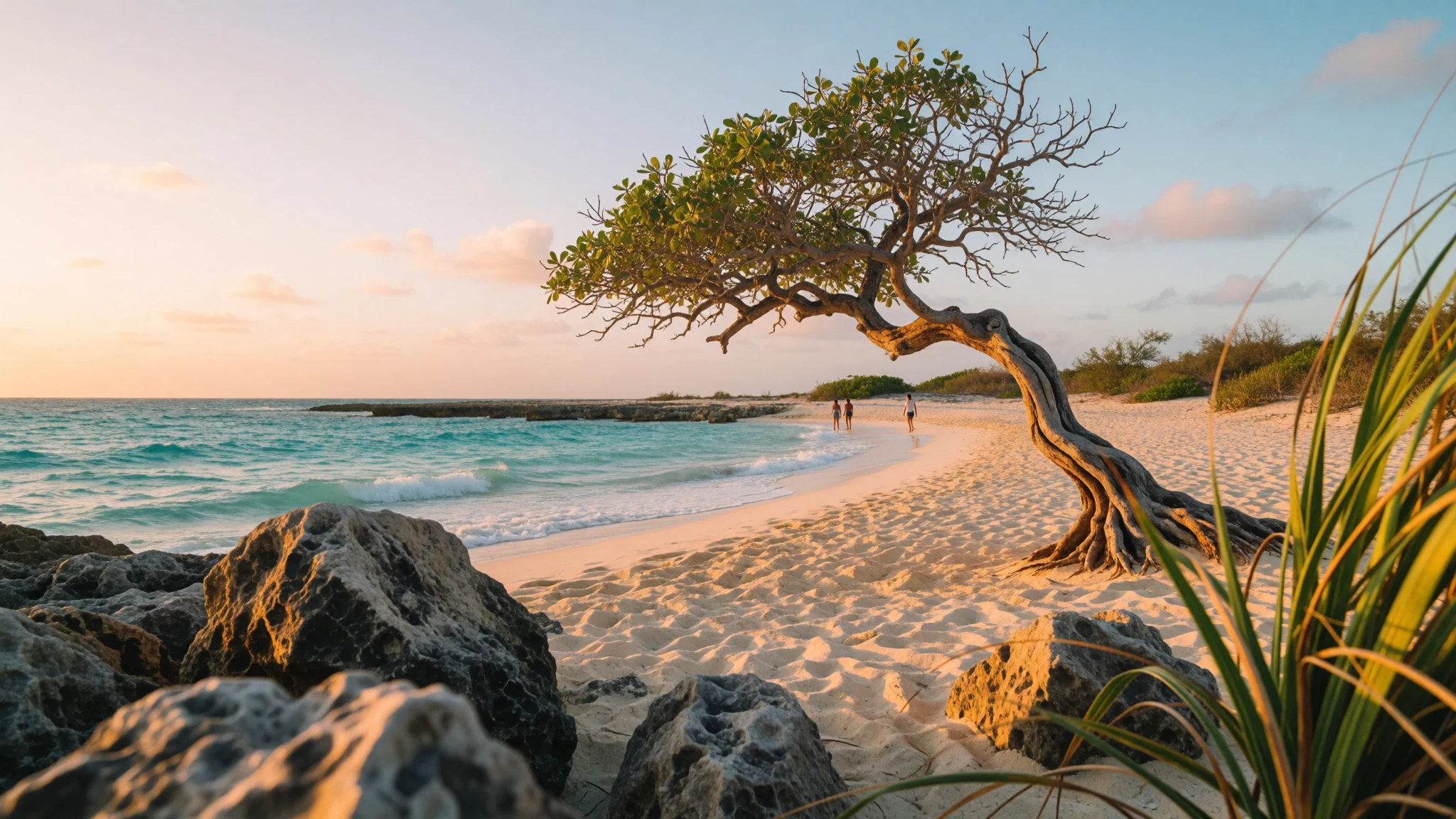
Aruba is a dry, low Caribbean island where Dutch public life, Papiamento and a resort coast share one small shore.
The place
Aruba is a constituent country within the Kingdom of the Netherlands, set in the southern Caribbean Sea north of Venezuela's Paraguaná peninsula and north-west of Curaçao. It sits on the South American continental shelf, so its rock belongs with the continent while its daily life is that of a Caribbean island. Together with Bonaire and Curaçao it forms the ABC islands, the western part of the Dutch Caribbean. Unlike the humid islands further north and east, Aruba is dry, with an arid, scrubby landscape, and the warmth and sunshine hold through the year.
The highest point is Mount Jamanota at 188 metres, on a flat island with a few hills. In 1986 the island became a constituent country and received its official name. It shares the Kingdom with the Netherlands, Curaçao and Sint Maarten, and people here hold Dutch nationality. Some 106,739 people live on the island. Oranjestad is the town that holds the aloe works, and the public visitor site is http://www.aruba.com/. Clocks follow Atlantic Time.
Tourism shapes the visitor economy. Large resort hotels take much of that trade, and both quick American chains and dearer dining rooms cater to the guests. Menus beside the hotels live off a captive crowd: leaflets in the rooms do much of the advertising, and with few kitchens chasing the same guests the cooking is sometimes ordinary. A volunteer-run sanctuary houses donkeys that would otherwise take their chances in traffic; dogs are the other danger the keepers name. Offshore, a battery-powered tourist submarine passes over a real coral reef. Inland the ground stays open and dry, closer to dry scrub than to the green of wetter Caribbean islands. English sits beside Dutch and Papiamento, and holiday names on the calendar often appear in Papiamento even when the occasion is shared with the rest of the Kingdom.
Its story
Before pottery reached Aruba, life on the island was a marine one. The long pre-ceramic, or Archaic, occupation ran on fishing, hunting and gathering, and people were still living that way into the first millennium AD, after farming and pottery were already common on many other Caribbean islands. Stone did the work: sharp-edged axes, chisels, and knives with long, flat blades. Only after that stretch does the Neo-Indian ceramic phase, associated with Dabajuroid ware, begin.
The oldest worked stone so far reported is from Sero Muskita. Nothing else from the Archaic sites on the island matches its age. The maker used the same finish and the same outline as a tool from Arikok, which is why the piece is placed before about 2000 BC. One reading is that visitors from the mainland brought this craft over from time to time, rather than a settled community inventing it in place.
Clay comes later. Museums on Aruba show ceramic, shell and stone objects that speak of the customs and beliefs of those ceramic communities, and A. J. van Koolwijk's gift of Nicolaas Pyclas's skull to the Leiden ethnographic museum in the 1880s is a reminder that early finds were carried into European collections. Drawings made in the nineteenth century copy marks left by earlier inhabitants. The political order a visitor meets now is separate from that deep past: in 1986 Aruba became a constituent country inside the Kingdom of the Netherlands and took the official name it still uses. Shared Kingdom holidays remained, and the island also keeps a day for its own flag and anthem.
What to see
- Donkey Sanctuary — inland roads of Aruba
Aruba's donkey sanctuary, staffed by volunteers, takes in animals the island still lets wander. Cars and dogs are the reasons so many need rescuing. The people there explain the programme if asked. This is not a petting zoo: the useful visit watches, listens, and leaves the animals room.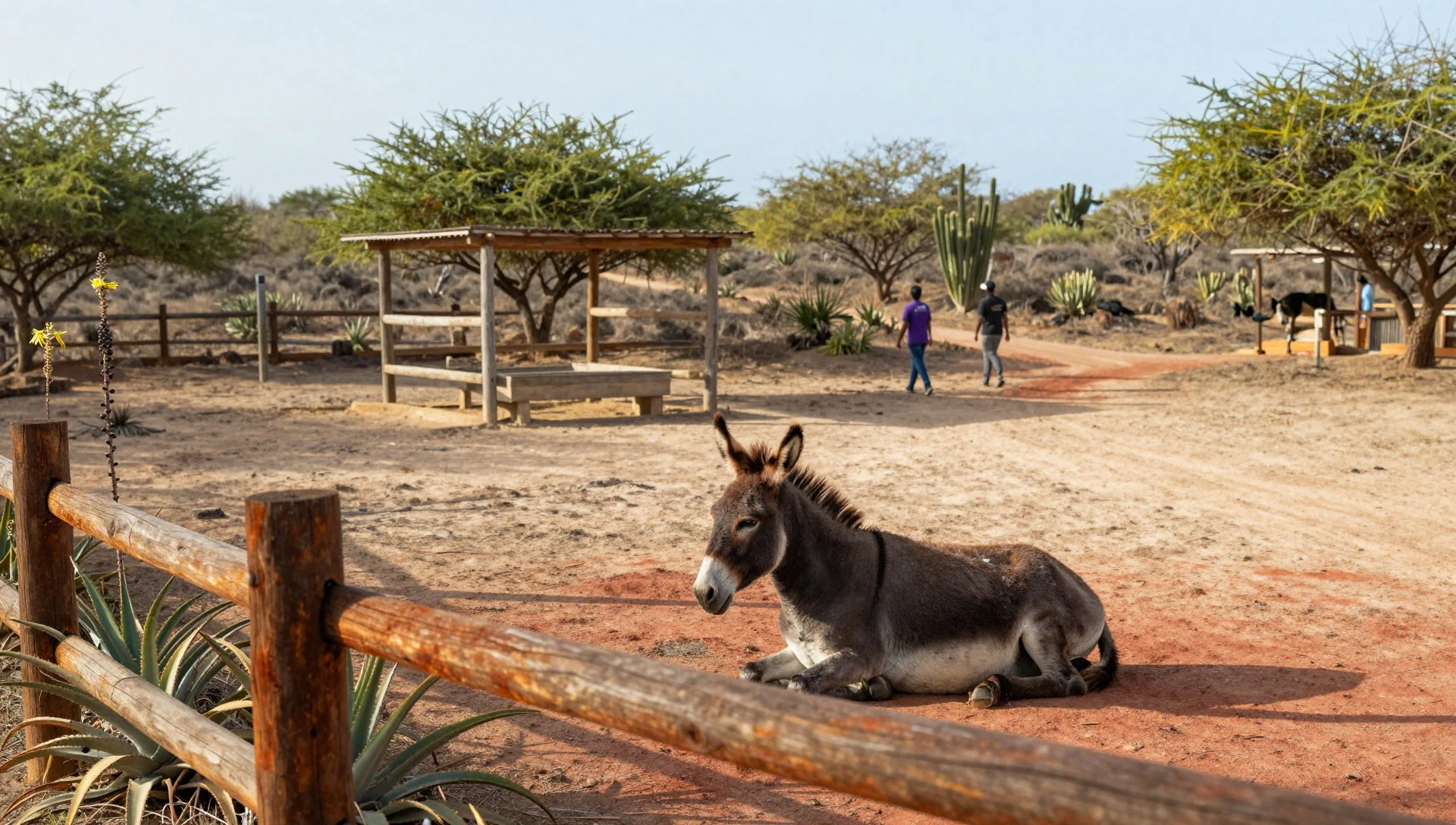
- Aloe factory — Oranjestad
The aloe factory in Oranjestad explains how Aruba grows and processes aloe, and what the crop is used for. It is a short lesson in a local industry, not a scenic stop. It suits the hot middle of the day, when the interest is the process itself. Opening days should be confirmed on the official site, http://www.aruba.com/, rather than assumed.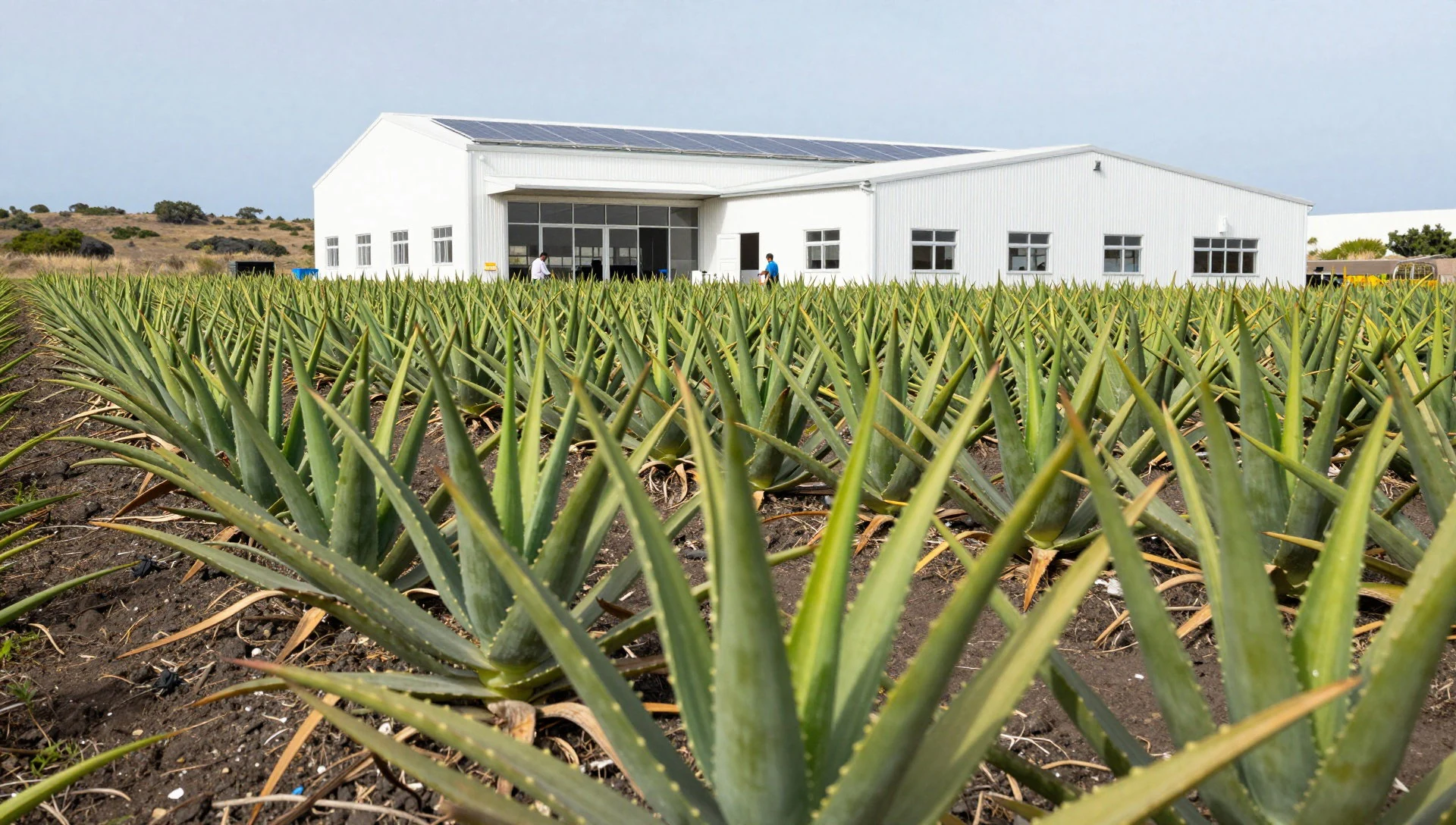
- Archaeological Museum — Aruba
Aruba's archaeological museum displays ceramic, shell and stone pieces that stand in for the habits and beliefs of the island's earliest cultures. The cases cover both the later pottery age and the older stone craft of long, flat knives, chisels and sharp-edged axes. A. J. van Koolwijk's gift of Nicolaas Pyclas's skull to the Leiden ethnographic museum in the 1880s shows how early objects left for collections abroad. The subject is those first communities.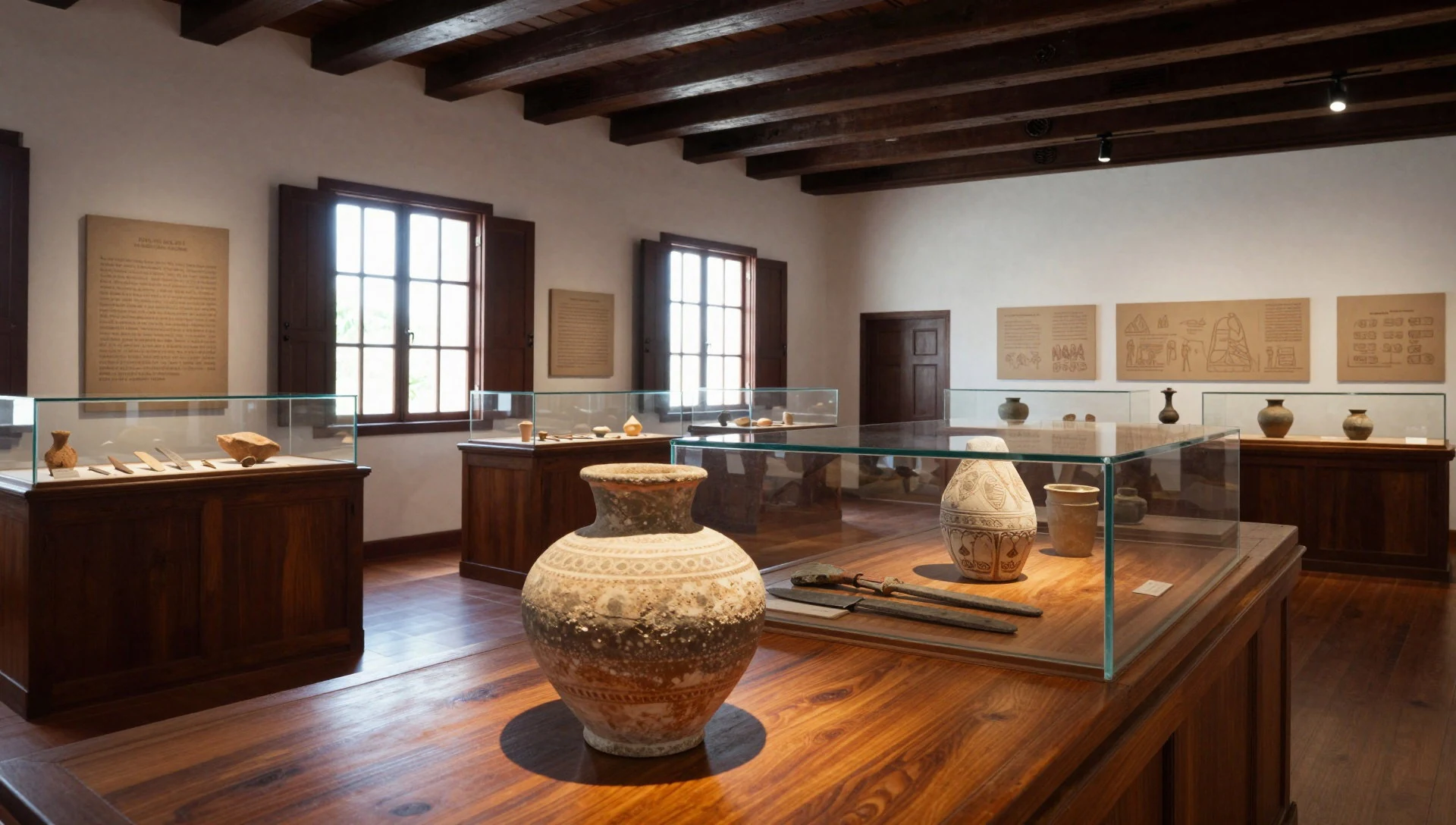
- Historical Museum — Aruba
Aruba's historical museum hangs paintings and cases of objects that move from early island life, across the colonial years, and into the present. Stone tools cannot carry that whole span: later settlement, Dutch rule, and the ordinary record leading to the constituent country of 1986 sit here. The collection is wide rather than one monument. It is the indoor partner to the archaeological cases.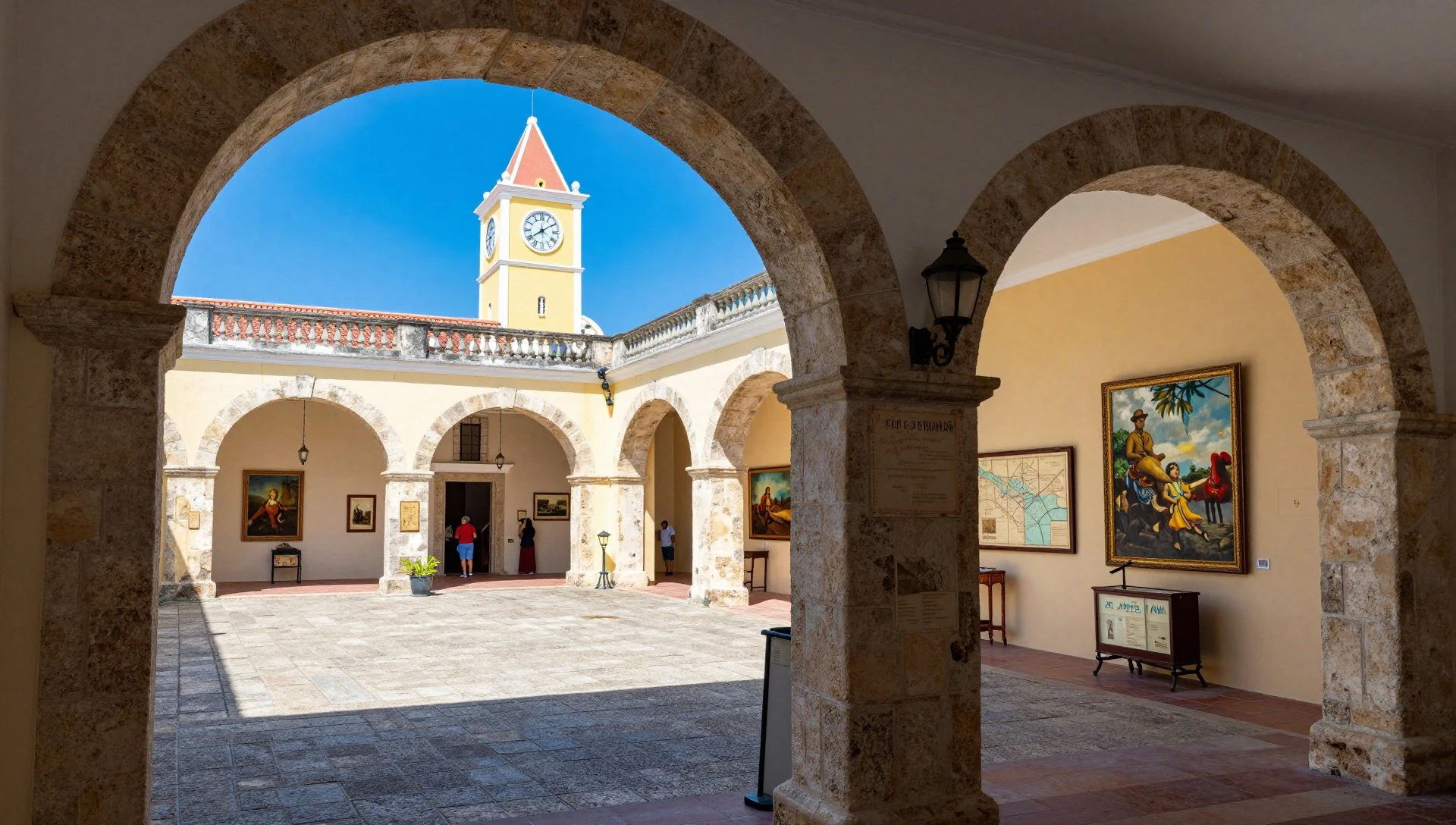
- Aruba Ostrich Farm — Aruba
The Aruba Ostrich Farm is a walking tour of pens and an incubator, run to explain the birds rather than to raise what kitchens serve. Meat on local menus is shipped from Curaçao. The visit is educational, with the birds close enough to see how they are kept. Hours should be checked on the official site.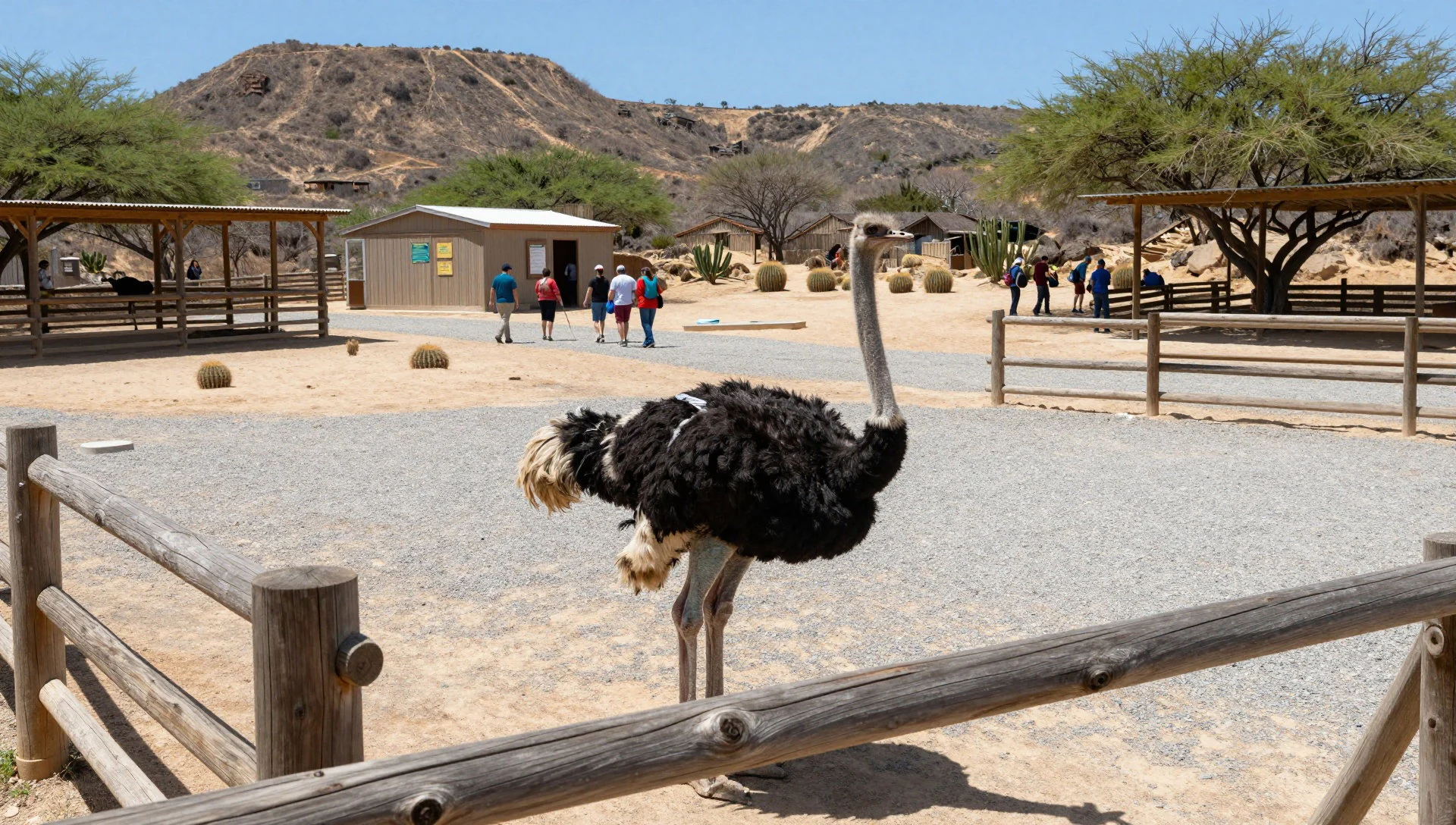
Culture
Aruba's public culture is a mix held together by Papiamento, Dutch custom and many foreign origins. In 2005 the civil registry counted people from 92 nationalities on the island. The Kingdom's red-letter days are still kept in public. Dia di Rey, the Papiamento name for Koningsdag, falls on 27 April and is shared with the other countries of the Kingdom, while Sinterklaas occupies 5 and 6 December. Local dates sit beside those. The anthem and the flag have their day on 18 March. Gaita songs belong to Christmas, and the dande to New Year's Eve, when ayaca, ham and ponche crema come out. Betico Croes is remembered on 25 January, and Dia di San Juan falls on 24 June. Between the feasts, a single errand can move through Papiamento, Dutch and English. National feeling hangs on those named days more than on one folk uniform. When you pass a donkey on the road, slow down and do not feed it from the car.
What to wear
On Aruba, heat and the feast calendar say more about dress than any single folk costume does. Feast days are when clothes become ceremonial: Sinterklaas in December, Dia di Rey in April, Christmas with gaitas, New Year with the dande, and Dia di San Juan in June are family occasions, and people wear smarter outfits then than on a weekday. The cloth itself is ordinary and light. Aruba is arid and sunny all year, and Mount Jamanota at 188 metres still leaves a low, hot coast, so the clothes are for sun rather than for cold. In Oranjestad, daily wear is cotton shirts, dresses and trousers. Swimwear stays on the beach and by the resort pools. A visitor should pack the same way: breathable cotton or linen, a hat against the dry sun, sandals for sand, and closed shoes for scrub, rough paths and museum floors. Evenings in the resort dining rooms are smart-casual rather than formal. A thin layer is worth carrying after dark, because the arid wind cools the skin even after a hot afternoon.
What to eat
- Keshi yena — local dining rooms in Oranjestad
Keshi yena is the plate Aruba treats as its own. A shell of Gouda is filled with spiced chicken and a mix of pepper, tomato, olive and caper, then baked. It belongs in local dining rooms in Oranjestad, not in the American chain counters that cluster near the resort hotels.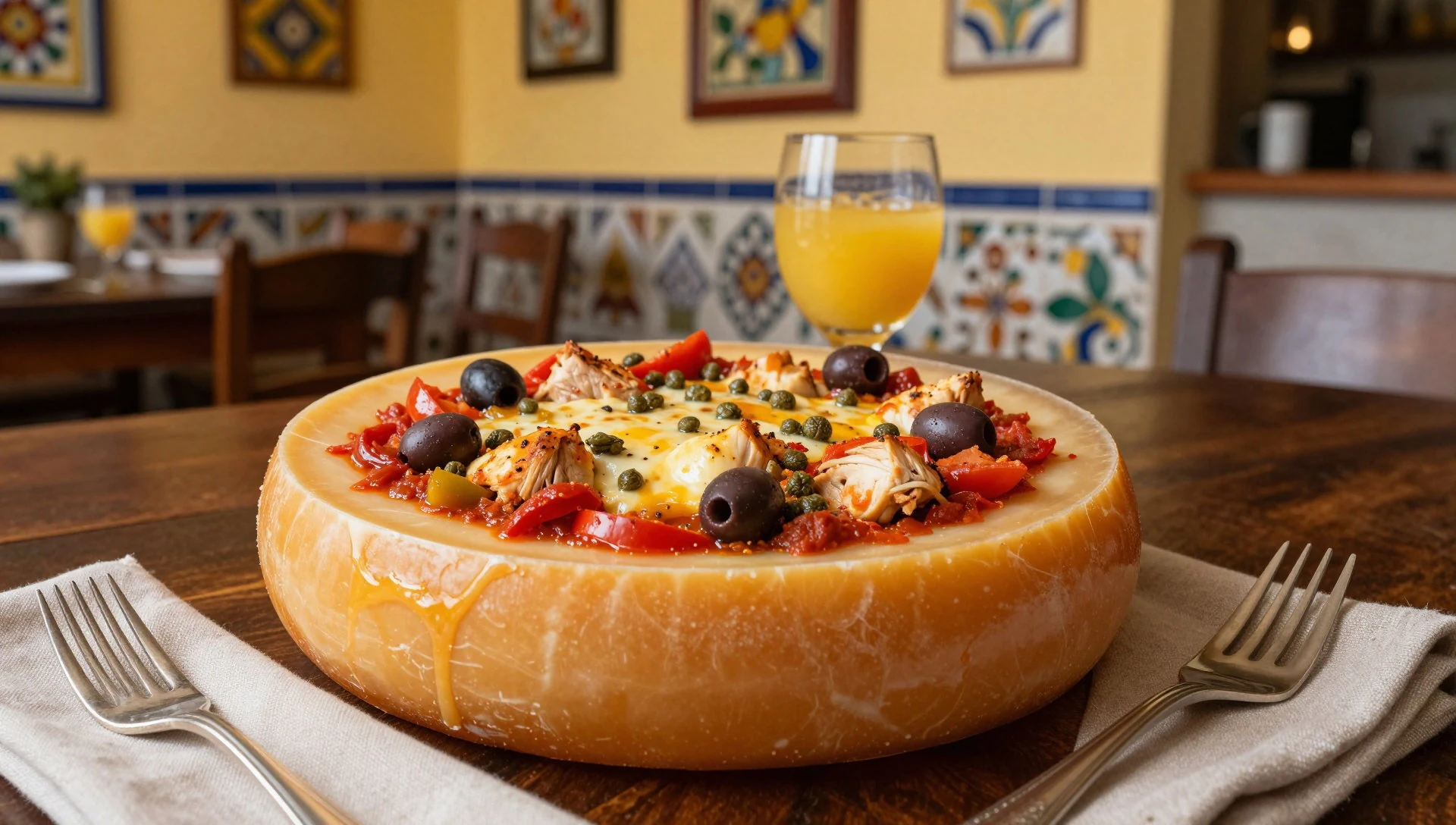
- Ayaca — family tables at Christmas, Oranjestad and the hotel coast
Ayaca is Christmas food on Aruba, served while gaita music is playing, not as a casual weekday lunch. It appears at family tables and seasonal gatherings in Oranjestad and along the hotel coast. Outside the festive weeks it is rarely the thing a kitchen is known for.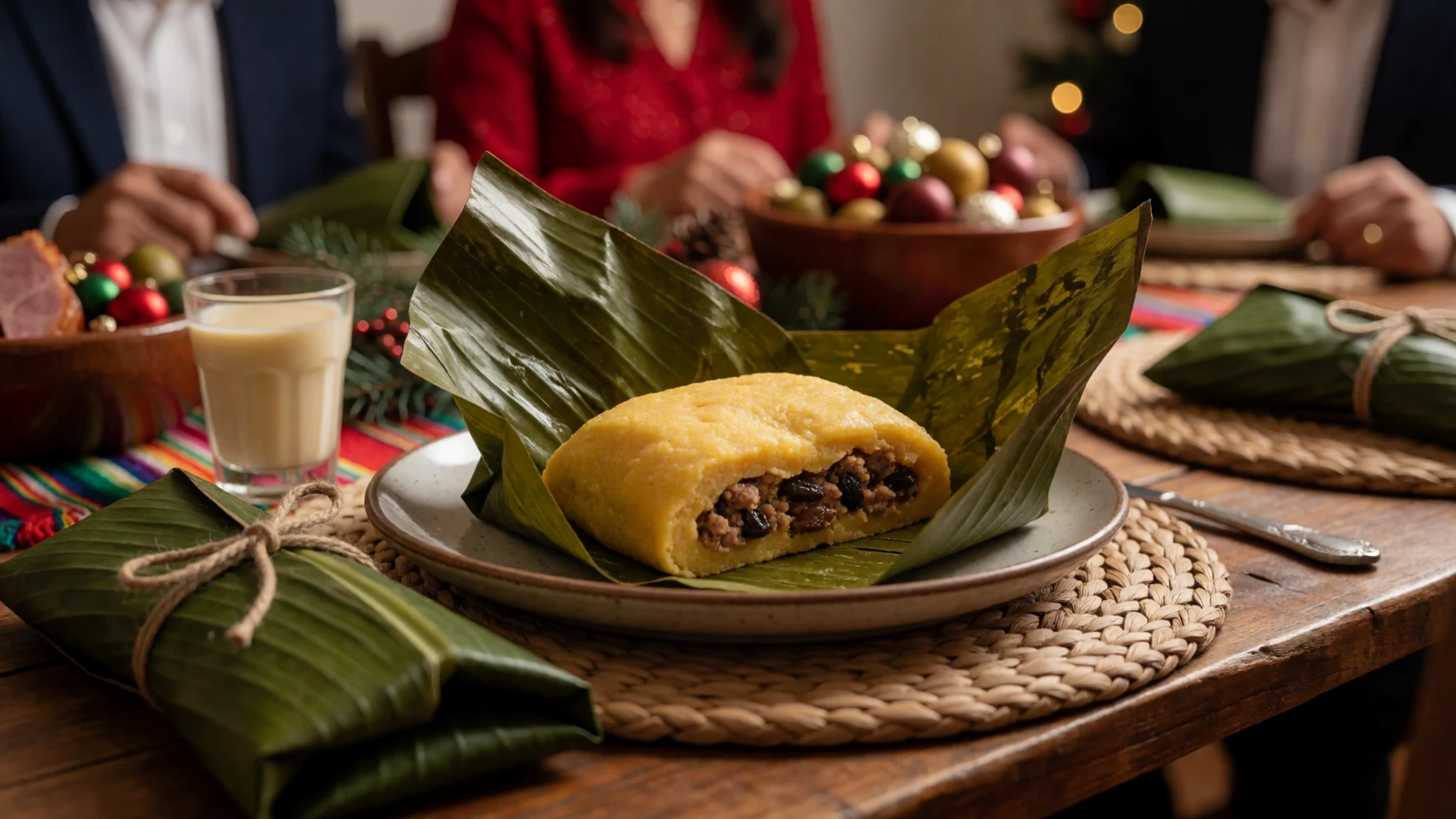
- Ponche crema — house gatherings at Christmas and New Year
Ponche crema is the holiday drink that shares Aruba's Christmas and New Year tables with ayaca and ham. It is poured at house gatherings while the dande is sung at New Year, not as a cooler on the beach. Seasonal parties in Oranjestad are where it turns up. - Holiday ham — family homes at Christmas and New Year
Ham is the plain savoury piece of Aruba's Christmas and New Year eating, set beside ayaca and ponche crema. It is household and party food, not a street snack and not a resort special. Festive gatherings in family homes around Oranjestad are where it appears. - Ostrich — dining rooms that import it; the farm tour is separate
Ostrich eaten on Aruba is not produced for the table at the local farm. That farm walks visitors round pens and an incubator, while the meat itself is brought from Curaçao. Any ostrich dish is an import, found only in dining rooms that choose to put it on the menu.
Plan it
Best time. Aruba stays warm and sunny through the year, an arid island rather than a humid one, yet September is hottest, October and November wettest, and February to April most comfortable. Late April brings Dia di Rey, June brings Dia di San Juan, and Christmas through New Year brings gaitas, dande and family feasts, which makes those weeks livelier and busier. The practical reason to choose a month is that spread of heat and rain, together with the crowd.
How long. 3–4
Getting there. Aruba cannot be reached by road or rail. Arrival is by air, then a short transfer from the airport to Oranjestad or the hotel coast. Routes and entry formalities are published on the official site, http://www.aruba.com/.
Budget. high
Tips
- Carry a passport valid on the day of entry and for the whole stay in Aruba.
- Where a visa is required, it also covers Curaçao, Sint Maarten and the Caribbean Netherlands, allows repeat entry, and does not cover the European Netherlands; the cap is 30 uninterrupted days in one country, inside 90 days within 180 days.
- Paid work is not allowed during a stay as a visitor.
- Sun is strong all year on this dry, low island, so carry water and a hat, and look for the heavier rain in October and November.
- On holiday weeks the resort dining rooms are busy; for the submarine, book ahead, and confirm openings on the official site rather than by rumour.
Etiquette
- Slow down for free-roaming donkeys and do not feed them from a car.
- Keep swimwear to the beach and pool; wear a shirt and shoes in town museums and shops.
- Treat flag day, Dia di San Juan, Sinterklaas and Dia di Rey as island celebrations, and join only as a guest.
Nearby
Sources
- Wikidata Q21203 (CC0)
- Wikipedia (rev 1383932776) (CC BY-SA 4.0)
- Wikivoyage (rev 5393847) (CC BY-SA 4.0)
- Photo photos/01-aruba-world-wind.jpg (Public domain)
- Photo photos/02-collectie-nationaal-museum-van-wereldculturen-tm-2344-198-st.jpg (CC BY 3.0)
- Photo photos/03-collectie-nationaal-museum-van-wereldculturen-tm-2344-193-st.jpg (CC BY 3.0)
- Photo photos/04-nl-hana-4-jbf-206.jpg (CC0 1.0)
- Photo photos/05-aruban-pot-akw-541.jpg (CC BY-SA 4.0)
- Photo photos/06-mapa-de-las-antillas-1500.jpg (Public domain)
- Photo photos/07-vespucci-first-voyage.jpg (CC BY-SA 4.0)
- Photo photos/08-vespucci-second-voyage.jpg (CC BY-SA 4.0)


