Baby Beach
Baby Beach, Aruba
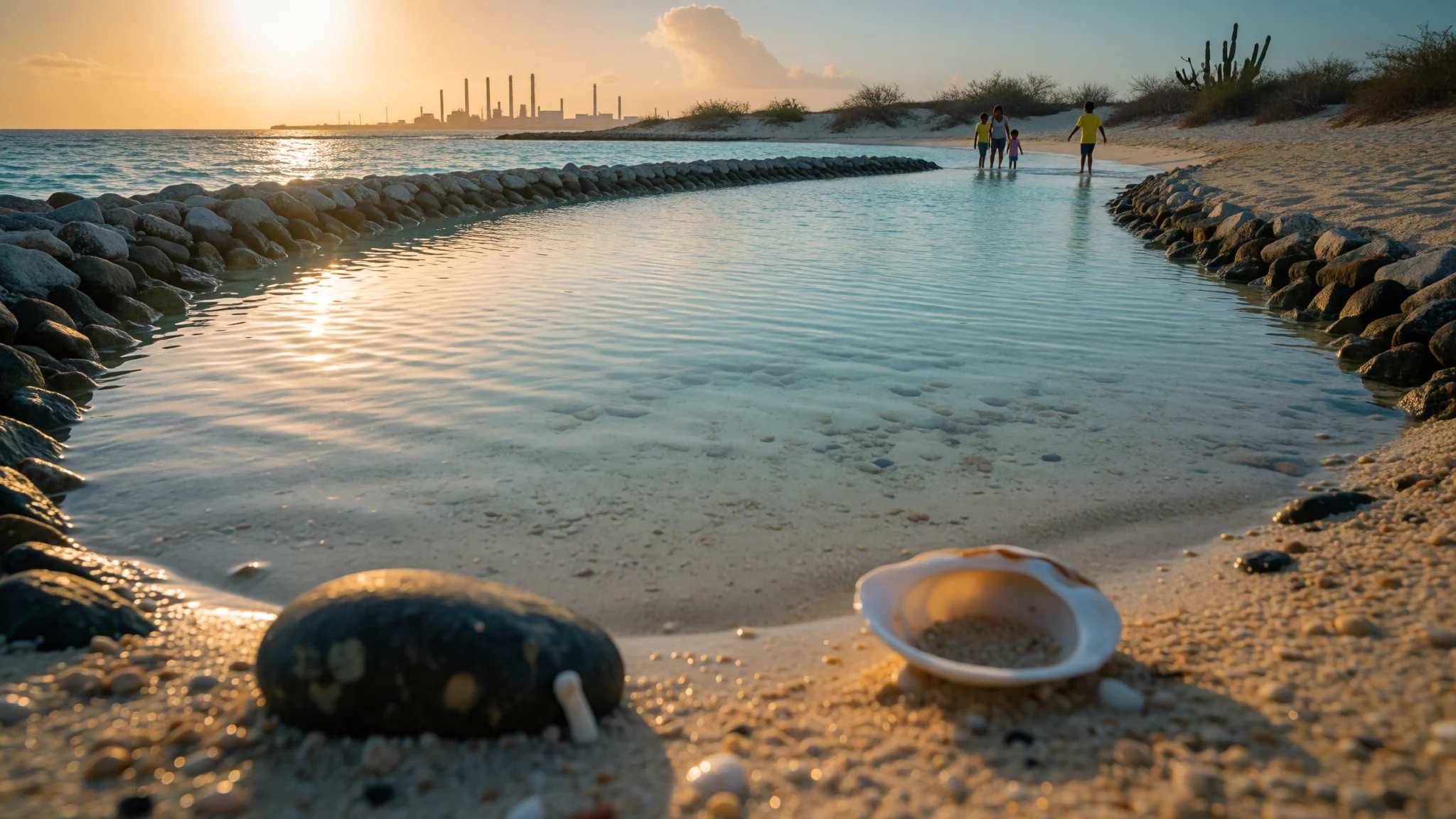
Baby Beach in Aruba is a calm, shallow lagoon where small children and nervous swimmers can paddle and snorkel with real confidence.
The place
Baby Beach sits at the far southeastern end of Aruba, on the southwest side of that tip, in the Mangle Cora locality next to the village of Seroe Colorado. Its official name is Klein Lagoen, Dutch for small lagoon, and the water inside has been shaped by people as well as nature. That is why it behaves so differently from the open-sea beaches elsewhere on the island. There are almost no waves, and the water inside stays shallow for a long way out, roughly waist height for an adult across much of the lagoon.
The nickname comes from that gentleness. Families with toddlers come here, and so do locals, which gives the place a lived-in, weekend feel rather than a resort one. Beginners also use it for snorkelling, because the shallows are forgiving.
The lagoon deepens towards its inlet, and that is where most of the marine life gathers. Fish such as parrot fish, angelfish, blowfish and squid are recorded here, along with barracuda and eels, though most of them stay near the opening rather than in the shallows.
The view is not a postcard of untouched wilderness. An oil refinery is visible from the sand, yet local currents keep the water clean and clear. Facilities are modest: a small snack stand, chairs and umbrellas for rent, and four-wheel-drive vehicles for hire for exploring the rough ground around the beach. Shade is limited, so the sun is part of the planning.
Its story
Baby Beach has a short but telling history, and most of it is written in what has been left behind. In the 1950s the Aruba Esso Club was built here as part of Lago Colony, the company settlement that is now the village of Seroe Colorado. The village was formerly known as Roode Berg, so the same place has carried several names within living memory.
The club was a social centre for the colony. It had a restaurant, a dance floor and a baseball stadium, which says a lot about the kind of community the refinery created: a self-contained neighbourhood with its own leisure habits, built around the shore of the lagoon. On the water there was a dock and a row of small shacks, and one of those shacks still stands.
Today the scene is much quieter. A single large abandoned building remains from the club era, and one business operates nearby, a dive shop. The refinery that gave the colony its reason to exist is still in sight across the water, which makes the beach an unusual mix of leisure and industry.
That layering is the real story of the place. The calm of the lagoon is partly the result of human alteration, the beach grew up beside a company town, and the locals who swim here now are using ground that once served a very different crowd. A walk along the edge, looking at the old structures, tells more than any plaque.
What to see
- The shallow lagoon — Baby Beach, Seroe Colorado
The main attraction is simply the water: a sheltered, sandy-bottomed lagoon where adults can stand and children can splash without waves knocking them over. It is best treated as a place to stay put for a few hours, floating, reading and watching families, rather than somewhere with sights to tick off.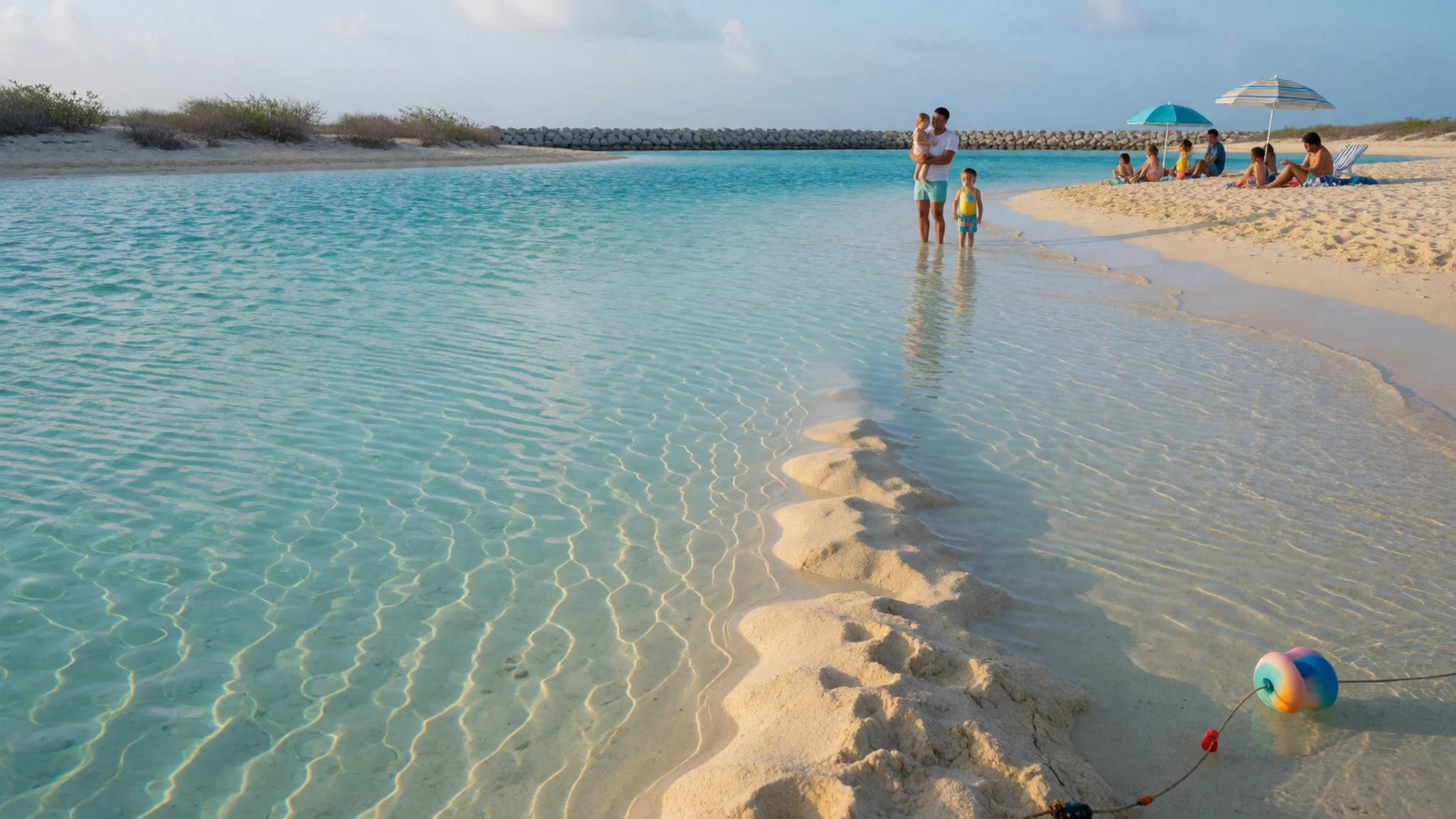
- The inlet and its fish — Lagoon inlet
Towards the opening where the lagoon meets the sea, the water gets deeper and the marine life becomes easier to spot. Parrot fish, angelfish and blowfish are among the residents, and barracuda and eels are recorded too. Snorkellers should keep to a sensible distance, and beginners can stay in the shallows.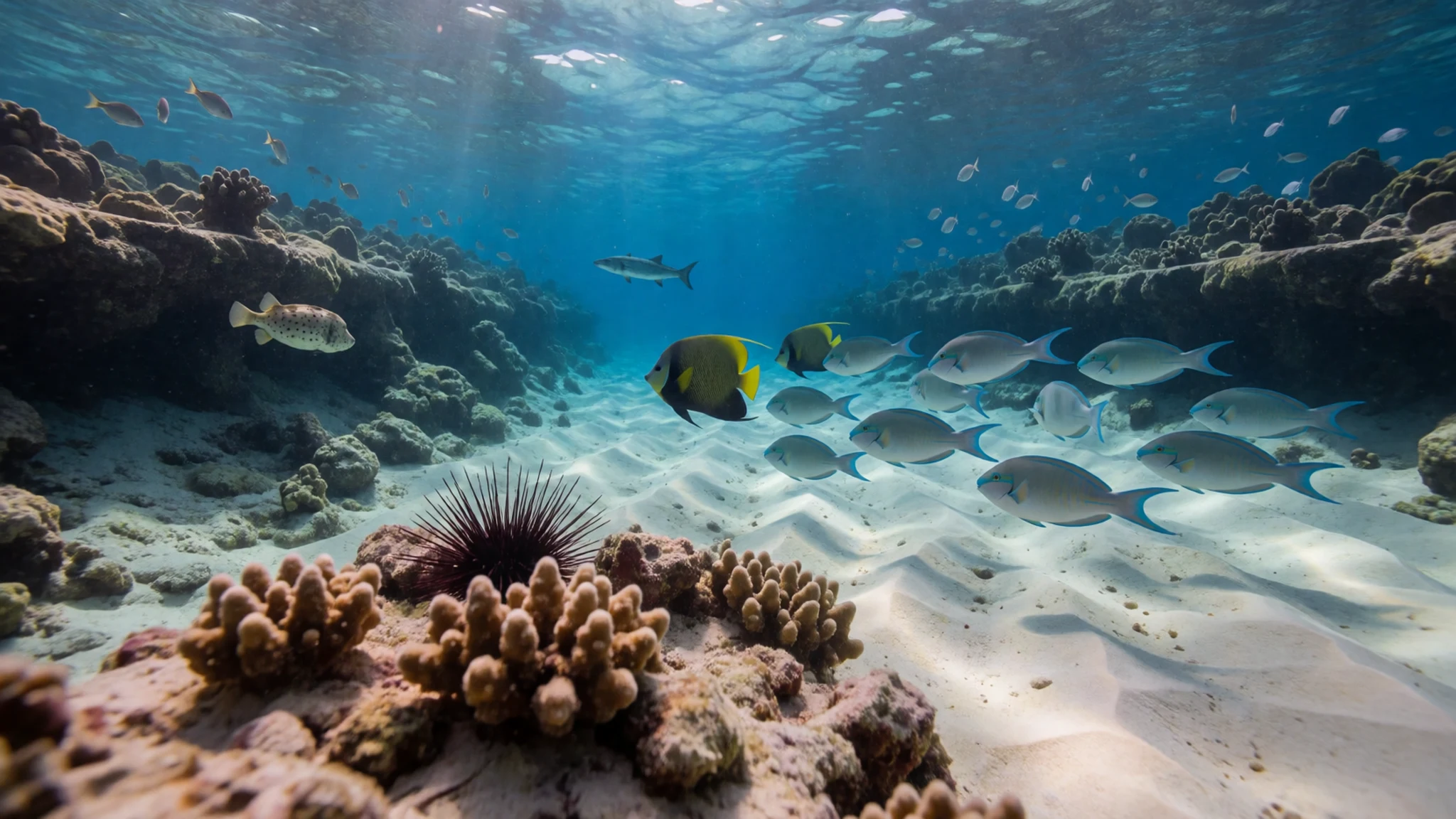
- The old Esso Club remains — West side of the lagoon
On the west side of the lagoon stood the Aruba Esso Club, with its restaurant, dance floor and ballpark. One large abandoned building survives, along with a lone original shack by the water. They are worth a slow look from outside, as a reminder of the company-town years that shaped the shore.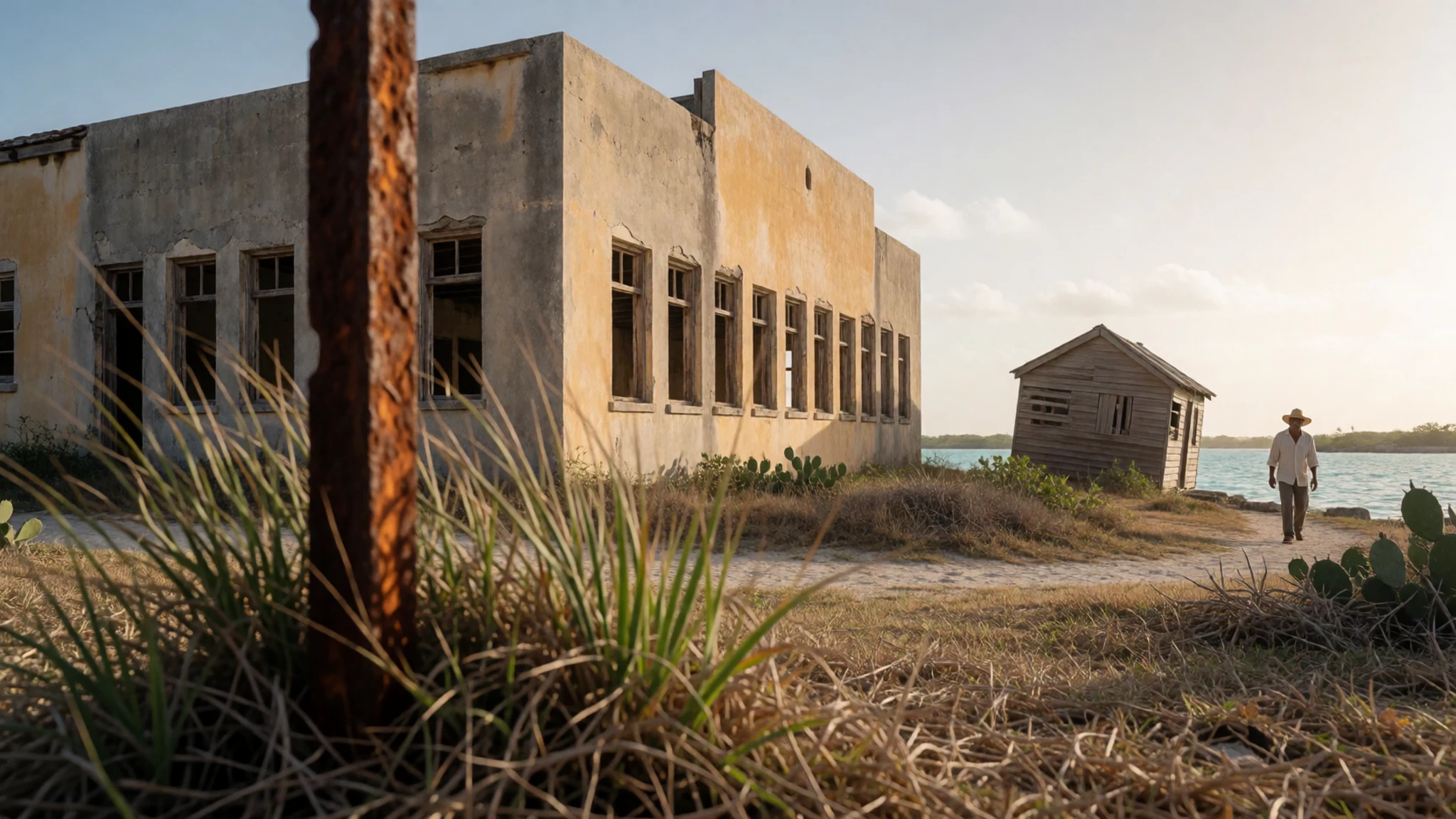
- Seroe Colorado village — Seroe Colorado
The village behind the beach, formerly called Roode Berg, grew out of Lago Colony. It is a quiet residential place rather than a tourist centre, and a short wander gives a sense of everyday life at this end of the island, away from the busier resort strip on the western side.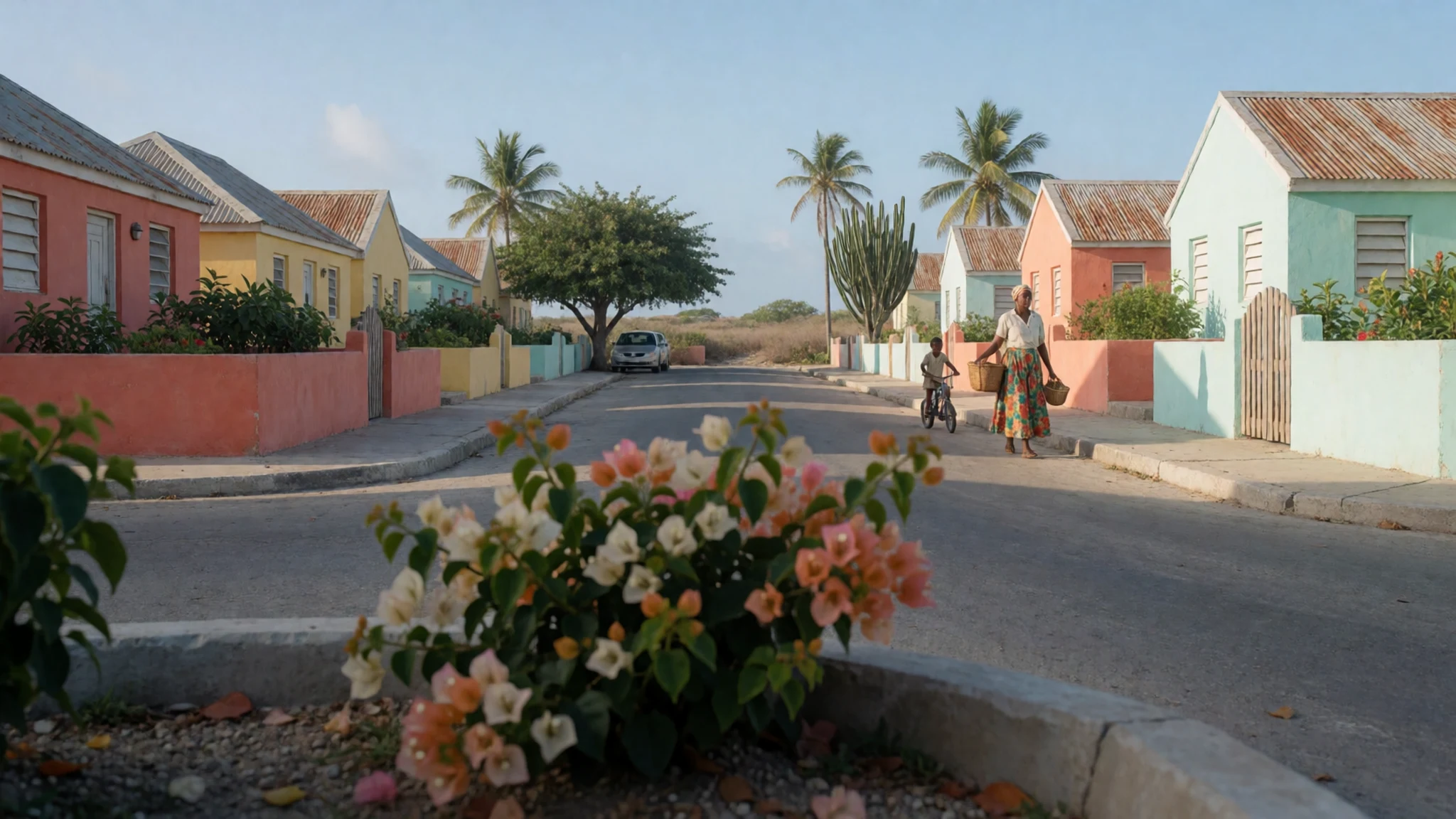
- The refinery skyline — Across the lagoon, to the south
Across the water the refinery is plainly visible, and photographers either avoid it or frame it deliberately. It explains why the settlement exists at all. Standing on the sand and looking at the contrast between clear shallows and industrial outline is a quietly striking way to understand this corner of Aruba.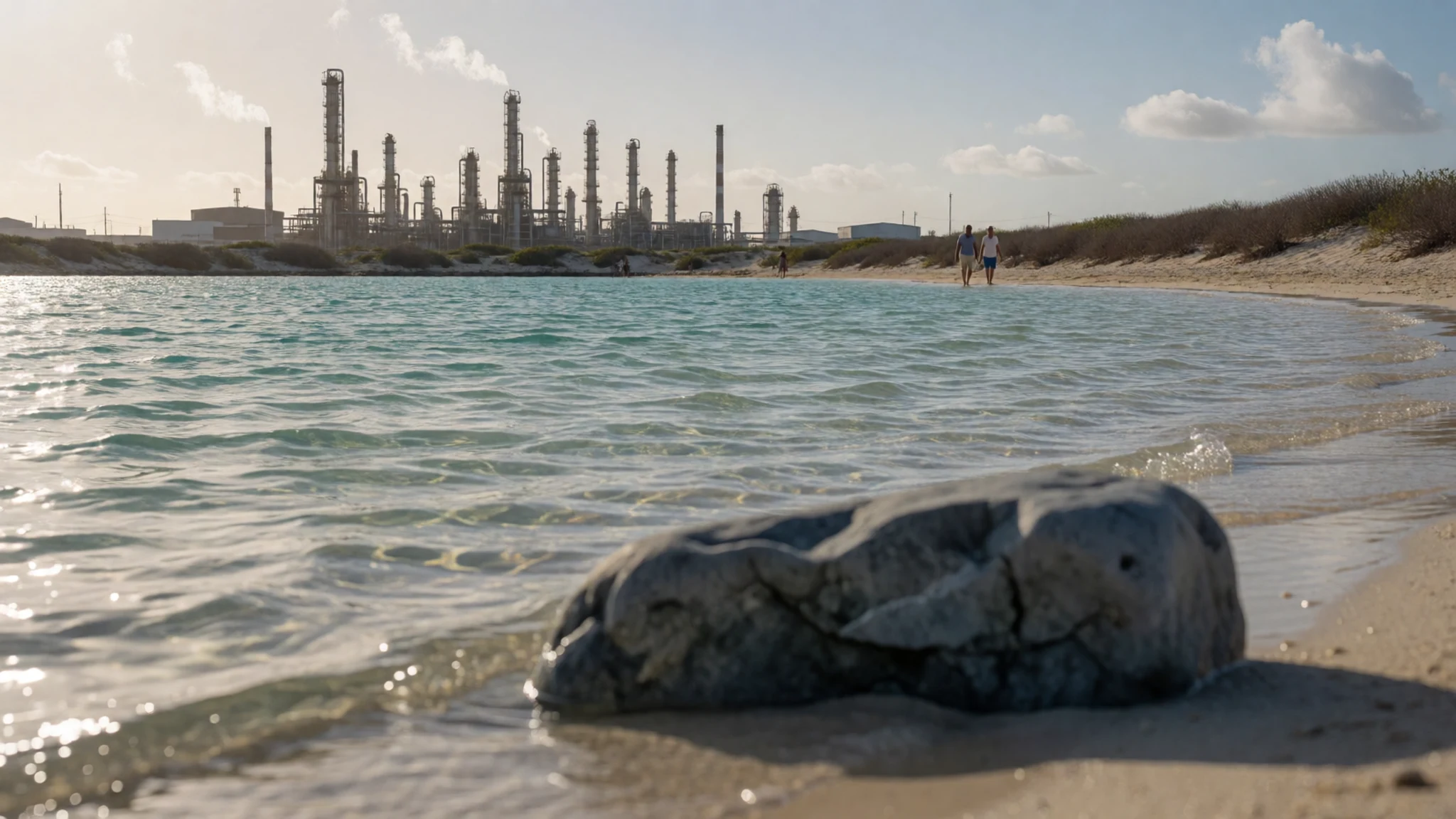
Culture
Baby Beach is a local beach as much as a visitor one, and that shapes the atmosphere. Aruba is a constituent country of the Kingdom of the Netherlands, and everyday speech on the island mixes Papiamento, Dutch, Spanish and English, so greetings and small courtesies travel well in any of them. At Baby Beach, expect families, grandparents with coolers, and children who have clearly been coming here for years.
The village of Seroe Colorado grew from a company settlement, and the older generation still remembers the Esso Club era. The abandoned building and the surviving shack are part of that memory, so they are better admired from a distance than climbed on or used as props. The beach itself is informal: music from someone's speaker, picnics under rented umbrellas, and a slow pace on weekends.
The lagoon is also a nursery of sorts, for fish as well as children. Visitors who snorkel are guests in a small ecosystem, and the polite approach is to look without touching, avoid chasing animals and take every scrap of rubbish away. Local custom on Aruba is relaxed about beach life but firm about public conduct. Public nudity is illegal on the island, and topless sunbathing is tolerated only in certain resort areas, not at a family beach like this one.
Keep your swimwear on at Baby Beach, since nudity is illegal on Aruba and this is a family beach, not a topless one.
What to wear
Aruba's traditional dress is mostly seen today at folk performances, school events and national celebrations rather than on ordinary days. Women's costume is usually a full skirt in bright cotton prints, a fitted blouse, a shawl and a head covering or straw hat, while men wear plain trousers, a light shirt and a straw hat. Cotton and straw suit the dry, hot climate, and the colours are chosen to be seen in the sun. The brief for this place does not give more detail than that, so for names of specific garments it is best to ask at a cultural museum or event.
What people actually wear at Baby Beach is simple. Locals and visitors alike are in swimsuits, board shorts, rash vests and light cover-ups, with wide-brimmed hats and sunglasses. Parents often dress small children in long-sleeved swim tops and sun hats because the shade is limited. Away from the water, people throw on t-shirts, linen shirts, shorts and sandals, and nobody dresses up.
Visitors should plan for strong sun, wind and warm water. Bring a rash vest or reef-safe sun protection, a hat that stays on in a breeze, and a cover-up for the walk to the snack stand or into the village. Water shoes are useful, since the lagoon edge and the inlet rocks can be rough underfoot, and a dry bag helps with phones and papers. There is no religious dress code here, but swimwear should be kept for the beach itself.
What to eat
- Pastechi — Bakeries and snack counters in San Nicolas and the village
A fried pastry filled with cheese, meat or fish, pastechi is Aruba's everyday snack and a common breakfast. Look for them at bakeries and snack counters around San Nicolas and Seroe Colorado, and ask what is freshly made. Pack a few for the beach.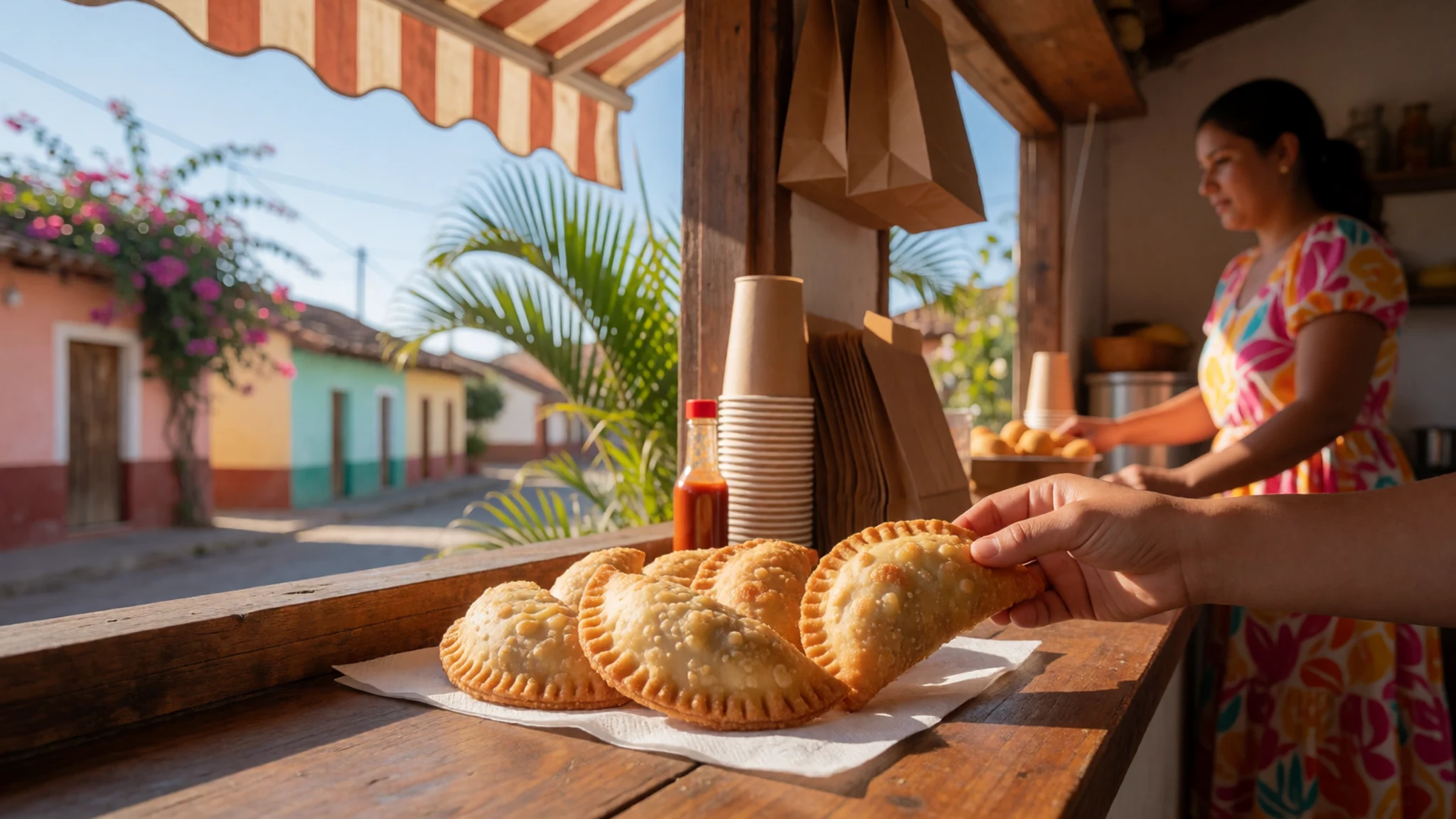
- Keshi yena — Local Aruban eateries around San Nicolas
A hollowed-out cheese, traditionally Dutch-style, stuffed with spiced chicken or other meat, then baked until soft. It is rich and filling rather than a beach lunch, so it suits an evening meal at a local eatery after a day by the water.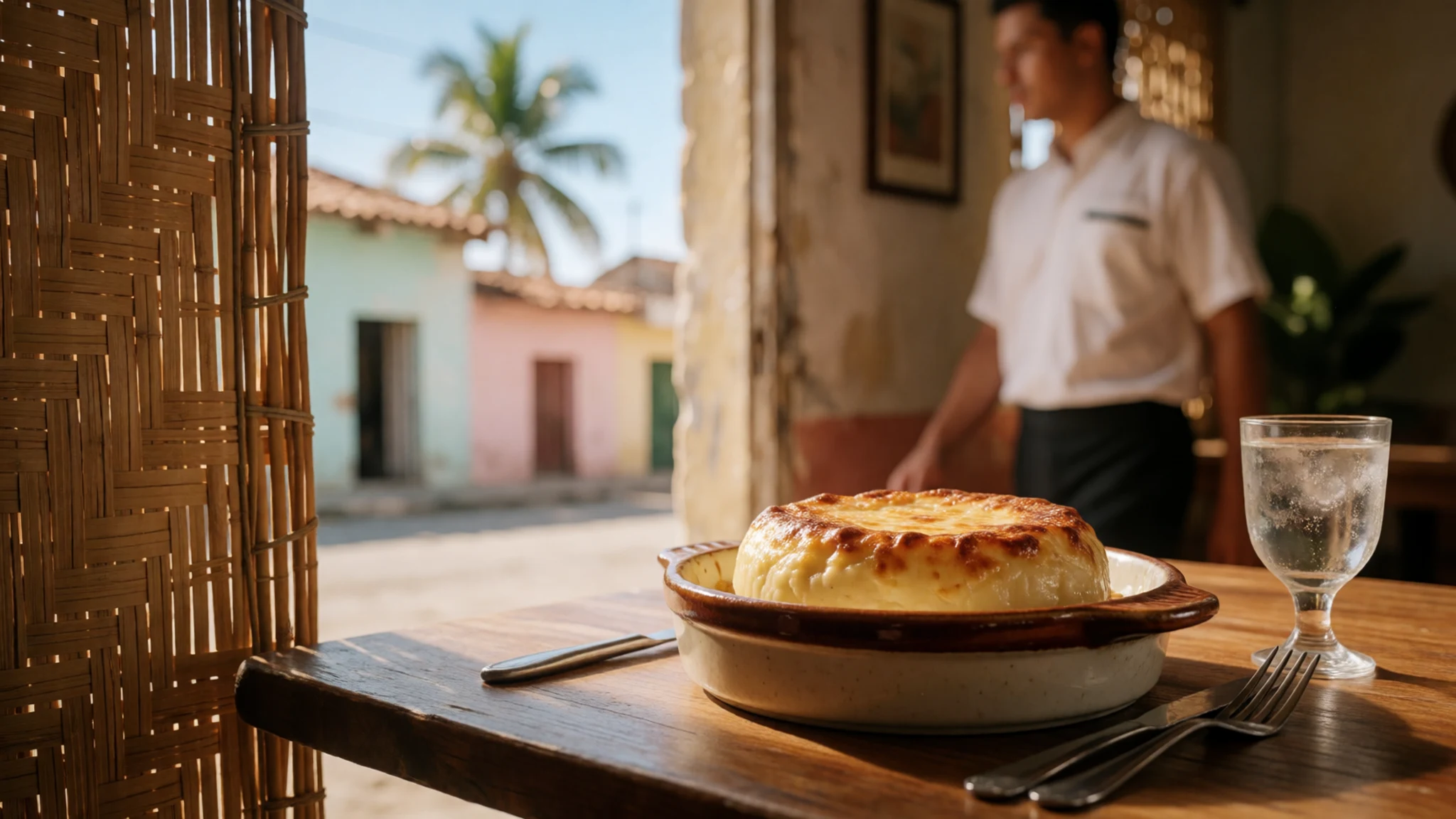
- Fresh fish with funchi — Seafront eateries near San Nicolas
Grilled or stewed fish served with funchi, a firm cornmeal side similar to polenta, is a staple of island cooking. Seaside eateries on this southeastern coast tend to serve what the boats have brought in, so ask for the catch of the day. - Pan bati — Casual local eateries and family kitchens
A thick, lightly sweet griddled pancake bread, usually served alongside meat, fish or stew. It is homely food rather than a showpiece, and appears on the menus of casual local places, often as a side that soaks up sauce. - Beach snacks and cold drinks — The snack stand on the beach
The small snack stand at Baby Beach covers the basics: something to eat, something cold to drink and a little shade. It suits a quick lunch between swims. Bring extra water and some food, as choice on site is limited.
Plan it
Best time. December to April is the usual choice for dry, sunny weather and calm days by the lagoon, though it is also the busier period on the island. Aruba is generally warm all year, so the shoulder months can bring quieter beaches. Early mornings and weekdays are gentler than weekends, when local families fill the shore.
How long. 1
Getting there. Fly into Queen Beatrix International Airport in Oranjestad, then drive or take a taxi southeast across the island through San Nicolas to Seroe Colorado; the last leg is a short drive to the lagoon car area. A rental car or an arranged taxi is far easier than waiting for public transport.
Budget. low
Tips
- Go early on weekdays, before families and day-trippers arrive
- Bring water, a hat and sun protection, as shade is limited
- Take water shoes for the inlet rocks and bring your own snorkel gear if you prefer, or ask about rentals at the beach
- Carry some cash and a card for the snack stand and rentals, and check current prices on site
- Chairs and umbrellas can be rented, so decide early if you want shade
Etiquette
- Keep swimwear on, as nudity is illegal on Aruba
- Look at fish without touching or chasing them
- Take rubbish away and leave the old Esso Club structures alone
Nearby
Sources
- Wikidata Q280262 (CC0)
- Wikipedia: Baby Beach, Aruba (rev 1377558444) (CC BY-SA 4.0)
- Wikivoyage: Aruba (CC BY-SA 4.0)
- Photo 01-baby-beach.jpg, Rickzwart (CC BY 3.0)
- Photo 02-baby-beach-aruba.jpg (Public domain)
- Photo 03-baby-beach-aruba-2.jpg, Caribiana (CC BY-SA 4.0)
- Photo 04-baby-beach-aruba.jpg, Caribiana (CC BY-SA 4.0)
- Photo 05-baby-beach-26265770649.jpg, Todd42013 (CC0 1.0)
- Photo 06-baby-beach-aruba-16662313528.jpg, Lelê Breveglieri (CC BY 2.5)
- Photo 07-baby-beach-aruba-16849837135.jpg, Lelê Breveglieri (CC BY 2.5)
- Photo 08-baby-beach-panoramio.jpg, rokker (CC BY 3.0)


Wildlife
- Barracuda (animal)
The great barracuda is a big fish that cruises through warm seas all over the world, like a long sea-going torpedo. At Baby Beach it has been recorded, though it tends to stay out near the opening of the bay rather than in the shallows, so look outwards rather than at your toes. Watch from a respectful distance, stay calm and quiet, and consider going with a guide. Never feed it. - Squid (animal)
The Caribbean reef squid is a small, torpedo-shaped sea creature with a soft frill of fins along its body, and it can change colour to show its mood. It usually travels in small schools. At Baby Beach it has been recorded, mostly near the opening rather than in the shallows. Float quietly, keep your distance, ideally go with a guide, and never feed it.