California Lighthouse
California Lighthouse, Aruba
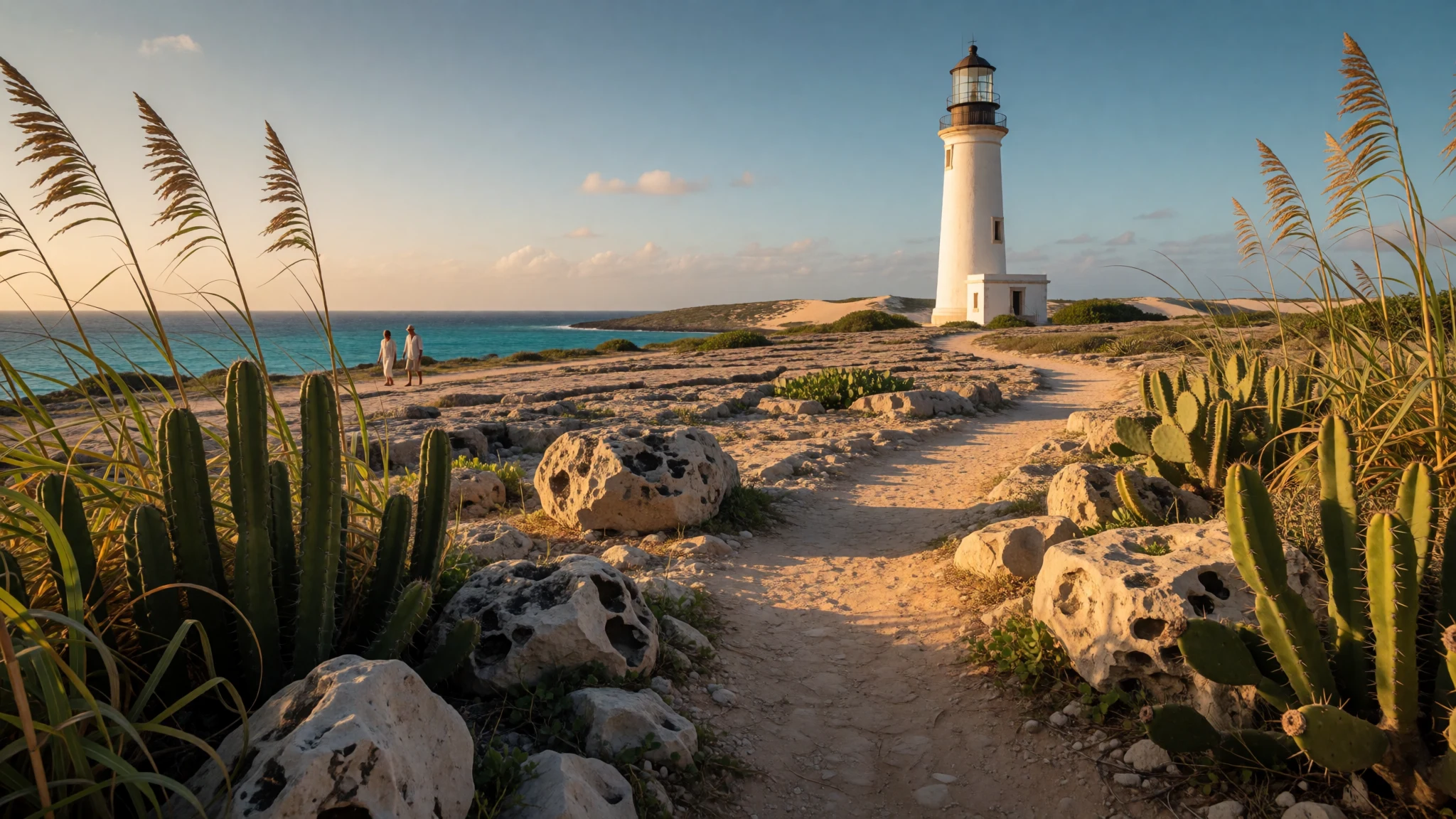
California Lighthouse is a wind-swept limestone headland on Aruba's wild north-west tip, with a shipwreck, a mistaken-identity story and big sunset views.
The place
California Lighthouse stands on a limestone plateau at Hudishibana, on the north-western tip of Aruba, close to Arashi Beach and the Sasariwichi dunes. Islanders call it Faro, simply "the lighthouse". Completed in the years around 1914, it takes its name from a British steamship, the S.S. California, which sank off this coast in 1891, long before the tower existed. The light was built so that other ships would not meet the same end on the rocks below.
The setting is very different from the resort strip further south. Here the land is dry and open: pale rock, cactus, low scrub and a wind that rarely drops. The sea on this exposed shore is rougher than the calm water on Aruba's sheltered side, and swimming off the rocks is not sensible. The dunes and the sweep of Arashi Beach lie within easy reach, and the whole headland feels remote even though it is only a short drive from the town of Noord.
Noord is the practical base: shops along its main road, small eateries, bus services and a church at its centre. The Tierra del Sol golf course occupies the northern cape on the way to the lighthouse, so the road passes manicured greens before the landscape turns wild again. Most people arrive for the view and the late-afternoon light, then move on to the beach or the dunes. The lighthouse is a landmark first and a day out second; an hour or two on the plateau is enough, longer if a beach stop is added.
Its story
California Lighthouse owes its name to a wreck and a misunderstanding. On 23 September 1891 the S.S. California, a wooden British steamship of the West India and Pacific Steamship Company, went down just off this shore while sailing from Liverpool towards the Americas. The ship normally carried fruit from South America, but on that voyage the hold was full of clothing, provisions and furniture. Cargo was thrown overboard and washed up on the beach, and local people gathered it with the aim of selling it at market.
Two police officers were sent over from Curaçao to stop them. Heading towards Noord and asking after "California", they were met with laughter, because they had not realised it was a ship rather than a place. The joke stuck, and the point of land, and later the lighthouse, took the name. For years afterwards, schoolchildren were said to be wearing "drowned goods".
The wreck is still there, but broken up, its pieces scattered across the seabed. It lies in strong currents and can only be reached by boat, and its surroundings are home to coral and reef fish. It is sometimes confused with the S.S. Californian, the ship that failed to help the Titanic in 1912, but that was a different vessel, and the Aruban wreck had sunk twenty-one years earlier.
Building the tower was awkward. In 1915 the only proper road in Noord ran past St Ann's Church, and nothing led towards Hudishibana except a track for donkeys and horses. The builders rented donkeys from the Figaroa family of Noord to bring materials up. A restoration in May 2016 marked a hundred years since the lighthouse was finished.
What to see
- California Lighthouse — Hudishibana, north-western tip of Aruba
The tower stands on the Hudishibana plateau with open views over the rocky shore and the water where the S.S. California went down. Most visitors come near sunset, when the light is soft and the wind is strong. Check locally whether the tower itself can be entered; the grounds and viewpoints are the main draw.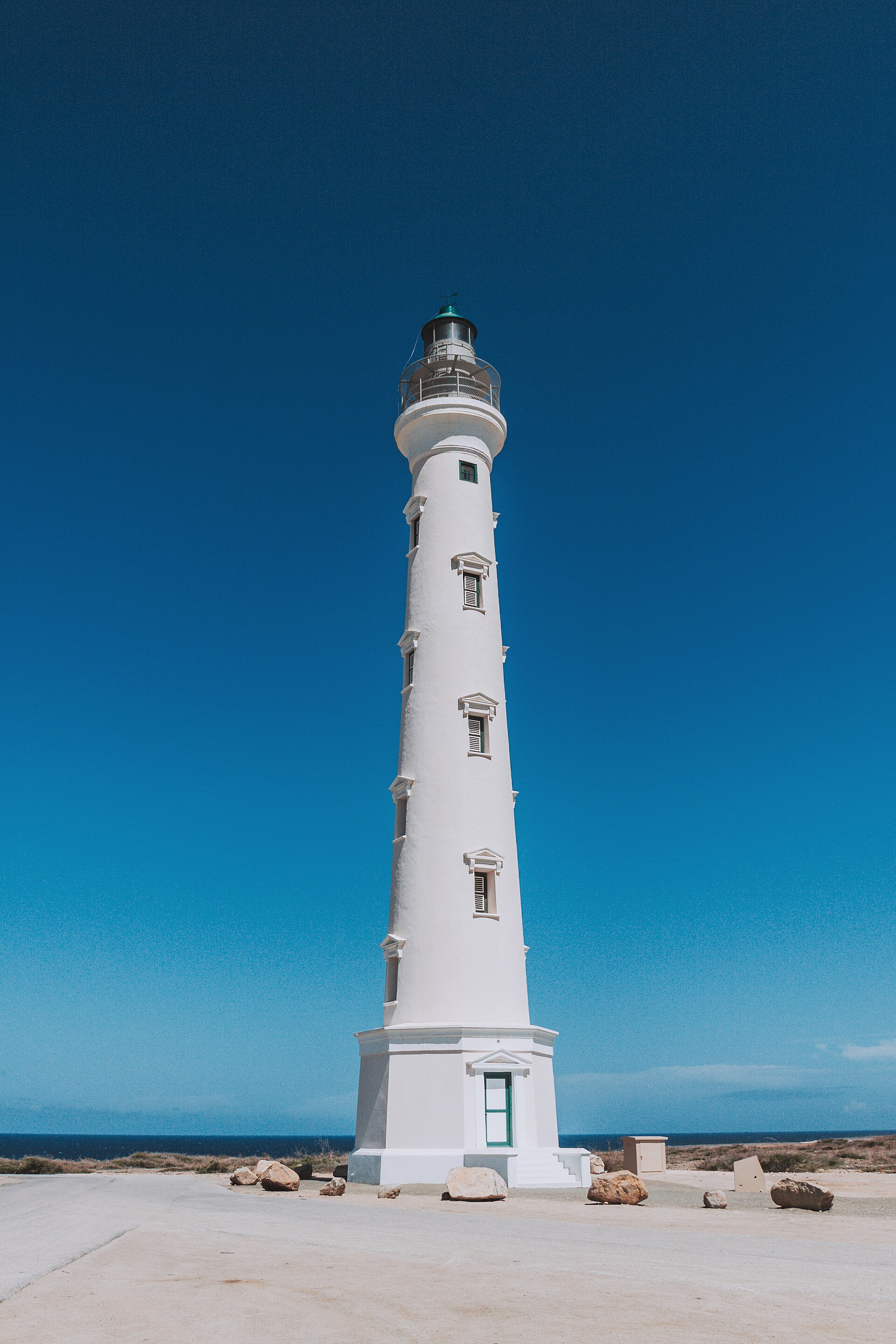
- Arashi Beach and the Sasariwichi dunes — North-west coast, near Hudishibana
Just below the lighthouse plateau, Arashi Beach offers pale sand and clearer, calmer water than the rocky headland, though conditions change with the wind. Behind it the Sasariwichi dunes make a quiet walk. Bring shade and water, since there is little cover on this stretch of coast. - Alto Vista Chapel — North-east coast, near Noord
Alto Vista Chapel is a small Catholic chapel on the island's quieter windward side. Local history treats it as the older religious meeting place that Noord's church later joined. It suits a short, reflective stop on the way between the lighthouse and the main towns. - Bubali Bird Sanctuary — Bubali, near Noord
This wetland near Noord shelters many migratory birds, and an observation tower gives the best view over the water without disturbing them. Early morning is the cooler, more active time. It is an easy, flat stop and a good contrast with the dry scrub of the headland. - Santa Ana Church, Noord — Centre of Noord
The Roman Catholic church of Santa Ana was first built in 1776 and has been rebuilt several times since. Inside, the solid oak altar is hand carved in neo-gothic style. It sits at the heart of Noord and is worth a short visit when the doors are open.
Culture
California Lighthouse sits in a part of Aruba where island identity is easy to read. Aruba is a constituent country of the Kingdom of the Netherlands, and Papiamento, a Creole language, is spoken alongside Dutch, with Spanish and English heard daily. The countryside beyond the resorts is called the cunucu, and its low cottages and dry gardens hold a rural way of life that islanders are proud of. Some of the restaurants in Noord are set in old countryside cottages for exactly that reason.
Catholic tradition runs deep. Alto Vista Chapel and the church of Santa Ana in Noord mark where communities once gathered, and religious festivals still shape the calendar. Noord also hosts a children's carnival parade, usually in February, as part of the wider Carnival season.
Humour is part of the local story, too. The tale of police officers hunting for a "place" that turned out to be a ship is still told with a grin, and it explains why a lighthouse carries an American-sounding name. Greetings matter in small communities, so a friendly "bon dia" in the morning goes a long way. Along the shore below the tower the rock is sharp and the sea is rough, so keep to the marked paths, do not climb on the rocks beside the tower, and take your rubbish away with you.
What to wear
California Lighthouse is a dry, windy headland, and clothing in northern Aruba follows the climate. Traditional Aruban dress is now seen mainly at Carnival, folklore events and cultural shows. Women's costume usually features a full, brightly patterned cotton skirt, a fitted blouse, a shawl and a headscarf, while men wear a white shirt, dark trousers and a straw hat. It reflects the cunucu farming past, when light cotton and sun protection were practical.
Day to day, islanders dress for heat: shorts, linen shirts, cotton dresses, sandals and sunglasses. Smart-casual is normal for an evening meal, and swimwear stays at the beach.
Visitors should plan for strong sun and constant wind. A hat that stays on, sunglasses, light long sleeves and high-factor sunscreen are all worth packing. Closed shoes or sturdy sandals are better than flip-flops on the sharp limestone around the lighthouse. A light layer helps when the breeze picks up at sunset. When visiting churches such as Santa Ana in Noord or Alto Vista Chapel, cover shoulders and knees, and put swimwear away before stepping inside.
What to eat
- Keshi yena — Local Aruban restaurants in Noord, especially countryside-cottage style eateries
A hollowed round of cheese filled with spiced chicken, beef or fish and then baked until the cheese melts. It is a classic Aruban main dish, rich and filling, often shared at lunch. - Pan bati — Family-run local eateries and lunch counters around Noord
A thick, soft griddle pancake bread made from flour and cornmeal. It is eaten with stews, grilled meat or fish and is simple, warming comfort food that suits a long lunch. - Sopi di pisca — Local seafood restaurants along the coast and in Noord
Aruban fish soup, usually light and peppery with chunks of local fish, vegetables and herbs. It makes a good first dish when the sun has been strong and the appetite is small. - Funchi with fried fish — Casual seafood places and roadside eateries near the coast
Funchi is a firm cornmeal side dish, similar to polenta, served beside crisp fried fish. Salty, crunchy and easy to share, it shows how the island eats everyday meals. - Pastechi — Bakeries and snack counters in Noord, best in the morning
A deep-fried pastry parcel with cheese, meat or fish inside. Island residents eat it for breakfast or a snack, and it is a cheap, quick way to fuel up before a drive to the headland.
Plan it
Best time. December to April is a sound choice, with warm, dry days and steady trade winds that make the exposed headland comfortable. Aruba stays warm all year, so go late in the afternoon to avoid the midday sun, and expect the wind to be strong at any season.
How long. 1
Getting there. Fly to Queen Beatrix International Airport near Oranjestad, then drive Route 1 north to Noord and on to the lighthouse. Arubus services run to Noord; check the current routes and timetable, then take a taxi or tour for the last leg to Hudishibana.
Budget. mid
Tips
- Go in the late afternoon for softer light and cooler air, and leave before dark because the tracks are rough
- Carry water, a hat and sunscreen; there is little shade on the plateau
- Rent a car or book a tour for the final stretch, as public transport stops in Noord
- Combine the lighthouse with Arashi Beach, the dunes and a meal in Noord to fill a half day
- Keep some cash for small eateries and snack counters
Etiquette
- Keep to marked paths and away from the cliff edge and the rocky shore, where waves are unpredictable
- Take all rubbish with you and do not disturb dune vegetation
- Cover shoulders and knees when stepping inside churches and chapels
Nearby
Sources
- Wikidata Q2279321 (CC0)
- Wikipedia — California Lighthouse (rev 1381648547) (CC BY-SA 4.0)
- Wikivoyage — Noord (rev 4718216) (CC BY-SA 4.0)
- Photo: California Lighthouse by Day — Aruba Paradise Photos (CC BY-SA 4.0)
- Photo: Close up drone photo of the California Lighthouse — Jeroen Lucas (CC BY-SA 4.0)
- Photo: Plan van het Eyland Aruba — Engelbertus Horst (CC0 1.0)
- Photo: California Lighthouse Restoration — Roman Tokman (CC BY-SA 4.0)
- Photo: FA-0714-141 01 — George Johan Cornelis Zimmerman (CC BY-SA 4.0)
- Photo: California Point, Landschap — Arthur Meiners (CC BY-SA 4.0)
- Photo: Fraters van Tilburg bij de vuurtoren van Westpunt — Brothers of Our Lady Mother of Mercy (CC BY-SA 4.0)
- Photo: Fraters van Tilburg bij vuurtoren California — Brothers of Our Lady Mother of Mercy (CC BY-SA 4.0)


