Castle Gutenberg
Castle Gutenberg, Liechtenstein
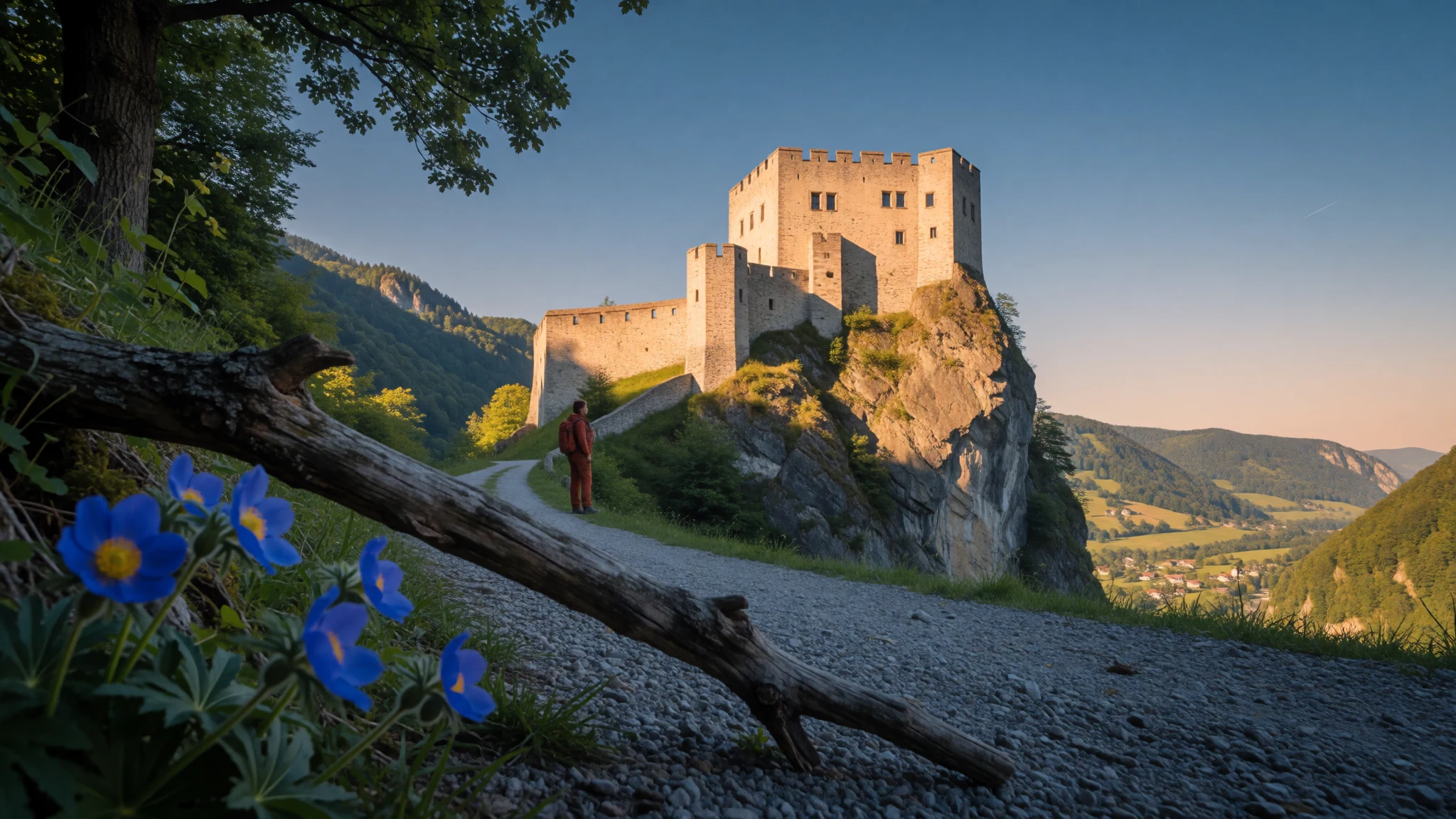
Castle Gutenberg sits on a lone rock above Balzers, a medieval stronghold, now a museum, that rewards a short uphill walk.
The place
Castle Gutenberg stands in Balzers, the southernmost village in Liechtenstein, where the Rhine valley narrows towards Switzerland. The castle crowns a free-standing rock rising about seventy metres above the village centre, so it shows up as a landmark from almost every street. A lane called Burgweg climbs to it, and the walk from the village is short enough that nobody needs to treat the visit as an expedition. Balzers itself is small, home to about 4,600 people, and feels like a working Alpine village rather than a tourist set: a church, a handful of eateries, quiet residential streets and open fields on the valley floor. Of the castles in Liechtenstein, Gutenberg is one of only two that survive intact. Unlike Vaduz Castle, which remains the home of the princely family, Gutenberg is run as a museum and is open to the public, so the courtyard and chapel can actually be seen. The border with Switzerland is open, and the nearest railway station is on the Swiss side at Trübbach, across the Rhine, while buses link Balzers with Sargans. That makes the castle an easy half-day from eastern Switzerland as well as from Vaduz. The place suits a calm, compact outing: a pleasant climb, a view over the valley and a short lesson in how a border castle changed hands over the centuries. Visitors hoping for a full day of attractions will find the village and castle together fill a morning or an afternoon, and little more.
Its story
Castle Gutenberg began not as a fortress but as a hilltop church with a burial ground. Around the start of the twelfth century the graveyard was given up and the church was ringed with a wall, forming a rough circular keep. Over the following decades the keep was raised into a main tower, which was later topped with battlements. The Frauenberg family, nobles from Graubünden in Switzerland, held the castle first. When Heinrich von Frauenburg died in 1314 it passed to the Habsburgs, who used it to watch the frontier with the neighbouring Swiss territories. A siege in 1499, during the Swabian War, left it damaged, and Emperor Maximilian I ordered major rebuilding. The drawbridge was removed in 1537 after storm damage and never replaced. Military use faded in later centuries and fires took their toll. After a blaze devastated Balzers in 1795, the ruins were quarried for stone to rebuild the village. The castle was bought locally and lightly repaired in 1824, then sold in 1854 to Princess Franziska of Liechtenstein. The Vaduz-born architect Egon Rheinberger rebuilt much of it between 1905 and 1912, adding new structures in the lower parts. Later the castle was hired out for events, and in 1951 it was sold to the Liechtenstein-born Mexican actress Medea de Novara and her husband Miguel Contreras Torres. The government bought it in 1979 for state and museum use, though Novara kept her right to live there until she died in 2001.
What to see
- Gutenberg Castle courtyard and chapel — Balzers, on the castle rock
The castle is the whole point of a visit to Balzers. Inside the walls, the courtyard is the part most worth lingering in, with the old tower rising above it, and the small chapel is simple and quiet. Check the official site for current museum opening arrangements before setting out.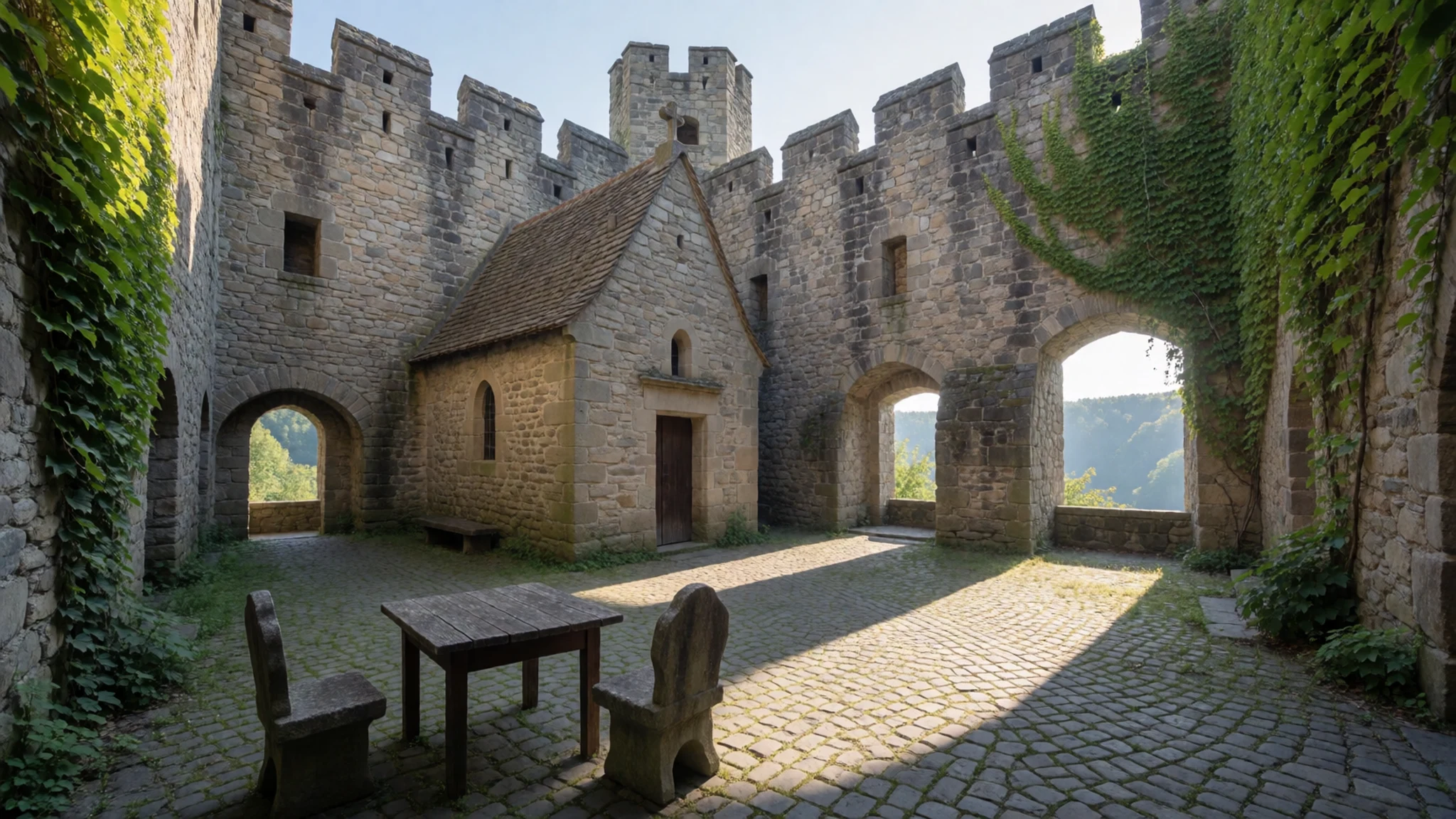
- Jubiläumskirche — Balzers village
This Romanesque Revival church was built in the early twentieth century to mark the jubilee of Prince Johann II's reign. The interior is plain, and most visitors find the exterior the better part. It is a working parish church, close enough to the castle to pair with it on one walk.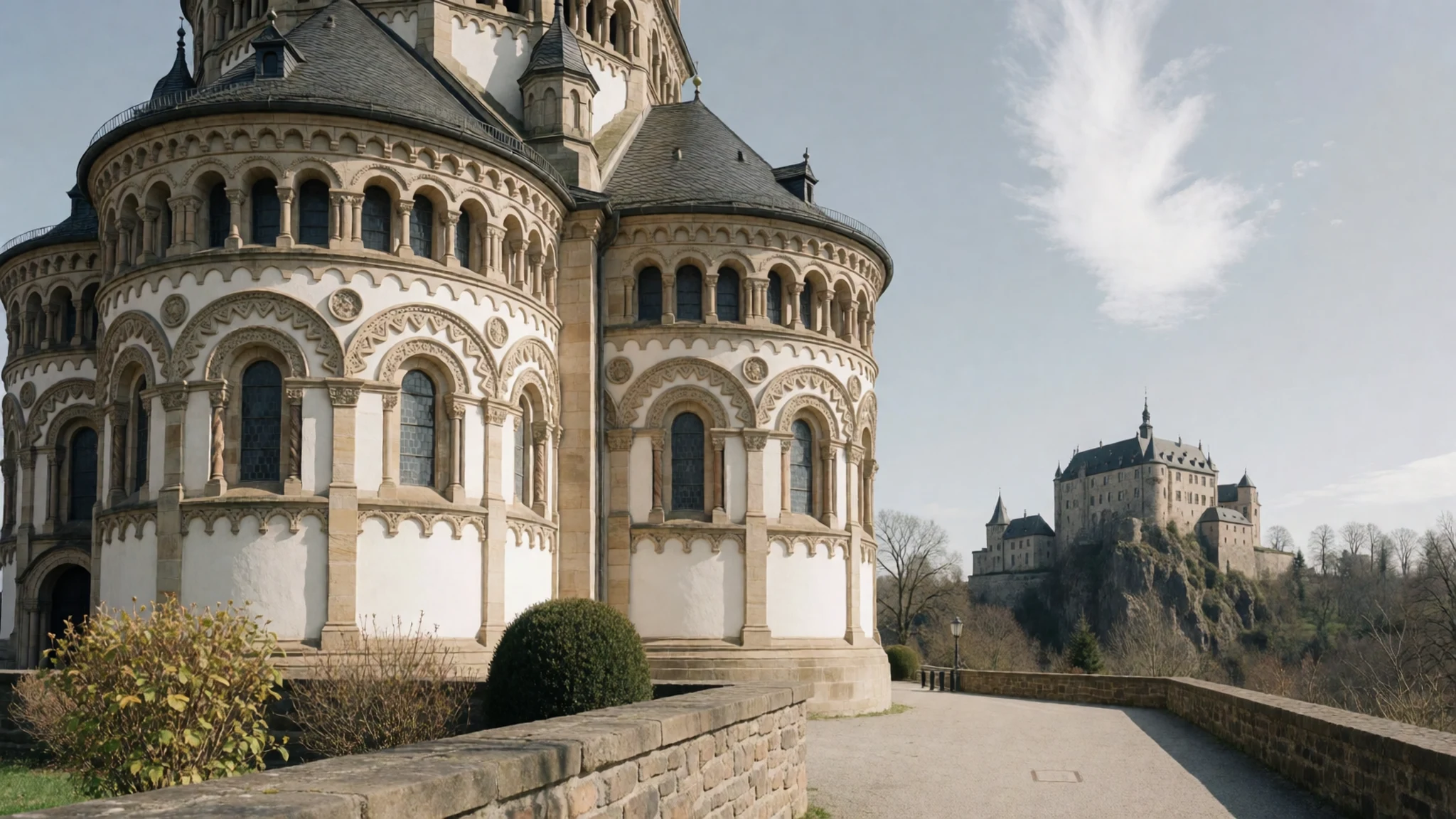
- The Burgweg climb and the rock — Burgweg, Balzers
The lane up to the castle is half the experience. It winds up the steep rock, and each bend opens more of the valley and the surrounding mountains behind the village. Allow time to stop and look back. Sturdy shoes help on the slope, especially after rain.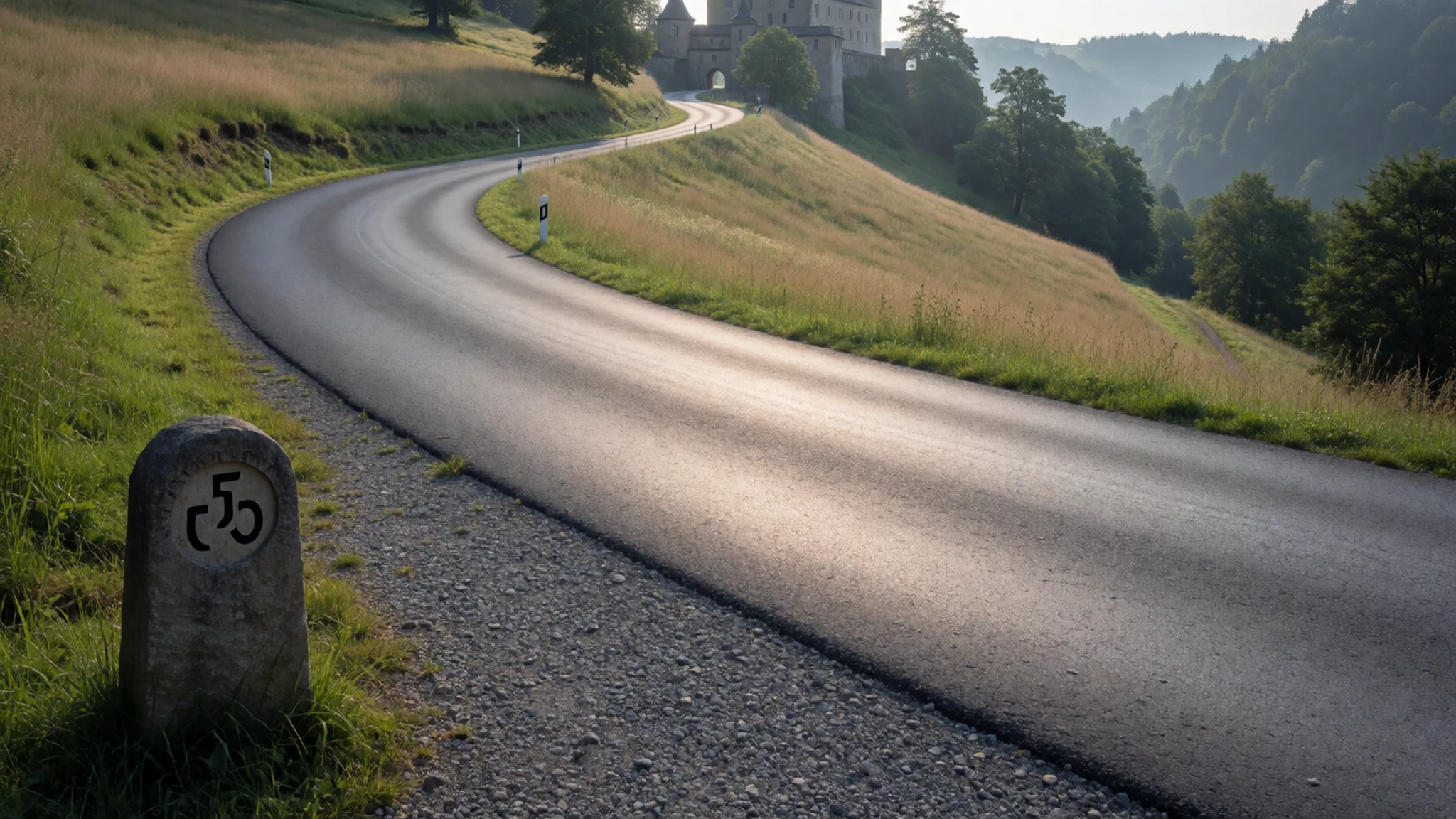
- Balzers village centre — Centre of Balzers
Before or after the castle, a stroll through the middle of Balzers shows the Liechtenstein that most day trippers miss: a working village with a few eateries and cafés and the castle always visible overhead. The Höfle bus stop is a good place to start the walk.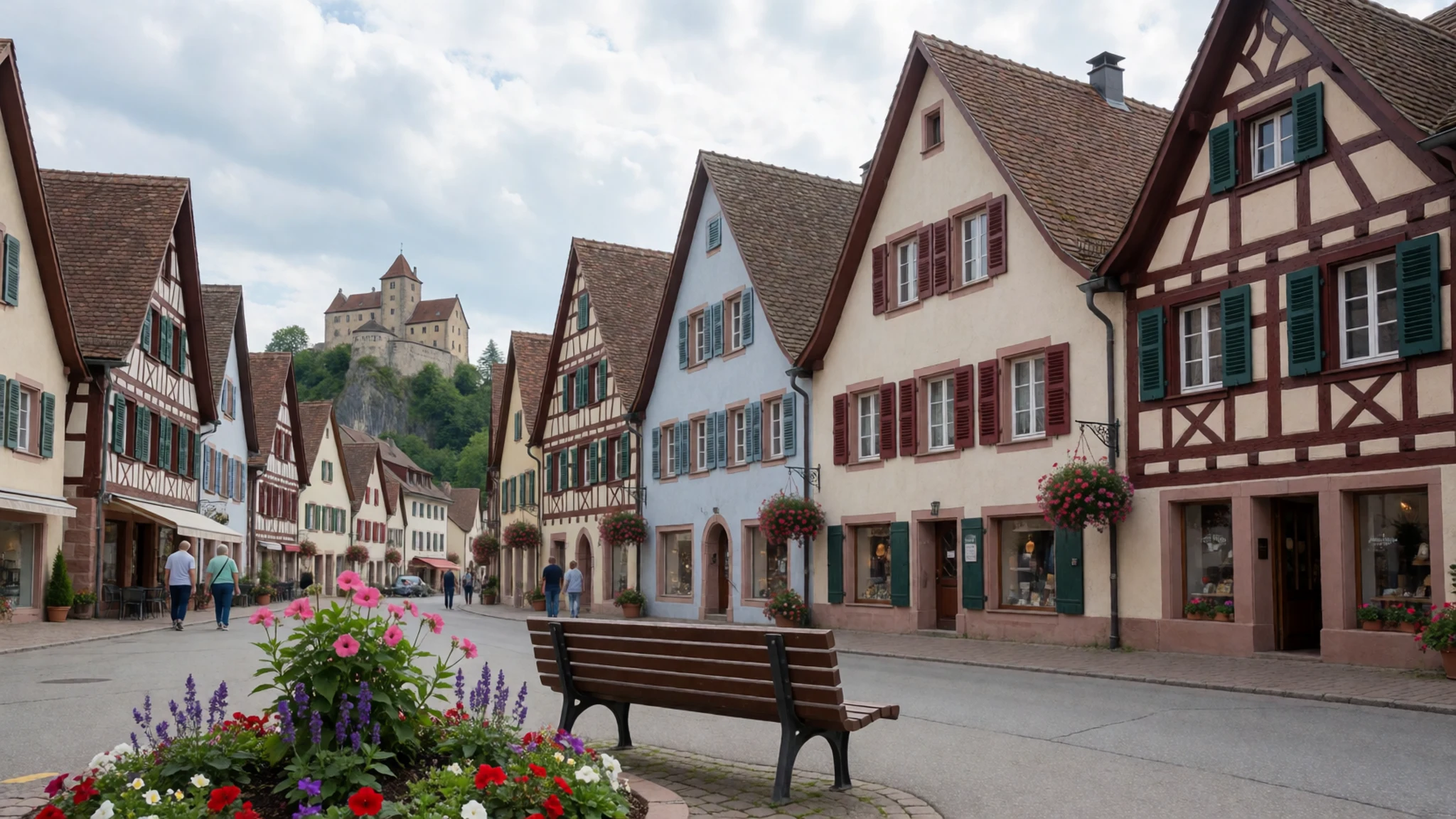
Culture
Castle Gutenberg belongs to a country that is a principality, ruled by a princely family whose seat is Vaduz Castle, not Gutenberg. That history is visible in the castle's own story: it passed from regional nobles to the Habsburgs, then to a Liechtenstein princess, and finally to the state, which now keeps it as a museum. Balzers is a mainly German-speaking village, and everyday speech is a local Alemannic dialect, though Standard German appears on signs and English will get visitors by in most places that see travellers. Church life still shapes the landscape: the Jubiläumskirche is a working parish church, and the castle has its own small chapel. The border with Switzerland is open, and people cross it routinely, so the Rhine valley feels like one continuous region rather than two separate countries. Local pride is quiet, expressed in tidy gardens, careful restoration and a calendar of village events rather than showy display. A visit is best treated as a courtesy call on a small community: arrive unhurried, greet people with a polite Grüezi or Guten Tag, and expect shops and eateries to keep local rhythms rather than tourist ones. Keep your voice low inside the Jubiläumskirche and the castle chapel, and ask before photographing anyone attending a service.
What to wear
Castle Gutenberg sits in an Alpine corner of Europe where traditional dress, known as Tracht, survives mainly for festivals, national celebrations and village events. Regional costumes in the Alpine world typically combine wool and linen with embroidered bodices, aprons and ribbons for women and waistcoats, jackets and hats for men, and they come out for parades and church feast days rather than daily use. In Balzers today, people dress as they would elsewhere in the Rhine valley: practical, neat and understated, with outdoor jackets, walking shoes and plain, good-quality clothes in town. Smart casual is the norm for restaurants, and nobody dresses up for a castle visit. Visitors should plan for weather first. The valley can be cool and wet, even in summer, so a waterproof layer and a warm top are sensible for the climb up Burgweg, and sturdy shoes with grip matter more than style on the sloping lane and the castle's old stone paving. In winter, warm boots and gloves are needed. Inside the Jubiläumskirche and the castle chapel, covered shoulders and knees are the respectful choice, and hats should come off. Sun protection is worth carrying for the exposed rock on clear days, and a small day bag keeps hands free for the walk.
What to eat
- Käsknöpfle — Village restaurants in central Balzers
Small cheese dumplings, close to a mountain cousin of macaroni cheese, usually topped with fried onions and served with apple sauce. Filling and rich, it suits a cool day after the castle climb. Look for it at village restaurants in the centre of Balzers.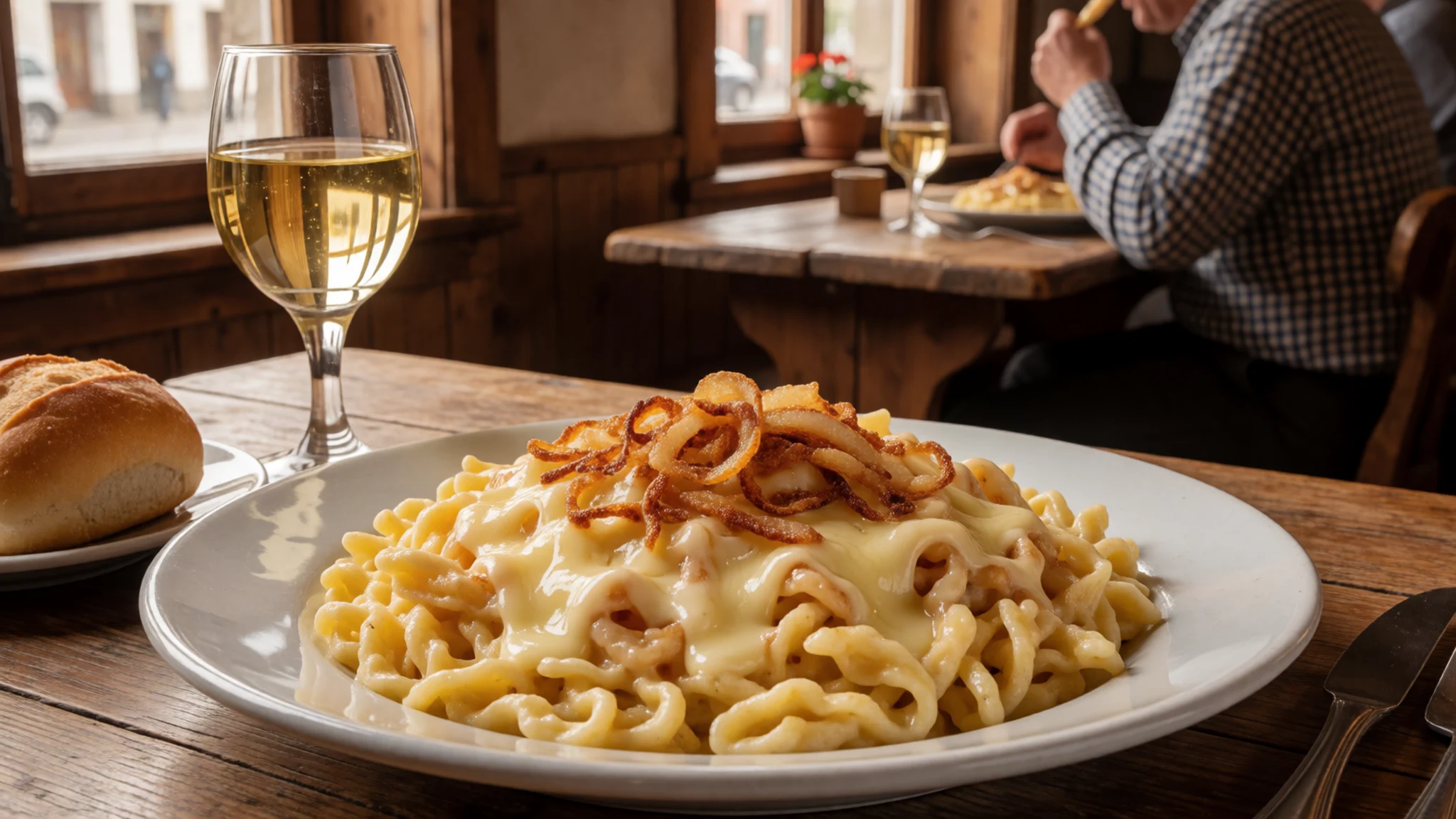
- Riebel — Traditional eateries in Balzers and nearby villages
A rustic dish of coarse cornmeal, toasted until crumbly. It is eaten with stewed fruit or with milky coffee, and sits in the tradition of simple farmhouse cooking in the Rhine valley. Ask for it at traditional eateries that serve local dishes.
- Rösti — Village restaurants and country inns
Grated potato fried until crisp outside and soft within, a staple across the Alpine region and easy to find in Liechtenstein. It often arrives beside sausage, an egg or cheese. A dependable choice for anyone unsure what else to order. - Sausage and cured meats — A butcher-restaurant or village inn in Balzers
One restaurant in Balzers is also a butcher, which says plenty about local habits. Grilled sausages and plates of cured meat, with bread and mustard, make an easy lunch before or after the walk up to the castle. - Rhine valley wine — Restaurants and cafés in Balzers
Vines grow on sunny slopes along the upper Rhine, and local restaurants often pour wines from the valley by the glass. A light white or red goes well with the cheese dishes. Ask staff what is local, and drink after, not before, the climb.
Plan it
Best time. May to October for dry, mild days and clear views from the rock; spring and early autumn are quieter and less hot than midsummer, while winter is cold and can bring snow to the lane up to the castle.
How long. 1
Getting there. Zurich Airport is the usual gateway, then a train to Sargans in Switzerland and a bus to Balzers in about 15 minutes. The closest railway station is Trübbach on the Swiss side of the Rhine. Alight at the Höfle bus stop and walk up through the village to Burgweg.
Budget. mid
Tips
- Check the official museum listing for opening arrangements before you go, as the castle is a museum and times can change by season
- Start the walk from the Höfle bus stop and allow time for the climb up Burgweg
- Wear shoes with grip, as the lane and courtyard are steep and old
- Carry a few Swiss francs and a card, since both are widely used in the region and prices are high by UK and Indian standards
- Combine the castle with lunch in Balzers and a look at the Jubiläumskirche to fill a morning or afternoon
Etiquette
- Keep voices low in the castle chapel and the Jubiläumskirche
- Ask before photographing people, especially anyone attending a service
- Stay on the lane and marked paths, as the rock is steep
Nearby
Sources
- Wikidata Q1012141 (CC0)
- Wikipedia: Gutenberg Castle (rev 1377830287) (CC BY-SA 4.0)
- Wikivoyage: Balzers (rev 5394348) (CC BY-SA 4.0)
- Schloss Balzers, Adrian Michael (CC BY-SA 2.5)
- Balzers FL-Burg Gutenberg, Tilman2007 (CC BY 3.0)
- View to the castle Gutenberg in Balzers, Liechtenstein, St9191 (CC BY 3.0)
- Balzers, Liechtenstein, Gutenberg Castle in the background, Marek Gehrmann (CC BY 3.0)
- Gutenberg castle in Balzers, Liechtenstein (5472), Norbert Aepli (CC BY 3.0)
- Gutenberg castle in Balzers, Liechtenstein (5473), Norbert Aepli (CC BY 3.0)
- Gutenberg castle in Balzers, Liechtenstein (5474), Norbert Aepli (CC BY 3.0)
- Gutenberg castle in Balzers, Liechtenstein (5476), Norbert Aepli (CC BY 3.0)


