Koumbi Saleh
Koumbi Saleh, Mauritania
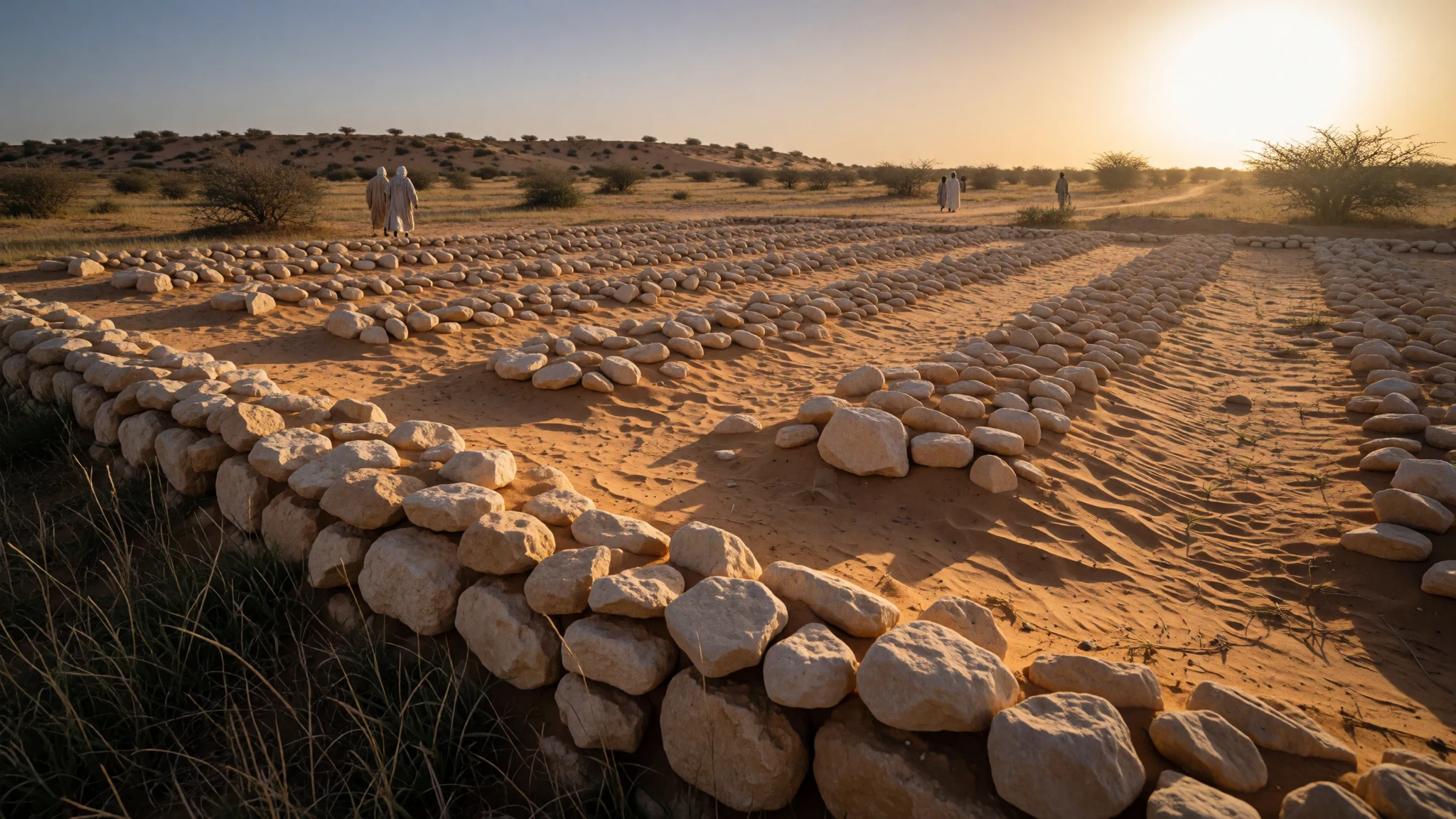
Koumbi Saleh is a quiet field of ruined stone houses and a mosque, where a medieval Saharan gold-trade city may once have stood.
The place
Koumbi Saleh lies in the far south-east of Mauritania, on dry scrubby plain about 261 metres above sea level, not far from the Malian border. Today it is two things at once: an archaeological site and a small commune, home to roughly fifteen thousand people according to the latest census figures. The ruins are low and sandy-coloured, mostly the footings and walls of stone houses laid out along former streets, with the outline of a large mosque among them. There are no crowds, no ticket barriers to speak of and very little shade, so the visit is about space, silence and imagination rather than spectacle. The land around is Sahel country: thorn trees, wide horizons, herders and their animals, and a sun that is fierce for much of the year. Temperatures swing sharply between day and night, and rain is thin and unreliable. Reaching the site takes effort, since it sits far from Nouakchott and most visitors arrive with a guide and a 4x4 arranged through an agency. Southern Mauritania has a reputation for warmth towards visitors, though people there are not used to tourism, so expect curiosity rather than a polished welcome. The reward is standing on ground that scholars link to the Ghana Empire, one of the early urban societies of West Africa, and seeing how much a trading town leaves behind once its people have gone.
Its story
Koumbi Saleh is tied to the story of the Ghana Empire, a West African power that Arab writers described from the ninth century onwards because of its part in the trans-Saharan gold trade. Gold travelled north across the desert, salt and other goods came south, and a capital in the Sahel sat at the meeting point. One eleventh-century writer, al-Bakri, described that capital as two towns set several kilometres apart: one for Muslim merchants, the other for the king. The ruins were only found by French archaeologists after a chronicle discovered in 1913 gave the capital's name as Koumbi, and they went looking. Digging revealed a substantial Muslim town of stone houses with a congregational mosque. Yet no inscription has settled the matter, and the royal town that al-Bakri described has never turned up, so scholars still say the site only may have been the capital. Radiocarbon dating suggests people lived here from the late fifth century, with a true urban phase running from roughly the eleventh century into the fourteenth. After that the town faded, as trade routes shifted and the desert economy reorganised itself. What remains is an honest puzzle: a real city, clearly important, whose exact name and role are still argued over by historians and archaeologists.
What to see
- The ruined town of Koumbi Saleh — Koumbi Saleh commune, south-east Mauritania
The main site is a spread of stone house foundations and walls along old lanes, with the shape of a large mosque at its heart. Walk it slowly in the cool of early morning, and ask your guide to explain which parts have been excavated and which remain sand-covered mounds.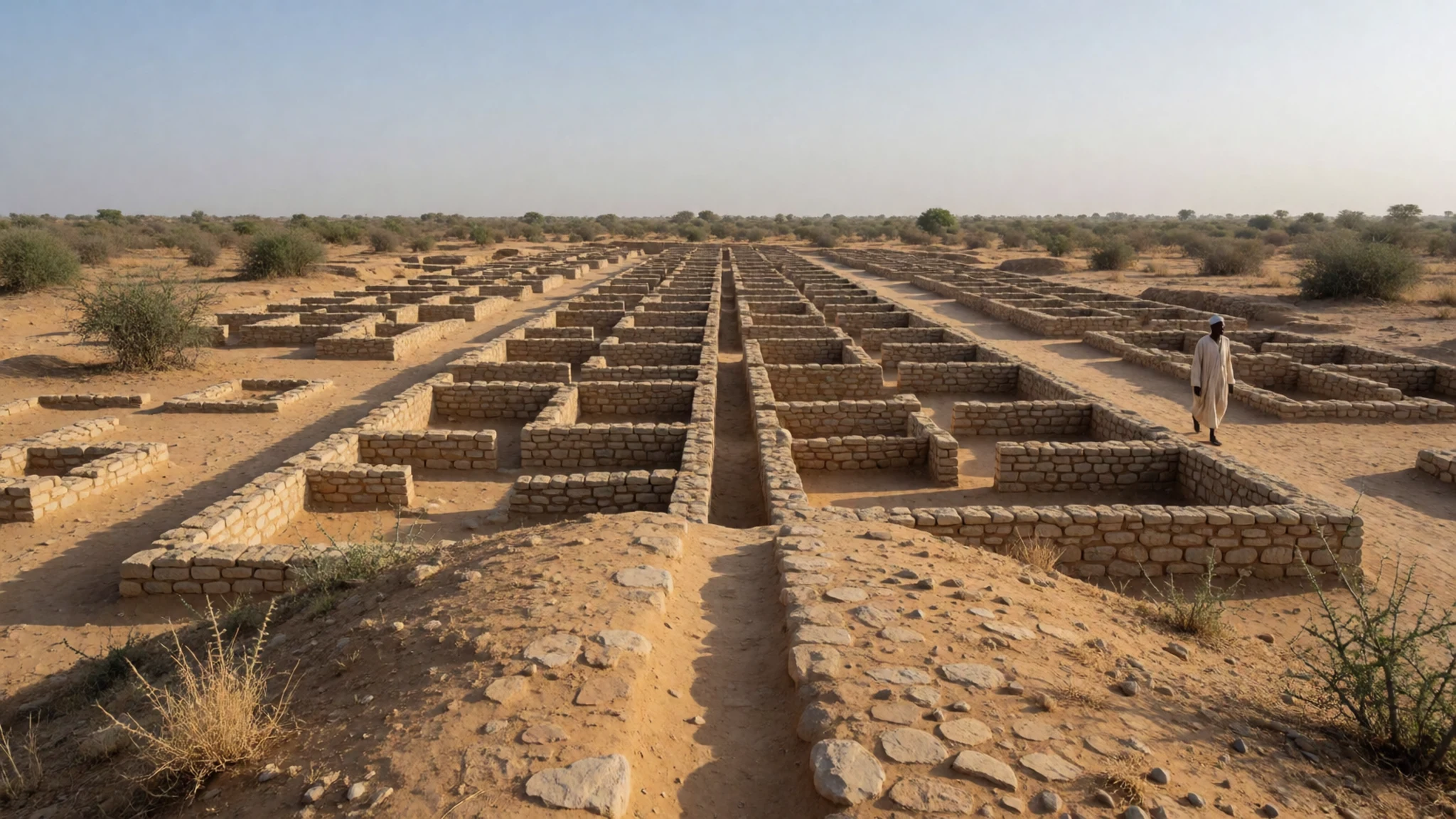
- Epigraphic shale plate, National Museum Nouakchott — Nouakchott
A shale plate from Koumbi Saleh, carved with religious formulae and geometric patterns, is kept in the national museum in the capital. It is a useful companion to the site itself, since it shows the finer craft of the people who lived in these stone houses.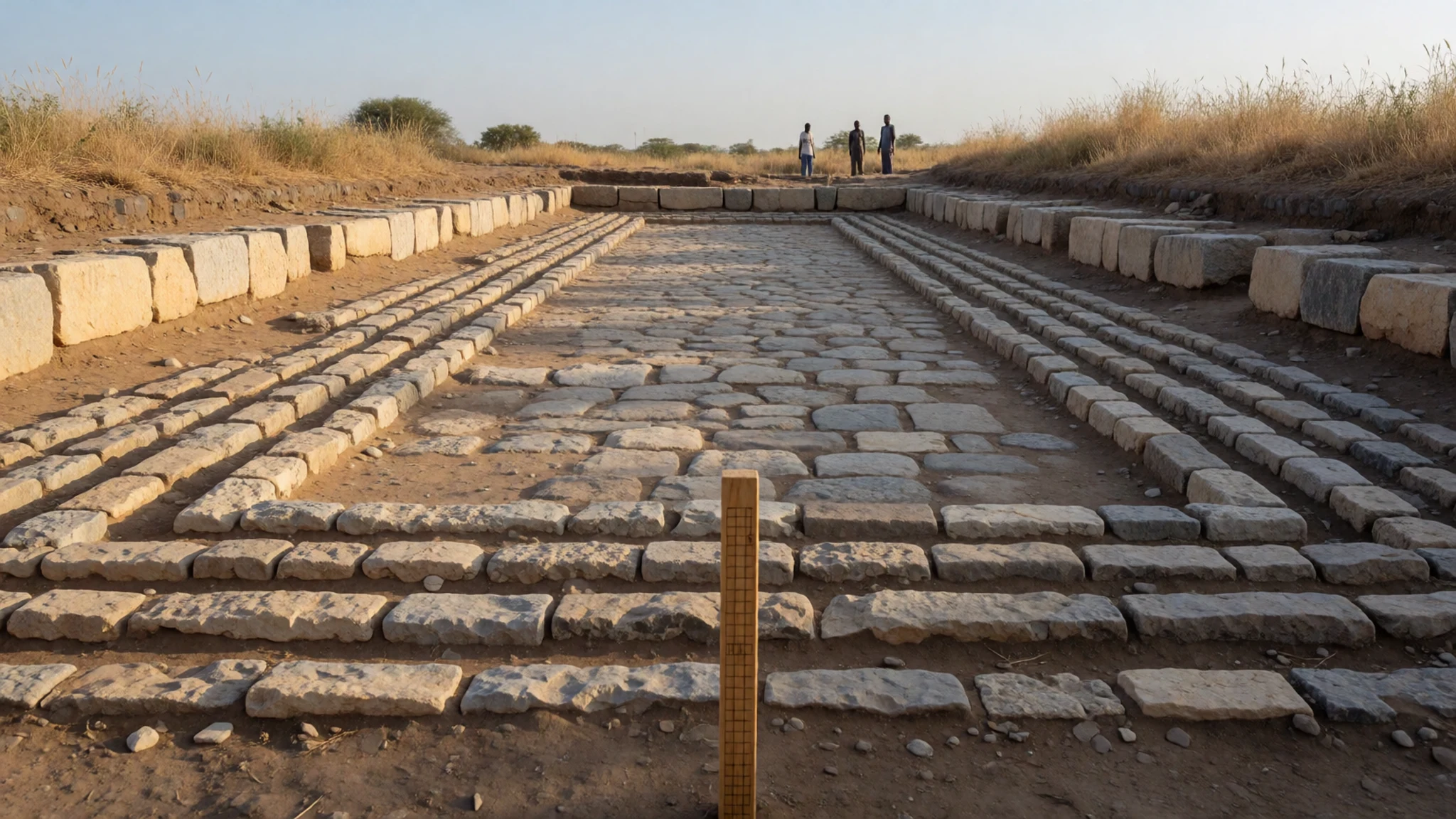
- Oualata — South-east Mauritania
This oasis town in the south-east was the southern end of many trans-Saharan routes in the thirteenth and fourteenth centuries. Its houses have colourful walls with intricate geometric designs, and a small manuscript museum shows old scrolls in fine calligraphy. It is a natural companion to Koumbi Saleh.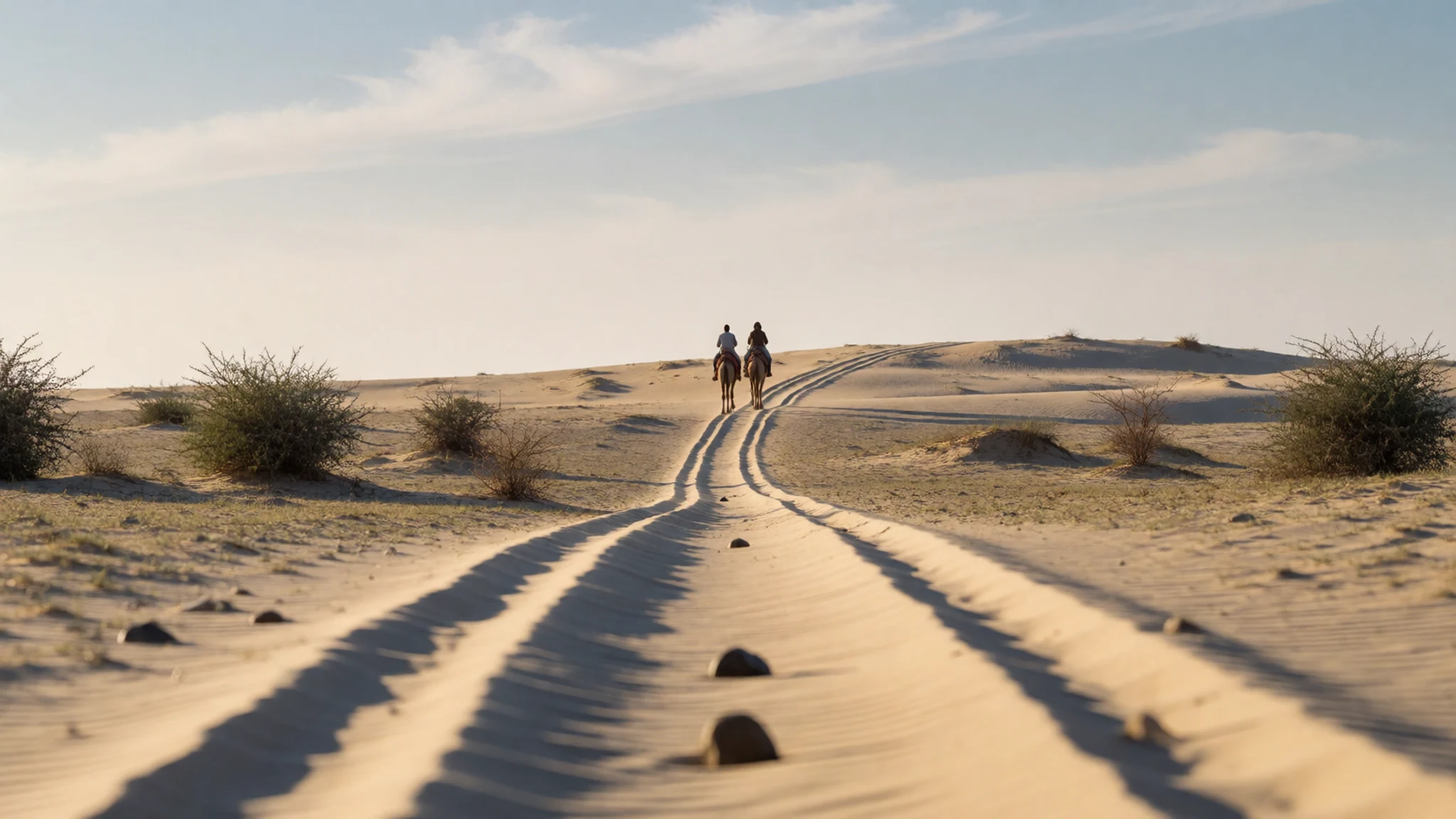
- Chinguetti — Adrar region
Chinguetti in the Adrar was a trading post and a centre of Islamic scholarship, and its stone architecture has changed little in nearly a thousand years. Family libraries hold old manuscripts, and the town is a World Heritage site, far north of Koumbi Saleh.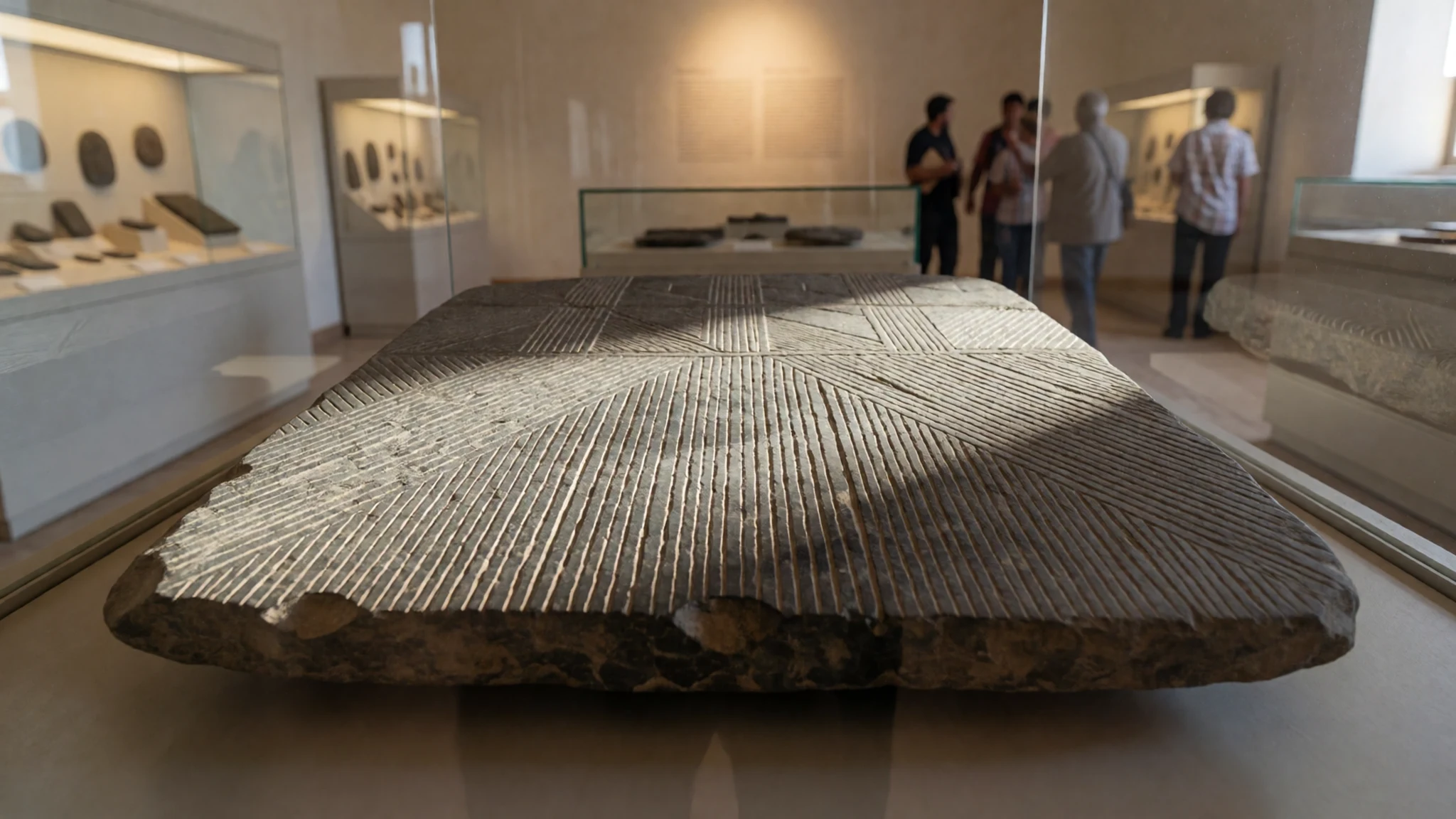
- Ouadane and the Adrar oases — Adrar region
Ouadane is another old caravan town in the Adrar, listed together with Chinguetti. Around it, 4x4 tracks cross rocky terrain and narrow canyons to hidden oases that watered Saharan traders for centuries. Plan this as a separate trip, since the distances are large.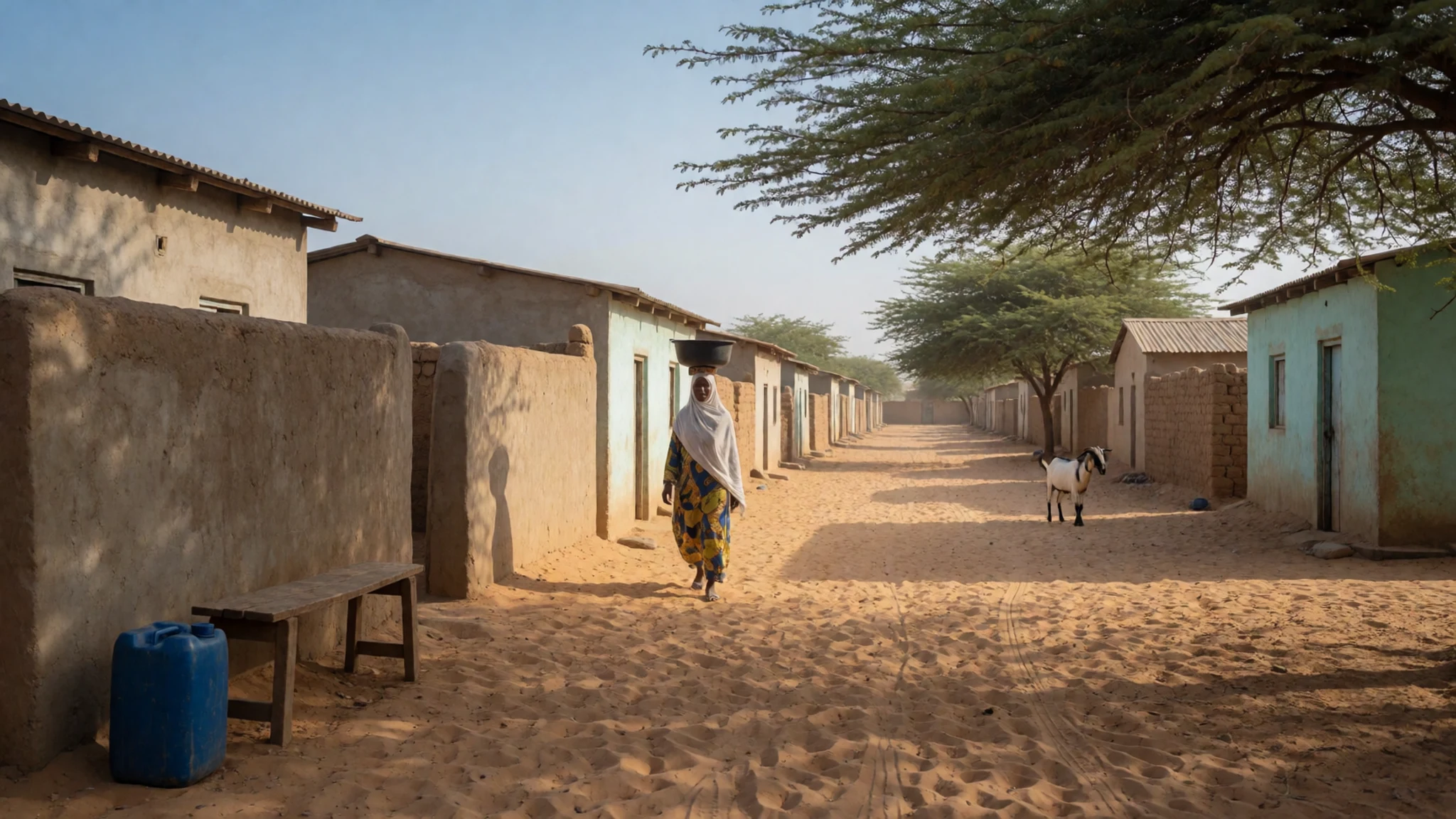
Culture
Koumbi Saleh sits in southern Mauritania, an Islamic republic where Hassaniya Arabic and French are widely heard and where hospitality is taken seriously. People in the south are generally friendly and welcoming, if not used to visitors, and a greeting goes a long way. Learn salaam alaykum and use it freely. Handshakes between men and women are best avoided unless the other person offers first; placing a hand over the heart while saying hello is a safe, warm alternative. Meals are often eaten by hand outside the capital, and the left hand is reserved for the toilet, so use the right hand for eating and for passing things. Mauritanians value reserve and modesty, and a direct, prolonged gaze can be read as an aggressive or even sexual signal, so softer eye contact is wiser, especially for foreign women, who may attract unwanted attention. Politeness around tea matters too: it is commonly served in small glasses, and accepting at least one is a courtesy. Photography of people, especially women, needs permission. Many visitors find that travelling with a local guide smooths all of this, because he or she can explain unspoken rules and introduce you properly. Greet elders first, take your time, and do not rush conversations. Etiquette: eat and pass food with your right hand only, and ask before photographing anyone.
What to wear
Traditional dress in Mauritania is built for sun, wind and sand. Men commonly wear the daraa or boubou, a wide, flowing robe, often in pale blue or white cotton, with loose trousers beneath and a turban or scarf wound against dust. Women wear the melhfa, a long single piece of fabric, often dyed or printed in strong colours, draped over the body and head; lighter cotton and chiffon are common for daily wear, with finer fabrics for celebrations and weddings. Both outfits suit the heat because they leave room for air to move. Today you will see a mix: many men in the south wear robes for prayer, festivals and ordinary days alike, while younger people and town dwellers combine shirts, trousers or jeans with the traditional pieces. Women often keep the melhfa as everyday wear. A visitor should dress modestly, with shoulders and knees covered, and loose long sleeves and trousers or a long skirt in light cotton or linen. Women need not cover their heads, but a light scarf is polite and also keeps off sun and dust. A wide-brimmed hat or scarf, sunglasses and closed sturdy shoes suit sandy, stony ground. Evenings can turn cool, so bring a thin layer. Avoid showy jewellery and expensive-looking gear.
What to eat
- Chebujin (fish and rice) — Small local eateries in southern towns
Fish cooked with rice and vegetables, a staple of the south and closely related to the thieboudienne of neighbouring Senegal. It is usually served on one large shared dish, so expect to eat communally, with the right hand if no spoons appear.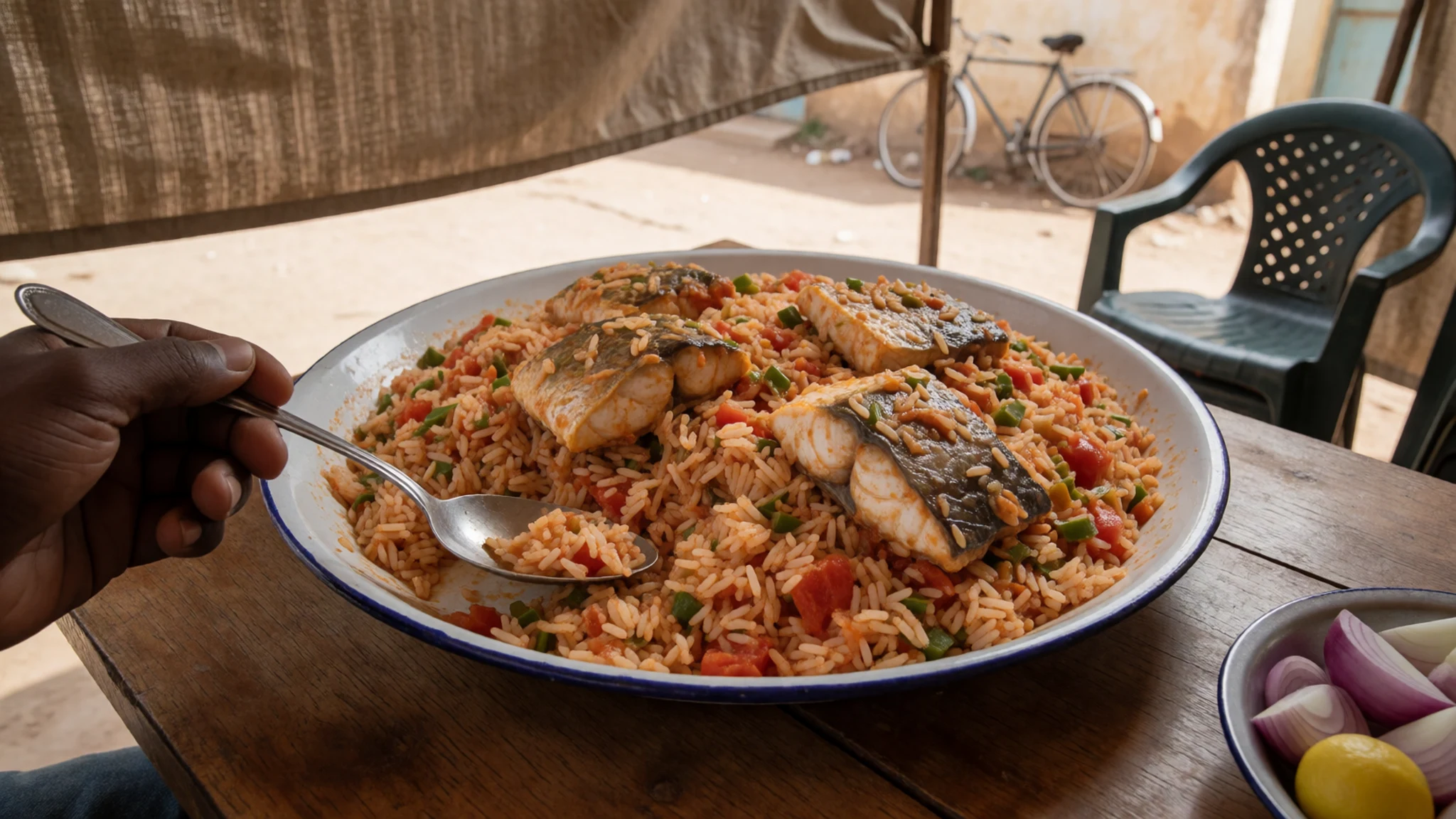
- Rice with meat — Roadside eateries and market food stalls
Rice topped with stewed mutton, goat or beef is an everyday meal across the country. The meat is slow-cooked until tender, the rice absorbs the juices, and portions are generous. It is simple and filling, and often the main choice at local eateries.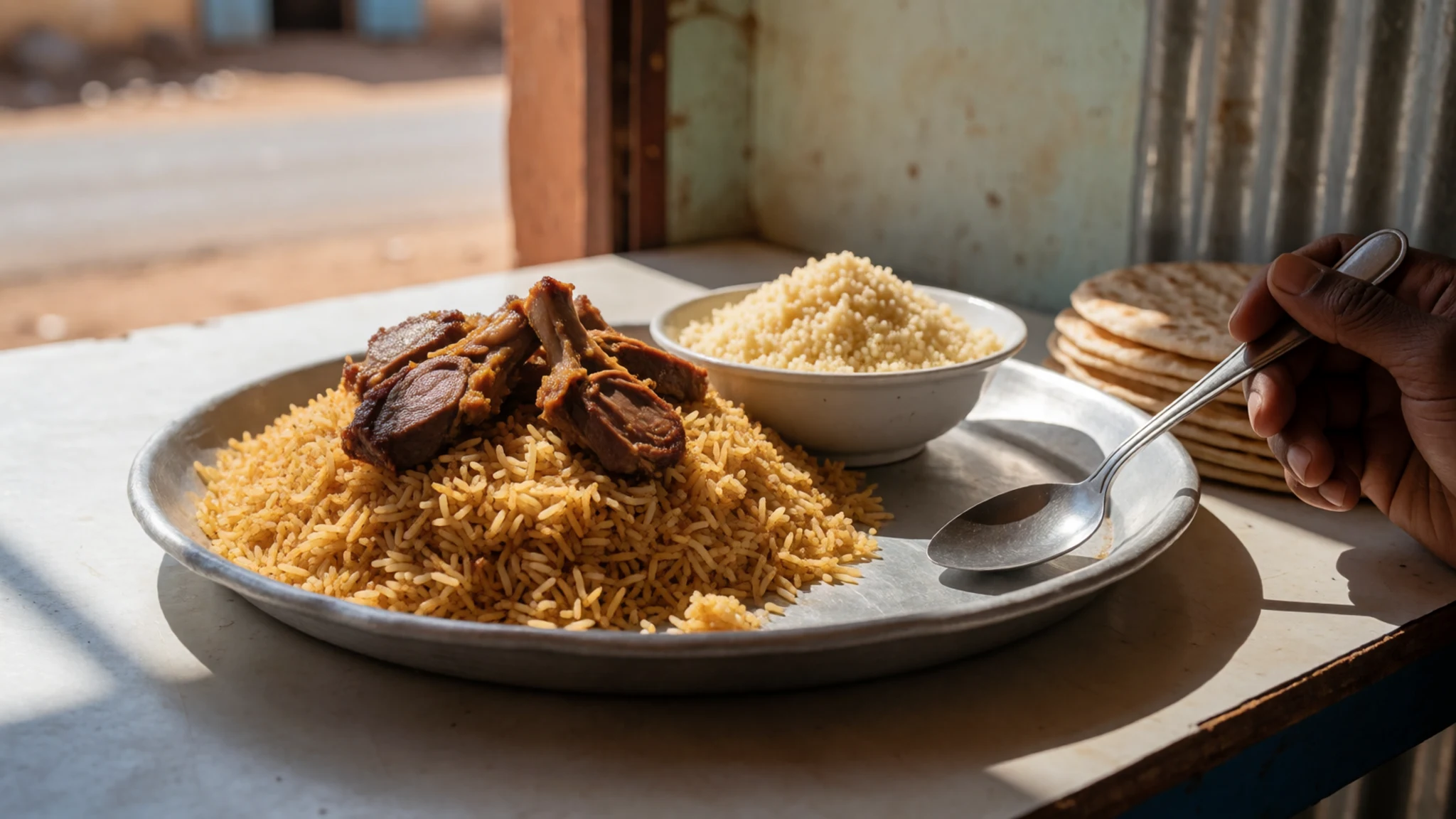
- Couscous — Local restaurants in larger towns
Couscous with meat and vegetables is more common in the north, though you can find it widely. The steamed grains are heaped with stew, sometimes with a little sweetness from onions or dried fruit. It is a good choice for a relaxed family-style lunch. - Mechui (grilled sheep) — Roadside grill stalls and town markets
Mechui is a whole or half sheep roasted over embers until the meat is crisp outside and soft within. It tends to be pricier than other dishes, and it is celebratory food. Look for carcasses hanging by the roadside, a sign that a stall is open. - Sandwiches and pizza — Sandwich streets and cafés in Nouakchott
In larger towns and the capital, simple sandwiches, pizzas and salads are everywhere, reflecting French and Lebanese influence. They are cheap, quick and a safe option when you want something familiar after a long day on dusty tracks.
Plan it
Best time. November to February, when days are warm rather than punishing and nights are cool. The rest of the year brings fierce heat, and the thin, irregular rains can make tracks harder.
How long. 2–3
Getting there. Fly into Nouakchott–Oumtounsy International Airport, which has flights from Paris, Casablanca, Dakar and other African cities. From there the site is a long overland journey to the south-east, best done with a driver and 4x4 arranged through an agency. Check current visa rules and the e-visa process before you go.
Budget. mid
Tips
- Check your government's travel advice before booking, as the border areas and some roads carry security warnings
- Use a local guide and 4x4, since tracks are unmarked and distances are long
- Carry plenty of water, sun protection and cash, as cards are rarely accepted outside the capital
- Start early in the day to avoid the worst heat and the harshest light for photographs
- Keep valuables out of sight and avoid flaunting wealth
Etiquette
- Greet people with salaam alaykum and follow their lead on handshakes
- Eat and pass things with your right hand only
- Ask permission before photographing people
Nearby
Sources
- Wikidata Q682728 (CC0)
- Wikipedia: Koumbi Saleh (rev 1379297716) (CC BY-SA 4.0)
- Wikivoyage: Mauritania (rev 5425309) (CC BY-SA 4.0)
- Photo: National Museum Nouakchott, Clemens Schmillen (CC BY-SA 4.0)
