Nouakchott
Nouakchott, Mauritania
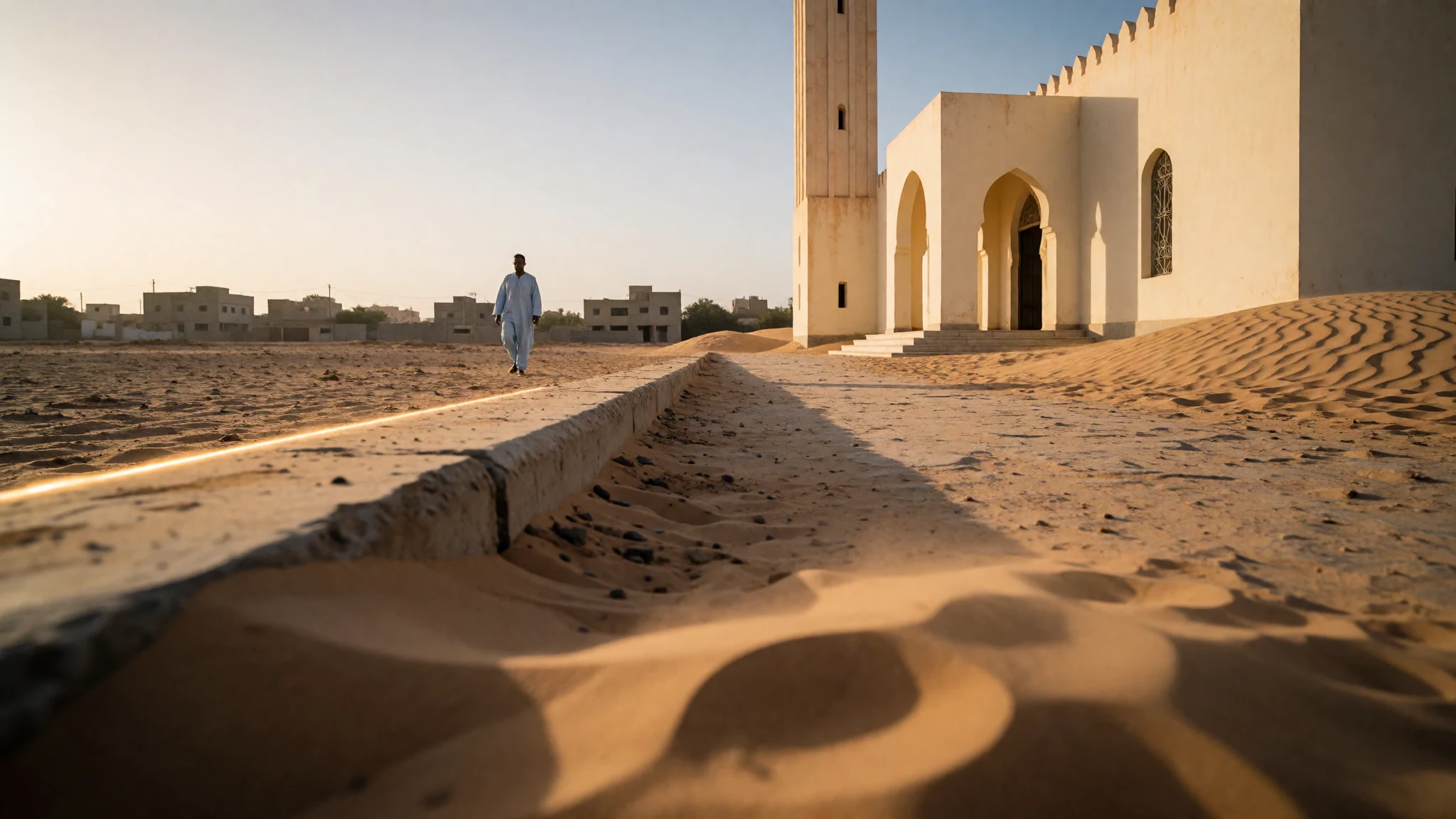
Nouakchott is a young Saharan capital on the Atlantic, worth visiting for its working fishing beach, its markets and its unpolished, honest feel.
The place
Nouakchott sits on the Atlantic edge of the Sahara in south-western Mauritania, about 7 m above sea level, and the flatness is the first thing a visitor registers. Sand blows in from the dunes behind, the ocean lies at the end of the streets, and the horizon is wide and pale. The city is the capital and the centre of government, banking and trade, with a deepwater port, a university and an international airport named Nouakchott–Oumtounsy. Its population is about 1.4 million, a striking figure for a place that began as a modest fishing settlement. Most of that growth is recent, so the city reads as a sprawl of low concrete buildings, walled courtyards and sandy lanes rather than a historic old town. Avenues such as Avenue Général de Gaulle carry the shops, embassies and banks, while the outer districts grow house by house. Along the shore much of the land is kept free of building, which suits a coast low enough for the sea to reach; the port and the fishing beach are the main exceptions. Heat, wind and dust shape daily life: errands happen early, afternoons are slow, and the beaches fill up in the evening. This is not a city of grand monuments. Its appeal lies in the working harbour, the markets, the mix of Moorish, Black African and French influences, and the sense of a country still deciding what its capital should be.
Its story
Nouakchott was a fortified fishing village, a ksar, long before it was a capital, and it stayed small under French colonial rule. As Mauritania moved towards independence it faced an awkward gap: the colony had been governed from Saint-Louis in Senegal, so it had no capital of its own. The first president, Moktar Ould Daddah, and his advisers wanted a seat of government that stood for modernity and national unity. That ruled out the old towns of the interior, each tied to its own region and loyalties. The coastal village lay conveniently between Saint-Louis and Nouadhibou, so it was chosen, and construction began in 1958. The original inhabitants, the Bouhoubainy, a people of Amazigh origin, were later settled elsewhere, notably at Aknodert, between the city and the airport. The plan was for a small administrative town. Then drought and the advance of the desert drove families out of their home villages, and many headed for the new capital. Neighbourhoods grew faster than services could follow, and within a generation the city was many times the size its planners had imagined. Today it holds well over a million people and anchors the national economy. Its history is therefore less about monuments than about migration: a planned capital that became a refuge and then a home, with families from every part of Mauritania living side by side on what was once empty sand.
What to see
- National Museum of Mauritania — Central Nouakchott
The National Museum is the natural first stop for context on the country's peoples, crafts and archaeology, and it sits among the national library and archives. Go in the cooler morning, and treat it as an introduction before heading out to the markets and the shore.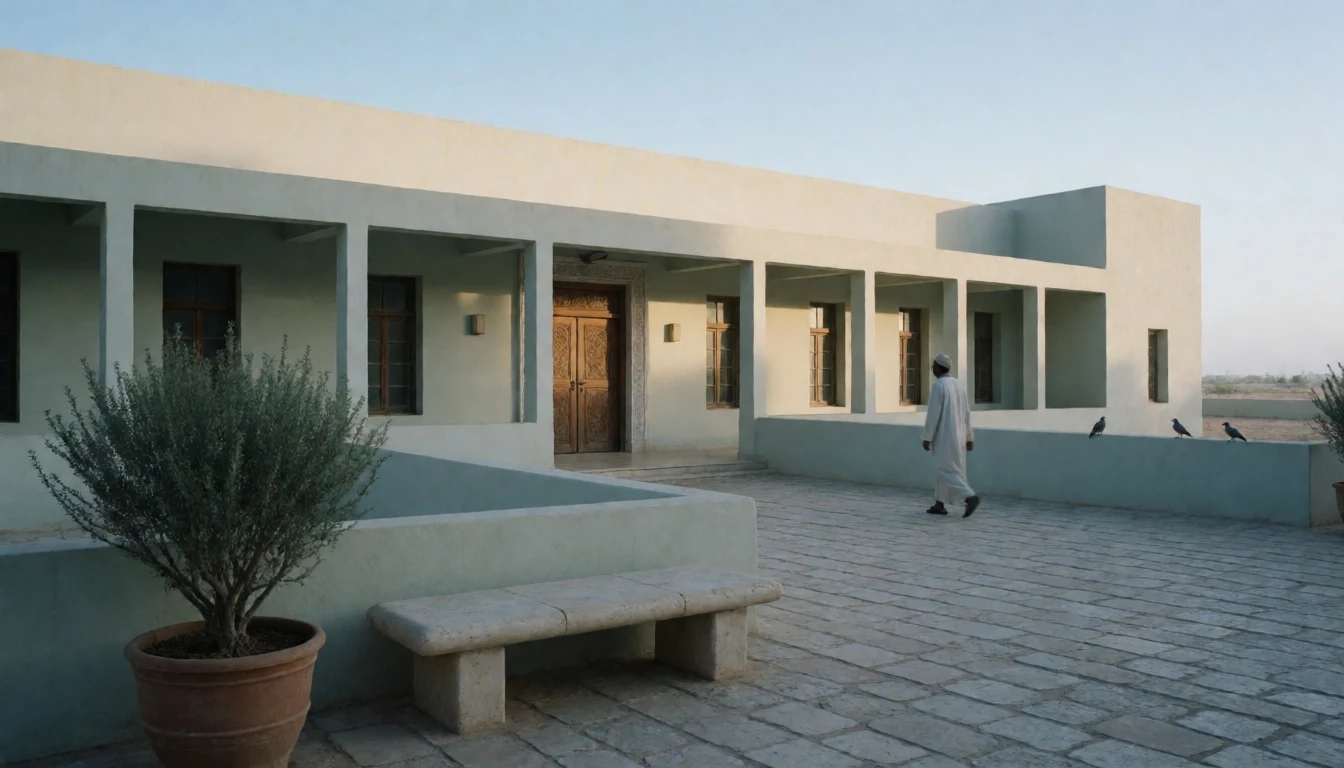
- Port de Pêche, the fishing wharf — Coast, west of the centre
At the fishing beach west of the centre, crews haul brightly painted wooden canoes onto the sand at the end of the day. The catch is sold on the spot, then loaded onto donkey carts and old cars for resale. It is noisy, smelly and absorbing; ask before photographing anyone.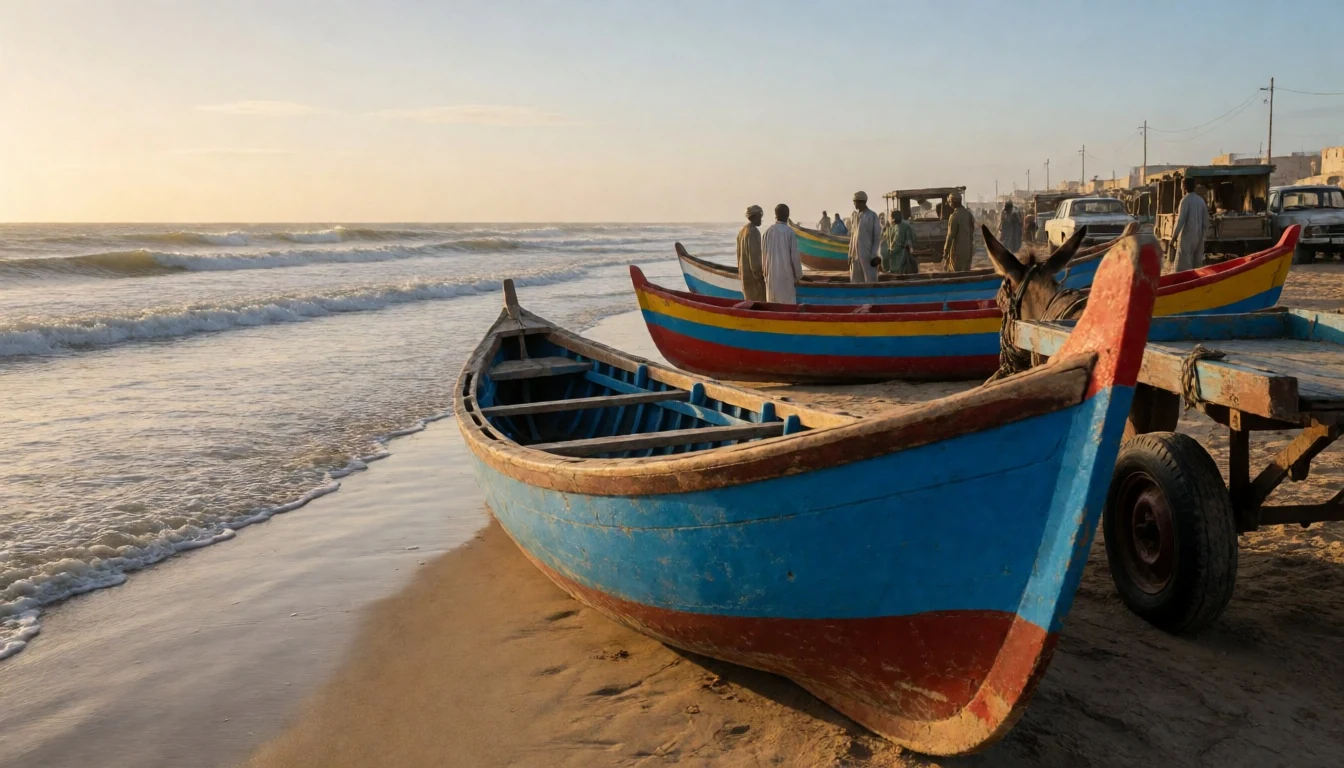
- The city beaches — Atlantic shoreline
On weekend evenings, especially in the hot season, residents come to the sand to walk, play football and cool off. The sea looks inviting but has a strong, treacherous current, so paddle rather than swim. Surf-casting is possible with your own gear, and groups are safer than going alone.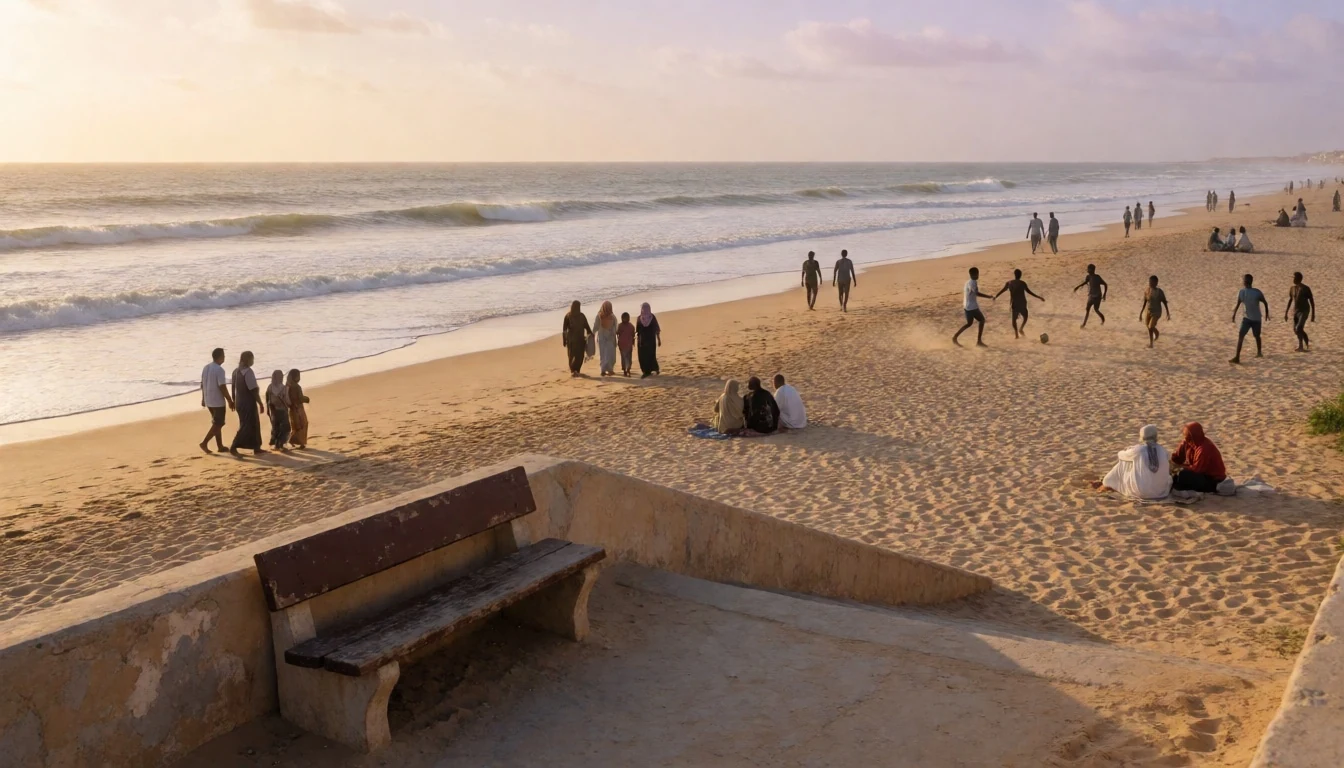
- Marocaine market and Marché Capitale — Central markets
Nouakchott's big markets are where the city shows itself: cloth, spices, household goods, mobile phones and sandwich counters packed together. The area around Marché Capitale is a good place to eat cheaply. Nouakchott is also known as a trading point for Saharan meteorites, which sometimes turn up among the stalls.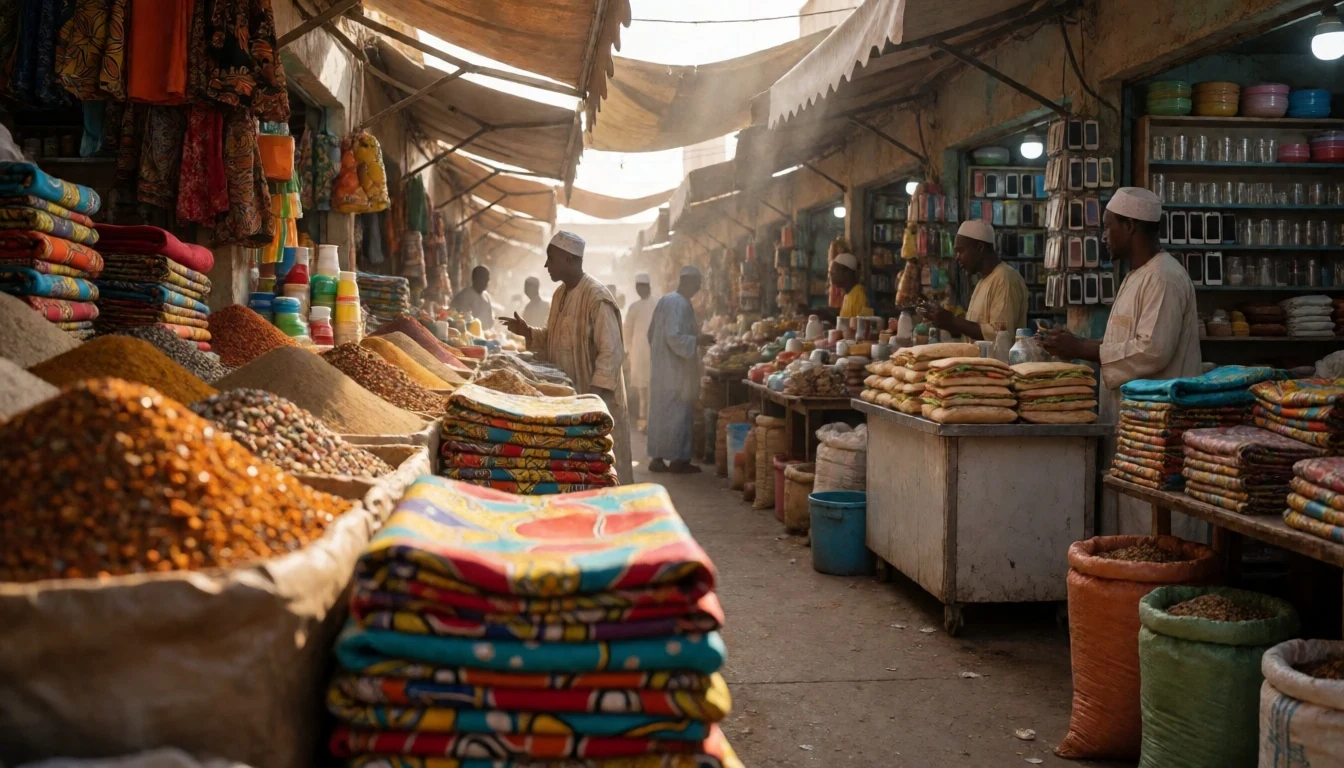
- Grand Saudi Mosque — Central Nouakchott
One of the city's best-known religious buildings, the Grand Saudi Mosque is easiest to appreciate from the outside, where its pale walls and minaret stand against the flat sky. Visitors should check locally whether non-Muslims may enter, and dress modestly in any case. - Franco-Mauritanian Cultural Centre — Central Nouakchott
The cultural centre runs films, concerts and exhibitions, and is one of the few places in the capital with a regular programme of arts events. Check what is on during your stay. It is a useful way to meet local artists, students and long-term residents over an evening.
Culture
Nouakchott is the capital of an Islamic republic, and daily rhythms follow prayer times, with Friday the main day of worship. Hassaniya Arabic is the street language, French turns up in offices and signs, and families also speak Pulaar, Soninke and Wolof, so the city sounds as varied as it looks. Hospitality is central. Tea is made in three rounds, poured from a height into small glasses, and being offered a glass is a real invitation to sit and talk, not a sales tactic. The capital's cultural institutions include the National Museum, the National Library and the National Archives, and the markets act as the true public square, where news, bargaining and family business mix. Fishing communities on the coast keep their own rhythm, tied to tides and weather. The city has also long been a trading point for Saharan meteorites, a reminder that its desert hinterland is part of its identity. Alcohol is not part of public life; foreign residents keep to private embassy and club circles, and visitors should not expect to find it openly. Friday is quiet for business, and many shops open late or close around midday prayers. Ask permission before photographing people, especially women, fishermen and anyone at prayer, and accept tea when it is offered.
What to wear
Traditional dress in Nouakchott follows the wider Saharan and Sahel style. Men wear the daraa, a wide, flowing robe, often in pale blue or white cotton, sometimes with embroidered neckline and a matching wrap or turban against sun and sand. Women wear the melhfa, a long length of light cotton or voile wrapped around the body and head, often in strong colours and prints, and the dyed and stiffened fabrics sold in the markets are admired for their sheen. Such clothes are worn daily by many people, and always for weddings, Fridays and festivals. In the capital, everyday dress is more mixed. Younger men often wear jeans, trousers, shirts or football tops, while many women combine a melhfa with a modern top or dress and a bright headscarf. Office workers wear suits or smart robes. Visitors should dress for heat, wind and modesty together: loose cotton or linen with long sleeves and trousers or long skirts, shoulders and knees covered. Women do not need to cover their hair in the street but should carry a scarf for mosques and for dust. A hat and sunglasses help, and closed shoes or sturdy sandals suit sandy lanes and the fishing beach better than flimsy flip-flops. In the cooler months a light jacket helps in the evening.
What to eat
- Thieboudienne (fish and rice) — Local eateries near the central markets
A big shared platter of rice cooked in a tomato sauce with fish and vegetables, shared from a single dish in family homes across the region. In Nouakchott it is easiest to find at local eateries near the markets at lunchtime. - Méchoui and grilled meat — Grill stalls and mid-range restaurants along the main avenues
Lamb or goat roasted or grilled over coals is a festive staple, and brochettes are common at city restaurants. Meat is the centrepiece of celebrations, so it appears in quantity at weddings and on feast days. - Fresh grilled fish — Around the fishing beach and the fish market
Because the city sits beside a rich fishing coast, the catch is bought directly on the beach and cooked on the day. Look for simple grilled or fried fish served with bread, rice or salad, and trust busy stalls over empty ones. - Sandwich shops — The street of sandwich shops near Marché Capitale
A street of near-identical sandwich shops near Marché Capitale serves quick lunches of meat, chips and salad in fresh bread. Taxi drivers know the favourite counters by name and will point the way. Good for a cheap, filling meal on a market day. - Attaya (mint tea) — Homes, shops and roadside tea stalls throughout the city
Strong green tea with mint and plenty of sugar, brewed in a small pot and poured into glasses in three rounds, each sweeter and milder than the last. Accept it when offered, and expect to spend time over it. - Camel milk (zrig) — Dairy sellers and small shops in the markets
Fresh or fermented camel milk, sometimes mixed with water and sugar, is a Saharan staple and a refreshing drink in the heat. Cautious visitors should choose well-handled, chilled milk and try a small glass first.
Plan it
Best time. November to February, when the days are warmer rather than punishing and the wind off the Atlantic is easier to bear. The hot season is heavy and dusty, and the beaches fill in the evenings then.
How long. 2–3
Getting there. Fly to Nouakchott–Oumtounsy International Airport and take a taxi into the centre. By road, shared taxis and minibuses leave from separate garages for Rosso on the Senegal border, for Atar and for Nouadhibou; the last two are long journeys, so start early and plan for a full day.
Budget. mid
Tips
- Carry cash in small notes, as cards are not widely accepted
- Do the market and fishing beach in the morning or at sunset, when the heat and light are kinder
- Drink bottled water and carry a scarf or light cover for blowing sand
- Stay in groups after dark and take taxis rather than walking at night
- Do not swim at the city beaches because of the strong current
Etiquette
- Ask before photographing people, especially women and anyone at prayer
- Dress modestly with shoulders and knees covered
- Accept tea when it is offered, and take your time over it
Nearby
Sources
- Wikidata Q3688 (CC0)
- Wikipedia: Nouakchott (rev 1381271266) (CC BY-SA 4.0)
- Wikivoyage: Nouakchott (rev 5423350) (CC BY-SA 4.0)
- Photo: Centre ville de Nouakchott, Laminesall96 (CC BY-SA 4.0)
- Photo: Nouakchott on the Atlantic coast, Laminesall96 (CC BY-SA 4.0)
- Photo: Grand Saudi Mosque, Ammar Hassan (CC BY 2.5)
- Photo: SNIM headquarters, ليو (CC BY-SA 4.0)
- Photo: Palais présidentiel, Ivik93 (CC BY-SA 4.0)
- Photo: Avenue Général de Gaulle, Bertramz (CC BY 3.0)
- Photo: Nouakchott districts map, Ле Лой (CC BY-SA 4.0)
- Photo: Population density and low elevation coastal zones, SEDACMaps (CC BY 2.5)


