Zagreb
Zagreb, Croatia
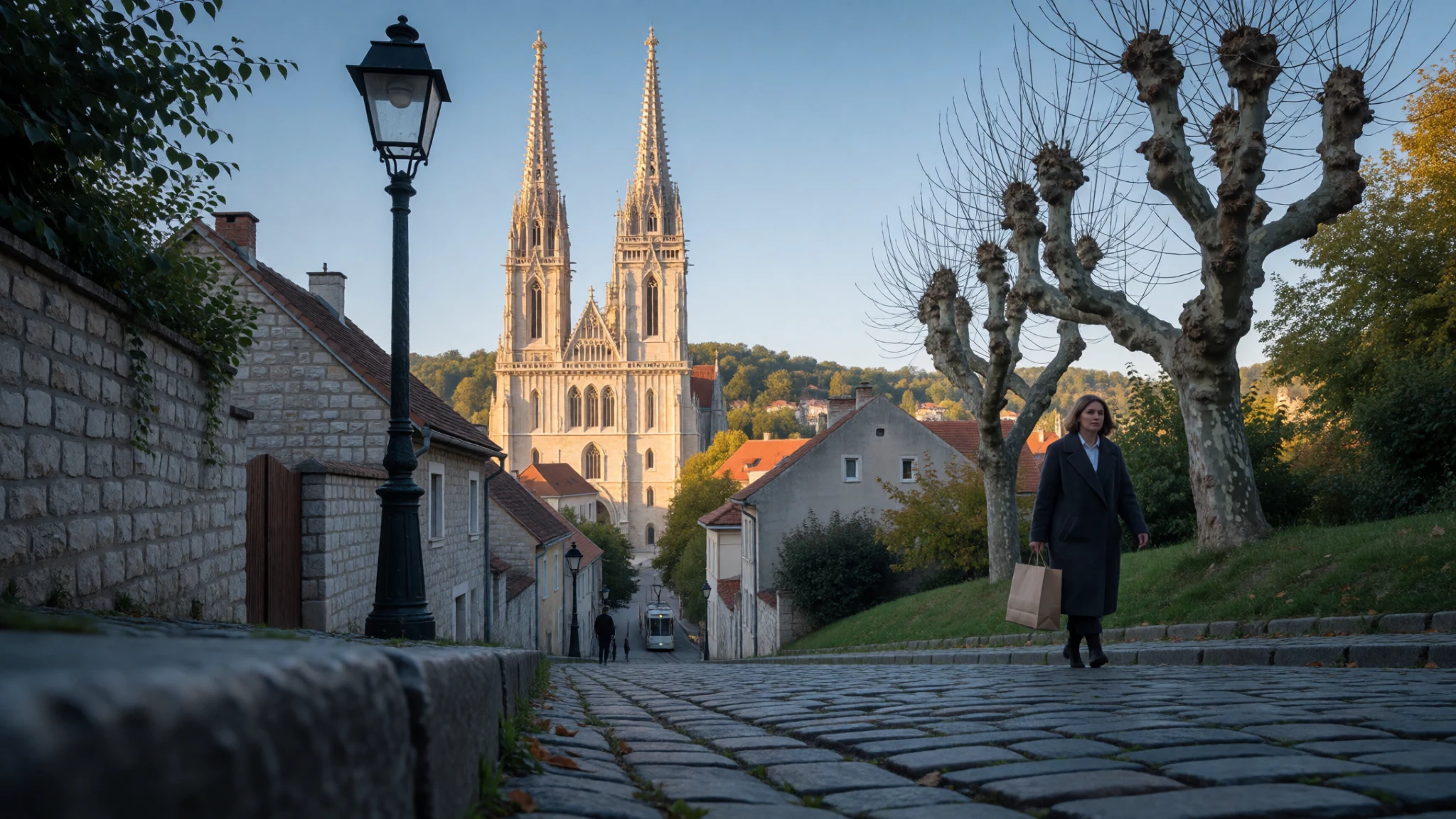
Zagreb is a relaxed Central European capital of café terraces, hilltop lanes and markets, and an easy base before the Adriatic coast.
The place
Zagreb is the capital of Croatia, home to about 767,000 people, and it sits at 127 m above sea level on the plain beside the Sava river. The wooded slopes of Medvednica mountain rise directly to the north, so a green ridge is always visible from the streets. The Slovenian border is close, which makes the city a natural first or last stop on a route between central Europe and the Adriatic.
The layout is easiest to read as three layers. The oldest layer is the pair of hilltop quarters, Gradec and Kaptol, where narrow lanes, gas lamps, churches and small museums sit within a few minutes' walk of each other. Below them lies the lower town, a Habsburg-era grid of squares, parks, theatres and grand façades, where most of daily life happens: offices, long coffee breaks, tram bells and flower sellers. Beyond that come the modern districts and the river, which most visitors never reach.
The city has a lived-in feel rather than a showpiece one. Locals fill café terraces on weekday mornings, markets open early, and the pace slows noticeably on Sundays. Summers can be hot and quiet as residents leave for the coast, while winter brings a lively market season in the squares. Compared with the Adriatic towns, crowds here stay thin and prices are gentler, though the main squares and the cathedral area do get busy at weekends. Most sights lie within walking distance of the central square, and trams cover the rest.
Its story
Zagreb began as two neighbours who did not always get along. Around 1094, a Hungarian king, Ladislaus, set up a bishopric here, and a community of clergy gathered around the cathedral on the eastern hill, Kaptol. On the next hill to the west, Gradec grew into a walled town of craftsmen and merchants who answered to the crown rather than the church. The Medveščak stream ran between them, and for generations the two settlements kept separate governments, rival loyalties and the occasional bitter quarrel over rights and taxes.
The stream is long gone from view, buried under a street, but its line still marks the divide in the city's memory. Over time the Habsburg monarchy gave the region stability and a taste for Viennese-style public life, and the lower town filled with squares, theatres and museums. The main square carries the name of Josip Jelačić, the Ban of Croatia, who is credited with bringing Gradec and Kaptol together into one city. His statue was long a focus of national feeling.
The twentieth century brought rapid change. Zagreb passed from Habsburg rule into a succession of Yugoslav states and became a major economic centre within Yugoslavia, ranking second among its cities. When Croatia declared independence, the parliament proclaimed Zagreb as the capital of the new republic. Today the city still has a layered character: a medieval core, imperial boulevards and the plainer buildings of the socialist decades, each easy to spot on a single afternoon's walk.
What to see
- Zagreb Cathedral — Kaptol
Zagreb Cathedral is recognisable from across the city by its twin spires, which dominate the skyline on the Kaptol hill. The present building is a Gothic Revival rebuild by the architect Hermann Bollé, on the site of a much older church. Go early for quiet, and check the diocese for opening times.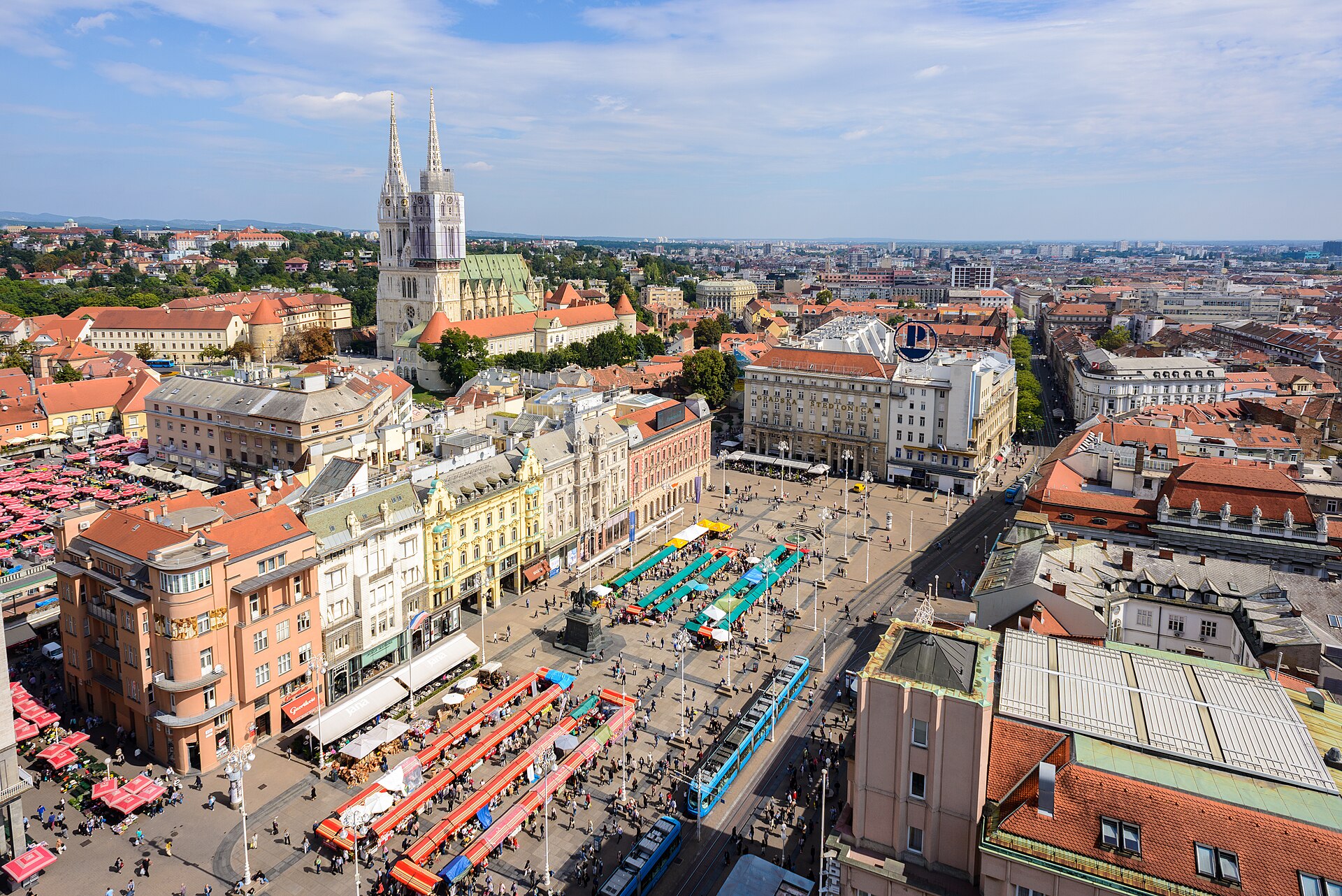
- St. Mark's Church — Upper Town (Gradec)
St. Mark's Church stands in a small square in the Upper Town, and its tiled roof is the reason it appears on so many postcards. The coloured tiles form the coats of arms of Croatia and of Zagreb. Parliament and government buildings face it, so the square is calm but occasionally busy with officials.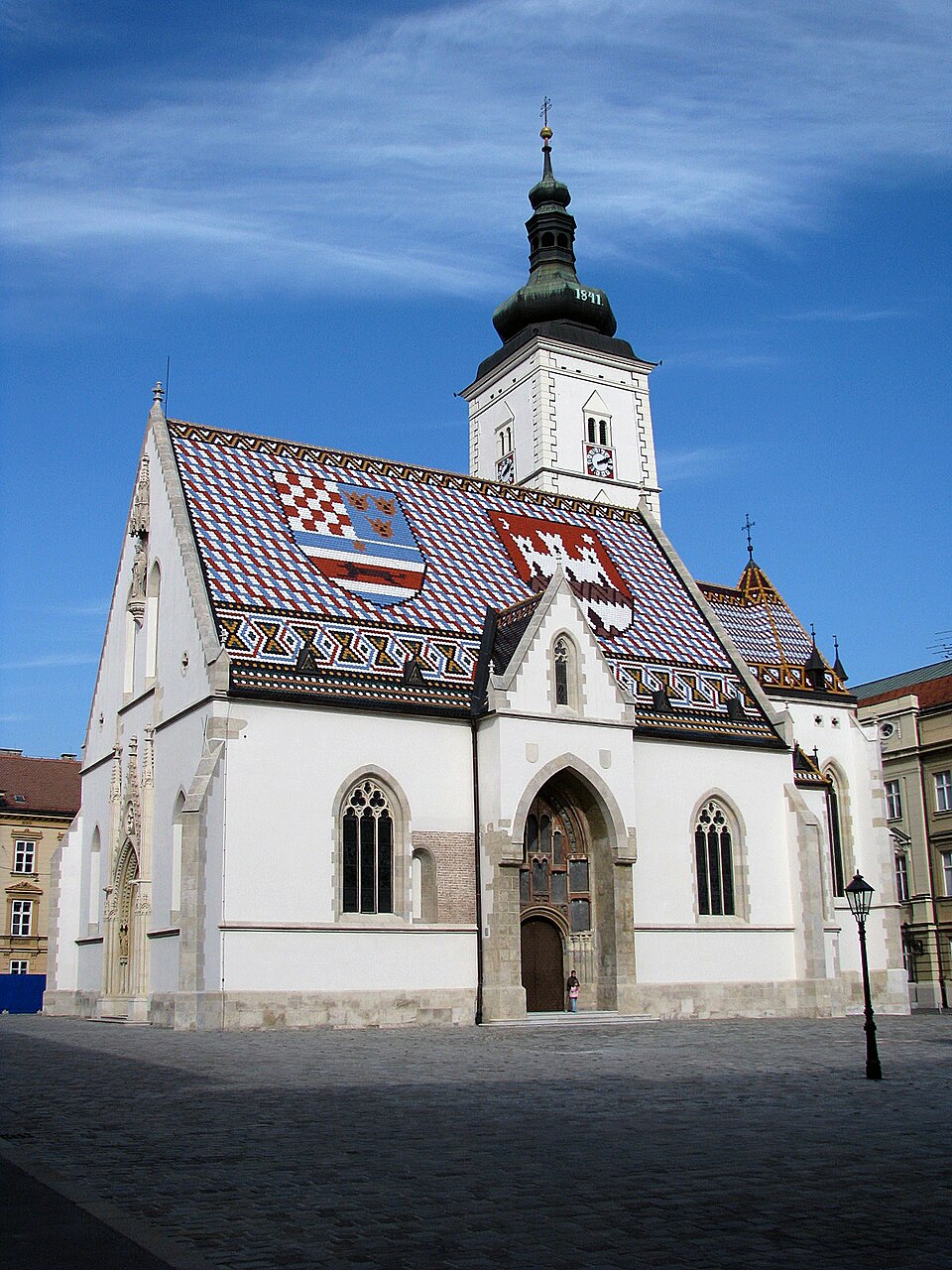
- Stone Gate (Kamenita vrata) — Upper Town (Gradec)
The Stone Gate is a passage through the old town wall, now used as a shrine to the Virgin Mary. Candles burn in the dark vault and locals pause here to pray or leave a wish. Visitors walk through quietly, since it is a place of worship rather than a photo stop.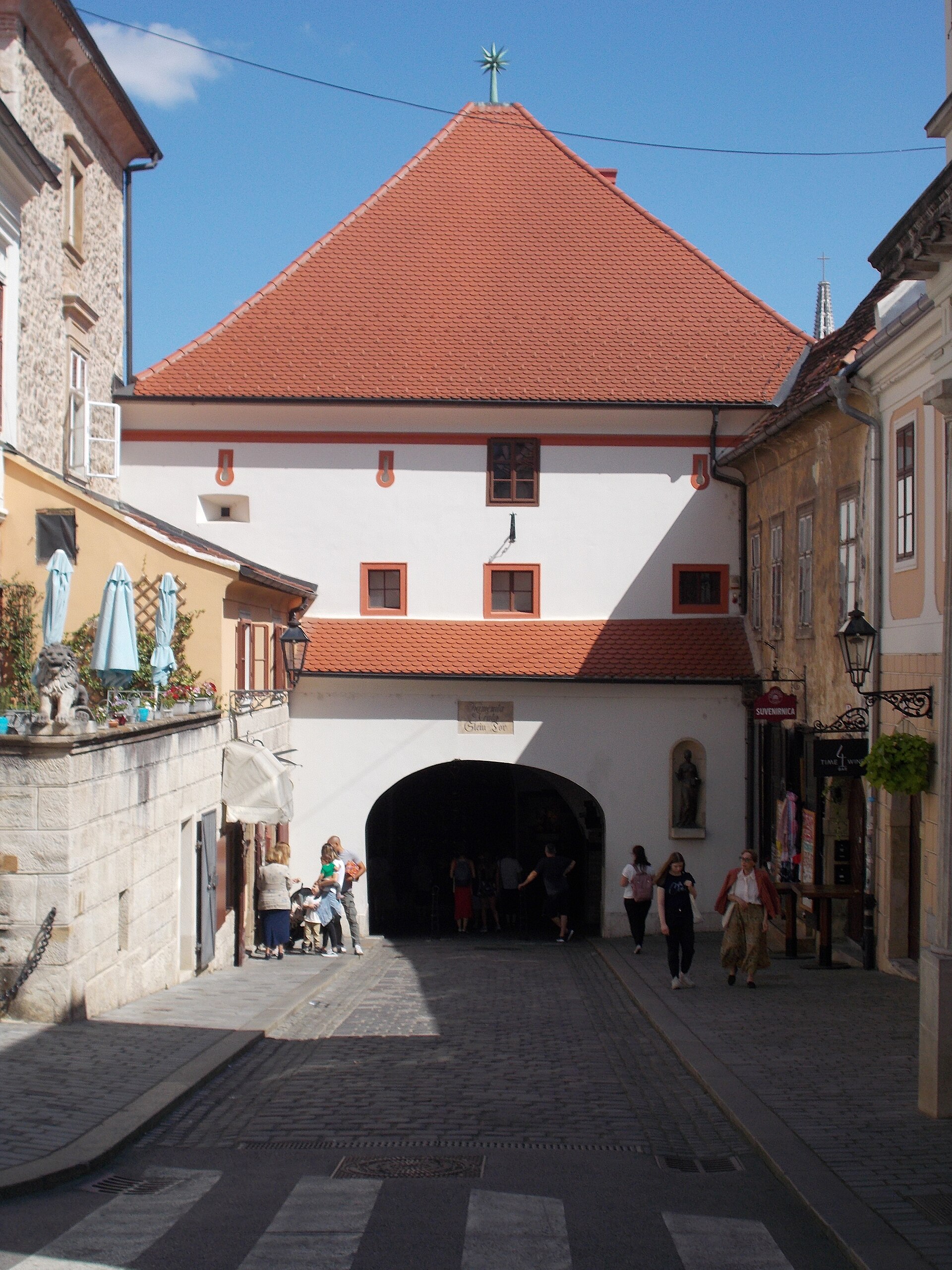
- St. Catherine's Church — Upper Town (Gradec)
St. Catherine's Church is a Baroque building tucked just off the Upper Town's main lanes, with a plain exterior and a richly decorated interior. It is a good place to slow down after the busier cathedral and square. Check locally for opening times, as it is sometimes used for concerts and events. - Ribnjak Park — Below Kaptol
Ribnjak is a landscaped park in the English style, with mature trees, exotic plants, sculptures and a children's playground. It sits just below Kaptol and gives a calmer, shadier counterpoint to the nearby cathedral crowds. Locals use it for lunchtime sandwiches, dog walks and quiet reading on weekday afternoons. - Dolac Market — Between the main square and Kaptol
Dolac is the open-air produce market just behind the main square, with red umbrellas over stalls of fruit, vegetables, cheese, flowers and eggs. Mornings are the best time, when local shoppers are out in force. The church of St. Mary stands on the slope above the stalls.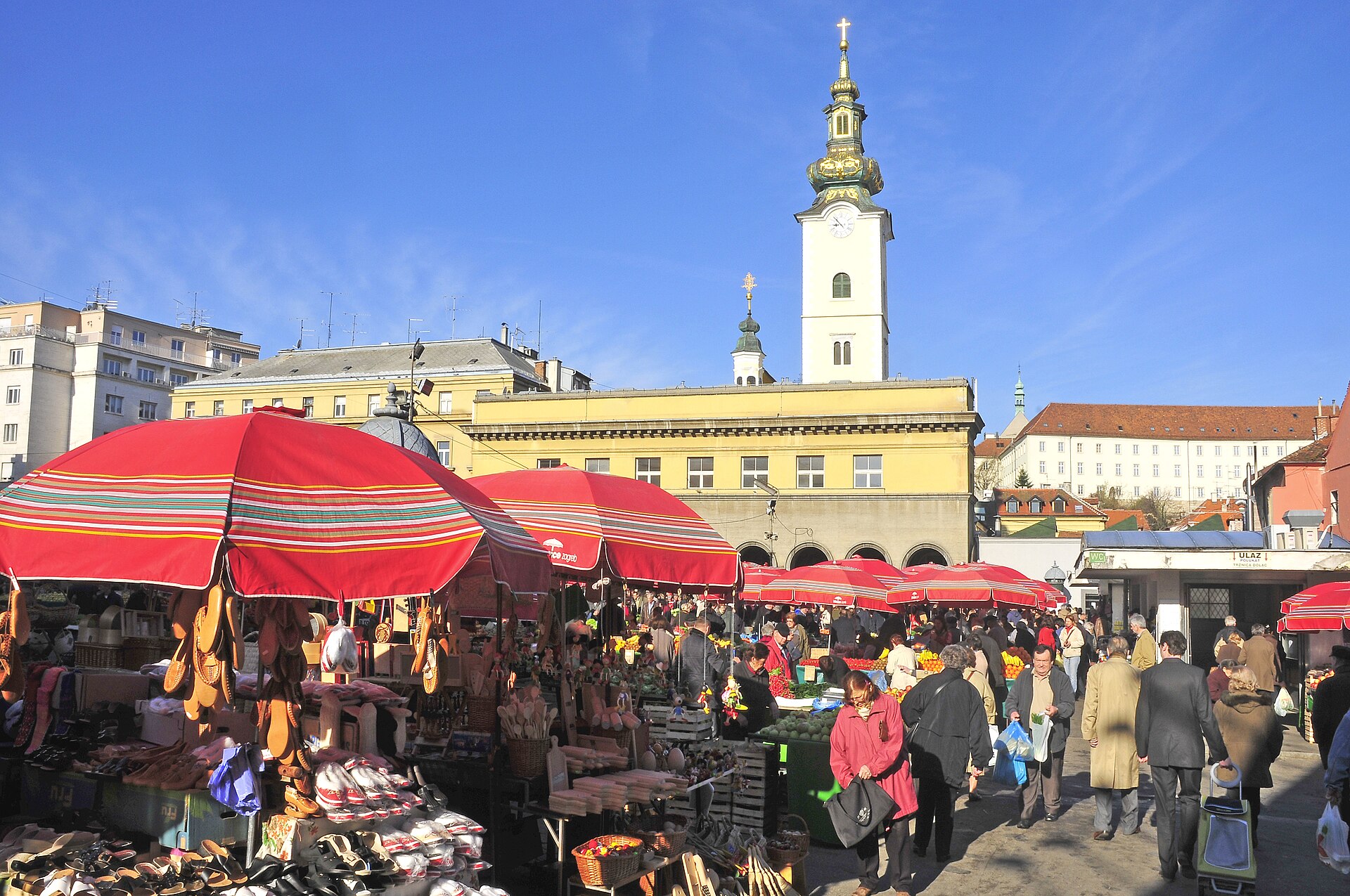
Culture
Zagreb's culture is shaped by its position between central Europe and the Balkans, and the result is a city that likes both formality and long, unhurried socialising. Coffee is the main social ritual: locals can sit for hours over a single cup, and a weekend morning stroll along the lower town's cafés is a custom in its own right. Visitors who try to rush a café meal will find service is not designed for speed.
The city is mainly Catholic, and church bells, saints' days and processions shape the calendar. Churches in the Upper Town and Kaptol are working places of worship as well as sights, and many residents stop in for a few minutes during the day. Music, theatre and visual art have deep roots here, and the national theatre, gallery buildings and museum halls reflect an educated, outward-looking tradition. Folk song and dance survive in festivals and community groups, particularly in the surrounding countryside.
Tourism has grown steadily, with visitors from Austria, Germany and Italy long dominant, and more recently from East Asia and India. Even so, daily life carries on beside the sightseers: markets run to local rhythms, shops close early on Sundays, and neighbours greet each other in stairwells. People are generally polite and direct, often speak good English, and appreciate a greeting in Croatian before a question.
At the Stone Gate shrine, keep your voice down and step aside for people who are praying, even if you are only passing through.
What to wear
Traditional dress in the Zagreb region draws on Croatian rural costume, which varies by village but leans on home-woven linen, hemp and wool. Women's outfits typically combine an embroidered white linen blouse, a pleated or gathered skirt, an apron and a decorated headscarf or cap; men wear linen shirts, waistcoats and dark trousers, often with embroidered trim. These outfits appear today at folk festivals, weddings, church feasts and performances rather than in daily life. The necktie is often traced to Croatian soldiers' neckcloths, and shops in the centre sell silk ties as a nod to that story.
What people actually wear is smart-casual and fairly European: tailored coats, dark colours, good shoes and neat jeans. Locals dress a little more carefully than visitors expect, especially for evenings, theatre visits and Sunday outings. Winters are cold enough for wool coats, scarves and gloves, and summers call for light cotton and linen.
For visitors, comfortable walking shoes matter most, since the Upper Town's cobbles are uneven and slippery after rain. Pack layers for changeable spring and autumn weather, a compact umbrella, and a warm coat for winter market season. In summer, bring a hat and sunscreen for open squares. Churches and shrines do not require formal dress, but covered shoulders and knees show respect, and a light scarf or shawl is handy for anyone going inside.
What to eat
- Štrukli — Traditional restaurants and small counters near the main square
Štrukli are baked or boiled dough parcels filled with fresh cheese and cream, regarded as Zagreb's signature dish. They arrive golden and soft, and can also be sweet. Look for them in traditional restaurants and small fast-food counters around the central squares. - Ćevapi — Grill houses and casual counters in the lower town
Ćevapi are small grilled minced-meat sausages, usually served in flatbread with chopped raw onion. They are a Balkan staple and an easy, filling lunch. Grill houses and casual street-food counters across the lower town serve them, often with roasted peppers on the side. - Zagrebački odrezak — Traditional tavern-style restaurants
Zagrebački odrezak is a breaded veal or pork cutlet folded around ham and cheese, then fried until crisp. It is a rich, hearty plate, usually served with potatoes. Traditional restaurants and tavern-style places make the best versions. - Purica s mlincima — Family-run restaurants, especially outside the centre
Purica s mlincima is roast turkey served with thin baked pasta flatbread that soaks up the juices. It is a classic of the Zagreb countryside and a common Sunday lunch. Look for it in family-run restaurants, particularly in the outer districts and foothills. - Market cheese and cream — The central produce market behind the main square
Fresh cheese and soft cream, sold in small tubs or wrapped portions, are a morning habit across the city. Farmers bring them to the stalls, and shoppers eat them with bread. A walk through the central produce market is the easiest way to taste them.
Plan it
Best time. May–June and September for mild weather and long café evenings; December for the festive market season, though it is cold. July and August can be hot and quiet as residents head for the coast, while January and February are cold and grey.
How long. 2–3
Getting there. Zagreb's airport lies south-east of the city, with a dedicated shuttle bus to the main bus station and local buses and taxis into the centre. Trains arrive from Ljubljana and other central European cities, with changes needed from further afield. The centre is compact, so the last leg is usually a short walk or tram ride.
Budget. mid
Tips
- Visit the cathedral and Upper Town early, before day-trippers arrive
- Carry some cash for market stalls and small cafés, though cards are widely accepted
- Wear shoes with good grip, as the old cobbles are slippery after rain
- Check the official city site, https://www.zagreb.hr/, for events, museum hours and transport details
- Allow a half-day for a walk or cable-car ride in the Medvednica foothills if the weather is clear
Etiquette
- Greet shopkeepers and café staff before ordering
- Keep quiet in churches and at the Stone Gate shrine
- Do not rush café service; sit and take your time
Nearby
Sources
- Wikidata Q1435 (CC0)
- Wikipedia: Zagreb (rev 1384846322) (CC BY-SA 4.0)
- Wikivoyage: Zagreb (rev 5423042) (CC BY-SA 4.0)
- Photo: Nick Savchenko, Zagreb Cathedral and Ban Jelačić Square (CC BY-SA 2.0)
- Photo: Bernard Gagnon, Mimara Museum, Zagreb (CC BY-SA 1.0)
- Photo: Stryn, Croatian National Theatre in Zagreb (CC BY-SA 4.0)
- Photo: Gveret Tered, Zagreb Funicular lower station (CC BY-SA 4.0)
- Photo: Ex13, St. Mark's Church, Zagreb (CC BY 3.0)
- Photo: Vojtěch Dočkal, Kamenita vrata (CC BY-SA 4.0)
- Photo: Bobonajbolji, Umjetnički paviljon (CC BY-SA 4.0)
- Photo: LBM1948, Dolac market, Zagreb (CC BY-SA 4.0)


