Yehliu Geopark
Yehliu Geopark, Taiwan
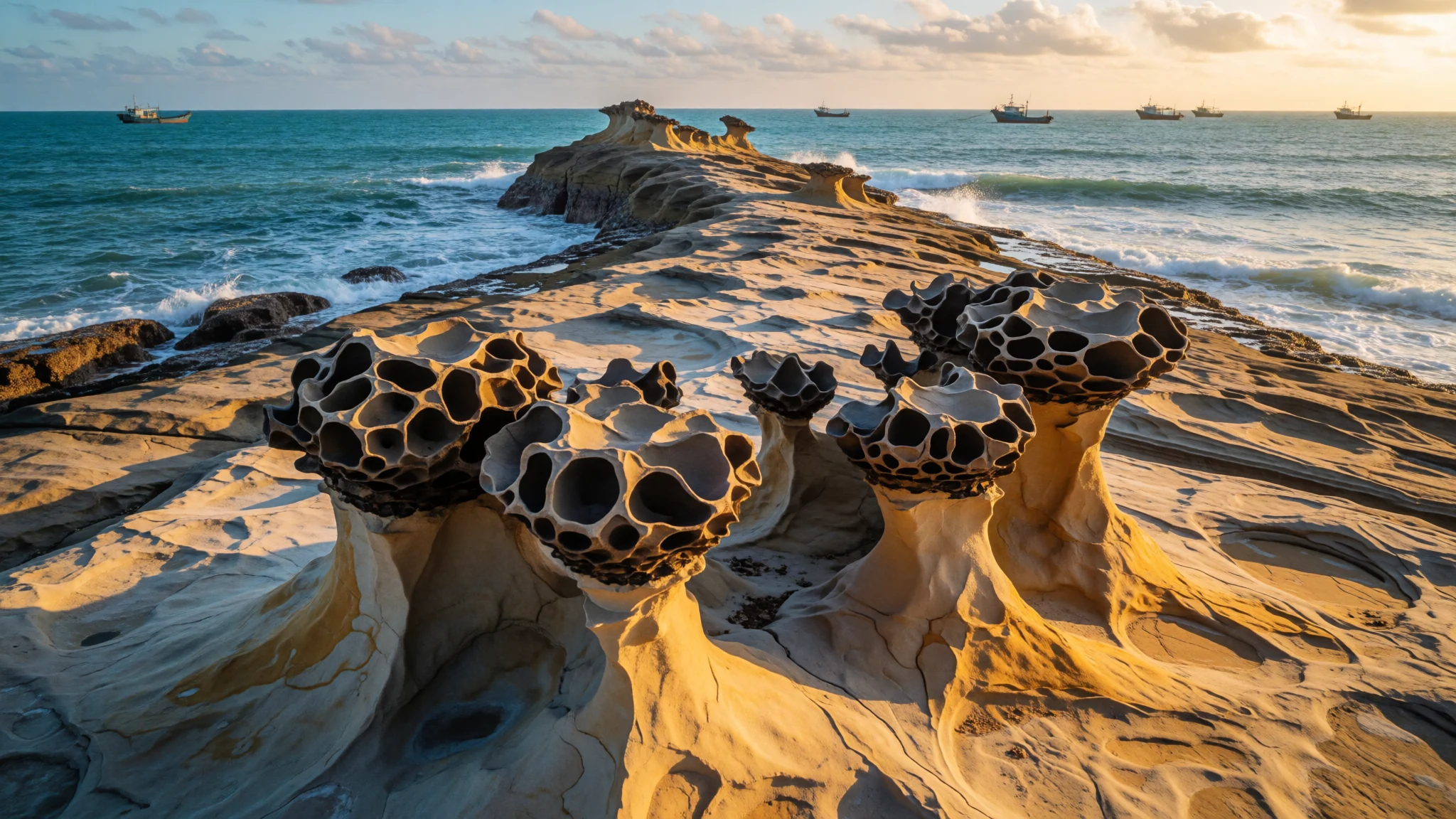
Walk among surreal, wind-carved sandstone hoodoos on a dramatic northern headland where ocean waves sculpt geological wonders.
The place
Yehliu Geopark occupies a remarkable cape and headland on the northern coast of Taiwan, reaching into the ocean as a narrow finger of sedimentary stone. The headland forms part of a geological formation created through ancient tectonic movements, where massive plates collided to push mountain ranges out of the sea. Over thousands of years, relentless ocean waves, driving winds, and salt weathering have battered the exposed shoreline, eroding soft layers of rock much faster than harder strata. This differential erosion produced an extraordinary field of mushroom-like hoodoos, ginger-rock nodules, and honeycomb weathering patterns across the rocky platform. Visitors walking out along the paved paths observe geological features shaped into familiar profiles by natural forces alone. The landscape shifts constantly with the tide and weather, glowing pale gold under bright sunlight or turning slate-grey when winter storms lash the northern coast. Salt spray fills the air, and sea birds wheel above the wave-cut platforms where water pools in hollows carved by centuries of mechanical and chemical weathering. Because the headland is entirely exposed to maritime elements, the experience of the terrain is visceral, marked by the roar of the surf and the wind whistling through hollowed-out rock cavities.
Its story
Yehliu Geopark has witnessed centuries of maritime history, starting with the indigenous Masu community who inhabited the coastal shelf long before outside traders arrived. Spanish sailors were early European visitors to the northern shore, later displaced by Dutch trading forces before local Hoklo families established fishing settlements along the sheltered bays. For generations, the coastline supported small-scale fishing communities whose lives were shaped by the unpredictable seas. In the nineteenth century, political tensions flared during Qing dynasty rule, leading to military actions that disrupted local settlements. The sea also claimed lives, commemorated locally by monuments such as the statue dedicated to a fisherman who died trying to rescue students from the churning waves. In modern times, the headland transitioned from an overlooked fishing waypoint into one of Taiwan's most celebrated natural attractions, drawing millions of sightseers to marvel at the iconic Queen's Head hoodoo. Conservation scientists now monitor the fragile sandstone neck of this famous formation as natural weathering and foot traffic slowly alter its silhouette, prompting the creation of digital replicas and protective cordons to preserve the geological heritage for future generations.
What to see
- Queen's Head — Yehliu Geopark
The signature natural rock formation inside Yehliu Geopark, bearing a striking resemblance to a regal woman's profile. Millions of visitors queue patiently along the wooden boardwalks to photograph this slender hoodoo, which scientists monitor closely as natural weathering slowly narrows its fragile sandstone base.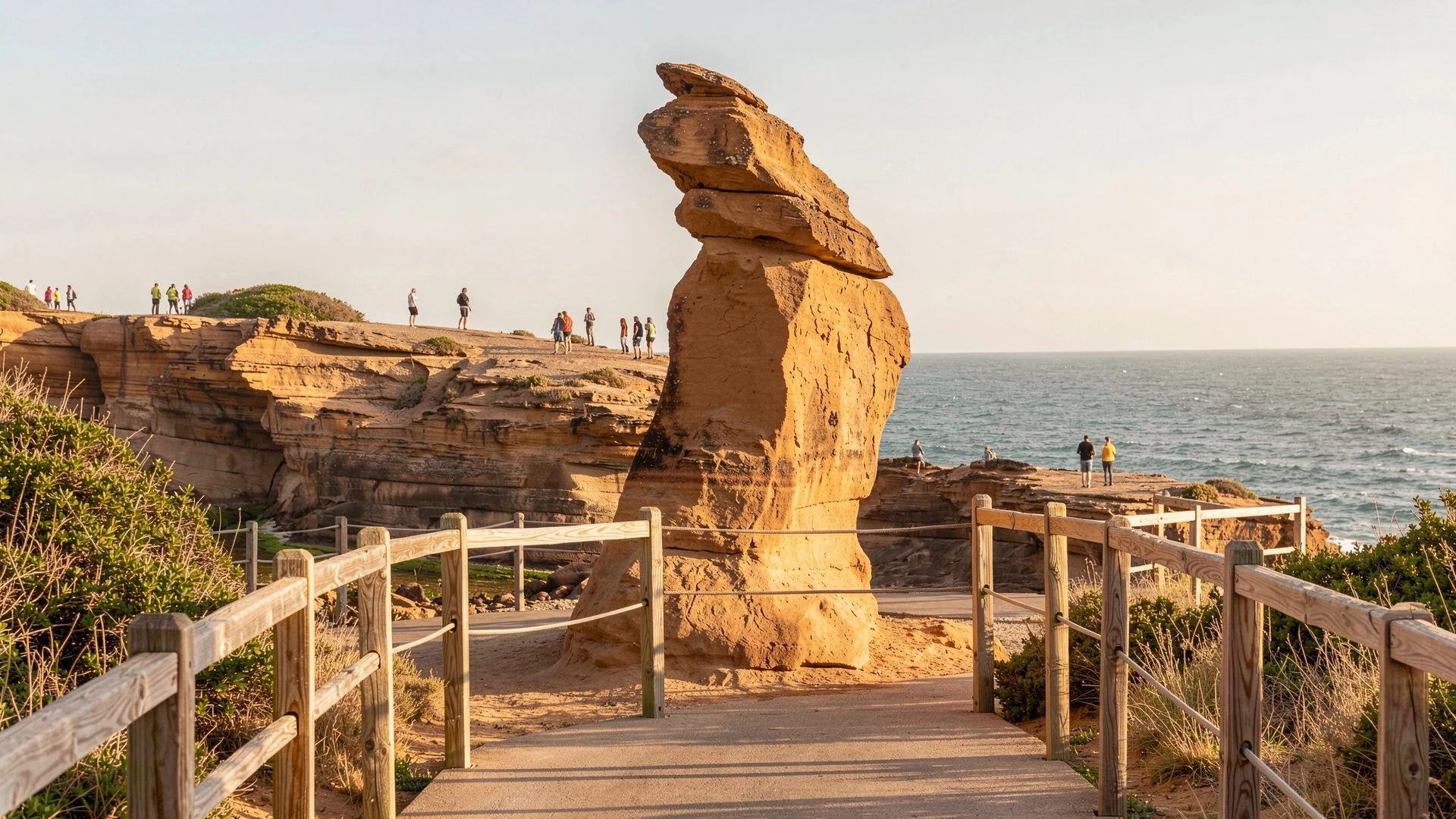
- Yehliu Promontory — Wanli District
A dramatic rocky outcropping stretching far out into the ocean, offering panoramic vantage points over crashing waves and wave-cut platforms. Walking the length of the cape reveals an array of honeycomb rocks, ginger rocks, and fossil-rich layers sculpted entirely by wind and maritime erosion.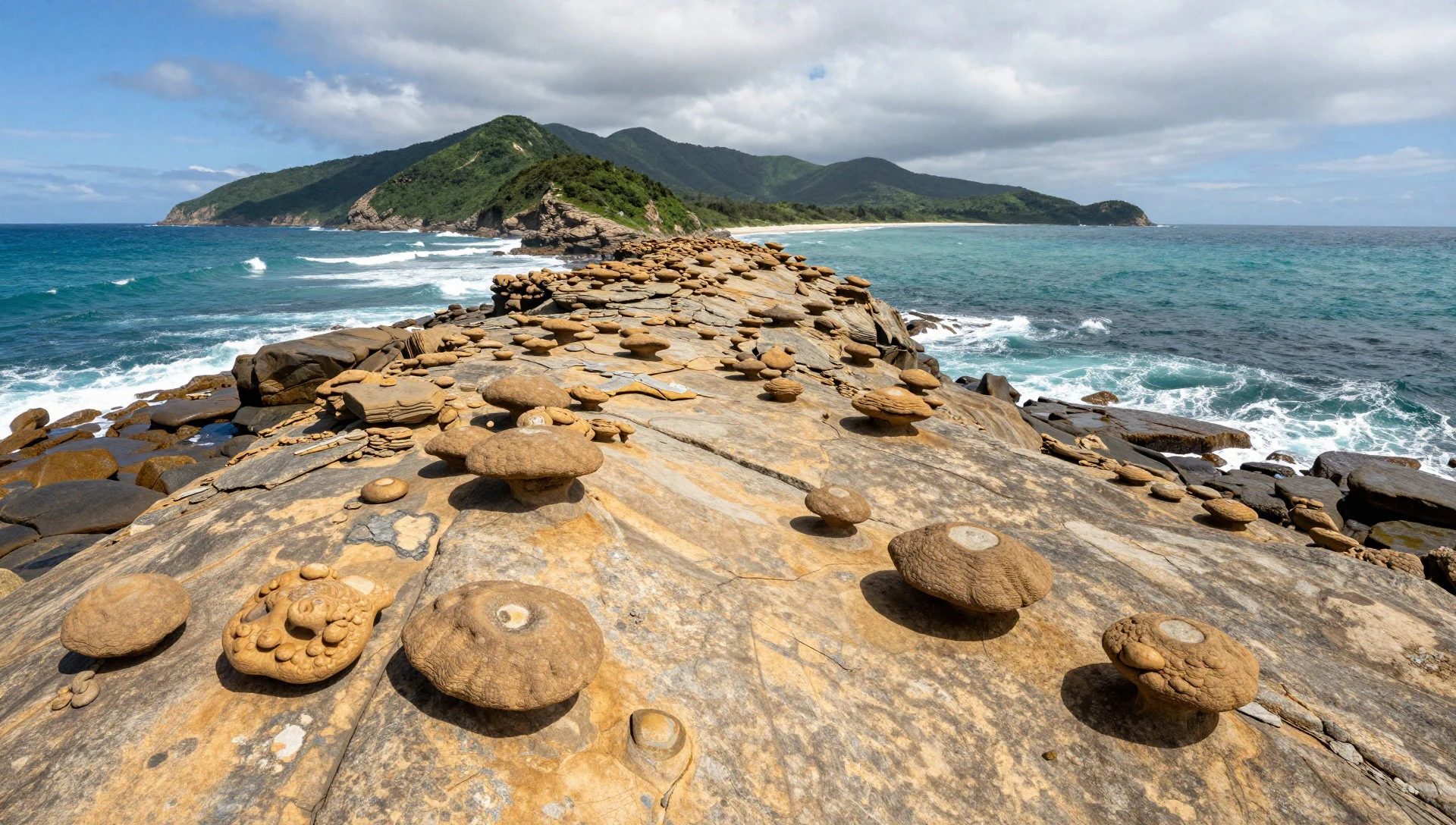
- Wanli Beach — Wanli District
A sweeping stretch of coastal sand situated near the geopark, popular with locals seeking a quieter seaside stroll away from the rocky headland. The shoreline provides broad views back toward the mountainous backdrop of the northern coast and serves as a launching point for coastal recreation.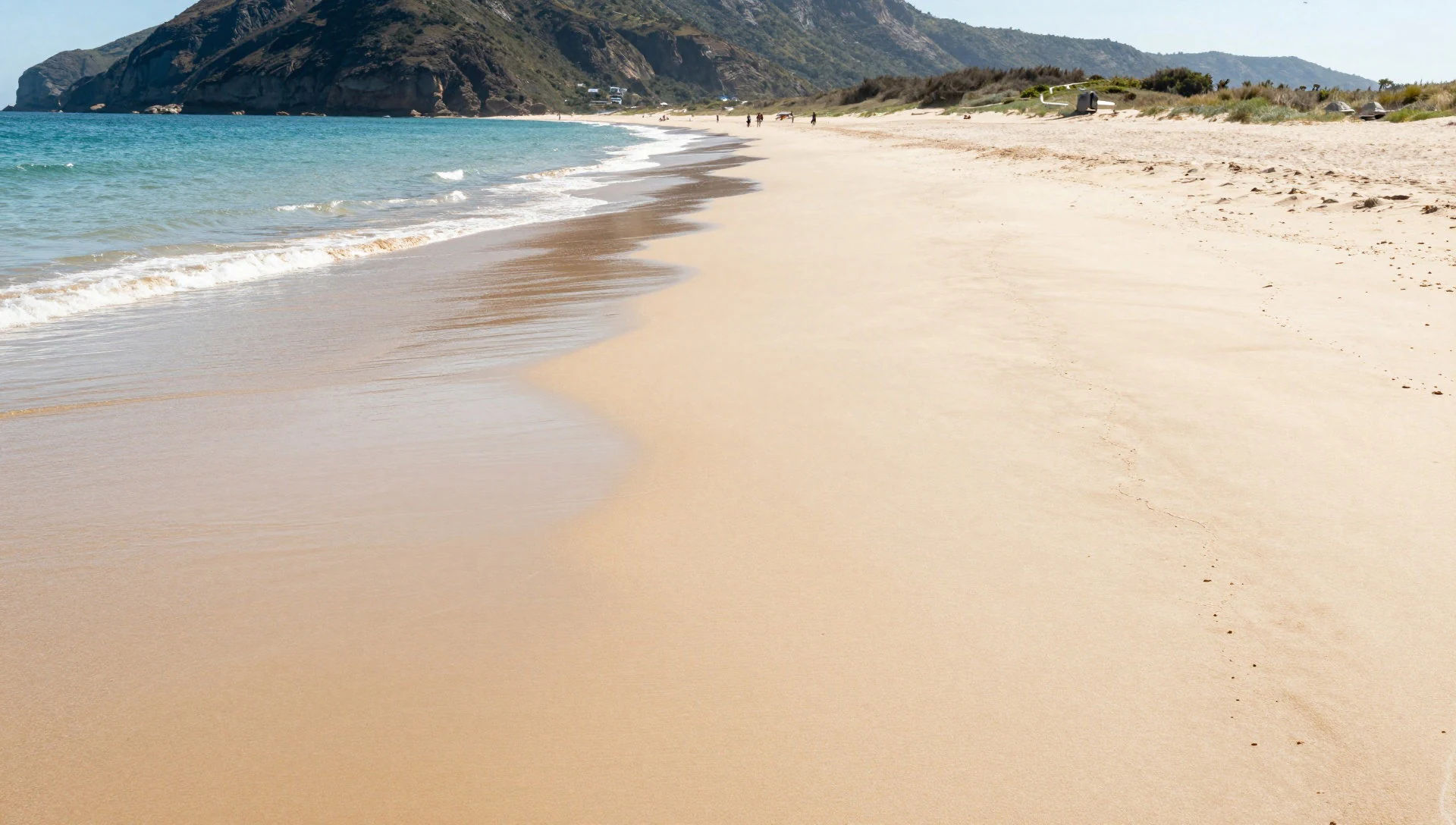
- Lin Tian-jen Statue — Yehliu Geopark
A bronze memorial erected near the entrance pathways to honour a local resident who tragically drowned while attempting to rescue students from treacherous offshore currents. The monument stands as a poignant reminder of the unpredictable power of the northern sea and the courage of coastal villagers.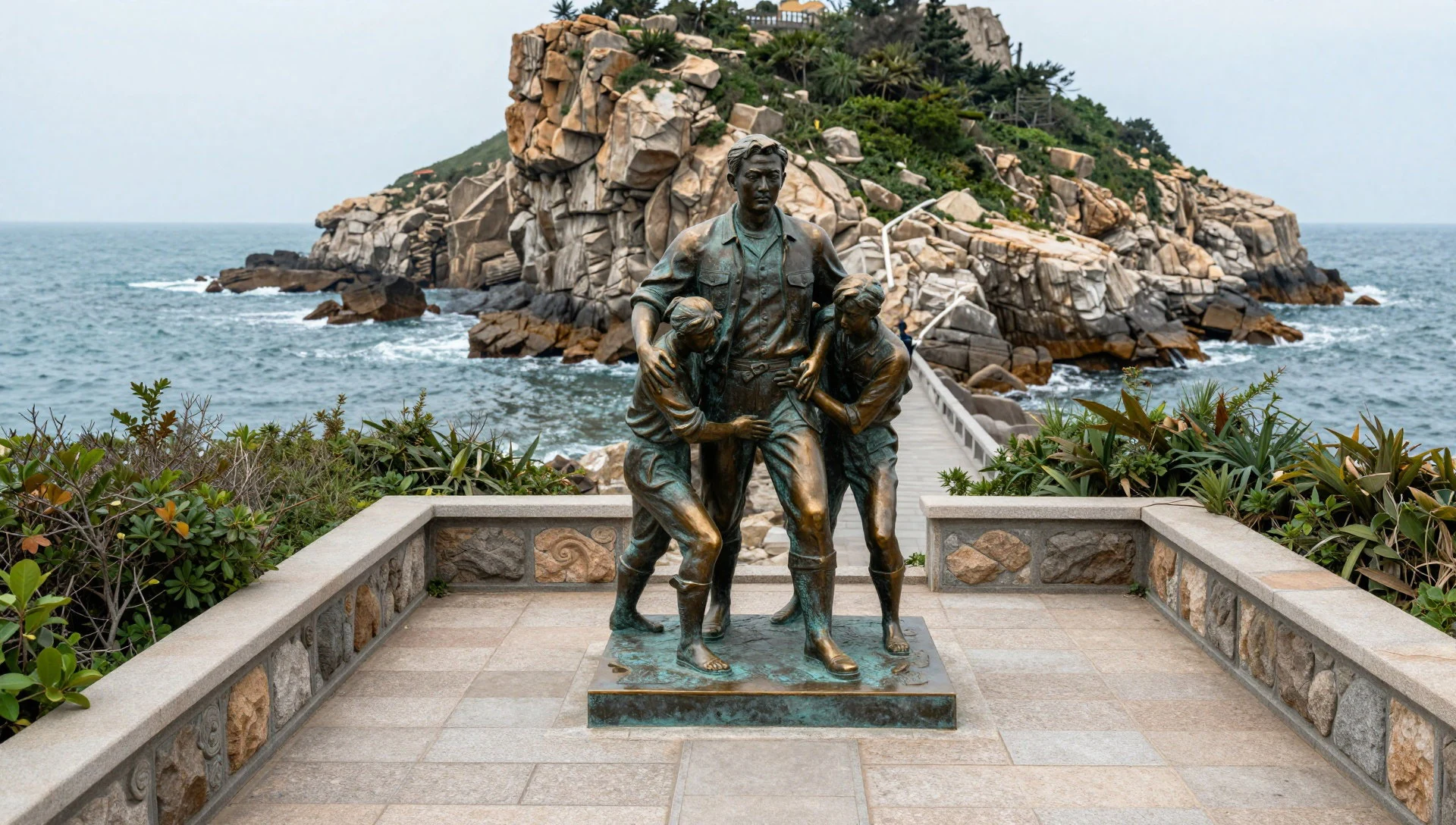
- Futuro Houses — Wanli District
An eccentric cluster of futuristic, saucer-shaped experimental dwellings constructed during the twentieth century and now standing abandoned near the coast. These architectural curiosities draw urban explorers and photographers interested in mid-century utopian design and derelict coastal structures.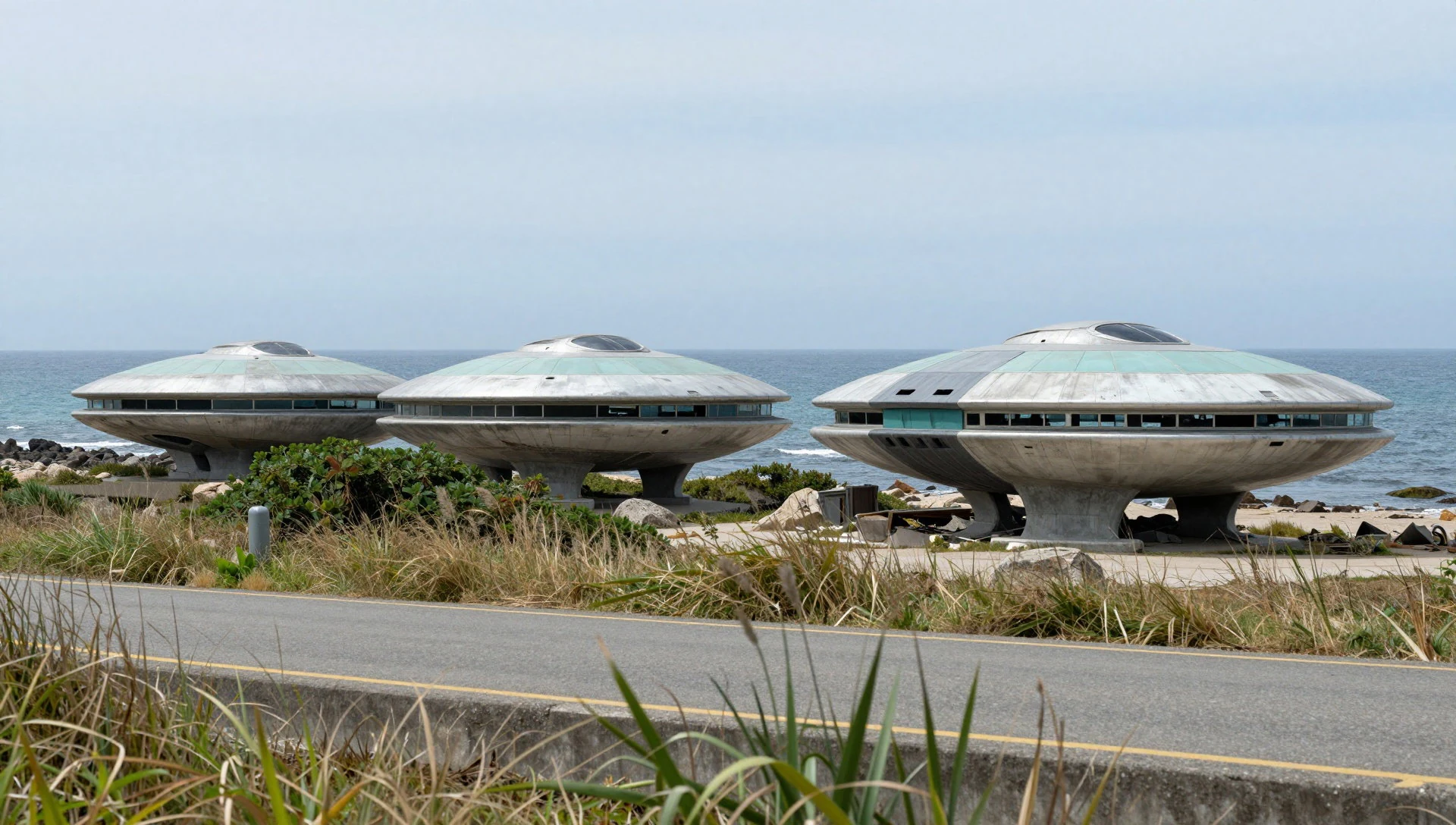
Culture
Yehliu Geopark and the surrounding Wanli district reflect a deep-rooted maritime heritage where coastal folk traditions and traditional temple worship remain central to daily life. Local residents gather at community temples like the Yehliu Baoan Temple to offer prayers for safe voyages and abundant fishing havens, maintaining rituals passed down through generations of Hoklo settlers. Festivals and celebrations follow the lunar calendar, bringing vibrant processions and traditional music to the narrow harbour streets. Visitors will notice a strong community pride tied directly to the sea, alongside a pragmatic hospitality developed through decades of welcoming travellers to the rocky shore. Always respect designated viewing barriers and safety ropes within the geopark to protect fragile geological formations from irreversible damage.
What to wear
Traditional daily attire in Yehliu Geopark and surrounding fishing villages historically favoured durable, lightweight cottons and broad-brimmed straw hats designed to withstand intense summer humidity and coastal salt spray. Today, locals wear standard contemporary casual clothing, while fishermen and harbour workers opt for waterproof rubber boots, UV-protective sleeves, and breathable synthetic layers suited for long hours under the open sun. Visitors exploring Yehliu Geopark should dress in practical, weather-appropriate layers with sturdy, closed-toe walking shoes possessing good grip, as the uneven sandstone platforms can be slippery when wet from sea spray or rain. Bringing a windproof jacket or light raincoat is essential, as sudden sea breezes and passing showers frequently sweep across the exposed headland.
What to eat
- Steamed Local Catch — Guihou Fishing Harbour
Fresh fish unloaded daily at the local wharves, simply prepared with ginger, scallions, and soy sauce to highlight the natural sweetness of the catch. Savoured at casual eateries lining the harbour wharves.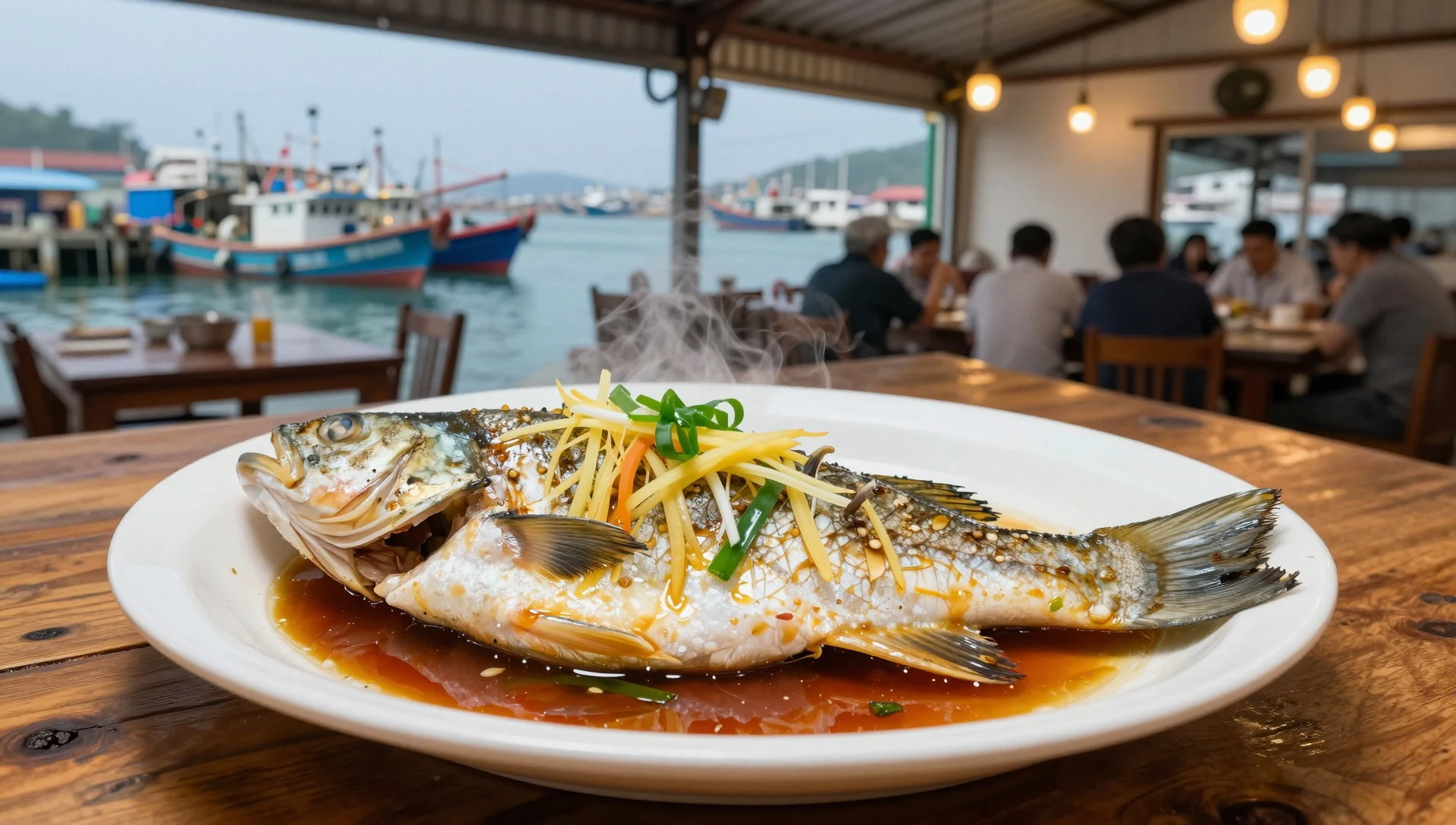
- Garlic-Butter Mantis Shrimp — Wanli Fishing Harbour
Large coastal crustaceans wok-tossed with fragrant garlic, butter, and chili peppers, offering a rich and savoury flavour profile popular along the northern waterfront. Found at seafood stalls around the docks.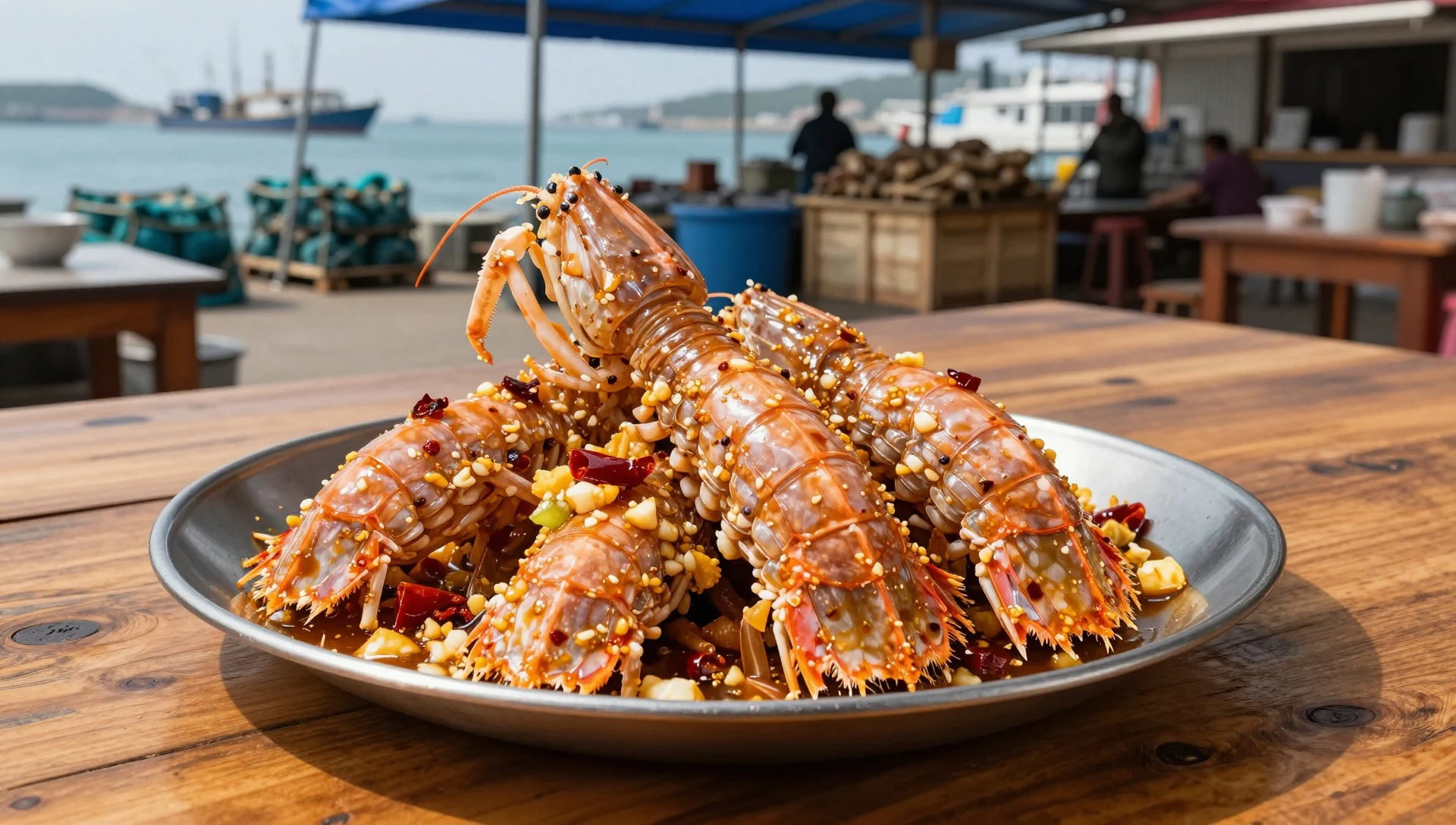
- Sea Urchin Omelette — Tung-ao Fishing Harbour
A delicate local speciality combining fresh sea urchin roe with free-range eggs, fried quickly on a hot griddle until just tender and aromatic. Served at family-run fish houses near the water. - Braised Squid Soup — Yehliu Fishing Harbour
A comforting, thick broth filled with tender pieces of locally caught squid, bamboo shoots, and fragrant Chinese basil. Available at small traditional noodle shops tucked behind the harbour.
Plan it
Best time. March to April and October to November offer pleasant temperatures and lower humidity; June brings the rainy season, while August is intensely hot and humid.
How long. 1–2
Getting there. Wanli has no rail connection, so access is by bus from Taipei stations or by car via the coastal highway.
Budget. low
Tips
- Arrive early in the morning before tour bus crowds descend on the Queen's Head.
- Wear footwear with sturdy grip for walking on uneven rock surfaces.
- Carry cash for small food stalls and local harbour markets.
- Protect against intense sun and wind exposure on the open headland.
Etiquette
- Stay behind safety lines and never touch protected rock formations.
- Respect local fishermen and working areas around the harbours.
Nearby
Sources
- Wikidata Q716932 (CC0)
- Wikipedia (rev 1369361361) (CC BY-SA 4.0)
- Wikivoyage (rev 5393246) (CC BY-SA 4.0)
- Photo 01-yehliu-northern-part.jpg (CC BY 3.0)
- Photo 02-1-yehliu-2015-panorama.jpg (CC BY-SA 4.0)
- Photo 03-20190415-yehliu-geopark-rock-formations-1.jpg (CC0 1.0)
- Photo 04-2010-12-30-evening-at-yehliu.jpg (CC BY 2.5)
- Photo 05-2010-12-30-yehliu-geopark.jpg (CC BY 2.5)
- Photo 06-2017-10-28-yehliu.jpg (CC BY 2.5)
- Photo 07-2019-09-20-yehliu-geopark.jpg (CC BY 2.5)
- Photo 08-20190415-yehliu-geopark-beach-rock-formation-1.jpg (CC0 1.0)


