Yaxchilan
Yaxchilan, Mexico
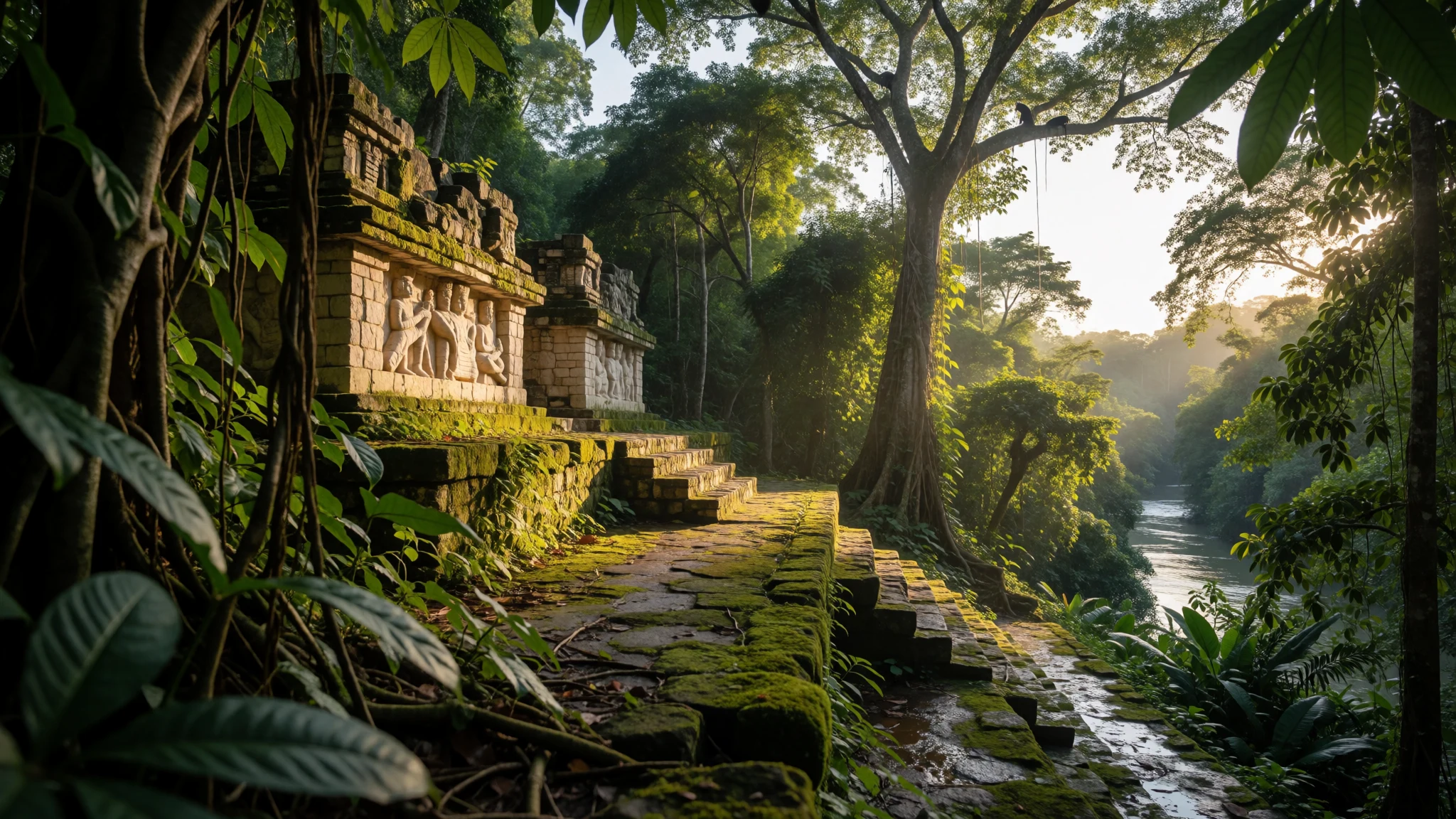
Journey deep into the Chiapas jungle by river boat to explore the magnificent, ruined Maya city of Yaxchilan and its famous carved stone lintels.
The place
Yaxchilan stands quietly on the south bank of the winding Usumacinta River in the remote southern state of Chiapas, Mexico. Encircled almost entirely by a dramatic horseshoe-shaped river meander that serves as a natural defensive barrier, this ancient archaeological zone remains cut off from modern road networks. Visitors reach the site by boarding small motorboats from the nearby riverside community of Frontera Corozal, gliding down tannin-stained waters where crocodiles sometimes bask on the muddy banks and howler monkeys roar from the high forest canopy. Within the ancient urban core, monumental stone plazas, crumbling limestone pyramids, and low-slung palaces sprawl across rising natural terraces. Towering ceiba and mahogany trees have reclaimed much of the architecture, twisting their heavy roots around carved masonry and casting deep shade over mossy courtyards. Unlike many more accessible archaeological destinations, Yaxchilan retains a raw, untamed atmosphere that plunges every traveller straight into the humid heart of the tropical rainforest. The ruined city is internationally celebrated for its exceptional collection of intricately carved limestone lintels positioned above doorways, alongside tall standing stelae that record dynastic triumphs in ancient glyphs. Exploring the stone corridors and darkened underground chambers reveals a sophisticated urban landscape deeply intertwined with the wild landscape of the Mexican borderlands.
Its story
The history of Yaxchilan stretches far back into the Preclassic Period, though its golden age unfolded centuries later during the Late Classic era. Early inscriptions indicate that a local ruling dynasty was formally established with the enthronement of its first recorded king in the fourth century. For many generations, the settlement remained a relatively modest regional player before gradually expanding its military and political reach across the river valley. During its height, Yaxchilan asserted dominance over smaller neighboring settlements while locking into bitter, prolonged rivalries with competing regional capitals like Piedras Negras and Palenque. Dynastic survival depended heavily upon strategic warfare, elite marriage alliances, and public rituals designed to validate the divine authority of reigning monarchs. Among the most influential figures in the city's chronicle was a powerful king who ascended the throne in the latter half of the seventh century and reigned for decades, transforming the capital into an architectural powerhouse. Later rulers continued to commission elaborate stairways and sculptured reliefs that documented victories, royal bloodletting ceremonies, and captive takings. By the dawn of the ninth century, like many great centers across the southern lowlands, Yaxchilan suffered a gradual political collapse. Populations drifted away into the surrounding forest, leaving majestic stone temples to be swallowed by the relentless advance of tropical vegetation until modern explorers rediscovered the silent ruins.
What to see
- Great Acropolis — Riverside archaeological zone
The Great Acropolis is the largest of the three elevated architectural groups at Yaxchilan, stretching in parallel along the western bank of the Usumacinta River. Climbing the monumental stone staircases leads visitors past tiered palace complexes, open plazas, and crumbling vaulted rooms that once served as the administrative and ceremonial heartbeat of the ancient realm. - Structure Group — Main plaza level
This notable edifice features an extensive series of stone lintels above its primary entryways, carved by royal commission to portray various military campaigns, conquests, and ritual victories achieved by the ruling dynasty. The deeply incised limestone panels offer remarkable detail regarding ancient attire, weaponry, and courtly status during the Classic period. - Upper Temple Complex — Upper terrace
Positioned on higher terraces overlooking the broader site, this architectural grouping features central entryways flanked by subsidiary rooms. Commissioned during a period of extensive dynastic building, the stone panels here prominently depict ruling monarchs alongside their military captains and attending ritual priests. - Subterranean Labyrinths — Southern sector
Structure 19 conceals a fascinating network of underground corridors and small basement chambers beneath its primary masonry. Exploring these dim passages reveals an enclosed environment inhabited by small resident bat colonies and unique insects adapted to the subterranean stone architecture, offering a genuinely atmospheric underground experience.
Culture
Cultural life around Yaxchilan is deeply rooted in the traditions of the indigenous communities that inhabit the surrounding Chiapas rainforest, particularly the Maya and Lacandon peoples. For generations, local inhabitants have maintained a profound spiritual and practical connection to the dense jungle, viewing ancient archaeological monuments not merely as historical relics but as sacred spaces connected to their ancestors and the natural world. Visitors to this frontier region encounter a warm, Spanish-speaking rural culture influenced heavily by traditional indigenous customs, community solidarity, and a slow-paced riverine lifestyle. Community checkpoints managed by local residents govern access to the area, reflecting a strong sense of local autonomy and stewardship over their ancestral lands. Travellers should always follow the explicit instructions and safety guidelines provided by heritage officials and local river guides when visiting the ruins. Always respect local community checkpoints and heritage staff instructions without argument.
What to wear
Traditional dress worn across rural Chiapas and nearby indigenous communities features vibrant textiles, hand-woven huipiles adorned with colourful geometric embroidery, and lightweight cotton garments suited to humid tropical climates. While older generations and ceremonial participants frequently maintain these traditional textile arts, people living in the area today commonly wear practical, modern everyday clothing such as jeans, shirts, and sturdy footwear suitable for humid rural environments. For visitors exploring Yaxchilan, clothing choices should prioritise comfort and protection against both intense heat and biting insects. Lightweight, breathable long trousers and long-sleeved shirts made from natural fabrics are strongly recommended to shield skin from the sun and brush. Because the archaeological terrain features steep stone escarpments, uneven rocks, and vegetation that becomes exceptionally slick following tropical downpours, sturdy walking boots or closed-toe hiking shoes with reliable tread are essential; sandals and ordinary tennis shoes should be avoided entirely to prevent slips and falls.
What to eat
- Traditional Regional Comal Dishes — Open-air eateries in Frontera Corozal
Simple, hearty Mexican dishes prepared over traditional flat clay griddles, featuring freshly pressed corn tortillas served alongside regional stews, savoury beans, and local cheeses. - Fresh River Fish — Riverside dining spots near the boat docks
Locally caught freshwater fish seasoned with regional herbs and citrus, often pan-fried or grilled and served with warm corn tortillas, rice, and fresh salsa. - Local Tamales — Street food stalls in Frontera Corozal
Masa corn dough stuffed with savory meats or beans, wrapped neatly in plantain leaves and steamed until tender, offering a comforting and portable meal. - Regional Antojitos — Local family-run restaurants in town
Assorted traditional corn-based snacks including fresh empanadas and tostadas topped with shredded meats, fresh cheese, and crisp cabbage.
Plan it
Best time. The drier months offer more reliable river conditions and clearer paths through the jungle, though the region remains warm throughout the entire year.
How long. 1–2
Getting there. Travel by road from Palenque to the riverside town of Frontera Corozal via local transport vans, then board a motorized boat for the final half-hour river journey up the Usumacinta River.
Budget. mid
Tips
- Carry bottled water and light energy snacks, as there are no shops or vending machines inside the archaeological zone.
- Wear sturdy hiking boots with good grip to navigate slippery stone steps and jungle paths safely.
- Apply reliable insect repellent generously before entering the forest to protect against mosquitoes.
- Bring cash in local currency for boat fares, transport, and meals in Frontera Corozal.
- Start your journey early in the morning to make the most of your time at the ruins before peak midday heat arrives.
Etiquette
- Always follow instructions given by INAH heritage representatives and local site guides.
- Be polite and patient at community checkpoints when entering Frontera Corozal.
- Respect the natural environment by packing out all personal waste and refraining from touching delicate ancient carvings.
Nearby
Sources
- Wikidata Q662263 (CC0)
- Wikipedia (rev 1374360691) (CC BY-SA 4.0)
- Wikivoyage (rev 5422881) (CC BY-SA 4.0)
- Photo photos/01-yaxchilan-1.jpg (CC BY-SA 2.0)
- Photo photos/02-foto-en-la-zona-arqueol-gica-de-yaxchilan-01.jpg (CC BY-SA 4.0)
- Photo photos/03-yaxchilan-lintel-24.jpg (CC BY 3.0)
- Photo photos/04-yaxchilan-edificio-6.jpg (CC BY 3.0)
- Photo photos/05-yaxchilanelves.jpg (Public domain)
- Photo photos/06-yaxchilan-lintel-15.jpg (CC BY-SA 2.0)
- Photo photos/07-british-museum-yaxchilan-lintel-16.jpg (CC BY 3.0)
- Photo photos/08-yaxchilan-lintel-25.jpg (CC BY-SA 2.0)


