Wuhan
Wuhan, People's Republic of China
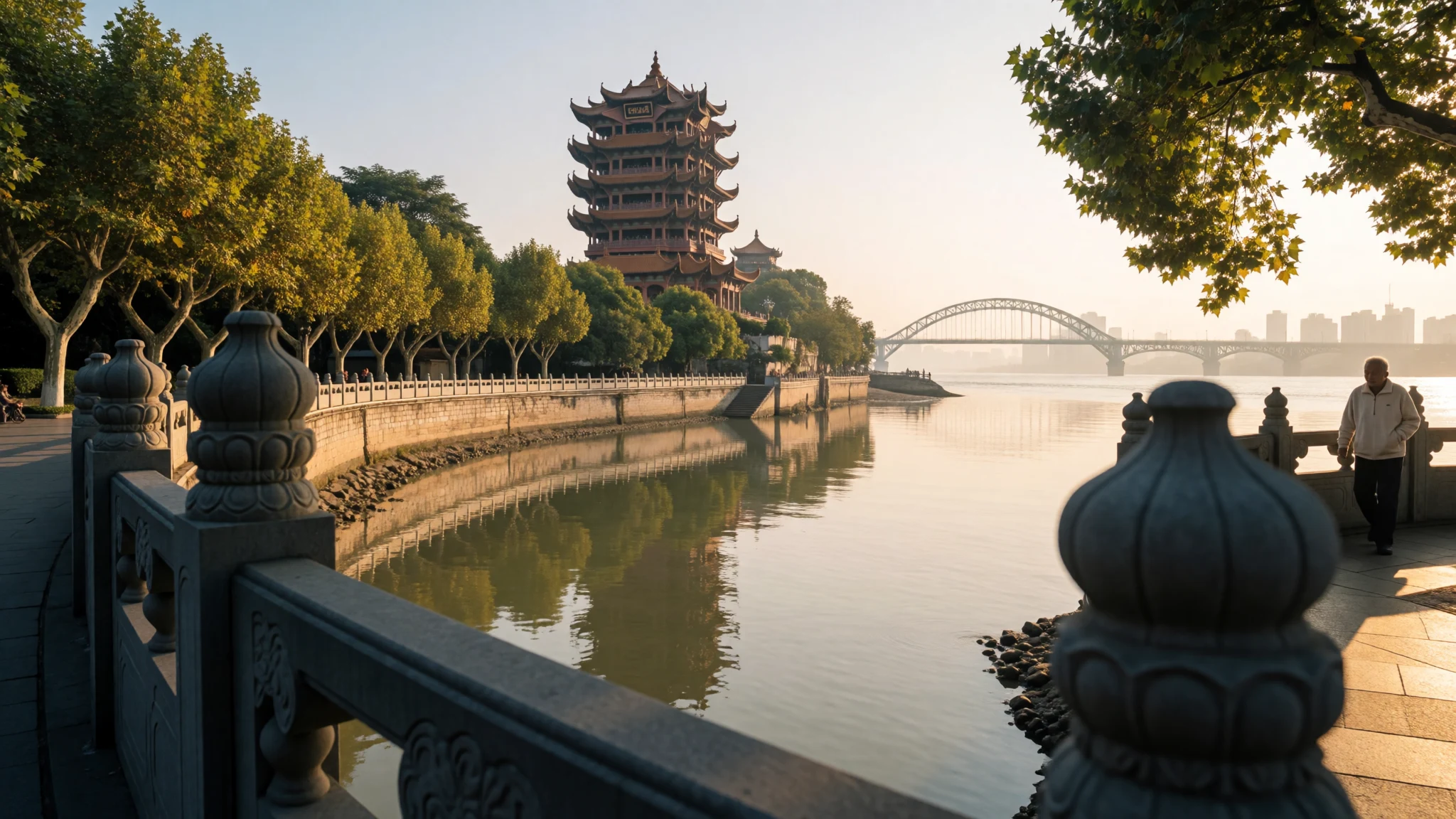
Wuhan is a vast river city where the Yangtze meets the Han, with a famous tower, lakes, lively breakfast streets and deep history.
The place
Wuhan sits on the flat Jianghan Plain in central China, at the point where the Han River runs into the Yangtze, and almost everything about the city follows from that meeting of waters. It is the capital of Hubei province and home to about 12.3 million people, sitting at an elevation of just 37 m, so the air is heavy and the land is threaded with lakes. The name is a fusion of three older towns: Wuchang on the south-east bank of the Yangtze, Hankou on the north bank beyond the Han, and Hanyang on the south-west side of the Han. Locals still talk about the Three Towns, and each has its own character. Wuchang is the university and museum side, with the Yellow Crane Tower and the old uprising sites. Hankou is the commercial heart, with a long riverfront, shopping streets and railway connections. Hanyang is quieter and more residential, with older neighbourhoods and fewer visitors. Because the rivers are so wide, the metro and its bridges and tunnels do much of the work of joining the three together, and a ferry across the Yangtze is as much a local commute as an outing. Wuhan has long been a trading crossroads, and it still behaves like one: busy, talkative, practical and proud of its food. It is an honest big city rather than a polished showpiece. Summers are very hot and humid, winters are damp and cold, and spring and autumn are the pleasant stretches for walking.
Its story
Wuhan has been inhabited for roughly 3,500 years. At Panlongcheng, in today's Huangpi District, archaeologists have uncovered a Bronze Age settlement linked to the Erligang culture, showing that the middle Yangtze mattered to early Chinese states long before any city of this name existed. Later the region fell under the State of Chu, which in 648 BC defeated the neighbouring State of Huang and moved its people into the area; Huangpi still carries that old name. Qin then absorbed Chu in 223 BC. Under the Han dynasty, Hanyang grew into a busy river port, and the surrounding region became a battleground in the dynasty's closing years because whoever held the Yangtze crossings held the middle of the country. The modern city's best-known moment came in 1911, when the Wuchang Uprising against the Qing set off the end of imperial rule. Wuhan briefly served as the national capital twice: in 1927 under a left-wing Kuomintang government, and again in 1937 as a provisional wartime seat. In 1938 it was fought over in the Battle of Wuhan during the war with Japan. More recently, a novel coronavirus was first identified here at the end of 2019, and in January 2020 the city went into the first lockdown of the pandemic. Many residents feel that this chapter has overshadowed the rest of a long and layered history, which is worth remembering when talking to people in the city.
What to see
- Yellow Crane Tower — Wuchang District
Yellow Crane Tower rises on Snake Hill in Wuchang, a multi-storey tower with flared eaves, looking over the Yangtze and the bridge below. The present structure is a modern rebuilding, and its fame rests on classical poetry more than on original timber. Go early or on a weekday, because tour groups fill the stairs by mid-morning.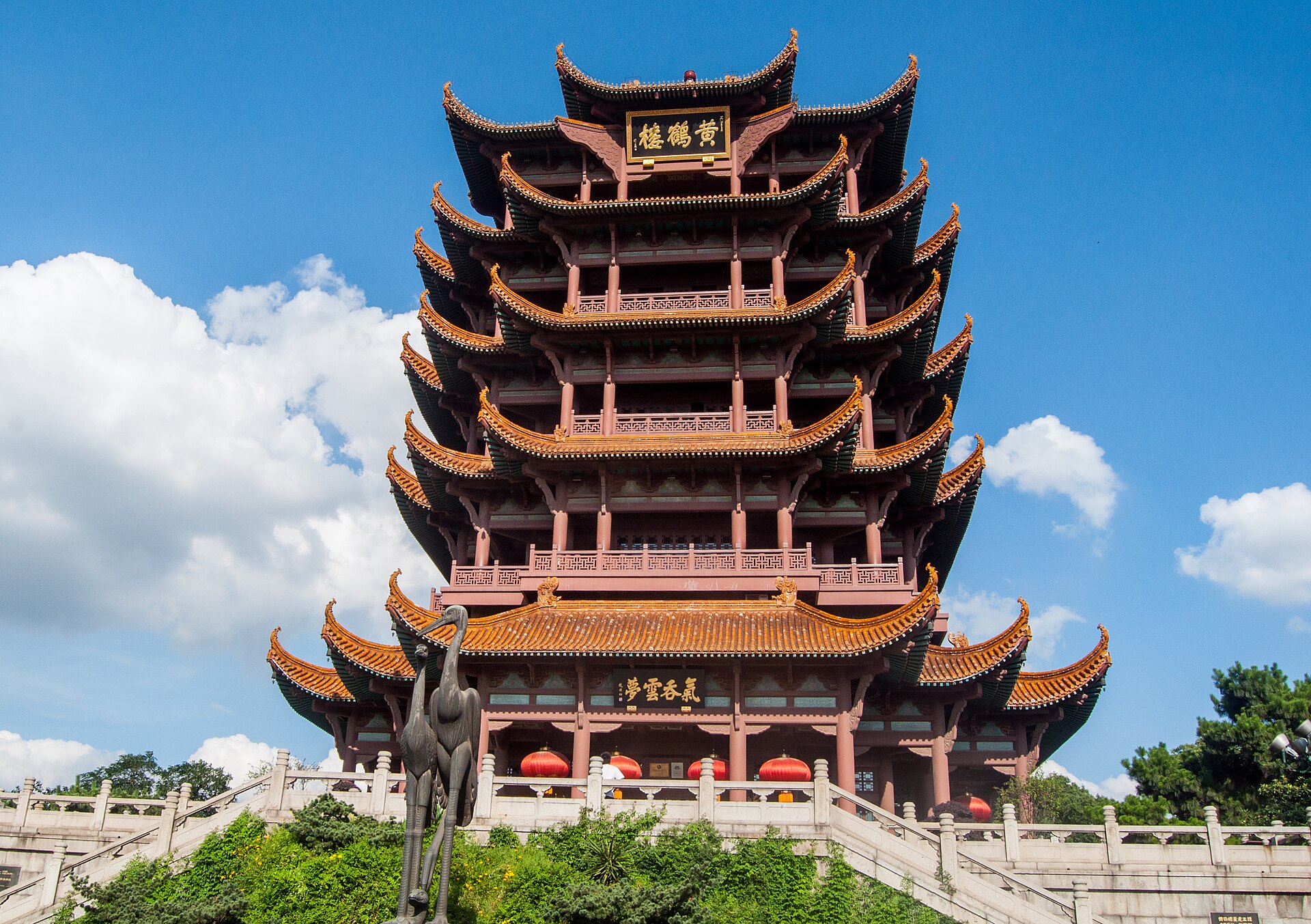
- Wuchang Uprising Memorial Hall — Wuchang District, near Yellow Crane Tower
Wuchang Uprising Memorial Hall occupies the red-walled former provincial government building where the 1911 revolt against the Qing began. Displays trace how a garrison mutiny spread across the country. It is a compact visit and gives the city's political history a physical place, with sculpted gardens and a statue-lined square outside. Check the official site for opening arrangements.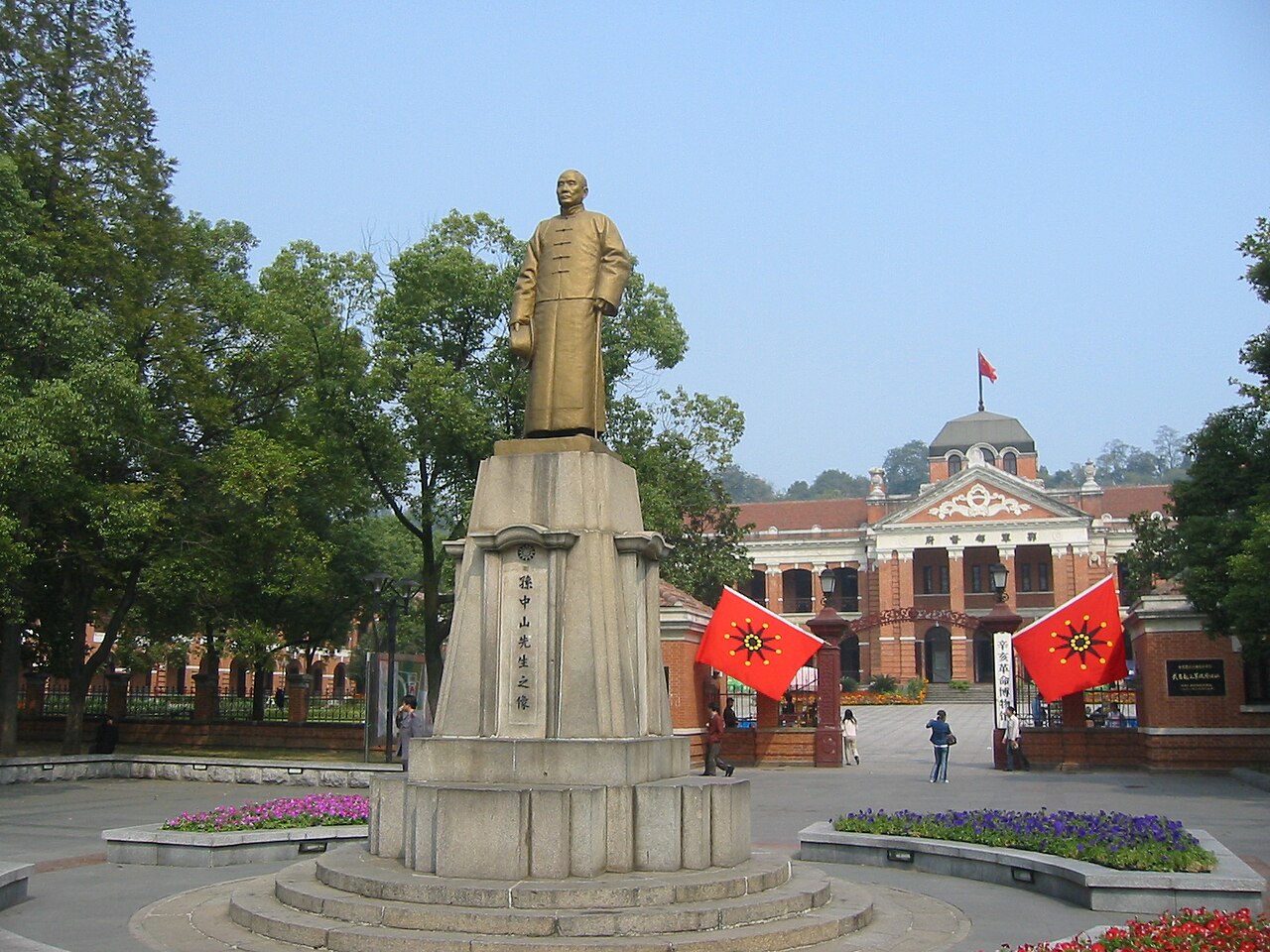
- Hubei Provincial Museum — Wuchang District, by East Lake
Hubei Provincial Museum is the place to understand the ancient Chu world that shaped this region. It is best known for bronzes, lacquerware and a large set of chime bells from an early tomb. Allow a good half day, and check the official site for any booking or entry rules before travelling. - East Lake — Wuchang District
East Lake is a sprawling lakeside park on the edge of Wuchang, laced with greenways, causeways, boating spots and plum and cherry gardens. It is where locals walk, cycle and escape the grid. Spring blossom is the draw, though weekends and holidays get crowded. In summer, go early to beat the heat and humidity. - Optics Valley Square — Hongshan District, Optics Valley
Optics Valley Square is a busy roundabout and shopping hub in the east of the city, surrounded by universities and technology companies. It is not a sight in the old sense, but it shows the Wuhan of students, start-ups and late dinners. Come in the evening for street food, big screens and the energy of a young crowd.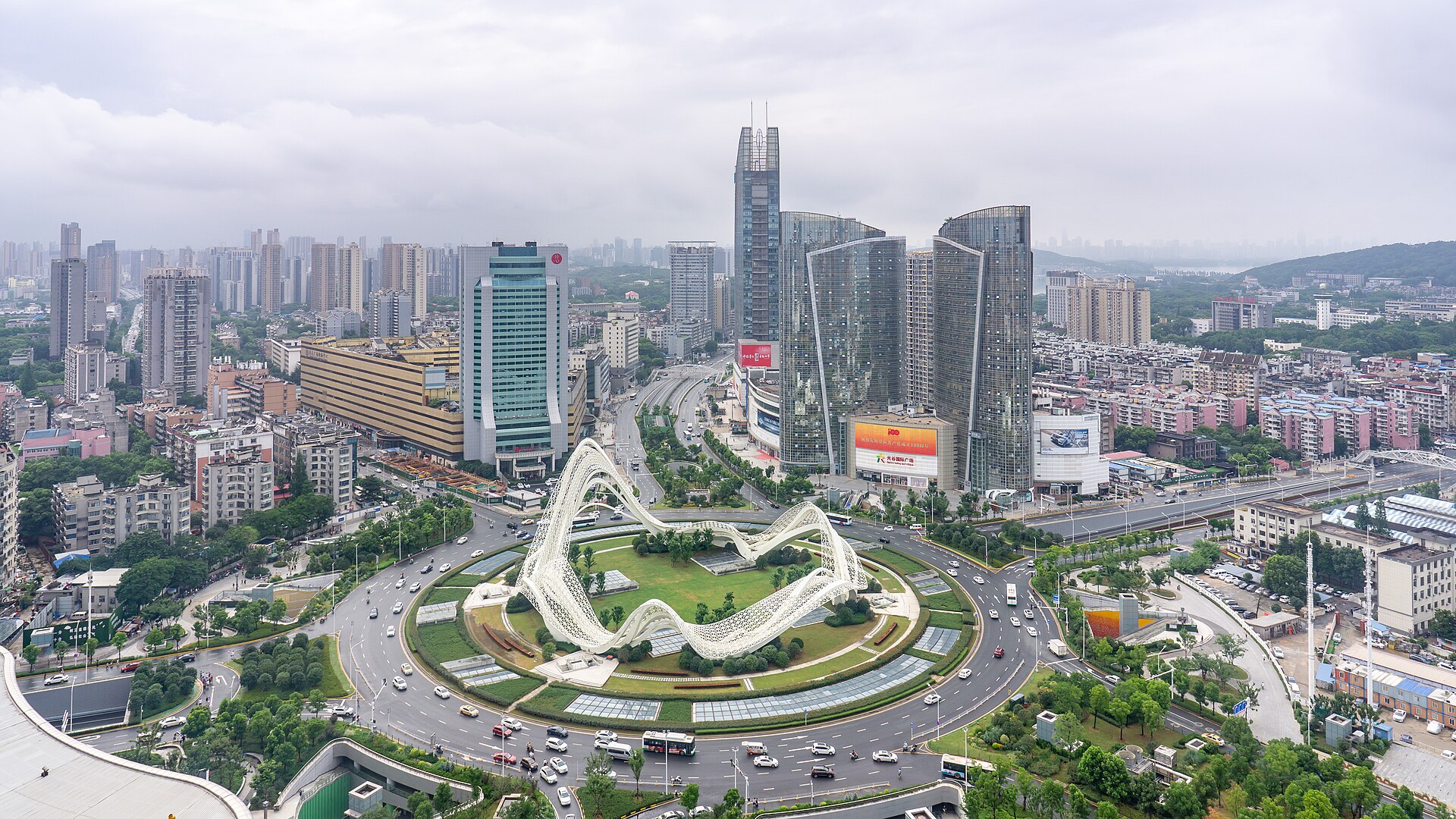
Culture
Wuhan's culture is shaped by its role as a river crossroads: direct, sociable and food-obsessed. The city's emblem is the plum blossom, chosen partly for the long local history of plum growing and partly for the fruit's modern research and economic value. Wild plums were used as medicine as far back as the Qin and Han periods, and some traditional new-year customs still revolve around planting plum trees. People here speak a local variety of Southwestern Mandarin, known as Wuhan dialect, with small differences between Wuchang, Hankou, Hanyang and Qingshan. Visitors who know standard Mandarin will follow much of it, but the rhythm is brisk and the vowels distinctive, and locals are usually pleased when a stranger tries a word or two. Hubei cooking, which grows out of the ancient cuisine of Chu, is one of China's ten major regional styles, and meals are taken seriously. On the third day of the third lunar month, many families eat eggs boiled with shepherd's purse, a small seasonal ritual meant to protect against illness through the year. Teahouses, riverside exercise groups, dance classes in parks and outdoor card games are everyday sights, and early mornings are the liveliest time in most neighbourhoods. Pride in the city is strong, and so is sensitivity about the pandemic years. Do not describe the pandemic as the "Wuhan virus" or "Wuhan disease" in conversation, as residents find the phrase hurtful and unfair.
What to wear
Wuhan's traditional dress belongs to the wider Chinese repertoire rather than to one distinctive local costume. The region has a long tradition of silk and of Han embroidery, a needlework style from the Jianghan Plain, and these appear on festival clothing, wedding wear and craft shops. The qipao, a close-fitting dress usually cut from silk or brocade, and the Hanfu revival, with wide sleeves and layered robes, are worn mainly for photographs, weddings, cultural events and festivals, often around the Yellow Crane Tower and East Lake. Everyday dress is casual and practical. Students in the university districts wear sportswear, hoodies and trainers; office workers favour smart-casual shirts and trousers; and in summer many people carry umbrellas against the sun as much as the rain. Winter brings padded jackets, scarves and thermal layers, because damp cold feels sharper than the thermometer suggests and many older buildings have little heating. A visitor should dress for the weather first. In summer, pack light, breathable cotton or linen, a hat, sun protection and shoes that can handle wet pavement. In winter, bring warm layers and a waterproof coat. Comfortable walking shoes matter, since sights are spread out and the best days involve plenty of stairs. Shoulders and knees do not need covering in the city generally, but modest clothing is sensible at active temples, and short shorts or sleeveless tops draw more attention in religious settings than in malls.
What to eat
- Reganmian (hot dry noodles) — Street stalls and breakfast counters across all three towns
Reganmian is Wuhan's signature breakfast: wheat noodles tossed in sesame paste, with pickles, spring onion and often chilli. It is eaten dry, with no broth, and is rich and nutty. Locals grab it from street vendors and small counters, then eat standing or at low tables. - Mianwo — Breakfast alleys such as Hubuxiang in Wuchang
Mianwo is a savoury fried dough ring, crisp at the edges and soft inside, rather like a doughnut without the sugar. It is usually bought hot and paired with soy milk or a bowl of noodles. Look for the queue at early-morning stalls. - Tangbao — Breakfast shops and steamer stalls in Wuchang and Hankou
Tangbao are small steamed dumpling-buns filled with pork and a spoonful of hot soup. Bite a small hole first and let the steam escape, then sip the broth before eating the rest. They are a classic early-morning snack. - Mibaba — Morning food streets and neighbourhood breakfast stalls
Mibaba is a lightly sweetened rice-flour pancake, pale gold and chewy, sold fresh from large griddles. It is a gentler counterpart to the heavy savoury breakfasts, and works well with tea or soy milk. - Mijiu tangyuan — Dessert counters and breakfast alleys, especially in cooler months
Mijiu tangyuan is a warm, sweet soup of fermented glutinous rice wine with small rice-flour dumplings, sometimes stuffed with sesame paste. It is comforting on a cold, damp morning and has only a mild alcoholic note. - Steamed bream in clear soup — Restaurants specialising in Hubei cuisine
Steamed blunt-snout bream in clear soup is a classic Hubei dish from the river-and-lake tradition. The freshwater fish is cooked gently so the flesh stays tender, with a light, clean broth. Order it at a sit-down meal, and be ready for small bones.
Plan it
Best time. March–April for plum and cherry blossom and mild days, and October–November for cooler, drier weather. Summer is very hot and humid, and winter is damp and cold.
How long. 2–3
Getting there. Wuhan Tianhe Airport is linked to the city by Metro Line 2, taxis and a commuter rail line to Hankou Railway Station, where long-distance trains and the metro connect. Wuhan is also well served by rail and road from other major cities.
Budget. low
Tips
- Start with outdoor sights such as Yellow Crane Tower and East Lake early in the day, before the heat and crowds
- Use the metro to cross the rivers, and allow extra time at rush hours
- Eat breakfast out: the breakfast streets are at their best before mid-morning
- Carry some cash and a working mobile payment app, as many small vendors prefer them
- Check the official site for museum opening rules and any booking requirements
Etiquette
- Treat the pandemic years with sensitivity and avoid calling it the Wuhan virus
- Queue patiently at busy stalls and at metro platforms
- Be alert to e-scooters and cyclists, who often ignore signals
Nearby
Sources
- Wikidata Q11746 (CC0)
- Wikipedia: Wuhan (rev 1384976637) (CC BY-SA 4.0)
- Wikivoyage: Wuhan (rev 5401457) (CC BY-SA 4.0)
- Photo 01: 武汉黄鹤楼俯瞰 (螺钉) (CC BY-SA 4.0)
- Photo 02: Yellow Crane Tower, Wuhan, China (Meraj Chhaya) (CC BY 2.5)
- Photo 03: 武汉光谷广场 (Arnie97) (CC BY-SA 4.0)
- Photo 04: 行政楼的屋顶与樱花 (Uuongkinghe) (CC BY-SA 4.0)
- Photo 05: The government location at Wuhan after Wuchang Uprising, 1911 (Mongol) (CC BY-SA 1.0)
- Photo 06: South Square of Hankou Railway Station (Baycrest) (CC BY-SA 2.5)
- Photo 07: Location of Wuhan Prefecture within Hubei (Croquant) (CC BY 3.0)
- Photo 08: 武汉黄鹤楼 (螺钉) (CC BY-SA 4.0)


