Volunteer Point
Volunteer Point, Falkland Islands
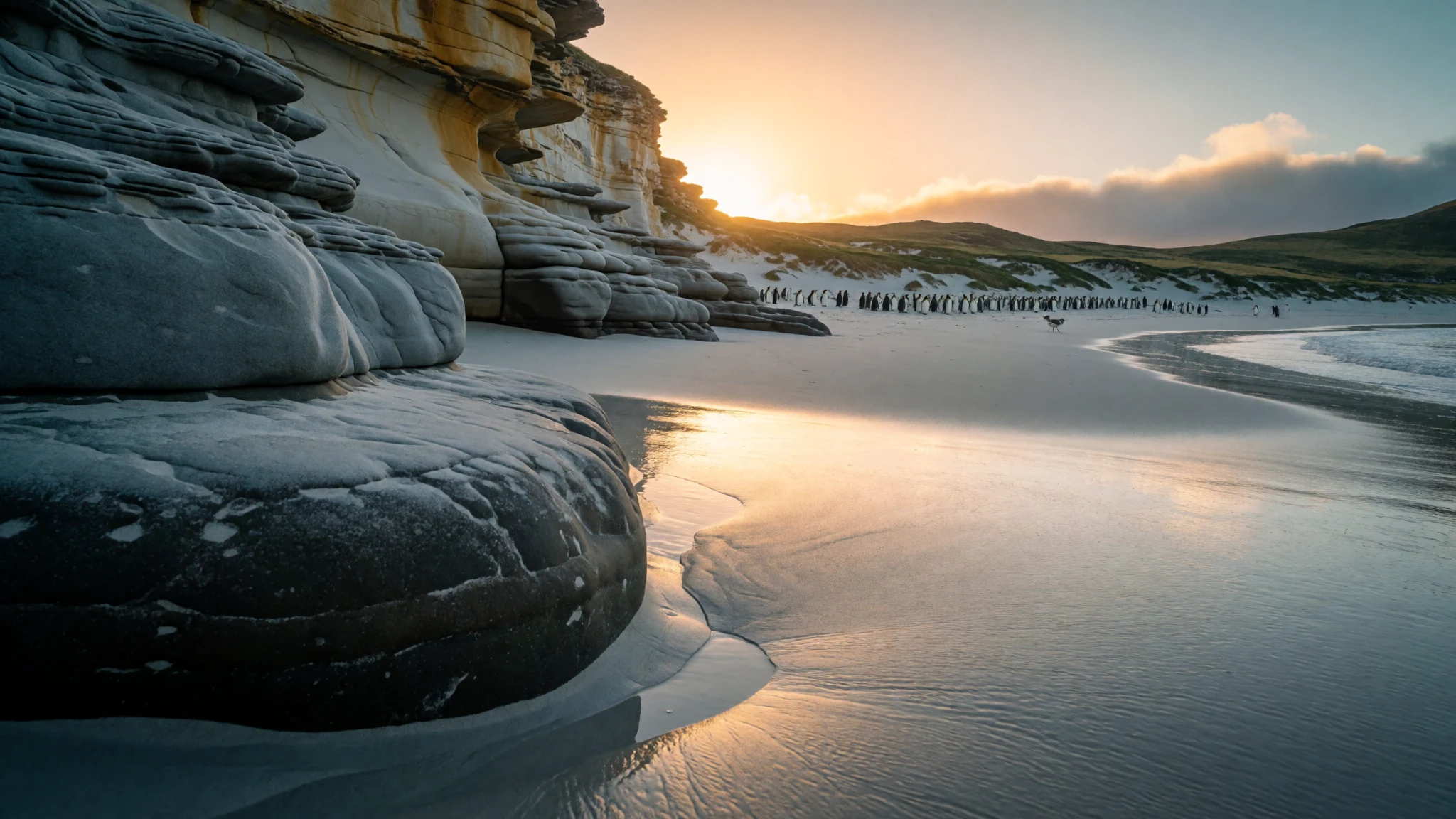
Volunteer Point is where the Falklands’ wildlife takes centre stage—king penguins on a broad beach with weather that keeps you honest.
The place
Volunteer Point sits on the east coast of East Falkland, on a headland at the end of a narrow peninsula. The setting feels wild and spacious: open sea to one side, rolling ground to the other, and a protective shape of land around Volunteer Lagoon. In practice, the “place” is the route and the arrival—an overland drive from Stanley or a helicopter hop—then a walk to the beach edge.
The beach itself, known as Volunteer Beach, is a long sweep of pale sand. At this specific point on the coastline, it hosts the islands’ largest king penguin colony along the shore. The penguins don’t just appear as a distant blur; they cluster and move in real time, so the experience is more like sitting near a living coastline than ticking off an animal sighting.
Visually, there’s also a geology story behind the scenes. The headland has hard quartz-sandstone formations and older sedimentary rock, so even when the light is flat, the landform still holds interest.
Crowd levels can change quickly. The area is popular for ecotourism and activity often concentrates around late morning into the middle of the day, which means you’ll share the viewpoint with other visitors—especially in peak season. On the plus side, the landscape is so big that even with people around, you rarely feel boxed in; on the flip side, it can get busy enough that you’ll want to time your arrival carefully and keep your distance.
Weather is part of the deal on the Falklands. Plan for wind and sudden changes, and treat warm layers and waterproofs as essential field kit rather than optional extras.
Its story
Volunteer Point’s name came from a ship: the Volunteer visited the islands in 1815, and the headland picked up its label from that era of navigation and exploration. That maritime link still feels relevant when you stand at the beach and look out across the same kind of water—wide, cold-leaning, and indifferent to human schedules.
Geographically, Volunteer Point is also notable for its location on the east side of East Falkland, making it one of the islands’ easternmost points. During the Falklands War, it entered the strategic conversation because of potential landing possibilities. Even if the main landings happened elsewhere, the fact that commanders considered this area shows how much these coastlines mattered.
The story shifts from ships and politics to birds and rock when you zoom in on what makes the headland work ecologically. Volunteer Point was designated a National Nature Reserve in 1968 and is classified as an Important Bird Area by BirdLife International. Today, it’s tied into Johnson’s Harbour Farm, a privately owned, locally managed area, which is why access is generally granted when conditions are dry and with permission.
A second layer of history sits in the landscape: the peninsula setting, the long stretch of white sand, and the surrounding grassy banks. And underfoot, the hard quartz-sandstone formations speak to a much longer timeline than any war or ship visit—old sedimentary rock that predates modern maps by a lot.
So Volunteer Point isn’t only “a penguin place”. It’s a headland shaped by human movement and disputes, then protected and managed for wildlife, where the daily drama belongs to the colony.
What to see
- King penguin colony on Volunteer Beach
Volunteer Point is best known for its king penguin colony along the beach. Watch how birds congregate and move along the sand margin, and expect the best encounters when you’re set up for a longer sit rather than a quick walk-by. The colony’s presence is the whole reason most people make the trip.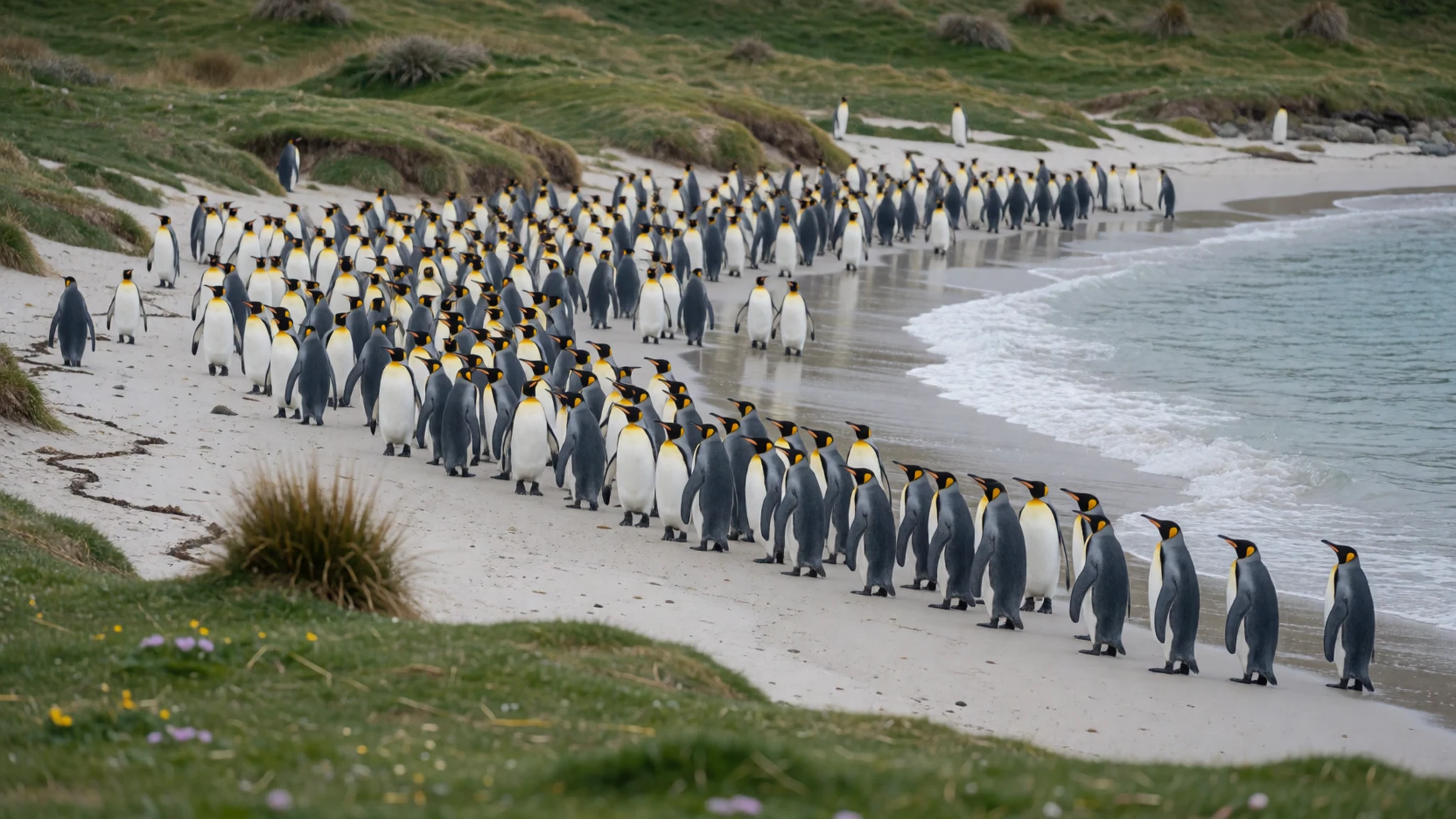
- Volunteer Point viewpoint and shoreline
The shoreline and headland perspective let visitors see the coastline’s shape: pale sand, grassy banks, and the peninsula that shelters Volunteer Lagoon. It’s also the spot where foot traffic becomes most noticeable, since many trips concentrate around late morning to mid-afternoon. Bring a wind layer; even calm days can feel chilly here.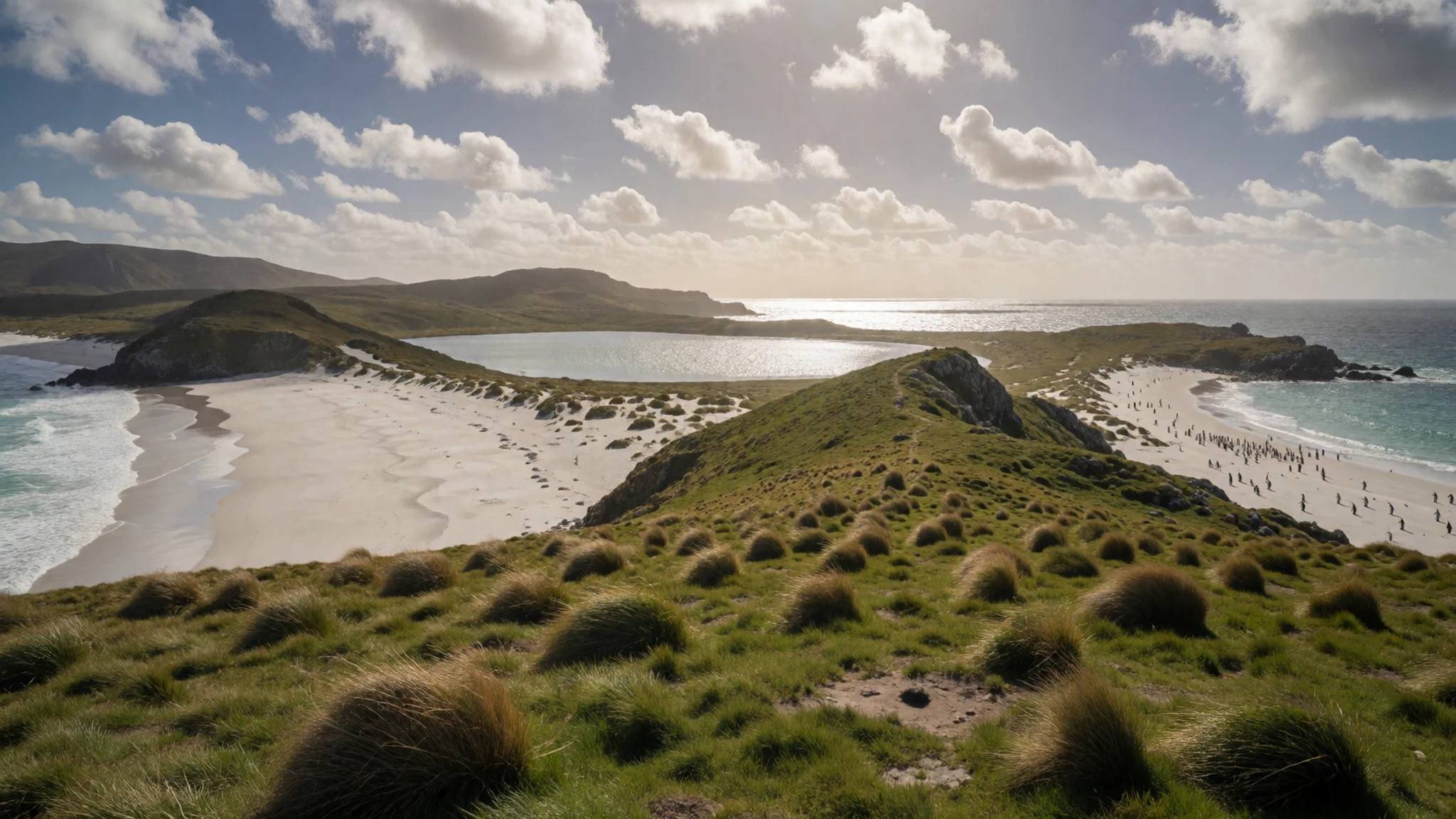
- Two-banded Plover
If you’re scanning the sand and edges rather than only looking at the penguins, the area can surprise with smaller shorebirds. Two-banded Plover (Charadrius falklandicus) is recorded around Volunteer Point, and it’s often easiest to spot when you pause and watch ground-level movement rather than keeping a constant walking pace.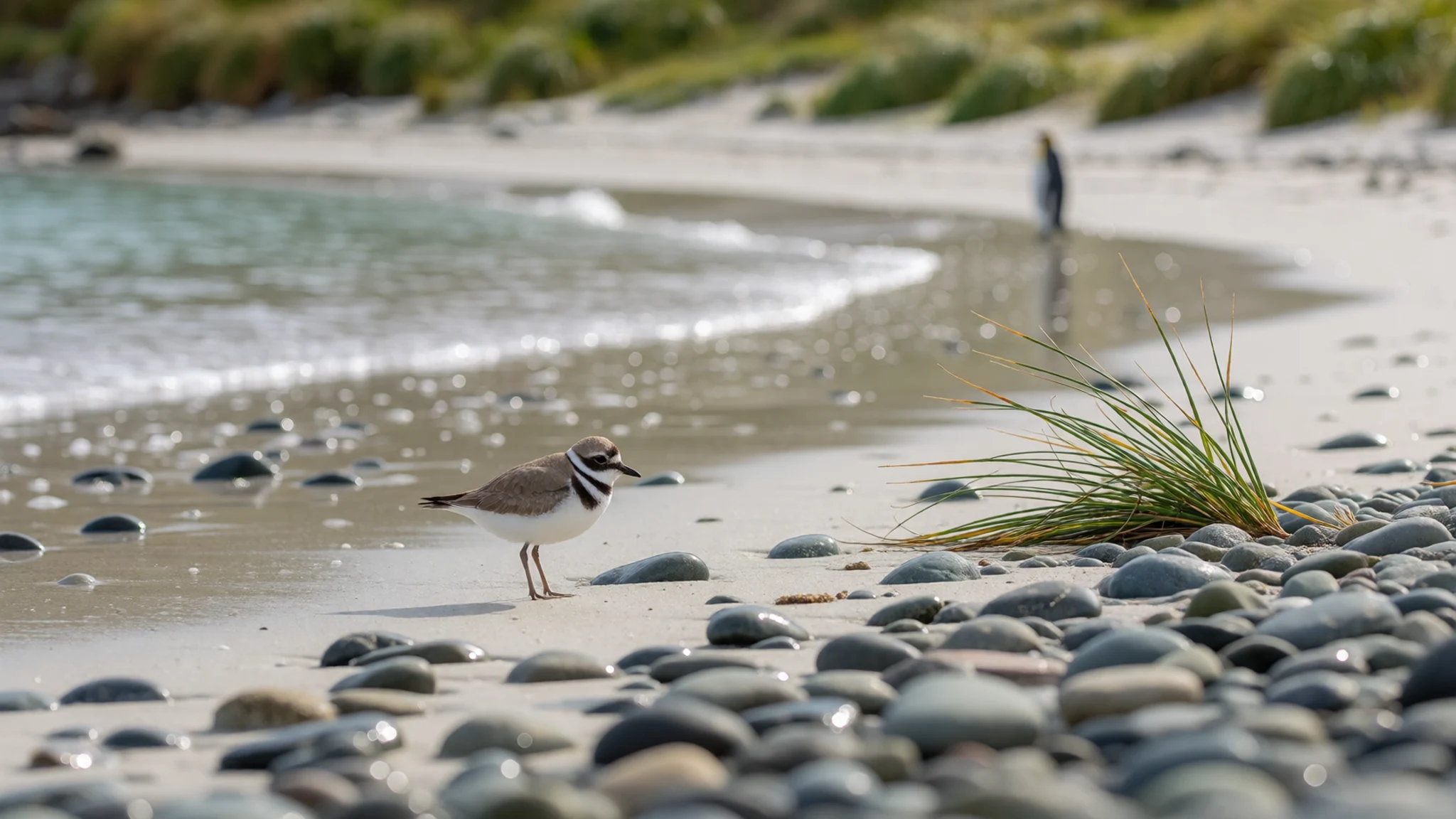
- Rock and landform along the headland
The headland’s hard quartz-sandstone formations and older sedimentary rocks give the place a sturdy, layered look. When clouds flatten the light, the texture of rock and the contrast between sand and grass become more important than dramatic shadows. It’s the kind of “slow looking” stop that rewards patience.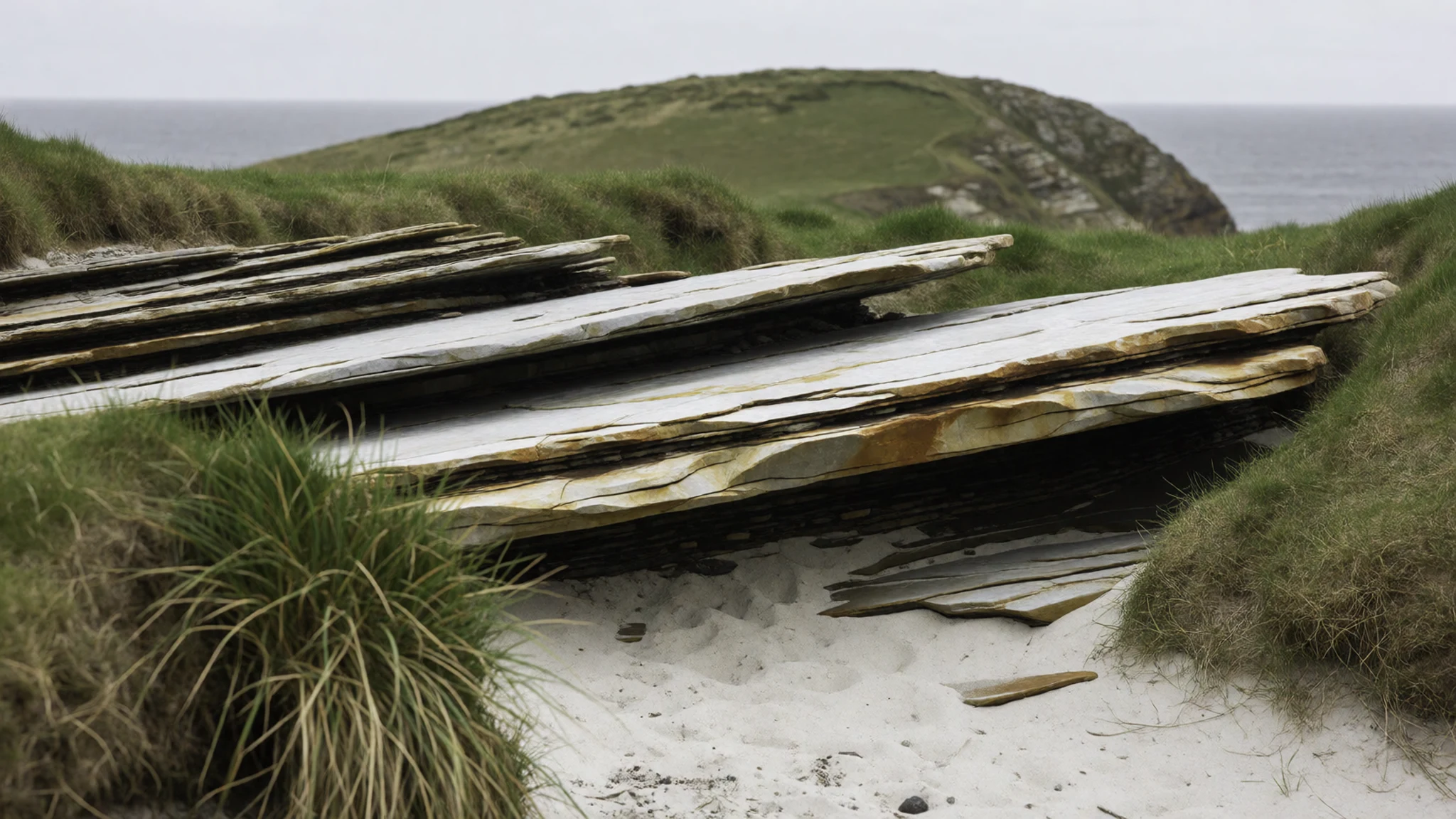
Culture
Volunteer Point sits in the Falkland Islands, which are a UK Overseas Territory, so day-to-day manners often feel familiar if you’ve spent time in the UK—but they can also be a bit more conservative. In general, drugs are not tolerated, and visitors should treat the islands as a place where behaviour matters and rules are taken seriously.
Socially, the Falklands’ attitudes toward LGBT people are described as overwhelmingly positive, with same-sex marriage made legal in 2017 and the first pride event hosted in Stanley that same year. Discrimination on sexual orientation is illegal, so you won’t need to second-guess how you should speak to people—be normal, be respectful.
A key cultural note for Volunteer Point is the lingering sensitivity around the 1982 conflict. Some residents retain mistrust of Argentines, and it’s advised never to call the islands “Argentine”. If the topic comes up, keep it calm and factual, and don’t chase debate just for the sake of conversation.
On-site, the wildlife is part of the community’s relationship to the land. The management context—permission-led access and a reserve setting—means behaviour around the colony is not casual. Move quietly, stay where you’re directed, and keep distance so birds aren’t forced into panic or crowding.
Visitor etiquette: keep well back from penguins, follow any access instructions given by the landowner/warden, and avoid arguing or discussing politics loudly near wildlife areas.
What to wear
Falklands weather is the real “dress code” near Volunteer Point: wind off the sea can make temperatures feel colder than expected, and conditions can shift quickly. While there isn’t a single traditional outfit tied to Volunteer Point itself, most island life follows British norms, so visitors usually dress for practicality rather than ceremony.
What people wear now tends to be outdoor-ready—coats, layers, waterproofs, and sturdy shoes suitable for walking over uneven ground near a beach. For many visitors, that means: a warm fleece or jumper under a waterproof jacket, thermal layers if it’s grey and windy, and gloves or a hat if the wind is up.
For a visit to the king penguins, aim for modest, practical clothing. Cover legs and arms enough to avoid getting chilled when you stop for longer viewing. Footwear matters: choose boots or trainers with decent grip because sand edges and gravelly paths can be slick.
If a helicopter transfer is on the plan, bring a secure bag and keep essentials in pockets or a closed daypack—gusts can make loose items annoying. Don’t rely on a single light layer; even in the drier seasons suggested by the months you’ll be travelling, the coast can still feel bracing.
In short: layer up, go waterproof, wear grippy footwear, and keep your outfit focused on staying warm and steady while you wait for the colony to do its thing.
What to eat
- Fish and chips — Stanley pubs and cafés
A traditional British-style staple in the Falklands, with fish and chips serving as a straightforward comfort meal. It’s the kind of dish you’ll typically find in Stanley eateries and pubs rather than only as a camp special.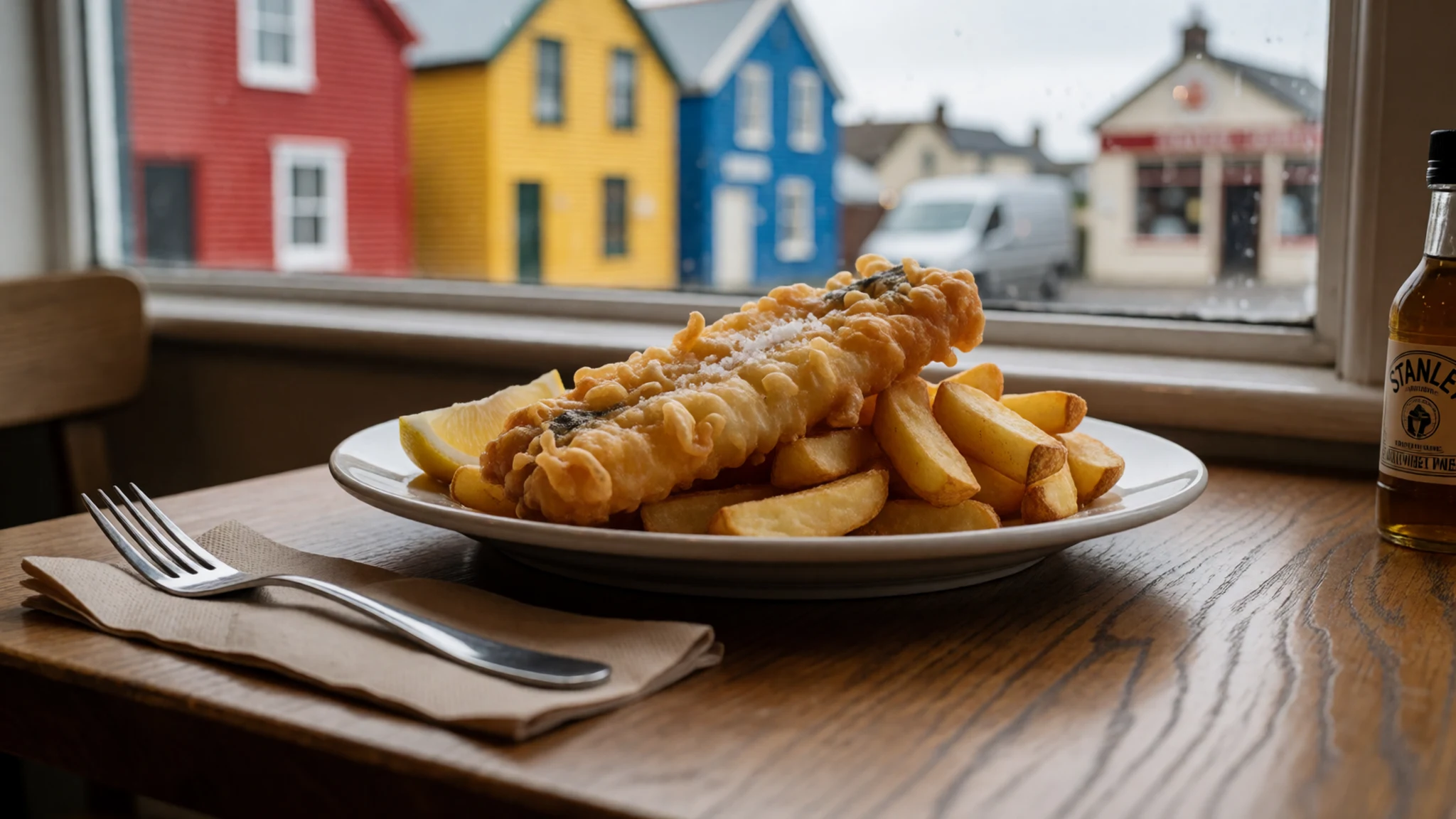
- Roast beef — Lodges and eatery-style restaurants in Stanley
Roast beef is part of the traditional British fare described for meals across the islands. It tends to show up where you’d expect cooked Sunday-style food—restaurants and also some lodge menus when you’re staying in camp.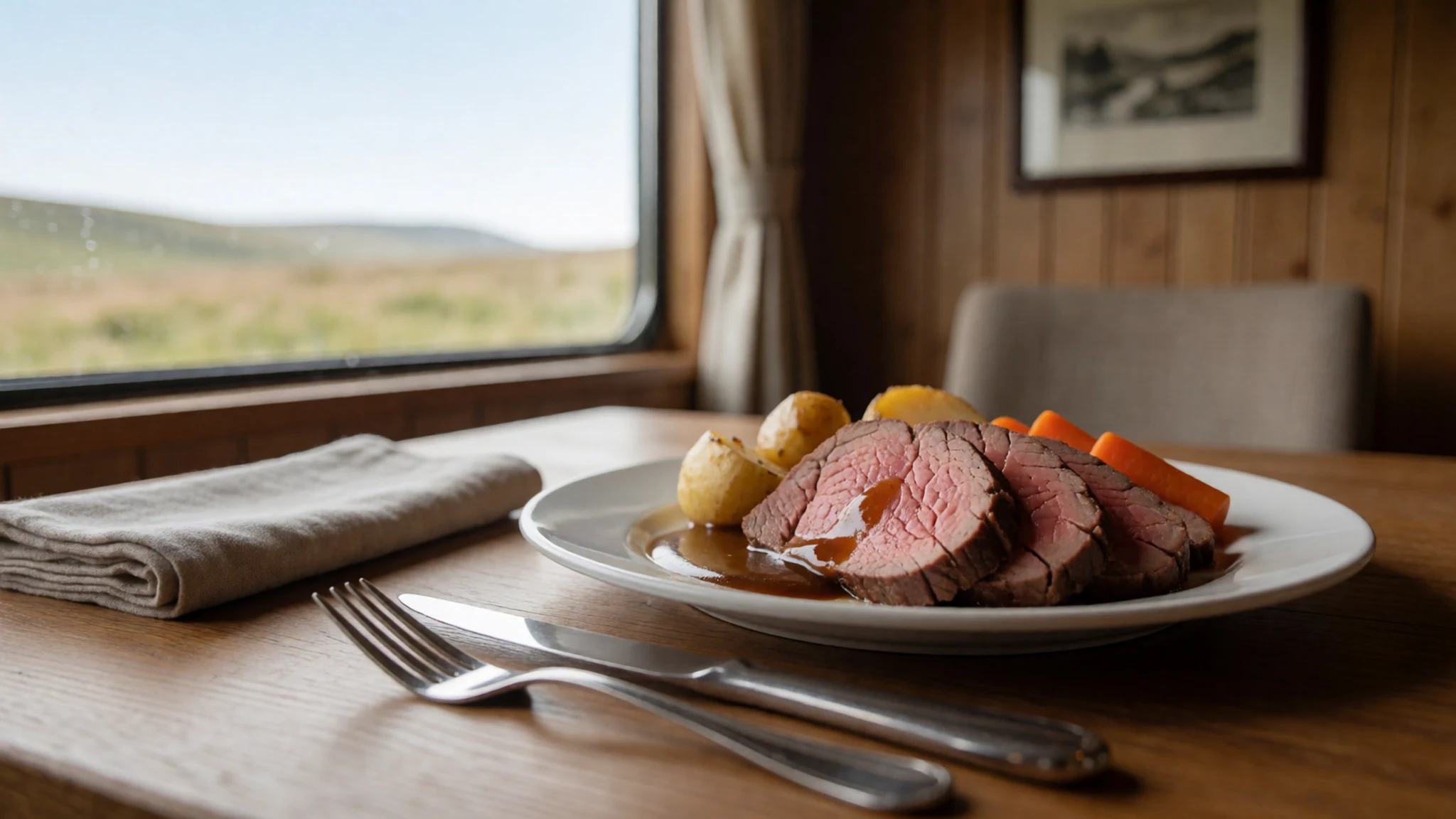
- Mutton — Supermarkets and cooked camp/lodge meals
Mutton is noted as a standard option, and it’s also the only fresh meat mentioned as being available in the supermarket. If you’re after a more local feel, it’s worth looking for mutton dishes at island dining places and camp meals. - Tea — Pubs and lodge dining
Tea is described as part of the islands’ standard fare, fitting the UK influence that shapes everyday meals. It’s the easiest “everyone can get it” choice alongside richer cooked dishes, especially when the weather feels maritime and windy. - Milanesa (Spanish influence) — Restaurants and pubs in Stanley
Spanish influence shows up in dishes like milanesa, which makes the menu feel a little broader than plain UK-style comfort. In practice, look for it among island menu offerings in Stanley rather than assuming it will be available everywhere. - Casuela (Spanish influence) — Eateries in Stanley
Casuela is another Spanish-influenced option mentioned as part of the food picture on the islands. It’s the sort of warm, hearty dish that suits cold, coastal days—best sought out in the main dining spots where menus are most varied.
Plan it
Best time. March–April and October–November for calmer, drier-feeling conditions that suit overland access when the reserve is more readily reached; December–January are peak visitor months, so expect more people.
How long. 2–3
Getting there. From Stanley, reach Volunteer Point by an overland vehicle journey of approximately three hours, or by helicopter. Located within Johnson’s Harbour Farm, entry typically depends on getting the property owner's approval and having dry weather, with lodging available at the warden’s house.
Budget. mid
Tips
- Plan around dry conditions since access is generally permitted when they’re met; if weather is unsettled, expect changes to timing.
- If you want fewer people around the viewpoint, aim to avoid the mid-day concentration of activity between 11:00 and 15:00.
- Set aside time for a longer penguin watch rather than a quick stop—the typical visit duration at the king penguin colony is about 63 minutes.
- Bring warm layers and water-resistant outerwear for wind and sudden weather shifts at the coast.
- Carry essentials in one place and keep them secure, especially if the day includes helicopter transfers.
Etiquette
- Keep a respectful distance from animals and avoid crowding; if an animal seems to notice your presence, you’re too close.
- Follow any instructions about access permissions and where to stand at the reserve.
- Don’t leave items unattended and don’t take unnecessary risks around wildlife that may be dangerous when cornered or with young.
Nearby
Sources
- Wikidata Q431031 (CC0)
- Wikipedia (rev 1384601514) (CC BY-SA 4.0)
- Wikivoyage (rev 5400949) (CC BY-SA 4.0)
- Photo photos/01-shantyvolunteerpoint.jpg (CC BY 2.5)
- Photo photos/02-volunteer-point-109.jpg (CC BY-SA 4.0)
- Photo photos/03-charadrius-falklandicus-volunteer-point-east-falkland-falkla.jpg (CC BY 4.0)


Wildlife
- King penguin (animal)
Think of the king penguin as the runner-up of the penguin world: only the emperor penguin is bigger, and the two look rather alike. Volunteer Point is the place to meet them, because it holds the largest king penguin colony along the shore of the Falkland Islands. Nothing here says which season or hour is best, so ask locally about timing before you go, then simply enjoy the sight of the colony. - Two-banded plover (animal)
The two-banded plover is a small bird from the plover family, found in Argentina, Brazil, Chile, Uruguay and the Falkland Islands. It is recorded around Volunteer Point, and it is often easiest to find if you stop walking and watch the ground for small movements, rather than striding on. Nothing here says which season or hour is best, so ask locally about timing. - King penguin (bird)
Think of the king penguin as the runner-up of the penguin world: only the emperor penguin is bigger, and the two look rather alike. Volunteer Point is the place to meet them, because it holds the largest king penguin colony along the shore of the Falkland Islands. Nothing here says which season or hour is best, so ask locally about timing before you go, then simply enjoy the sight of the colony. - Two-banded plover (bird)
The two-banded plover is a small bird from the plover family, found in Argentina, Brazil, Chile, Uruguay and the Falkland Islands. It is recorded around Volunteer Point, and it is often easiest to find if you stop walking and watch the ground for small movements, rather than striding on. Nothing here says which season or hour is best, so ask locally about timing.