Stanley
Stanley, Falkland Islands
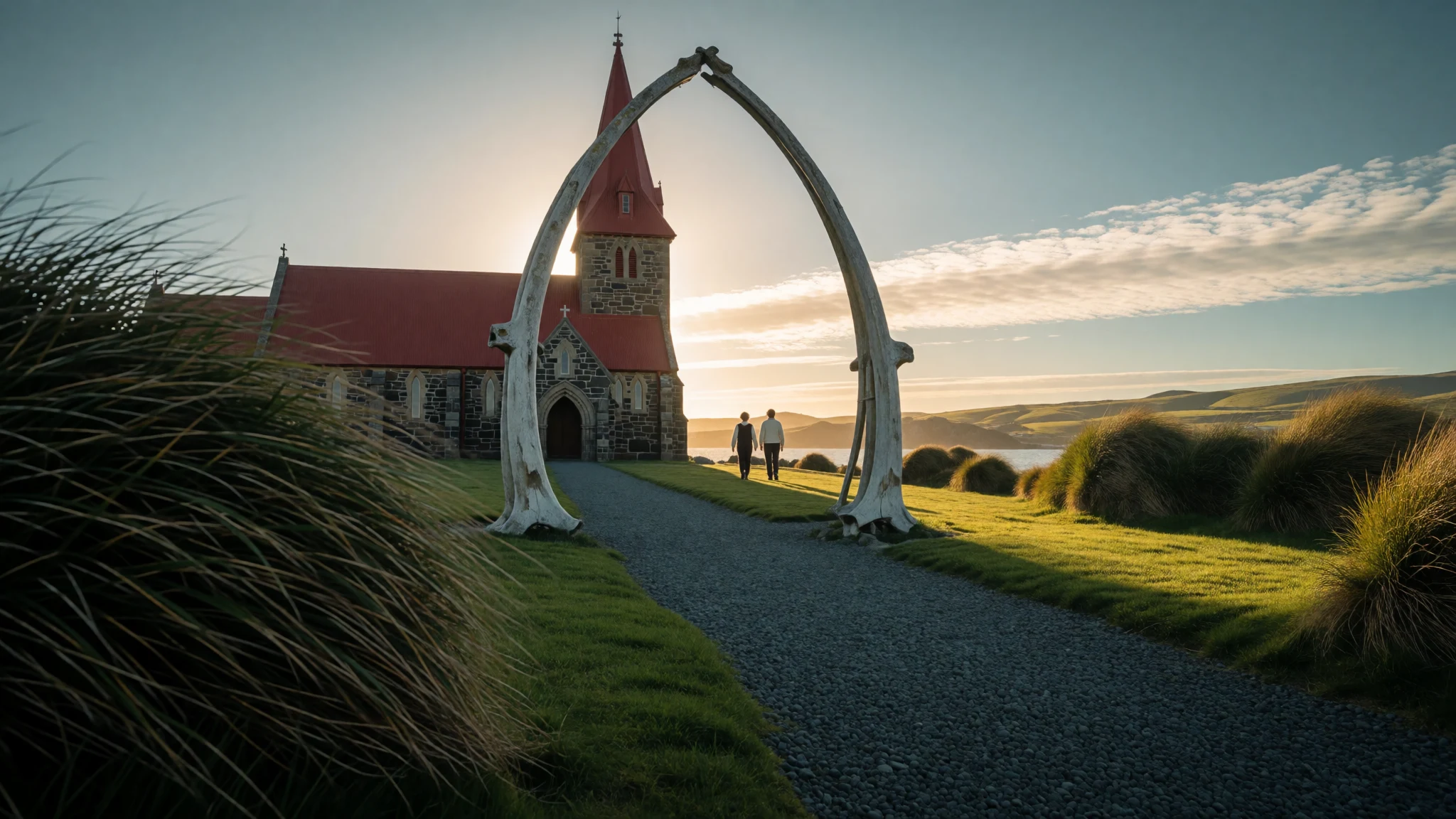
Stanley is a small British-flavoured harbour town at the bottom of the Atlantic, with wildlife, wartime memory and weather all within walking or driving distance.
The place
Stanley is the capital of the Falkland Islands, a British Overseas Territory in the South Atlantic, and it holds most of the islands' people: about 2,500 on the facts count, which makes it a small town by any measure. It sits on East Falkland, on a north-facing slope above a sheltered harbour, about 51 m above sea level. Anything outside town is simply "Camp" to locals, and Stanley is where the shops, the hospital, the government offices and the only real nightlife are gathered. The climate is cool, windy and changeable. Westerlies blow most of the year, temperatures stay fairly even from season to season, and winters are gentler than the latitude suggests. Total rainfall is modest, but a single day can run through sun, hail and sun again. The town stretches along the waterfront, with Ross Road as its main frontage, and almost everything a visitor wants can be reached on foot. It feels British in its pubs, red post boxes and street names, yet it also has a frontier practicality, with four-wheel-drive vehicles parked outside every other house. Wildlife sites lie beyond the town and are reached by vehicle or organised tour. Stanley received formal city status only in recent years, a fact that sits amusingly against its size. Most visitors arrive either by cruise ship, landing by tender near the centre, or through the airport out of town, and the place is noticeably quieter on days when no ship is in.
Its story
Stanley was not the first capital of the Falkland Islands. That role belonged to Port Louis, on Berkeley Sound to the north. In the early 1840s the governor, Richard Moody, wanted a better site, and naval officers who knew the southern seas helped him assess the options. Their names survive in Crozier Place and Ross Road. Moody settled on Port Jackson, renamed it Stanley Harbour, and cited its deeper anchorage for visiting ships. Not everyone agreed. One early critic wrote that the governor had picked a boggy and miserable spot for his town. Building began in 1843, and Stanley took over as capital in 1845, named for Lord Stanley, the minister then responsible for the colonies. The harbour proved its worth. Before the Panama Canal opened, ships battered by storms around the southern tip of the continent limped into Stanley for repairs, and the repair trade carried the local economy. Support for sealing and whaling vessels heading to the Antarctic later became a major business. Nature has also shaped the town: a landslide in 1886 destroyed an earlier church on the site now occupied by the cathedral. The next great upheaval came with the 1982 conflict between Britain and Argentina, which left its mark on the islands' politics, its memorials and the way residents talk about their home. Today the harbour is quieter, but the town's layout and many of its street names still reflect those first decades as a naval and maritime outpost.
What to see
- Falkland Islands Museum — Western end of the waterfront
The museum is the best single place to understand the islands. Its displays cover the 1982 conflict in detail, but also the longer settler history, farming life, and the plants and animals of the archipelago. Allow a good part of a morning, especially on a wet or windy day. - Christ Church Cathedral and the Whalebone Arch — Ross Road, town centre
The cathedral was built in the early 1890s after a landslide wrecked its predecessor. In front stands an arch assembled from whale jawbones, which is the town's most photographed corner. Seen from the harbour road, the red-roofed church and the pale arch make a tidy, unmistakable picture of Stanley.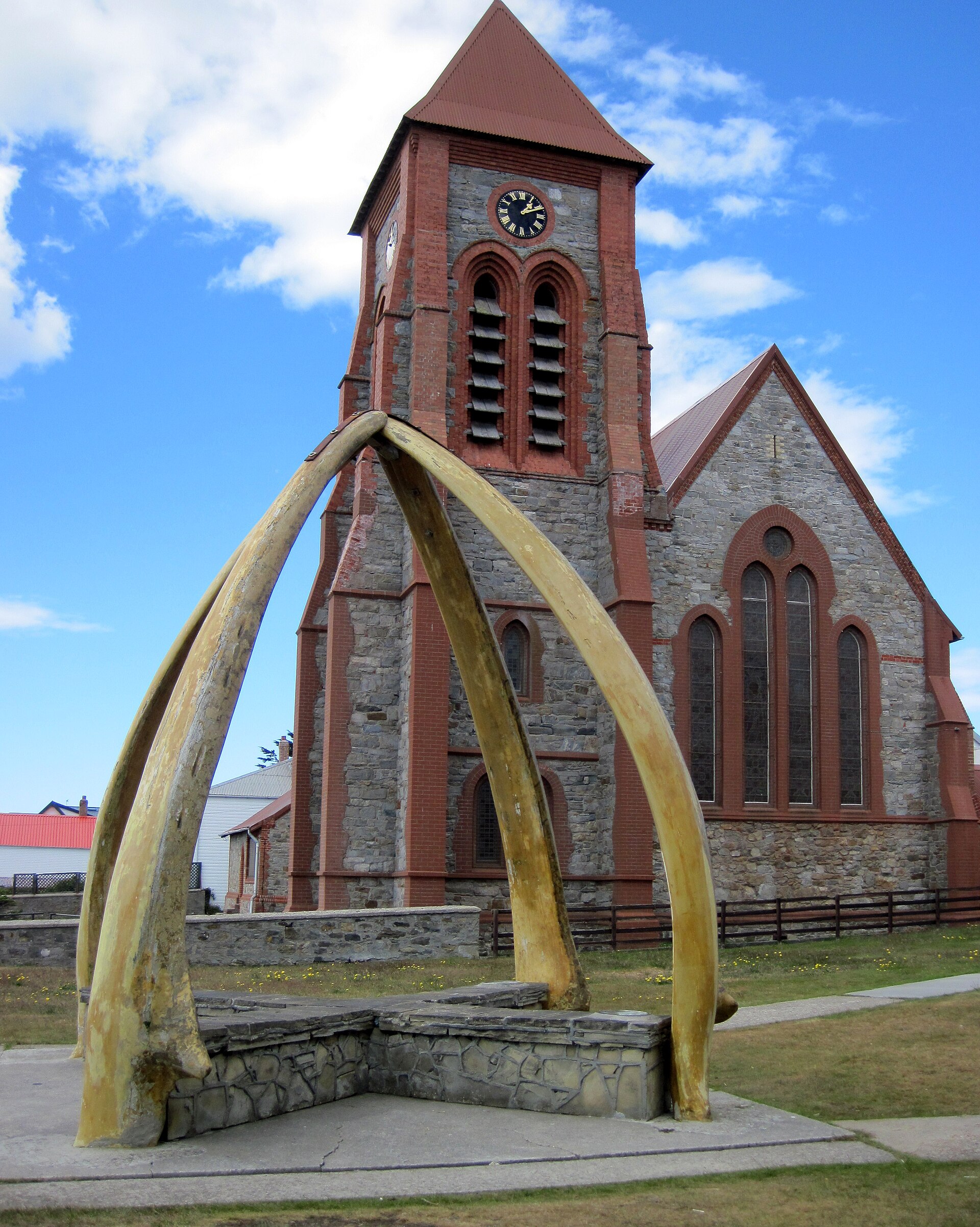
- St Mary's Church — Western side of town
This wooden church dates from 1899 and is the only Catholic church in the islands. Inside, murals painted in oils by the local artist James Peck line the western wall. It is a modest building, and its quiet interior makes a good contrast to the cathedral nearby. - Government House — Western end of Ross Road
The governor's residence dates from the mid-nineteenth century and is listed for its architectural and historic value. Ernest Shackleton stayed here during his Antarctic expedition. It is viewed from the road rather than visited, and the gardens and fences give a sense of old colonial Stanley. - 1982 Memorial — Ross Road, near the harbour
The memorial honours the British troops who died in the 1982 conflict. It stands on the waterfront road, with government buildings behind it. Visitors tend to stop here in silence, and local people still lay flowers. It gives context to much of what is displayed in the museum.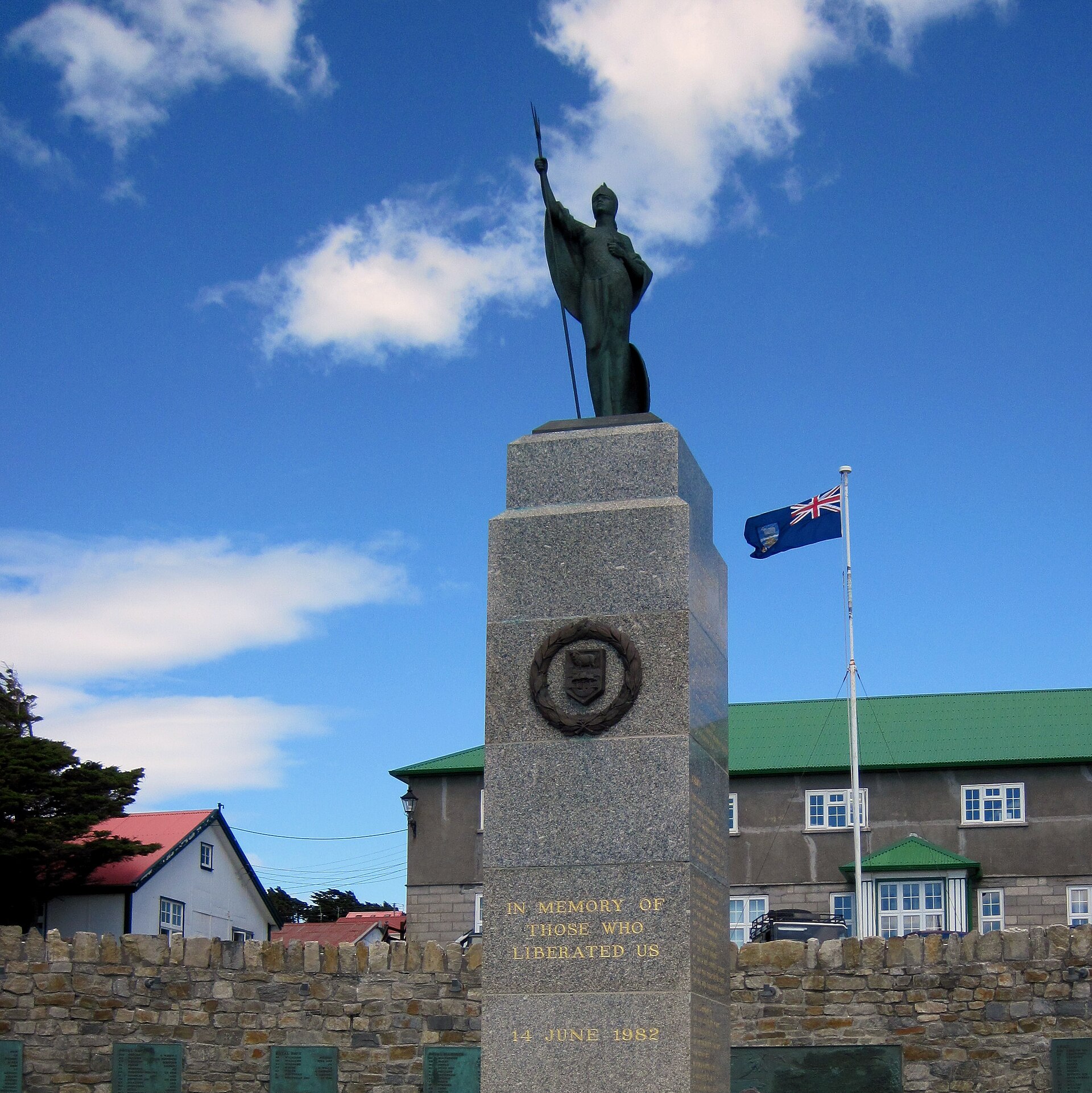
- Jetty Visitor Centre — Public jetty, harbour front
Next to the public jetty, this centre is the practical first stop for maps, tour bookings and gift shopping. It is also where cruise passengers tend to land, so it can be busy on ship days. Staff can explain which wildlife trips are running and what the weather means for them.
Culture
Stanley's culture is British at its roots and island-specific in its manner. The community is small enough that most people know one another, and visitors will often be greeted in the street or in a shop. Pubs, the church and sheep-farming links to the wider "Camp" form much of the social fabric, and weather talk is a constant. Daily life is practical, with a strong tradition of self-reliance in a place that is far from anywhere else. Memory of the 1982 war with Argentina runs through the town. It appears in the museum, the memorial on Ross Road, and in the way many residents speak about their right to decide their own future. Most people are happy to chat with respectful visitors, but the subject is personal, and it is wiser to listen than to argue. The islands have their own stamps, their own currency issue and a clear sense of identity, which is quietly proud rather than loud. Gatherings, from church services to pub evenings with live music, tend to be warm and informal. Because the town is so small, courtesy matters: queue patiently, greet shop staff, and do not assume everything will be open at odd hours. Use the English names for places, and never say "Puerto Argentino" or "Islas Malvinas" in conversation, because locals will take real offence.
What to wear
Stanley has no formal national costume, and that is worth stating plainly rather than inventing one. The islands' working heritage is sheep farming, and wool is the textile most closely tied to local life, from knitted jumpers and hats to the thick socks worn inside boots. The traditional look is outdoor workwear: tough trousers, waxed or waterproof jackets and rubber boots, worn by farmers and townspeople alike. Today people in Stanley dress for the weather first and style second. Expect fleeces, windproof coats, jeans, sturdy shoes and woolly hats for most of the year, with something a little smarter for church, civic occasions or an evening at a restaurant. Uniforms are common too, because of the military presence and the working harbour. A visitor should dress in layers, since sun, wind and rain can arrive within the same hour. Pack a proper waterproof jacket and waterproof trousers, a warm hat, gloves and a scarf even in summer. Footwear matters most: walking boots with good grip, ideally waterproof, are needed for wildlife sites, where the ground is boggy or sandy and the wind is strong. Modesty rules are relaxed, though covered shoulders and knees are polite inside churches and at the memorial. Evening wear can be as simple as clean, dry outdoor clothing.
What to eat
- Fish and chips — Chip shops and pubs near the waterfront
Local fish in a crisp coating, served with chips, is the town's easiest meal. It is sold from takeaway counters and as pub food near the harbour. Eat it hot, ideally in a sheltered spot, because the wind will cool it quickly. - Chargrilled steak — Diners and restaurants in town
Beef is a regular on menus, usually chargrilled and served with chips or vegetables. Diners and restaurants along the main roads offer it, often alongside burgers. Bookings can be wise at weekends, when the better-known dining rooms fill up. - Curry — Diners and pub kitchens
A curry is a common warming dish on Stanley menus, especially when the weather is wet and cold. Some diners pair it with local organic produce. The style is closer to British pub curry than to anything regional, but it is filling and welcome. - Empanadas — Takeaway counters and casual cafés
These filled pastries appear next to burgers and pizza at casual eateries. They are a handy snack for a day out to see wildlife, and they travel well in a pocket. The name reflects wider South Atlantic influence, though the filling varies by cook. - Café lunches, tapas and cake — Waterfront cafés and tea rooms
The cafés near the harbour serve breakfast, lunch, light plates and homemade desserts, with cocktails in the evening at some. They are good for a long, dry sit-down between museum visits and walks, and a fair measure of local baking.
Plan it
Best time. November to February for the mildest, longest days and the best chance of wildlife trips running. Temperatures are fairly even through the year, with strong westerly wind and rain spread across all seasons, so pack for weather in any month.
How long. 2–3
Getting there. The nearest airport is Mount Pleasant (MPN), located 56 km away, with a road transfer connecting it to Stanley. Cruise ships anchor off the town and land passengers by tender near the centre.
Budget. high
Tips
- Check the official visitor site, https://www.falklandislands.com/our-islands/stanley-capital-of-the-falklands, for current opening times and tour details before you go
- Book wildlife tours and restaurant tables early, especially at weekends and on cruise-ship days
- Pack layers and a proper waterproof, because wind and showers are normal in any season
- Start museum and church visits early on cruise days, when the centre is busiest
- Carry some cash and a card, and ask locally what is accepted
Etiquette
- Use English place names and avoid Spanish names for the islands
- Be quiet and respectful at the 1982 memorial and in churches
- Greet people in shops and on the street, as the community is small and friendly
Nearby
Sources
- Wikidata Q12245 (CC0)
- Wikipedia: Stanley, Falkland Islands (rev 1380860490) (CC BY-SA 4.0)
- Wikivoyage: Stanley (Falkland Islands) (rev 5360786) (CC BY-SA 4.0)
- Aerial photo Port Stanley (CC BY 3.0)
- Map of the Port Stanley, Falklands area (CC BY 3.0)
- Stanley Post Office, Falkland Islands (CC BY 2.5)
- Whalebone Arch and Cathedral in Stanley, Falkland Islands (CC BY 3.0)
- Settlement at Port Stanley, Falkland Islands, May 1849 (Public domain)
- Falklands War Memorial on Ross Road in Stanley (CC BY 3.0)
- Portrait of Edward Smith-Stanley (1799–1869) (Public domain)
- Argentine Military Government edict in the Falkland Islands Museum (CC BY-SA 2.0)


