Västerås
Västerås, Sweden
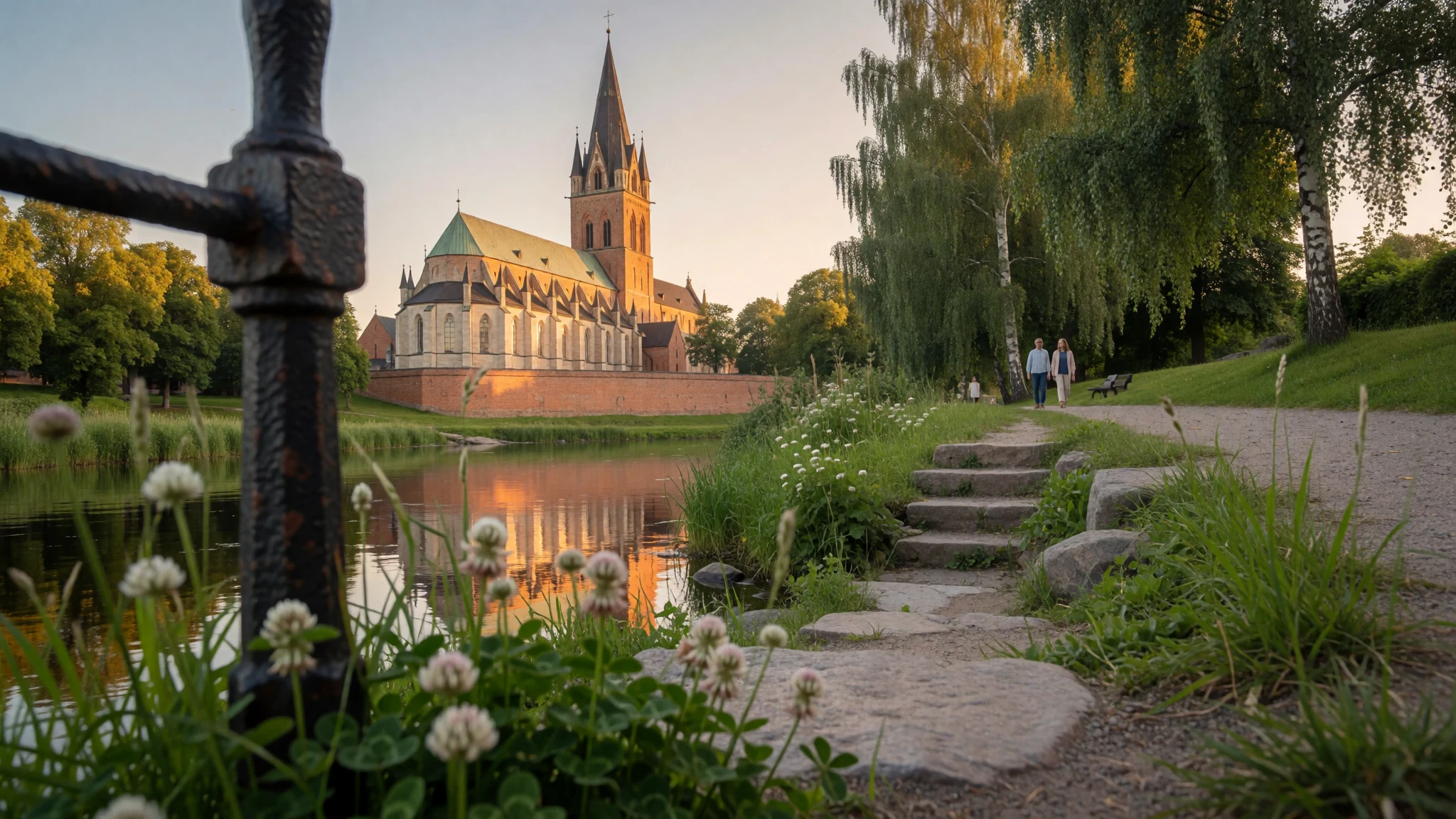
Västerås is a flat, lakeside Swedish city where a medieval cathedral, a Reformation castle and a huge ancient burial mound sit close to Stockholm.
The place
Västerås sits on the northern shore of Lake Mälaren in Västmanland, central Sweden, about 110 km west of Stockholm. Roughly 132,000 people live in the urban area, so it counts as a real city by Swedish standards, yet the middle is compact. The cathedral, castle, shopping streets, station and riverside paths are all within an easy walk of one another, and the ground is flat, only about 17 m above sea level. The small river Svartån, the 'Black River', cuts through the centre on its way to the lake, and it gave the city its name: Västra Aros, 'western river mouth'. Industry shaped the modern place. Electrical engineering grew here from the late nineteenth century, and former factory and office buildings still frame parts of the waterfront, some now turned into museums or housing. Swedes also know the city as Gurkstaden, 'cucumber city', because farmers around it grew pickling cucumbers in large quantities in the eighteenth and nineteenth centuries. Västerås is a county capital and the seat of a bishop, which explains the mix of church spires, civic buildings and glass-fronted offices. It is not a city of postcard drama. The appeal is a working Swedish town with a medieval core, lake views, cycle lanes and a handful of sights that reach unusually far back in time. Winters are dark and cold, with the lake usually frozen from December to the end of March, while summer days are mild and long. It works well as a day trip from Stockholm, and better as a slow overnight stop.
Its story
Västerås is one of the older towns in Sweden, and its story begins before written records. People settled around the mouth of the Svartån in the Viking Age, before 1000 CE. Just outside the modern city stands Anundshög, a burial mound raised about 500 CE, over 68 m wide and almost 9 m high, with stone ship settings beside it. By the twelfth century Västerås had become the seat of a bishop. Birger Jarl reconstructed the Gothic cathedral over a previous location; it was consecrated in 1271, and a monastery developed close by. The town appears in records of the mid-thirteenth century as Westraarus. The 'west' separated it from Östra Aros, the earlier name of Uppsala. The castle above the water changed hands in the sixteenth century, when King Gustav I captured it and rebuilt it as his own. It was here, in 1527, that he summoned the riksdag, the Swedish parliament, and the meeting is remembered as the moment Sweden broke from the Catholic church and turned Protestant. His son Eric XIV was later held in the castle, from 1573 to 1575, and is buried in the cathedral. Tradition says he died from poisoned pea soup. The modern city has a different claim to fame. In 1890 the engineering firm ASEA built one of Sweden's first power plants here, the Turbine House, and electrical manufacturing turned a regional market town into an industrial centre.
What to see
- Västerås Cathedral — City centre, near the river
The cathedral is the city's oldest working landmark, with parts dating to around 1200 and a Gothic form that was restored in the nineteenth century. Inside lies the tomb of Eric XIV. Check the official site for opening times and services, as a visit can be closed off during worship. - Västerås Castle — Beside the Svartån, central Västerås
The castle is tied to the 1527 riksdag, where King Gustav Vasa pushed through Sweden's break with Catholicism. It later held the captive Eric XIV. Much of the interest is in the story, so it helps to read a little first and then walk the grounds and waterfront.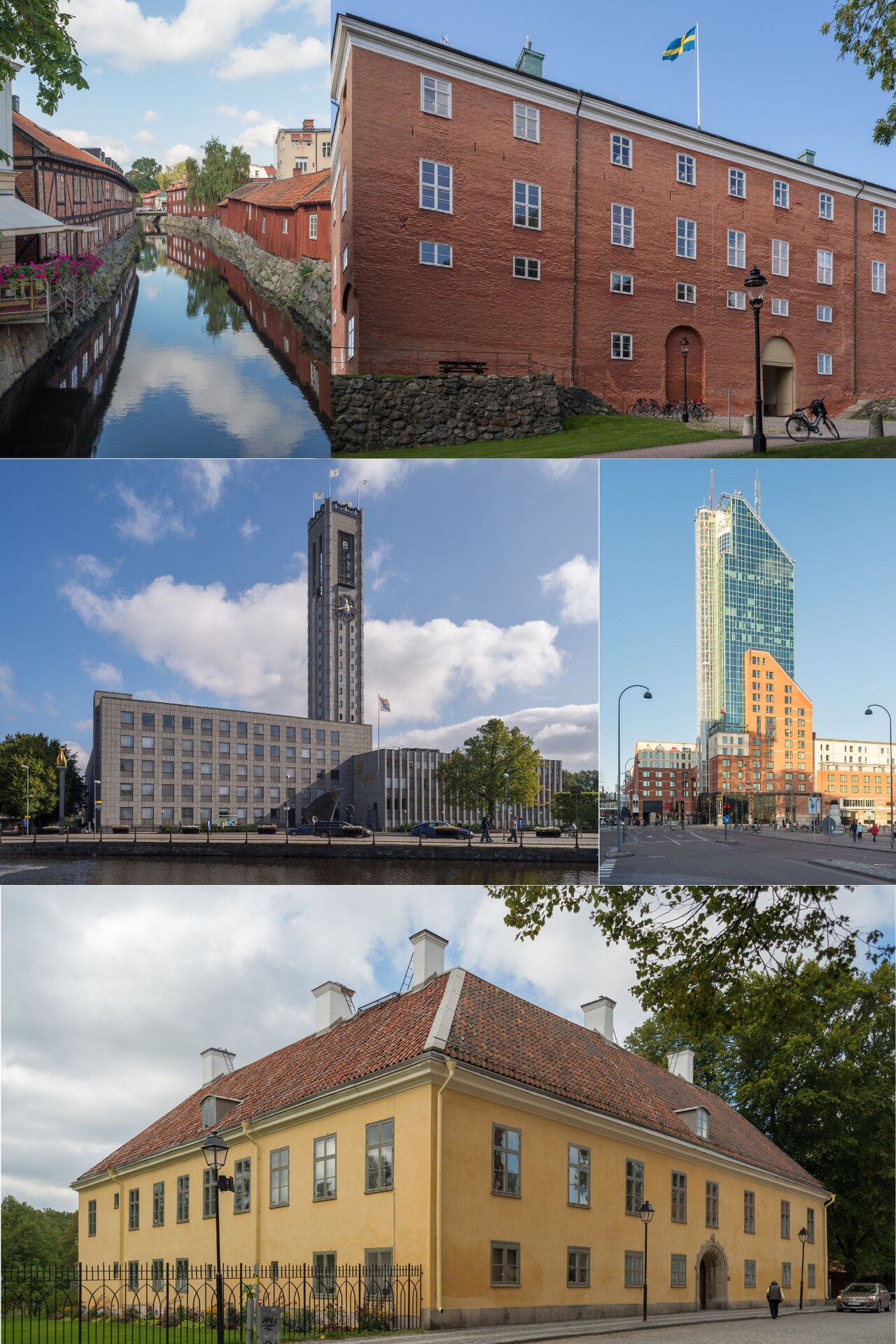
- Anundshög — Just outside the city, north-east of the centre
Anundshög is a burial mound from about 500 CE, wide and tall enough to feel like a small hill, with two stone ship settings beside it. The site is open grassland, popular for summer picnics. Allow time to get there by bus or bike, and take a waterproof jacket. - The Turbine House — Riverside, south of the centre
Built in 1890 by ASEA, this was one of Sweden's early power plants and shows how the city became an industrial centre. A small museum inside is shown to visitors by appointment, so arrange a visit through the city's official site before turning up.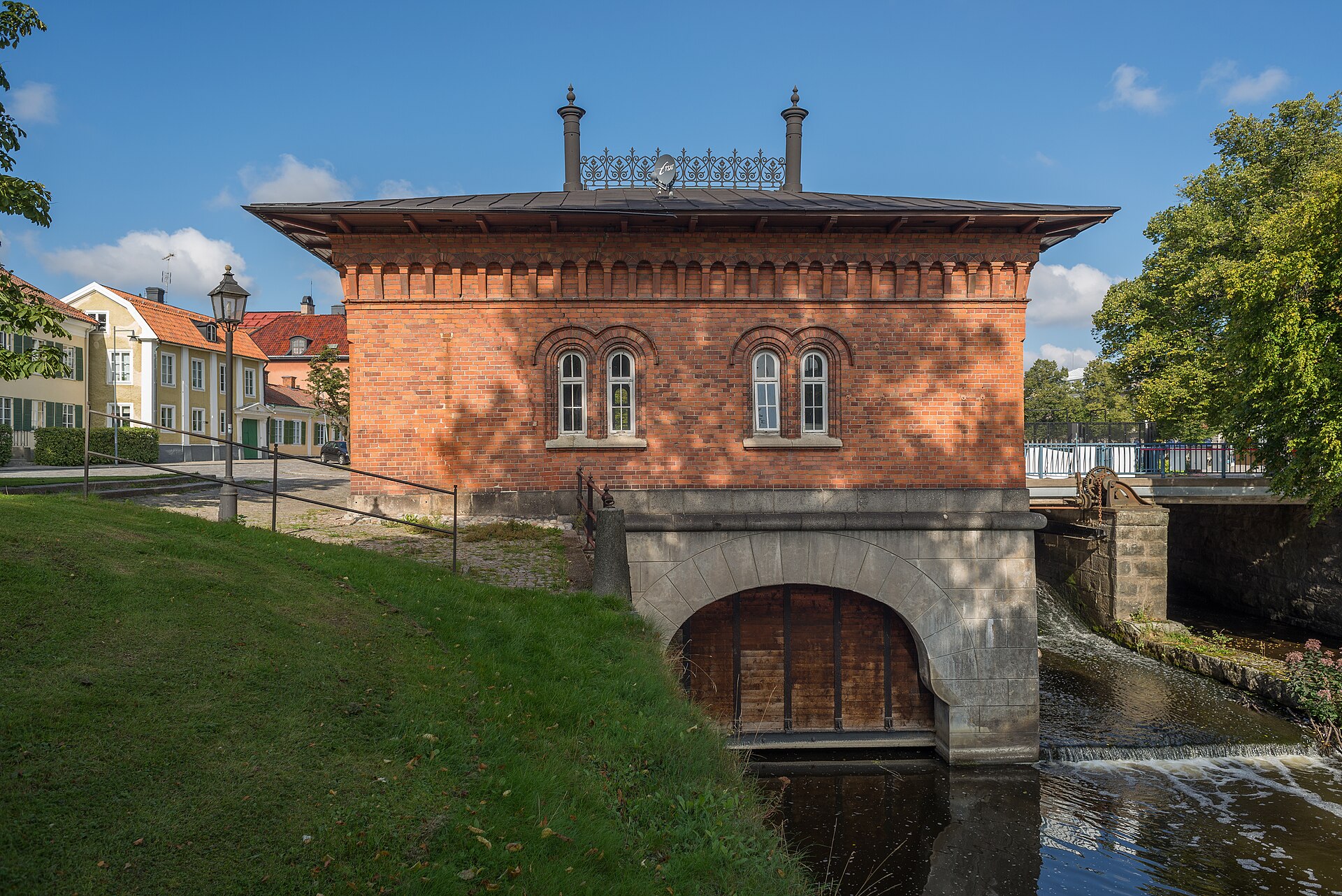
- Vallby Open Air Museum — Western edge of the city
Vallby gathers old buildings and farm life from across Västmanland into one open-air site, giving a sense of Nordic folk culture before the factories arrived. It suits a slow afternoon, ideally in the milder months when the grounds are at their best. Check seasonal opening before going. - Kristiansborgsbadet — North of the centre
This public bathing house has a traditional 25 m pool and a separate section with moist and dry saunas and a cold plunge. It is a good winter option, and a way to see how locals relax. Take a towel, check the rules on swimwear and look up current hours online.
Culture
Västerås carries the quiet habits of a mid-sized Swedish city, shaped by Lutheran history, engineering and the lake. The decision of 1527 to leave the Catholic church is still the best-known event in its past, and the cathedral and castle are treated as shared heritage rather than as tourist stages. Daily life is orderly and low-key. People queue patiently, speak softly in public and tend to keep a polite distance, which can read as cool until a conversation starts. Cafés are central to social life, and the pause for coffee and a bun, known as fika, is a fixed point of the working day. Cycling is normal, and the flat ground helps. Outdoor life matters too. Many locals head to the lake paths, the open country around Anundshög or the public baths, and the sauna tradition is relaxed and practical rather than a show. The city's industrial pride is quieter than its church history, but it shows in the museum of the Turbine House and in the old company buildings that still shape the skyline. English is widely spoken, and card payment is the default almost everywhere. Ice hockey and bandy are the local winter sports, and the indoor arenas fill on match nights. Visitors who treat the city as an ordinary place to live, rather than a monument, get the warmest reception. In the cathedral, keep your voice low, switch off your phone and do not walk around or take photographs while a service is under way.
What to wear
Traditional dress in Sweden is regional, and Västmanland has its own folk costumes, known as folkdräkter. In general these are built from wool and linen, with fitted bodices, skirts or breeches, white linen blouses or shirts, aprons and decorated caps or hats. They appear at midsummer, weddings, folk-dance events and on National Day, rather than in daily life. The open-air museum at Vallby is a good place to see how rural clothing and textiles looked before industrial cloth took over. For specific patterns, ask the museum staff rather than relying on general descriptions. Today people in Västerås dress in a practical, plain style. Dark and neutral colours dominate, with good outdoor jackets, knitwear, jeans and comfortable trainers or boots. Cycling clothes and reflective details are common, and people dress up only a little for restaurants or pubs. Visitors should plan around the weather. Summer days often sit around 22 °C but can bring sudden showers, so carry a light waterproof and a layer for evenings by the lake. In winter, snow can lie for months and the midday temperature can stay well below freezing when air arrives from the east, so bring a warm coat, hat, gloves and boots with a good grip. No dress code applies at the cathedral, but covered shoulders and a quiet manner are appreciated. Bring a swimsuit for the public baths, and check the rules for the sauna section.
What to eat
- Västeråsgurka (pickled cucumber) — Delis and food shops in the centre; ask locally for regional produce
The city's nickname comes from a cucumber suited to pickling, once grown widely around Västerås. Look for pickles on shop shelves or alongside open sandwiches and plates of cold fish and meat. It is a small taste with a real local story. - Kebab on a plate — Neighbourhood kebab shops, often away from the main square
For a cheap, filling meal, locals recommend a plate of kebab meat with salad, chips and sauce at a neighbourhood shop. It is everyday food rather than a regional speciality, but it is how many people in the city eat on a budget. - Thai-Chinese curry — Casual restaurants on the streets around the cathedral and station
Thai and Chinese eateries are a staple of Swedish town centres, and Västerås has several in the middle of town. A beef curry with rice is a typical order. Portions are generous, and many places offer lunch menus on weekdays. - Hamburger from a stand — Small grill stands outside the centre, such as the Gideonsberg area
A simple burger from a local grill is a long-standing cheap meal for people on the move, and several travellers and locals prefer it to the big chains. Expect no frills and a short menu. Eat it standing or take it to the river. - Fika with a cinnamon bun — Cafés in the old town and along the riverside
Coffee with a cinnamon or cardamom bun is the standard break in a Swedish day. Any café will serve it, and the quieter ones near the cathedral are good for a slow pause. For something stronger, the city's pubs pour many draught beers and whiskies.
Plan it
Best time. May to August, when days are long and mild; July daytime highs mostly hover around 22 °C, though showers can arrive suddenly. Winters are cold with snow for months and the lake frozen from December to late March, so go then only for a quiet, wintry visit.
How long. 1–2
Getting there. Fly into Stockholm Arlanda Airport (ARN), then continue by train or road to Västerås, which is about 110 km west of the capital; check the rail operator's site for current timetables. Once in the city, almost everything is walkable or a short bus ride away.
Budget. mid
Tips
- Check opening times and any appointment rules for the Turbine House, the cathedral and Vallby on the official city site, www.vasteras.se, before you go.
- Carry a light waterproof in summer, as showers can come from nowhere, and layer up well in winter.
- Hire a bike or use buses for Anundshög and Vallby, which sit outside the compact centre.
- Cards are accepted almost everywhere, so little cash is needed.
- Combine the city with Stockholm for a longer trip, as the two are well connected by road and rail.
Etiquette
- Keep your voice low and phone silent inside the cathedral, and avoid photographing during services.
- Queue patiently and keep a polite distance in shops and on buses.
- Follow the rules at the public baths, including showering first and checking swimwear requirements.
Nearby
Sources
- Wikidata Q25412 (CC0)
- Wikipedia: Västerås (rev 1380735631) (CC BY-SA 4.0)
- Wikivoyage: Västerås (rev 5426564) (CC BY-SA 4.0)
- Photo: Stadshotellet Västerås (Einarspetz) (CC BY-SA 4.0)
- Photo: Västerås collage 2025 (Listz3) (CC BY-SA 4.0)
- Photo: Suecia 2-036 Västerås (Public domain)
- Photo: Gustav Vasa triumphs 3 (Fred J) (Public domain)
- Photo: 3000' ovanför Västerås (Wotha) (CC BY 3.0)
- Photo: Turbinhuset September 2014 (Arild Vågen) (CC BY 3.0)
- Photo: ASEA HQ (CC BY 3.0)
- Photo: ABB Arena Syd (Rogere) (Public domain)


