Tsumago
Tsumago, Japan
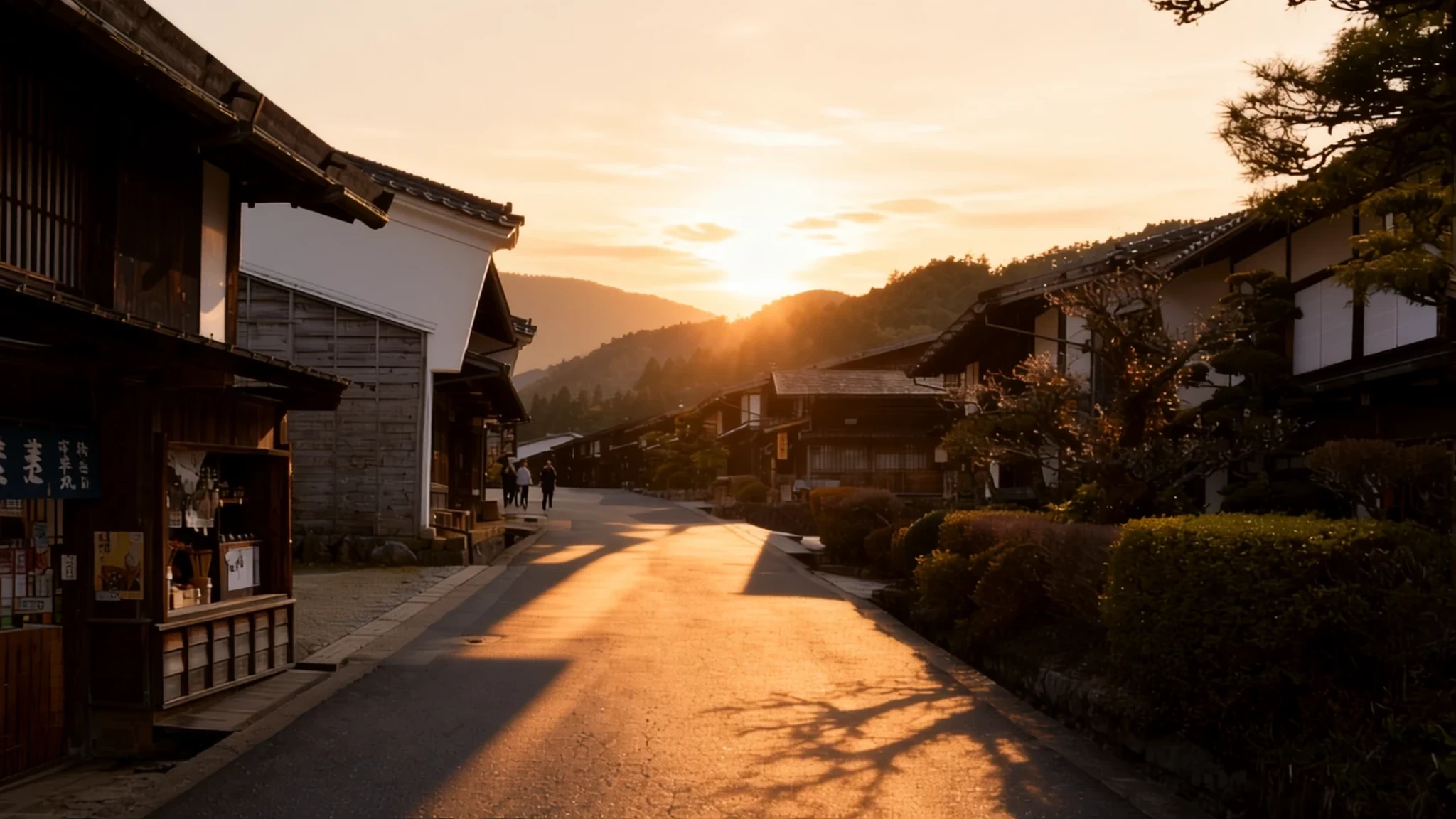
Tsumagoi is a high Gunma village of cabbage fields, acidic onsen, and the black lava of Mount Asama.
The place
Tsumagoi (嬬恋村) sits in Agatsuma District, on the northwestern edge of Gunma Prefecture in Japan. The municipal boundary meets Nagano Prefecture to the north, the south and the west, so the settlement sits on a highland shelf between two prefectures rather than in a broad basin. Ash laid down by Mount Asama has built soils that suit cool-climate vegetables, and cabbage is the crop the village is known for. The Agatsuma River drains the valley; Lake Baragi and Lake Tashiro hold water in the uplands. The skyline is a ring of volcanoes and older peaks: Mount Asama, Mount Motoshirane, Mount Kusatsu-Shirane and Mount Azumaya. Some of this ground is included in Jōshin'etsu-kōgen National Park.
Life here follows a humid continental pattern: summers are mild enough to draw people up from the hot plains, while winters are long, snowy and severely cold. That climate, together with the elevation, is why farming concentrates on highland vegetables rather than paddy rice, and why the other pillar of the local economy is seasonal visiting: hot-spring resorts and ski slopes as well as the open fields. Around nine thousand people live in the municipality, a figure that spreads thinly across a wide area of pasture, forest and lava. The village office and the hamlets, including Hoshimata, sit among those fields, with Mount Asama often in view beyond the cabbage rows. For a first orientation, the official village site is the place to confirm opening times and seasonal access: https://www.vill.tsumagoi.gunma.jp/
Its story
Tsumagoi's longer past is written in the ground more clearly than in rice fields. Numerous remains from the Jōmon period have been found in the village, while artefacts from the later Yayoi period are almost absent. The upland climate and the soils do not favour wet-rice farming, so the usual Yayoi pattern of paddy settlement never took hold here. Through the Edo period the land around Tsumagoi belonged to hatamoto-administered territory inside Kōzuke Province, the old name for much of what is now Gunma. Authority sat with the shogun's direct retainers rather than with a great domain castle nearby, and the hamlets lived as mountain communities on that estate.
The defining shock of the early modern era came from the volcano. During the Tenmei eruption of Mount Asama, Kanbara village (鎌原村) lost much of its settlement, and hundreds of residents died. Lava and mud from that eruption still shape the northern slopes, which is why a visitor meets a field of jagged black rock rather than a gentle hillside. The municipality that exists today was formed in 1889, under the Meiji system, and placed in Agatsuma District, Gunma Prefecture. The same year is the founding date carried in the official record. Since then the village has remained a highland farming district that also lives with an active volcanic neighbour: agriculture on the ash soils, and a service economy built around hot springs and winter snow. The Jōmon sites, the Edo estate pattern and the Tenmei disaster are the three layers under today's cabbage rows and ryokan streets.
What to see
- Onioshidashi Volcanic Park — northern slopes of Mount Asama, Gunma–Nagano border
Onioshidashi Volcanic Park, in Tsumagoi, is the rough black rock field on Asama's north side, where Gunma runs into Nagano. The stone underfoot is old lava, sharp enough that walkers need sturdy shoes rather than light sandals. A small museum at the site sets out how the volcano made this ground. Paths remain on the lava field itself.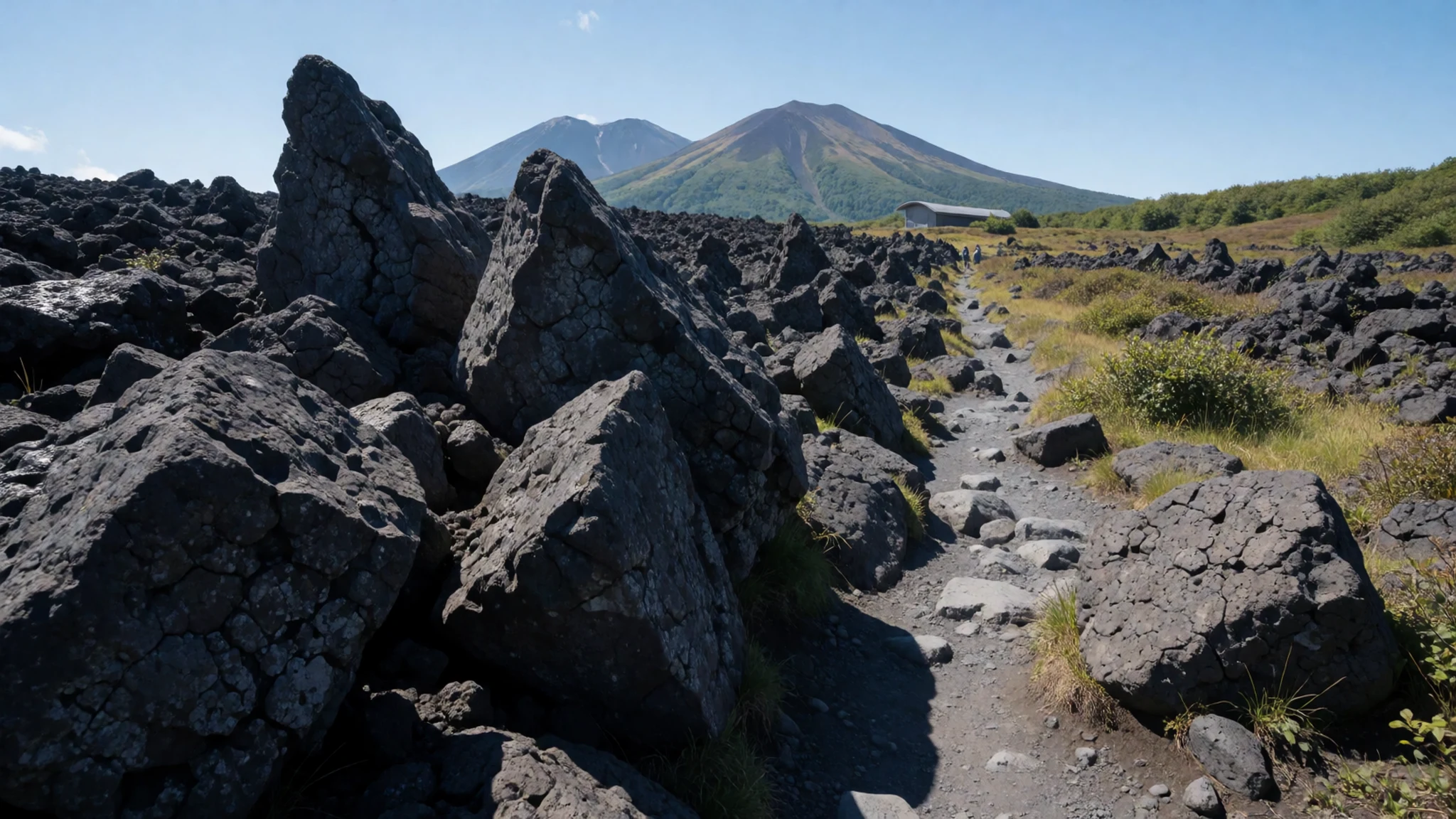
- Cabbage fields — Hoshimata and the shelves around the village office
Tsumagoi's cabbage fields cover the highland shelves between the hamlets, and Mount Asama stands behind the rows when the air is clear. Ash soils and a cool summer are why this crop defines the village, and the plots are working farmland rather than a display garden. The roads around Hoshimata and the village office give a clear view of the patchwork without entering a field.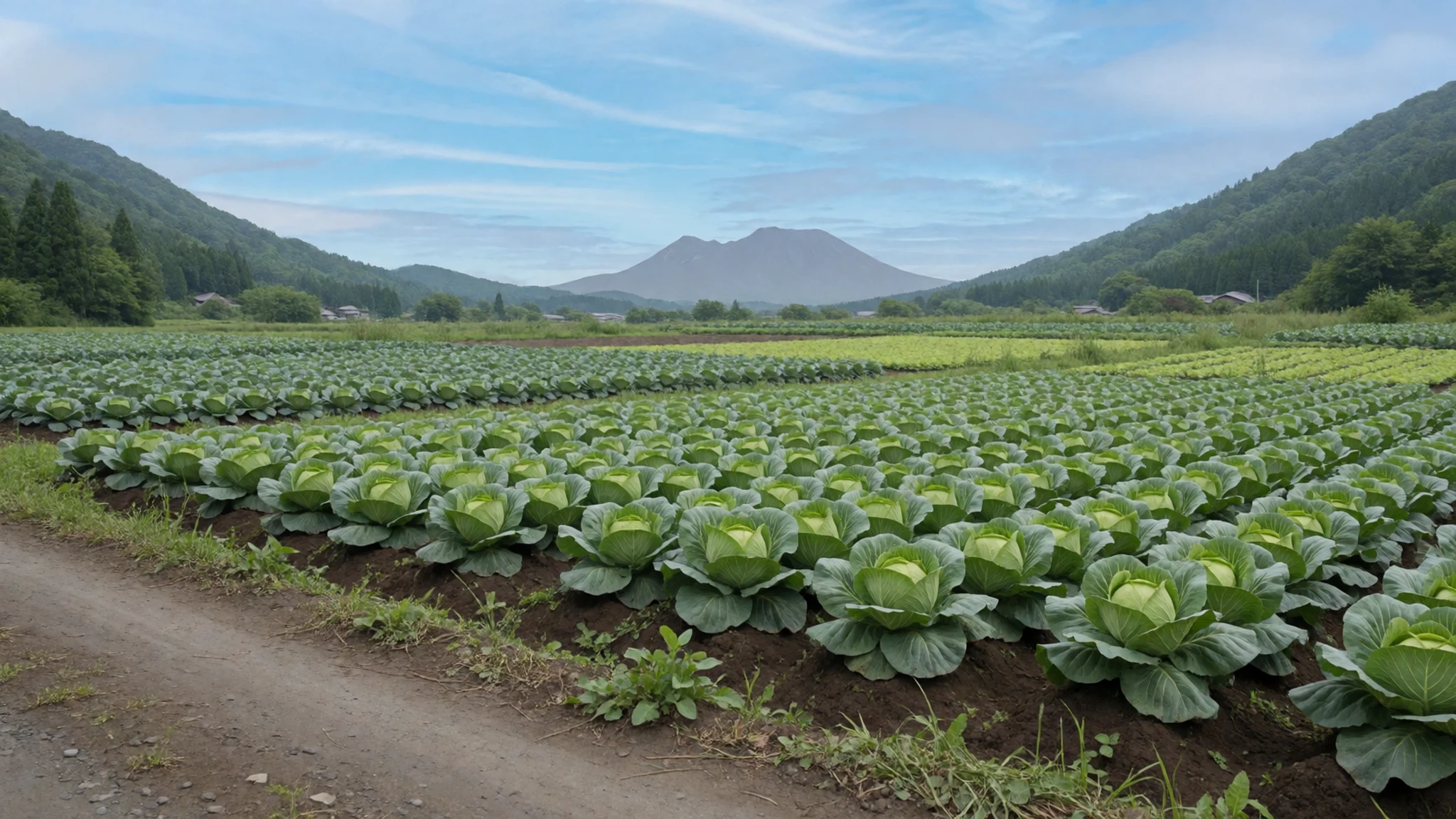
- Agatsuma River — Mihara Bridge
The Agatsuma River is the main watercourse of Tsumagoi, running through the village toward the wider Gunma valley. From Mihara Bridge the channel reads as a mountain river: a broad stony bed, fast water after rain, and banks lined with fields and low forest rather than a city embankment. It is the drain for snowmelt and summer storms off the surrounding peaks.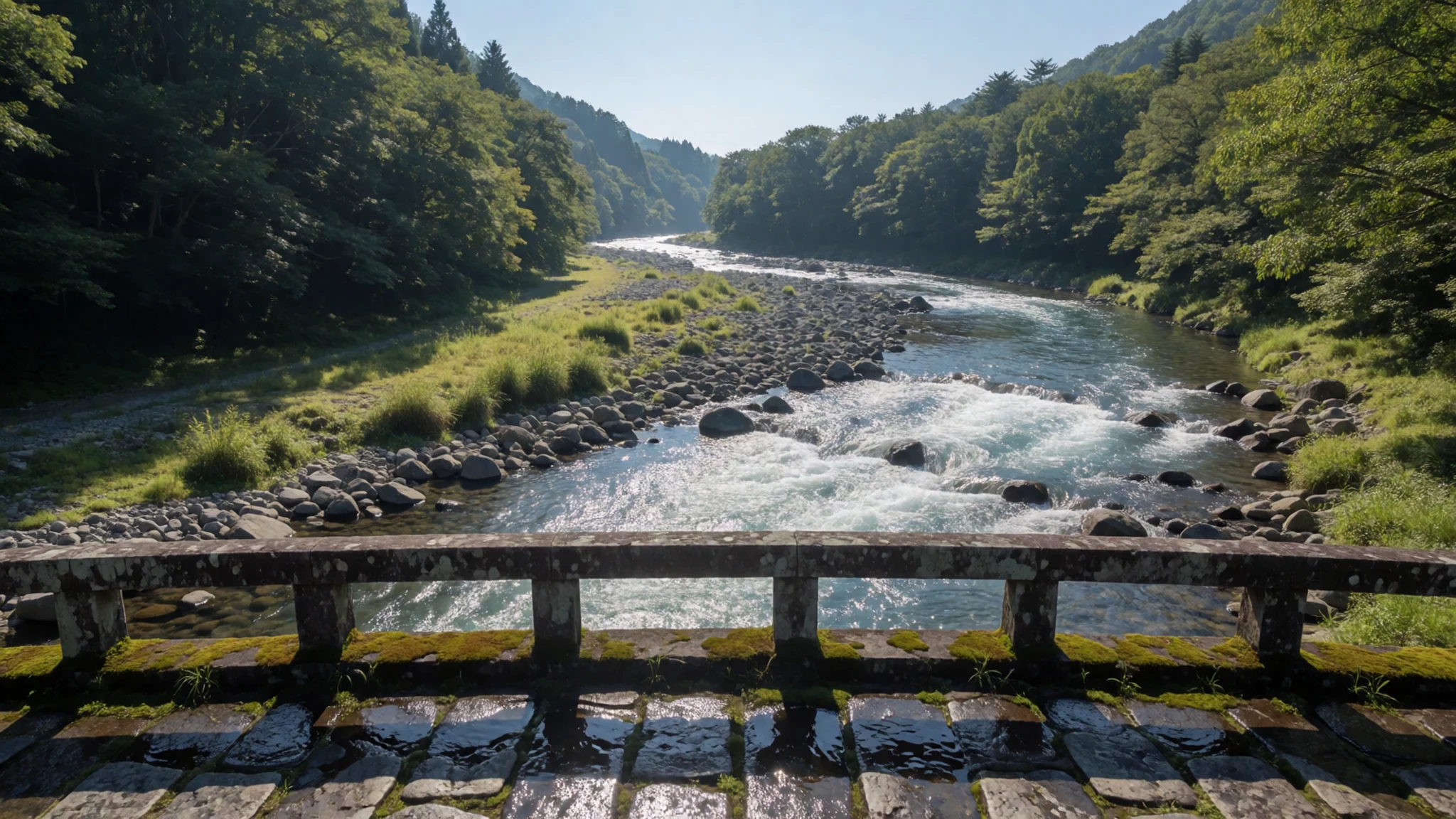
- Manza, Kazawa and the village onsen — Manza, Kazawa and the high plateau
Tsumagoi's hot springs — Manza, Kazawa, Tsumagoi and Handeki among them — are the heart of the village's visitor economy. Manza is known for strongly acidic water, a different bathing experience from a mild alkaline spring, and the resorts sit high, with cold air even when the baths are hot. Kazawa and the springs that carry the village name spread the same habit along the plateau: stay overnight, bathe, and eat.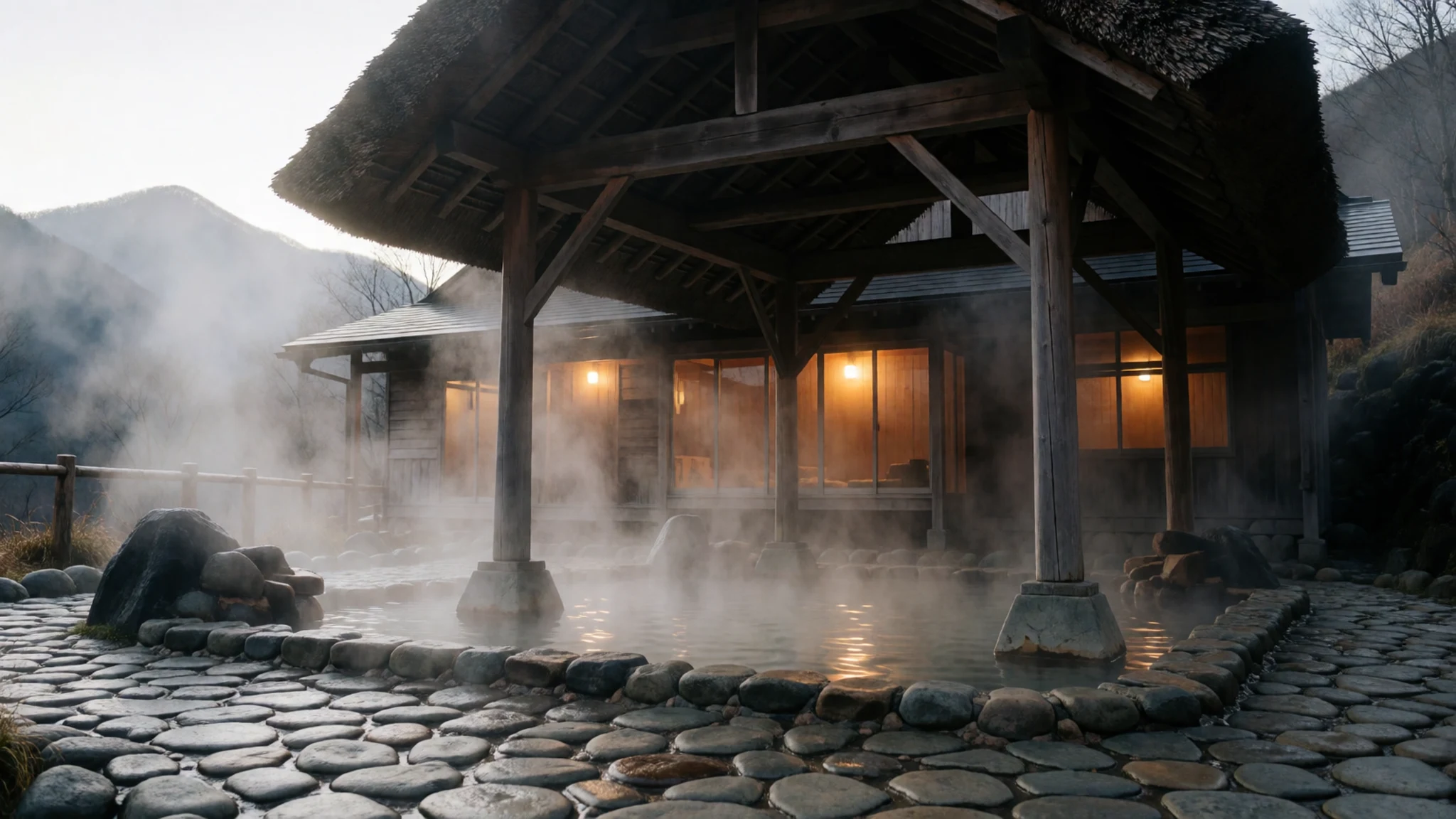
- Ridges above the onsen plateau — viewpoints near Mount Kusatsu-Shirane
From the high ground near Mount Kusatsu-Shirane, Tsumagoi opens to the west as a run of ridges, forest and sky. The crater-side viewpoints sit above the onsen plateau, and the walk up to them is part of the visit: wind, a drop in temperature, and a wide horizon. Cloud often closes the view by afternoon.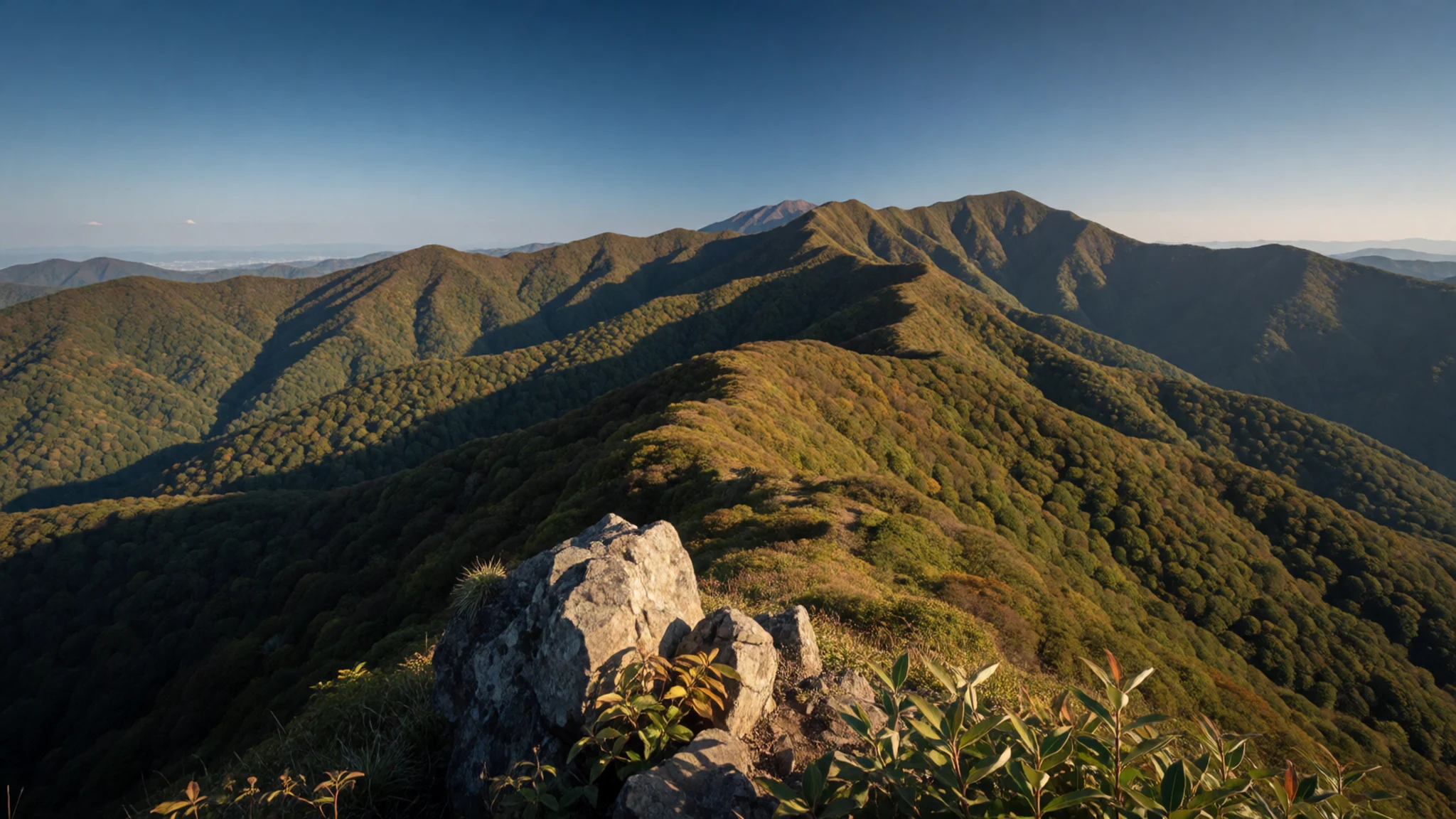
Culture
Tsumagoi's culture is a highland farming culture shared with volcanoes and hot water. Households still organise the year around cabbage: planting after the snow, tending rows through the cool summer, and sending the crop off the plateau before the hard frost. That work sets the calendar more firmly than a civic festival list. Summer brings people up from the plains to escape heat, and the onsen districts fill; winter turns the same slopes to skiing and can shut ordinary roads when snow is heavy. Neighbours talk about the weather as a working condition.
Bathing is the ritual an outsider is likely to meet. At Manza and the other springs a long soak is part of the stay, and Manza's acidic water is treated locally as a mark of the place. Inns keep the usual Japanese order of the public bath. Away from the resorts, small shrines and the village office mark a quieter civic life, and the memory of the Tenmei eruption still colours how people understand the northern slope.
In a Tsumagoi bathhouse, wash completely before entering the shared bath, stay quiet, and do not photograph other bathers.
What to wear
Tsumagoi has no court dress of its own. Traditional clothing follows cold-country Japanese custom. For festivals and shrine days people still wear kimono, or a yukata in the warmer months, with an obi; in winter a padded hanten or a short happi coat goes over ordinary clothes. Older farm wear, still seen at harvest events, is an indigo cotton noragi jacket and momohiki trousers, with a tasuki cord tying the sleeves for field work. Cloth was cotton or hemp, quilted against the frost, and straw sandals later gave way to split-toe jika-tabi.
What people wear now is practical mountain clothing. Through the growing season, farmers and residents work the cabbage rows in long-sleeved shirts, sun hats, neck cloths and rubber boots, then change into jeans, trainers and a light jacket in the village. Winter dress is made for snow and hard frost: down jackets, knit hats, gloves, thermal layers and waterproof boots, the same outfit seen on the ski slopes and the road to Manza.
A visitor should dress in those layers. Summer on the plateau can be mild at noon and cold after dusk, so a shirt and a fleece beat one thin top. Winter calls for a real coat, a hat and boots that cope with snow. At a shrine, cover shoulders and knees and remove shoes where slippers are set out. In the onsen, outdoor clothes stay in the changing room, and swimwear is not worn in the bath.
What to eat
- Tsumagoi cabbage — farm stalls, roadside vegetable shops and onsen inns
Tsumagoi cabbage is the village crop, served raw, lightly salted or quickly cooked so a highland leaf keeps its sweetness. It turns up at farm stalls and roadside vegetable shops, and on the evening menu at onsen inns, often grilled or cooked with pork.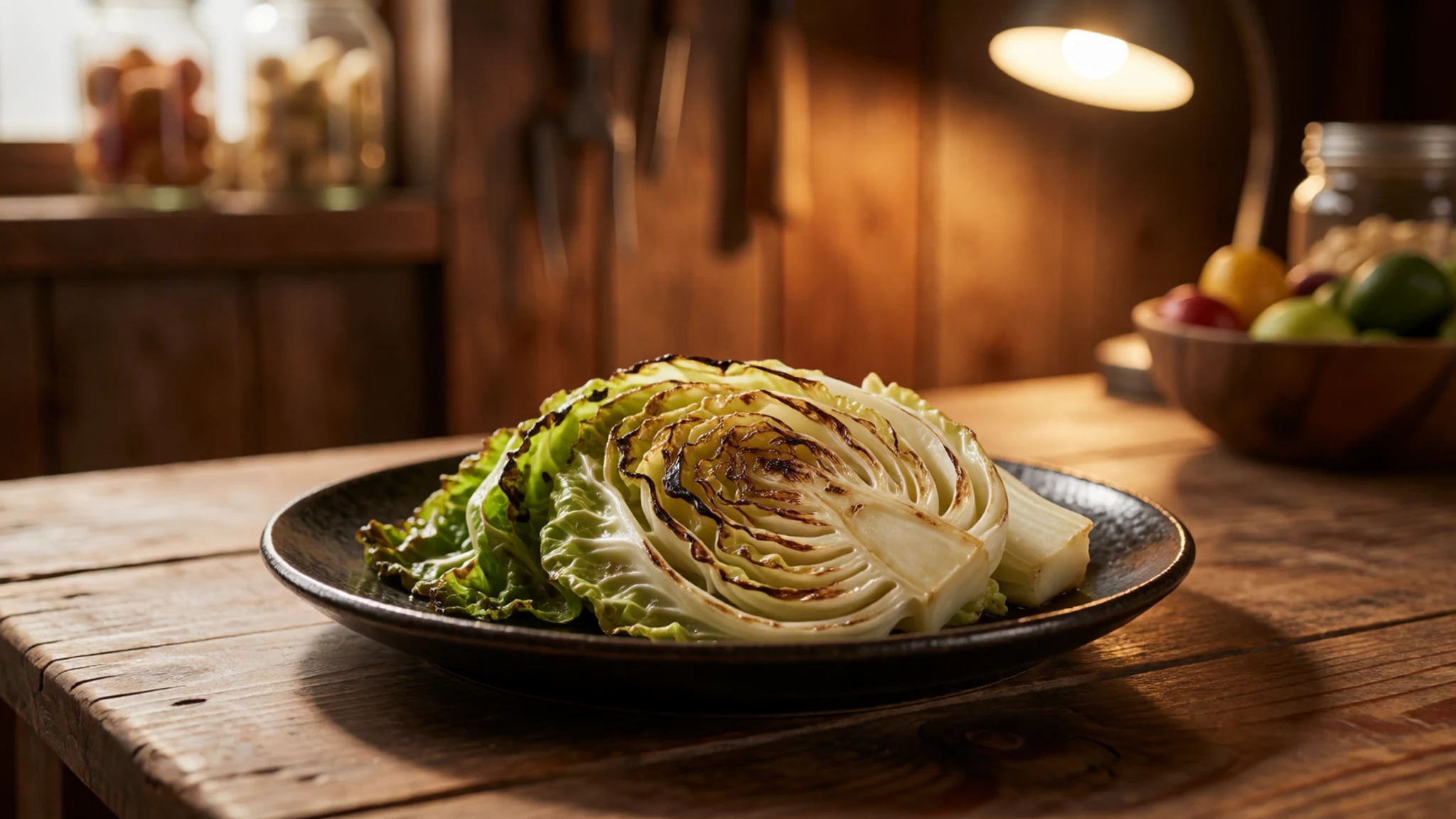
- Highland tsukemono — village grocery shops and onsen inns
Pickled cabbage and other highland vegetables keep Tsumagoi's summer crop through a winter too cold for fresh leaves. The result is a sour, salty tsukemono, served with rice. Jars and small plates are sold at village grocery shops and in onsen inns.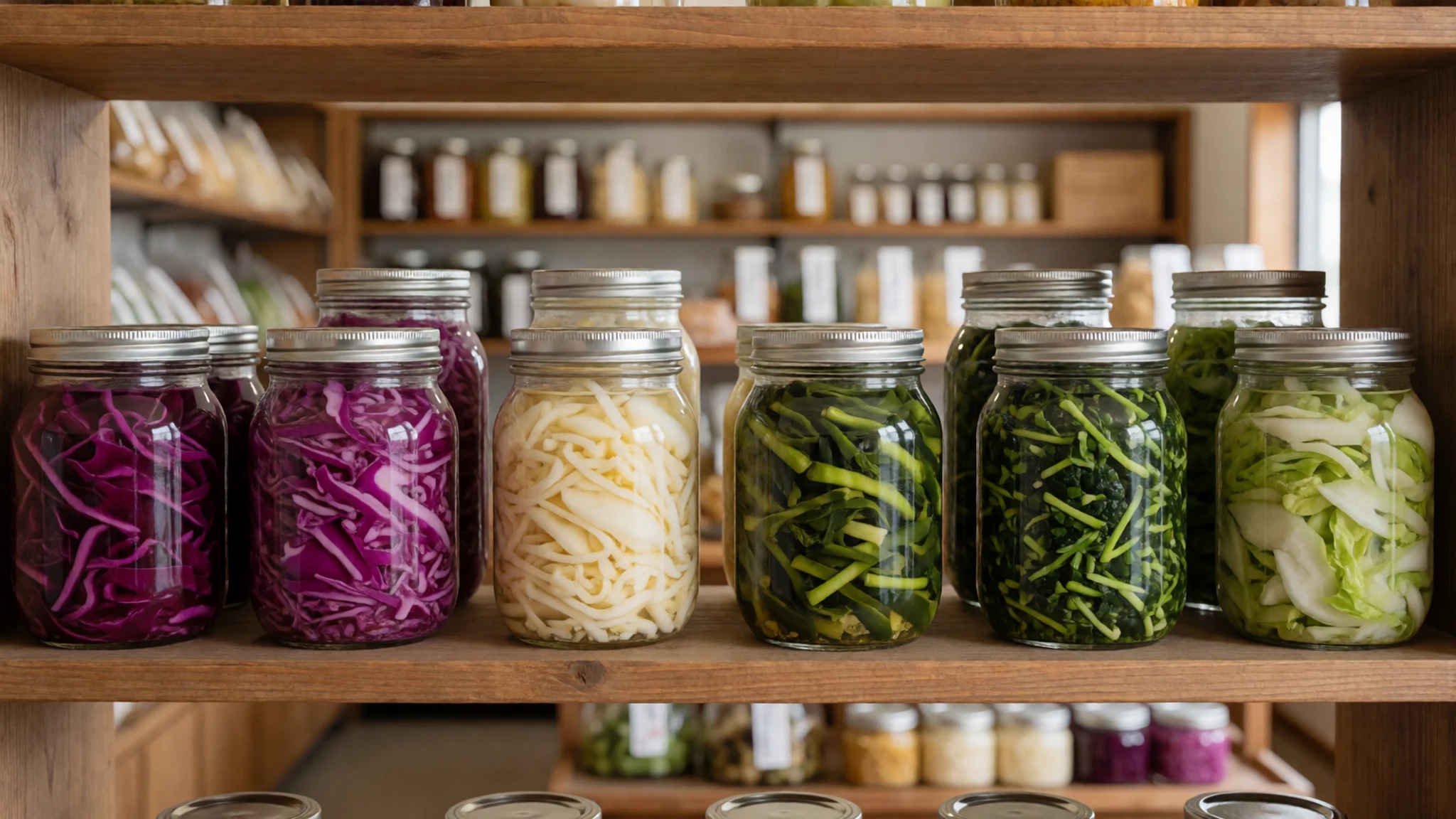
- Soba — village eateries and ryokan dinners
Soba is the noodle of this mountain border, and Tsumagoi's inns and small eateries serve it chilled with a dipping sauce or in hot broth when the wind is up. A plain bowl at a village eatery or at a ryokan dinner is the usual way to order it. - Onsen set meal — the dining room of an onsen inn
The set meal at a Tsumagoi onsen inn is the main food event for many visitors: rice, miso soup, grilled fish or pork, pickles and a cabbage dish, with mountain vegetables when the season allows. It is served in the inn's own dining room. - Miso with highland greens — inn breakfasts and home kitchens in the village
Miso soup built on highland vegetables — cabbage, and the sansai wild greens of the surrounding woods when they are in season — is everyday cooking in Tsumagoi. It is humble, hot and salty, and it appears at breakfast in inns as often as at the family table.
Plan it
Best time. July and August are the comfortable months in Tsumagoi, when the highland stays cooler than the plains and the cabbage fields are full. January and February bring snow and skiing, though winter is severely cold and travel can stop. September is the wettest month. Late spring is green but still cold at night.
How long. 2–3
Getting there. Tsumagoi is reached on JR East's Agatsuma Line, which runs through the valley toward Manza-Kazawaguchi and Ōmae. By road, national routes cross the plateau toward Karuizawa and down the Agatsuma valley; in winter those roads need snow tyres or chains. Seibu Kanko Bus serves the district, JR Bus Kanto links the high plateau with Komoro and Sakudaira, and a highway bus runs between the plateau and Shinjuku in Tokyo. Confirm the day's buses and any snow closures on the official village website before travelling.
Budget. mid
Tips
- Check the official village website for road closures and volcanic alerts before setting out.
- Begin early when the day includes Onioshidashi and a bath, because afternoon cloud often sits on the ridges.
- Carry cash for farm stalls, small baths and rural buses; card payment is patchy away from the inns.
- Pack a real winter coat, hat and waterproof boots if travelling in the snow months; the cold is severe.
- Reserve onsen inns ahead for summer and for the ski weeks, when visitors come up from the plains.
Etiquette
- Wash fully before a shared bath, keep towels out of the water, and do not photograph other bathers.
- Remove shoes at ryokan doors and at shrines where a raised step and slippers are waiting.
- Keep out of working cabbage fields, and ask before photographing people at work.
Nearby
Sources
- Wikidata Q1203321 (CC0)
- Wikipedia (rev 1377955348) (CC BY-SA 4.0)
- Wikivoyage (rev 5387838) (CC BY-SA 4.0)
- Photo: Tsumagoi village office (CC BY-SA 1.0)
- Photo: view west from Mount Shirane (CC BY 3.0)
- Photo: cabbage field and Mount Asama (CC BY 3.0)
- Photo: Agatsuma River from Mihara Bridge (Public domain)
- Photo: Asama Volcano Museum (CC BY-SA 4.0)
- Photo: Hoshimata, Tsumagoi (panoramio 13) (CC BY 3.0)
- Photo: Hoshimata, Tsumagoi (panoramio 14) (CC BY 3.0)
- Photo: Hoshimata, Tsumagoi (panoramio 16) (CC BY 3.0)


