Troy
Troy, Turkey
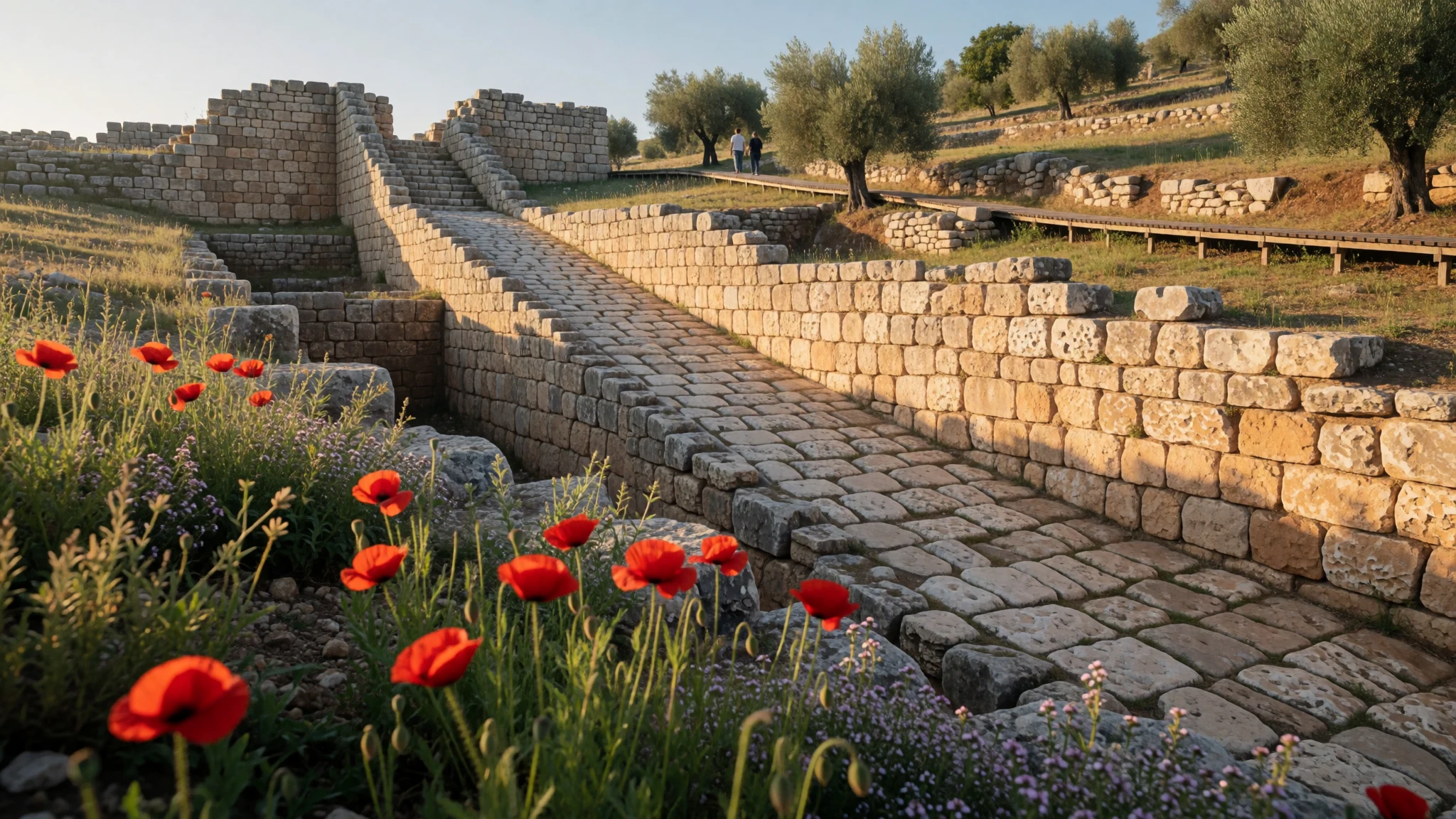
Troy is where myth meets archaeology: layers of ancient cities on one hill, still readable as you walk.
The place
Troy, also known through the archaeological site name Hisarlık, sits near Çanakkale in northwest Asia Minor (modern-day Turkey). It’s famous for the Greek legend of the Trojan War, but what draws most visitors today is the physical evidence: a long-settled mound where later stories were built on earlier realities.
The site is spread across multiple “layers” of occupation, archaeologists labelling them with Roman numerals from Troy I onwards. Every layer marks a settlement constructed directly over the remains of an earlier one, which is why the landscape feels like a timeline in the dirt. Early on, Troy became a fortified settlement, and later phases show changing wealth, architecture, and cultural connections across the Late Bronze Age and beyond.
As the centuries rolled forward, the name and role shifted. Records from the Late Bronze Age refer to places thought to be connected with Wilusa, and later eras saw Greek and Roman life emerge in the final layers. That mix matters when touring: the ruins are not just “old walls”, they’re evidence of shifting influences—Hittite-era diplomacy, Greek mythic associations, and Roman-era reverence.
Practical reality check: most people come as a day trip, so the site can feel busy in peak visiting windows. The hill means you’ll be walking in open areas, so plan for bright weather, and pace the layers rather than trying to sprint through the story.
Its story
Troy’s story starts with deep time and ends with a trail of written clues. The earliest layers, from Troy I through Troy V, predate writing and are known through archaeology—what stone, earth, and building footprints still allow scholars to reconstruct. Later, written records become part of the picture, especially from the Late Bronze Age onward.
In this later era, the city is often discussed through Hittite records. Scholars connect Wilusa and Taruisa with the Troy/Ilion tradition by comparing linguistic links, with proposed correspondences appearing in the early 20th century and later research making some identifications more secure. What’s interesting here is the diplomatic framing: Wilusa appears among states tied to the Assuwa Confederation, and later texts mention rulers associated with peaceful relationships with the Hittites.
Those connections feed the long-standing debate about myth and history. Some layers resemble features found in literary descriptions, encouraging the idea that there may be a “kernel” behind the Trojan War stories—though the evidence doesn’t prove a straightforward Greek assault on the city.
When the settlement continues into the Greek and Roman periods (Troy VIII–IX), the site takes on a different energy. It becomes not only a place of habitation, but also a setting for religious and tourist interest linked to the legendary tradition. So the “Trojan War” is only one part of the narrative: the hill holds a long sequence of changing identities, from fortified beginnings to recorded diplomacy and eventually later myth-driven attention.
What to see
- Troy-Çanakkale Museum — Çanakkale area (near the site)
Troy-Çanakkale Museum is the main exhibition space, set in a modern, boxy building with a rusty exterior. It helps visitors decode what they’ll see outside, across multiple phases of the site. Expect a calmer pace here before walking the hill.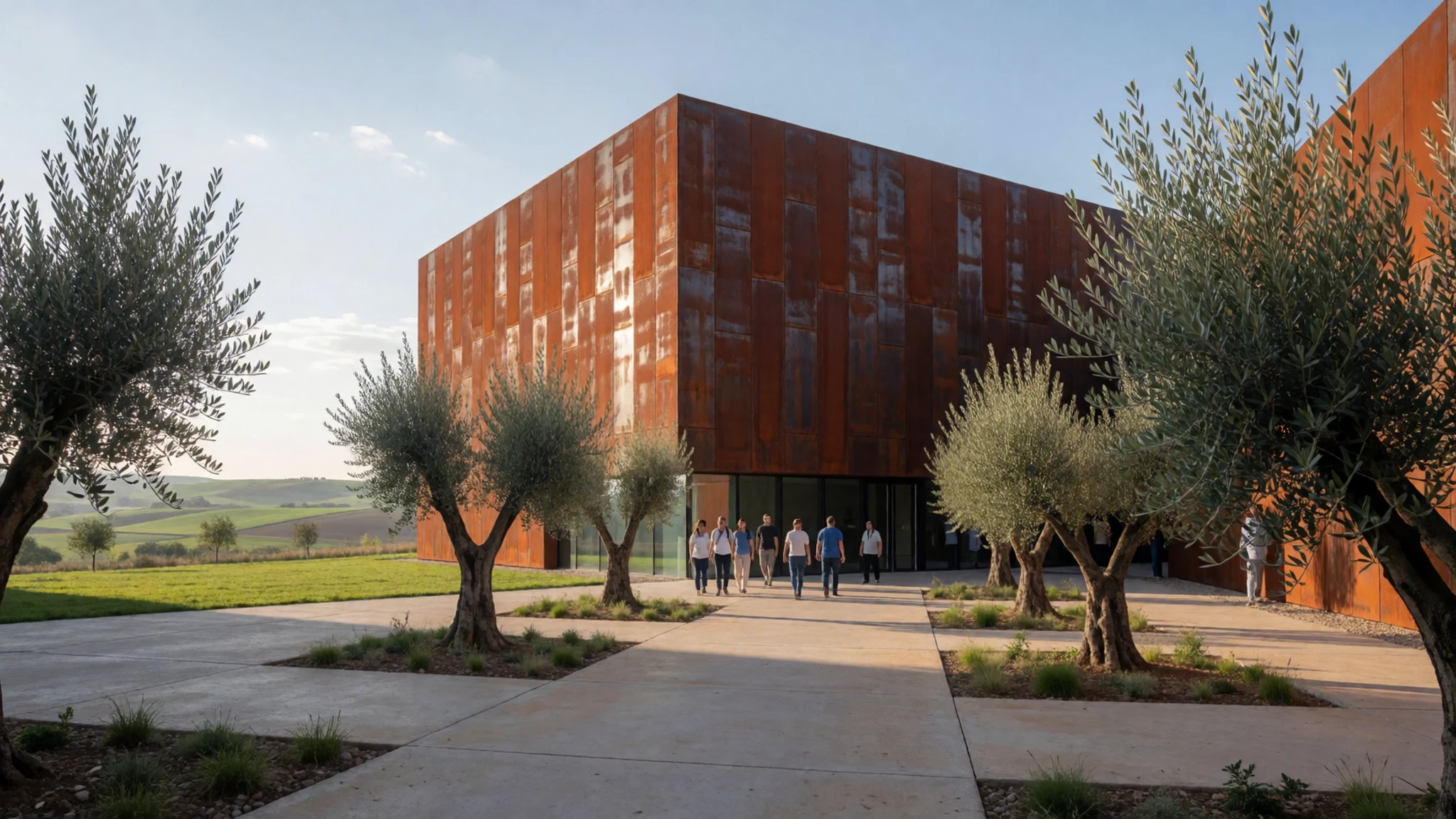
- Troy ancient city (Hisarlık ruins) — Hisarlık hill (archaeological site)
Troy ancient city is the core of the visit, with visible fortification remains commonly associated with Troy VII, and a famous wooden horse displayed on site. This is where the layered approach becomes real: earthworks and walls suggest how each era reused and rebuilt over the last.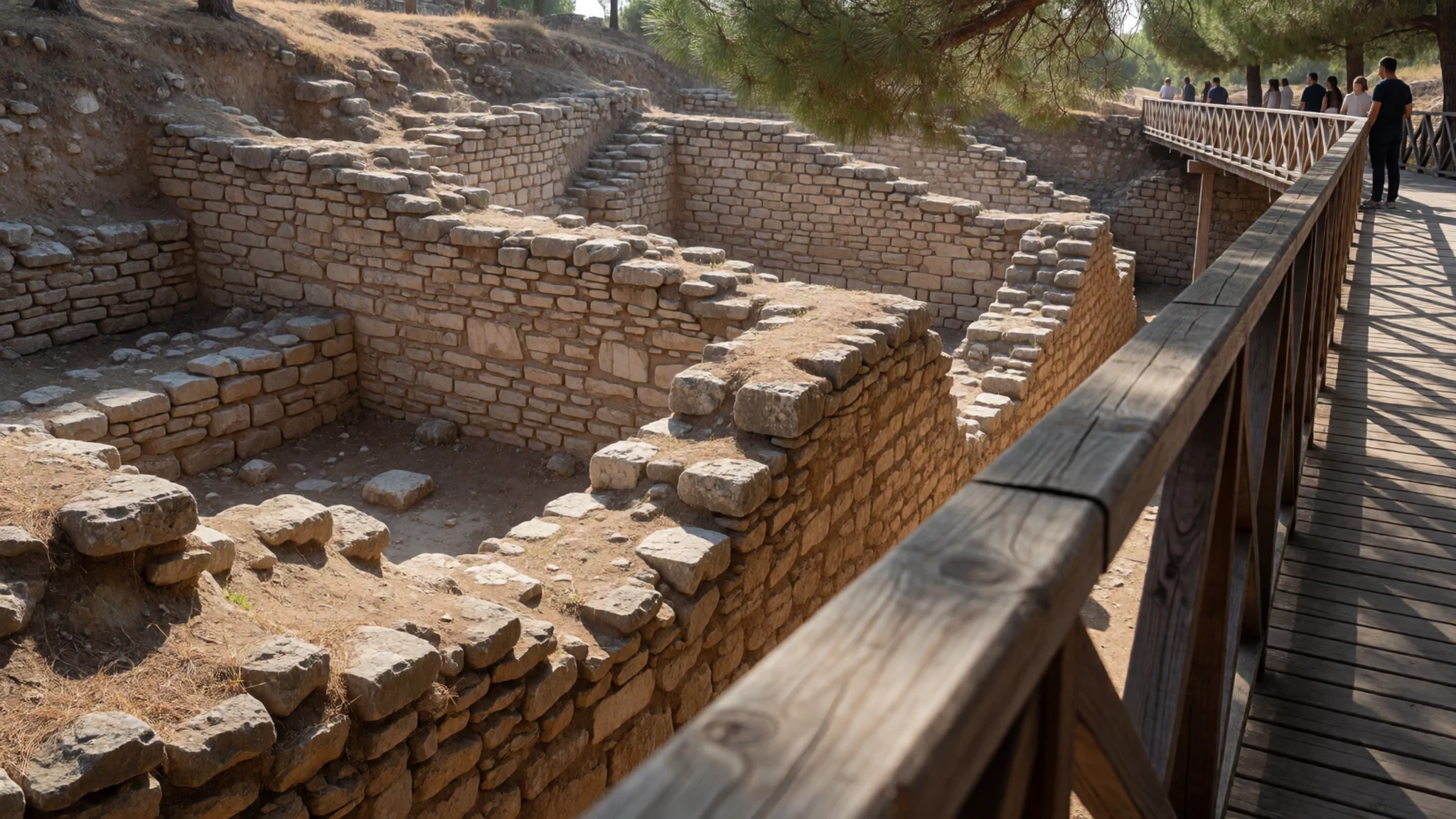
- Truva Seyir Terası (view terrace) — Terrace area overlooking the valley
Truva Seyir Terası is a small commercial strip with souvenir stands, but the pull is the view north. From here, you can look out over the valley and understand how the landscape would have framed a harbour inlet in earlier times—use it for orientation and photos between ruins.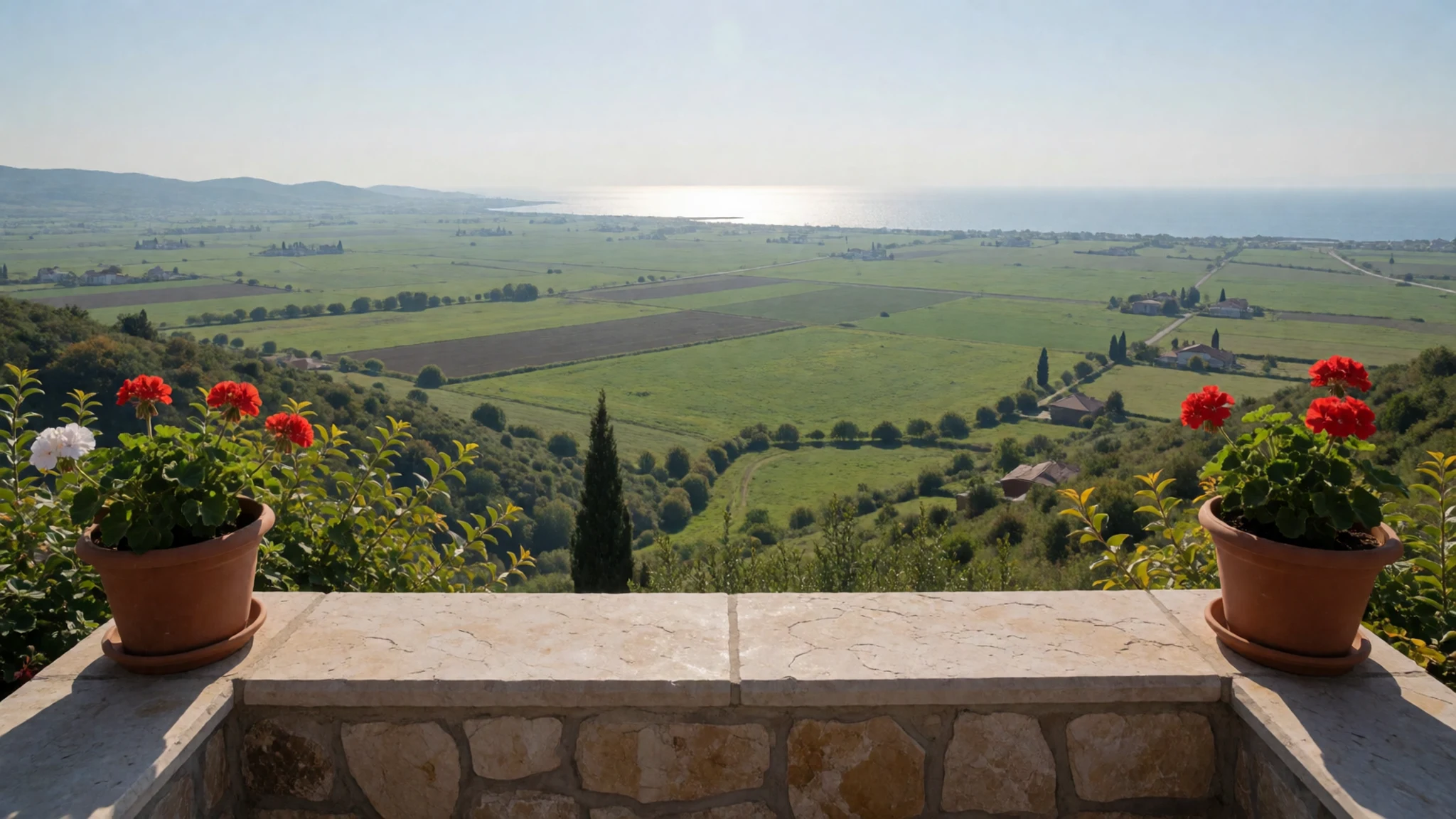
- Çıplak (Schliemann’s village stay area) — Çıplak village, east of the site
Çıplak is about 1 km east of Troy, associated with the excavation period when Heinrich Schliemann stayed nearby. The village includes a small free museum, a quiet counterpoint to the main ticketed site and a useful stop if the rest feels too tour-bus heavy.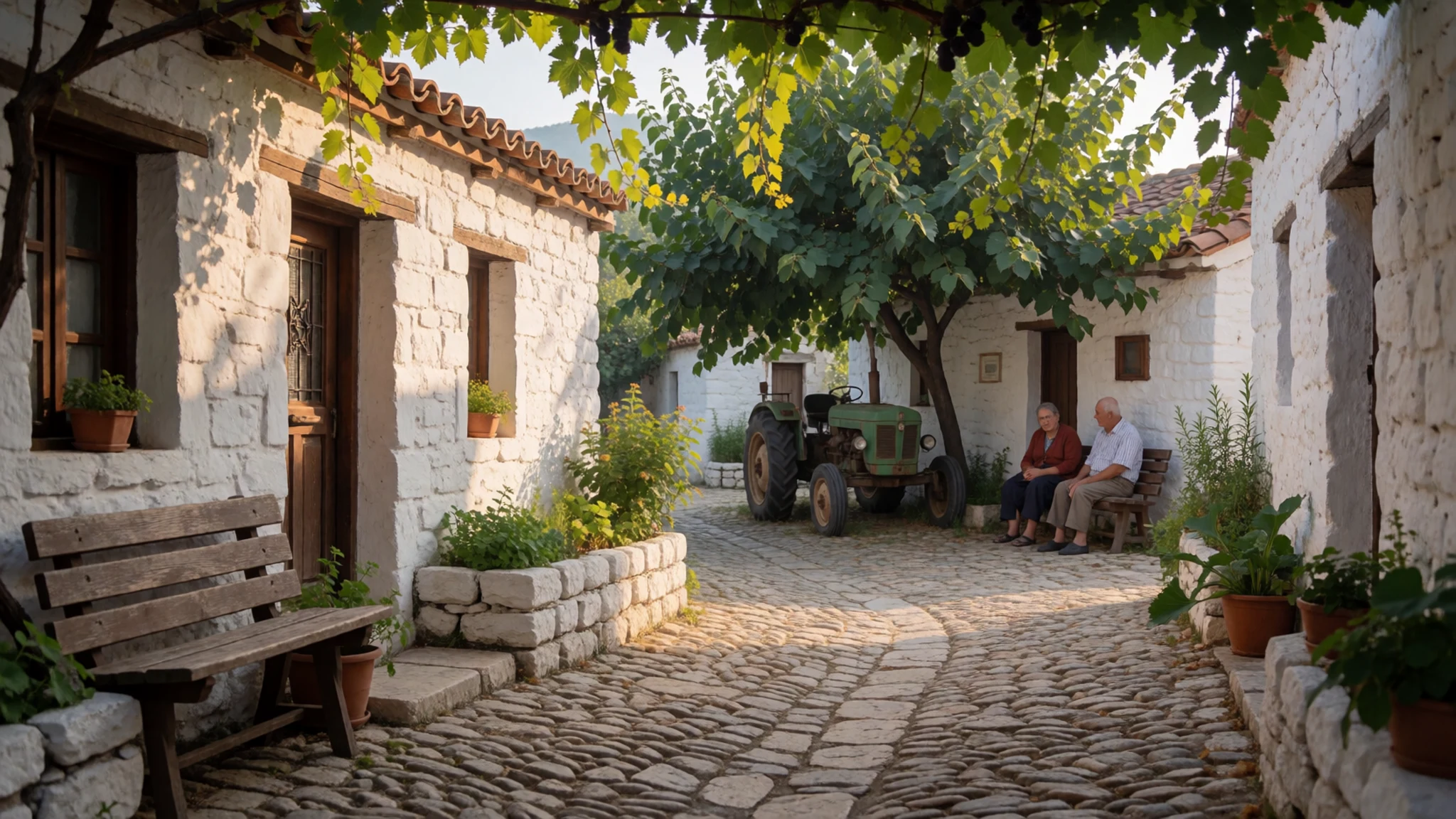
Culture
Troy is an archaeology site with a strong mythic storyline, and visitors tend to arrive curious—then get absorbed by the practical reality of layers and rebuilding. You’ll see school groups at busy times, and the wooden horse display is designed to draw crowds, so expect more “photo moments” than quiet contemplation during peak hours.
Because Troy sits outdoors on a hill, treat it like an all-weather walk even when the sky looks kind: the wind can pick up fast and the ground can be uneven. Inside the museum, keep your focus on context—items and labels make the outside ruins easier to interpret. The site’s UNESCO status also means visitors are generally mindful about staying on paths and not treating the mound like a playground.
One good way to enjoy Troy is to travel mentally through the Roman-numeral layers rather than trying to “finish” everything in one go. Pick a direction, read signs slowly, and don’t underestimate how much time it takes to look properly at stone details.
Visitor etiquette: keep to marked routes, be quiet near artefacts in the museum, and don’t climb on ruins or blocks for photos.
What to wear
At Troy, the clothing goal is comfort for outdoor walking and respect for heritage spaces. Traditional dress in the region can vary by community, but in Turkey you’ll commonly see şalvar-style trousers and long, draped garments in traditional contexts, along with woven fabrics and patterned textiles used for everyday wear or local celebrations. In modern Troy visits, what matters most is modesty around archaeological and museum areas rather than dressing “like a local”.
For day-to-day sightseeing now, visitors usually wear lightweight tops, long trousers or breathable skirts, and a hat or sunglasses for the sun. Footwear is the real decision: the terrain is uneven and you’ll be on and around old surfaces, so trainers with grip are safer than flip-flops.
For visitors, aim for layers you can adjust—morning and late-day conditions can feel cooler than midday, while open areas can be bright and windy. If planning to enter museum spaces, bring something that looks presentable but still practical for walking. Avoid very short hems that restrict movement, and choose breathable fabrics that handle warm weather without becoming sticky.
What to eat
- Meatballs — Opposite the museum (near the main site)
Meatballs are a straightforward local pick at eateries close to the museum area, ideal when touring has built up hunger. Look for simple, hearty plates rather than anything fussy—this is fuel-for-walking food.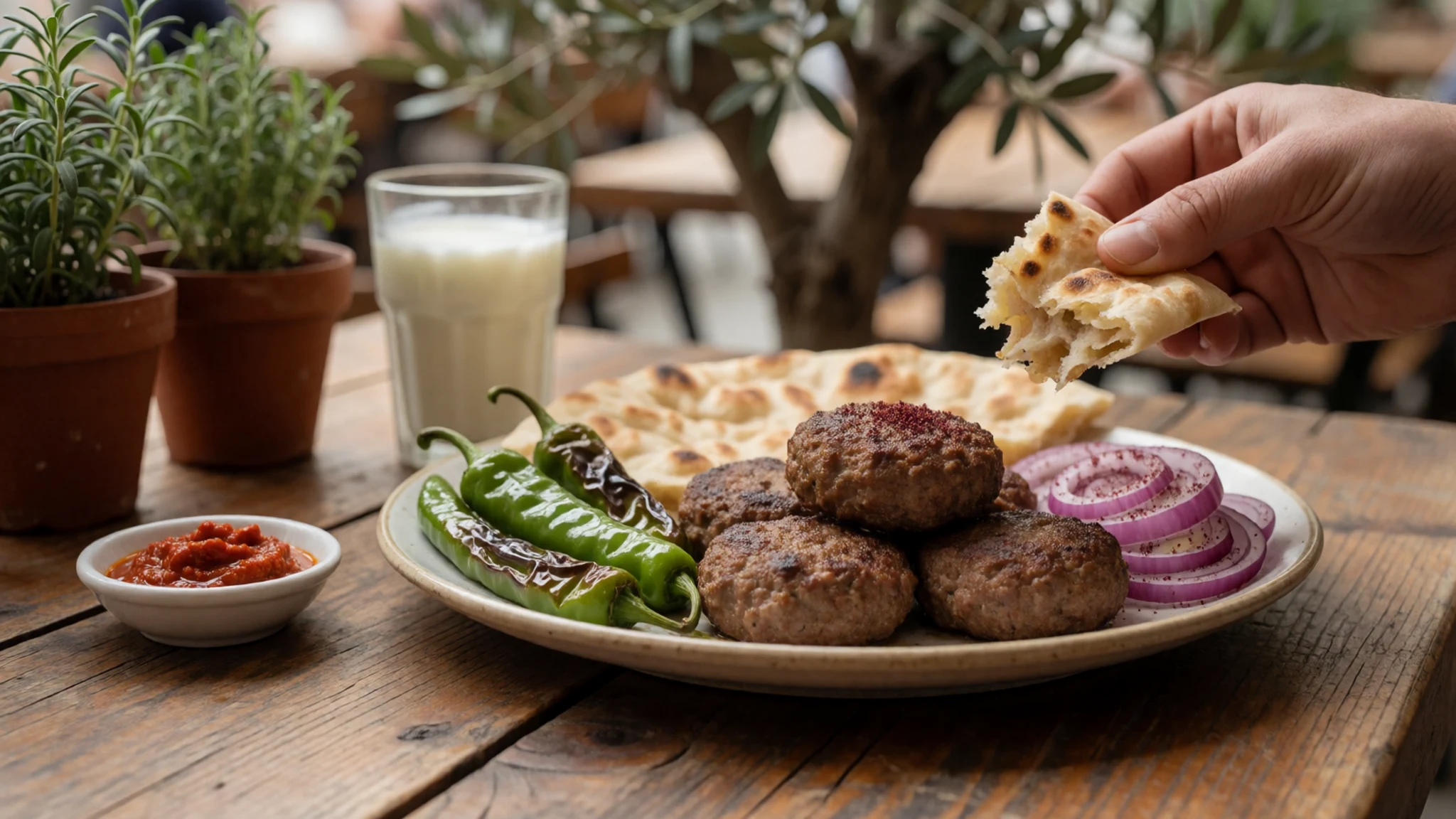
- Cafe garden meals and snacks — By the terrace
A garden-style cafe option near the terrace works well for a slower break, especially if the wind has you looking for a sheltered spot. Expect cafe-style mains and drinks rather than full-form restaurant dining.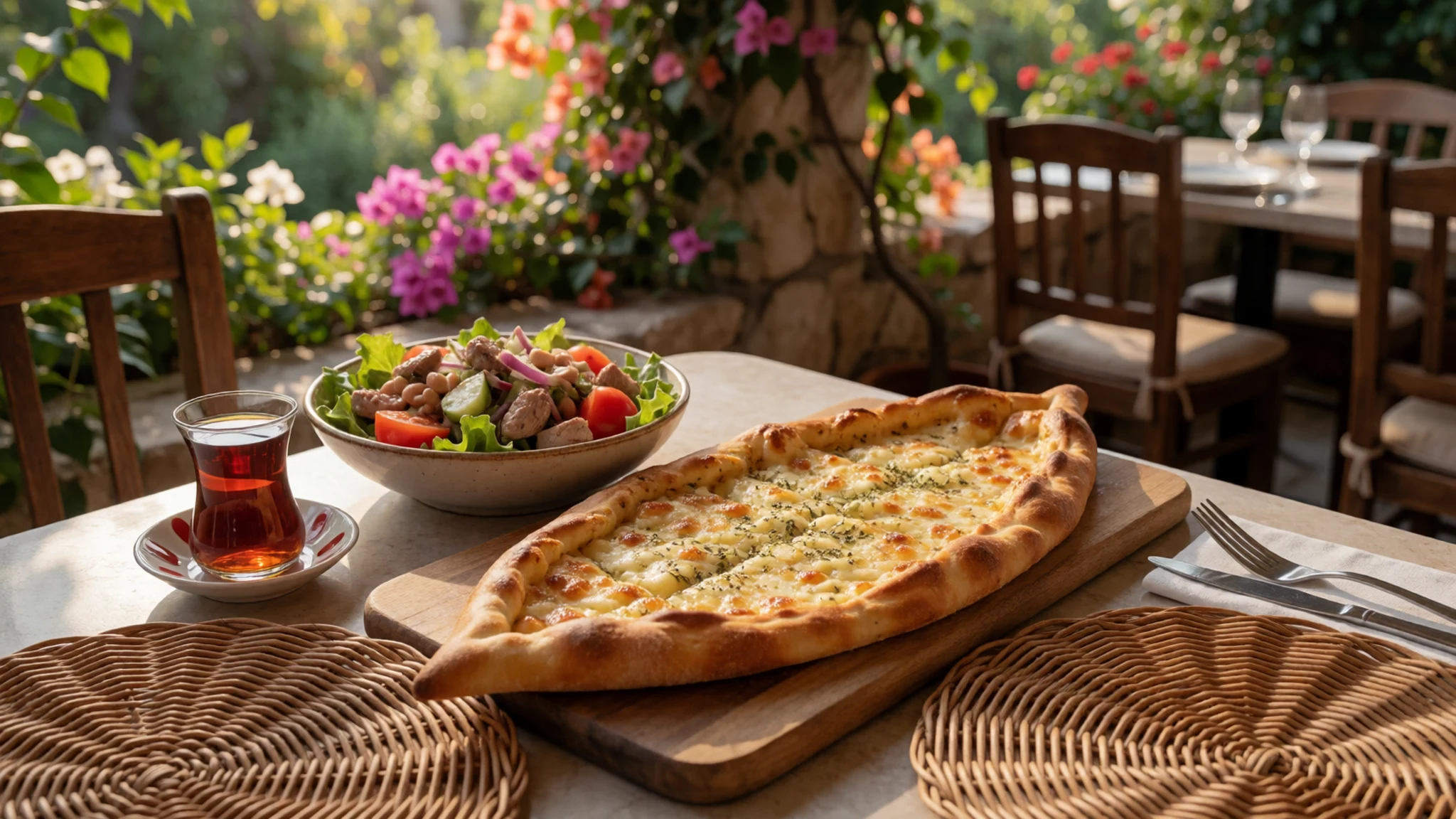
- Cheap, cheerful cafe food — Terrace area near the viewpoint
Helen Cafe is the kind of place many visitors gravitate to because it’s easy and casual, with food that suits a sightseeing schedule. It’s handy for breakfast-style stops and for refuelling between ruin sections. - Pide-style dishes (when available) — Cafes around the terrace
Along the Troy terrace and nearby cafes, you’ll often find Turkish bread-based dishes such as pide when menus are running. It’s a good choice when touring makes sit-down meals tricky and you want something filling and portable. - Hotel or cafe breakfasts — Çanakkale (if basing there), or cafe areas near the site
Because Troy visits are commonly day trips, breakfast can set the pace. Many travellers grab something from a nearby hotel or local cafe before heading out, keeping it simple so there’s time to enjoy the morning ruins.
Plan it
Best time. March–May and September–October are the most comfortable months to aim for, with milder temperatures than the hot, dry mid-summer; the warmest months are July and August, and heavy rain tends to fall in winter.
How long. 2–3
Getting there. Most visitors base in Çanakkale, then reach Troy from there by road via the signed turn-off on the Çanakkale–İzmir corridor and the drive through fields towards Tevfikiye; the site is around 5 km off the main D550 / E87 route.
Budget. mid
Tips
- Start early if possible to give the ruins time before peak day-trip arrivals build up.
- Use the museum first to make the layered ruins easier to read while walking.
- Pack water and a hat; Troy’s open areas can feel exposed.
- Build in a break on the Truva Seyir Terası for orientation and photos, then continue to the less crowded corners.
Etiquette
- Stay on marked paths and don’t climb on ruins for a better viewpoint.
- Keep noise down in the museum and around artefacts.
- Share space politely with school groups at popular photo points.
Nearby
Sources
- Wikidata Q22647 (CC0)
- Wikipedia (rev 1383485629) (CC BY-SA 4.0)
- Wikivoyage (rev 5292885) (CC BY-SA 4.0)
- Photo photos/01-walls-of-troy-2.jpg (CC BY 3.0)
- Photo photos/02-j-g-trautmann-das-brennende-troja.jpg (Public domain)
- Photo photos/03-alexandria-troas-thermen.jpg (CC BY 3.0)
- Photo photos/04-die-gartenlaube-1878-b-713.jpg (Public domain)
- Photo photos/05-golden-bottle-and-goblets.jpg (Public domain)
- Photo photos/06-turkey-2941-2216425111.jpg (CC BY-SA 2.0)
- Photo photos/07-troy-ii.jpg (CC BY 2.5)
- Photo photos/08-troya-3.jpg (CC BY-SA 4.0)


