Tel Aviv
Tel Aviv, Israel
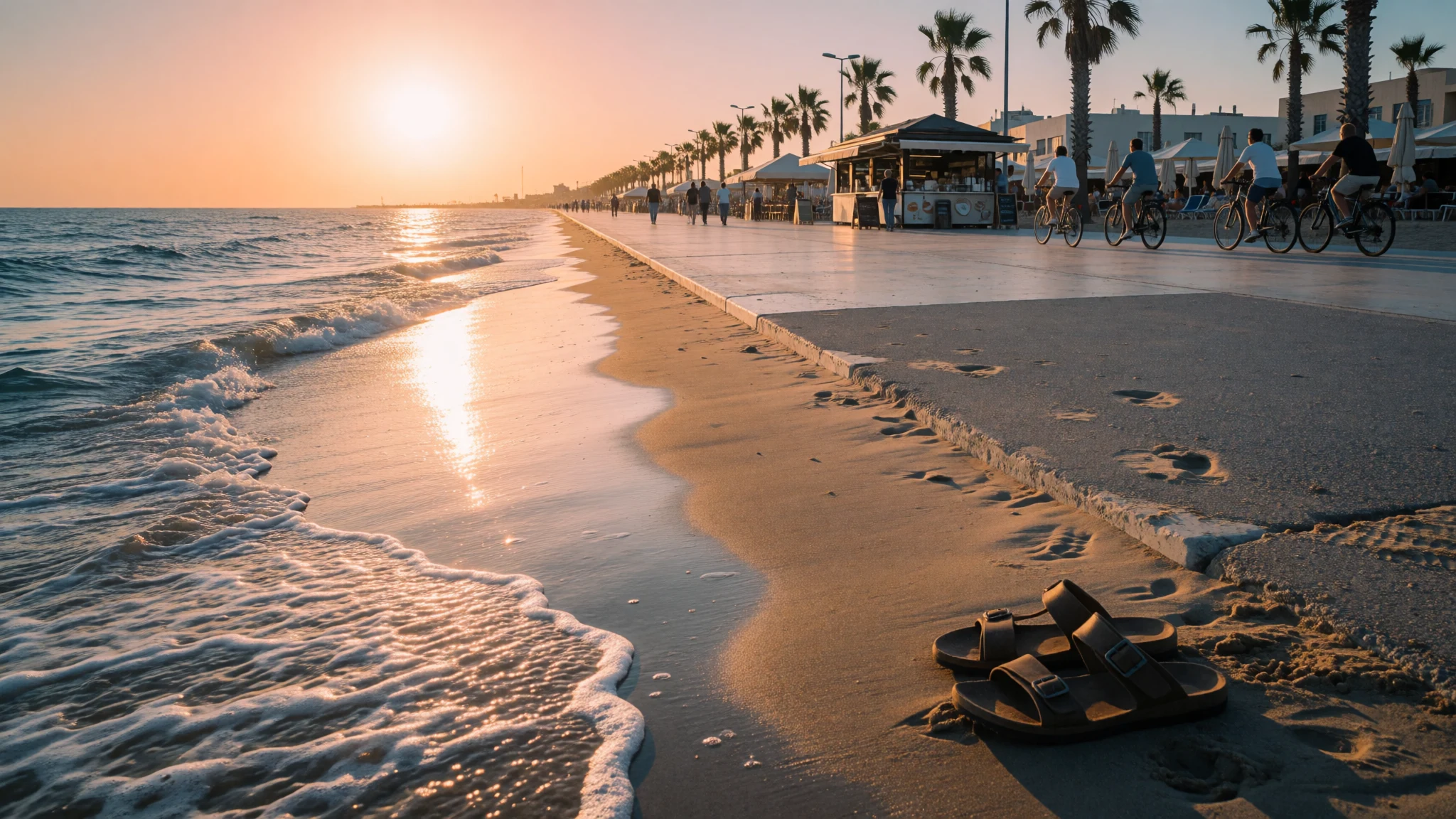
Tel Aviv pairs a young beach city with the ancient port of Jaffa and a walkable, noisy street life.
The place
Tel Aviv, the Mediterranean city also styled Tel Aviv-Yafo, spreads along a low Israeli shore only about five metres above the sea. The municipality records a population of 467875. South of the beaches lies Jaffa, a port far older than the garden suburb begun in 1909, and the two are now one city under the Tel Aviv-Yafo Municipality. Between them sit sandstone lanes, pale boulevards, a long promenade and a knot of office towers at Sarona. Daily life faces the water. People swim, run and cycle the front, then slip back to cafes, markets and shaded streets when the glare builds. Hebrew is the public language, Arabic is part of Jaffa's ordinary speech, and English is common in shops and cafes. Most of the foreign embassies in Israel are based here, and companies in trade and technology cluster in the same central districts as the university. Rabin Square, city hall rising behind its pool, is where public gatherings collect. Heat shapes the hours. Summer is bright and heavy; winter is milder, with rain in spells. From Friday afternoon through Saturday, Shabbat stops the trains and buses, while the secular seafront keeps its cafes and beaches going. The city is expensive to eat and sleep in. It yields most to someone on foot in the early hours, when the shift from old port to new boulevard is easy to read.
Its story
Tel Aviv is a new city wrapped around a much older port. Jaffa, now the southern part of Tel Aviv, was already a walled town through the early modern era, unlike the open ground to its north. Ships used the natural anchorage by the Bronze Age, and the mound itself was lived on long before that. Egyptian papers and the Hebrew Bible both speak of the place. Power changed hands repeatedly — Canaanites, Egyptians, Philistines, Israelites, Assyria, Babylon, Persia, Phoenician traders, Hellenistic kings, Hasmoneans, Rome, Byzantium, early Islamic caliphates, Crusaders, Ayyubids, Mamluks, and at last the Ottomans — because the headland gave shelter to boats. Inside the modern borders, older traces survive as mounds rather than streets: Abattoir Hill, Tell Qudadi, Tel Gerisa, Tel Hashash and Tell Qasile. During the First Aliyah, in the late nineteenth century, Jewish newcomers found the port too tight and started neighbourhoods on open ground beyond the walls. Neve Tzedek came first, raised by Mizrahi Jews on land tied to Aharon Chelouche, in sandstone houses of two storeys. In 1909 those residents established Tel Aviv, calling it at the outset Ahuzat Bayit (אחוזת בית). They wanted a garden suburb beside the port, not a replacement for it. The first houses were low, under clay tiles, in a manner then familiar from Europe. Builders later mixed in arches, domes and ornamental tile — Pagoda House, by Alexander Levy, is a surviving example — before Patrick Geddes set boulevards and small parks among pale blocks. A walk inland from the harbour still shows that order: ancient quay, then the new neighbourhoods, then the wide streets of the young city.
What to see
- Port of Jaffa — Jaffa
The port of Jaffa is the old working edge of Tel Aviv-Yafo, a stone harbour whose anchorage was already in use by the Bronze Age. Fishing boats and converted warehouses line the quay, and lanes climb from the water into the walled town. Morning is the quiet hour, before weekend visitors fill the alleys.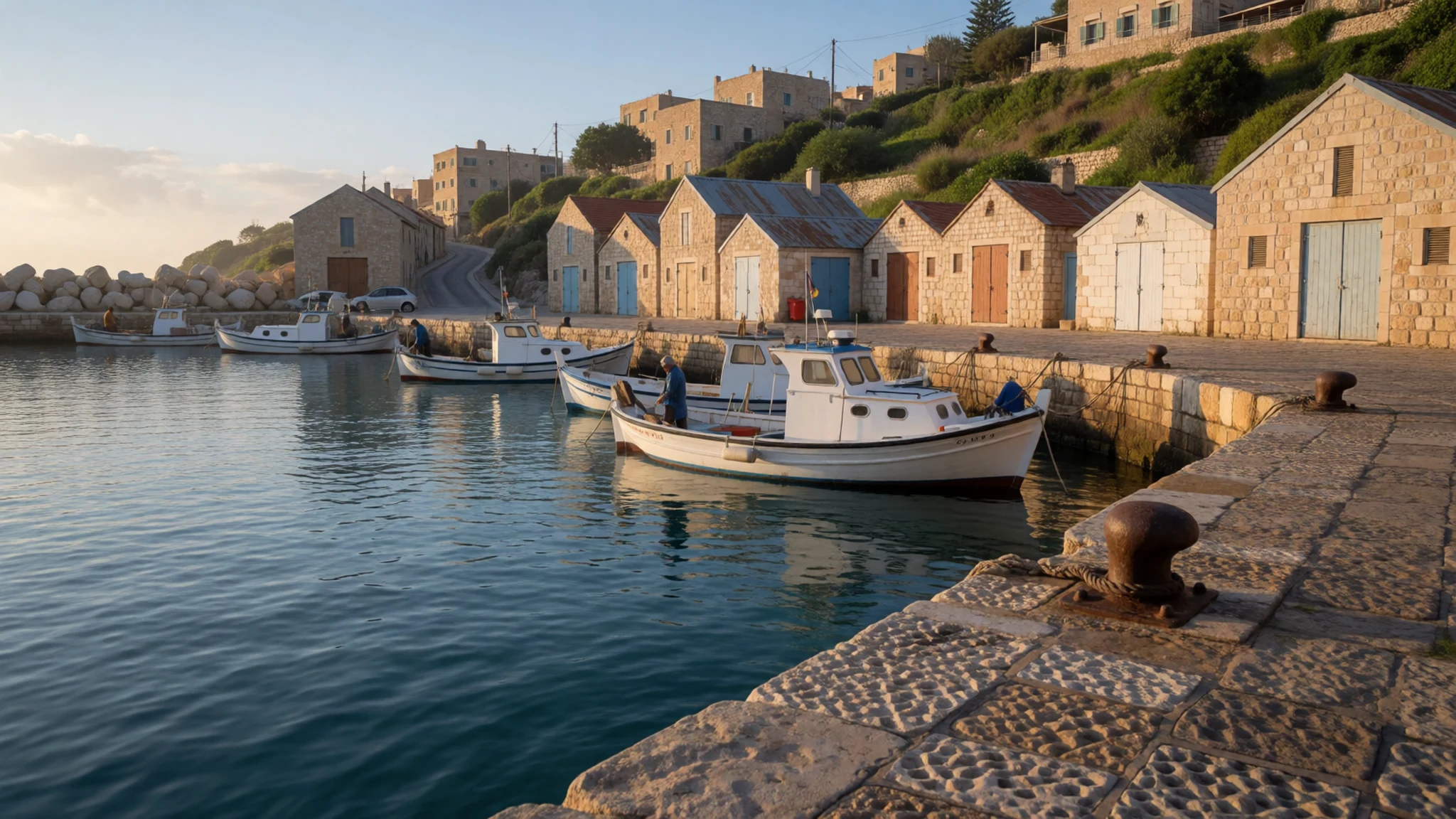
- Jaffa Clock Tower — Jaffa
Jaffa's clock tower stands in a square of low stone buildings, raised in the late Ottoman years while the port was still separate from Tel Aviv. It marks the hinge between market lanes and the roads running north along the coast. The square around it is the practical start for a walk up into the old streets or down to the water.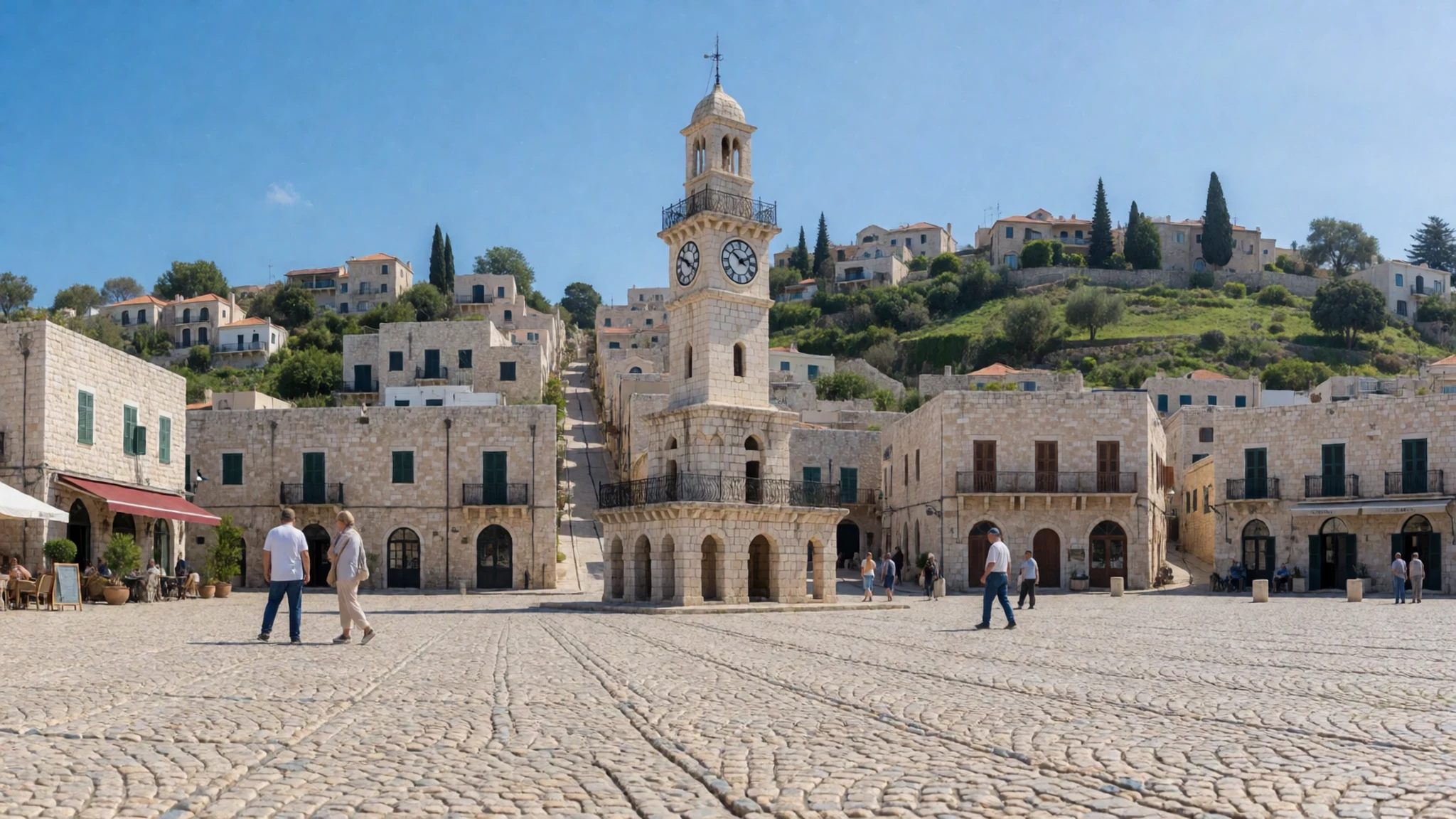
- Tel Aviv Promenade — Mediterranean seafront
Tel Aviv's promenade is the paved walk along the city's Mediterranean beaches, set between the sand and a line of cafes. Only about five metres above the water, the front is flat, bright and often windy. Walkers and cyclists share it from morning until late, and the beaches beside it fill with swimmers. The early hours keep the shore calmer; afternoon brings the crowds and the full glare.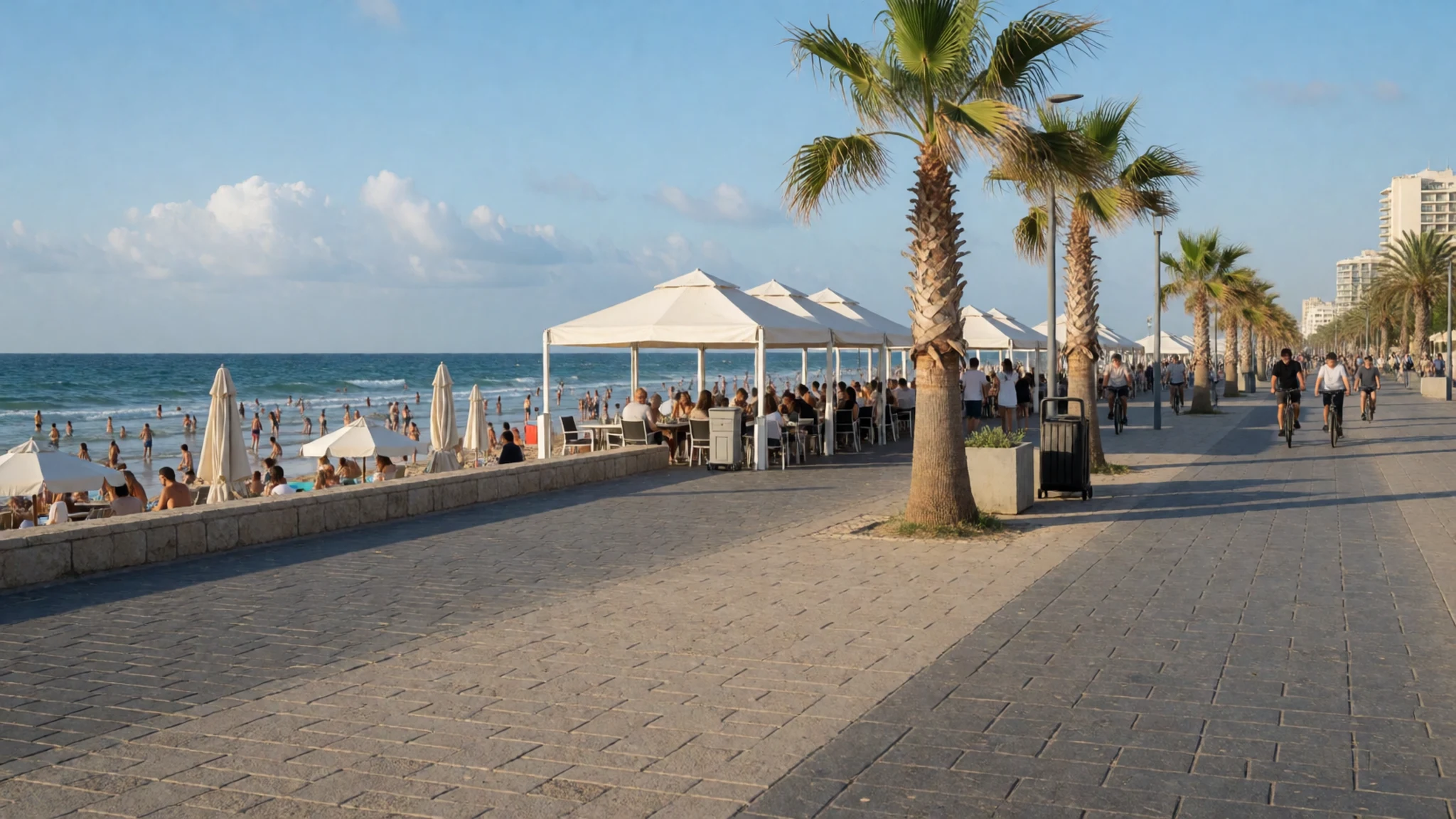
- Sarona — Central business district
Sarona sits inside Tel Aviv's business district, a group of low historic buildings held in a ring of glass towers. Paths cross the grounds, and a market hall and cafes occupy the older houses, so office workers and visitors share the same shade at midday. The contrast is physical: older houses kept at street level while the skyline around them climbs.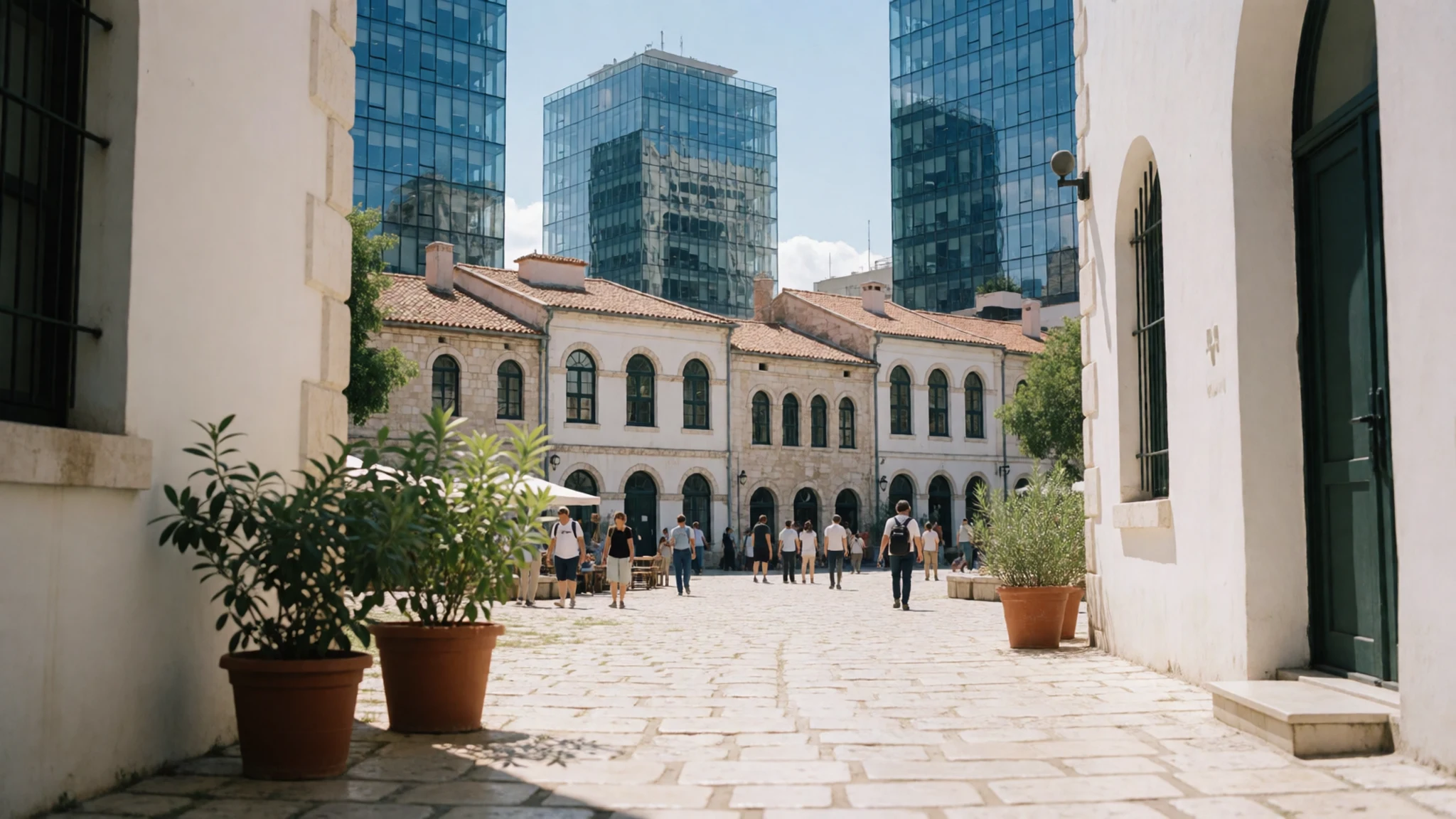
- Rabin Square — City centre
Rabin Square is Tel Aviv's broad civic plaza, with city hall behind a shallow ecological pool and a Holocaust memorial. Rallies, fairs and ordinary evenings use the same open ground. A renovation kept the gathering space and softened it with water and planting. Nothing about the square is intimate; it is built for crowds, speeches and the long view back to the municipal building.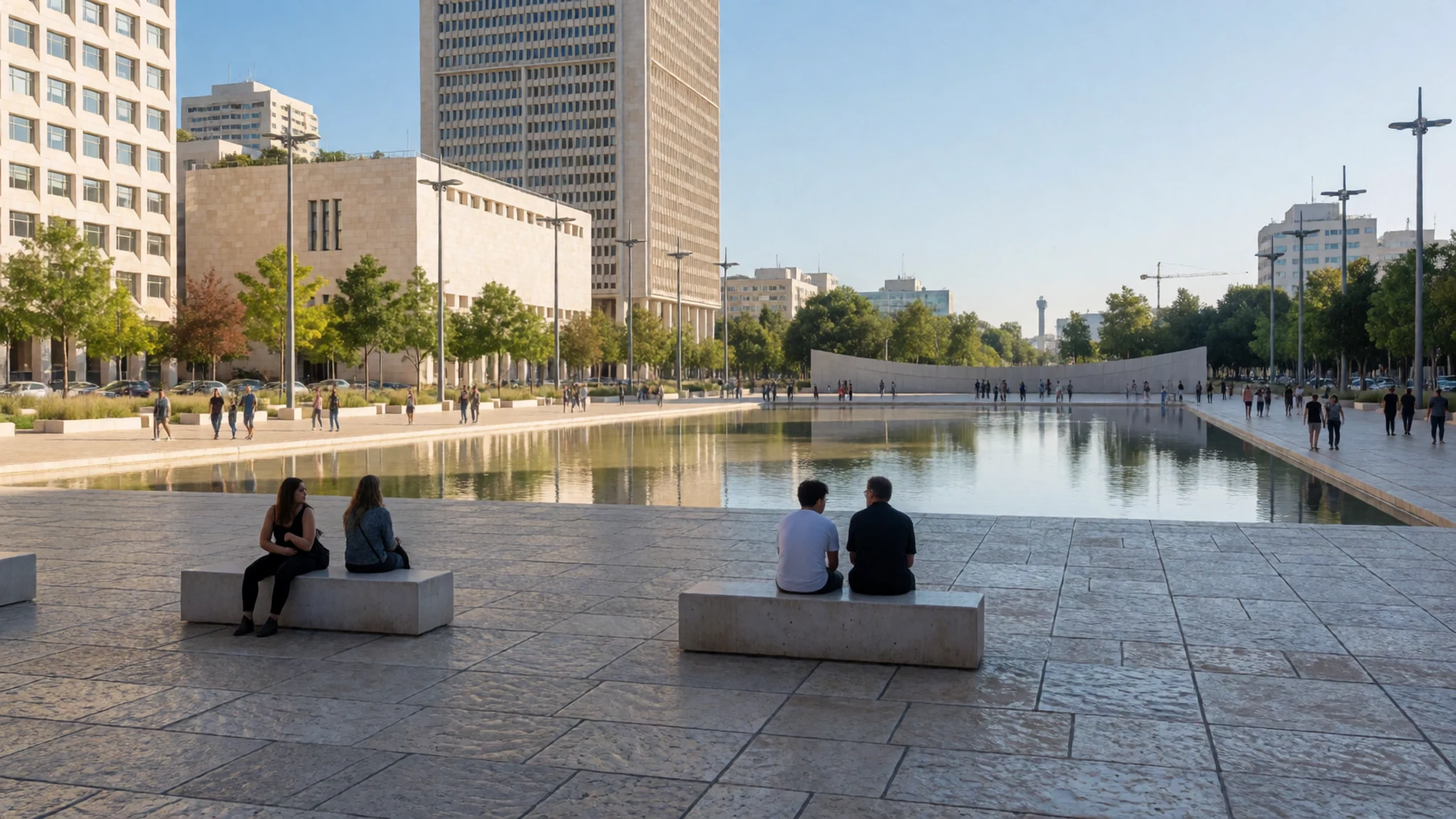
- The White City — Central boulevards
The White City is the band of Tel Aviv where pale, flat-roofed apartment houses follow the boulevard-and-park scheme Patrick Geddes drew. Curved balconies and long windows face the glare, and pocket parks break up the boulevards. Nearby lanes keep an earlier eclectic habit of arches, domes and patterned tile, with Pagoda House among the survivors. Those streets are still lived in, not roped off as a museum quarter.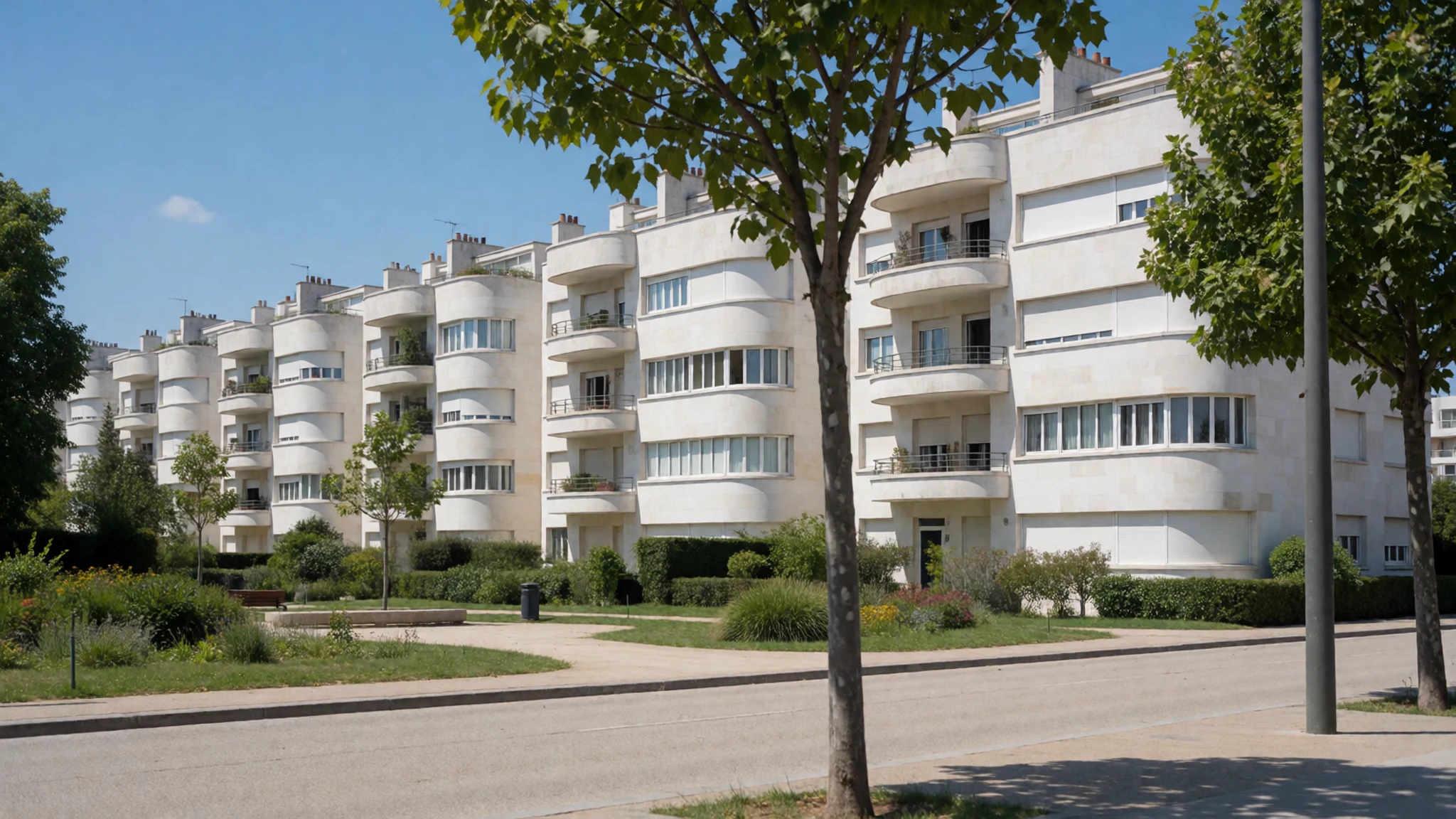
Culture
Tel Aviv's public culture is coastal, informal and mostly secular, set against the older mixed streets of Jaffa. Hebrew runs civic life, Arabic is part of Yafo's shops and kitchens, and other languages turn up on the beach and in cafes. The week hinges on Shabbat. From Friday afternoon, buses and trains stop and many religious homes go quiet, yet the seafront and the centre's cafes stay open and talkative. A visitor feels that double rhythm more than any single custom. Building styles carry the mix as clearly as the calendar does. Early houses borrowed European cottages and clay tiles; Neve Tzedek stayed with sandstone of two storeys; later streets added arches, domes and coloured tile, Pagoda House included; Geddes's plan then threaded parks and boulevards between pale blocks. Evenings pull people outdoors. Late spring brings documentary and student film festivals, and June adds a festival devoted to gender diversity. The promenade tolerates noise and bare legs; religious lanes in Jaffa, and any synagogue, do not. Ask before you photograph people, and cover shoulders and knees when you enter a mosque, a church or a synagogue.
What to wear
Tel Aviv does not put one traditional costume on the weekday street, though several textile habits survive in families. Embroidered dresses, dense at the neck and cuffs, still come out for Mizrahi and Yemenite weddings and holidays. Religious Jewish men may wear a kippah daily and a white shirt with dark trousers on Shabbat. In Jaffa, a hijab and a long coat are common among some Muslim women, and church feasts bring more formal clothes. These are clothes for worship and celebration, not for the beach. Weekday dress is loose and practical. Cotton and linen, shorts, sandals and a hat against the sun take people from the promenade to cafes under Sarona's towers. After dark the boulevards smarten a little, and twice a year a fashion market lets local designers sell urban clothing directly. Winter nights need a warm coat; rain comes in bursts, and the sea wind is constant. Visitors can follow that informality, then adjust. Keep swimwear on the sand and add a shirt for cafes and buses. Cover shoulders and knees in a mosque, church or synagogue, with a scarf to hand for a mosque, and leave shoes where others have left theirs. Choose footwear that can cope with Jaffa's stone lanes and a long promenade.
What to eat
- Falafel — Street corners from Jaffa to the beach pavements
Falafel is Tel Aviv's everyday handful: fried chickpea balls in pita with salad, pickles and tahini, eaten on the move. Street corners sell it from the lanes above Jaffa's port to the pavements behind the beaches. Look for a crisp crust and a soft centre.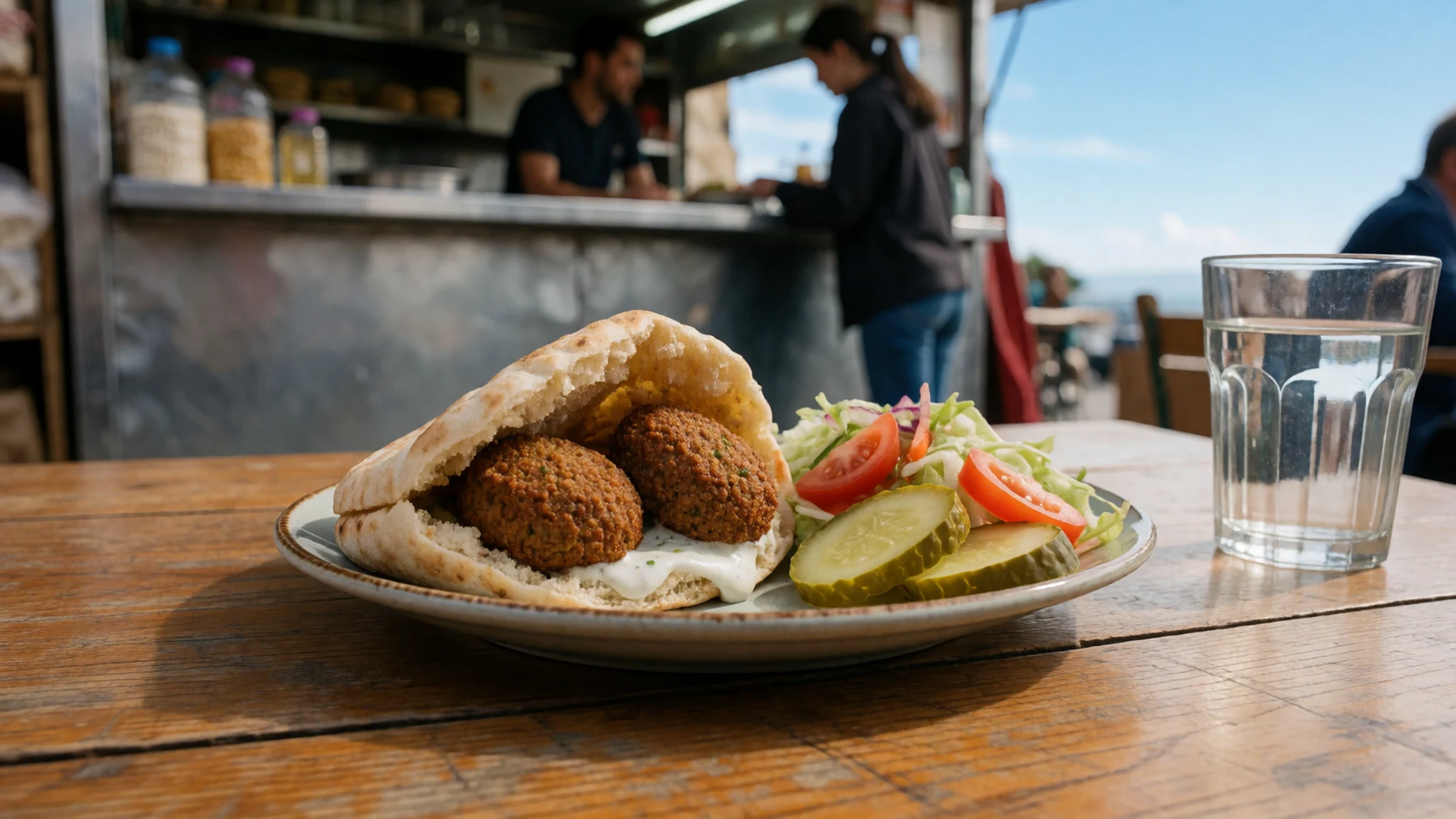
- Hummus — Casual eateries and street counters, especially in Jaffa
Hummus is the other daily staple in Tel Aviv, a bowl of whipped chickpeas and tahini with pita, often eaten as the whole plate. Casual eateries and street counters sell it all day, notably in Jaffa. Ask for it freshly made and finished with olive oil.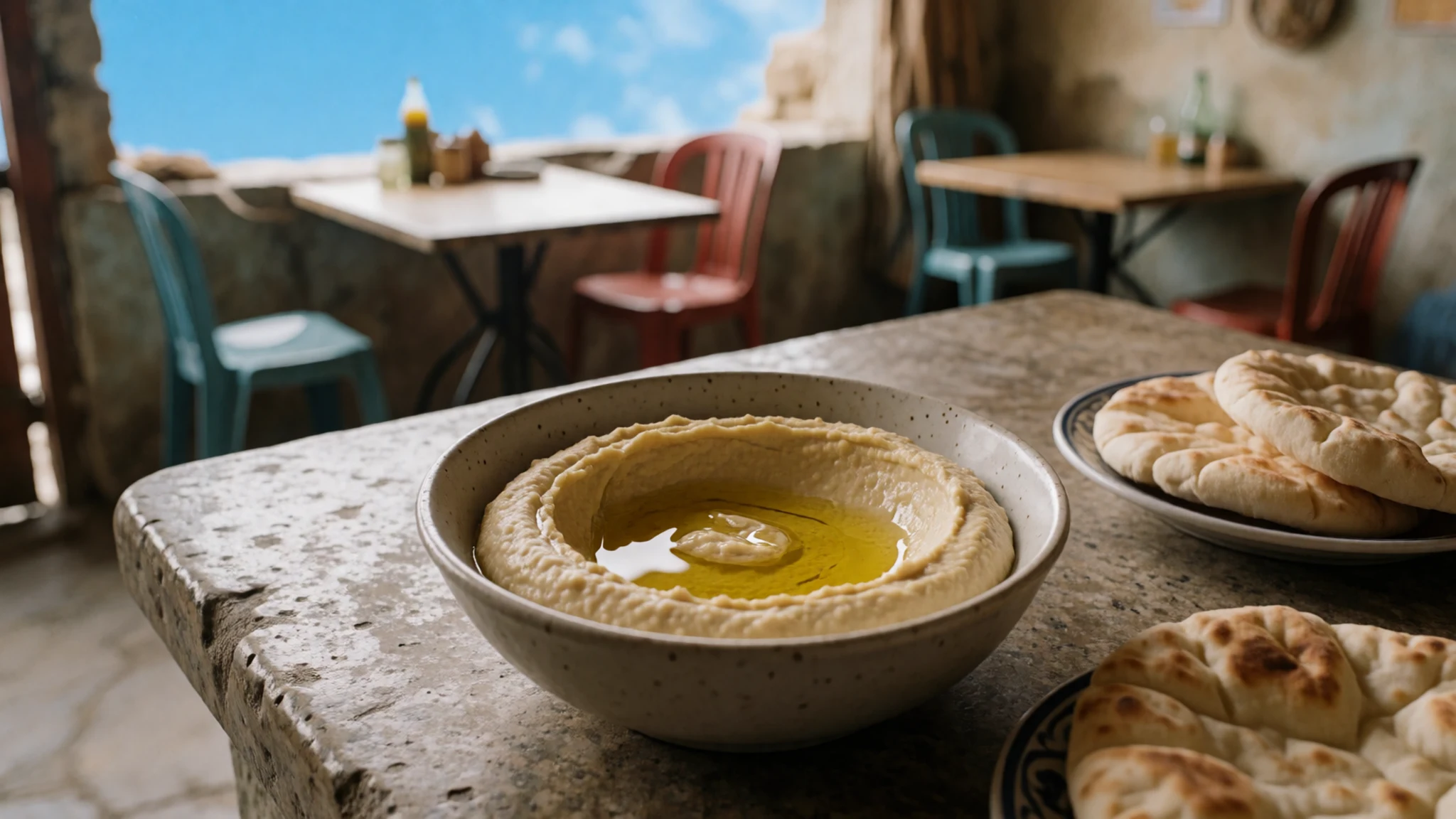
- Pressed toast — Cafes on the central boulevards and in Neve Tzedek
A pressed toast — bread and cheese, often with a vegetable filling, grilled flat — is the cafe snack of Tel Aviv, taken with coffee. Cafes along the central boulevards and in Neve Tzedek serve it through the morning and into a slow Friday. - Fresh juice — Juice stands near the beaches and on shopping streets
Tel Aviv's juice stands press fruit to order, typically orange, pomegranate, carrot and whatever the season is offering. They cluster near the beaches and along shopping streets, and they suit a hot afternoon better than another heavy plate. Pick fruit you can see in the crates. - Plant-based plates — Neve Tzedek, Sarona and Frishman street
Tel Aviv keeps a wide plant-based table, and many kitchens cook a fully vegan menu rather than one token dish. Neve Tzedek, Sarona and Frishman street are the neighbourhoods to try, from grain bowls to hummus without dairy. Say what you avoid; staff expect the question.
Plan it
Best time. In Tel Aviv, December, January and February are comfortable months for walking, mild by day but short of midsummer glare. June through September is hot and humid, which suits the beach if the day starts early and pauses through midday. Winter is milder, with rain in spells and thinner crowds on the sand. Whatever the month, buses and trains halt for Shabbat from Friday afternoon until Saturday evening.
How long. 3-4
Getting there. Most visitors arrive at Ben Gurion International Airport, called Natbag by locals. Trains leave from the station under the main arrivals hall and run direct to Tel Aviv; taxis and hired cars cover the same last stretch, and buses pick up on the ground floor, to the right outside the terminal. Across Shabbat there is no train or bus, and taxis are busy, so keep a pre-booked car if a flight lands on Friday afternoon or Saturday. Route details change; check the city site, https://www.tel-aviv.gov.il/.
Budget. high
Tips
- Start the day early in Jaffa and on the promenade, before heat and groups build.
- Do not count on buses or trains from Friday afternoon through Saturday evening.
- Carry some cash for stalls and small counters; cards are usual in cafes and shops.
- Look up festival dates on the official city website instead of assuming a weekend will coincide.
- Take water and a hat; the seafront has very little shade.
Etiquette
- Ask before photographing people, especially in Jaffa's residential lanes and at worship.
- Cover shoulders and knees in mosques, churches and synagogues, and remove shoes where they are left at the door.
- Lower your voice in religious streets during Shabbat.
Nearby
Sources
- Wikidata Q33935 (CC0)
- Wikipedia (CC BY-SA 4.0)
- Wikivoyage (CC BY-SA 4.0)
- Sarona CBD, Tel Aviv, Israel (CC BY-SA 4.0)
- Sarona CBD, Tel Aviv, Israel (cropped) (CC BY-SA 4.0)
- Jaffa Clock Tower (CC BY-SA 4.0)
- Tel Aviv Promenade panoramics (CC BY-SA 2.0)
- Rabin Square ecologic pool (CC BY 3.0)
- Tel Aviv-Yafo (CC BY 2.5)
- Port of Jaffa (CC BY 2.5)
- Aerial view of the Port of Jaffa (CC BY-SA 4.0)


