Svartifoss
Svartifoss, Iceland
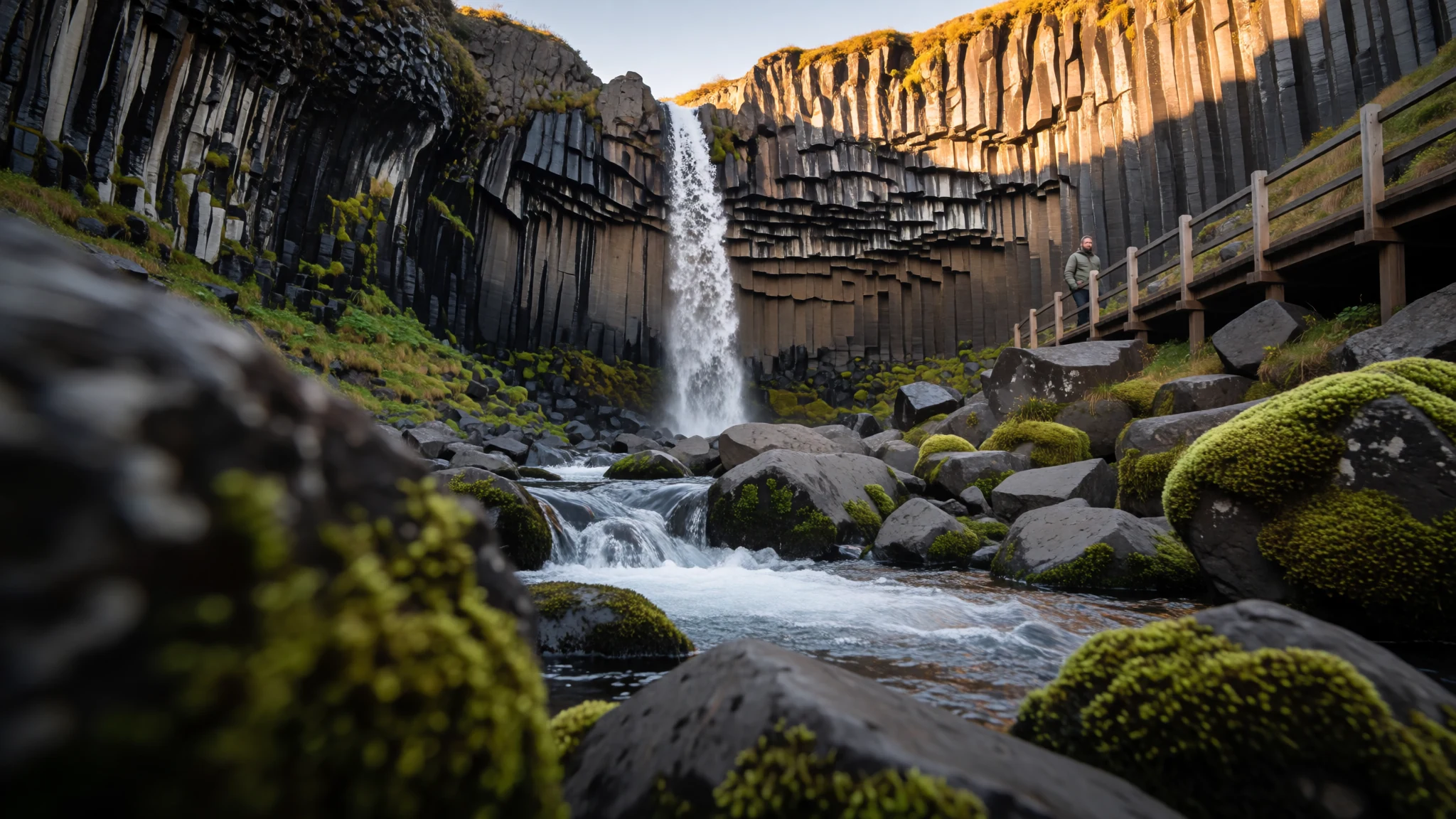
Svartifoss drops slender white water over a natural wall of dark, hexagonal basalt pillars inside Iceland's Skaftafell wilderness.
The place
Svartifoss, situated within the Skaftafell area of Vatnajökull National Park, stands as one of Iceland's most distinct natural landmarks. The waterfall cascades cleanly over a sheer cliff face encased in dramatic dark basalt columns. This dark volcanic framing gives the cascade its Icelandic name, which translates directly to 'black waterfall'. The surrounding geological features were formed during ancient volcanic eruptions, as thick sheets of cooling basaltic lava contracted slowly and cracked into orderly, predominantly hexagonal pillars.
Unlike many waterfalls where continuous water flow gradually smooths and rounds the surrounding rock, the basalt colonnade at Svartifoss fractures along clean geometric planes. Sharp horizontal grooves and fine striations run along the vertical faces of the columns, recording the incremental cooling stages of the molten rock. As water flows continuously over the lip, gravitational stress and seasonal freeze-thaw cycles cause upper column sections to break away cleanly.
Because these heavy basalt blocks snap off faster than the falling water can erode their edges, the base of Svartifoss is surrounded by sharp, angular rock fragments and massive fallen pillars. This creates a striking natural amphitheatre of dark jointed stone framing the tumbling stream. The waterfall is situated on the edge of the Skaftafell plateau, accessible via a well-graded walking trail that climbs through native birch woodland, offering views over the expansive outwash plains of the southern coast.
Its story
The striking geometry of Svartifoss has resonated far beyond its remote location in Skaftafell, exerting a profound influence on modern Icelandic architecture and cultural identity. For centuries, the surrounding landscape formed the backdrop for classical Icelandic sagas, grounding the region's dramatic topography of glaciers and volcanic rock in local literary folklore. However, in the early twentieth century, the waterfall's unique geological structure became a cornerstone for defining a distinct national aesthetic.
When state architect Guðjón Samúelsson was commissioned to design prominent public buildings for the young republic, he sought inspiration directly from Iceland's unique volcanic geology rather than copying European classical models. The regular hexagonal basalt columns of Svartifoss became his primary source of visual inspiration. This influence is most dramatically displayed in the iconic façade of Hallgrímskirkja church in Reykjavík, whose towering concrete pillars and stepped side wings directly mimic the cascading basalt formations of Skaftafell.
Samúelsson incorporated similar basalt-inspired geometric patterns into his design for the National Theatre of Iceland, where dark interior details and columned structural elements echo the natural amphitheatre surrounding Svartifoss. Through these high-profile national monuments, the remote waterfall moved from a wilderness wonder to an enduring symbol of Icelandic design, demonstrating how the raw forces of fire and ice continue to shape the cultural expression of the island.
What to see
- Seljalandsfoss
Seljalandsfoss is one of South Iceland's most iconic waterfalls, dropping over a high coastal cliff. A well-trodden walking path allows visitors to pass entirely behind the curtain of falling water, offering sweeping views across the green southern plains. Waterproof jacket and sturdy boots are essential due to constant mist.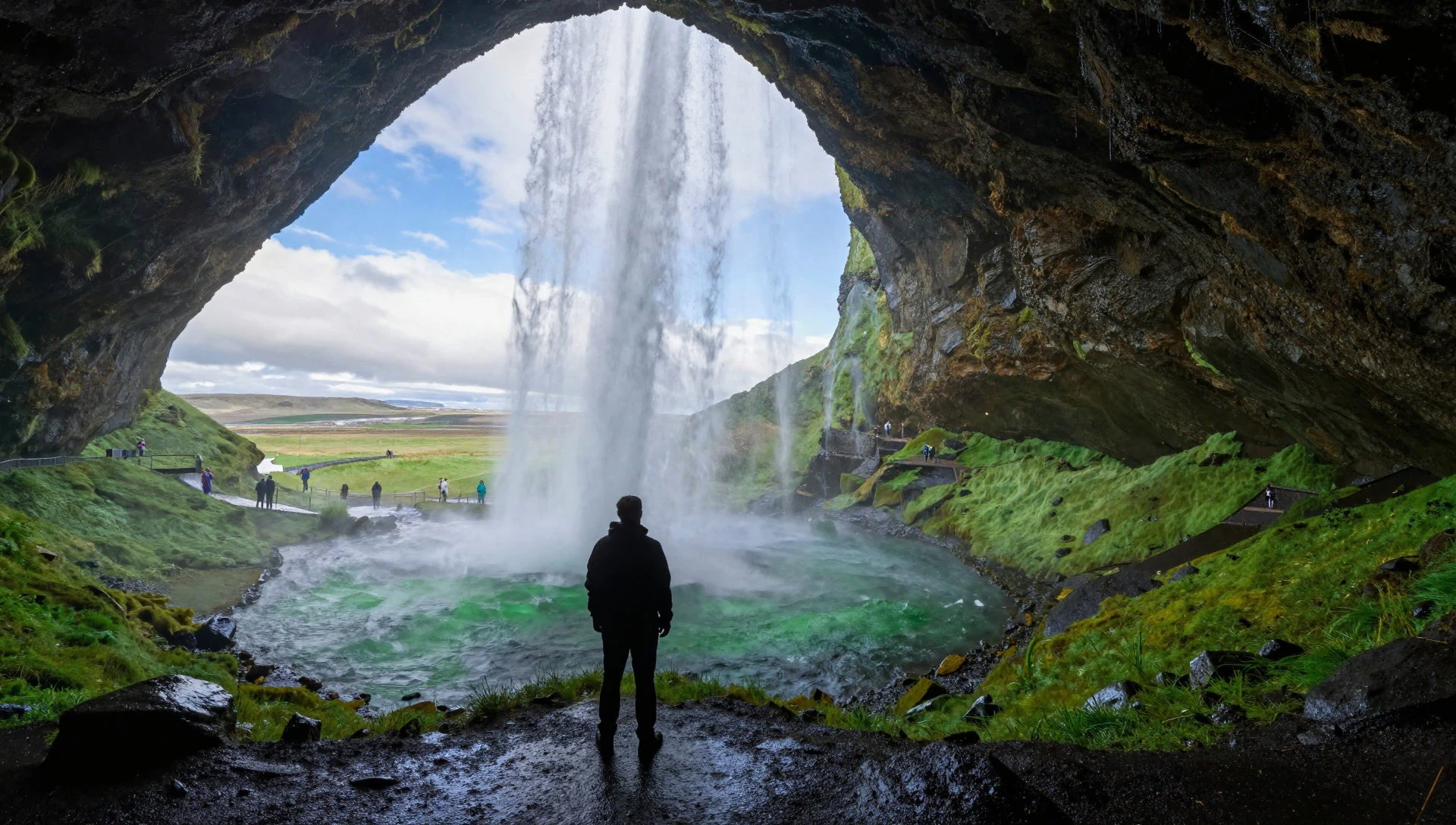
- Fjaðrárgljúfur Canyon
Fjaðrárgljúfur Canyon is a deep, serpentine river gorge located near Kirkjubæjarklaustur. Its towering palagonite walls curve dramatically above a winding stream, clad in a thick carpet of vibrant green moss. Marked walking trails run along the upper edge, providing impressive lookout points over the deep canyon floor below.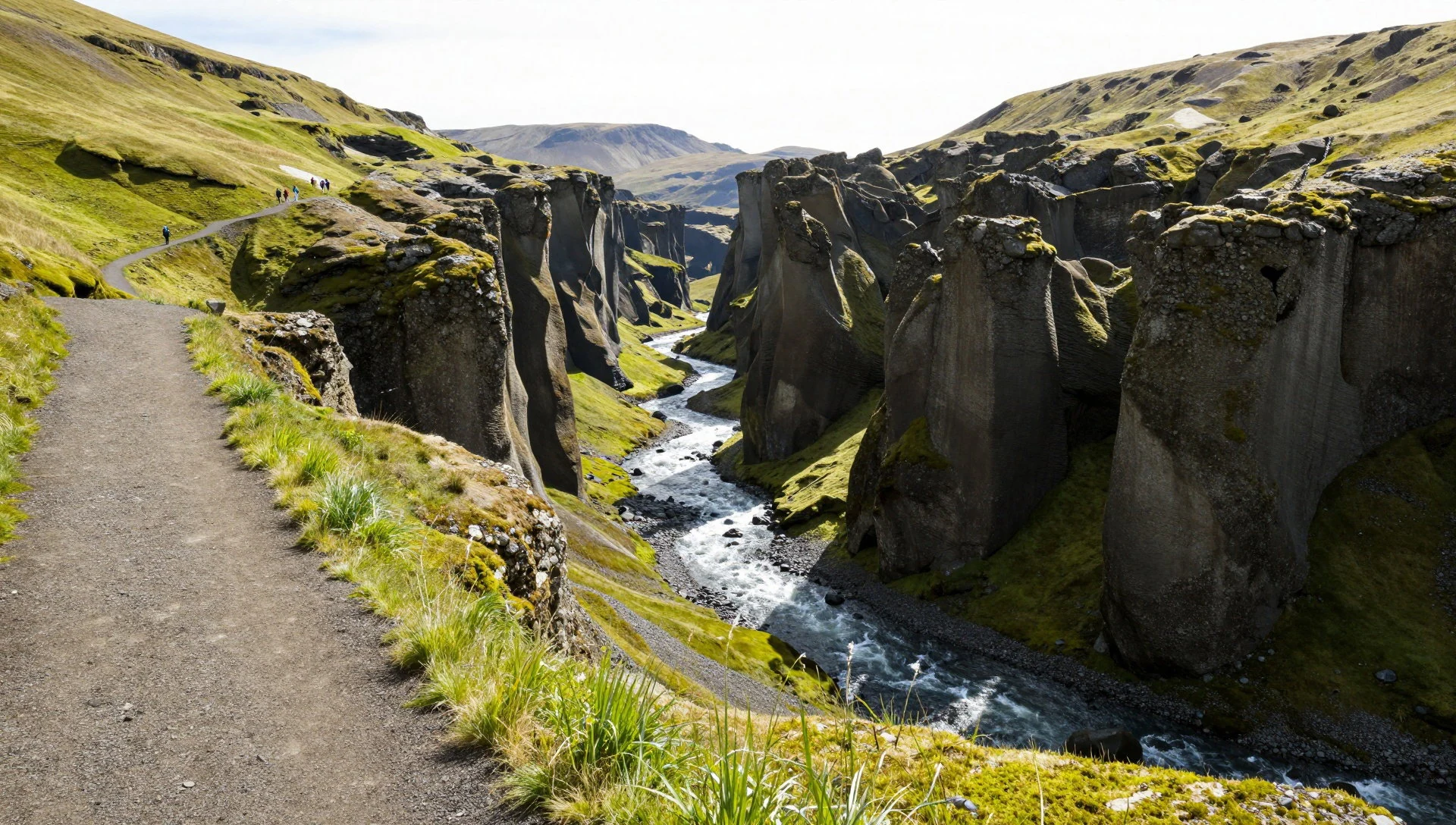
- Laugavegur Trail
Laugavegur Trail is Iceland's premier multi-day highland trekking route, stretching from Landmannalaugar to Þórsmörk. Hikers traverse geothermal valleys, black volcanic deserts, and glacial rivers, staying at mountain huts and campsites along the way. The route demands thorough preparation and proper gear to handle severe mountain weather variations.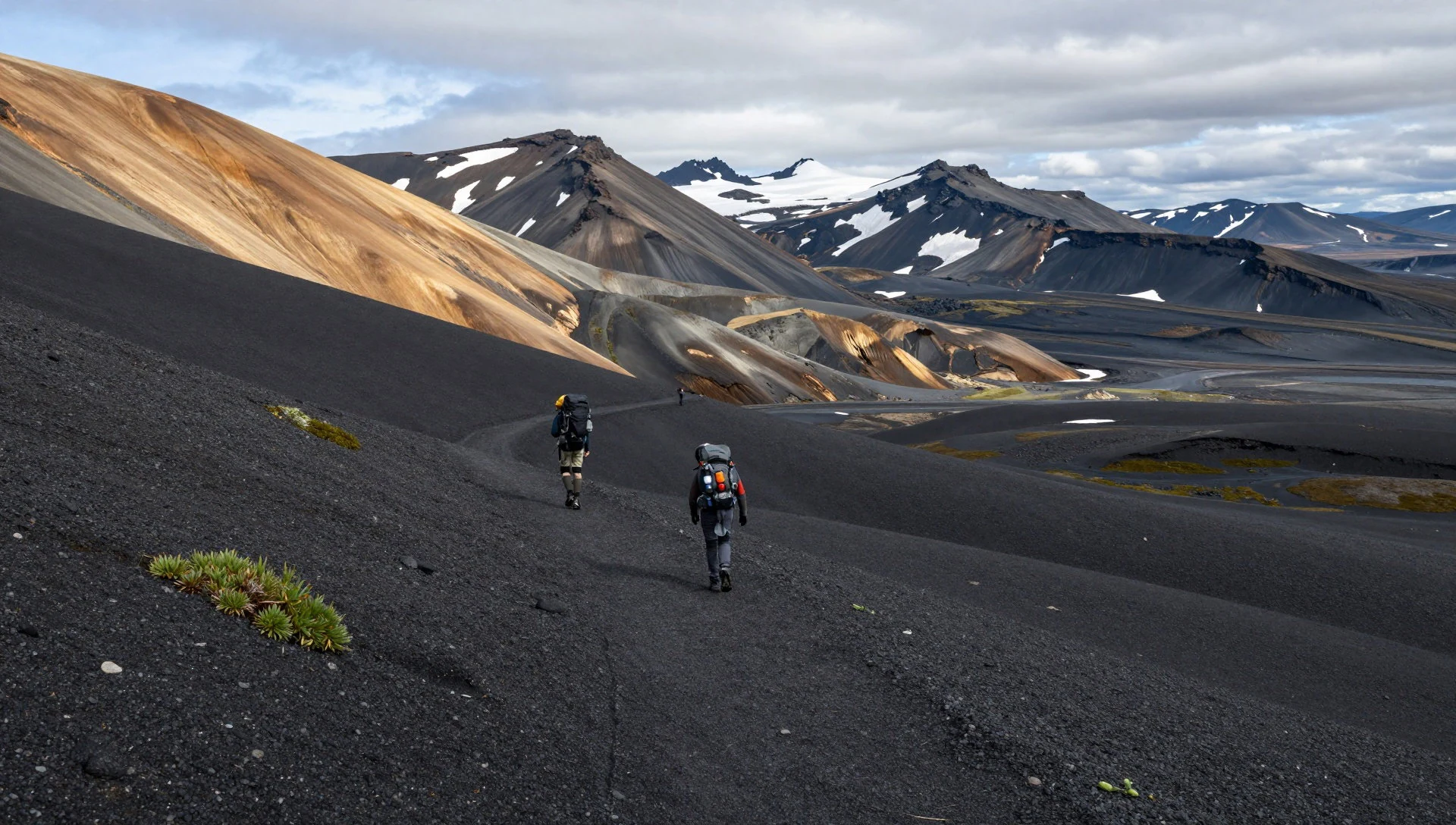
- Þórsmörk Valley
Þórsmörk is a sheltered mountain valley nestled between three major glaciers and braided riverbeds. Renowned for its relatively mild microclimate, the area features birch forests, jagged mountain ridges, and panoramic hiking routes. Access requires high-clearance mountain buses capable of navigating wide, unbridged glacial river crossings safely.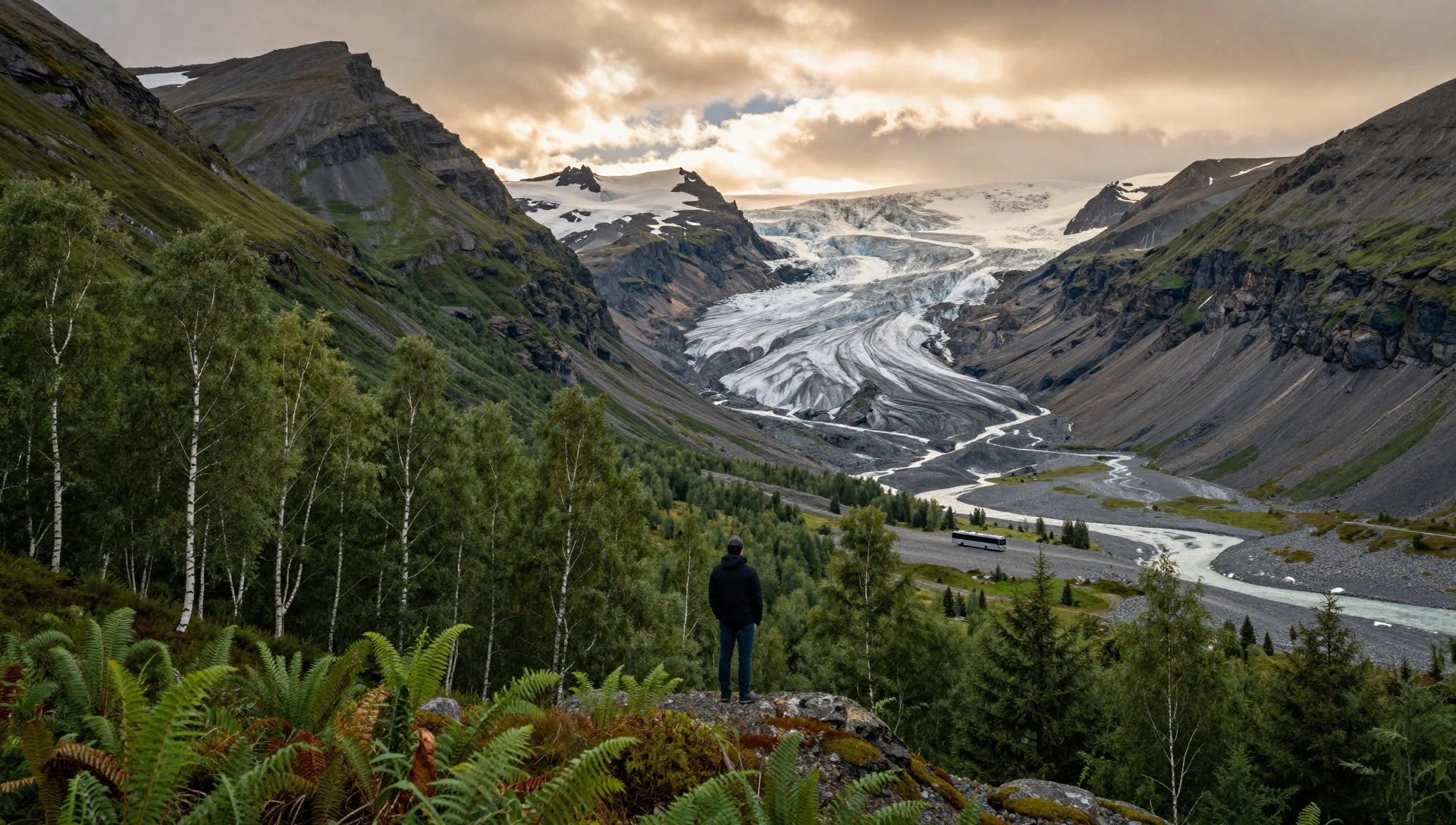
- Fimmvörðuháls Pass
Fimmvörðuháls is a famous mountain pass trail linking Skógar to Þórsmörk, situated between the Mýrdalsjökull and Eyjafjallajökull ice caps. The demanding route takes hikers past dozens of cascades along the Skógá River before crossing fresh volcanic craters formed during recent eruptions, offering unmatched mountain vistas.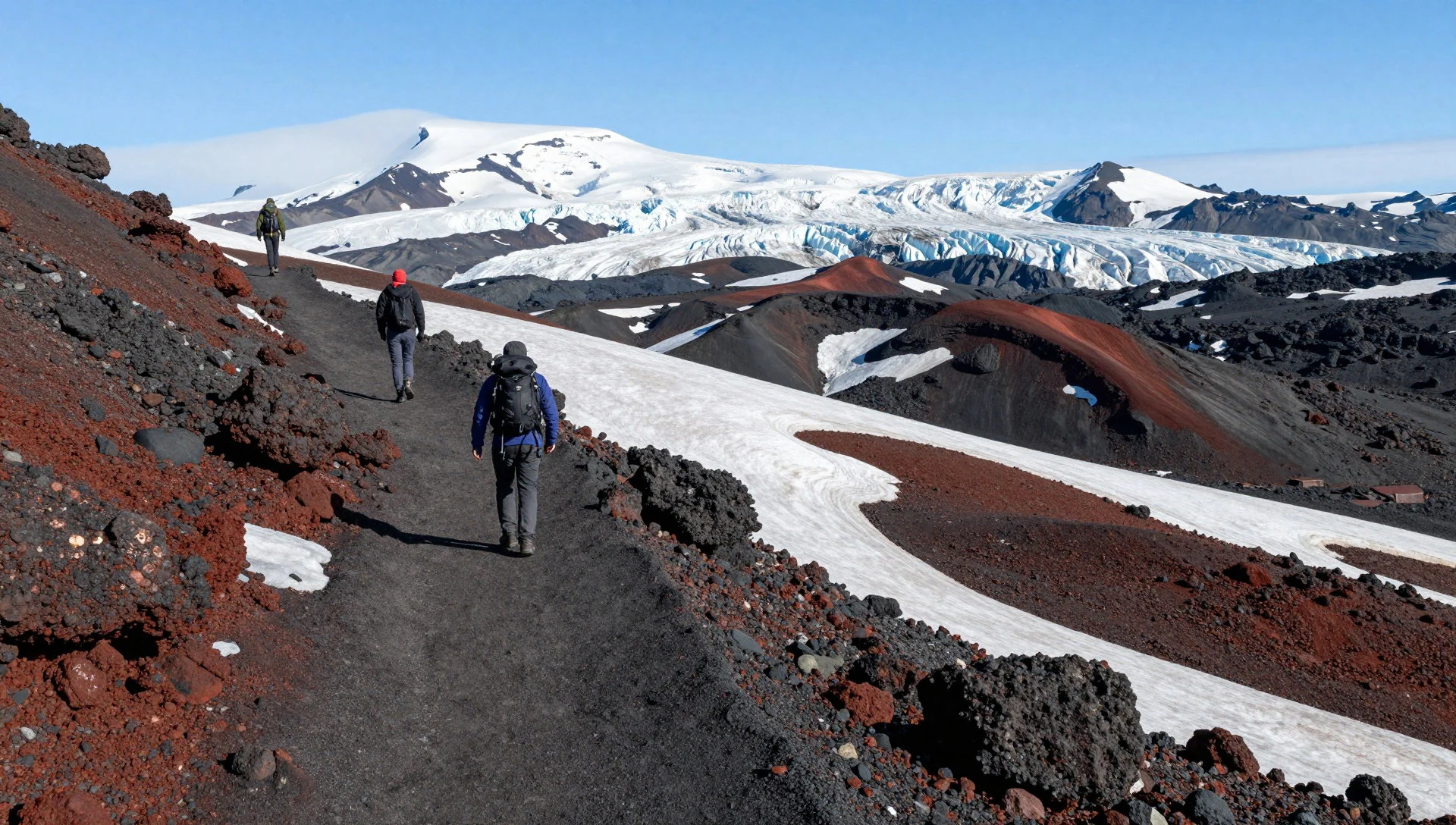
Culture
Life along Iceland's southern coastline has historically been defined by geographic isolation, harsh maritime conditions, and an unyielding volcanic landscape. Early farmsteads nestled beneath glaciers depended on cattle rearing, sheep farming, and coastal fishing, building a tight-knit community resilience that endures today. Icelandic culture maintains a deep spiritual and practical connection to the natural world, where oral storytelling, saga traditions, and geological history remain intertwined with daily life.
With the growth of international travel in South Iceland, local communities strongly advocate for environmental stewardship and sustainable tourism. Sub-arctic ecosystems and thin volcanic soils are extremely fragile; slow-growing moss carpets and native birch scrubland take decades to recover once damaged by foot traffic or off-road vehicles. Respecting conservation guidelines is both a social expectation and a fundamental cultural value throughout the country. When visiting national parks and wilderness areas, always stay strictly on designated footpaths and wooden boardwalks to protect sensitive plant life.
What to wear
Traditional Icelandic clothing evolved as a practical defence against the damp, windy conditions of the North Atlantic. Hand-spun and hand-knitted garments made from unspun sheep wool, known locally as lopa, provided natural water resistance and exceptional insulation. This heritage remains vibrant today through the lopapeysa, the iconic woollen sweater featuring decorative geometric yokes around the collar and shoulders. Farmers, park rangers, and outdoors enthusiasts across South Iceland wear the lopapeysa as essential everyday outerwear during cool weather.
In contemporary settings, Icelanders blend traditional knitwear with modern technical gear designed for unpredictable mountain climates. Waterproof softshell trousers, breathable thermal base layers, and windproof jackets are standard attire for daily outdoor life.
For travellers hiking to Svartifoss or exploring the southern coast, packing high-performance outdoor layers is essential regardless of the season. Ditch cotton in favour of wool or synthetic base layers, add an insulating mid-layer, and finish with a fully waterproof and windproof outer shell. Sturdy hiking boots with ankle support and deep tread are vital for navigating wet gravel paths and slippery basalt boulders around the waterfall base.
What to eat
- Arctic Char — restaurants and countryside inns around Kirkjubæjarklaustur
Freshwater Arctic char is a celebrated culinary specialty across South Iceland. Harvested from local rivers and sustainable farms, this delicate fish is typically pan-seared with fresh butter, herbs, and lemon, or house-smoked and served with rye bread.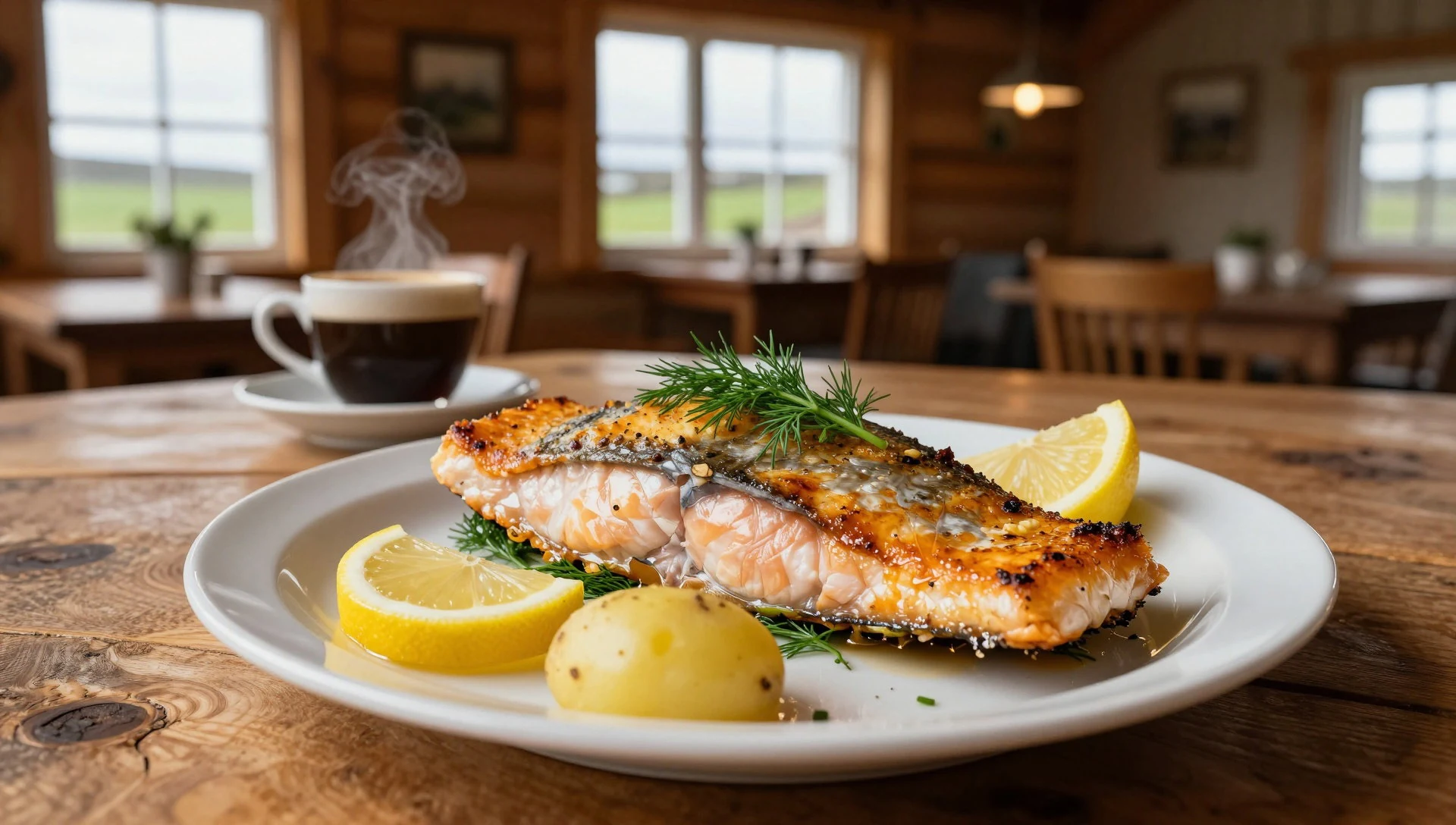
- Skyr — farm stalls, roadside cafes, and markets across South Iceland
Skyr is a traditional Icelandic cultured dairy staple enjoyed for over a millennium. Dense, creamy, and high in protein, this fresh cultured cheese is served sweet with cream and berries, or blended into hearty breakfast bowls and desserts.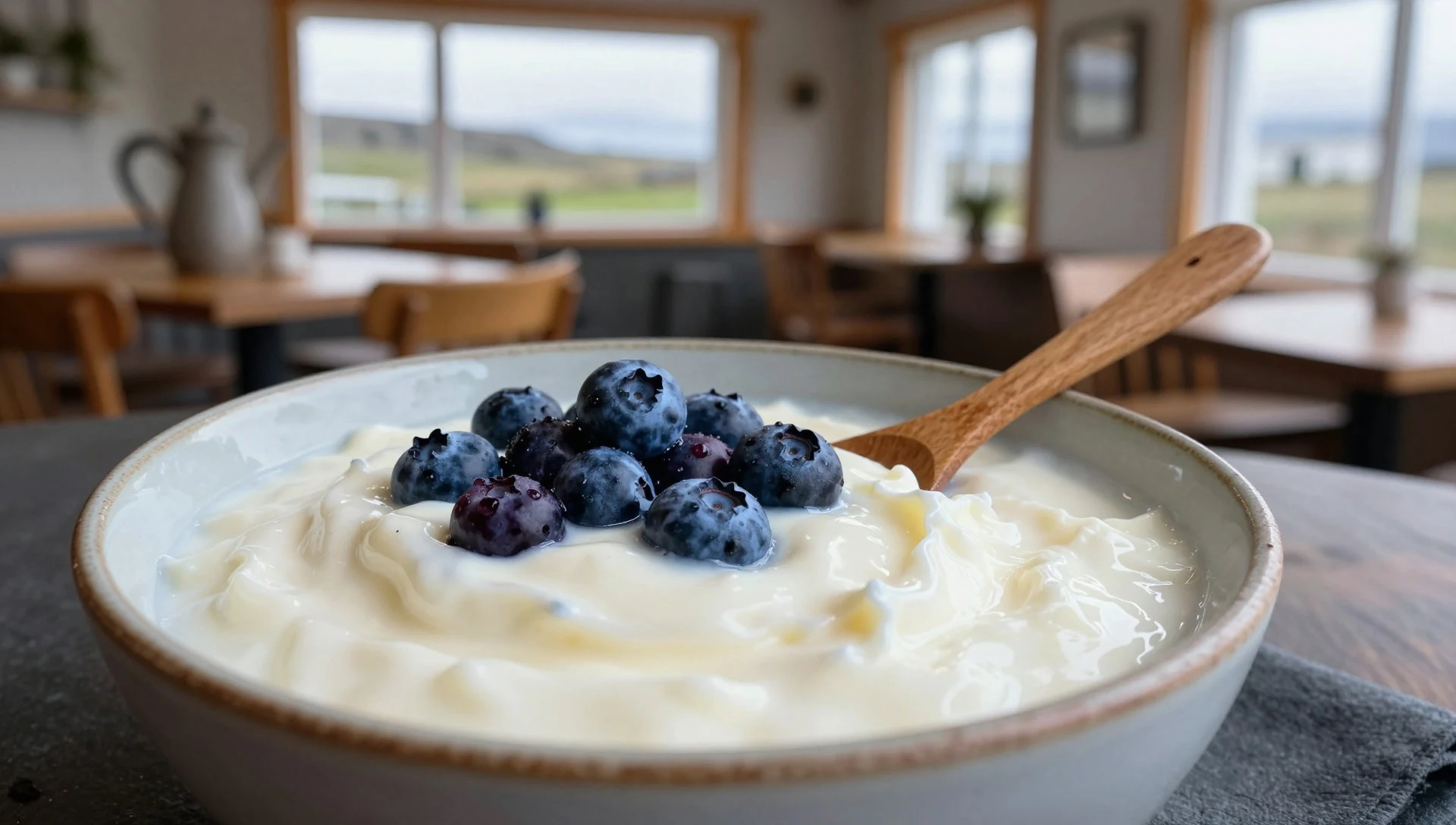
- Local Farm Wheat Bread — farm shops and bakeries along the southern coast
Hearty bread baked from locally harvested grain offers a distinct taste of southern Icelandic agriculture. Dense, dark, and slightly sweet, it is traditionally served warm with generous coats of fresh farm butter alongside local soups. - South Iceland Craft Beer — countryside taprooms and local pubs near Selfoss
Microbreweries in the southern lowlands produce small-batch ales using pure glacial meltwater. Local craft selections range from crisp pale ales to rich stouts, making them a popular refreshment after a day of hiking in the national park. - Icelandic Lamb Soup — visitor centre cafes and mountain huts throughout Skaftafell
Kjötsúpa is a traditional Icelandic clear soup made with free-roaming mountain lamb, root vegetables, and herbs. Piping hot and deeply satisfying, this classic dish is served across park cafes as the ultimate comfort food for cold hiking days.
Plan it
Best time. June to August brings long daylight hours, milder temperatures, and accessible hiking trails; May and September offer quieter visits with cooler weather.
How long. 2–3
Getting there. Fly to Reykjavík, then drive east along the southern Ring Road for roughly four hours to reach the Skaftafell visitor centre parking area.
Budget. mid
Tips
- Rent a four-wheel-drive vehicle if planning to venture onto unpaved highland roads
- Carry full waterproof jacket and trousers even on sunny mornings
- Check daily weather and road safety bulletins before setting out on long drives
- Reserve campsites or hotel rooms months in advance for summer travel
Etiquette
- Never drive off marked roads as off-road driving damages delicate soil and carries severe fines
- Pack out all litter and follow leave-no-trace principles throughout national parks
- Remain strictly on marked footpaths to prevent erosion of fragile sub-arctic moss
Nearby
Sources
- Wikidata Q1145786 (CC0)
- Wikipedia (rev 1362227140) (CC BY-SA 4.0)
- Wikivoyage (rev 5256807) (CC BY-SA 4.0)
- Photo photos/01-svartifosssummer.jpg (CC BY-SA 4.0)
- Photo photos/02-svartifosswinter.jpg (CC BY-SA 4.0)
- Photo photos/03-svartifoss-july-2014.jpg (CC BY-SA 4.0)
- Photo photos/04-waterfall-svartifoss.jpg (CC BY-SA 4.0)
- Photo photos/05-svartifoss-winter.jpg (CC BY-SA 4.0)
- Photo photos/06-einzigartiges-amphitheater-aus-dunklen-hexagonaleren-basalts.jpg (CC BY-SA 4.0)
- Photo photos/07-einzigartiges-amphitheater-aus-dunklen-hexagonaleren-basalts.jpg (CC BY-SA 4.0)
- Photo photos/08-einzigartiges-amphitheater-aus-dunklen-hexagonaleren-basalts.jpg (CC BY-SA 4.0)


