Strasbourg
Strasbourg, France
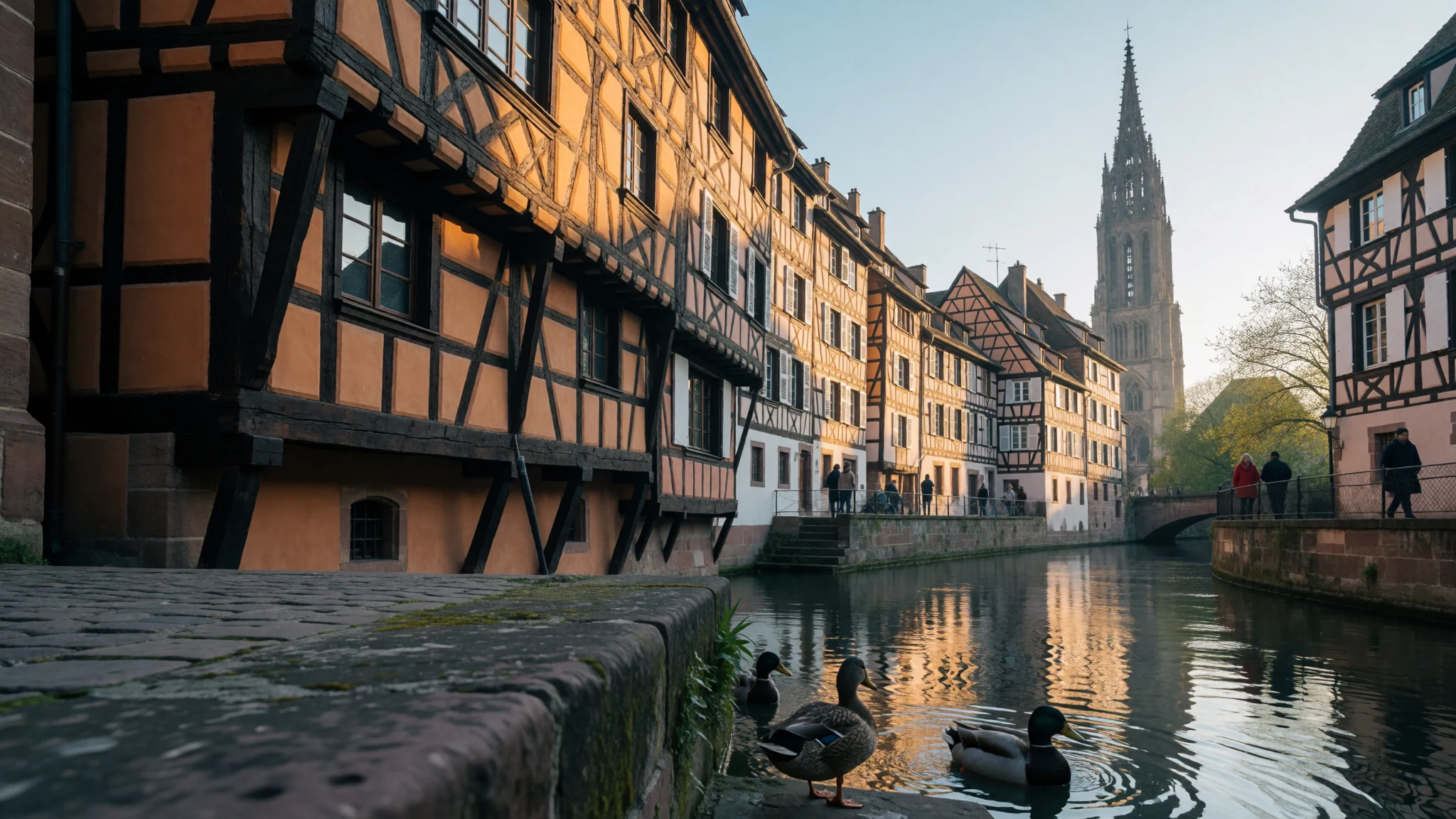
Strasbourg pairs a canal-cut Alsatian old town with the working seat of the European Parliament.
The place
Strasbourg is the capital and largest city of Grand Est, in historic Alsace, on the Upper Rhine plain in northeastern France where the Ill runs toward the Rhine. The commune is home to 293,771 people and lies at 150 metres. It is a prefecture and a border city, and the European Parliament sits here, so interpreters, flags and coach parties are part of the street, not a side trip. Several other European bodies work from the city as well, which gives the calendar a rhythm of sessions, security cordons and full hotels. Water shapes the centre. Channels of the Ill cut La Petite France, a quarter of half-timbered houses and mill races, and the Ponts Couverts, no longer covered, close the view with their towers. Nearby, the Rohan palace turns the riverbank to French classical stone. Beyond that, the Neustadt opens into wide avenues around Place de la République, the Palais du Rhin among the heavy imperial buildings. Medieval timber, French ceremony and German boulevards sit in one walk. The same ground has been filed under the Holy Roman Empire, France, the German Empire and Nazi Germany. That sequence shows up as bilingual names, Alsatian cooking next to French cafés, and a skyline with no single century in charge. The city is large enough for ordinary neighbourhoods and a tram network, and compact enough that the cathedral still marks direction from the quays. Practical updates are published on the official site, https://www.strasbourg.eu.
Its story
Strasbourg grows in the record out of the Roman camp Argentoratum, noted from 12 BCE, on fertile land between the Ill and the Rhine. Through the Middle Ages the bishops governed. Their hold was strengthened more than once, until Hausbergen in 1262, when the town broke that hold and continued as a self-governing imperial city of the Holy Roman Empire. In 1681 Louis XIV's forces brought Alsace, and Strasbourg with it, under the French crown. The classical palace on the river belongs to the long French period that followed. The border flipped in 1871, after the Franco-Prussian War: the city was placed in the Imperial Territory of Alsace-Lorraine and stayed German until France recovered it in 1918. The broad Neustadt was laid out for that German chapter, which is why the avenues feel unlike the medieval island. The years of the world wars repeated the swing. German troops entered in June 1940 as France was defeated, and annexation put Strasbourg in the Gau Baden-Elsaß under Gauleiter Robert Wagner. In November 1944 General Leclerc's 2nd French Armoured Division took the city back. French rule has held since. The city's own record lists those sovereignties as the Holy Roman Empire, France, the German Empire, Nazi Germany and France again. Those changes were not only flags. A family could see the school language and the town hall switch more than once. The cathedral, underway for medieval centuries and finished by one tall tower, stayed the fixed object while armies passed. Hosting the European Parliament is the city's later reply to that record: institutions planted on a border so the border would matter less.
What to see
- Cathédrale Notre-Dame — Cathedral quarter
Strasbourg's Cathédrale Notre-Dame is pink sandstone Gothic, in the works from 1176 to 1439. The single spire reaches 142 metres, and the travel notes call it the highest cathedral tower in France. Sculpture covers the west front, and the interior is a tall Gothic nave. The square is calmer early, before coach groups gather. Tower access changes, so the city website is the check.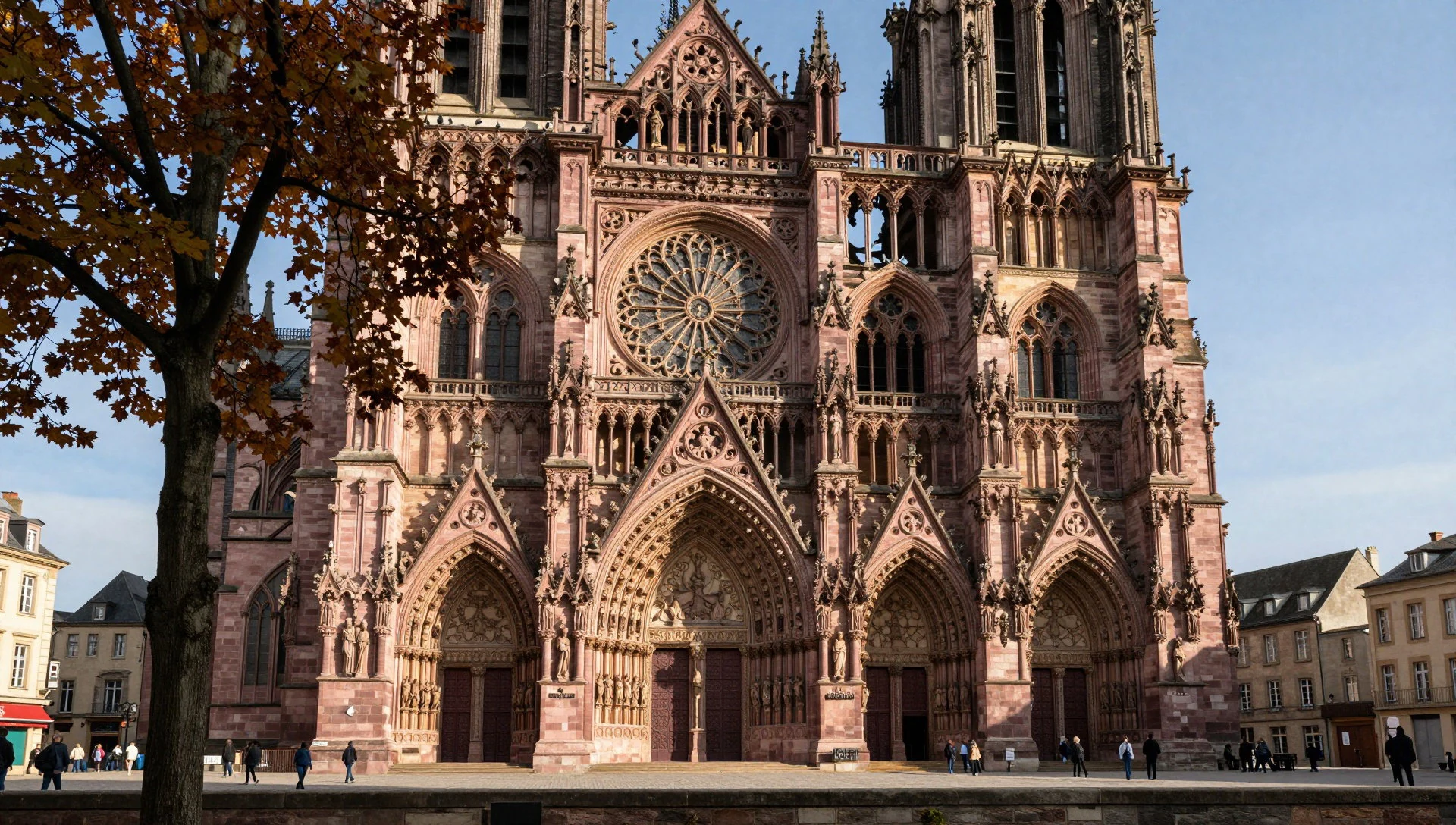
- Ponts Couverts — La Petite France
Strasbourg's Ponts Couverts are a chain of three bridges on the Ill, with four towers of the twelfth and fourteenth centuries still standing over them. They were a defensive gate, and they still look like one: thick masonry, narrow channels, often the cathedral spire in the same frame. The crossing sits where La Petite France begins, half-timbered houses and old mill races along the banks.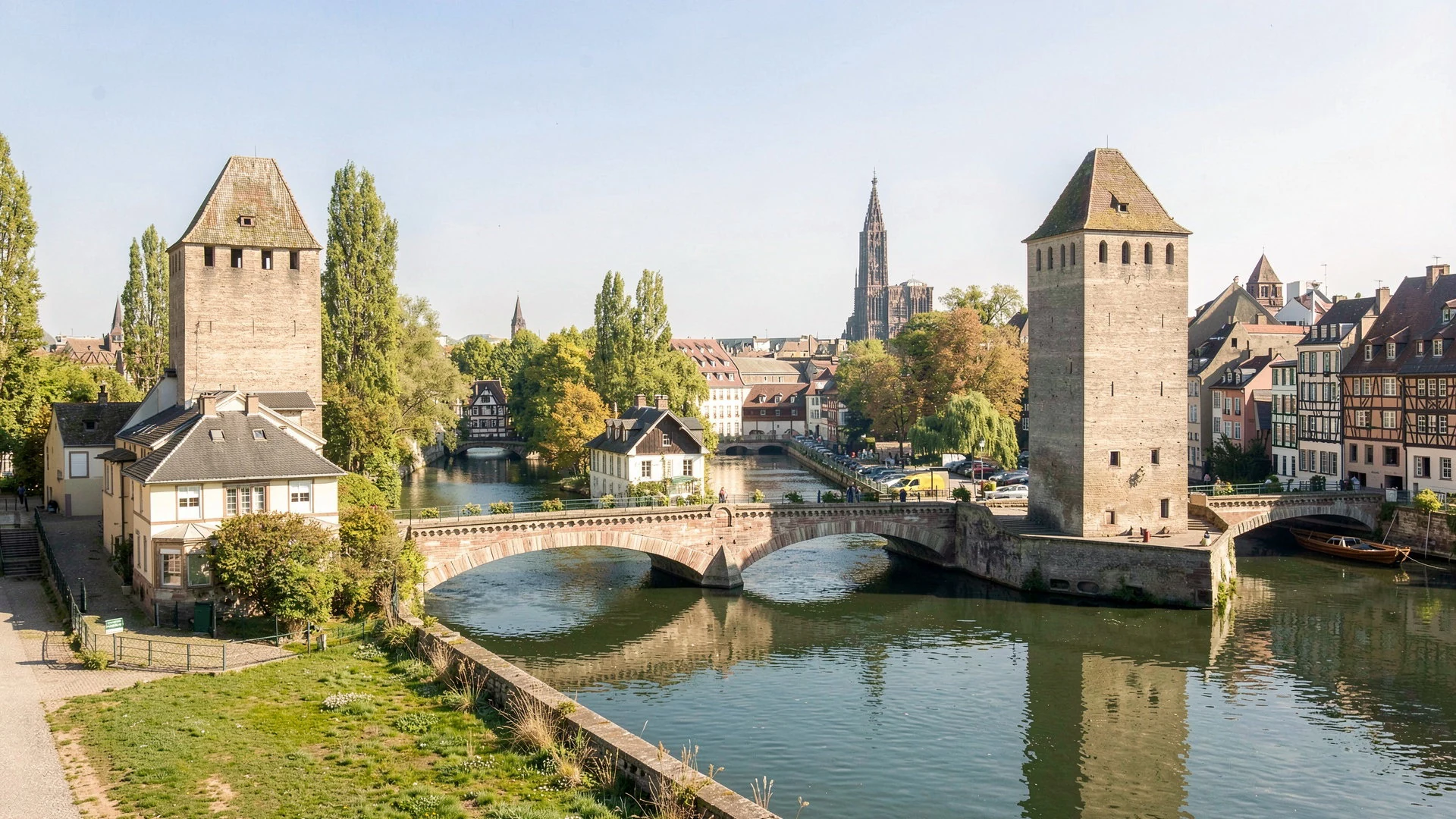
- Maison Kammerzell — Cathedral square
Strasbourg's Maison Kammerzell stands on the cathedral square, a half-timbered house with upper floors carved in 1589. Figures cover the beams, the window frames and a projecting oriel, a late Renaissance wooden front rather than a plain merchant wall. Against the pink church beside it, the house shows how elaborate timber work became here. An eatery occupies the ground floor.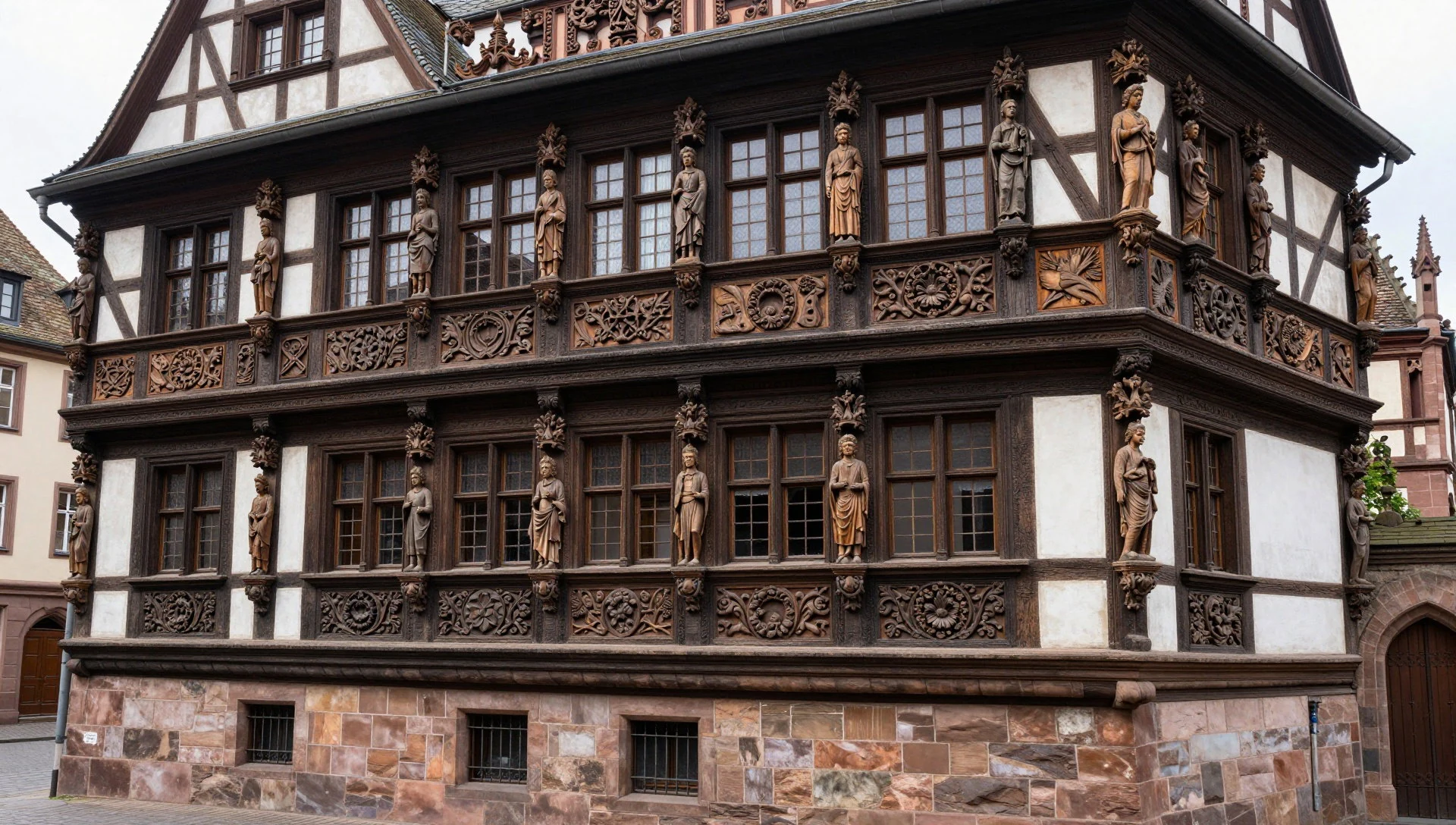
- Palais Rohan — Quai des Bateliers
Strasbourg's Palais Rohan is the classical palace beside the Ill, begun once France held the city in 1681. The river front, seen from the boatmen's quay, is a long pale façade of even windows, with the ceremonial court away from the water. Three collections share the rooms: fine arts, archaeology and applied arts. For doors and entry rules, use the official city site.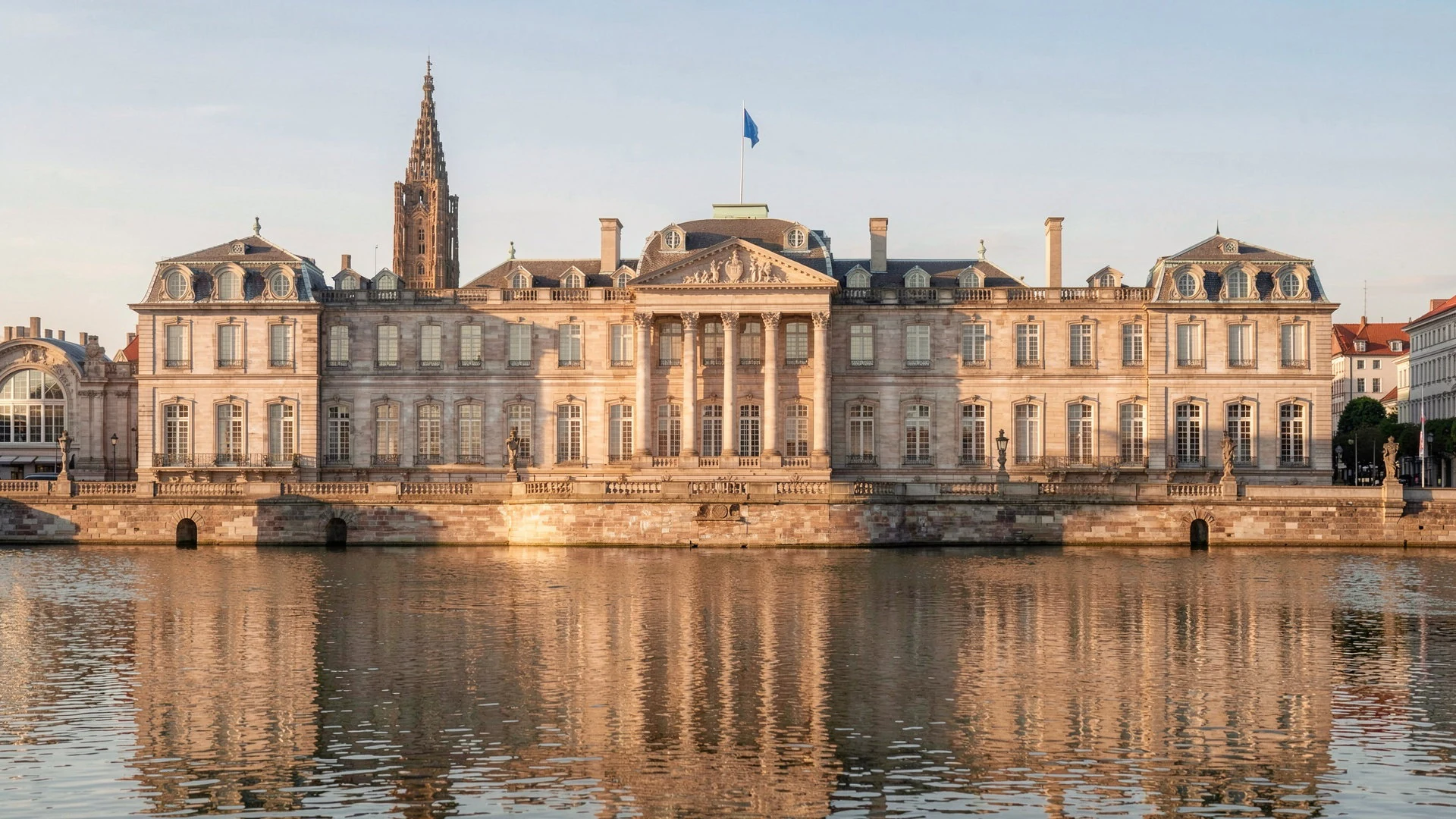
- Musée Alsacien — Old town
Strasbourg's Musée Alsacien sets out daily life in Alsace from the thirteenth century to the nineteenth: work tools, toys, furniture, clothing and religious objects from Christian and Jewish homes. The rooms are built as interiors people might have used, which makes the timber streets outside easier to understand. It is a modest museum and a useful stop before walking La Petite France.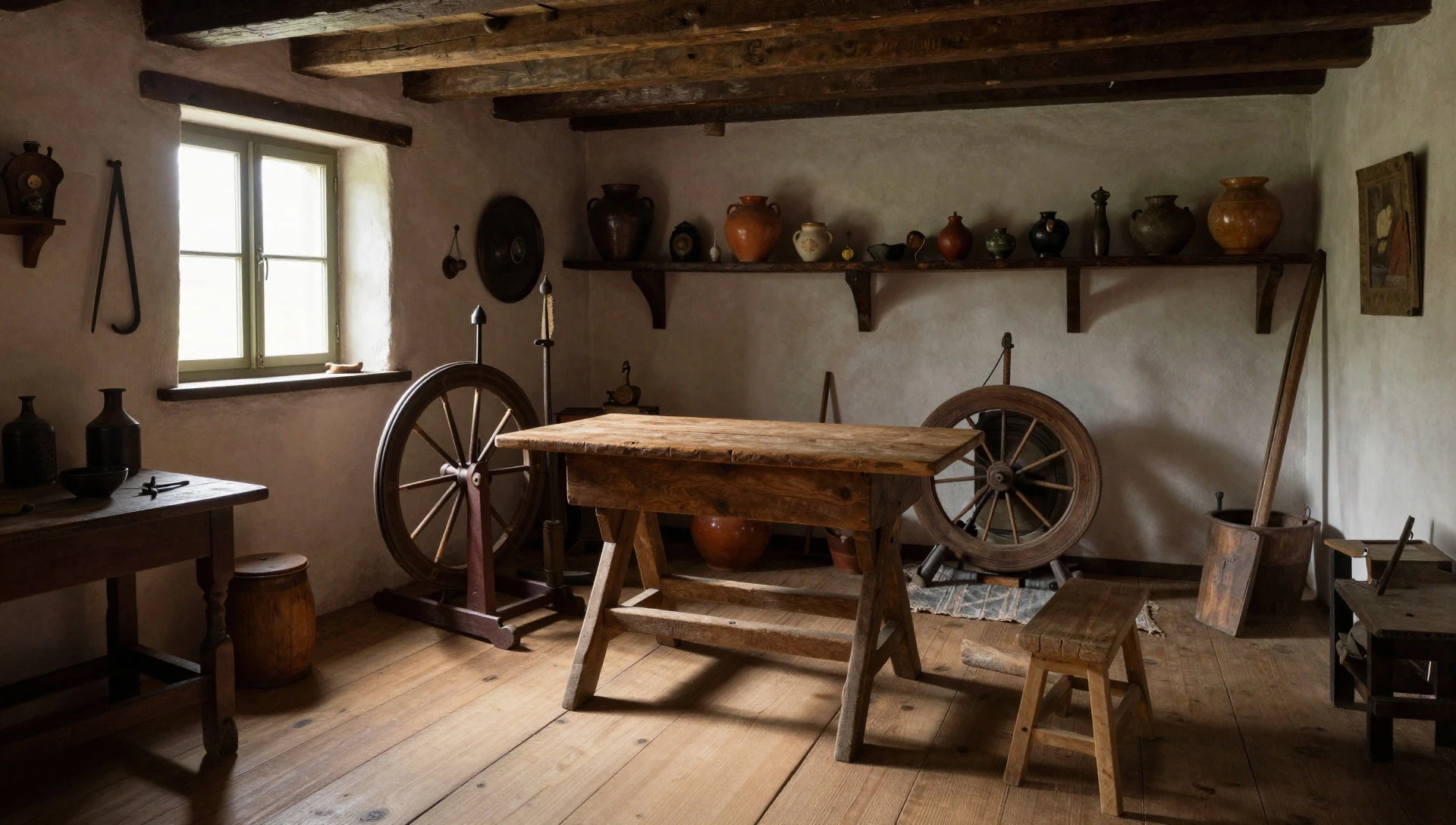
Culture
Strasbourg keeps a full musical and theatre calendar beside the comings and goings of the European institutions. Since 1975 the Palais de la musique et des congrès has been home to the Orchestre philharmonique de Strasbourg, an orchestra founded in 1855 and one of the oldest symphony orchestras in western Europe. The Opéra national du Rhin works here too, along with the Théâtre national de Strasbourg, the Percussions de Strasbourg and the Théâtre du Maillon. Smaller stages include the Théâtre jeune public, TAPS Scala and the Kafteur, and the Laiterie belongs on the same live-music circuit. Festivals mark the seasons without taking the city over. Autumn is Musica, devoted to contemporary classical music. Summer is the Festival international de Strasbourg, established in 1932, with classical programmes and jazz. Augenblick, a film meeting, has returned each year since 2005. A parliament plenary adds another kind of crowd: languages, security and full trams, then a quiet week after. Between those dates this is a French city with German-language traces in surnames, shop names and family custom, and with winstubs that still expect a long meal rather than a rushed table. In the cathedral, speak quietly, step aside for anyone who is praying, and do not use flash during a service.
What to wear
Strasbourg's folk dress is Alsatian rather than court French. For women the festive version centres on the coiffe, a large bow of black silk ribbon set on a small cap, worn with a white blouse, a fitted velvet bodice, a full skirt and an apron. Colour and size of the bow once marked a village and a kind of occasion; in the city today the costume comes out with folk groups and feast days, not for work. Men's festive clothes were a dark jacket, a red or black waistcoat, breeches and a wide hat, in wool and linen. The Musée Alsacien holds these garments beside plainer work clothes, which is the right place to see the textiles up close. Daily dress in Strasbourg is ordinary big-city French. Coats, scarves, trainers and dark jackets fill the tram; session weeks at the parliament add suits. The Rhine plain is cold in winter, so a warm coat matters, and summer can be warm enough for shirtsleeves. A light waterproof is worth packing in any month. Visitors can wear the same. Cobbles and bridge stones need shoes with a grip, not thin soles. The cathedral is a working church, so covered shoulders and knees are the respectful choice, and hats come off indoors. Alsatian festive costume is for an invitation, not for sightseeing.
What to eat
- Tarte flambée — Winstubs in La Petite France and the cathedral streets
Strasbourg's tarte flambée, also called Flammekueche, is a thin oval of dough fired very hot with cream, onions and lardons. It is savoury, crisp at the rim and soft in the middle. Winstubs around La Petite France and the cathedral streets still serve it to share.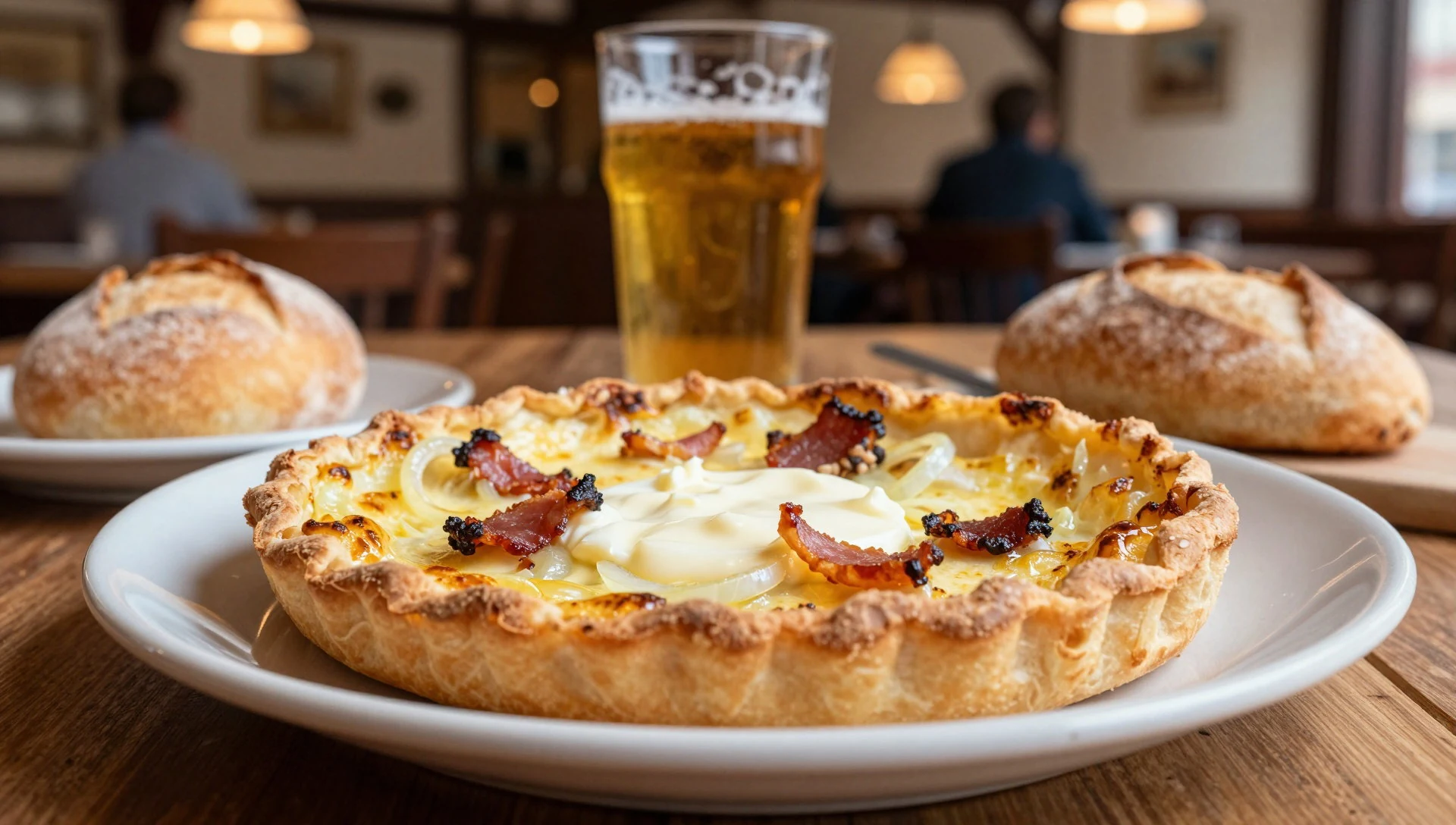
- Choucroute garnie — Winstubs in the old town and the Neustadt
Strasbourg's choucroute garnie piles wine-cooked sauerkraut with salted pork, sausage and potato. It belongs to a long winstub lunch, not a snack stop. Dining rooms in the old town and on the Neustadt avenues still serve it in the colder months.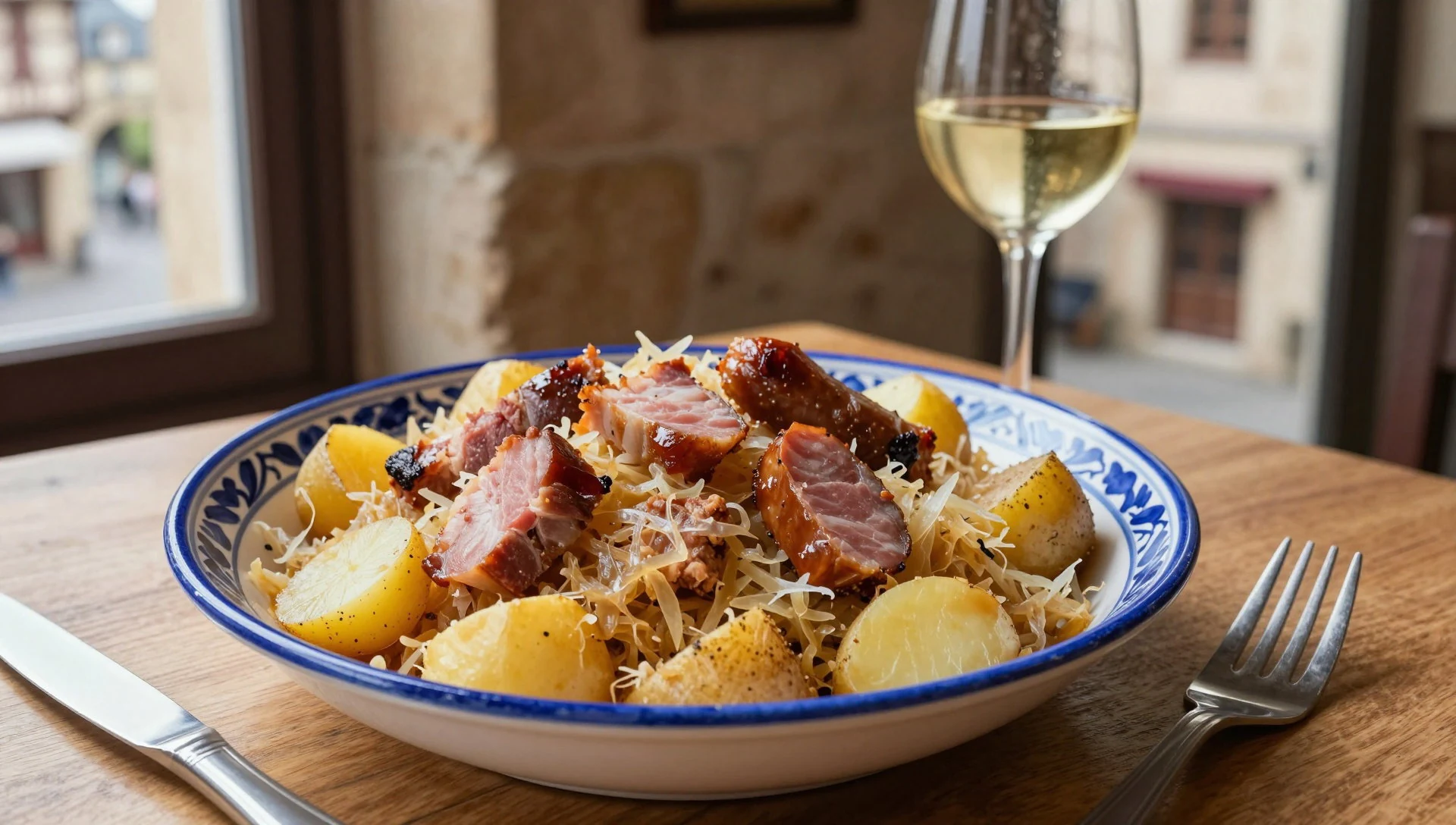
- Baeckeoffe — Alsatian eateries in the old centre
Strasbourg's baeckeoffe layers potato, onion and marinated meats in a sealed ceramic dish. The name recalls the baker's oven, where households left the pot to cook. Old-centre eateries still serve it as one shared casserole. - Kougelhopf — Bakeries in the old town and market streets
Strasbourg's kougelhopf is a tall yeast cake from a fluted mould, with raisins, almonds and a light sugar crust. Bakeries in the old town and near the market streets sell it for breakfast or later with coffee. It is also a cake for festive tables. - Bretzel — Bakery counters and morning stalls around the cathedral and La Petite France
Strasbourg's bretzel is a salted knot of dough, boiled then baked, and sold warm. Butter is the usual companion. Bakery counters and morning stalls around the cathedral and La Petite France stack them in the window, and they are the easy bite between sights.
Plan it
Best time. April, September and October are the easier months for walking the lanes, with August the hottest and May the wettest. High summer can be hot on the plain, and winter is cold. December fills the squares for the Christmas market, which suits some visits and exhausts others. Take a current forecast seriously.
How long. 3–4
Getting there. Strasbourg has its own airport. Basel-Mulhouse-Freiburg, over the border, and the German airports at Karlsruhe/Baden-Baden and Stuttgart offer more flights, with a train or bus still to do; check those links close to the day. The TGV from Paris, including a connection from Charles de Gaulle, is often the simplest long leg into the main station. Details change, so confirm them rather than trusting a saved plan.
Budget. mid
Tips
- Book rooms early when the European Parliament is in session; the station and parliament districts fill first.
- See the cathedral square and the Ponts Couverts early in the day, before coach groups settle in.
- Walk the old centre and use the tram for the station, the Neustadt and the European quarter.
- Cards work in most eateries; keep small cash for bakery counters and market stalls.
- Confirm museum and tower access on https://www.strasbourg.eu rather than assuming a fixed timetable.
Etiquette
- In the cathedral, keep your voice down, avoid flash during worship, and dress so shoulders and knees are covered.
- Ask before photographing people, especially during a service or when someone is in festive dress.
- Offer a bonjour when you enter a shop or a winstub, and wait your turn on the tram.
- Do not block the narrow bridge paths for a long photo stop when others are trying to cross.
Nearby
Sources
- Wikidata Q6602 (CC0)
- Wikipedia (rev 1381986784) (CC BY-SA 4.0)
- Wikivoyage (rev 5419011) (CC BY-SA 4.0)
- Photo photos/01-strasburg.jpg (CC BY 2.5)
- Photo photos/02-strasbourg-cathedral.jpg (CC BY 3.0)
- Photo photos/03-absolute-ponts-couverts-02.jpg (CC BY 3.0)
- Photo photos/04-strasbourg-palais-rohan-depuis-le-quai-des-bateliers.jpg (CC BY 3.0)
- Photo photos/05-absolute-petite-france-02.jpg (CC BY 3.0)
- Photo photos/06-stra-burger-kaiserpalast-heute-palais-du-rhin.jpg (CC BY-SA 2.0)
- Photo photos/07-strasbourg-h-tel-brion-2.jpg (CC BY 3.0)
- Photo photos/08-european-parliament-strasbourg-hemicycle-diliff.jpg (CC BY 3.0)


