St. Pölten
St. Pölten, Austria
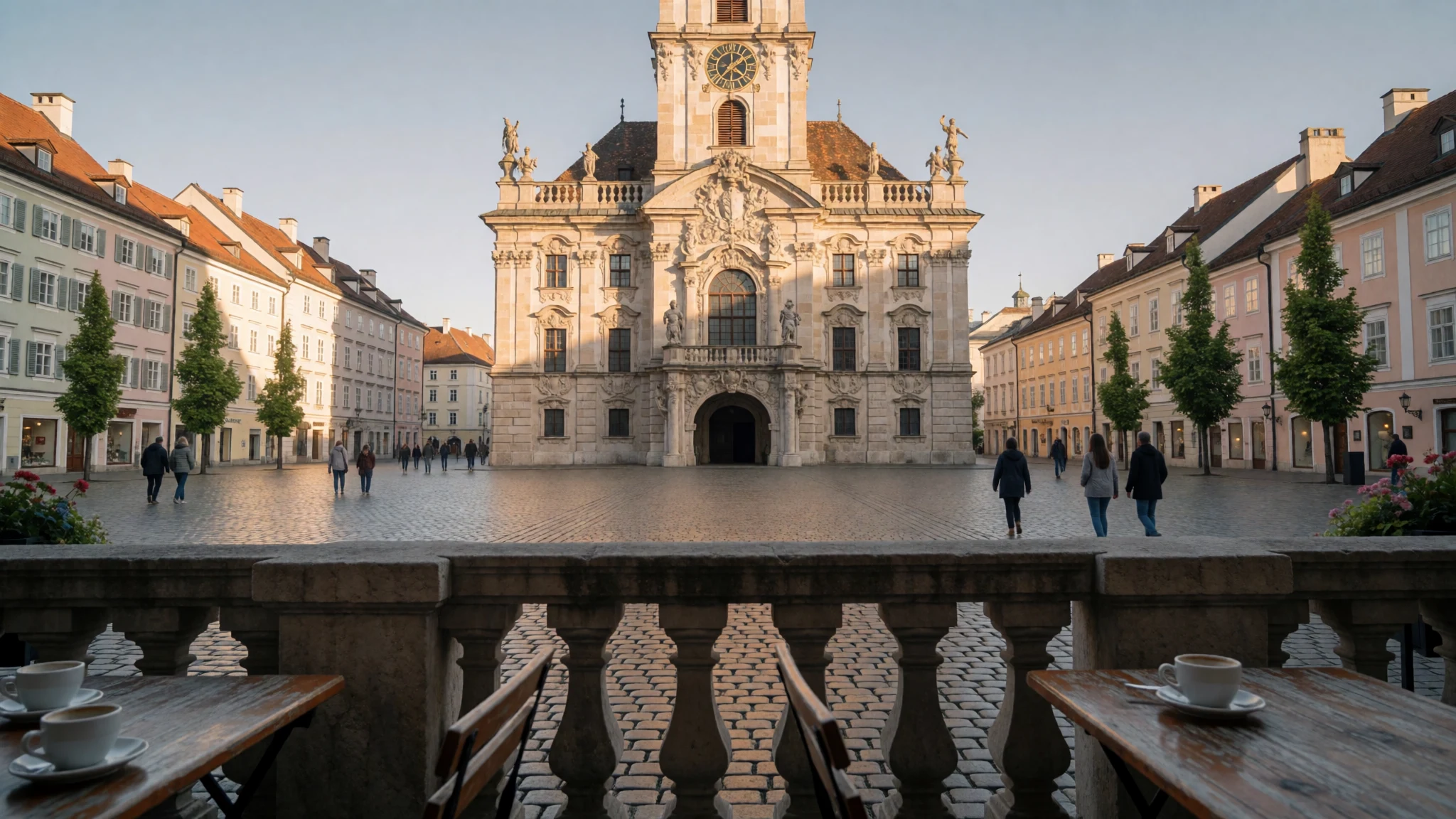
St. Pölten combines ancient Roman foundations and Baroque squares with striking modern government architecture along the Traisen river.
The place
St. Pölten serves as the capital of the State of Lower Austria in the northeast of the country. Positioned north of the Alps and south of the picturesque Wachau valley, the municipality spreads across the Mostviertel region along the banks of the Traisen river. Many travellers pass through on their journey towards Vienna, finding a quieter urban centre that balances preserved historic quarters with contemporary civic design. The municipal area includes numerous smaller subdistricts and outlying neighbourhoods that merge agricultural pockets with industrial presence. Despite functioning as the regional seat of government, the city maintains a remarkably compact footprint, allowing visitors to walk easily between medieval lanes, expansive public squares, and green recreational spaces. The surrounding terrain rises gently towards nearby valleys, making the locality a natural gateway for regional excursions on foot or by regional rail.
Its story
The roots of St. Pölten reach back to antiquity, built directly over the footprint of the ancient Roman settlement of Aelium Cetium. Centuries later, religious life took root when a Benedictine monastery was established here, later recording a name variant linked to the local river. The settlement gained official town privileges in the medieval period and subsequently achieved full city status. For centuries, ecclesiastical authority governed the community until ownership transferred to the state. Augustinian canons left a lasting architectural mark through their collegiate foundation, the buildings of which later transitioned into the city's cathedral complex. A significant turning point arrived when the regional parliament voted to relocate the state capital here, supplanting Vienna and leading to the construction of modern administrative quarters. The city's unusual modern name evolved gradually over centuries, originating from an early Christian martyr before being clipped by local dialect into its current form.
What to see
- Museum Niederösterreich — Landhausviertel
This prominent regional museum houses permanent exhibitions detailing local history and natural sciences, alongside an art gallery featuring works by notable Austrian painters including Egon Schiele and Ferdinand Georg Waldmüller, spanning from Gothic to Baroque eras. - Klangturm — Landhausviertel
Standing as a distinctive modern landmark within the government district, this slender observation tower offers panoramic views across the rooftops of the capital and the surrounding countryside towards the nearby river valley. - Old Synagogue — Inner City
A striking example of early twentieth-century architecture, this Jugendstil prayer house was designed by prominent architects and constructed before the First World War, serving today as a preserved cultural venue. - Festspielhaus St. Pölten — Landhausviertel
Designed by a renowned contemporary architect, this major concert hall and performance venue hosts a dynamic calendar of international dance, orchestral music, and theatrical productions within a sleek, modern structure. - Viehofen Lakes — Northern Suburbs
Formed from former gravel extraction pits, these accessible lakes provide a popular local recreation area featuring walking paths, swimming infrastructure, and boat rentals amid quiet natural surroundings.
Culture
Cultural life in St. Pölten thrives through a mix of established classical institutions and contemporary youth initiatives. The city supports diverse venues ranging from state theatres and repertory cinemas to underground music pubs and major festival spaces that host contemporary art and film events throughout the year. Historic pharmacies with baroque facades stand alongside cutting-edge architectural complexes, reflecting a community proud of both its ancient heritage and modern administrative identity. Locals value an active outdoor culture, frequently gathering by the river or attending seasonal music festivals. When entering smaller neighbourhood churches or participating in traditional community events, keep voices moderate and respect local customs.
What to wear
Traditional attire in St. Pölten follows the wider Lower Austrian customs, where regional dirndls and tailored Tracht jackets appear during local festivals, church celebrations, and civic ceremonies. These garments traditionally utilise sturdy natural textiles like linen, cotton, and wool, often detailed with hand-embroidered motifs characteristic of the Mostviertel region. For everyday life, residents dress in practical, contemporary European casual wear, favouring comfortable layers suited to changing seasonal temperatures. Visitors exploring the city centre or heading into nearby nature trails should pack comfortable walking shoes, a sturdy windproof jacket for riverside breezes, and smarter attire if planning to attend an evening performance at the Festspielhaus.
What to eat
- Traditional Austrian Coffee and Pastries — Inner City
Experience the classic café culture by sampling regional cakes and freshly brewed melange at historic establishments like Café Schubert in the old town centre. - Mostviertel Perry and Cider — Local taverns across the region
Sample locally produced perry and apple cider made from the abundant orchards covering the surrounding hills, available in traditional neighbourhood pubs and seasonal wine taverns. - Regional Dumplings and Roast Pork — Traditional inns throughout the municipality
Hearty local eateries serve classic Austrian comfort dishes, including savoury bread dumplings, roasted meats, and seasonal vegetable preparations sourced from nearby farms.
Plan it
Best time. Late spring and early autumn offer pleasant weather for exploring the historic centre and nearby lakes, while summer brings lively open-air festivals.
How long. 2
Getting there. Easily accessible by regional trains from Vienna's Westbahnhof or via the A1 motorway, making the journey from the capital quick and straightforward.
Budget. mid
Tips
- Wear comfortable footwear for walking between the historic old town and the modern government district.
- Check the schedule of local cultural festivals before visiting to experience concerts or film screenings.
- Combine your city visit with a scenic narrow-gauge railway journey into the surrounding hills.
Etiquette
- Greet shopkeepers and staff politely when entering local businesses and eateries.
- Observe quiet hours in residential districts and keep public spaces clean.
Nearby
Sources
- Wikidata Q82500 (CC0)
- Wikipedia St. Pölten (CC-BY-SA 4.0)
- Wikivoyage St. Pölten (CC-BY-SA 4.0)