Shiraito Falls
Shiraito Falls, Japan
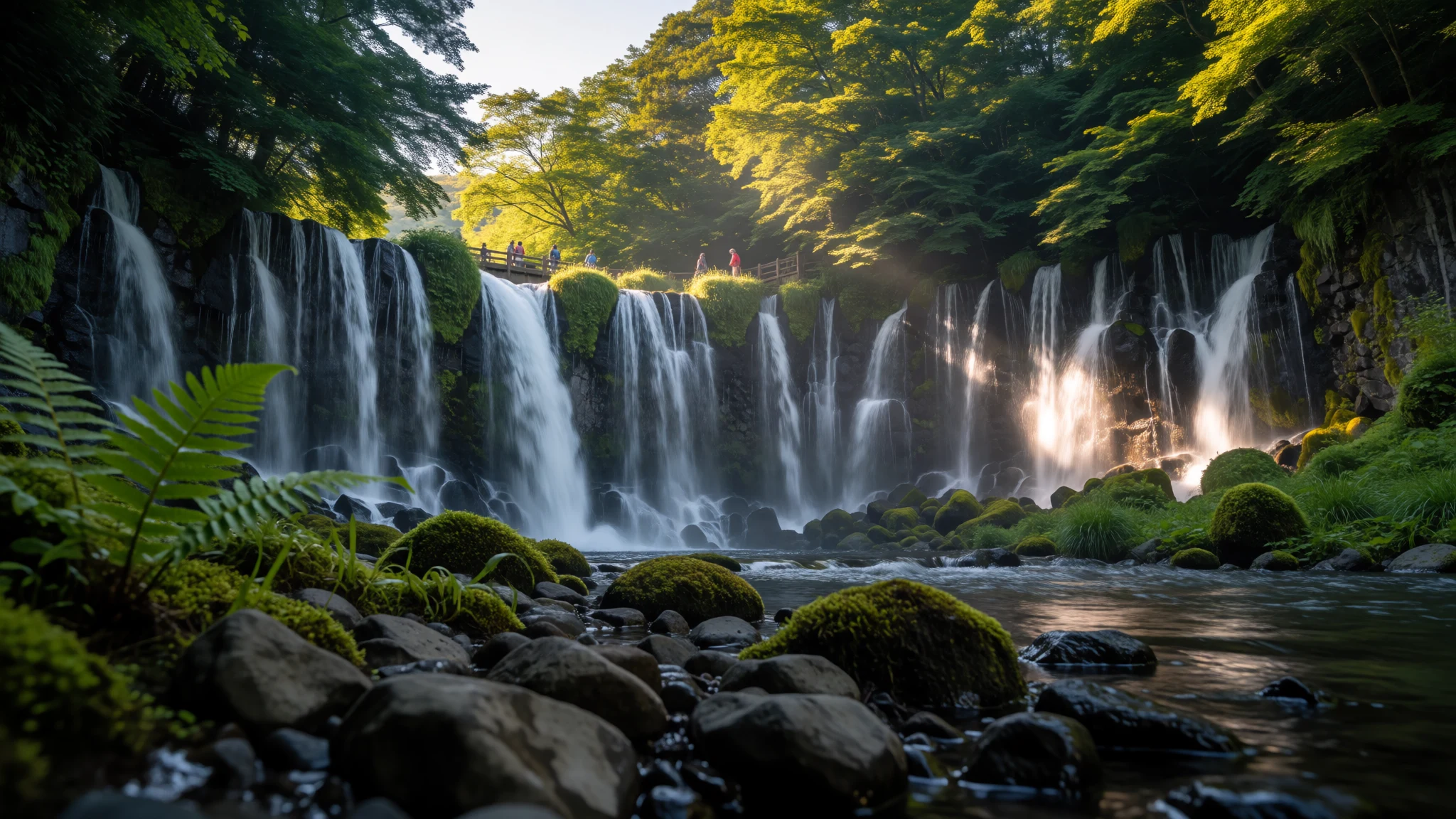
Visit Shiraito Falls to witness hundreds of slender threads of snowmelt water cascading across a curved volcanic cliff near Mount Fuji.
The place
Shiraito Falls sits quietly in Fujinomiya within Shizuoka Prefecture, positioned closely against the lower reaches of Mount Fuji. The local tourist association maintains bilingual guidance for visitors arriving to see the landscape, which is renowned across the region for its unusual geological formation. Unlike a single plunging torrent, the water emerges from upper layers of volcanic strata and fans out across a wide, curved precipice. Hundreds of individual streams spill over the edge, creating a visual effect that resembles fine white silk threads hung across dark stone, which inspired the traditional Japanese name Shiraito-no-taki. A short walk from the main viewing platforms reveals how the water collects from subterranean snowmelt originating on the upper slopes of the mountain before bursting forth mid-cliff. The surrounding basin is lush with woodland foliage that shifts dramatically through the seasons, turning bright green in summer and glowing with deep amber and red hues during autumn. Souvenir vendors and local craft shops line the walking paths near the approaches, offering snacks and regional keepsakes to travellers coming off the local bus routes. The sound of rushing water fills the entire valley, drowning out traffic and creating a cool, refreshing microclimate that feels sheltered from the surrounding towns. It is an accessible natural wonder that rewards patient observation, particularly when morning mist clings to the cliff face before the midday crowds arrive from nearby transit hubs.
Its story
The historical and cultural significance of Shiraito Falls runs deep within regional traditions tied to mountain worship and volcanic reverence. For generations, ascetics and pilgrims climbing Mount Fuji would stop at the cascade to perform purification rituals in its icy waters before attempting the arduous ascent to the summit. These spiritual practices linked the waterfall directly to the sacred geography surrounding the mountain peak. In recognition of its outstanding natural and cultural importance, the falls were incorporated into the broader Fuji-Hakone-Izu National Park, receiving official protection as a designated Japanese Natural Monument. Decades later, international recognition followed when the waterfall was formally added to the World Heritage List as an integral component of the Fujisan Cultural Site designation, highlighting its role in inspiring traditional art, poetry, and religious devotion throughout Japanese history. Local preservation efforts have carefully balanced tourism access with environmental protection, ensuring that the surrounding forest and cliff hydrology remain undisturbed by modern commercial encroachment. Historical records and Edo-period woodblock prints frequently depicted the delicate silk-like strands of the falls, cementing its status as an iconic motif in classical Japanese aesthetics. Today, visitors walking the stone paths can trace the footsteps of centuries of travellers who viewed this unique geological formation not merely as a scenic backdrop, but as a living sanctuary of pristine water and volcanic stone.
What to see
- Shiraito Waterfalls — Fujinomiya
The main attraction features hundreds of delicate water strands fed by snowmelt running down from Mount Fuji. Visitors can walk down paved pathways and staircases to reach viewing bridges that span the river gorge directly in front of the sweeping, curved rock face. - Sengen Taisha Shrine — Fujinomiya
This historic shrine serves as the traditional starting point for climbers ascending Mount Fuji. Walk straight north from the station past local convenience stores, turn left at the Chuo-cho traffic light, and follow the street downhill until you see the large red torii gate marking the sacred entrance. - Lake Tanuki — Asagiri Plateau
Nestled quietly in the surrounding highlands, this scenic lake is famous for offering unobstructed reflections of Mount Fuji. Photographers gather here during specific seasonal windows to capture the famous Diamond Fuji phenomenon, where the rising sun aligns perfectly with the mountain peak to create a sparkling visual effect. - Hana no yu — Fujinomiya
A large local bathhouse complex featuring indoor and outdoor hot spring baths fed by natural mineral waters. Travellers can reach the facility by taking local bus services from the train station or the main shrine and stepping down near the prominent family restaurant sign.
Culture
The cultural fabric of the region around Mount Fuji is deeply interwoven with reverence for natural elements, particularly pristine water sources and volcanic landscapes. Local communities maintain a strong tradition of hospitality towards travellers, blending rural warmth with the orderly etiquette characteristic of Japanese public life. Traditional arts, craft brewing, and seasonal festivals reflect a profound respect for the natural environment and the changing seasons. When visiting sacred sites and shrines such as Sengen Taisha, visitors are expected to observe quiet decorum, bow slightly before entering torii gates, and cleanse their hands and mouths at the stone water basins before approaching the main prayer halls. Littering is strictly avoided, and travellers should carry their rubbish with until finding designated recycling stations. Photography of religious ceremonies or local residents should always be conducted respectfully and discretely. Always remove your outdoor shoes and slip into provided indoor slippers when stepping up onto tatami mats or entering traditional temple buildings.
What to wear
Traditional attire in Shizuoka Prefecture historically featured durable cotton and silk garments suited for farming, tea harvesting, and mountain pilgrimage. While traditional kimono and yukata are now reserved for local festivals, seasonal hot spring visits, and cultural celebrations, everyday modern dress across Fujinomiya is practical, neat, and contemporary. Locals typically wear comfortable trousers, knitwear, and smart jackets suited to shifting mountain weather. For visitors exploring Shiraito Falls and the surrounding highland trails, practical clothing is essential. Layers work best because temperatures near the base of Mount Fuji can drop quickly, even during milder months. Sturdy walking shoes or trainers with good grip are necessary for navigating the damp stone steps and paved pathways leading down to the waterfall viewpoints, which can remain slippery from mist and spray. Visitors planning to visit shrines or indoor dining establishments should wear slip-on shoes that are easy to remove when entering traditional spaces, and carry a lightweight waterproof jacket or umbrella to handle sudden mountain showers.
What to eat
- Fujinomiya Yakisoba — Fujinomiya streets and market stalls
A distinctive local variation of fried noodles distinguished by its firmer texture, seasoned fish powder topping, and savoury sauce. Look for small independent food stalls and specialty eateries displaying bright orange yakisoba flags fluttering outside their doorways. - In-House Roasted Coffee — Cafes near Fujinomiya station and waterfall approaches
Local coffee shops take pride in roasting specialty beans on-site, offering rich brews and aromatic blends tailored to warm up travellers arriving from the cooler mountain air around the falls and surrounding plateau routes. - Bavarian-Style Craft Beer — Local taprooms and brewery pubs
Craft breweries operating in the shadow of Mount Fuji produce authentic German-style beers adhering to traditional European purity laws, using pure regional spring water, hops, malt, and yeast. - Bagel Sandwiches and Baked Desserts — Downtown Fujinomiya coffee houses
Cosy neighbourhood cafes serve hearty daytime menus featuring freshly baked bagel sandwiches, pasta dishes, and various sweet treats alongside English menus and quiet seating areas.
Plan it
Best time. Spring (March to April) for cherry blossoms and clear mountain views, or autumn (October to November) for vibrant maple foliage.
How long. 2–3
Getting there. Take the Tokaido Shinkansen from Tokyo to Mishima, change for the Tokaido Line to Fuji station, and transfer to the JR Minobu Line for the final run to Fujinomiya.
Budget. mid
Tips
- Start your visit to the waterfall early in the morning to beat the tour bus crowds
- Carry cash for small shrine donations, bus fares, and street food vendors
- Check local bus timetables in advance as rural departures can be infrequent
- Pack a lightweight waterproof jacket for sudden mountain weather changes
Etiquette
- Remove your shoes when stepping onto tatami flooring or entering temple halls
- Dispose of your rubbish properly or carry it with you until you find a bin
Nearby
Sources
- Wikidata Q38411 (CC0)
- Wikipedia (rev 1362226390) (CC BY-SA 4.0)
- Wikivoyage (rev 5402472) (CC BY-SA 4.0)
- Photo 01 (CC BY 2.5)
