Shimla
Shimla, India
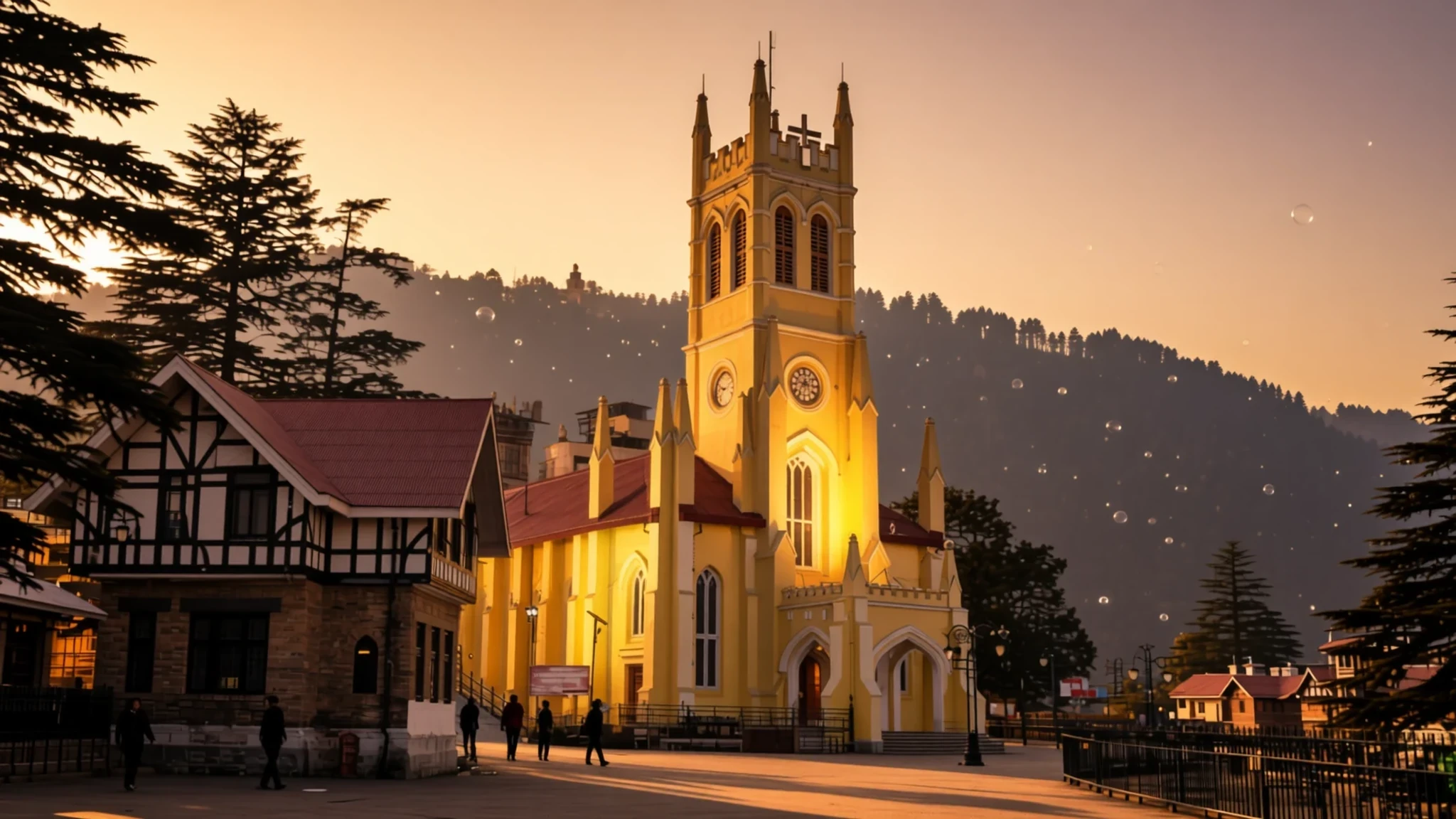
Shimla offers crisp mountain air, striking colonial architecture, and wooded Himalayan ridges that served as the grand summer retreat for British India.
The place
Shimla functions as the capital and largest city of the northern Indian state of Himachal Pradesh. Spread across steep mountain ridges within the southwestern Himalayas, the settlement grew from scattered hamlets into an administrative powerhouse during the colonial era. Company rule transformed the pine-clad heights into a favored refuge from the scorching heat of the Indian plains, eventually establishing it as the official summer capital of British India in the latter half of the nineteenth century. The city's geography is defined by its dramatic elevation, with residential quarters, government buildings, and markets clinging to dramatic slopes surrounded by dense forests. Architectural styles reflect this dual heritage, featuring neo-Gothic churches, Tudorbethan administrative blocks, and timber-framed structures alongside traditional shrines. Commerce, education, and political history intersect along pedestrianed thoroughfares where motor vehicles are largely restricted. Travelers arrive to walk the historic ridge, explore wooded paths that wind through cedar and pine trees, and experience a unique blend of Himachali mountain culture and preserved British-era urban planning. The municipal area remains the commercial and cultural heart of the region, drawing visitors year-round to its cool mountain climate and panoramic valley vistas.
Its story
Long before European officers arrived, the ground occupied by modern Shimla was largely dense forest surrounding a few scattered villages and mountain shrines. Local tradition links the settlement's name to Shyamala Devi, an alternate manifestation of the goddess Kali. During the early nineteenth century, the region fell under the control of Nepalese Gorkha leaders before the East India Company secured dominion through the Sugauli Treaty following the Anglo-Nepalese War. Early British explorers recorded finding little more than modest hamlets where ascetic travelers stopped for spring water. Soon after, colonial administrators constructed the first timber cottages to escape the oppressive summer heat of the lower plains. As more officials built residences along the forested spurs, the settlement expanded rapidly, eventually hosting high-level political summits, treaty negotiations, and viceregal governance. Following Indian independence and the subsequent integration of numerous surrounding princely states, the area became the administrative core of Himachal Pradesh. Subsequent decades saw Shimla host significant diplomatic accords and administrative restructuring, cementing its legacy as a pivotal location in modern South Asian political history while preserving its distinct mountain heritage.
What to see
- Christ Church — The Ridge
Constructed in the mid-nineteenth century, this prominent landmark stands as the second oldest church in northern India. Visitors come to admire the stained-glass windows depicting theological virtues alongside a vintage organ that remains remarkably well preserved within the neo-Gothic stone walls.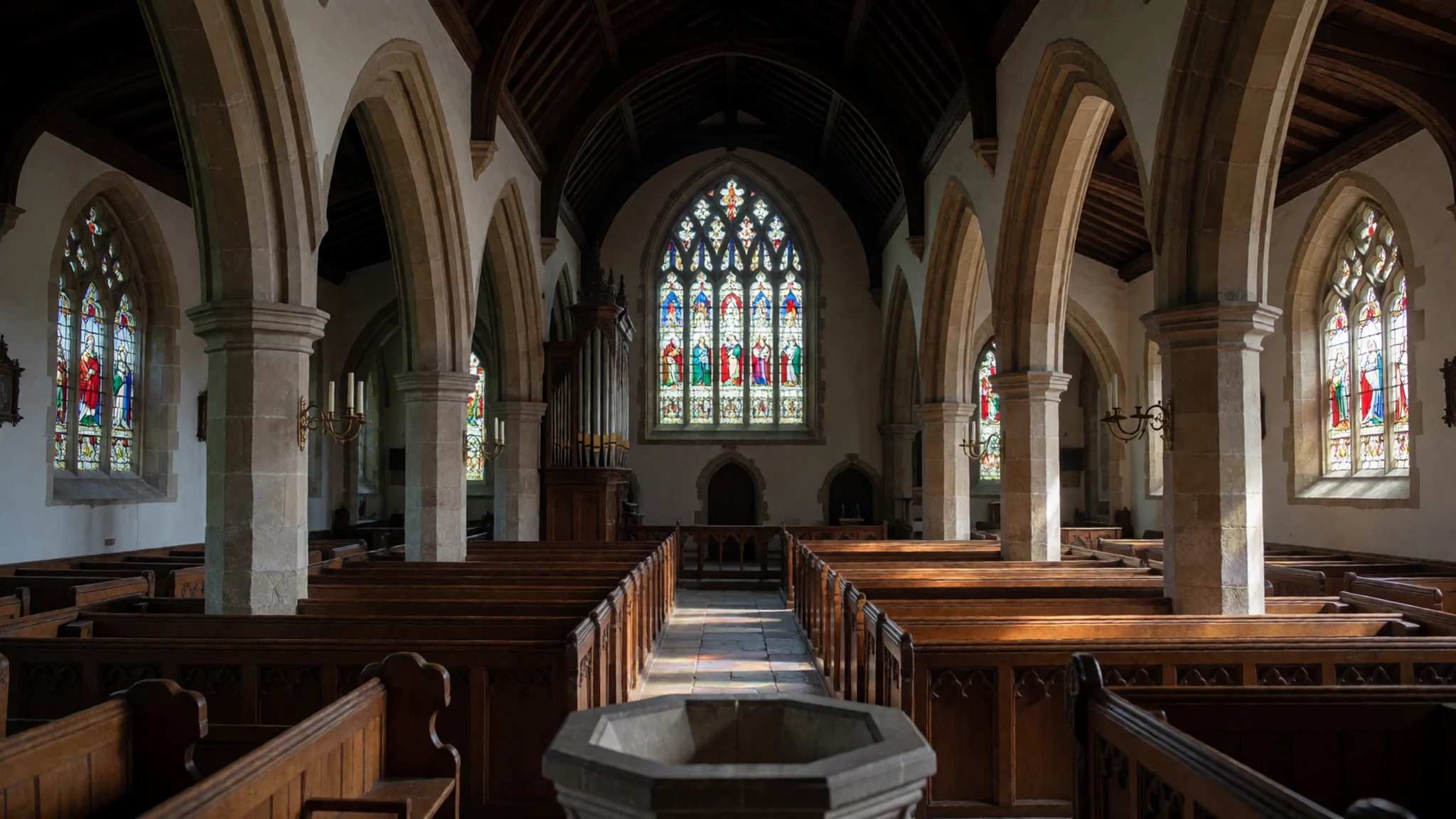
- Viceregal Lodge — Observatory Hill
This magnificent stone-and-timber mansion served as the summer residence for British viceroys. Today, the expansive estate houses an advanced academic study institute, offering visitors a chance to walk through stately wood-paneled halls and manicured gardens that overlook sweeping mountain valleys.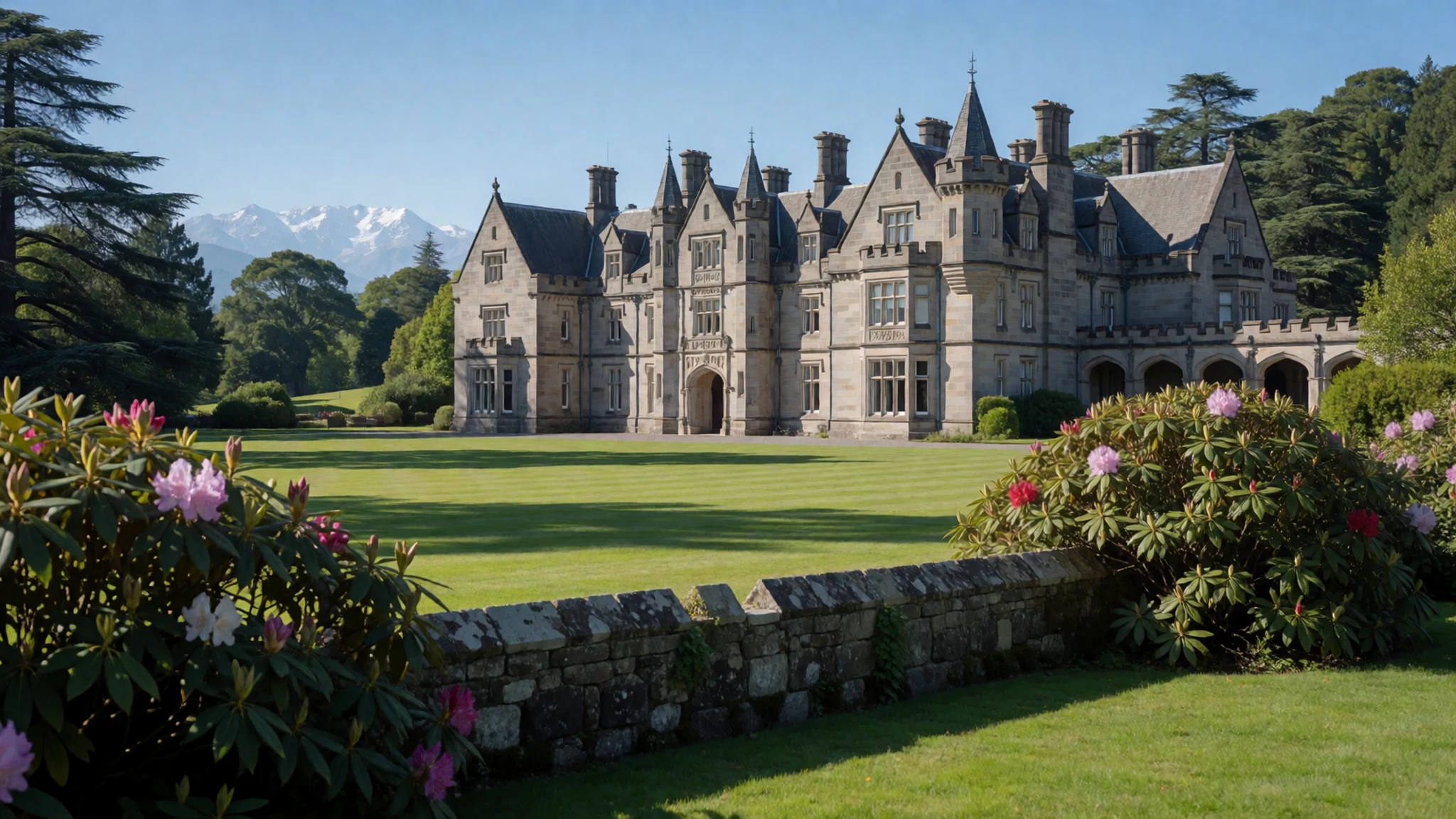
- The Mall — City Centre
Running along the spine of the settlement, this pedestrian-only thoroughfare acts as the primary social and commercial artery. Lined with heritage storefronts, clubs, banks, and eateries, it provides panoramic views of the surrounding hills and valleys as evening falls.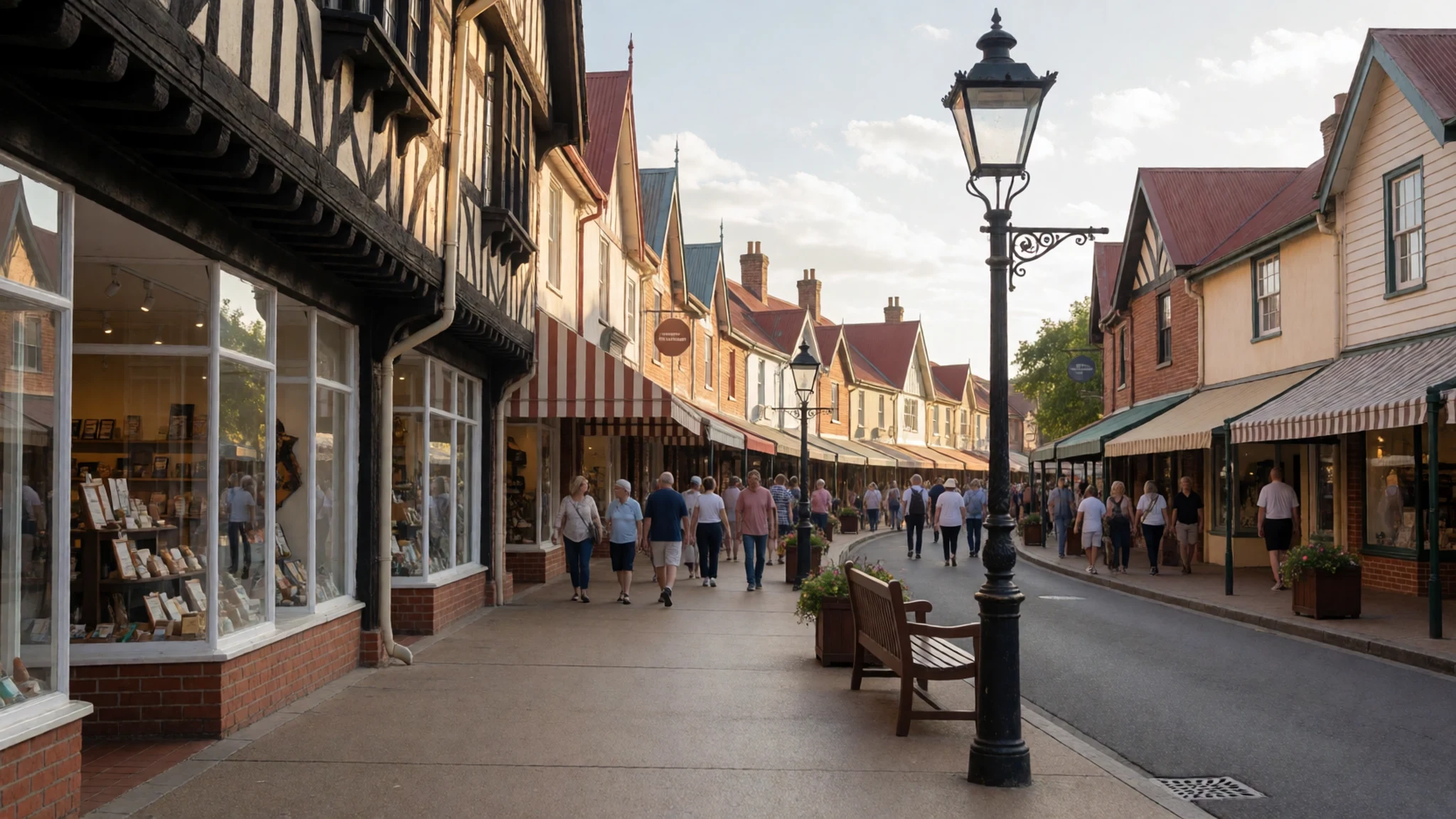
- Chadwick Falls — Summer Hill
Tucked away amid dense pine and deodar forests, this cascading waterfall tumbles over sheer rock faces. It appears at its most dramatic immediately following the monsoon rains, while drier months reveal a gentler stream surrounded by quiet woodland trails.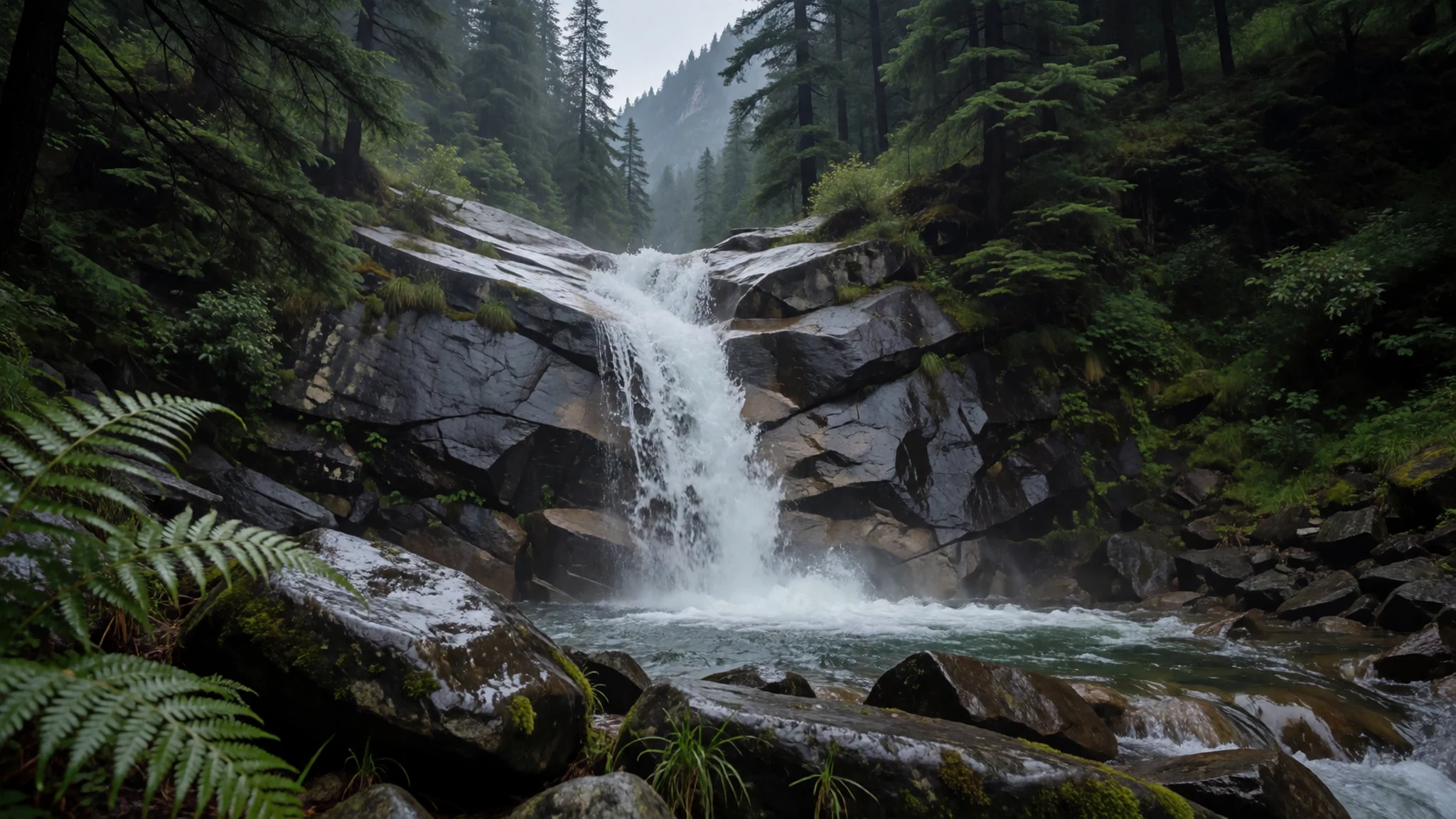
- Jakhu Temple — Jakhu Hill
Perched on the highest peak in the municipal area, this hilltop sanctuary is dedicated to the Hindu deity Hanuman. A colossal brightly colored statue towers above the trees, drawing pilgrims and hikers who navigate steep forest paths populated by resident populations of macaques.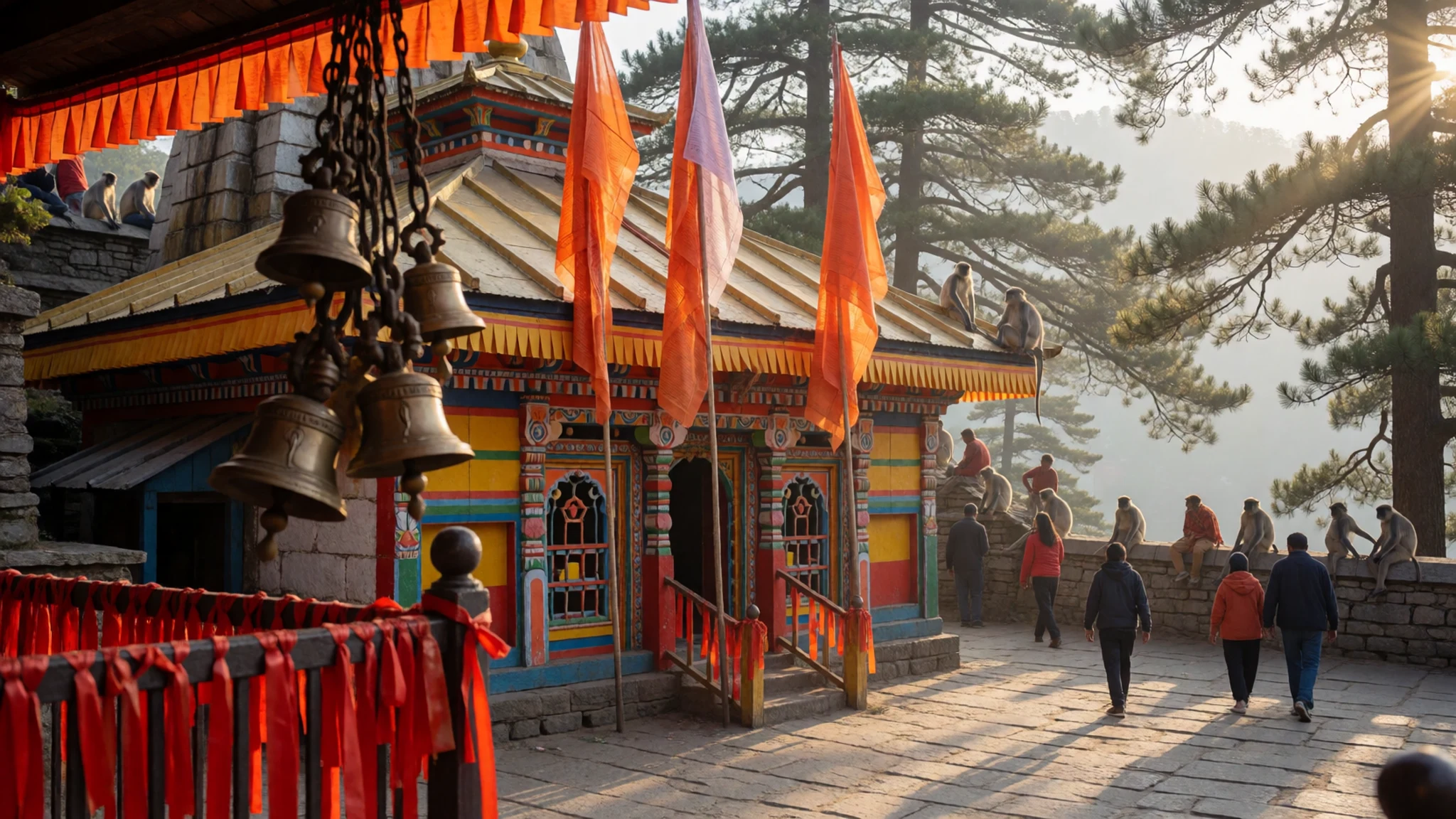
Culture
Residents of Shimla, informally known as Shimlaites, inhabit a cosmopolitan mountain community shaped by centuries of diverse cultural influences. Throughout the calendar year, the municipal area hosts lively celebrations, notably the annual summer festival on the central ridge, which features musical performances from artists across the country. A winter carnival organized jointly by local broadcasting and tourism boards brings festive markets and cultural displays from Christmas through New Year's Day. Traditional crafts, textiles, and regional paintings are carefully preserved and exhibited in public galleries across town. Heritage architecture from the colonial era stands alongside ancient sacred sites, reflecting a multicultural heritage where mountain traditions merge seamlessly with historical administrative architecture. Visitors should remove their footwear before entering any temple or sacred space.
What to wear
Traditional attire in Shimla reflects the practical needs of mountain life, featuring hand-woven woolen shawls, embroidered caps known as Himachali pahari caps, and sturdy garments designed to withstand chill alpine winds. Local textiles often incorporate intricate geometric patterns passed down through generations of Himalayan artisans. Day-to-day wear among locals now combines modern urban clothing, such as denim and jackets, with traditional woolen layers during cooler months. Visitors exploring Shimla should pack versatile layers, including sweaters or windbreakers for chilly evenings, sturdy walking shoes capable of handling steep stone steps and unpaved forest paths, and modest clothing that covers shoulders and knees when visiting local temples or religious shrines.
What to eat
- Himachali Thali — Ashiana & Goofa on The Ridge
Sample traditional regional mountain recipes, featuring lentil preparations, curd-based gravies, and spiced local grains, served together on traditional platters.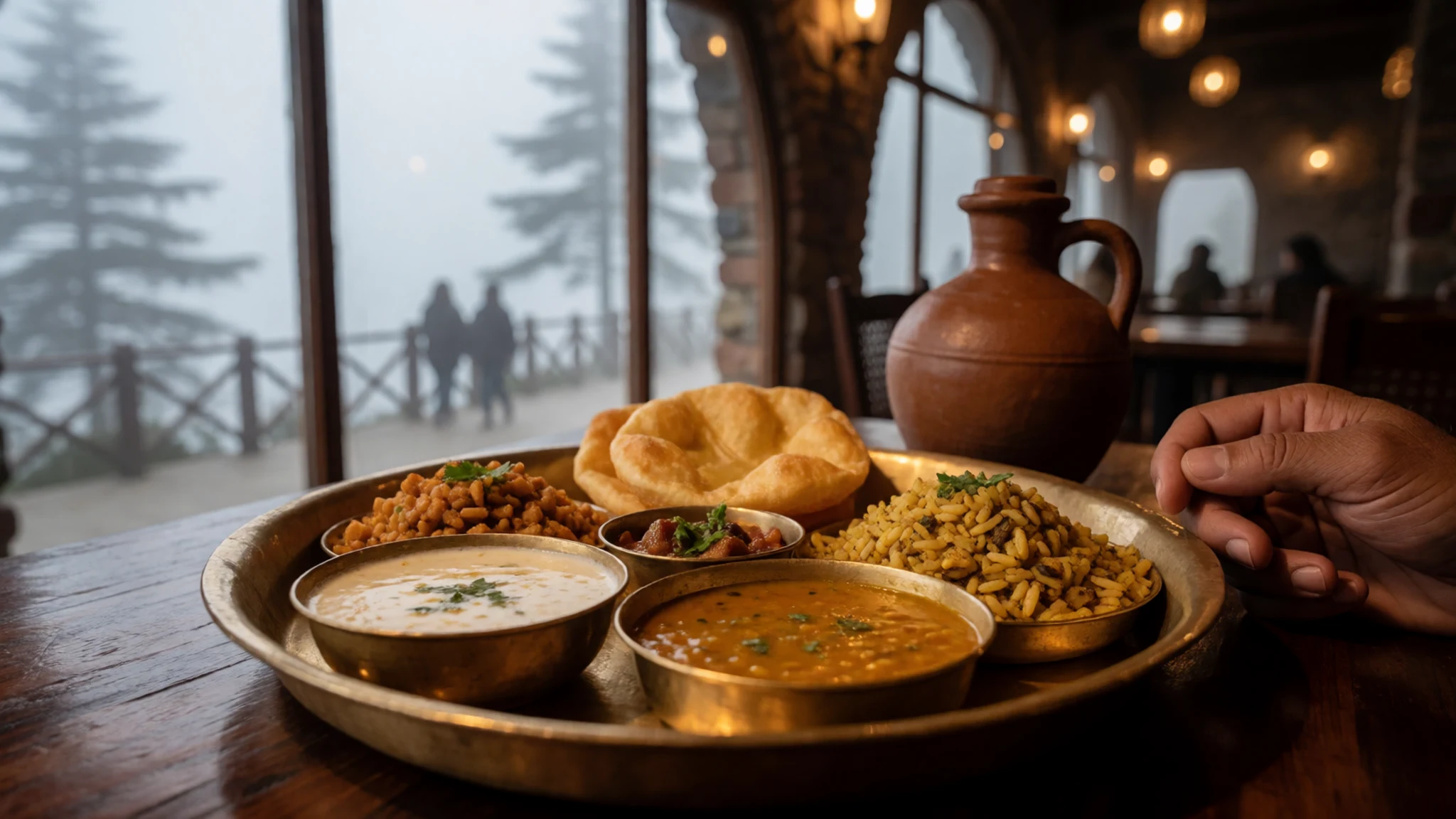
- South Indian Tiffin — Indian Coffee House on The Mall
Enjoy comforting idlis, dosas, and filter coffee alongside classic English breakfast plates served in a historic, no-frills setting.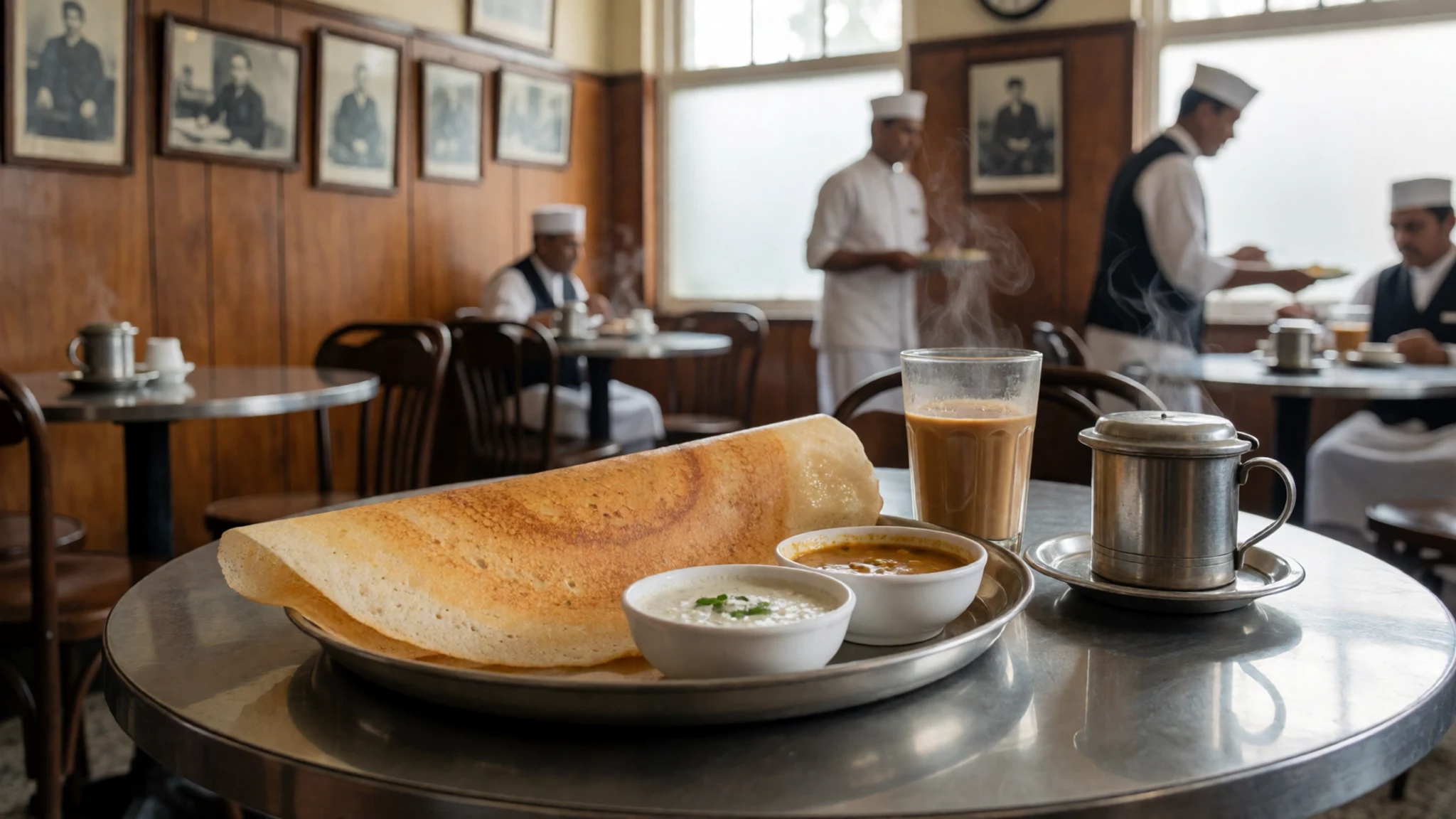
- European and Asian Classics — The Oberoi Cecil Restaurant
Dine on carefully prepared continental dishes, wood-fired mains, and regional curries within a storied heritage hospitality setting. - North Indian Curries — The Devicos near The Mall
Savour hearty Mughlai dishes, tandoori items, and comforting North Indian comfort food in a long-standing downtown dining room. - Wholesale Produce and Snacks — Lower Bazaar
Browse through atmospheric, dense merchant lanes offering fresh seasonal fruits, local snacks, and everyday provisions.
Plan it
Best time. March to April for pleasant spring weather and clear mountain views, or October to November for crisp autumn air and clear skies; June brings the heavy monsoon rains, and January to February often brings winter snowfall.
How long. 3–4
Getting there. Fly into the local airport or arrive by train via the historic narrow-gauge mountain railway from Kalka, followed by a scenic road transfer up into the hills.
Budget. mid
Tips
- Wear comfortable, flat walking shoes with good grip to handle the steep hills and pedestrian-only stone paths.
- Book heritage accommodations well in advance if traveling during peak summer or winter holiday festival periods.
- Carry cash for small temple donations, local market stalls, and independent tea vendors.
- Keep a light jacket or fleece handy, as mountain temperatures drop quickly after sunset even during warmer months.
Etiquette
- Remove footwear before stepping inside temples, shrines, and domestic homes.
- Ask permission before photographing local residents in traditional dress or temple interiors.
- Dress modestly with covered shoulders and knees when visiting religious sites.
Nearby
Sources
- Wikidata Q83786 (CC0)
- Wikipedia (rev 1383037156) (CC-BY-SA 4.0)
- Wikivoyage (rev 5356383) (CC-BY-SA 4.0)
- Photo 01-shimla-skyline.jpg (CC BY-SA 4.0)
- Photo 02-landscape-of-shimla-himachal-pradesh.jpg (CC BY-SA 4.0)
- Photo 03-jakhu-temple-shimla.jpg (CC BY-SA 4.0)
- Photo 04-kalibari-shimla.jpg (CC BY-SA 4.0)
- Photo 05-christ-church-shimla.jpg (CC BY 3.0)
- Photo 06-annandale-shimla3.jpg (CC BY 3.0)
- Photo 07-gaiety-theater-mall-road-shimla-2014-05-07-1290.jpg (CC BY 3.0)
- Photo 08-viceroy-lodge.jpg (CC BY 3.0)


