Shenzhen
Shenzhen, People's Republic of China
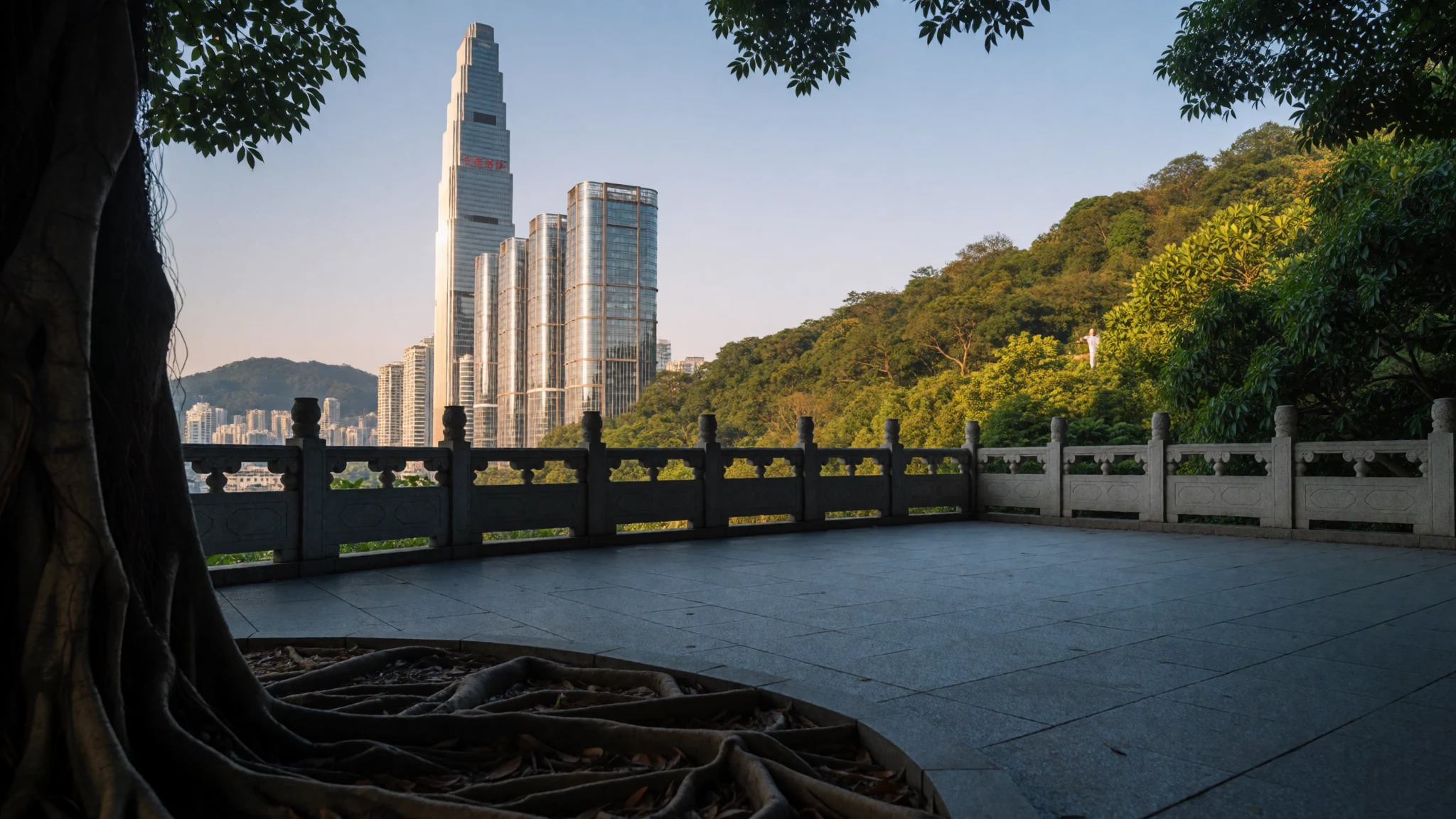
Shenzhen is a young migrant city of towers, electronics markets and waterfront parks, with older Hakka villages and walled towns at its edges.
The place
Shenzhen sits on the east bank of the Pearl River estuary in Guangdong province, with Hong Kong directly across the border to the south. Dongguan lies to the north, Huizhou to the northeast and Macau across the water to the southwest. The city has about 17.7 million people, most of them born elsewhere, and it feels like it: the pace is quick, the streets are planned and tidy, and almost every Chinese regional accent turns up on the metro. Until 1979 it was a scatter of farming and fishing settlements. Then it became China's first special economic zone, and it now works as a centre for technology, trade and finance, with a very large container port. For a visitor, Shenzhen is less a single old centre than a chain of districts. Futian holds the business towers and the main civic and cultural buildings. Nanshan, to the west, mixes universities, tech campuses, parks and the waterfront at Shenzhen Bay. Luohu, beside the Hong Kong border crossing, is the older commercial core. The east of the city is greener, with coast, hills and Hakka villages. The climate is subtropical: summers are hot, humid and stormy, winters mild and mostly dry. Distances are big, but the metro is cheap and easy to follow, so a single day can stitch together a skyline, a market and a stretch of sea without a car. Shenzhen rewards curiosity more than a checklist; it is a city to wander, eat in and watch at work.
Its story
Shenzhen's story is usually told as a sudden one, but the ground has a longer record. People have lived along this stretch of coast since the mid-Neolithic period, and administrative counties were set up here long before the modern city. After the Qin dynasty brought the south under imperial rule, the area was folded into the Lingnan region and gradually took on the culture of the Chinese heartland. The walled town of Nantou served for centuries as a seat of local government, while Dapeng in the east grew up as a coastal garrison town. In the twelfth century the area became a trading point for salt and spices moving through the South China Sea. Later chapters were turbulent: historians link this coast with the last stand of the Southern Song, the final resistance of the Ming, and the Opium Wars. At the start of the twentieth century a railway between Canton and Kowloon crossed the border here, and a small market town grew around the crossing. The real transformation began in 1979. Under the reform and opening up policy associated with Deng Xiaoping, the city was founded as a special economic zone, chosen partly because Hong Kong lay next door and could supply investment and know-how. Factories came first, then offices and design studios, and migrants arrived from every province. Residents like to say Shenzhen has no history; the old sites at Nantou, Dapeng and the eastern villages say otherwise.
What to see
- Nantou Ancient Town — Nanshan
The walled settlement of Nantou served as a local seat of government for many centuries, and its south gate still opens onto lanes, old shopfronts and small galleries. Parts have been restored heavily, so expect a mix of history and cafe culture. Go in the morning, before the heat and weekend crowds.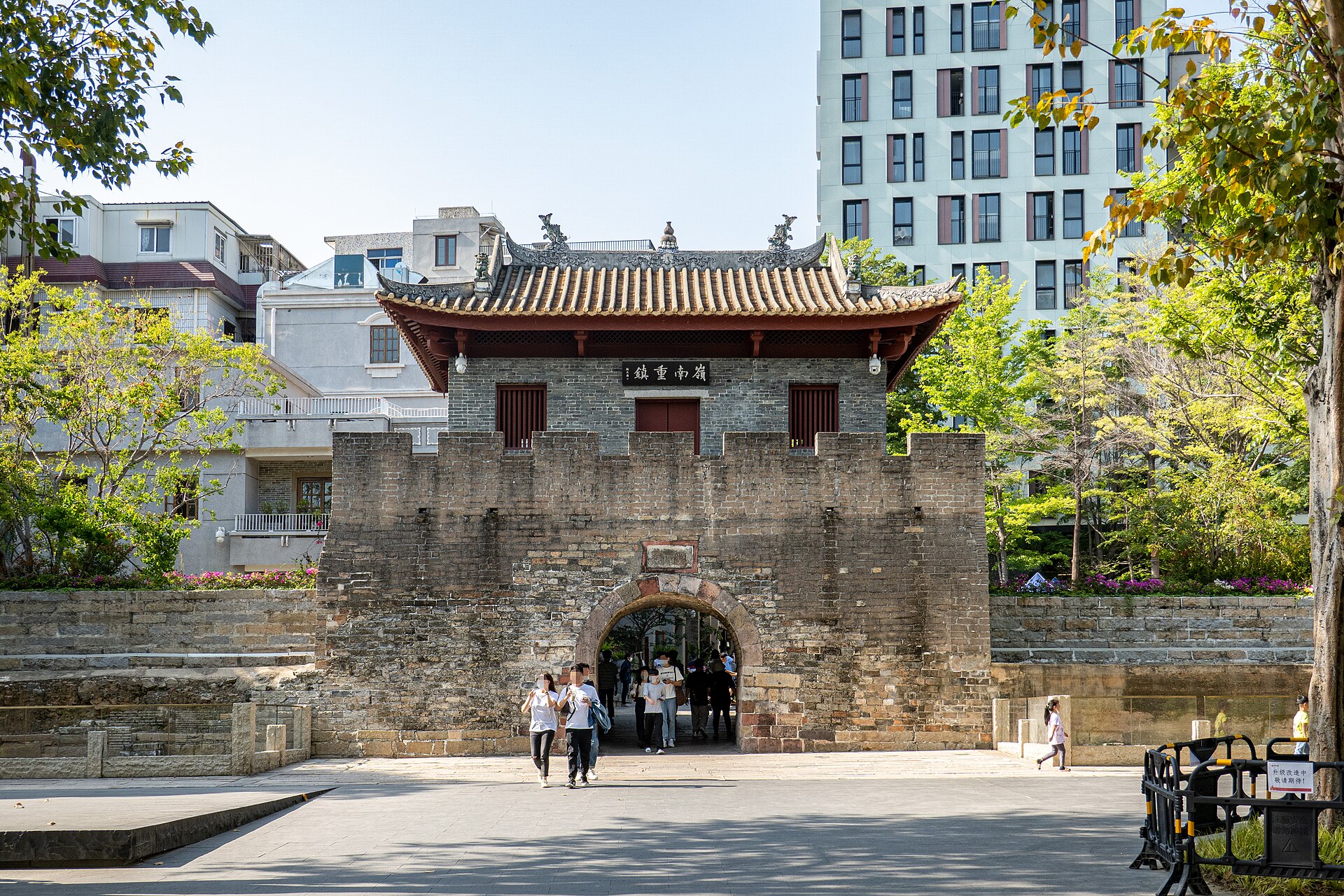
- Futian business district — Futian
Glass towers line Shennan Avenue and the civic buildings around it, and the Ping'an Finance Center is part of the skyline that dominates the view. Walk the elevated links and the central park at dusk, when the lit façades show best and the heat has dropped. The side parks give the clearest views across the district.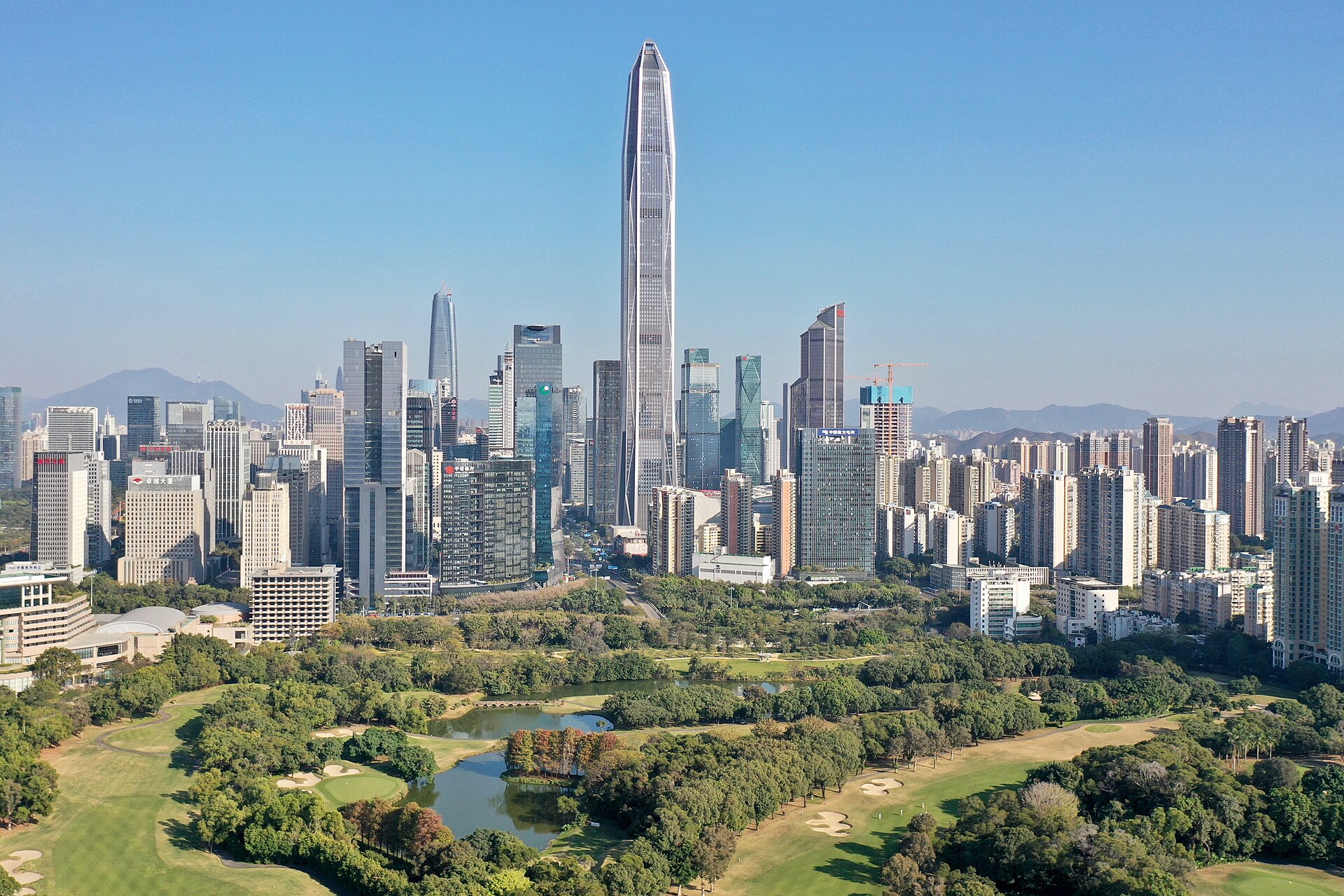
- Huaqiangbei electronics markets — Futian
Multi-storey malls sell components, circuit boards, phone parts, cameras and gadgets by the stall, and the streets outside are dense with delivery bikes and buyers haggling over small lots. Even if you buy nothing, it explains why Shenzhen became a manufacturing and design hub. Expect crowds and compare prices before paying.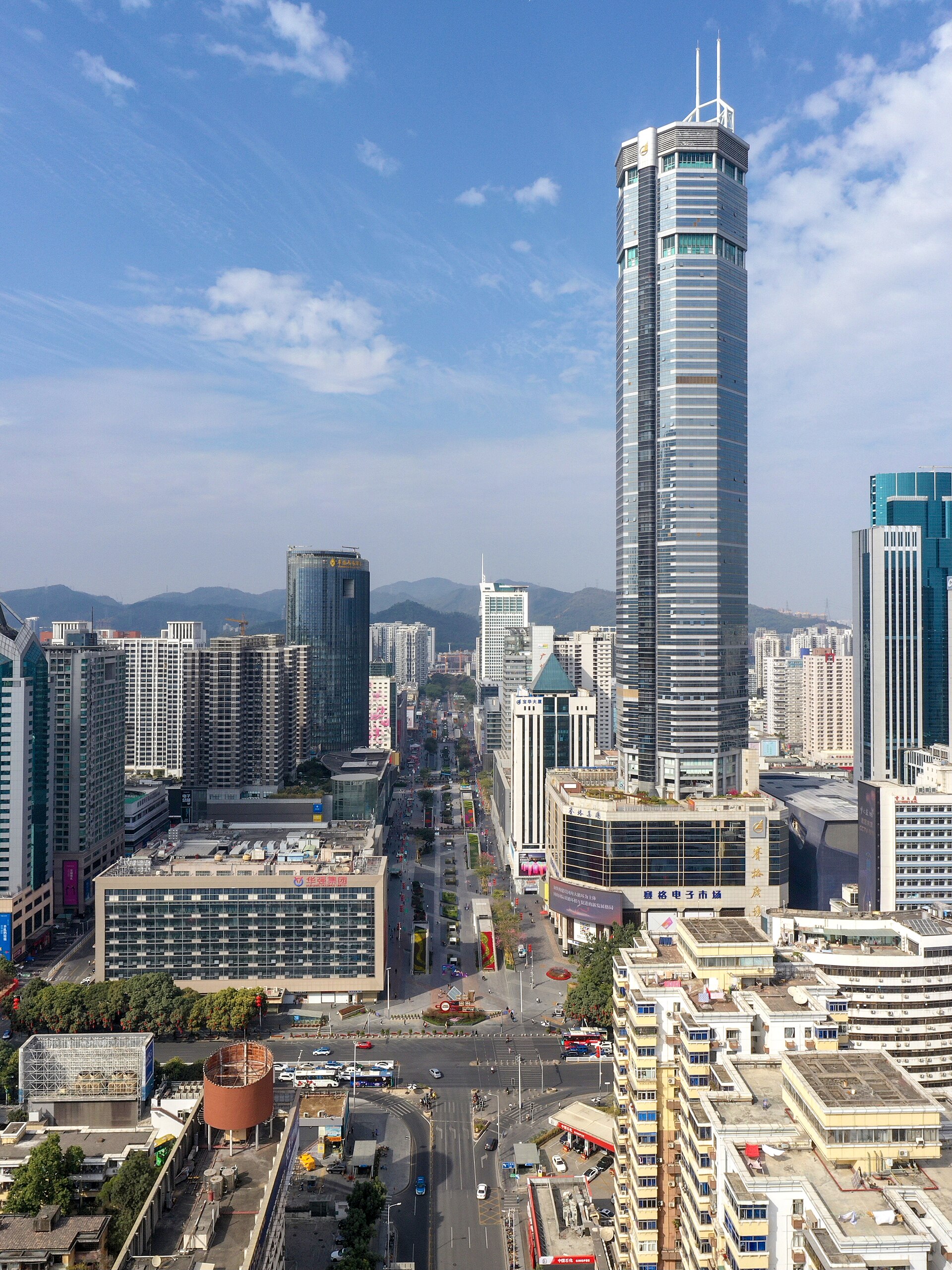
- Shenzhen Bay waterfront — Nanshan
A long park runs along the estuary, with cycle paths, lawns and views across the water to the hills of Hong Kong and the road bridge linking the two. It suits an evening walk or a hired bike, and sunsets can be fine on clear days. Mangroves and birdlife nearby reward a slow pace.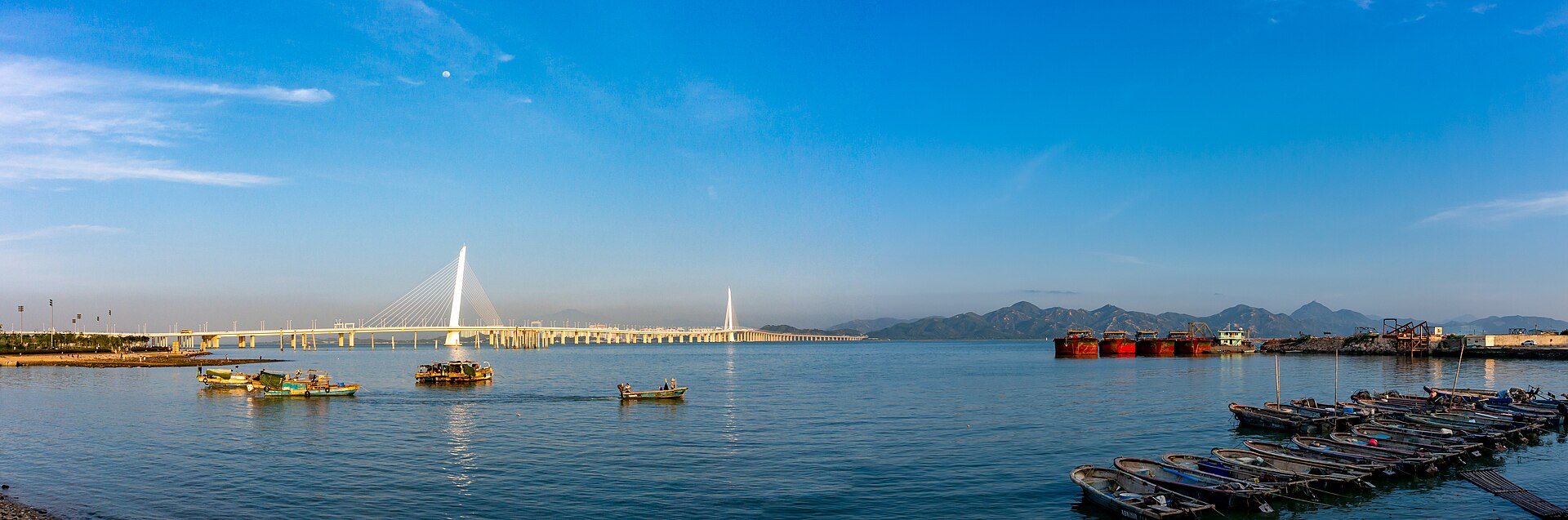
- Dapeng and the Hakka villages — Eastern Shenzhen
The old fortress town of Dapeng and the nearby Hakka villages, with their walled houses and ancestral halls, show the rural side that the skyline hides. Reaching them means a long metro-and-bus journey, so give it most of a day and pair it with a beach or a hill walk.
Culture
Shenzhen was a Cantonese-speaking part of Guangdong before it became an economic zone, and traces of that remain in dim sum breakfasts, ancestral halls and the Cantonese still heard in older neighbourhoods. The dominant voice today is Mandarin, spoken by migrants from every province, which gives the city its unusual character: no single dialect, few old family networks, and a habit of reinvention. People use the phrase "Shenzhen speed" for the rapid building, quick decisions and constant competition that define working life, and it shows in late offices, fast delivery and impatience in queues. The city has also tried to build a gentler cultural side. Early in the twenty-first century the municipal government announced a push towards design, animation and libraries, and today there are design museums, bookshops, art spaces in converted factories and busy public libraries. Festivals follow the national calendar, and Lunar New Year empties the city as workers travel home, leaving the streets unusually quiet. Daily life is largely cashless, run through phone apps for payments, transport and ordering food, so visitors should set up a payment method before relying on it. In public, people are polite but direct, and strangers rarely make small talk. When visiting a temple, ancestral hall or village shrine in Shenzhen, keep your voice low and ask before photographing worshippers or residents.
What to wear
Shenzhen has little dress tradition of its own, so the story starts with the older communities around it. Hakka villagers in the east are associated with plain, dark cotton jackets and trousers and with women's broad-brimmed hats hung with a cloth fringe, while Cantonese families historically kept silk and fine cotton for weddings and Lunar New Year. These garments are now mostly seen at festivals, in museums and in staged photographs. Everyday dress in the city is practical and smart-casual: sneakers, linen or light cotton in summer, thin jackets in winter, and a work badge on a lanyard around many necks near the tech campuses. Younger people follow Korean and Japanese trends alongside local streetwear labels, and the shopping malls are full of them. Visitors should dress for heat and humidity: breathable cotton or linen, a hat, sunglasses and a small umbrella that serves against both sun and sudden rain. Air-conditioning indoors is strong, so carry a thin layer. Comfortable closed shoes suit long walking days and uneven village paths. No special cover is needed in the city, but a little modesty, with covered shoulders and knees, is polite at temples and ancestral halls.
What to eat
- Cantonese dim sum — Tea restaurants in older neighbourhoods such as Luohu, mostly at breakfast and brunch
Steamed dumplings, rice rolls and buns arrive in small baskets with pots of tea. This is the local Cantonese tradition, and a morning table shared with others is the easiest way to sample several things at once. - Roast goose and char siu — Roast-meat shops (siu mei) across the city, usually near the street front
Lacquered goose, glazed pork and crisp-skinned meats hang in shop windows and are chopped to order over rice. It is quick, filling and cheap, and a good lunch between sights. - Hunan stir-fries — Hunan eateries in Futian and Luohu, popular with homesick migrants
Expect strong chilli, smoked meats and sour-hot flavours, often cooked fast in a wok. Shenzhen's migrant history means these places are plentiful and often crowded at lunch. Ask for less spice if unsure. - Sichuan hotpot — Hotpot restaurants in shopping malls, best for an evening group meal
A pot of numbing, chilli-red broth simmers at the table while thin meat, vegetables and tofu are cooked in it. Order a mild or split pot if you are cautious, and share with a group. - Hakka salt-baked chicken — Hakka restaurants and village eateries in eastern Shenzhen
Chicken cooked in a salty, aromatic crust comes out tender and simple, usually with a dipping oil. It reflects the Hakka cooking of the eastern villages and pairs well with a day trip to Dapeng.
Plan it
Best time. October to December for clearer, drier and milder weather; March is also comfortable though it can be damp. Summers are hot, humid and stormy, with typhoon risk, and Lunar New Year is very quiet as many residents leave.
How long. 2–3
Getting there. Shenzhen Bao'an International Airport, then the metro into the centre. High-speed trains reach Shenzhen North and Futian stations, and from Hong Kong the rail and metro border crossings at Luohu and Futian lead straight into the city metro. Check the official site (http://www.sz.gov.cn) and current visa rules before travel.
Budget. mid
Tips
- Set up a phone payment method or carry some cash, as many shops expect app payments
- Visit Nantou and the waterfront in the morning or late afternoon to avoid midday heat
- Allow a full day for Dapeng and the eastern villages, as the journey is long
- Check visa rules early; a short-stay visa on arrival may exist for travellers from Hong Kong or Macau, but rules change often
- Carry water, a small umbrella and a thin layer for strong air-conditioning
Etiquette
- Ask before photographing people, especially worshippers and village residents
- Queue patiently for the metro and let passengers off first
- Keep voices low in temples and ancestral halls
Nearby
Sources
- Wikidata Q15174 (CC0)
- Wikipedia: Shenzhen (rev 1382638857) (CC BY-SA 4.0)
- Wikivoyage: Shenzhen (rev 5417965) (CC BY-SA 4.0)
- Photo: Commercial area of Futian to east (Charlie fong) (CC BY-SA 4.0)
- Photo: Skyline KK100 and Shun Hing Square (Charlie fong) (CC BY-SA 4.0)
- Photo: Huaqiangbei and Shennan Cross (Charlie fong) (CC BY-SA 4.0)
- Photo: Shennan Road, Zhuzilin Junction east (Charlie fong) (CC BY-SA 4.0)
- Photo: China Resources Headquarters and Shenzhen Bay Gymnasium (Charlie fong) (CC BY-SA 4.0)
- Photo: Shenzhen Bay Bridge, 2013 (Iswzo) (CC BY-SA 4.0)
- Photo: South gate of Nantou Ancient Town, 2022 (Iswzo) (CC BY-SA 4.0)
- Photo: Opening of Chinese Section of the Canton-Kowloon Railway (Public domain)


