Shah Alam Blue Mosque
Shah Alam Blue Mosque, Malaysia
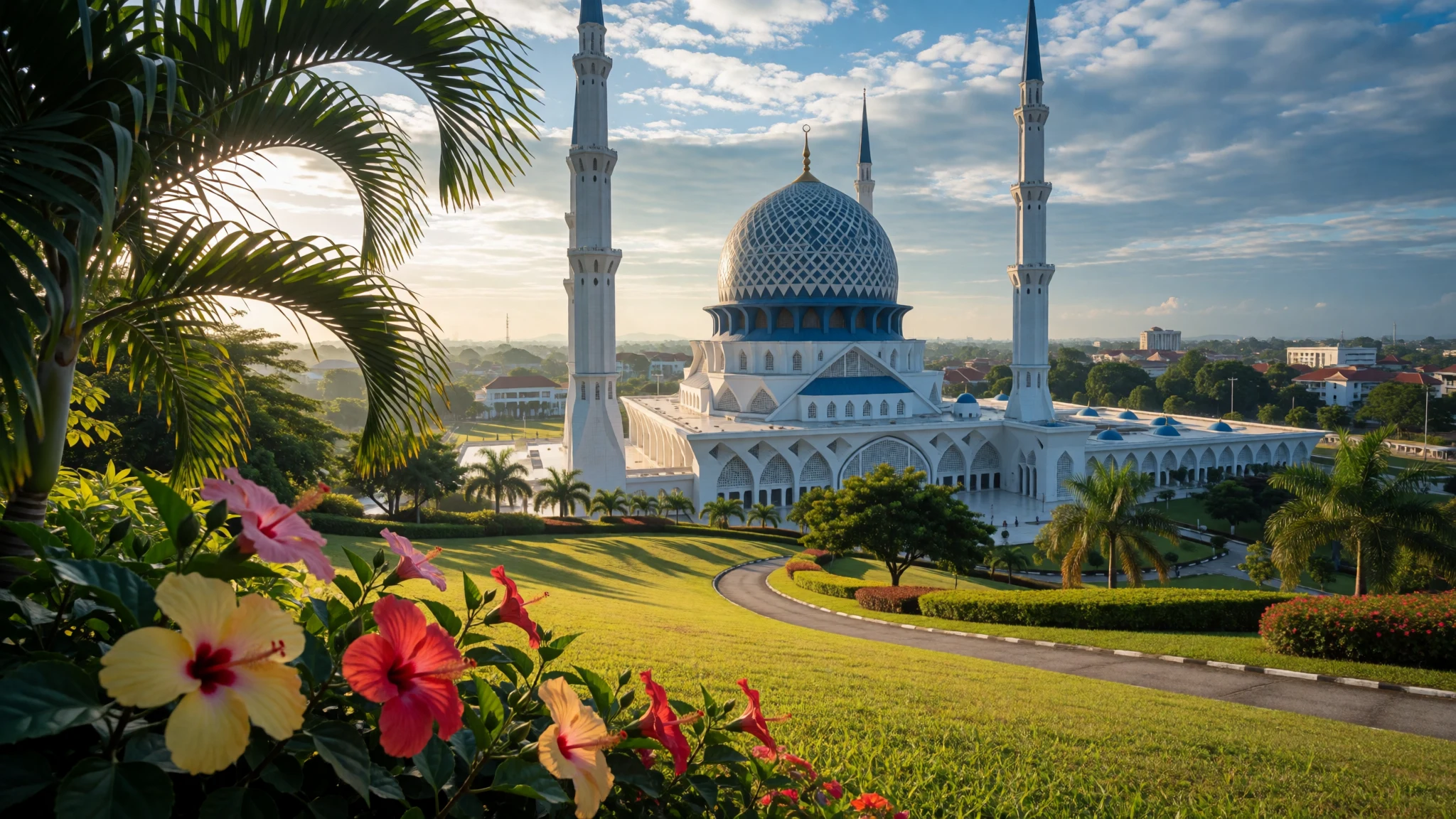
Visit Shah Alam to experience its remarkable state mosque, renowned for its colossal blue dome and soaring minarets rising above Selangor.
The place
Shah Alam Blue Mosque, formally known as the Sultan Salahuddin Abdul Aziz Shah Mosque, stands as the crowning architectural landmark of Selangor in Malaysia. Situated in the planned urban centre of Shah Alam, the complex is celebrated as the country's largest mosque and ranks among the most spacious houses of worship across the region. Its most defining characteristic is the massive blue and silver dome, which dominates the surrounding skyline and casts a striking silhouette against the tropical clouds. Four slender minarets stand guard at each corner of the sprawling complex, adding to the monumental scale of the religious grounds. Visitors approaching the site encounter an urban layout defined by numerous roundabouts and leafy neighbourhoods that connect the various commercial and residential districts of the city. The mosque overlooks a meticulously landscaped park inspired by traditional Islamic garden designs, offering quiet pathways and reflective green spaces that contrast with the energetic pace of the nearby commercial zones. Inside, the vast prayer halls are fully carpeted and air-conditioned, designed to accommodate thousands of faithful at any given time. The windows are fitted with special blue stained glass that filters the harsh equatorial sunlight, bathing the interior spaces in a serene, peaceful azure glow. Fine decorative calligraphy adorns the inner curves of the dome, while intricate aluminium grilles and rich timber panels complete the ceiling craftsmanship. Outside prayer hours, travellers and architectural enthusiasts are welcome to walk the perimeter galleries, admire the monumental scale of the courtyards, and appreciate the thoughtful synthesis of regional heritage and modern engineering.
Its story
Shah Alam Blue Mosque carries a history tied directly to the administrative evolution of Selangor during the late twentieth century. The development of the complex began when the late Sultan Salahuddin Abdul Aziz envisioned a grand state mosque to anchor the newly designated regional capital. Construction works commenced in the early years of the decade preceding its completion, bringing together master builders, engineers, and artisans who sought to fuse traditional Islamic aesthetics with contemporary structural techniques. When the doors officially opened, the building instantly became a point of civic pride for the local community and an ambitious statement of modern Malaysian architecture. Over the decades, the structure has weathered the tropical climate through careful maintenance of its vitreous enamel-baked steel panels and aluminium roofing materials. The surrounding city grew outwards from these administrative foundations, transforming from a quiet administrative township into a sprawling urban centre while preserving the monumental mosque as its spiritual heart. Today, the building stands as an enduring monument to the ruler who commissioned it, preserving craft traditions through its intricate geometric motifs, carved wooden panels, and monumental proportions that continue to draw visitors from across the globe.
What to see
- Sultan Salahuddin Abdul Aziz Shah Mosque — City centre
The monumental state mosque features the iconic blue and silver dome, four soaring minarets, and expansive prayer halls decorated with intricate calligraphy, stained glass, and fine timber craftsmanship. - Shah Alam Agricultural Park — Taman Pertanian
This extensive public park preserves a lush tropical rainforest alongside managed agricultural plots, fruit orchards, and paved trails designed for walking and cycling through shaded natural surroundings. - Snowalk I-City — I-City
An indoor Arctic environment attraction featuring sub-zero temperatures, intricate ice sculptures, and cold-weather recreational rides offering a distinct climate shift from the tropical heat outside. - Garden of Islamic Arts — Mosque perimeter
A landscaped park surrounding the mosque grounds, inspired by traditional paradise garden layouts with quiet reflecting pools, shaded seating areas, and geometric pathways designed for quiet contemplation.
Culture
Shah Alam reflects a vibrant multicultural Malaysian society where traditional Malay customs blend harmoniously with modern urban lifestyles. At the Shah Alam Blue Mosque, visitors encounter an active house of worship where Islamic traditions shape the daily rhythm of the community. Modest attire is expected throughout the complex, and visitors are provided with appropriate robes and headcoverings at the entrance to ensure respectful engagement with the religious space. Traditional arts, including intricate woodcarving and Arabic calligraphy, hold a revered place in local heritage and are prominently displayed across the region's public architecture. Visitors should always remove shoes before entering carpeted prayer areas and remain quiet during call-to-prayer hours and active worship sessions.
What to wear
Shah Alam fashion combines traditional Malay attire with contemporary global styles suited to the warm, humid climate. Traditional garments such as the baju kurung for women and the baju melayu for men remain popular for formal occasions, religious observances, and festive celebrations, crafted from breathable fabrics like cotton and lightweight silks. In everyday urban settings, locals mostly wear casual modern clothing, including lightweight shirts, trousers, and modest dresses. For visitors exploring Shah Alam and touring the Blue Mosque, lightweight, loose-fitting clothing that covers the shoulders and knees is essential to cope with the tropical heat while respecting local modesty standards. Visitors entering the mosque are required to wear provided cloaks and headscarves regardless of their outer garments.
What to eat
- Mamak Specialities — Commercial dining areas
Enjoy comforting milk tea shakes alongside savoury cheese flatbreads at popular open-air eateries where locals gather to socialise and watch televised sports. - Ikan Bakar — Waterfront food stalls
Freshly caught local fish marinated in aromatic spice pastes and grilled over hot coals until smoky and tender, served with dipping sauces. - Authentic Thai Cuisine — Hotel dining rooms
Fragrant curries, spicy soups, and stir-fried noodle dishes prepared with fresh herbs in a relaxed, family-friendly dining environment. - Traditional Japanese Fare — City restaurants
An assortment of carefully prepared sushi, sashimi, and grilled dishes served in a refined setting celebrating classic culinary techniques. - Local Mixed Rice — Neighbourhood coffee shops
A diverse array of meat and vegetable dishes served over steamed rice, allowing diners to sample multiple flavours in a single meal.
Plan it
Best time. The climate remains warm and humid throughout the year with tropical rain showers; visiting during drier months offers more comfortable conditions for exploring outdoor gardens and monuments.
How long. 1–2
Getting there. Arrive via Kuala Lumpur International Airport, then continue by road or rail connecting through regional train stations towards the city centre.
Budget. mid
Tips
- Check visitor opening hours before arriving at the mosque to avoid prayer time restrictions
- Dress modestly with shoulders and knees covered when visiting religious sites
- Carry bottled water to stay hydrated in the warm tropical climate
- Use local train stations or taxis for getting around commercial districts
Etiquette
- Remove footwear before stepping onto carpeted prayer hall floors
- Dress respectfully and wear provided robes when entering the mosque interior
- Maintain a quiet, respectful tone while exploring active worship spaces
Nearby
Sources
- Wikidata Q308510 (CC0)
- Wikipedia (CC BY-SA 4.0)
- Wikivoyage (CC BY-SA 4.0)