Seattle
Seattle, United States
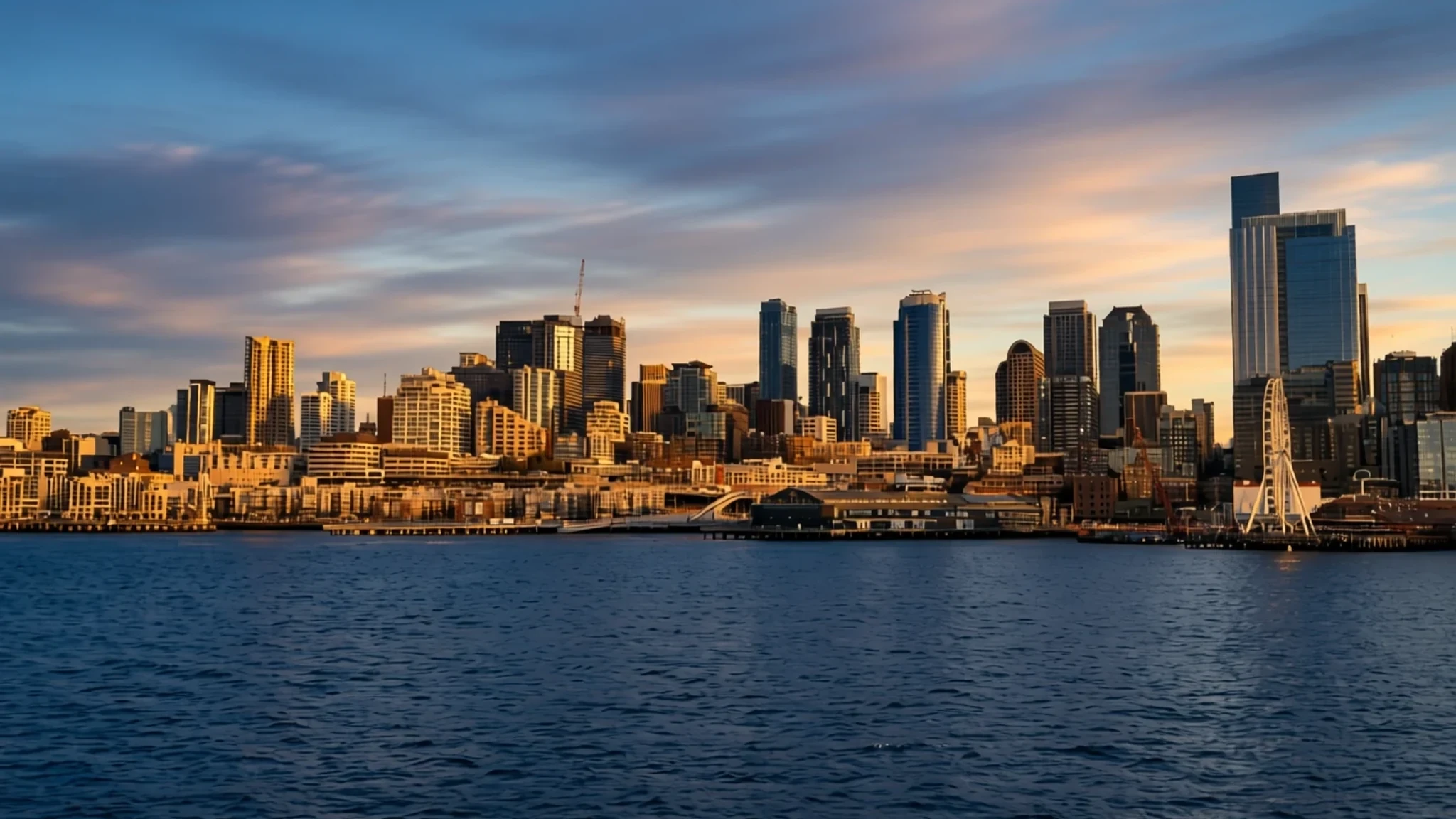
Seattle combines a working harbour, steep neighbourhoods, coffee culture and easy access to mountains and islands, best enjoyed in the dry summer months.
The place
Seattle sits on a narrow strip of land between Puget Sound, an arm of the Pacific Ocean, and Lake Washington, in the north-west of the United States. It is the most populous city in Washington State and the seat of King County, with roughly 737,000 residents inside the city limits. The wider metropolitan area is far larger, and the city has grown quickly over the past decade and a half. Downtown runs down a set of hills toward the water, while neighbourhoods such as Capitol Hill, Ballard and Fremont spread across the slopes and around the lakes. The city's position makes it a gateway for trade with Asia, and its port handles a large volume of container traffic. Technology companies have shaped the city's economy for decades, and visitors notice the mix of software offices, marine industry and outdoor culture. Seattle is close to the Canadian border, which makes it a practical starting point for trips north to Vancouver and to the islands. On clear days the Olympic Mountains show to the west and the Cascade Range to the east. Rain is common from autumn to spring, so the city feels greener and quieter in the grey months and more open in summer.
Its story
Seattle was shaped by Indigenous communities long before any outside settlement. Archaeology points to human presence in the area for several thousand years, and when the first newcomers arrived the Duwamish people lived in a cluster of villages around Elliott Bay. The city's name in the Lushootseed language refers to a crossing place, and it belonged to one of those villages near what is now King Street Station. Captain George Vancouver charted the coast for Britain's Royal Navy at the end of the eighteenth century, and his survey opened the region to a wider world. American settlers arrived in the 1850s. In 1851 a party led by Luther Collins claimed land at the mouth of the Duwamish River, and a second group, the Denny Party, landed in a rainstorm at Alki Point later that year. The early town grew slowly around the water, timber and the sheltered harbour. Its growth accelerated as railways and shipping linked it to the rest of the country and to Asia, turning a remote settlement into a port city. Many of the streets and districts visitors walk today follow the lines drawn in those early decades, and the waterfront still carries traces of the industries that built the place.
What to see
- Pike Place Market — Downtown waterfront
Pike Place Market is the city's oldest continuously operating public market and the place most visitors head for first. Fishmongers throw fish across the stalls, and farmers, flower sellers and craft vendors fill the lanes up the hill. Go early in the morning, before the midday crowds and the tour groups arrive, and bring some cash for small stalls. The market spreads across several levels, so take time to explore the side passages.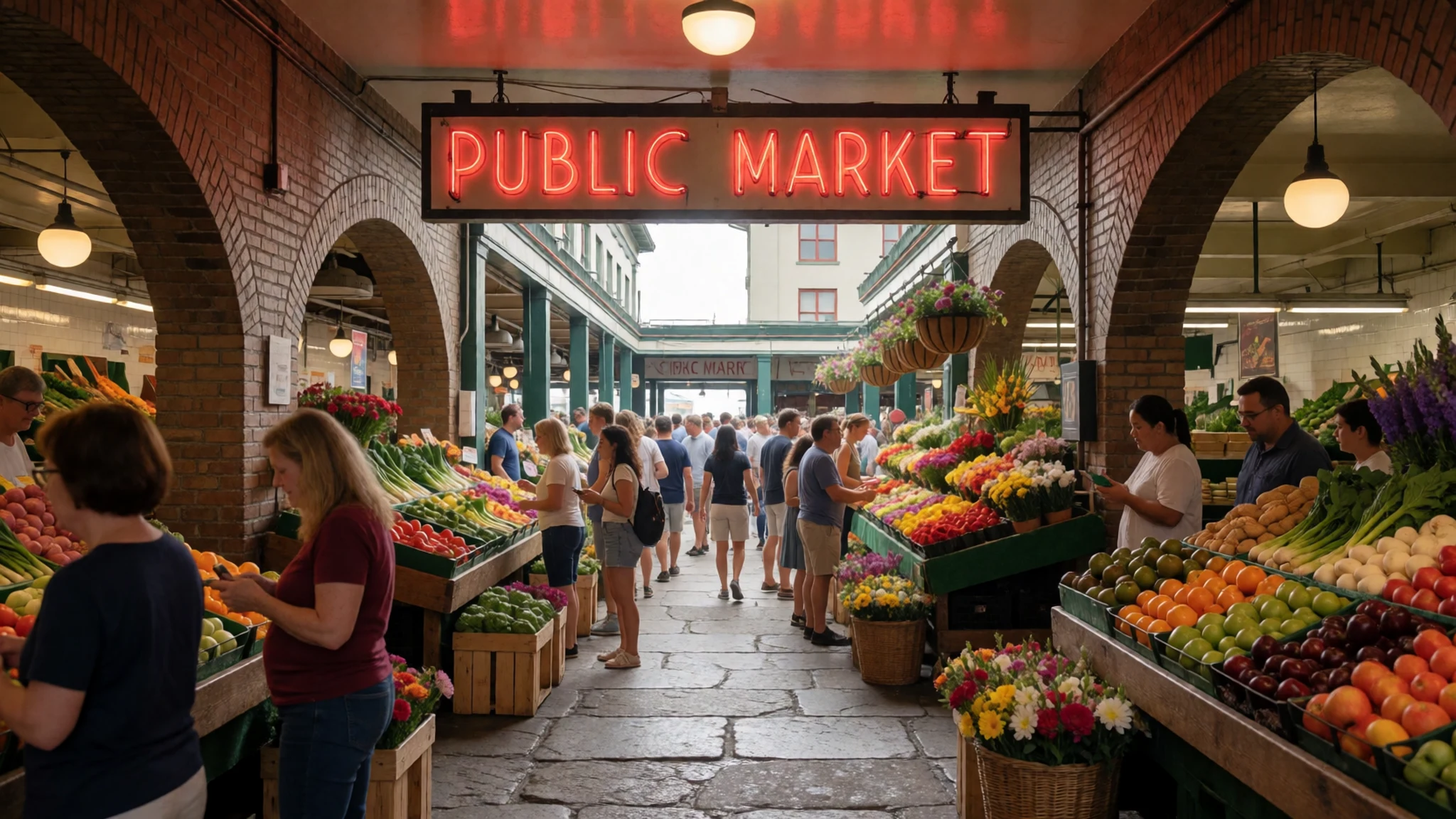
- Seattle Great Wheel and the waterfront — Elliott Bay waterfront
The Seattle Great Wheel stands on the piers of Elliott Bay and gives a slow, enclosed view over the harbour, the ferries and the mountains beyond. It is best in the evening, when the lights come on across the water. Nearby piers have arcades, aquarium entrances and places to eat fish and chips. Harbour cruises leave from the same waterfront, and the hour-long trip gives a good view of the skyline from the water.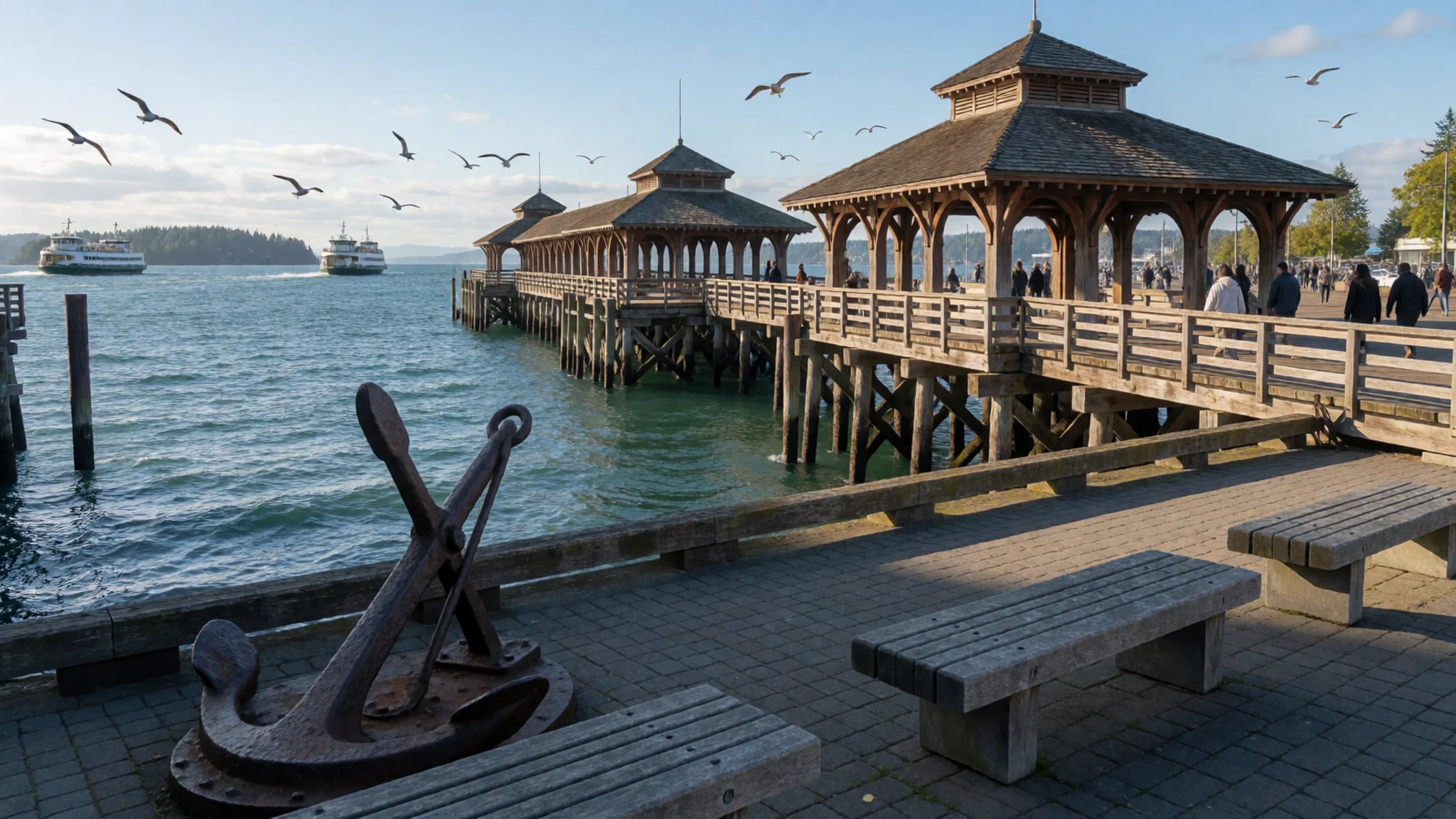
- Space Needle — Uptown, north of downtown
The Space Needle is the landmark that defines the city's skyline, built for a world's fair and kept as a symbol ever since. The viewing deck gives a full sweep of downtown, Elliott Bay, Lake Union and the snowy peaks on clear days. Tickets are timed and can sell out in summer, so book ahead. A combined city pass can include the Space Needle and the aquarium, which helps if you plan to do both.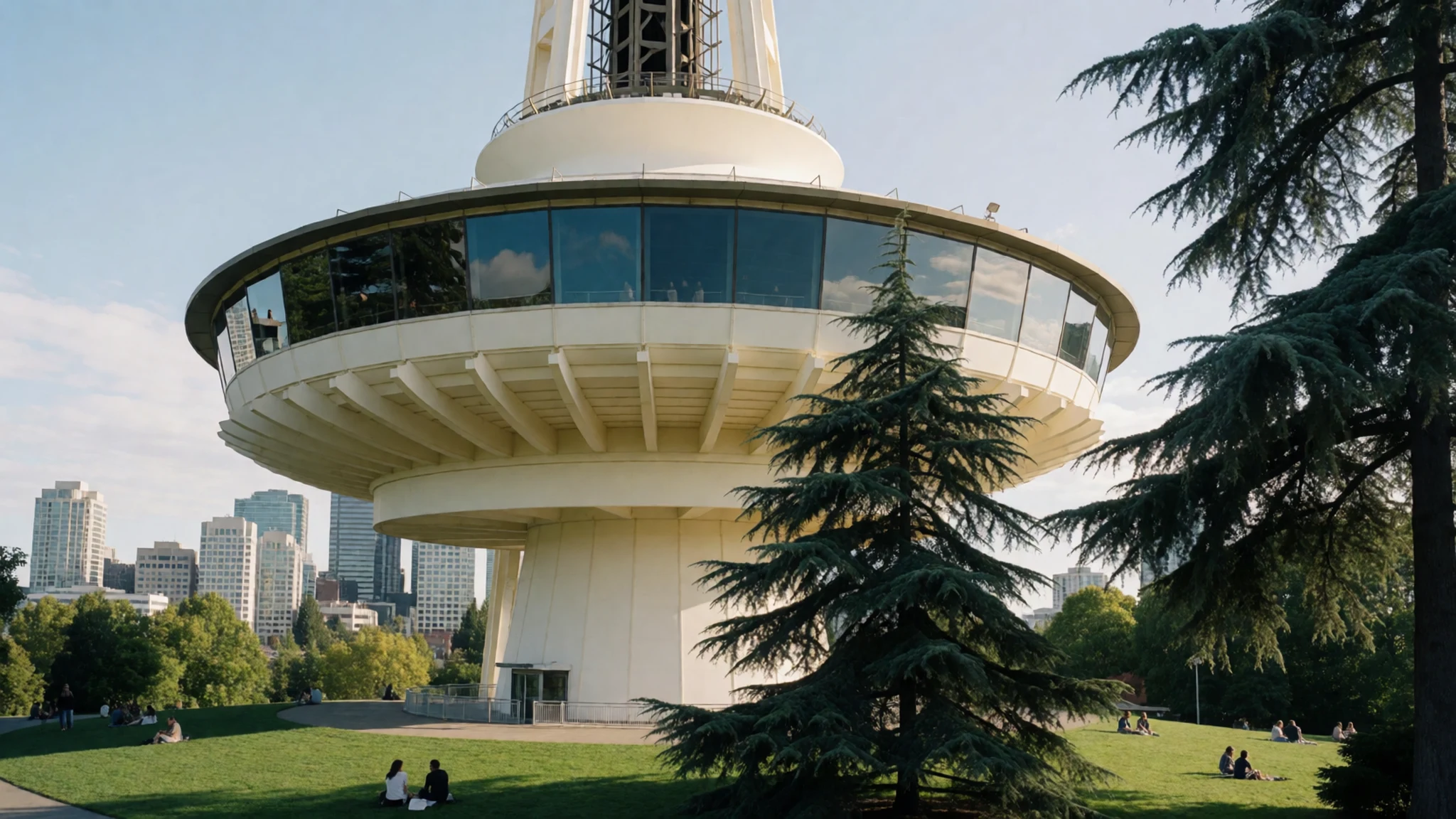
- Amazon Spheres — South Lake Union
The Amazon Spheres are three glass domes on the company's headquarters campus, filled with plants and a garden-like workplace. They are a striking piece of modern architecture and a reminder of how much the city's economy has changed. The spheres are part of a working campus, so access is limited and you should check the official site for current visiting arrangements before you go. The nearby streets are good for a walk.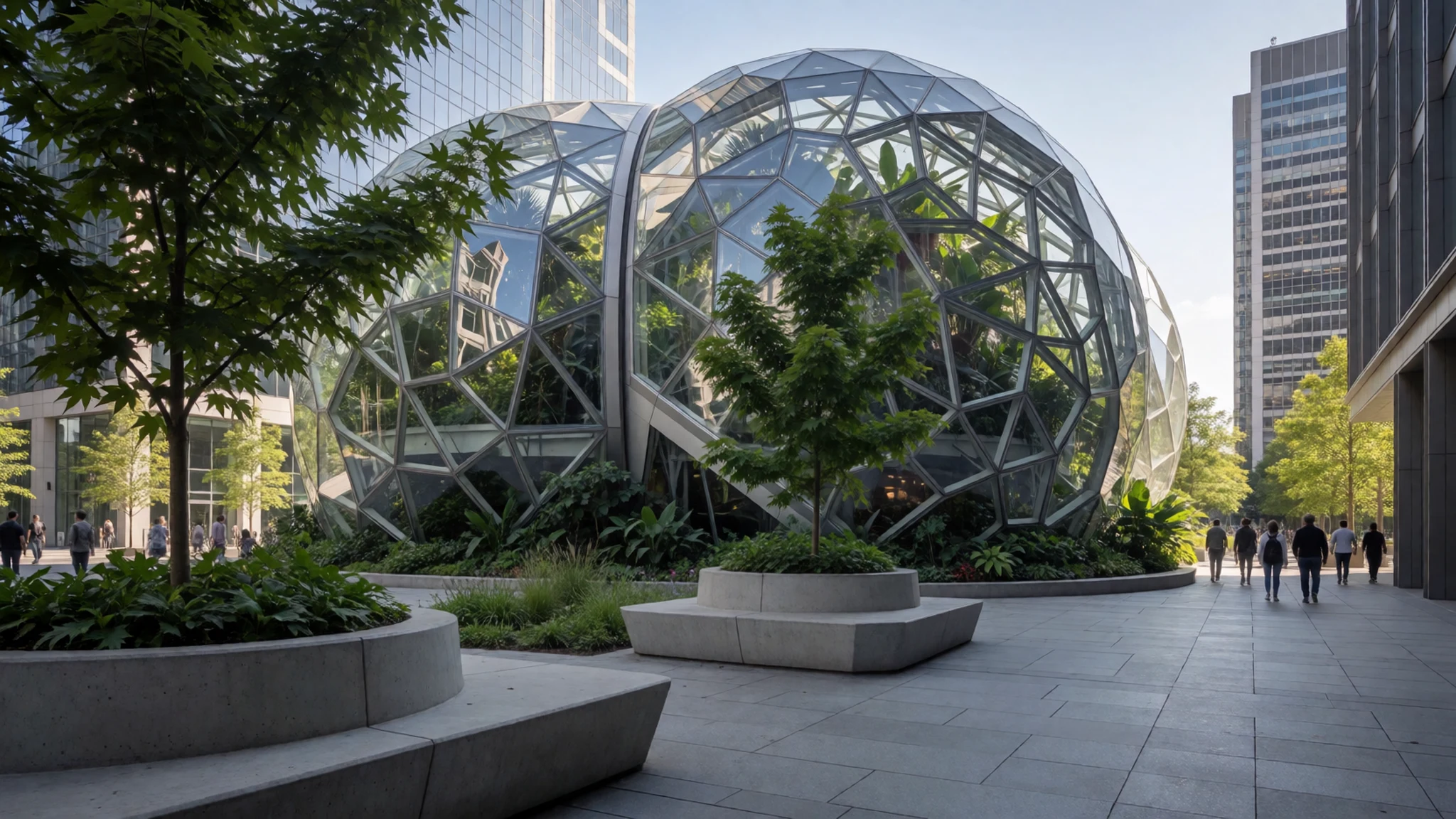
- Lake Union dinner cruises — West side of Lake Union
Lake Union and Lake Washington are good for a slower view of the city. Waterways Cruises runs brunch, supper and four-course dinner cruises, and the dinner trip is business casual. Boats leave from the west side of Lake Union, where houseboats line the shore. The evening light on the water is the reason many locals spend summer evenings on the lake. Book ahead for weekend sailings.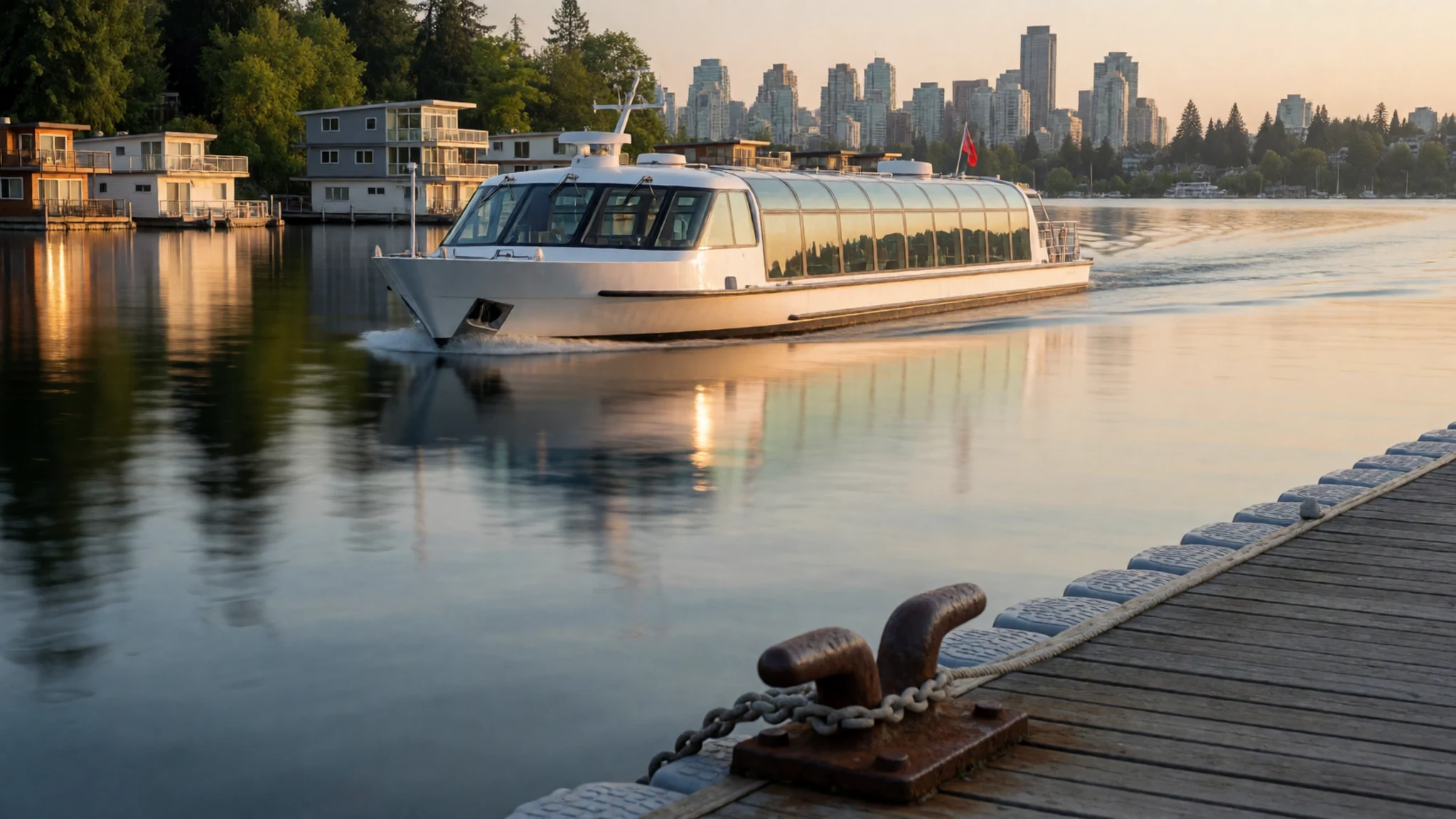
Culture
Seattle is a city of neighbourhood life, with street fairs and parades held across its districts through the warmer months. Its performing arts have a long history: the Seattle Symphony performs at Benaroya Hall, and the Seattle Opera and Pacific Northwest Ballet perform at McCaw Hall on the grounds of the fairground campus north of downtown. The opera is especially known for its Wagner productions, and the ballet school has trained dancers for decades. The Seattle Youth Symphony Orchestras are among the largest youth symphonic groups in the country, which shows how seriously music is taken across generations. Many visitors also come for the film festival, which brings a wide range of international cinema each year. Expect a relaxed, informal public manner in most places, though the concert halls have their own customs. At Benaroya Hall, arrive before the start, switch your phone off and wait for a pause before leaving your seat.
What to wear
The traditional dress of the region comes from the Coast Salish peoples, whose textiles were central to daily life. Weavers made blankets and garments from mountain goat wool and dog hair, and used cedar bark for clothing, mats and hats. Woven designs carried family and clan meaning, and they were worn for ceremony and warmth. Today these textiles appear in museum collections and in contemporary work by Indigenous artists, and some local makers continue the craft. In everyday Seattle, dress is practical and informal. Layers are the norm: a waterproof shell or light rain jacket, a fleece or wool sweater and a base layer that can be taken off indoors. Denim, sneakers and boots are common, and plenty of people wear outdoor brands even in town. Business dress is more formal downtown. For a visitor, pack a waterproof jacket even in summer, bring comfortable shoes with good grip for steep streets and the market, and choose smart-casual clothes for concerts and dinner cruises.
What to eat
- Sockeye salmon — The fish counters and seafood stalls at Pike Place Market
Red sockeye salmon is the local fish to try, best in late summer when the runs are strong. Look for it on the fish counters at the market, where it is sold whole or in fillets, and ask for it grilled or smoked. Smoked sockeye is a classic souvenir too.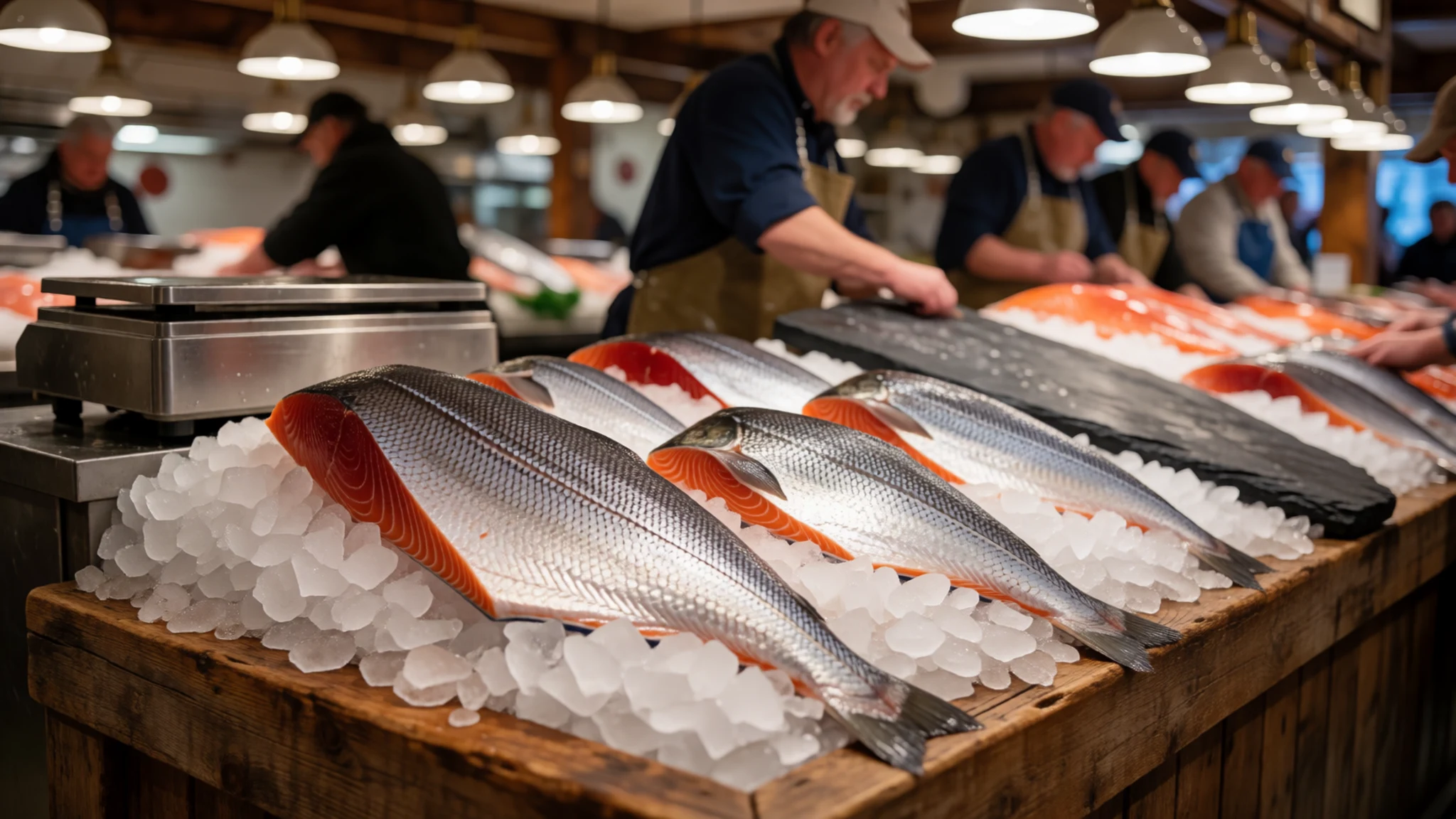
- Dungeness crab — Casual seafood restaurants on the Elliott Bay waterfront
Dungeness crab is sweet and easy to eat cold or warm, served with lemon and butter. It is a seasonal favourite on the Pacific coast and turns up in many seafood restaurants. Order it at a casual harbour restaurant for a relaxed meal with a view of the boats.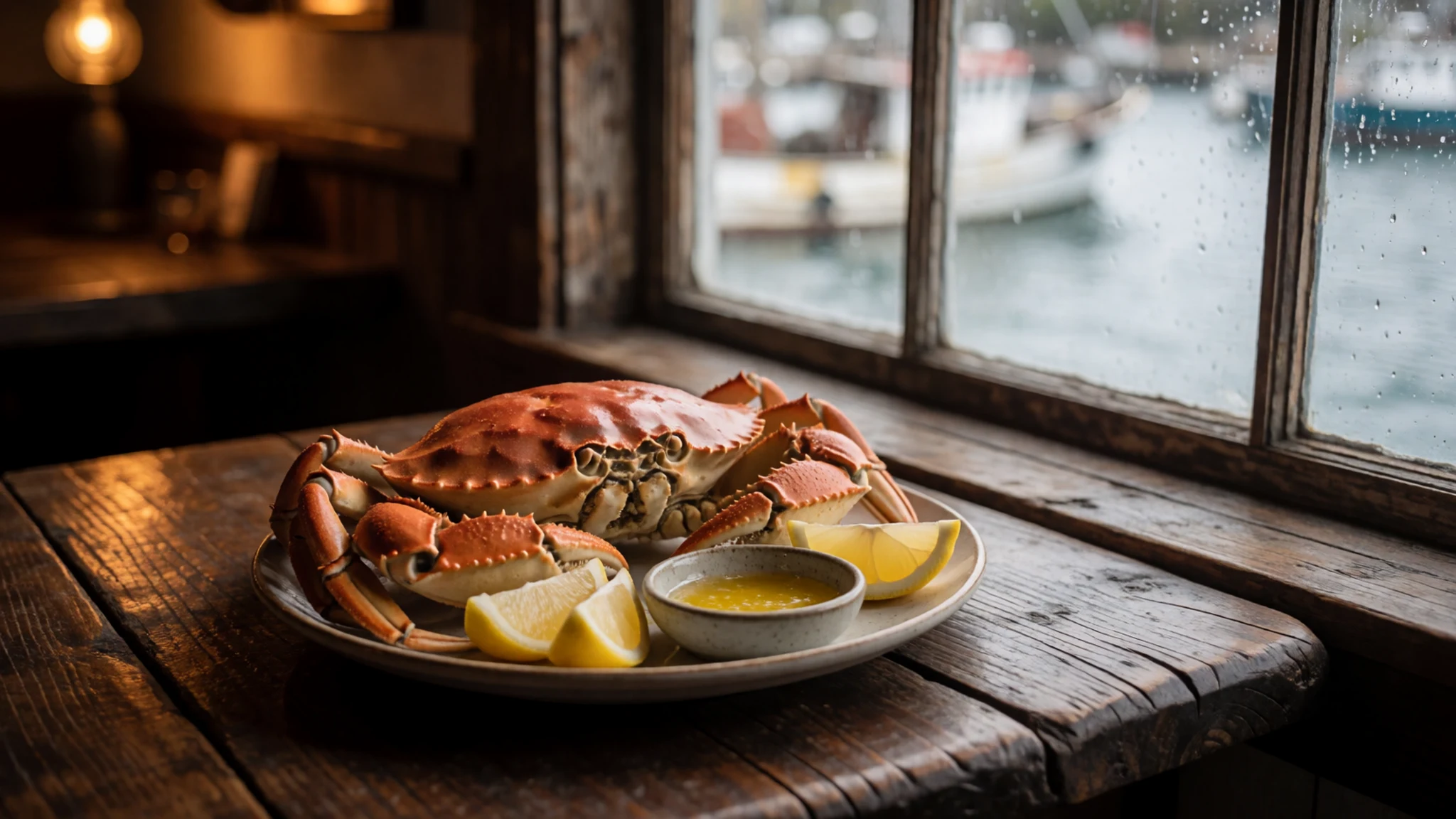
- Clam chowder — Counter-service seafood spots near the market and the waterfront
Seattle takes its chowder seriously, usually a creamy bowl with clams, potatoes and bacon. Many places serve it in a bread bowl, which makes a filling lunch. It is a good choice on a cool, wet day when the city feels its weather most.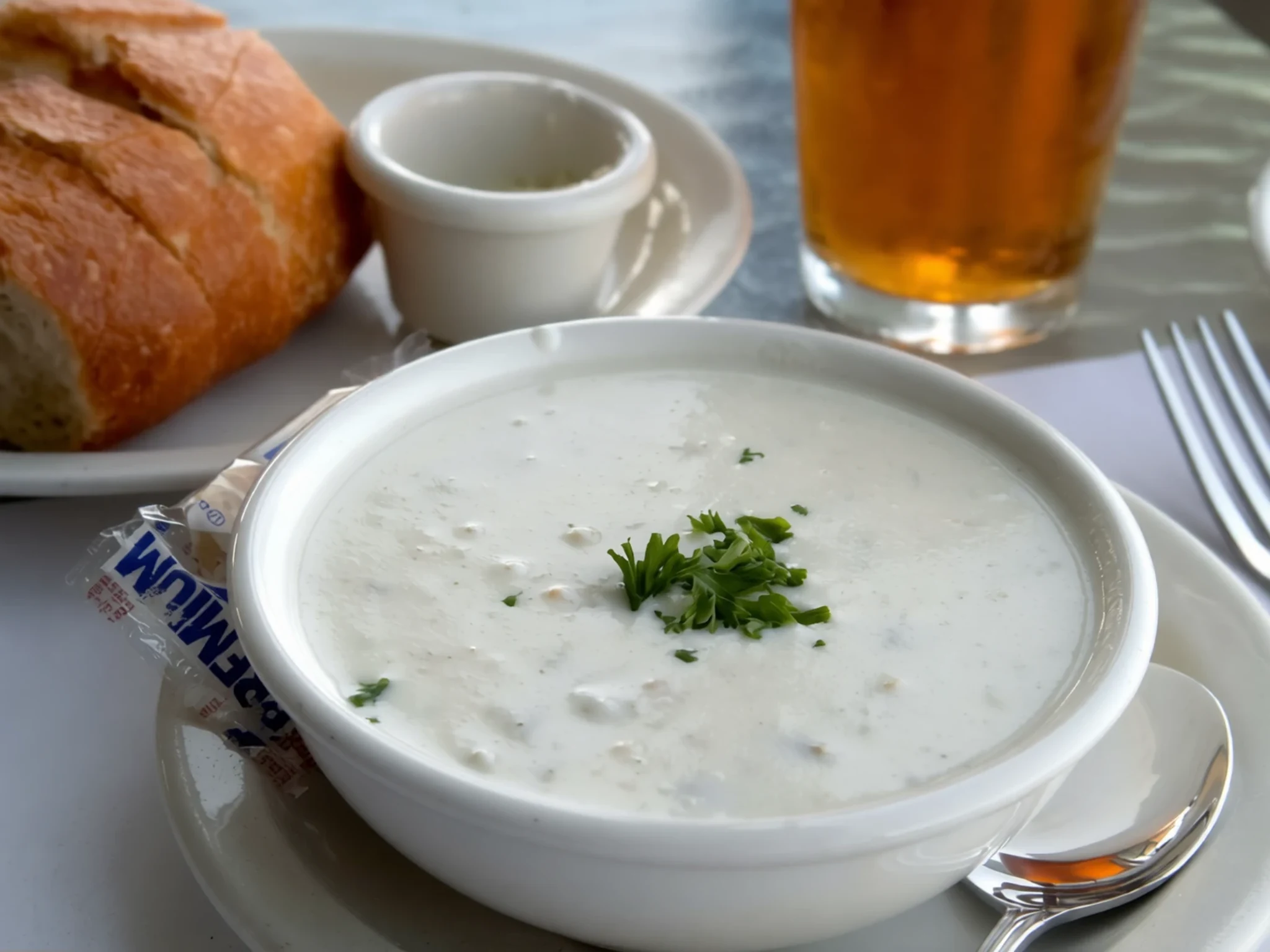
- Hand-pulled noodles and dumplings — The International District, south of downtown
The city's Asian communities have shaped its food scene, and hand-pulled noodles and dumplings are widely available. Small restaurants serve bowls of broth with fresh noodles, and steamed or fried dumplings make quick, cheap meals. Expect simple dining rooms and busy lunch hours. - Lunar New Year street food — Streets of the International District during Lunar New Year festivities
During Lunar New Year the International District fills with stalls selling snacks, skewers and sweets, alongside lion dances and performances. The food is affordable and varied, so it is a good way to sample several dishes in one visit. Arrive early to avoid the biggest crowds and carry some cash.
Plan it
Best time. June to September is the dry season, with long evenings, warm days and the clearest views of the mountains. Late spring and early autumn are quieter and still pleasant. Winter is wet and grey, though the city has its own charm then.
How long. 3
Getting there. Fly into Seattle-Tacoma International Airport, which is linked to downtown by light rail. Vancouver, British Columbia is a few hours away by road, so a short trip north is an easy add-on.
Budget. mid
Tips
- Book Space Needle and aquarium tickets ahead, especially in summer
- Visit Pike Place Market early, before the midday crowds
- Pack a waterproof layer even on a sunny day
- Wear comfortable shoes; the hills are steep
- Carry some cash for small stalls and markets
Etiquette
- Do not handle fish or produce at the market stalls without asking
- Queue politely at the fish counters and popular restaurants
- Tip table staff generously, since their pay depends on it
Nearby
Sources
- Wikidata Q5083 (CC0)
- Wikipedia (rev 1382548722) (CC BY-SA 4.0)
- Wikivoyage (rev 5406507) (CC BY-SA 4.0)
- Seattle aerial 2, May 2023 (Spicypepper999) (CC0 1.0)
- Seattle Downtown Aerial, July 2025 (User:Cmglee after Spicypepper999) (CC BY 4.0)
- Seattle Center as night falls (Jeffery Hayes) (CC BY 3.0)
- Seattle Great Wheel (Diego Delso) (CC BY-SA 4.0)
- Pike Place Market Entrance (Mtaylor444) (CC BY 3.0)
- Amazon Spheres from 6th Avenue (SounderBruce) (CC BY-SA 4.0)
- Seattle - Occidental and Yesler - 1884 (Theodore E. Peiser) (CC BY 3.0)
- Birds-eye view of Seattle and environs, 1891 (Koch, Hughes Litho. Co.) (Public domain)


