Scoresby Sund
Scoresby Sund, Greenland
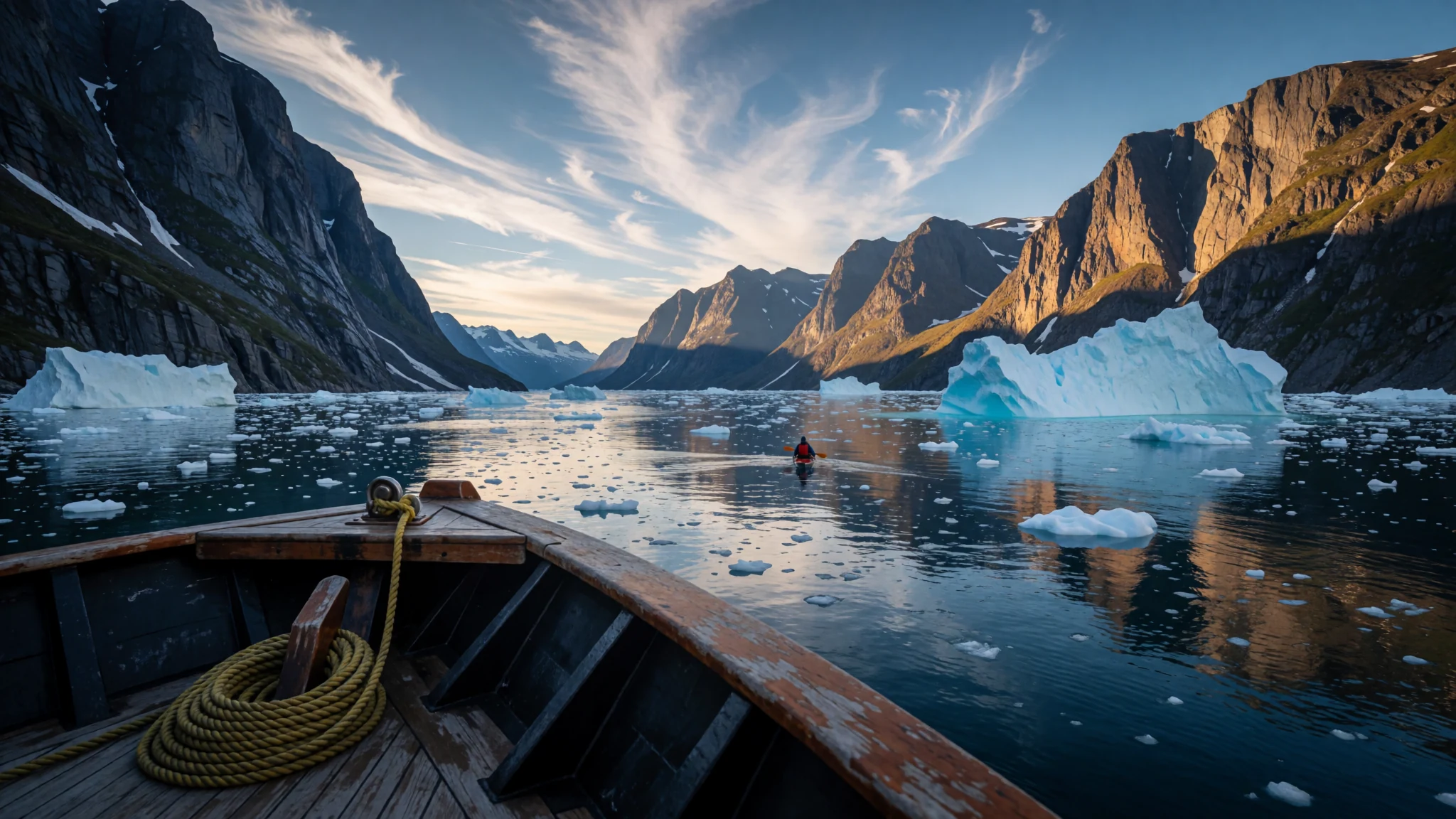
Journey to Scoresby Sund to witness one of the planet's vastest fjord systems, where colossal icebergs drift past towering basalt cliffs in profound isolation.
The place
Scoresby Sund is an immense and branching fjord system situated on the eastern coastline of Greenland. Carved deeply into the earth, this marine labyrinth features a primary waterway stretching inward before splitting into a complex web of icy branches that cover an enormous territory. Towering mountain ranges frame the dark waters, flanked on the southern shores by monumental walls of basalt rock that rise steeply above the surface, while the northern boundaries present a gentler, more rounded landscape. The mouth of the sound opens toward the Greenland Sea between dramatic capes, creating a wide marine gateway where cold polar currents sweep past drifting ice. Far inland, sheltered basins and deep branching arms carve through ancient geological formations, creating microclimates where hardy Arctic vegetation manages to cling to the rocky soil during the brief summer thaw. Human habitation in this immense wilderness is concentrated entirely at the settlement of Ittoqqortoormiit, perched on the northern side of the outer sound, representing the sole permanent community across thousands of square kilometres of wilderness. Elsewhere, the territory remains completely wild, dominated by the raw elements of wind, ice, and sweeping stone under vast polar skies. Visitors arriving in Scoresby Sund enter a realm far removed from ordinary urban existence, where travel is defined by the rhythm of sea ice, maritime navigation, and the immense scale of the Arctic coastline.
Its story
The human story of Scoresby Sund is inextricably linked to both ancestral Inuit survival and maritime exploration. Long before European vessels arrived in these icy waters, Indigenous hunters navigated the branching fjords in skin-covered kayaks, utilising the rich marine ecosystem of seals, whales, and fish to sustain life in an unforgiving climate. Archaeological remains scattered across the coastline tell of nomadic camps and winter settlements that endured centuries of bitter cold through profound ecological knowledge and communal resilience. The modern cartographic identity of the sound was established when the English explorer William Scoresby mapped the complex fjord network in detail during the nineteenth century, naming the vast marine corridor in honour of his father. For generations, the inner reaches of the fjord remained largely unvisited by outsiders until the twentieth century, when expeditions sought to document the remote terrain and geological formations. The establishment of Ittoqqortoormiit brought a permanent modern community to the region, shifting the traditional nomadic patterns into a settled village life centred around hunting, fishing, and community resilience. Today, the heritage of Scoresby Sund lives on through the descendants of these resilient communities, who maintain traditional harvesting practices alongside contemporary life. Exploring the historic ruins and meeting the residents offers travellers a window into a unique cultural landscape forged at the extreme edge of human habitation, where history is written in stone, ice, and oral tradition passed down through generations.
What to see
- Glaciers and Drifting Icebergs — Main fjord basin and Rødefjord
Drifting through the branching channels of Scoresby Sund reveals colossal icebergs calved from massive tidewater glaciers. These sculptural ice masses display striking shades of turquoise and deep blue, glowing under the low polar light and creating an otherworldly aquatic landscape of frozen titans.
- Ittoqqortoormiit Settlement — Northern side of the sound mouth
The colourful timber houses of Ittoqqortoormiit stand perched on the rocky coast near the mouth of the sound, forming the only permanent community for miles. Wandering through this remote village offers a glimpse into daily Arctic life, traditional hunting culture, and tight-knit community resilience.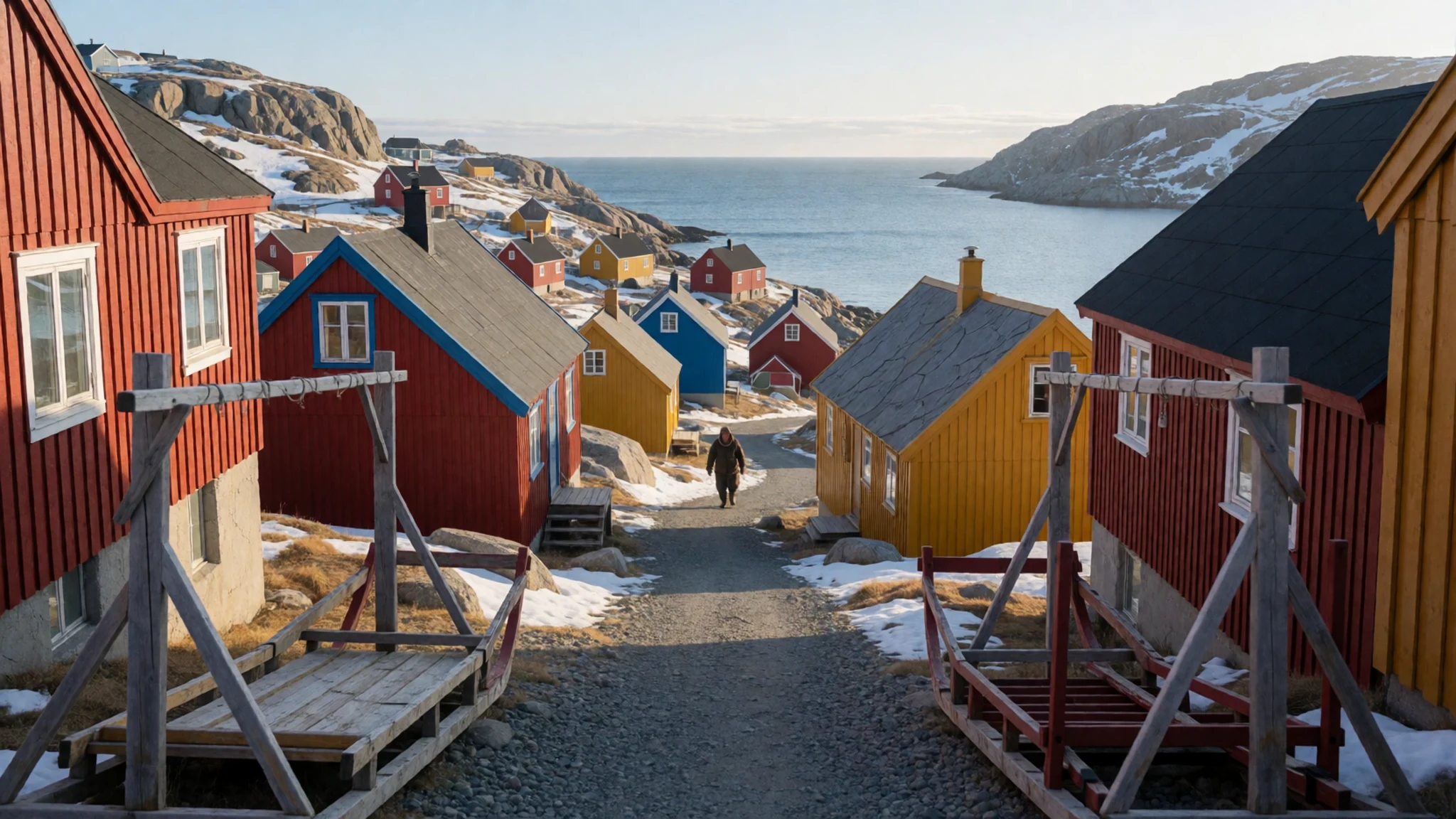
- Basalt Cliffs of Cape Brewster — Kangikajik at the Savoia Peninsula
The southern gateway of the sound features immense, sheer rock walls formed from ancient layers of dark basalt. Rising dramatically straight out of the icy sea, these towering precipices create a formidable and imposing natural fortress guarding the entrance to the vast waterway.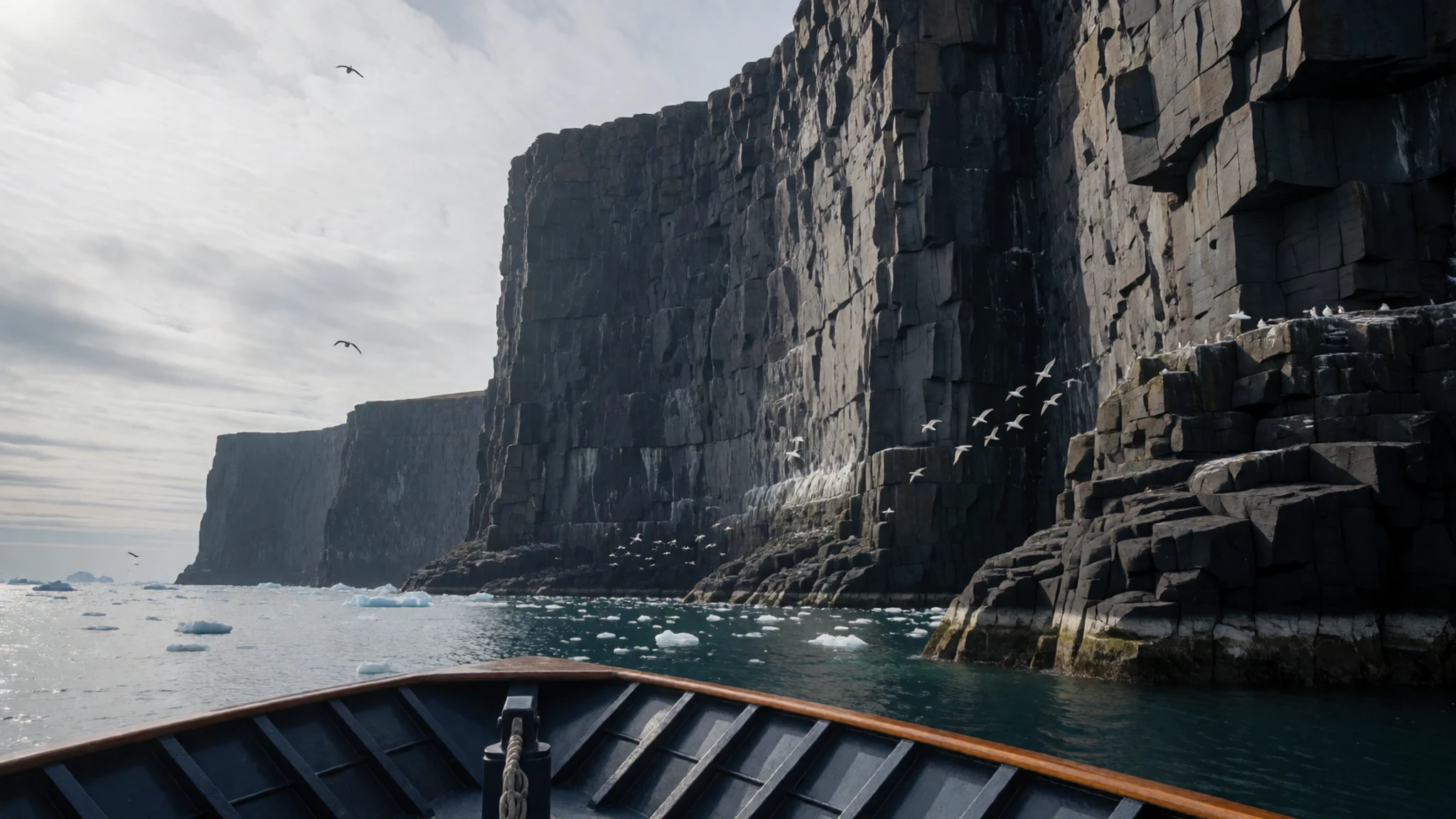
- Tundra Flora of Sydkap — Inner southern coast of the sound
The inner protected shores around Sydkap support remarkable pockets of hardy Arctic vegetation that bloom briefly during the summer months. Low-lying dwarf shrubs, delicate mountain flowers, and vibrant mosses carpet the sheltered valleys against a backdrop of distant glaciers.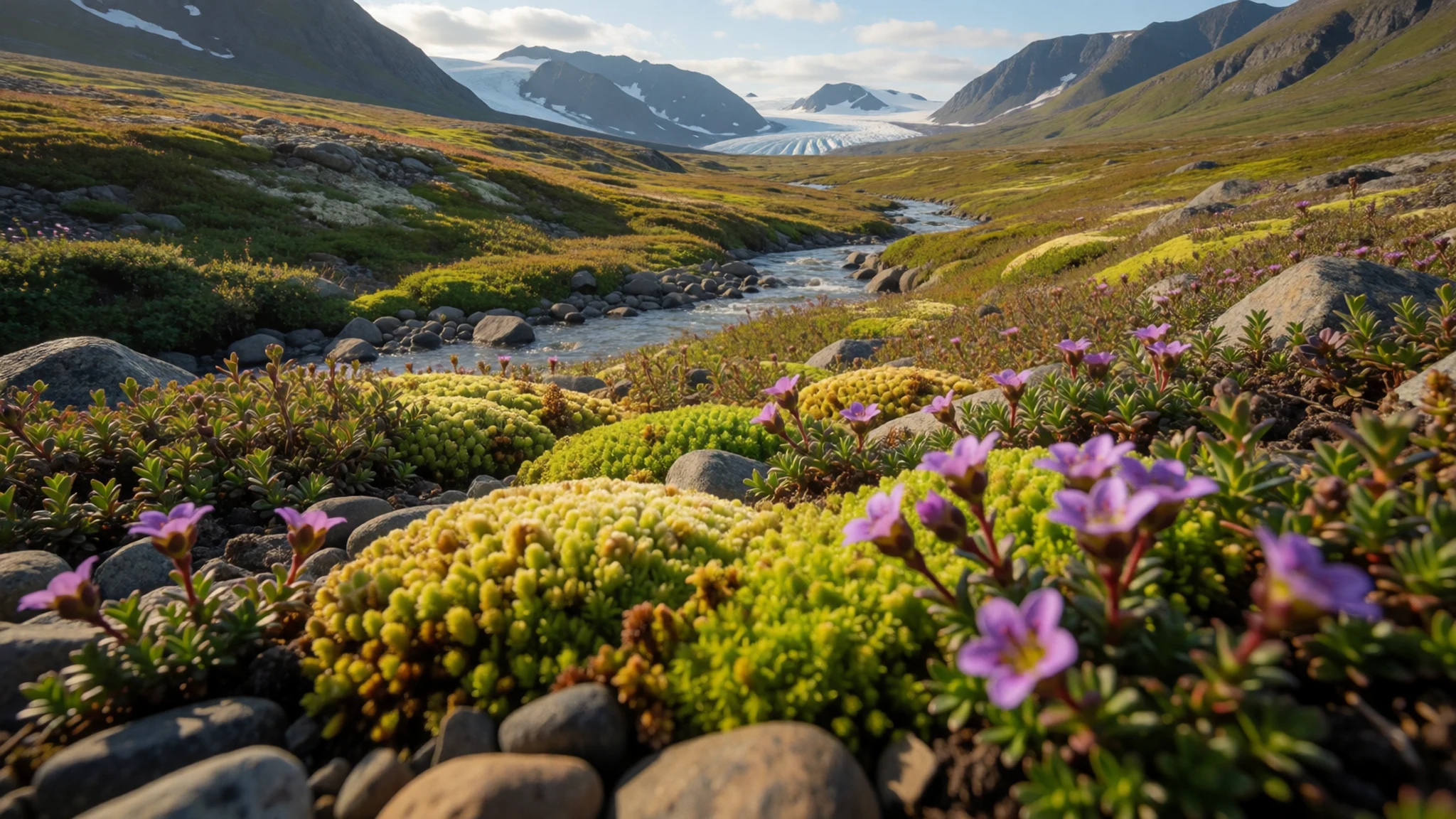
- The Midnight Sun — Throughout the region
During the height of summer, the sun remains permanently above the horizon across the northern territories, bathing the icy fjords in continuous golden light. This ethereal phenomenon erases the boundary between day and night, casting long, dramatic shadows across the endless mountain ranges.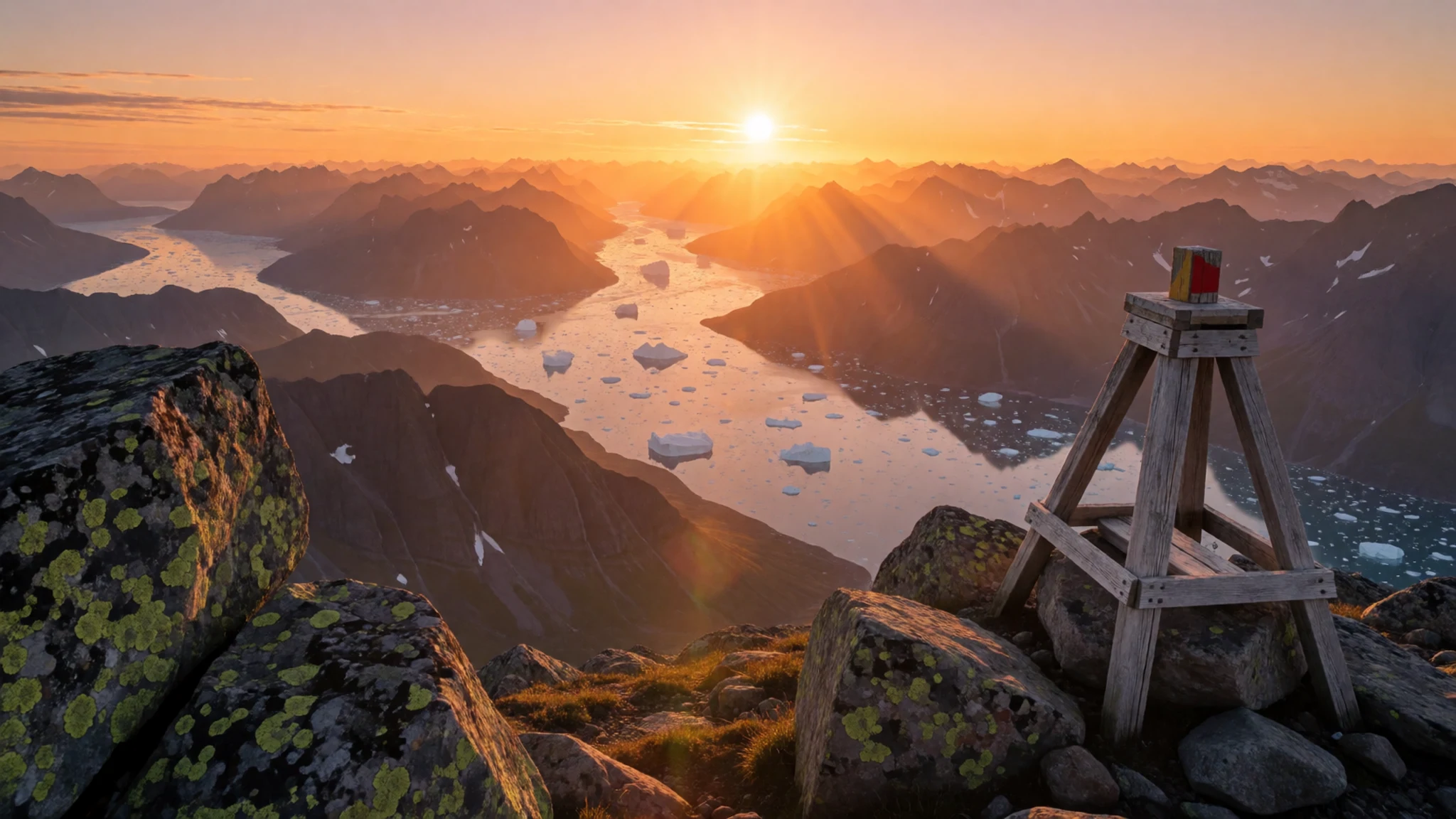
Culture
The cultural fabric of Scoresby Sund is woven from proud indigenous traditions and a deep-rooted connection to the harsh polar environment. The native inhabitants of Greenland refer to themselves as Kalaallit, and visitors should always use this term or simply refer to locals as Greenlanders while avoiding outdated and offensive historical labels. Residents possess a rich heritage of storytelling, artistic carving in bone and antler, and community cooperation that has ensured survival through generations of bitter winters. Modern community life blends traditional subsistence hunting with contemporary civic structures, education, and maritime trade. When visiting settlements within Scoresby Sund, travellers will find a welcoming local population, though respectful boundaries must always be observed regarding private homes and personal space. Always ask permission before photographing local residents, particularly children and hunters returning with their catch, to maintain mutual respect. Remember that Greenlanders consider themselves a distinct nation within the Kingdom of Denmark, so never refer to your location simply as being in Denmark.
What to wear
Traditional dress in Scoresby Sund reflects centuries of adaptation to extreme cold, featuring garments crafted from cured animal skins, furs, and intricately patterned seal-skin trousers paired with beaded collars and handcrafted boots known as kamik. While these elaborate traditional costumes are now reserved for national holidays, confirmations, and cultural celebrations, the textile wisdom behind them remains visible in modern everyday attire. Today, residents of Scoresby Sund dress in practical, high-performance modern outdoor gear designed to withstand biting polar winds, sub-zero temperatures, and damp coastal conditions. Visitors exploring the region must prioritise function and thermal layering over fashion, equipping themselves with windproof and waterproof outer shells, heavy-duty thermal underwear made from merino wool or synthetic fleece, insulated gloves, and sturdy waterproof hiking boots with excellent grip for uneven rocky terrain. A warm hat that covers the ears and polarized sunglasses to protect against intense glare reflecting off sea ice and snow are absolute essentials for any outdoor excursion.
What to eat
- Greenlandic Seal and Whale — Local community markets and traditional family tables
Locally harvested marine mammals form a foundational part of traditional coastal cuisine in Scoresby Sund, often prepared as hearty stews or dried meats with deep, rich flavours.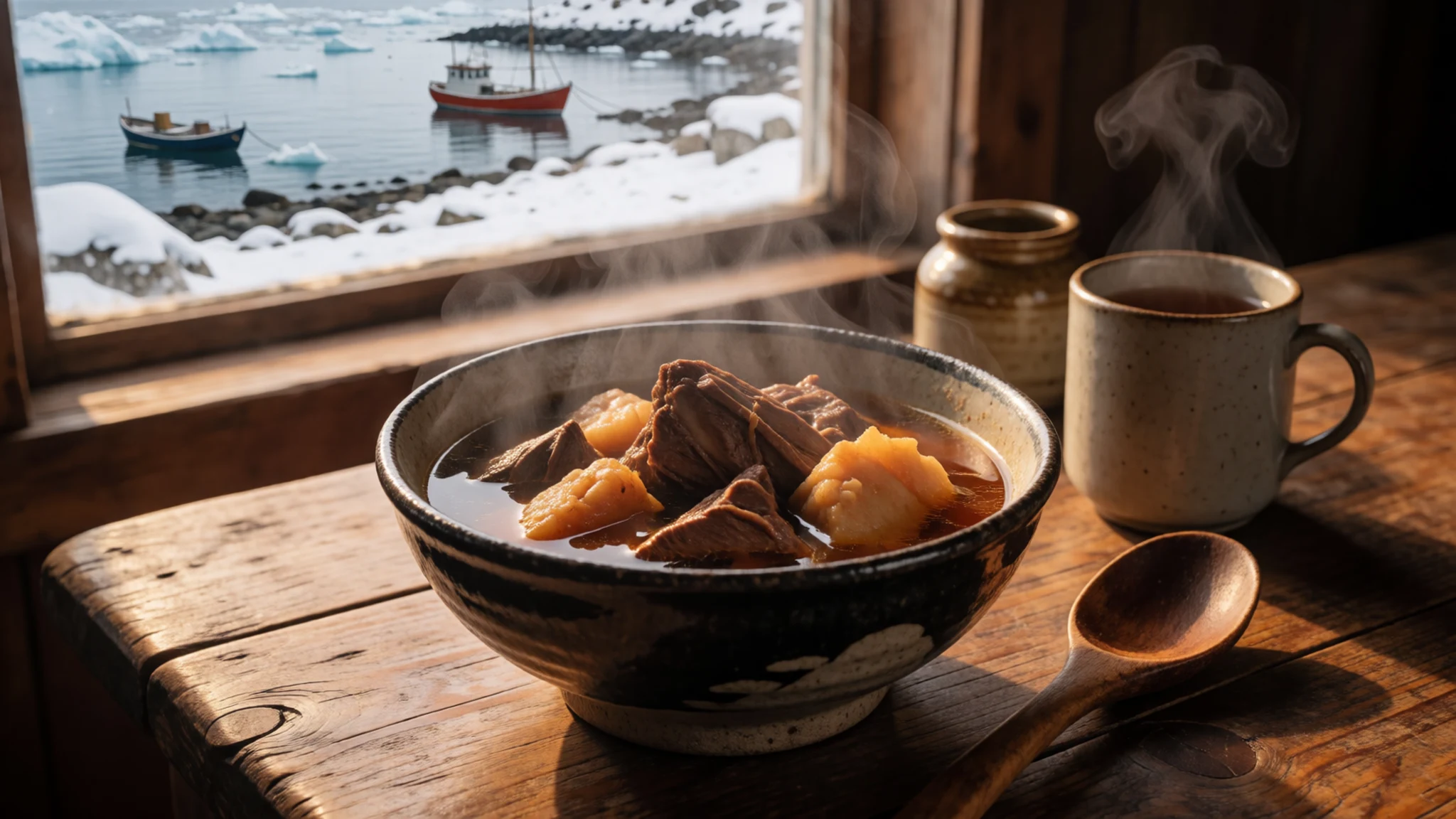
- Muskox and Caribou Stew — Local village eateries and guesthouses
Lean and robust game meats sourced from the surrounding tundra are simmered slowly with root vegetables and aromatic herbs to create warming dishes that sustain travellers through chilly days.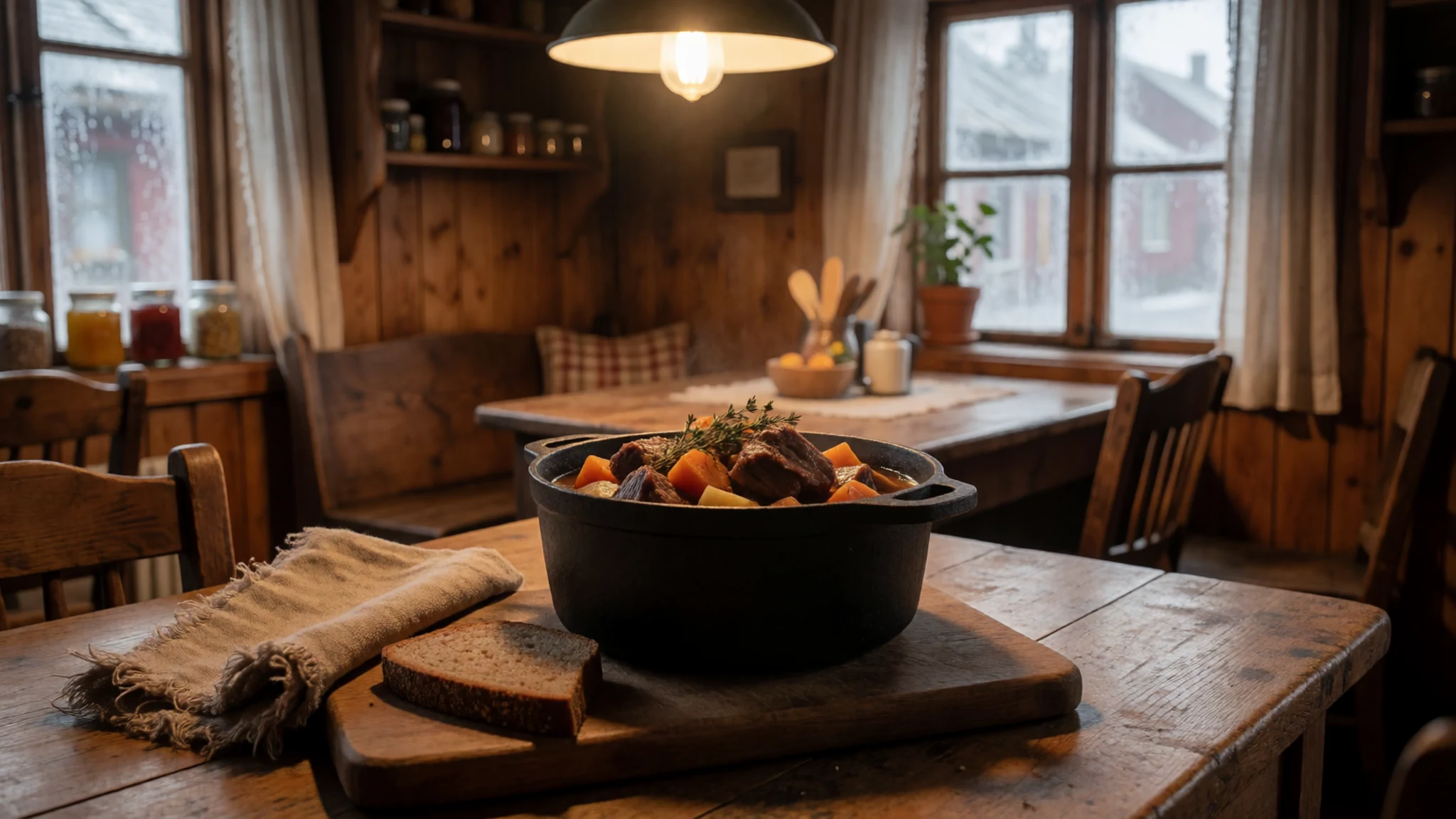
- Greenlandic Coffee — Community gathering spaces and expedition ships
A potent and theatrical post-dinner speciality featuring hot coffee laced with liberal measures of whisky, Kahlúa, and Grand Marnier, ignited to create a dramatic flaming ritual before serving. - Locally Caught Arctic Char — Coastal fishing camps and settlement kitchens
Freshly fished from icy streams and coastal waters, Arctic char offers a delicate flavour profile and is frequently enjoyed lightly smoked, baked, or pan-fried with simple seasonings.
Plan it
Best time. June to August offers the most navigable sea conditions, milder weather, and the continuous daylight of the midnight sun, whereas winter brings extreme cold and heavy sea ice.
How long. 5–7
Getting there. Access to Scoresby Sund is typically via expedition cruise ship from Iceland, or by domestic flight to Nerlerit Inaat Airport followed by a helicopter transfer to Ittoqqortoormiit.
Budget. high
Tips
- Pack professional-grade thermal layers and windproof outerwear regardless of the summer season
- Book expedition passages and local guides well in advance due to extremely limited infrastructure
- Bring cash for purchasing local crafts in Ittoqqortoormiit as electronic payment options are scarce
- Prepare for potential weather delays as Arctic storms can quickly alter travel schedules
Etiquette
- Always ask permission before photographing local residents and hunters
- Respect local property and leave wildlife undisturbed across the fragile tundra
- Never use outdated colonial terminology when speaking with residents
Nearby
Sources
- Wikidata Q426453 (CC0)
- Wikipedia (rev 1382549901) (CC BY-SA 4.0)
- Wikivoyage (rev 5381839) (CC BY-SA 4.0)