Santorini
Santorini, Greece
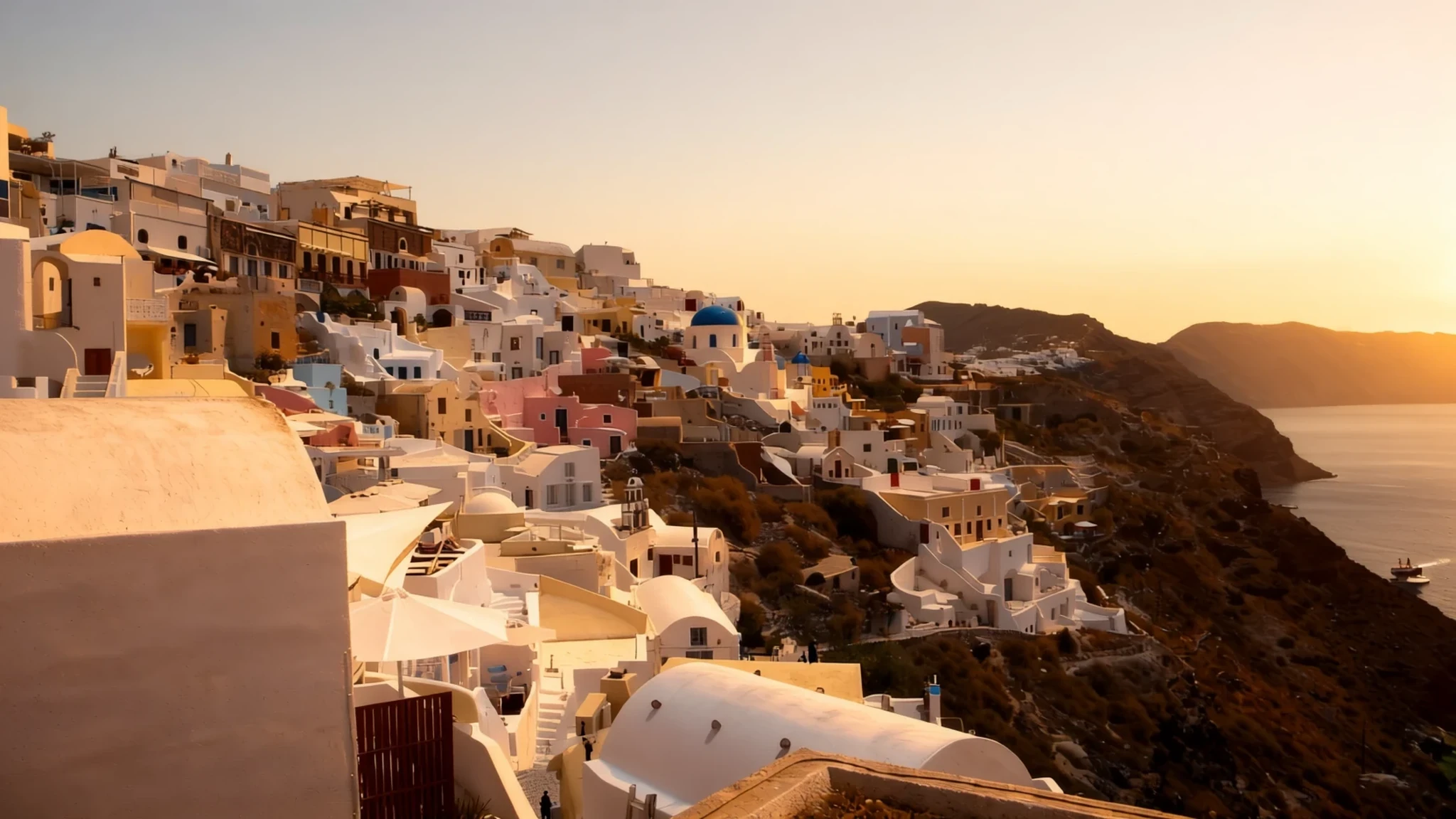
Santorini offers dramatic caldera views, ancient volcanic geology, and striking Cycladic architecture in the southern Aegean Sea.
The place
Santorini, officially known as Thira or Thera, rises from the southern Aegean Sea as the largest member of a small, circular archipelago formed by an ancient collapsed caldera. Located about two hundred kilometres southeast of the Greek mainland, the island group spans a modest land area where steep volcanic cliffs plunge directly into deep marine waters. The main island is characterised by an arid, windswept landscape shaped by millennia of tectonic shifts and volcanic activity, featuring sparse vegetation and rugged terrain rather than rolling green hills. Settlements cling precariously to the upper edges of the precipitous cliffs, presenting tiers of whitewashed dwellings and blue-domed sanctuaries that catch the intense Mediterranean light. Below these lofty ridges, narrow paths wind down towards sheltered bays and volcanic shores composed of dark sand and pebble formations. Despite its compact size, Santorini supports a permanent community alongside its bustling tourism sector, anchoring the administrative Thira regional unit. The surrounding waters remain deep and crystal-clear, framed by neighbouring islets such as Therasia and the uninhabited volcanic cones of Nea Kameni and Palaia Kameni. Visitors traversing the island encounter a distinct topography where natural isolation meets maritime heritage, creating an environment unlike any other in the Cyclades group. The interplay of dark volcanic rock, white plaster, and cobalt sea defines the visual identity of this remarkable Aegean destination.
Its story
Santorini holds a turbulent geological and human history defined by one of the most catastrophic natural events in antiquity. Roughly three thousand six hundred years ago, a colossal volcanic cataclysm tore through the island at the height of the prosperous Bronze Age Minoan civilisation. This immense explosion obliterated the centre of the former volcanic cone, leaving behind a massive water-filled caldera surrounded by hundreds of metres of ash deposits and triggering devastating tsunamis across the eastern Mediterranean. Scholars have long connected this cataclysmic eruption with the enduring legend of the lost continent of Atlantis. Long before this disaster, the region experienced active volcanism starting millions of years ago, with early dacitic lavas extruding from vents around the southern sector. Archaeological excavations initiated in the late twentieth century at Akrotiri revealed a remarkably preserved prehistoric town entombed beneath thick layers of solidified volcanic ash. Unlike the palaces of Crete, this ancient settlement uncovered multi-storey stone buildings, intricate drainage networks, fine wall frescoes, and specialised workshops that pointed to advanced maritime trade and textile production. Following the great disaster, the island was later colonised by Dorian Greeks and Venetian rulers, each leaving architectural and cultural imprints that blend with indigenous Cycladic traditions. The historical layers of Santorini tell a story of abandonment and renewal, as the island lay empty for centuries after the disaster before new settlers arrived to build upon its restless volcanic foundation.
What to see
- Fira
Fira serves as the vibrant capital of Santorini, perched dramatically along the steep caldera rim high above the central port. Its winding white pathways feature countless shops, tavernas, and residences that showcase a striking fusion of Venetian and Cycladic architectural styles against the brilliant Aegean backdrop.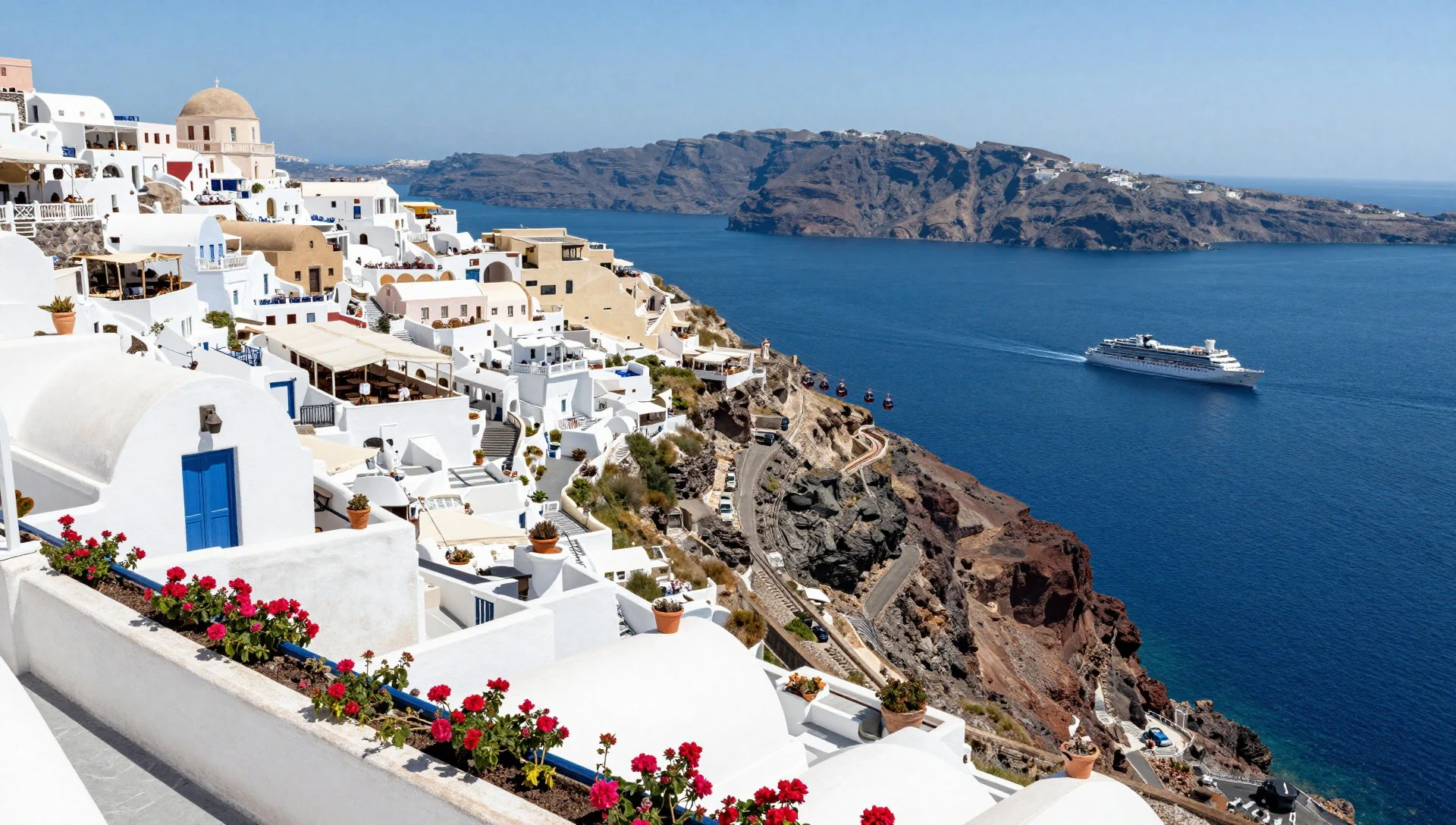
- Oia
Oia occupies the northern tip of Santorini, renowned for its classic whitewashed homes carved directly into volcanic rock and crowned by iconic blue domes. As evening approaches, visitors gather along its stone terraces to witness the famous sunset casting golden light over the waters of Ammoudi Bay.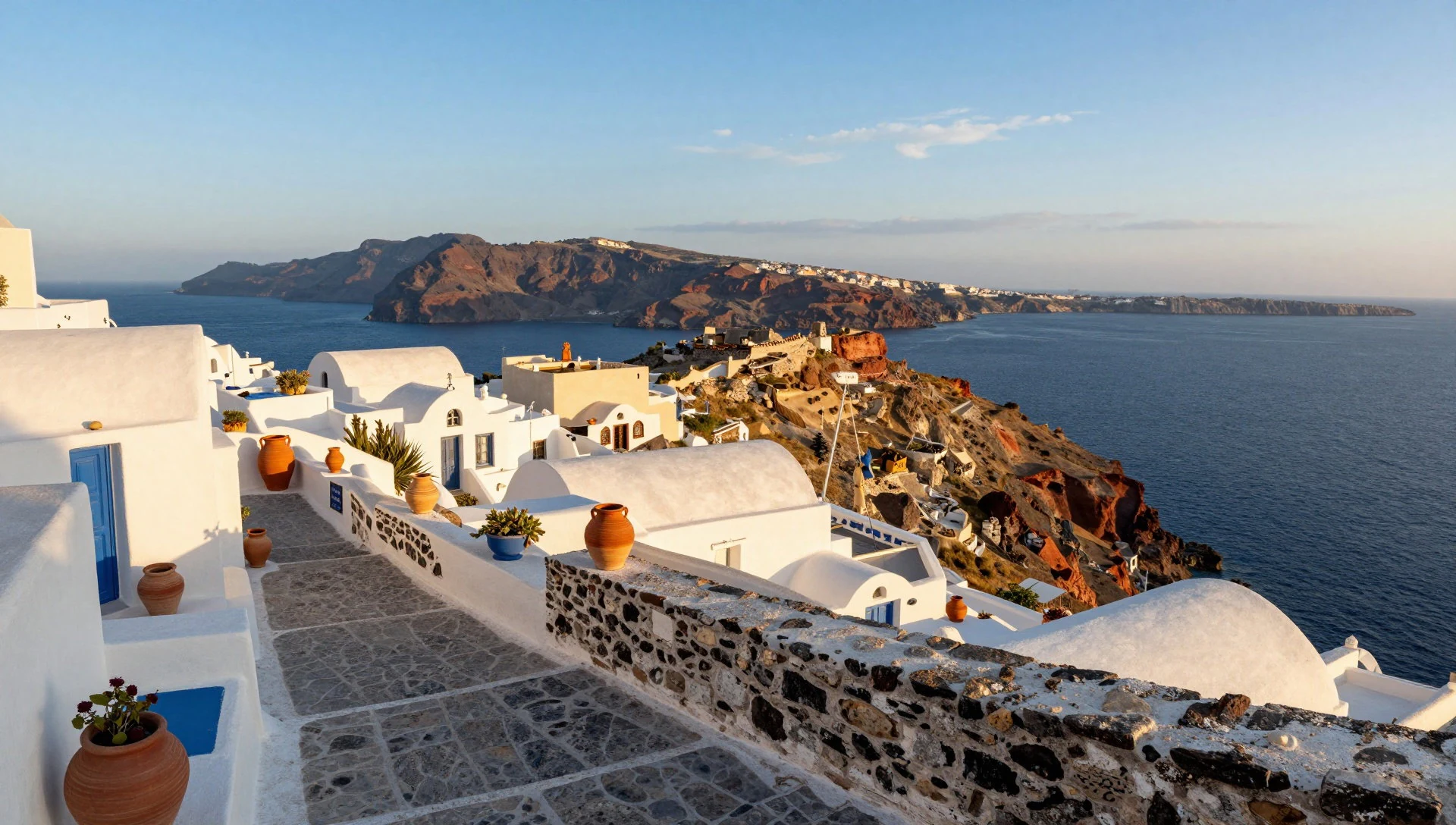
- Imerovigli
Imerovigli sits at the highest point along the caldera cliffs, offering uninterrupted panoramic vistas across the entire volcanic basin and neighbouring islets. This peaceful settlement provides quieter walking paths while maintaining the quintessential architecture and dramatic sheer drops characteristic of the island's western ridge.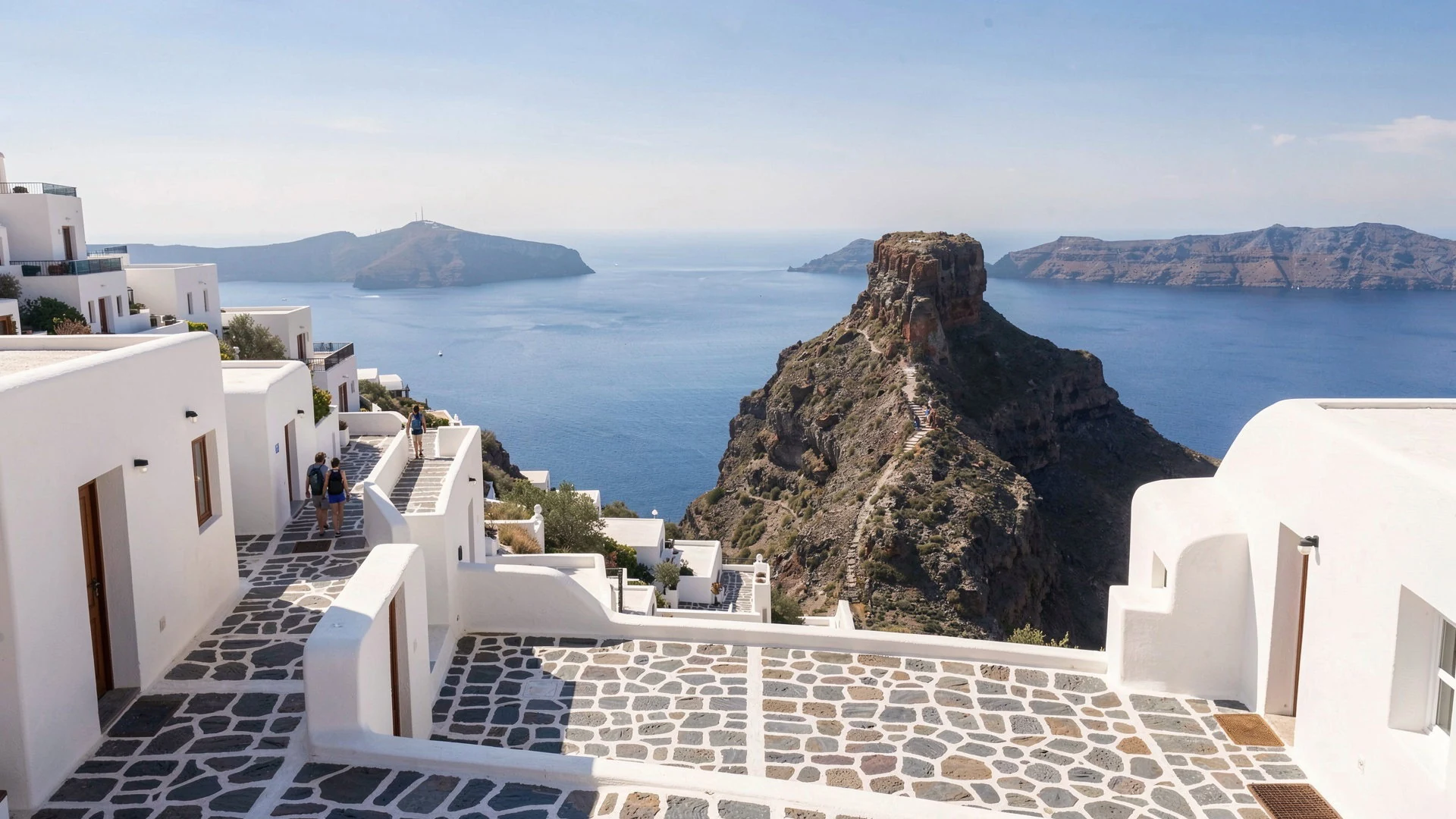
- Akrotiri Archaeological Site
Akrotiri preserves the remains of a sophisticated Bronze Age Minoan town frozen in time by thick volcanic ash layers from the ancient eruption. Visitors walk among multi-level stone ruins, ancient streets, and remarkable wall paintings that reveal the daily life of an advanced prehistoric trading community.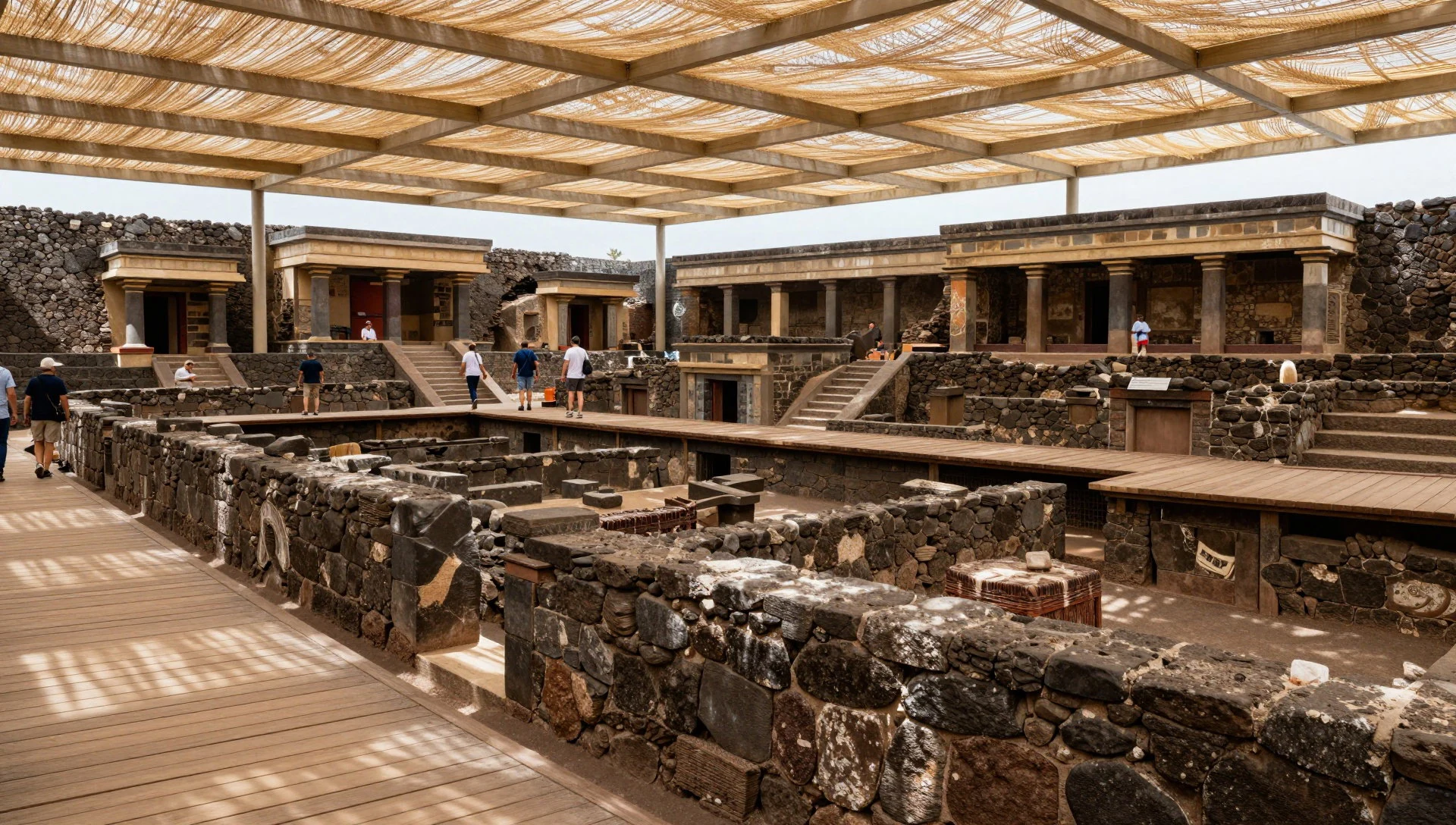
- Ancient Thera
Ancient Thera crowns the steep ridge of Mesa Vouno, presenting Hellenistic, Roman, and Byzantine ruins overlooking the eastern coastline. This historic site features ancient sanctuaries, a theatre, and a public agora that trace centuries of habitation following the prehistoric volcanic eras.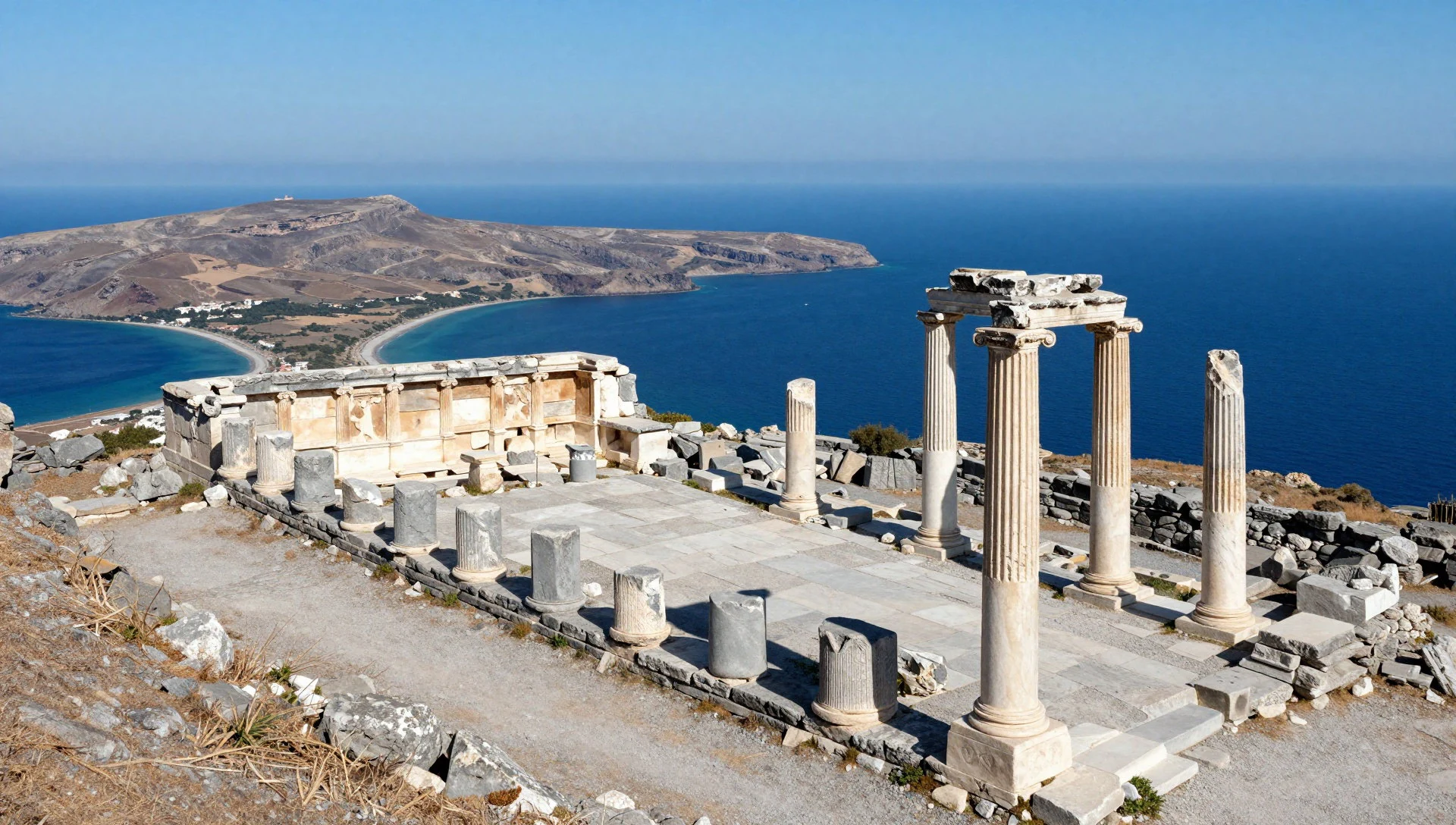
Culture
Santorini shares in the rich cultural heritage of the Cyclades, where traditional island life was historically shaped by maritime trades, fishing, and hardy agricultural practices adapted to dry volcanic soils. Community bonds remain strong, anchored by local religious festivals, patron saint celebrations, and family-run tavernas where traditional music and hospitality are shared generously. Over recent decades, the rapid expansion of tourism has transformed the local economy, shifting daily routines away from traditional farming towards hospitality services while introducing a cosmopolitan energy during the warmer months. Despite these modern pressures, older inhabitants maintain deep ties to the land, preserving artisanal crafts and wine-making techniques passed down through generations. Visitors should respect local customs, particularly when entering places of worship where modest attire covering shoulders and knees is expected. Always ask permission before photographing local residents or private residential courtyards in cliffside villages.
What to wear
Santorini fashion blends practical island wear with chic Mediterranean style suited to its dramatic cliffside geography and warm climate. Traditional dress in the Cyclades featured hand-woven textiles, sturdy cotton garments, and woollen layers designed to withstand sea breezes and winter dampness. Today, residents and workers in Santorini opt for lightweight, breathable fabrics such as linen and cotton in neutral or bright tones that reflect the intense sunlight and whitewashed surroundings. Travellers exploring the island should prioritise comfortable footwear with secure grip, as navigating the steep stone staircases, cobblestone alleys, and volcanic hiking trails demands stable soles rather than delicate sandals. Sun protection accessories, including wide-brimmed hats and sunglasses, are essential daytime staples. When moving away from the coastal beaches towards village churches or traditional areas, visitors should ensure their clothing remains respectful by covering swimwear and avoiding overly casual outfits in formal community spaces.
What to eat
- Tomato fritters (Tomatokeftedes) — traditional tavernas across Fira and Oia
These crisp, flavourful fritters make use of the island's unique small tomatoes grown in mineral-rich volcanic soil, mixed with herbs, onion, and flour, then fried until golden. They are commonly served as an appetizer in local village tavernas.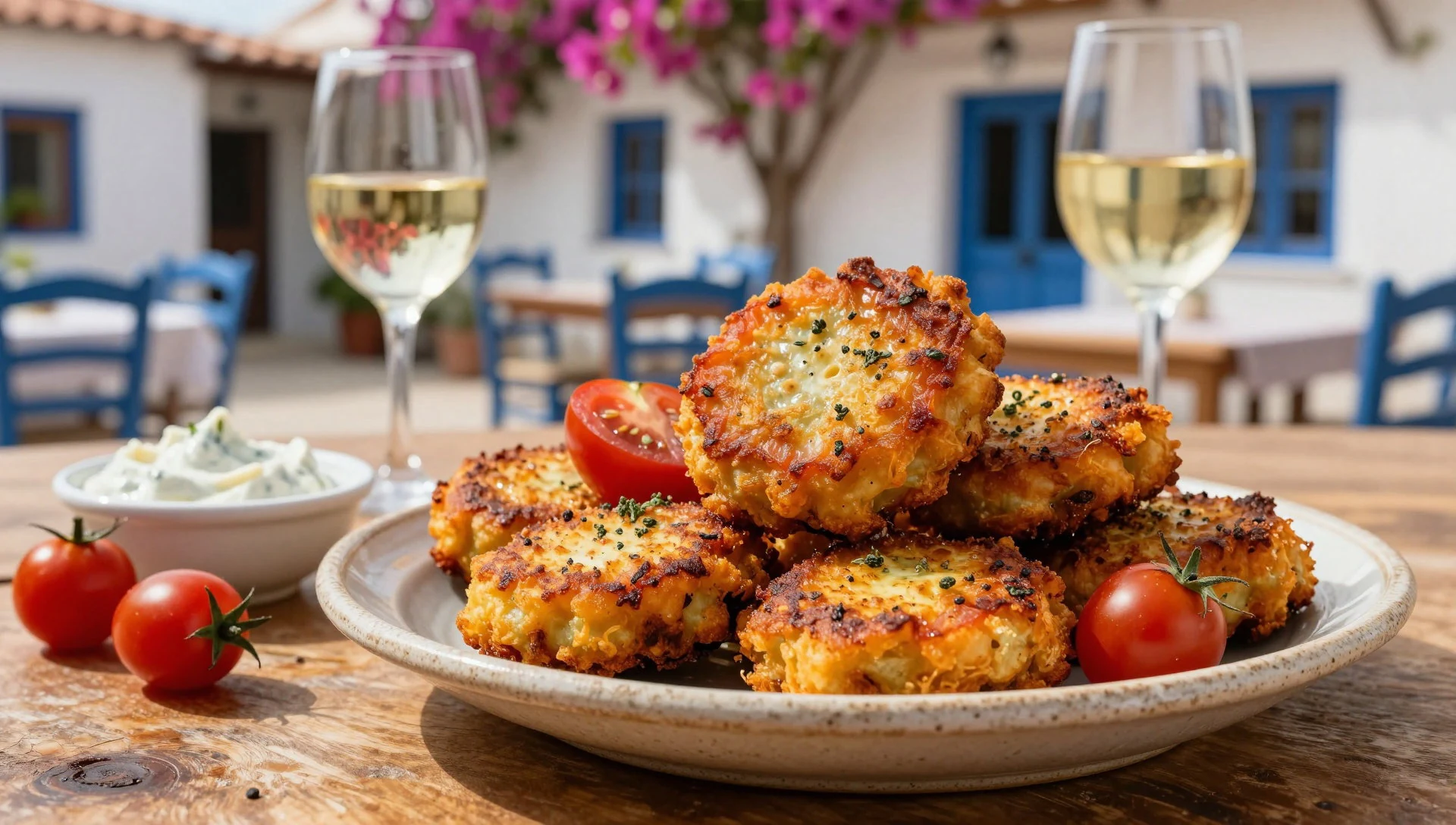
- Fava — family-run eateries throughout the island villages
A smooth, comforting yellow split pea purée simmered with onions and olive oil, often garnished with capers and fresh red onion. It represents one of the oldest culinary traditions rooted in the island's challenging agricultural landscape.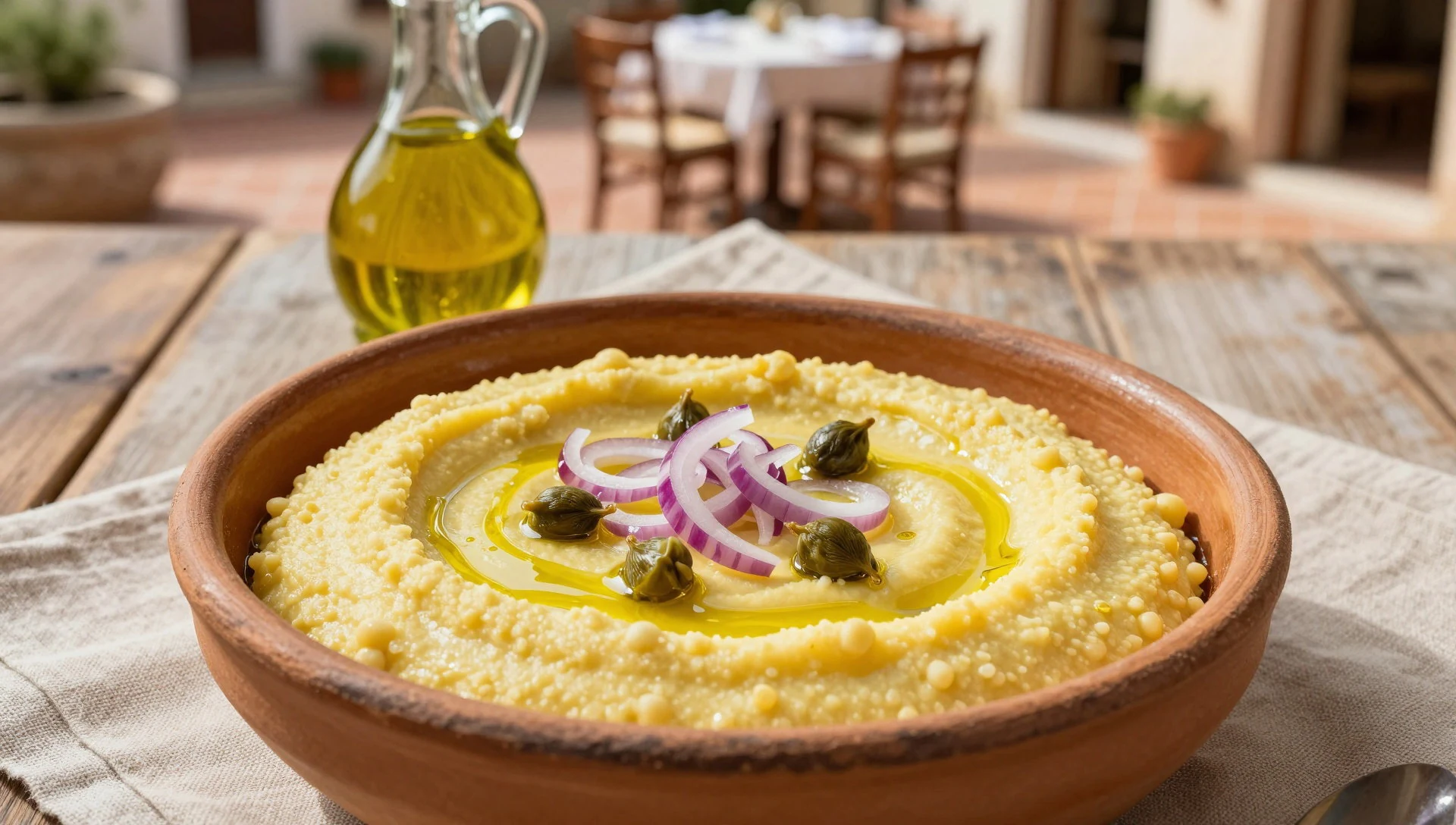
- Santorini Assyrtiko wine — local wineries and clifftop wine bars
A dry white wine produced from ancient vine varieties trained into low basket shapes to protect against strong coastal winds. It offers a distinct mineral acidity and citrus profile derived directly from the volcanic terroir. - Chlorotyri cheese — village grocery shops and select artisanal food stalls
A rare, creamy local goat's cheese with a slightly tart flavour, produced in limited quantities due to the scarcity of grazing land and traditional dairy farming constraints. It pairs wonderfully with local bread and fresh produce. - White aubergine dishes — seasonal menus in rural family tavernas
Though increasingly rare due to agricultural shifts towards wine production, this delicate, sweet white variety of eggplant is celebrated when found, typically baked or fried in olive oil.
Plan it
Best time. April to June and September to October offer pleasant temperatures and manageable crowds, avoiding the intense heat and heavy tourist influx of July and August.
How long. 3–4
Getting there. Regular flights from Athens take about 30 to 45 minutes, while standard ferries and high-speed catamarans sail from Piraeus harbour.
Budget. high
Tips
- Book accommodation and transport well in advance if travelling between May and October
- Wear sturdy footwear with good grip for walking on uneven cobblestones and cliff paths
- Carry cash for smaller village shops and local buses
- Start morning sightseeing early before day-tripper crowds arrive in Oia and Fira
- Stay hydrated and protect yourself from strong sun exposure during afternoon hours
Etiquette
- Dress modestly with shoulders and knees covered when visiting churches and monasteries
- Ask permission before photographing local people or private residential property
- Keep noise levels respectful when passing through quiet residential cliffside neighbourhoods
Nearby
Sources
- Wikidata Q129296 (CC0)
- Wikipedia (CC BY-SA 4.0)
- Wikivoyage (CC BY-SA 4.0)