Santa Cruz de la Sierra
Santa Cruz de la Sierra, Bolivia
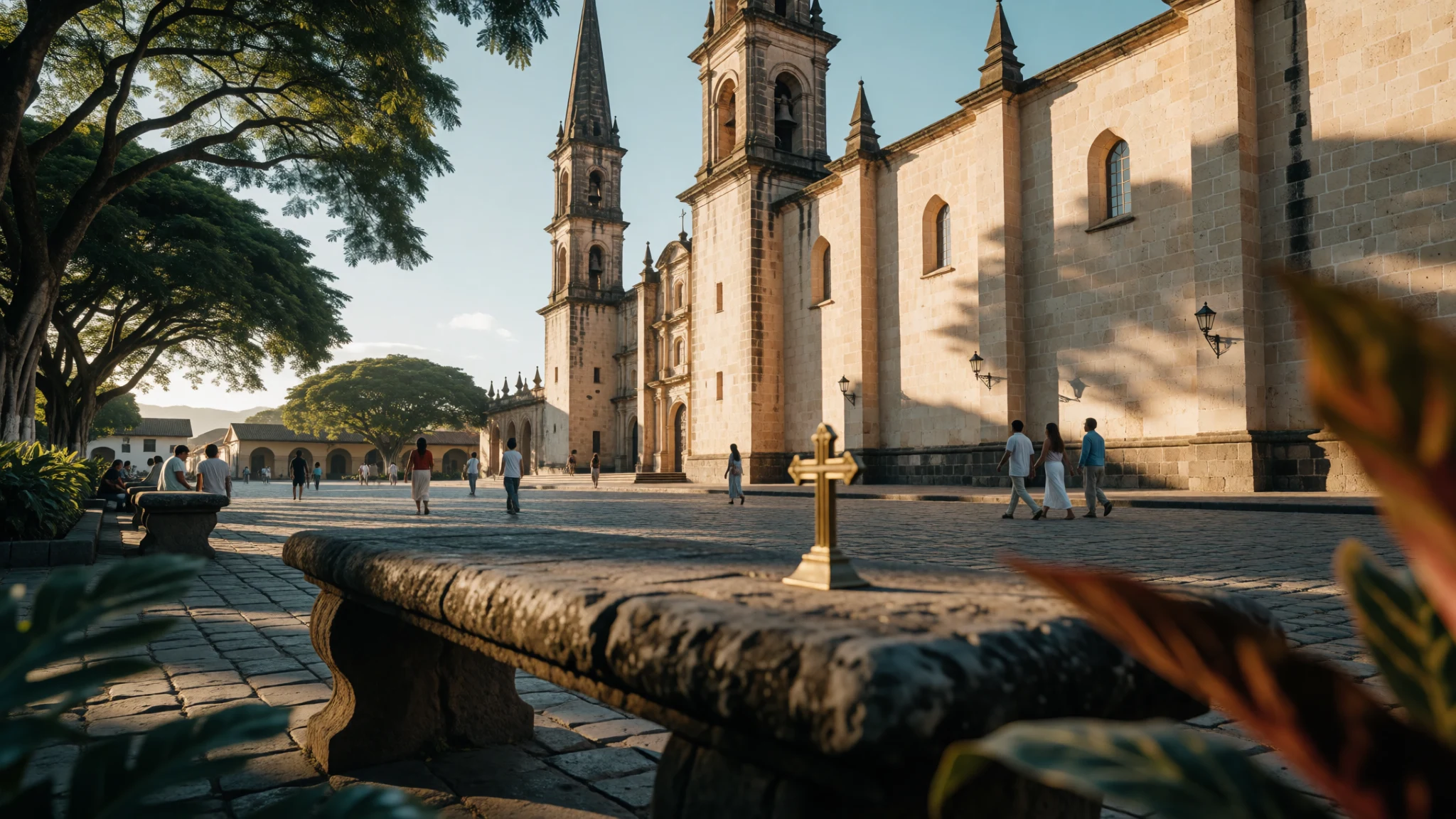
Santa Cruz de la Sierra mixes city energy with tropical-lowland heat and lively local culture, especially around Carnival.
The place
Santa Cruz de la Sierra is Bolivia’s biggest city and the capital of the Santa Cruz department, known locally simply as Santa Cruz. It sits in the eastern Tropical Lowlands on the Pirai River, so daily life often feels warm, open, and a bit more spread-out than you’d expect from a major city. The metro area is made up of several municipalities, which helps explain why the city can feel like multiple neighbourhoods stitched together—busy commercial pockets, residential zones, and places to pause.
The centre gives you the classic starting point: a sense of place, where local routines meet visitors passing through. From there, the city’s identity comes through in its mix of churches and civic spaces, plus modern entertainment and shopping. A walk between older landmarks and newer complexes shows how quickly this city has grown since its early Spanish founding in 1561.
What stands out on the ground is pacing. Santa Cruz is not the kind of city where everything is tightly clustered for an all-day museum slog. Instead, it rewards short hops: a plaza to watch people, a botanical garden/zoo-style stop for greenery, and then an evening plan that might be as simple as dinner and a cinema. If you’re arriving around the Carnival season, expect the city’s rhythm to change—some services shut down and the public celebrations can get messy.
In short, Santa Cruz is a real working city with tropical attitudes: energetic, sometimes chaotic, and best explored with flexibility and good hydration.
Its story
Santa Cruz de la Sierra’s story begins long before the city as travellers see it today. In the pre-Columbian era, the area around the city was inhabited by Arawak groups who were later associated by the Spanish with the Chané. European contact came with conquistadores moving through the broader region. After that early wave of exploration, the Spanish founded the settlement in 1561 under Ñuflo de Chavez, and over time the location shifted before the city was finally set on the Pirai River in the late 16th century.
For a long stretch, Santa Cruz behaved like many frontier towns: not much institutional attention, and slow population growth. Independence in Bolivia didn’t immediately change that pace. The city’s real acceleration arrived much later, after agrarian and land reforms in the mid-20th century, when growth took off rapidly. That’s one reason the city feels both historical and modern at once: older religious and civic anchors exist alongside newer districts and entertainment hubs.
Cultural life also has its own arc. The city and department are described as mestizo, with influences linked to Spanish and European contributions, plus indigenous groups from across the region. Carnival, in particular, shapes the seasonal mood—preparations begin in December, with parades and then a multi-day celebration where comparsas dance in groups and music becomes the organising principle for public life.
So Santa Cruz’s history is not just dates and migrations; it’s the way the city later learned to celebrate itself, grow outward, and live with the heat and the river in the background.
What to see
- Cathedral of Santa Cruz (Climb the tower) — Centro / near Plaza 24 de Septiembre
Start at the Cathedral of Santa Cruz and, if you can, climb the church tower for a higher perspective over the central area. It’s one of those city landmarks that gives you orientation fast—then you can wander back down through streets shaped by daily footfall. - Plaza 24 de Septiembre — City centre (Centro Urbano)
Plaza 24 de Septiembre is where Santa Cruz’s pace becomes visible: locals and visitors hang out, watch passers-by, and generally treat the plaza as a daily living room. It’s a good place to take stock of the day before choosing what to do next. - Jardín Botánico Municipal — Municipal area outside the centre
For a greener break without leaving town, head to the municipal botanical garden, a compact place focused on animals from South America. The set-up is easy to handle in a couple of hours, and there’s a food court and kiosks on-site for simple refuelling. - Sloths of Cotoca — Cotoca (nearby town/area)
The Cotoca sloth-spotting is more “go looking” than “guaranteed sighting”. Meet at the plaza in Cotoca and scan the treetops—locals often know where to check first. Bring patience and a camera with a decent zoom. - CineCenter — Equipetrol / modern commercial zone
If Santa Cruz’s heat or crowds push you indoors, CineCenter is a straightforward option: movie screenings plus a shopping-mall feel and a range of cafes and restaurants. It’s the kind of place where your evening plan can change with what you feel like.
Culture
Santa Cruz de la Sierra’s culture is described as mestizo, shaped by Spanish and European influences alongside indigenous heritage from groups linked to the Guarani, Chiquitanos, and the Amazon region. In practice, that blend shows up less as a “museum theme” and more in everyday life—music, shared social spaces, and the way communities turn public areas into meeting points.
Carnival is the clearest seasonal marker. Preparations start in December, followed by pre-Carnival parades. The celebration then shifts into a holiday period in which people dance in comparsas—groups formed for the occasion—and party in large public lots where artists perform. It’s joyful, loud, and very physical; even the way people interact with each other can be playful in a way that may feel surprising if you’re used to quieter festivities.
Because Carnival affects services and routines, it can be harder to “do logistics on the day”. Some businesses shut down beyond markets, restaurants, and internet cafes, so planning ahead matters.
Visitor etiquette: if you’re around Carnival, wear clothes you’re comfortable damaging and be ready for water-play from balloons and sprays.
What to wear
Santa Cruz de la Sierra sits in Bolivia’s eastern Tropical Lowlands, so dressing is mostly about dealing with heat and getting comfortable for walking. In everyday life you’ll see a mix of styles: lightweight casual wear, breathable fabrics, and practical footwear—especially in neighbourhoods that involve lots of short trips and city walking.
Traditional dress in the broader Santa Cruz region is typically tied to indigenous and mestizo heritage, with garments often featuring woven textiles and vibrant colours. You’ll notice elements like colourful cloth, embroidery, and wrap-style pieces during cultural moments, including Carnival-linked events. Even when people aren’t wearing full traditional outfits day-to-day, the festival look tends to borrow from those textile traditions—more colour, more decoration, and more coordinated costumes within each comparsa.
What to pack: light cotton or linen shirts, shorts or breathable trousers, and a hat with sunglasses. For church interiors, aim for modest clothing (shoulders and knees covered) and bring a light layer for air-conditioned spaces. For footwear, choose closed-toe trainers or sandals with support: the city streets can be uneven and you’ll want something stable after long walks or evenings out.
What to eat
- Camba-style food (at El Aljibe) — Near the central square (around Potosí and Ñuflo de Chavez area)
El Aljibe is flagged as a good place to try Camba food near the central square. It’s a sit-down setting where you can sample local flavours without overthinking the menu—great when you want something properly “Santa Cruz” rather than just fast snacks. - Design Center food court — Design Center food court
The Design Center has a large food court that runs the gamut from vegetarian salads to Argentine-style grilled steaks. It’s a low-effort way to feed a group with different tastes, and it suits nights when you want reliable variety without leaving the complex. - Argentine-and-Bolivian steak at Los Lomitos — General city dining spots (Los Lomitos area)
Los Lomitos is described as a steakhouse with a mix of traditional Argentine and Bolivian cuisine. If your plan is dinner with a fuller, meat-forward meal, this is a straightforward choice—especially when the evening feels like “sit down and relax”. - Pastries and coffee at Fridolin — Central dining/café areas (Fridolin)
Fridolin is a pastry and coffee bistro noted for excellent desserts. It’s the kind of place that works well as an afternoon pause—something sweet, something warm, and a chance to recover before heading out again in the evening.
Plan it
Best time. March–April for steadier sightseeing weather and cooler days, and October–November when conditions are comfortable for walking; Carnival periods can disrupt services.
How long. 2–3
Getting there. From Bolivia’s main connections, you can arrive by bus from major cities such as Cochabamba or La Paz; if coming from Brazil, buses are a practical option via Corumbá (Brazil) and Puerto Quijarro (Bolivia), then the final leg into Santa Cruz.
Budget. mid
Tips
- If you visit around Carnival, assume some shops and services will close beyond markets and a few essentials—plan logistics early.
- For popular areas, go in the morning to avoid the most intense daytime heat.
- Carry some cash for small purchases and places that aren’t set up for cards.
- Keep water with you—Santa Cruz’s warm conditions can catch people out.
Etiquette
- Respect local rules at churches; keep voices down and dress modestly if entering religious spaces.
- During Carnival, don’t assume “spectator zone” protections—water play is part of the fun.
- Be considerate when taking photos of people during celebrations; keep distance and let the moment breathe.
Nearby
Sources
- Wikidata Q170688 (CC0)
- Wikipedia (rev 1385165494) (CC BY-SA 4.0)
- Wikivoyage (rev 5417351) (CC BY-SA 4.0)
- Photo photos/01-northern-skyline-santa-cruz.jpg (CC BY 3.0)
- Photo photos/02-santa-cruz-de-la-sierra-3.jpg (CC BY-SA 4.0)
- Photo photos/03-catedral-bas-lica-menor-de-san-lorenzo-santa-cruz-de-la-sier.jpg (CC BY-SA 4.0)
- Photo photos/04-casa-del-pueblo-santa-cruz-de-la-sierra.jpg (CC BY-SA 4.0)
- Photo photos/05-casa-de-cultura-santa-cruz.jpg (CC BY-SA 4.0)
- Photo photos/06-cristo-redentor-santa-cruz-de-la-sierra.jpg (CC BY-SA 4.0)
- Photo photos/07-gobierno-aut-nomo-municipal-de-santa-cruz-de-la-sierra.jpg (CC BY-SA 4.0)
- Photo photos/08-equipetrol-neighborhood.jpg (CC BY-SA 4.0)


