Sambor Prei Kuk
Sambor Prei Kuk, Cambodia
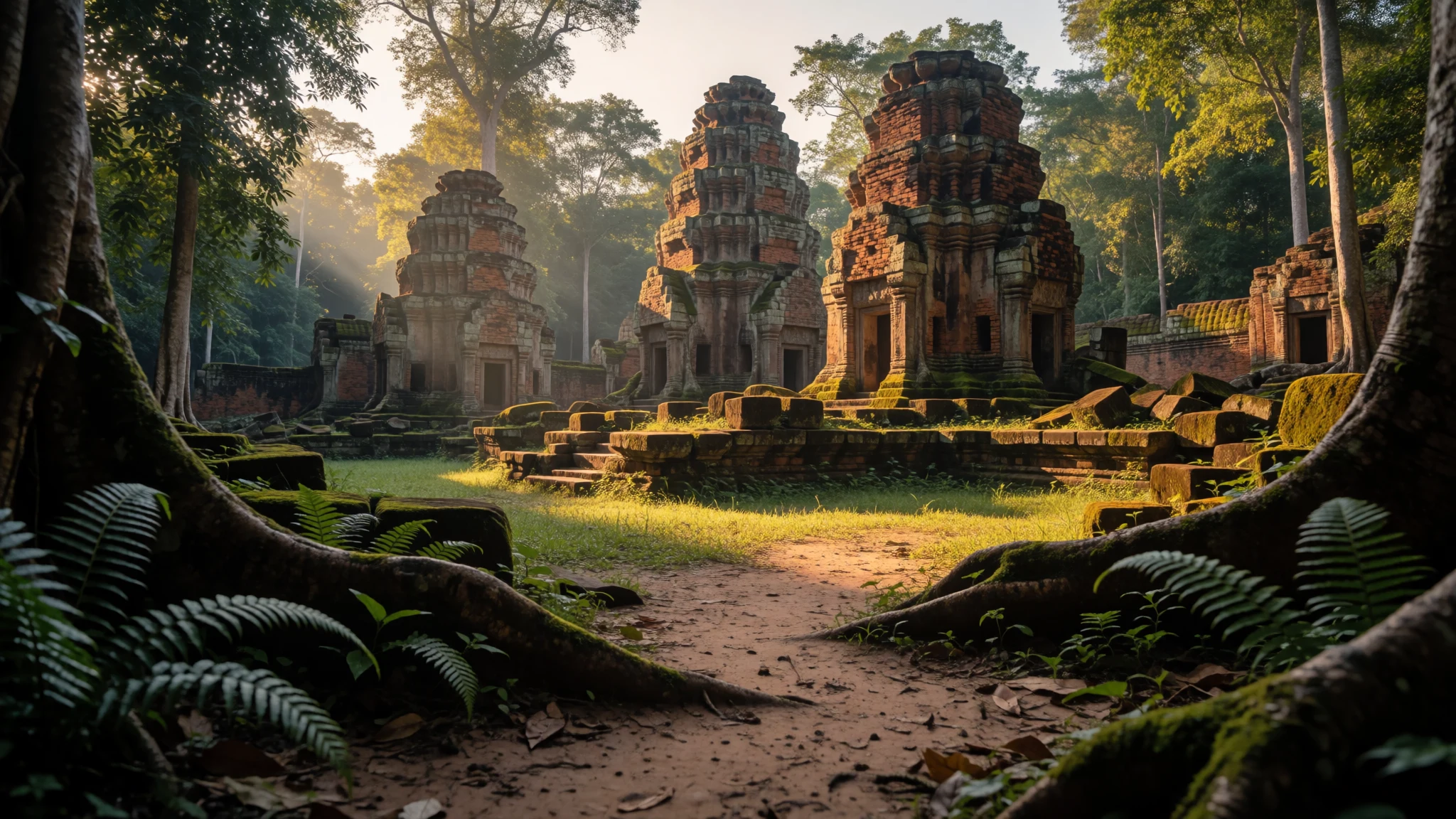
Explore the moss-covered brick towers of Sambor Prei Kuk, a ruined pre-Angkorian capital hidden deep in the Cambodian forest.
The place
Sambor Prei Kuk sits within Cambodia, positioned in Kampong Thom Province. The archaeological zone lies north of the provincial capital and east of Angkor, spreading out near the eastern bank of the Tonle Sap lake and close to the winding course of the Steung Saen River. Visitors arriving at the complex encounter a dense forest canopy that shades ancient brick sanctuaries, enclosing quiet courtyards where tree roots grip carved lintels and fallen masonry.
The central layout of the archaeological zone divides into distinct walled groups, each defined by an enclosing brick perimeter. Within these boundaries stand numerous prasats, octagonal brick towers, carved shiva lingams, yonis, quiet ponds, ancient reservoirs, and weathered lion sculptures. Unlike the vast, towering sandstone blocks of later eras, these structures showcase an earlier building tradition that relied primarily on moulded brick with select sandstone elements for doorways and decorative accents. The atmosphere here remains tranquil, far removed from the bustling crowds of major tourist hubs, allowing travellers to wander at a relaxed pace along earthen paths shaded by giant tropical trees and tangled vines.
Its story
Sambor Prei Kuk traces its origins back to the Chenla Kingdom, flourishing from the late sixth century through the ninth century. Known originally as Isanapura, the settlement served as a major royal capital and central sanctuary established by King Isanavarman I. Historical records and stone inscriptions indicate that the king reigned over the region and cemented his authority through diplomatic missions and territorial expansions across neighbouring principalities.
An inscription discovered on the grounds attributes the construction of the main northern sanctuary to Isanavarman I, dated specifically to September in the seventh century. During this era, the ruler claimed supremacy over the wider region, establishing political and cultural networks that linked the royal court with distant empires. The prominence of Isanapura eventually waned following the death of King Jayavarman I, an event that triggered political turmoil, fractured the centralized kingdom into smaller principalities, and ultimately paved the way for the rise of the Angkorian civilization.
What to see
- Prasat Sambor (North Group) — North Group
Prasat Sambor forms the principal sanctuary of the northern sector at Sambor Prei Kuk. Attributed to the seventh-century reign of King Isanavarman I, this walled enclosure features weathered brick prasats adorned with ancient stone inscriptions that record the royal history of the early Chenla Kingdom. - Yeai Poeun Temple Group (South Group) — South Group
Yeai Poeun stands as a remarkable southern cluster within Sambor Prei Kuk. Enclosed by a square brick wall, the complex showcases characteristic octagonal towers and intricate lintel carvings that illustrate early architectural styles developed before the grand expansion of the Angkorian period. - Central Temple Group — Central Group
The Central Temple Group at Sambor Prei Kuk represents a later phase of construction within the ancient city. Visitors walking through this shaded sector can observe weathered shrines and moss-draped courtyards where towering jungle trees intertwine with ancient brickwork and fallen architectural fragments. - Asram Maha Rosei — Outer perimeter
Asram Maha Rosei is a rare surviving sanctuary located near the main archaeological zone of Sambor Prei Kuk. Constructed largely from stone rather than brick, this compact Hindu temple offers a fascinating glimpse into the diverse building techniques employed during the early pre-Angkorian era. - Steung Saen Riverbanks — Riverside area
The Steung Saen River flows gently near the boundaries of Sambor Prei Kuk. The wooded banks and nearby rural waterways provide a scenic backdrop for travellers exploring the surrounding countryside of Kampong Thom Province, reflecting the traditional agrarian lifestyle of the local communities.
Culture
Cambodia maintains a rich cultural heritage shaped by centuries of tradition, Buddhism, and ancient Hindu influences. In rural districts and regional hubs such as those surrounding Sambor Prei Kuk, communities retain deeply traditional ways of life centred around agriculture, family networks, and village customs. Visitors are welcomed with genuine warmth, though local etiquette emphasizes modesty and respect for elders and sacred spaces. Traditional dress remains conservative, particularly outside major urban centres, with locals generally preferring to keep shoulders and knees covered during daytime activities.
Interactions with residents in less touristed provinces offer an authentic look at everyday Cambodian life, where community bonds remain strong and customs are preserved across generations. When exploring rural villages or ancient temple precincts, travellers should remain mindful of local sensitivities regarding photography and sacred architecture. Always ask for permission before photographing local residents, as some individuals prefer not to have their picture taken, while others in urban zones may expect a small gratuity. Always remove your hat and cover your shoulders and knees when entering active temple shrines or sacred archaeological sites across Cambodia.
What to wear
Traditional fashion in Cambodia centres around versatile, lightweight textiles suited for a tropical monsoon climate. The iconic krama—a traditional checked cotton scarf—is worn universally across the country as a head covering, towel, sun shield, or fashion accessory. Silk weaving also holds a venerable place in local craftsmanship, producing intricate patterns historically reserved for formal ceremonies and festive occasions.
In daily life across regional towns and rural areas near Sambor Prei Kuk, residents wear practical, modest clothing designed to combat the intense heat and humidity. Locals commonly opt for loose trousers, lightweight cotton shirts, and protective wraps that shield the skin from the sun. For visitors, appropriate attire is essential: lightweight, breathable fabrics in natural fibres such as cotton or linen work best. When visiting archaeological parks and sacred monuments, travellers must wear clothes that cover both shoulders and knees out of respect for local religious traditions. Sturdy walking shoes or comfortable sandals are recommended for navigating uneven earthen paths, stone steps, and forest terrain.
What to eat
- Khmer Rice and Noodle Dishes — Local roadside eateries and provincial markets
Rice forms the absolute foundation of everyday Khmer cooking, served alongside savoury stir-fries, fresh herbs, and occasionally delicate rice noodles. These comforting dishes provide a hearty base for meals enjoyed in local eateries throughout Kampong Thom and provincial towns. - Freshwater Fish Preparations — Traditional village stalls and riverside food stalls
Abundant freshwater fish sourced from nearby rivers and lakes feature prominently in traditional Cambodian recipes. Prepared grilled, steamed, or simmered in aromatic herb broths, these dishes highlight the reliance on local aquatic resources. - Prahok-Infused Specialities — Family-run kitchens and traditional markets
Prahok, a traditional fermented fish paste, adds a distinctive depth and robust umami flavour to many classic Khmer culinary preparations. While its pungent aroma can surprise newcomers, it remains a beloved staple of regional cuisine. - Black Pepper Specialties — Regional food stalls and local markets
Unlike neighbouring culinary traditions that lean heavily on extreme chilli heat, Khmer cooking prefers the gentle warmth and aromatic bite of black pepper. Dishes seasoned with crushed peppercorns and garlic offer a balanced, savoury flavour profile. - Tropical Fruit Selections — Morning markets and fruit carts
A wide variety of sweet tropical fruits, including mangoes, bananas, jackfruit, and pineapples, grow abundantly across the region. These refreshing treats are enjoyed fresh at roadside stands throughout the day.
Plan it
Best time. November to February offers the most comfortable weather for exploring Sambor Prei Kuk, featuring cooler temperatures and lower rainfall before the intense dry heat sets in around March and April.
How long. 1–2
Getting there. Travel by road from Phnom Penh or Siem Reap to Kampong Thom provincial capital, then take a local remork (tuk-tuk) or taxi for the remaining northern journey to the archaeological site.
Budget. low
Tips
- Start your temple visits early in the morning to beat the midday heat and forest humidity
- Carry sufficient cash in local currency for entrance fees, transport, and small purchases
- Bring plenty of drinking water and insect repellent for walking through the forested temple grounds
- Wear lightweight, breathable clothing that covers your shoulders and knees out of respect for sacred sites
Etiquette
- Always ask permission before taking photographs of local residents in rural villages
- Remove hats and ensure modest dress when walking among ancient temple ruins and shrines
Nearby
Sources
- Wikidata Q1818746 (CC0)
- Wikipedia (CC BY-SA 4.0)
- Wikivoyage (CC BY-SA 4.0)