Safed
Safed, Israel
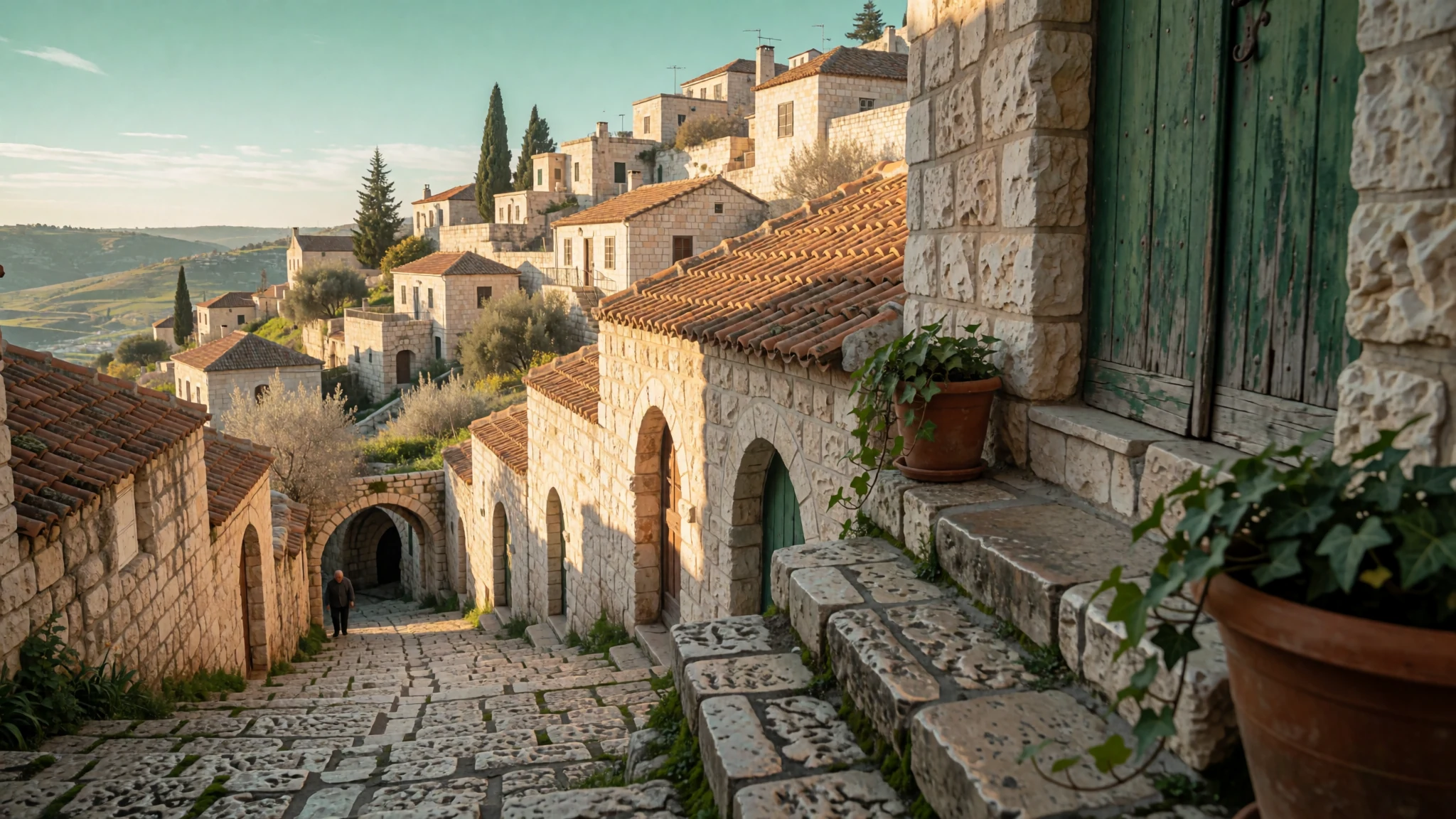
Safed is a Galilee hill town of stone lanes, old synagogues and an artists' quarter.
The place
Safed, also known as Tzfat and Safad, is a city in northern Israel, perched at 900 metres on a ridge in the Upper Galilee. The population is 35,700. The built-up area mixes a tight stone old town with later neighbourhoods that spill downhill. Officially the municipality spells the name Zefat; in Hebrew it is Tzfat (צְפַת) and in Arabic Ṣafad (صَفَد). The pronunciation visitors usually hear is SAH-fed.
The historic core climbs toward the remains of a fortress. Lanes are stepped, narrow and paved, with houses of pale masonry and workshops tucked into former homes. The Artists' Quarter occupies what was the Arab quarter, and a cluster of synagogues sits on the same hillside, many of them linked to the Kabbalah scholars who gathered here after the Ottoman conquest in 1517. Safed belongs to the group known as Judaism's Four Holy Cities, which is why the lanes still fill with students, worshippers and people visiting family graves as well as with painters and weekenders.
It is a small place to move through. The railway reaches only as far as Karmiel, and the last stretch is by bus, including services from Tiberias and Rosh Pina. In summer the local note is simply to keep drinking water; winter at 900 metres can be sharp. Between those seasons the town is easy to walk, and many travellers use it as a quiet base for the northern Galilee rather than as a city of large monuments. Practical updates sit on the municipal website.
Its story
Safed enters the written record as a high, fortified place rather than as a dated founding. Scholars identify it with Sepph, the Upper Galilee stronghold that Josephus described. The Jerusalem Talmud names it among five ridges where fires were kindled so that communities farther off would know a new month or a festival had been declared, in the days of the Second Temple.
A long gap follows. Paper from the Cairo Geniza, written in 1034, recalls a business deal in Tiberias in 1023 involving Musa ben Hiba ben Salmun, whose byname al-Safati means "of Safed". That is the earliest clear trace of Jews living here beside Muslims, already in the eleventh century. Ibn Shaddad, who died in 1285, pictured a well-settled village and a tower, Burj Yatim, just before Crusader forces took the district in 1101–1102, and he observed that earlier Islamic histories barely noticed the site.
In 1168 the Crusader garrison gained a substantial castle on the ridge. Saladin captured it twenty years on. In 1219 al-Mu'azzam Isa, Saladin's grand-nephew, had the stronghold demolished. The 1240 treaty reopened the height to fortification. Baybars, the Mamluk sultan, took that castle further in 1268, raised Safed's rank to a provincial capital and gave the Galilee a new administrative centre on this hill. The town then shrank for generations. Ottoman rule from 1517 steadied it: Jewish migrants from Europe expanded wool working and the teaching of Kabbalah, and Safed came to be counted among Judaism's Four Holy Cities.
What to see
- Safed Citadel — Summit of the old town
The Safed Citadel stands at the top of the old town, where Crusader and later Mamluk defences once commanded the ridge. What visitors walk today is a ruin: low stonework and a broad view over the Galilee, not a rebuilt castle. Old survey drawings name the height Kulat Safed. The path is short, steep and uneven.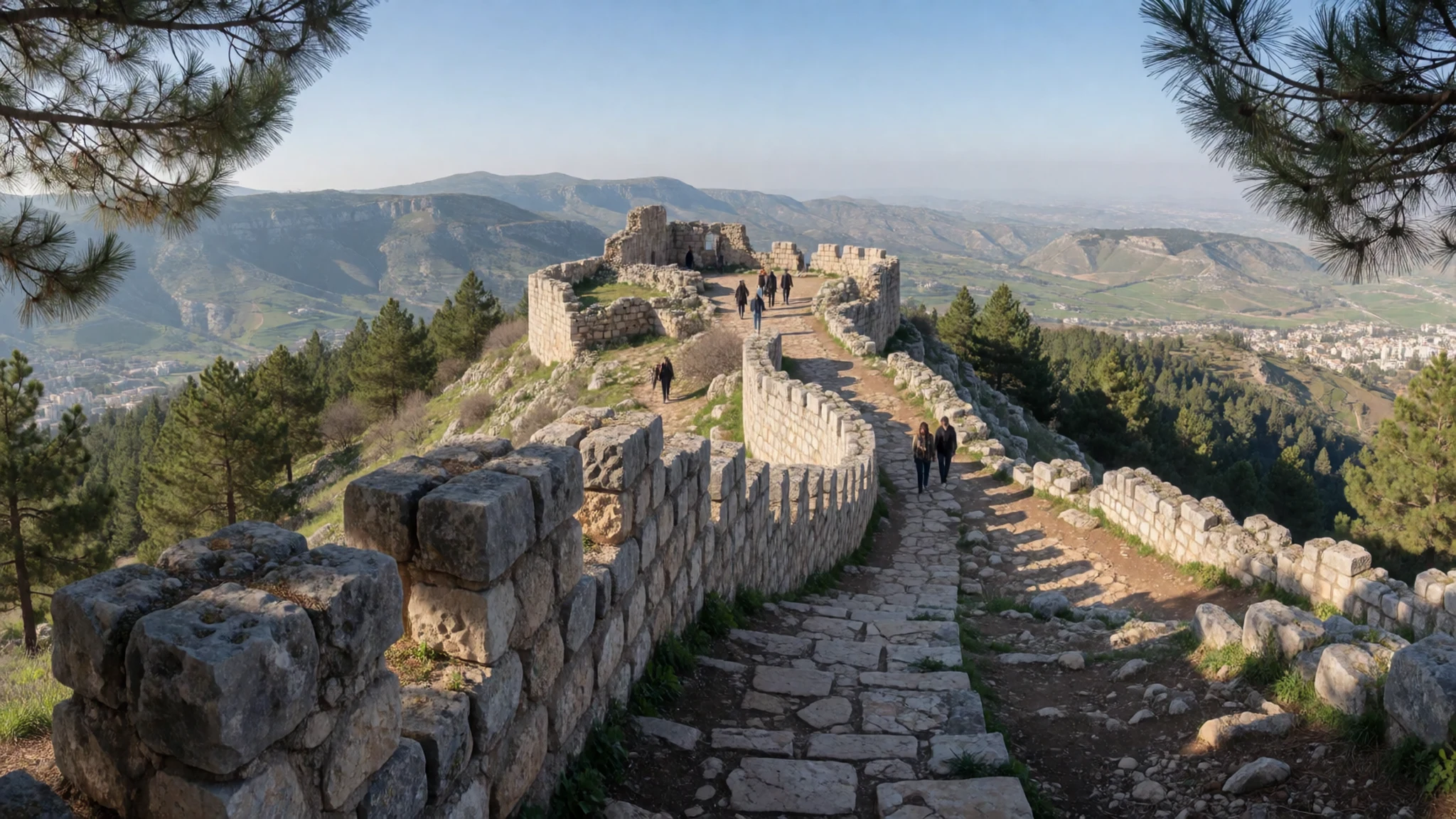
- Abuhav Synagogue — Old synagogue quarter
The Abuhav Synagogue stands in Safed's synagogue quarter and is the house of prayer many visitors come to see. It took shape in the 1490s, arranged on Kabbalistic ideas of sacred space, and it remains a working congregation. The room is small, densely worked and often busy with worshippers.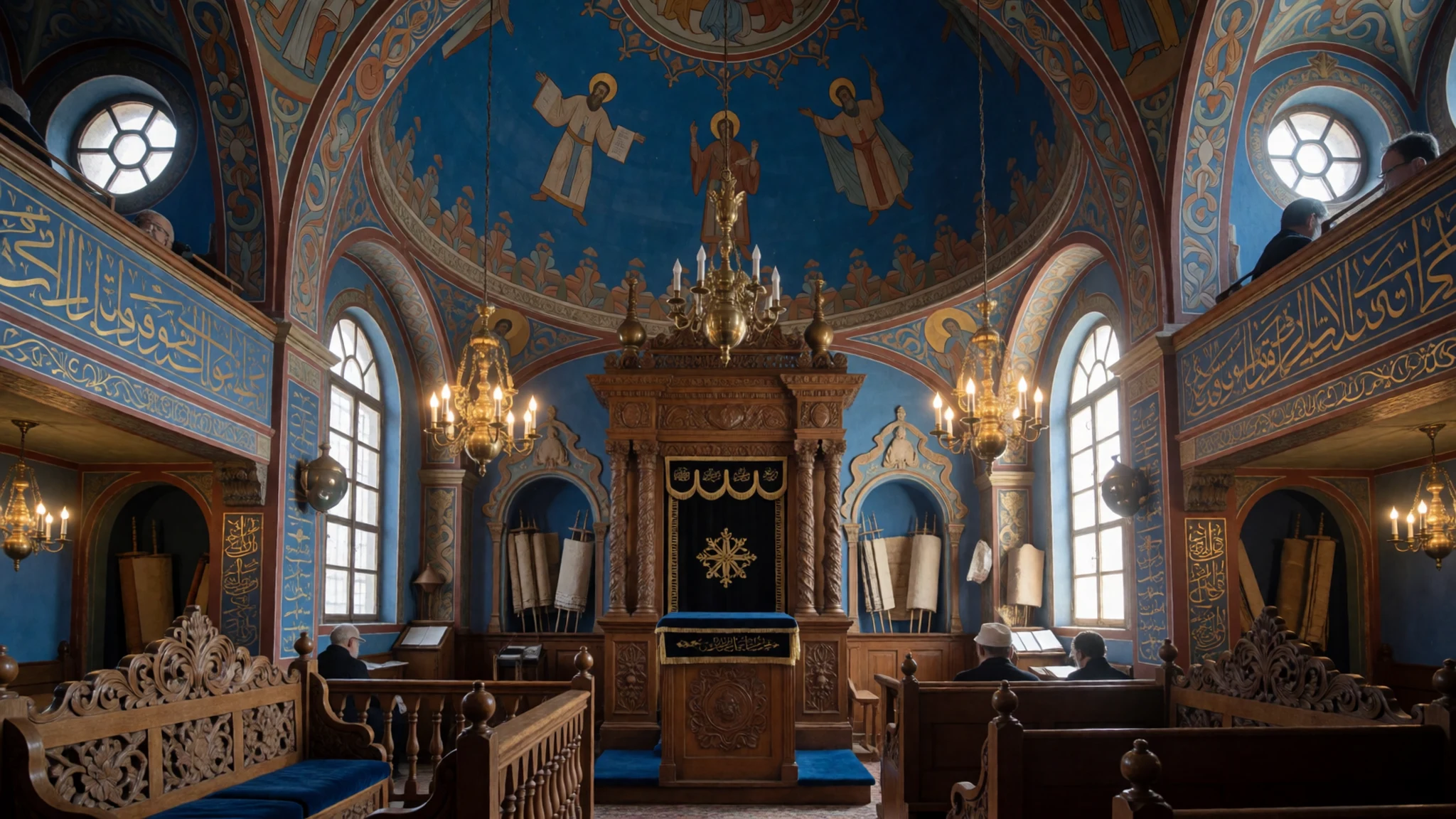
- Yosef Karo Synagogue — Old synagogue quarter
The Yosef Karo Synagogue in Safed stands on the ground of a sixteenth-century yeshiva led by Rabbi Yosef Karo, the scholar associated with the Shulchan Aruch, a central code of Jewish law. The building sits in the same tight group of prayer halls as the Abuhav Synagogue. People come to pray as well as to look, and the tone inside is quiet.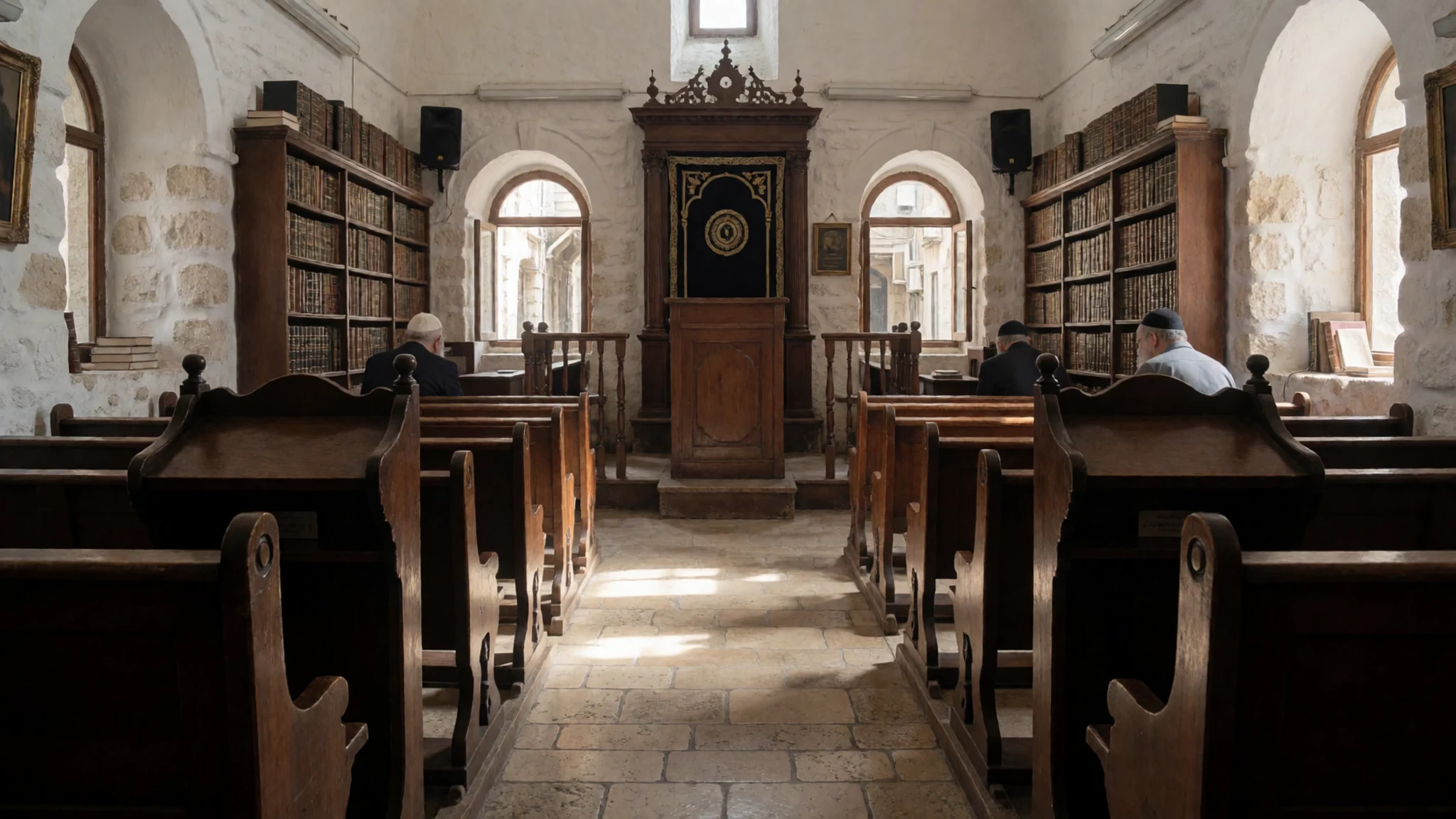
- Ari Ashkenazi Synagogue — Old synagogue quarter
The Ari Ashkenazi Synagogue in Safed is dedicated to the memory of Rabbi Isaac Luria, the mystic known as the Ari. It stands in the old synagogue cluster and is known for an ornate ark. Weekday visits are the usual pattern, but the hall is still a working congregation, so access follows the community's own rhythm.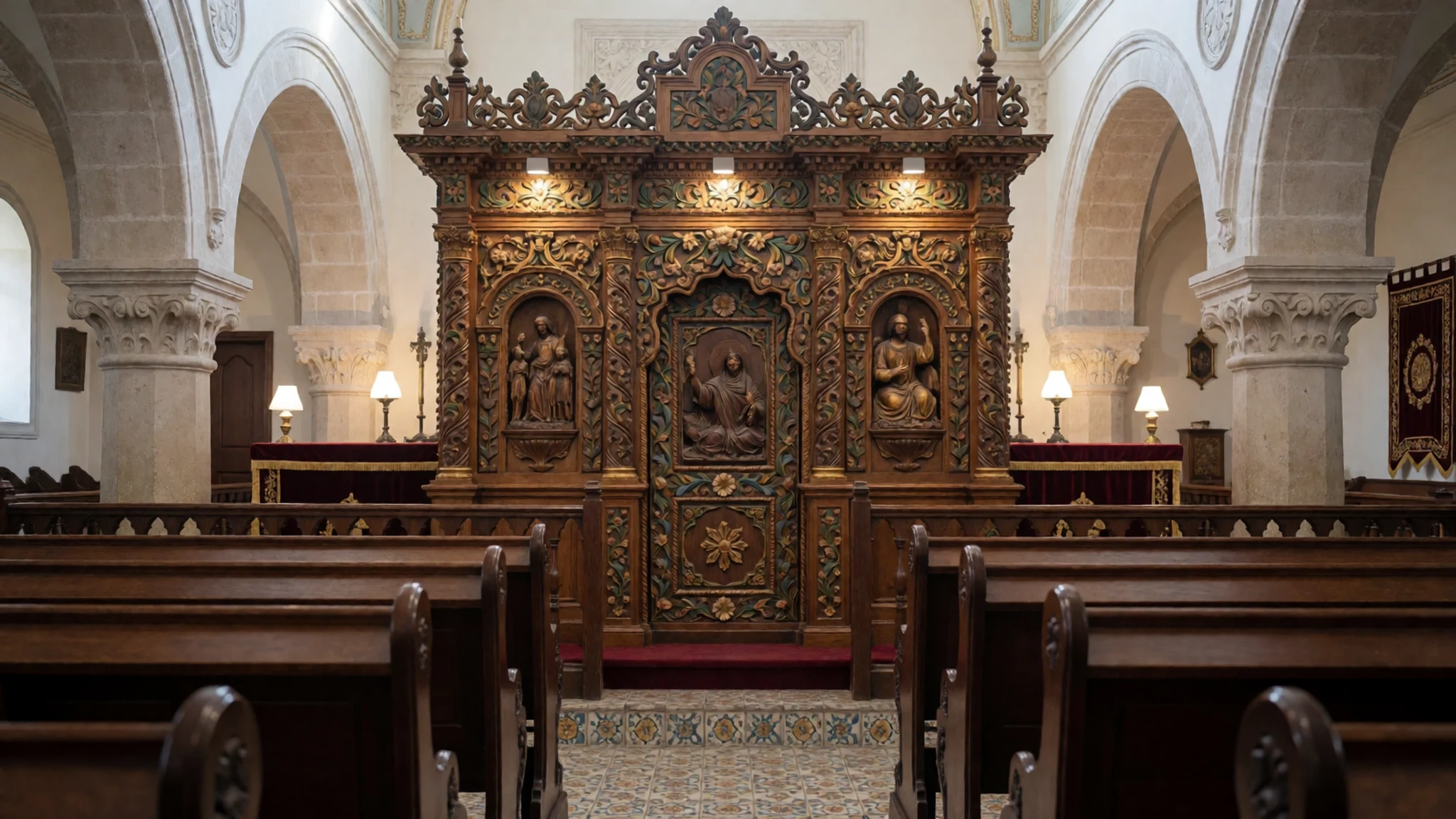
- Ancient Cemetery — Slope below the old town
The Ancient Cemetery of Safed lies on the slope below the old town and holds the graves of many noted rabbis. People come to pray as well as to pay respects, and the ground is a living holy place. Particular graves are pointed out on the path; there is no fixed short list to learn beforehand.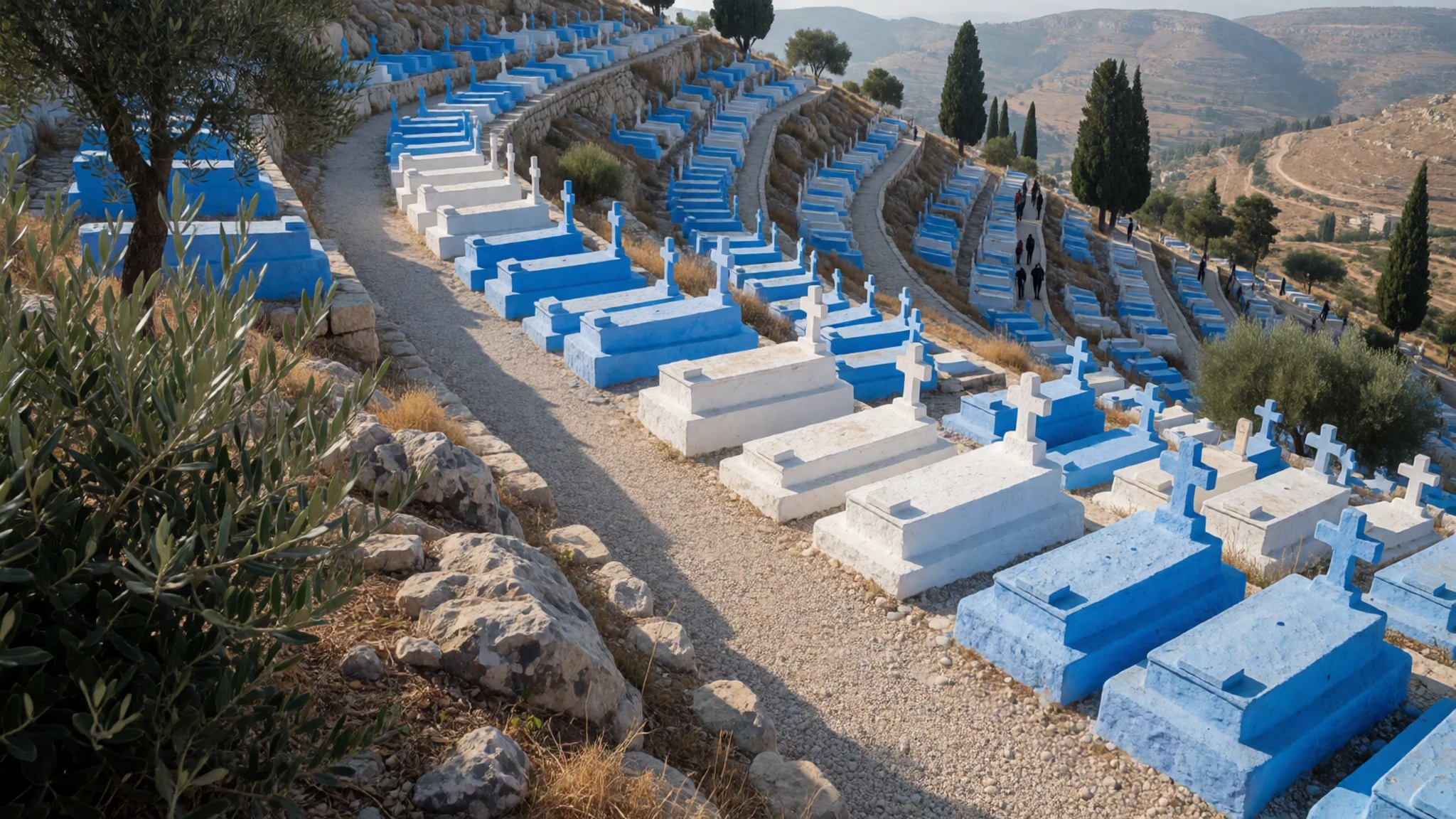
Culture
Safed's public culture has a religious side and an artistic side, and they share the same stone lanes. Kabbalah study, synagogue life and cemetery visits bring people up the hill through the year. The artists' colony is the other current. In the 1950s and 1960s painters gathered in the former Arab quarter, and the town was talked about across Israel as an art capital. The circle included Yitzhak Frenkel, Yosl Bergner, Moshe Castel, Menachem Shemi, Shimshon Holzman and Rolly Schaffer.
When the Glitzenstein Art Museum opened in 1953, Mane Katz gave Safed eight of his canvases. Galleries and solo workshops still line the quarter. The Frenkel Frenel Museum and Beit Castel, set in Moshe Castel's former home, keep individual studios in the story of the street rather than behind a single civic façade.
For a while the night hours matched the galleries for attention. Through the 1960s Safed's clubs drew singers near the start of their careers, Naomi Shemer and Aris San among them. That nightlife has since faded; the lanes now feel closer to a gallery walk and a religious neighbourhood than to a club district.
In Safed, dress modestly at synagogues and the cemetery, and ask before you photograph anyone who is praying.
What to wear
Safed does not keep a single ceremonial costume for the street. What reads as traditional dress is the clothing of religious life: men in dark suits, white shirts and hats or kippot, married women with hair covered by a scarf, a snood or a wig, and skirts below the knee. Wool workshops that flourished here in the sixteenth century left no folk costume behind, but cloth still marks observance, especially the white worn on Shabbat.
On a weekday the Artists' Quarter shows another Safed. Painters, students and visitors wear ordinary cotton and linen, jeans, trainers and sun hats. Both wardrobes share an alley without either being a costume put on for outsiders.
A visitor should plan for 900 metres and for doors where modesty matters. Covered shoulders and knees are the standard at synagogues and at the cemetery. A light scarf helps at the citadel and at holy places. Summer wants breathable cloth and a water bottle; evenings and the cold months want another layer. Stone steps and broken paving call for closed shoes with a grip rather than thin sandals.
What to eat
- Safed cheese — Artists' Quarter and nearby old-town lanes
Safed cheese is the city's dairy speciality, made locally and sold from small producers in the old town. A tasting sometimes comes with tea. The place to find it is the Artists' Quarter and the lanes nearby, where dairies welcome callers.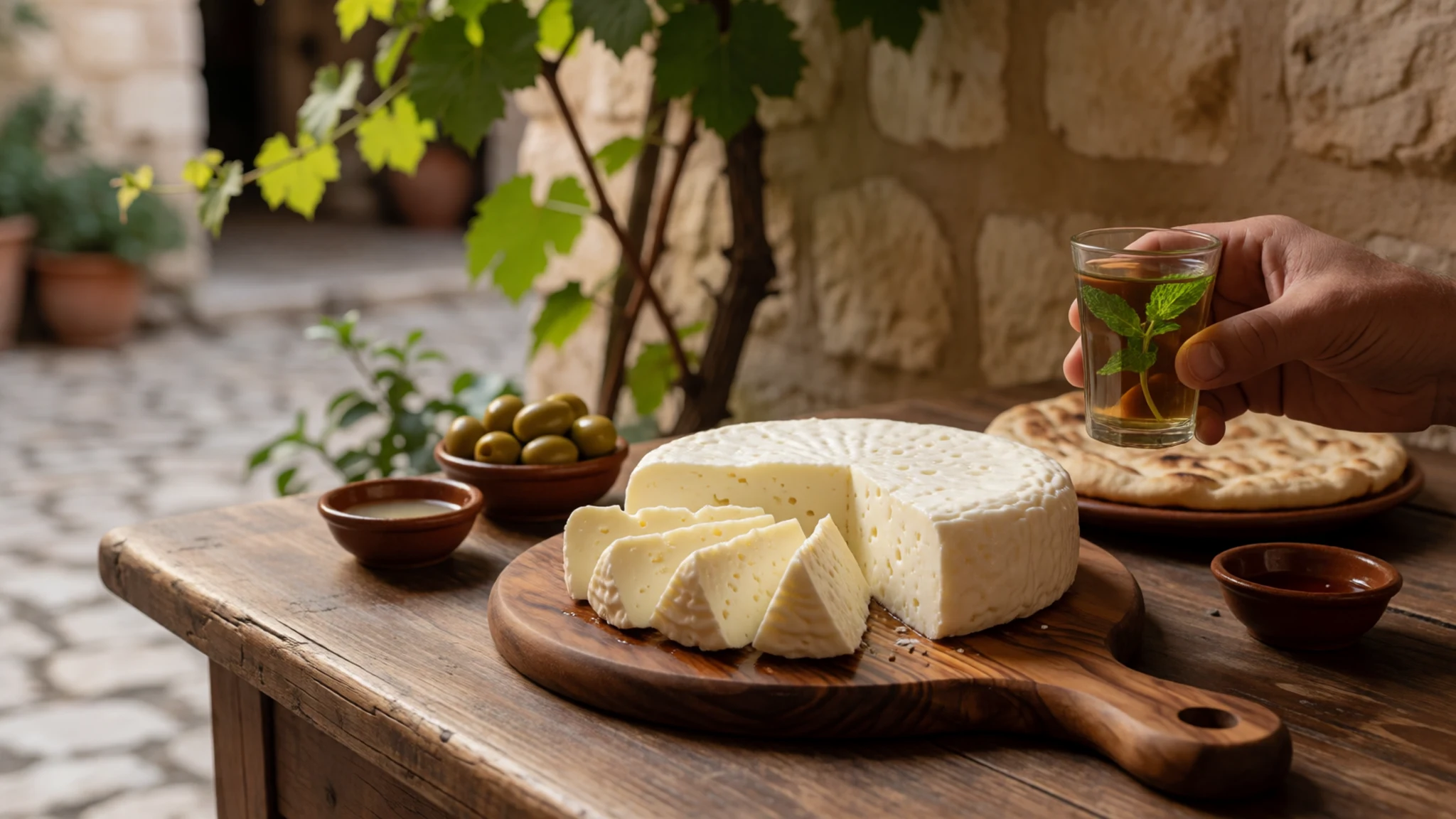
- Falafel — Old-town counters and streets into newer neighbourhoods
Falafel is everyday food in Safed, served at counters in the old town and on streets leading into the newer neighbourhoods. Fried chickpeas in pitta, with salad, suit a short stop between synagogues and galleries. It is spoken of locally as inexpensive and reliably good.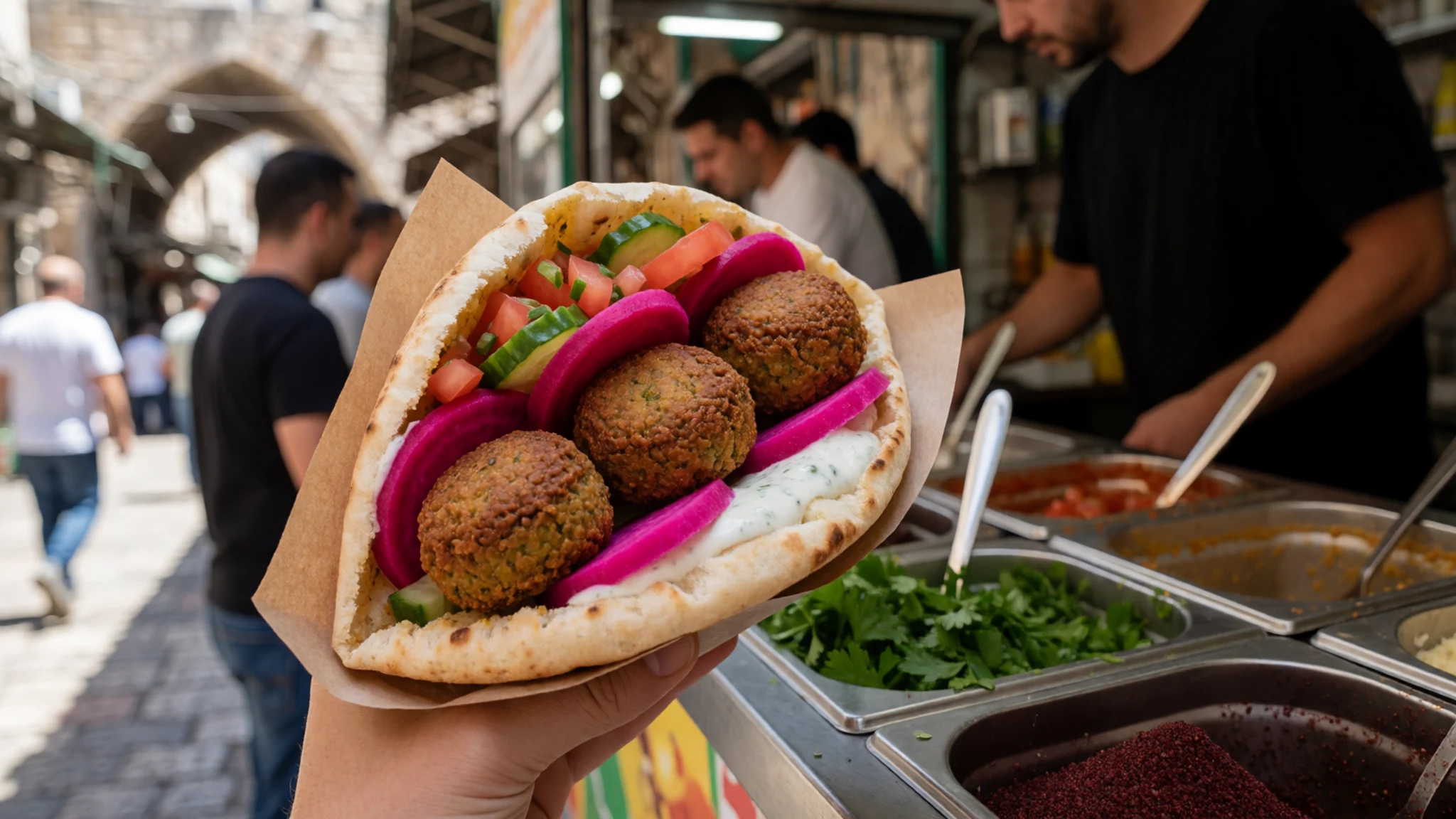
- Shawarma — Casual counters on commercial streets
Shawarma in Safed is sold at the same kind of casual counter as falafel, mostly on commercial streets rather than in the quiet synagogue alleys. The usual serving is spit-roasted meat in bread. It makes a straightforward lunch between walks in the old town. - Pizza — Small eateries in town
Pizza sits on the ordinary Safed menu beside falafel and shawarma, among the basic foods the town is known for. Slices come from small eateries rather than from one celebrated address. It is a familiar option after a morning in the old lanes. - Tea — Small dairies in the old town
Tea in Safed belongs with the cheese stop rather than with a separate café trail. Small dairies in the old town pour a glass for visitors who have come to taste. It is a short pause between the lanes, not a meal in itself.
Plan it
Best time. April, May, September and October are the easiest months to walk Safed. The town stands at 900 metres, summer is when visitors are told to drink extra water, and winter on the ridge can be cold. Those months sit between the heat and the cold.
How long. 2–3
Getting there. Safed has no railway station. From Ben Gurion Airport the practical route is an Israel Railways train to Karmiel, the closest station, and a bus for the last leg into town. Buses also run from Tiberias and from Rosh Pina, which has connections toward Haifa and Tel Aviv. Services from Jerusalem and Bnei Brak are fewer and cater mainly to Orthodox travellers. Check current times with the operator and with the municipality at http://www.zefat.muni.il/Pages/default.aspx.
Budget. mid
Tips
- Start in the synagogue lanes early, before the stone holds the midday heat.
- Carry water in summer, including for the short exposed climb to the Safed Citadel.
- Keep some cash for dairies and small counters.
- Change at Karmiel if you are coming by train; the railway does not enter Safed.
- To stay in the lanes, look at small guest houses in the Old City, the Artists' Quarter or the south of Safed; Amirim is a nearby alternative.
- Treat Safed as a base for the north if you wish: buses, taxis and seasonal group trips reach other Galilee and coastal spots within about an hour.
Etiquette
- In Safed, cover shoulders and knees in the synagogues and in the Ancient Cemetery.
- Ask before photographing people, above all anyone who is praying.
- On Shabbat, expect many religious shops and eateries to be closed, and sort food and transport before Friday evening.
- Speak quietly in the cemetery; it is a place of prayer, not a viewing platform.
Nearby
Sources
- Wikidata Q188336 (CC0)
- Wikipedia (rev 1382952232) (CC BY-SA 4.0)
- Wikivoyage (rev 5386493) (CC BY-SA 4.0)
- Photo photos/01-safed1.jpg (CC BY 3.0)
- Photo photos/02-safed-street.jpg (CC BY 4.0)
- Photo photos/03-safed-alleyway.jpg (CC BY 4.0)
- Photo photos/04-pikiwiki-israel-48709-safed-the-old-city.jpg (CC BY 2.5)
- Photo photos/05-tsfat-the-old-town-croped.jpg (CC BY 3.0)
- Photo photos/06-safeddscn4033.jpg (Public domain)
- Photo photos/07-safedcitadel.jpg (Public domain)
- Photo photos/08-kulat-safed-from-the-1871-77-palestine-exploration-fund-surv.jpg (Public domain)


