Rothenburg ob der Tauber
Rothenburg ob der Tauber, Germany
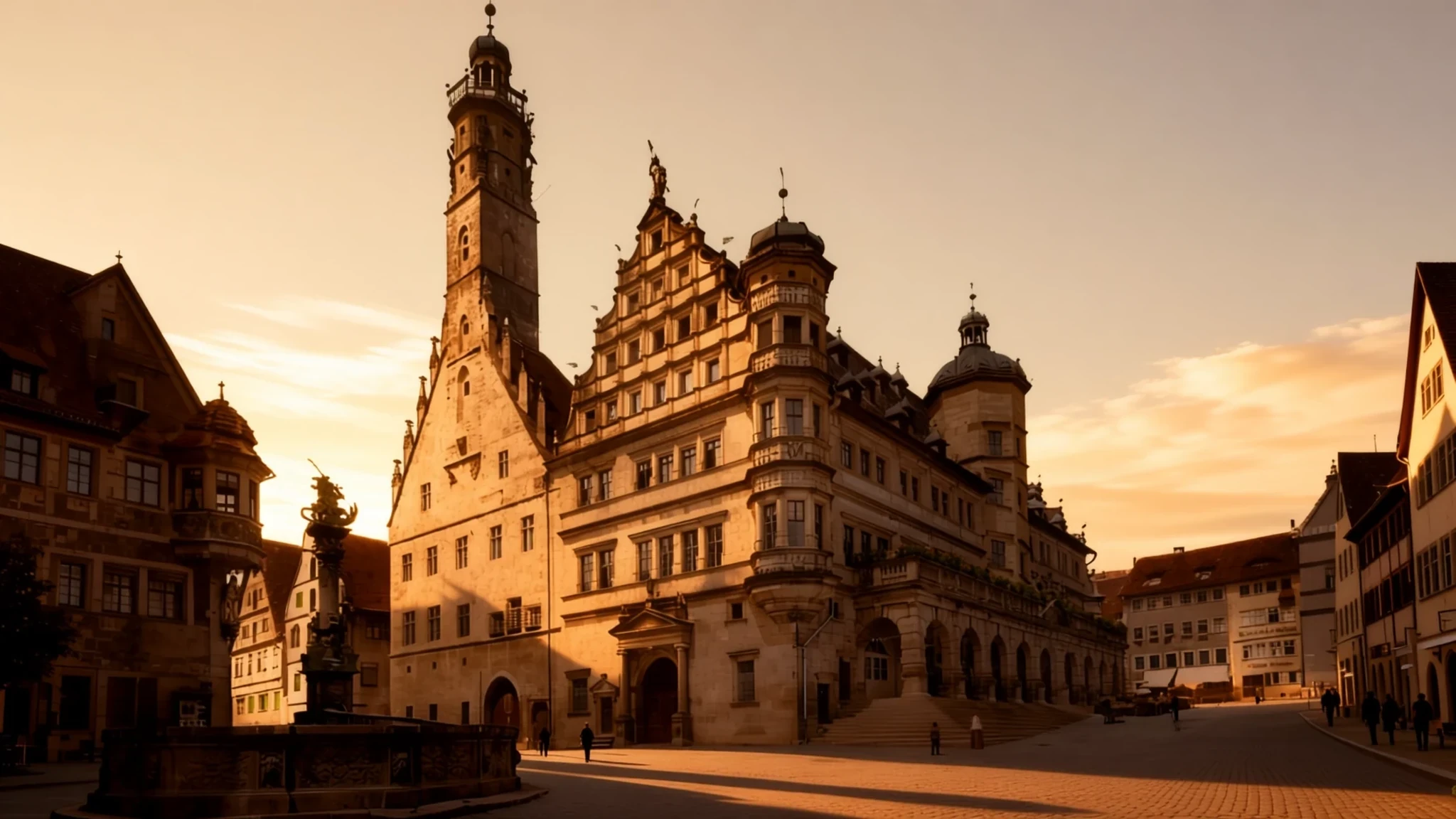
Step through ancient stone gates into a remarkably preserved Franconian town where high medieval walls enclose quiet cobbled lanes and timber-framed gables.
The place
Rothenburg ob der Tauber sits high above the River Tauber in the Franconia region of Bavaria. It forms a celebrated stop along the Romantic Road, drawing travellers from across the globe to experience its intact historic core. The settlement stands out as one of only four German towns retaining its full medieval circuit of defensive walls, alongside Nördlingen, Dinkelsbühl, and Berching. The townscape presents a dense arrangement of steep gable roofs, timber-framed facades, and stone arches that escaped extensive modernisation.
Life inside the walls centres on the old marketplace and narrow alleys branching towards old gatehouses. The local geography elevates the old town above the surrounding river valley, creating natural viewpoints from the ramparts across green slopes and orchards. While day visitors fill the principal squares during peak sunlight hours, the early mornings and late evenings return the lanes to a quiet pace. Visitors walk the covered wooden walkways of the fortifications, explore small hidden gardens, and observe the preservation work funded by donors worldwide.
Its story
Human presence on the ridge dates back to early Celtic habitation before the turn of the first era. Counts established a weir system in the castle gardens, followed later by fortifications on the high mountain top above the river. Dynastic shifts brought royal attention when rulers acquired adjacent lands to establish a new castle and court. This foundation shaped the layout of the marketplace and parish church.
The community gained significant status as a free imperial city, securing royal privileges that fostered trade and urban expansion. Guilds, monastic orders, and civic leaders constructed hospitals, monasteries, and grand administrative halls, turning the settlement into a prosperous trade hub. A celebrated pilgrimage brought large numbers of travellers to view holy relics.
Conflict and economic shifts later reduced its regional dominance, leaving the town largely frozen in architectural form. Decades later, spa development and heritage tourism brought renewed attention. Sustained restoration efforts after regional damage preserved the historic fabric seen today.
What to see
- Market Square — Altstadt
The central hub of civic life, framed by historic administrative buildings, cafes, and fountains. Visitors gather here to watch the mechanical clock figures enact historical tales on the facade of the old councillors' tavern.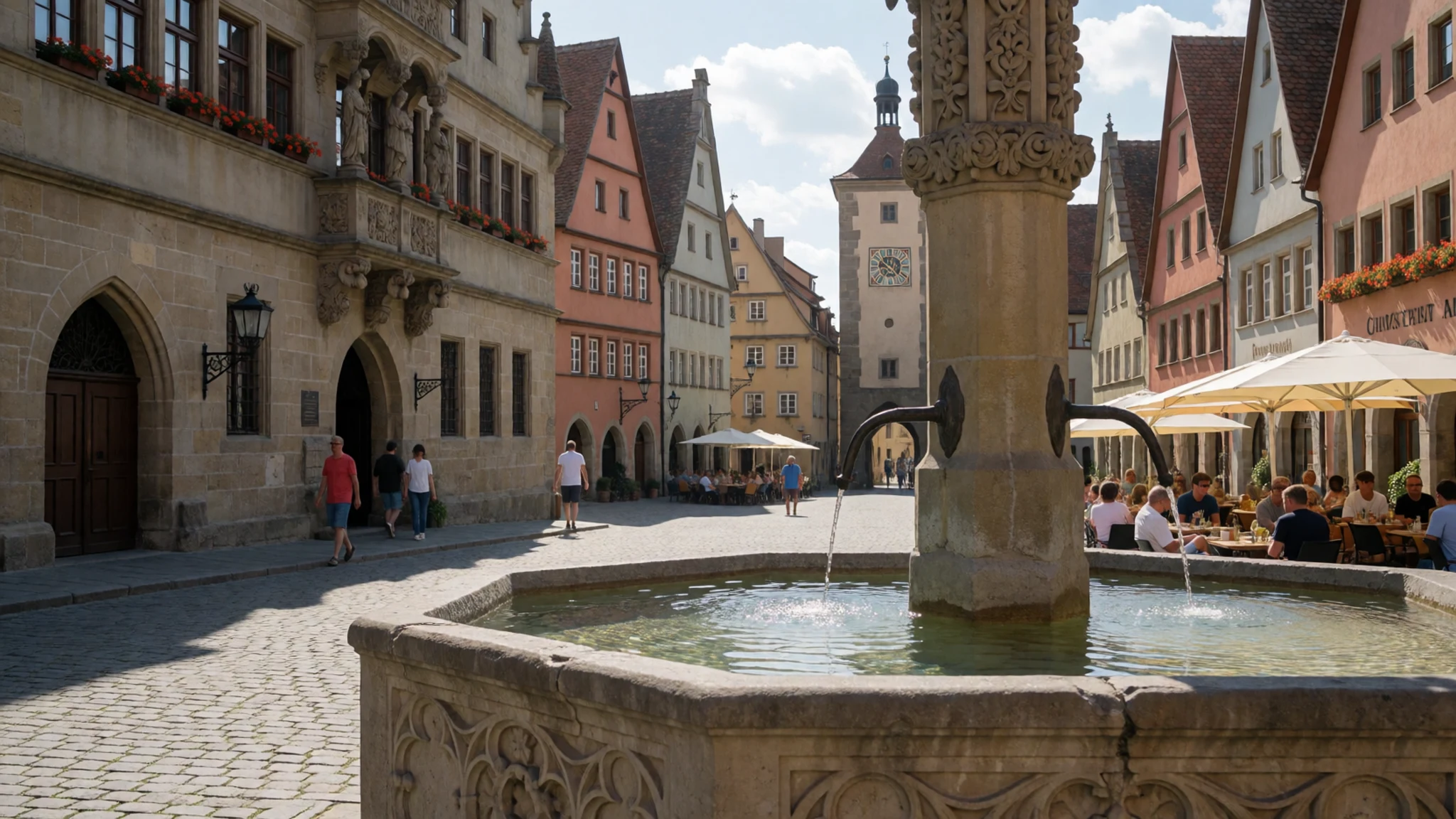
- Plönlein — Southern Altstadt
A small triangular junction often captured in photographs, where two historic roads diverge past stone gate towers and timber houses down towards the valley below.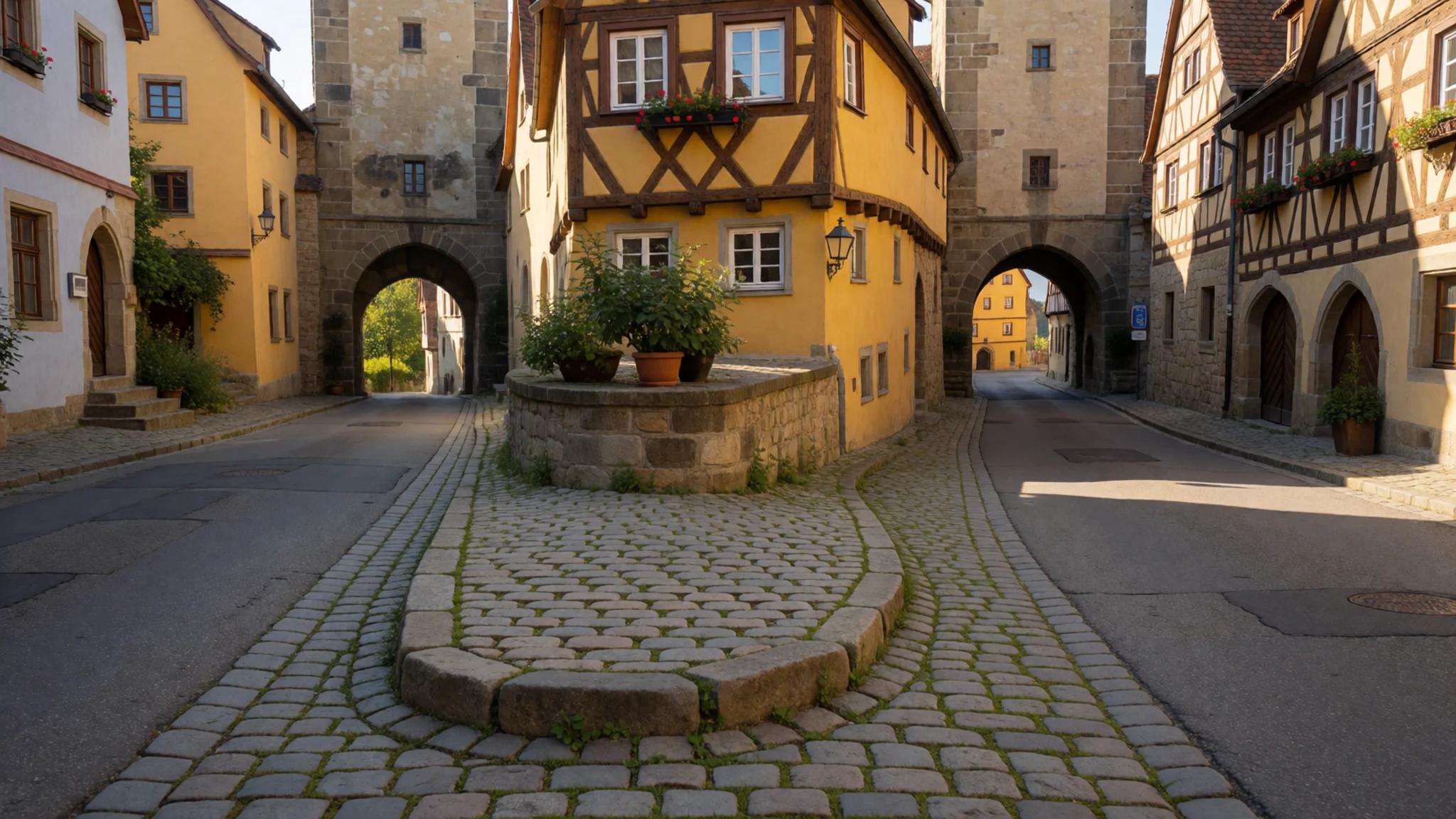
- Town Wall — Around the perimeter
An extensive stone fortification surrounding the old town, featuring covered wooden walkways, watchtowers, and donor plaques detailing worldwide restoration efforts following past conflicts.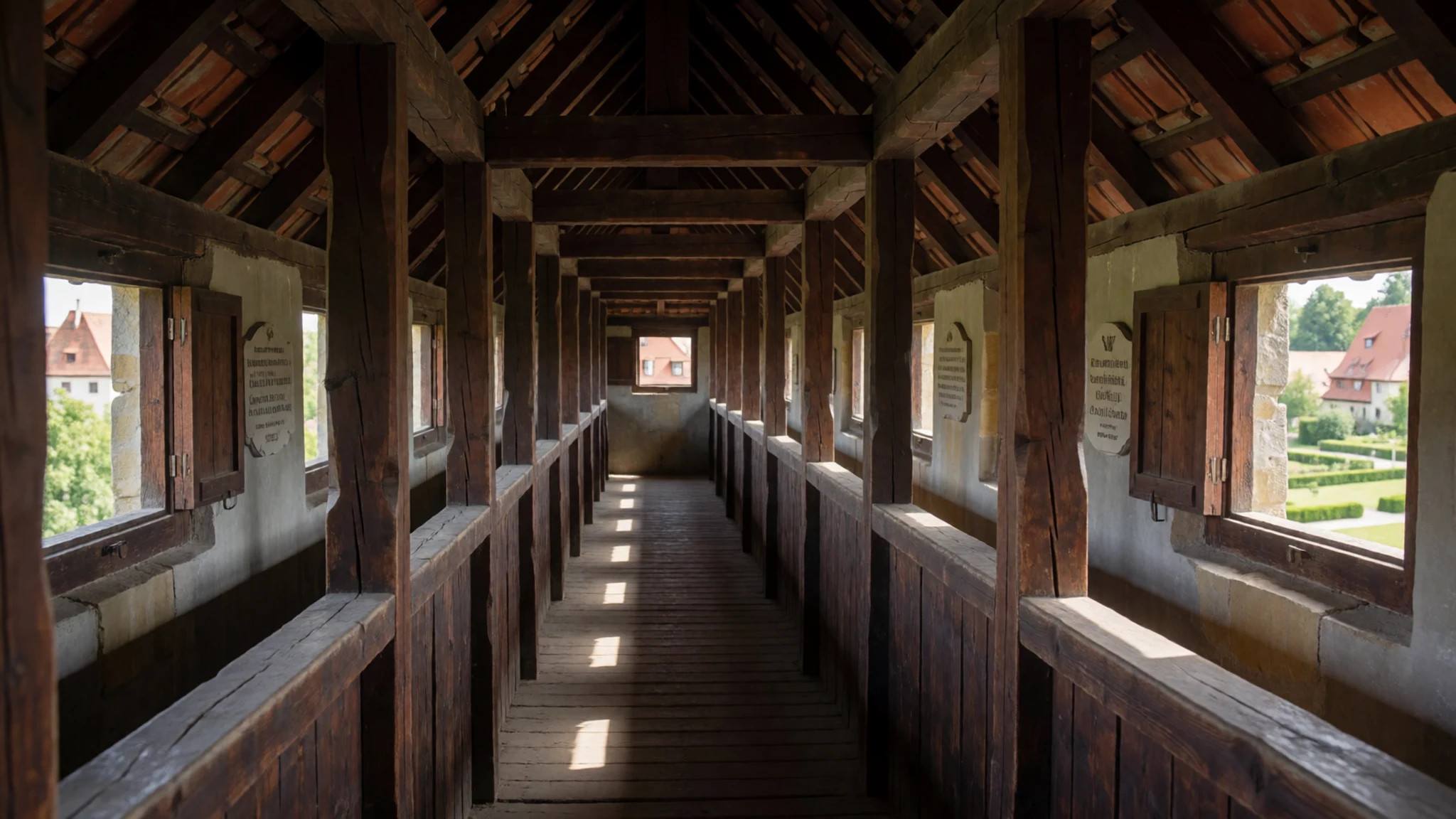
- Medieval Crime and Punishment Museum — Burggasse
An exhibition located near the central square exploring legal history, jurisprudence, and historical penal devices used across European jurisdictions through the centuries.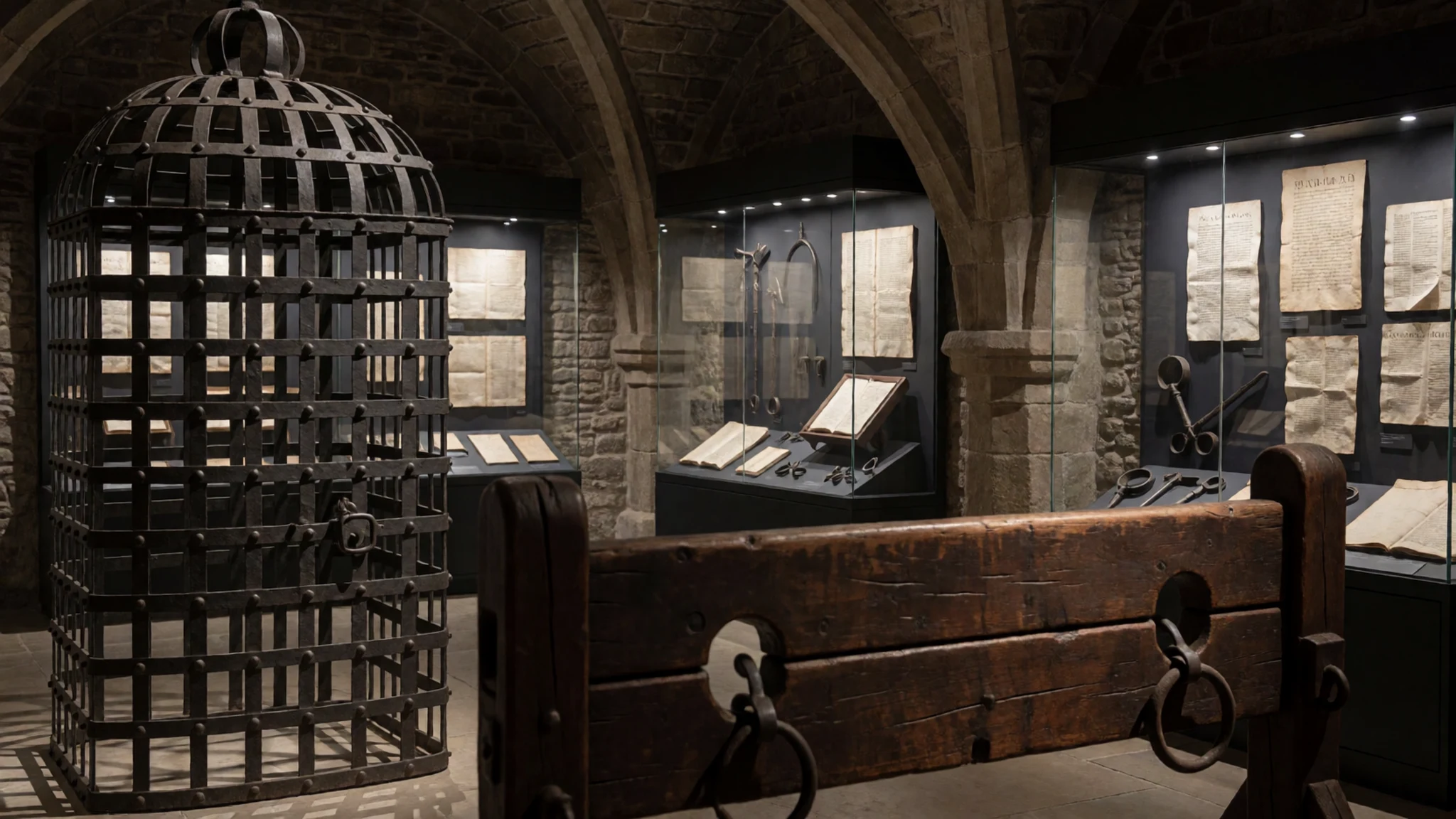
- St. James' Church — Klostergasse
A grand Gothic place of worship featuring elaborate stone vaults, carved wooden altars by master craftsmen, and religious artwork that drew medieval pilgrims from afar.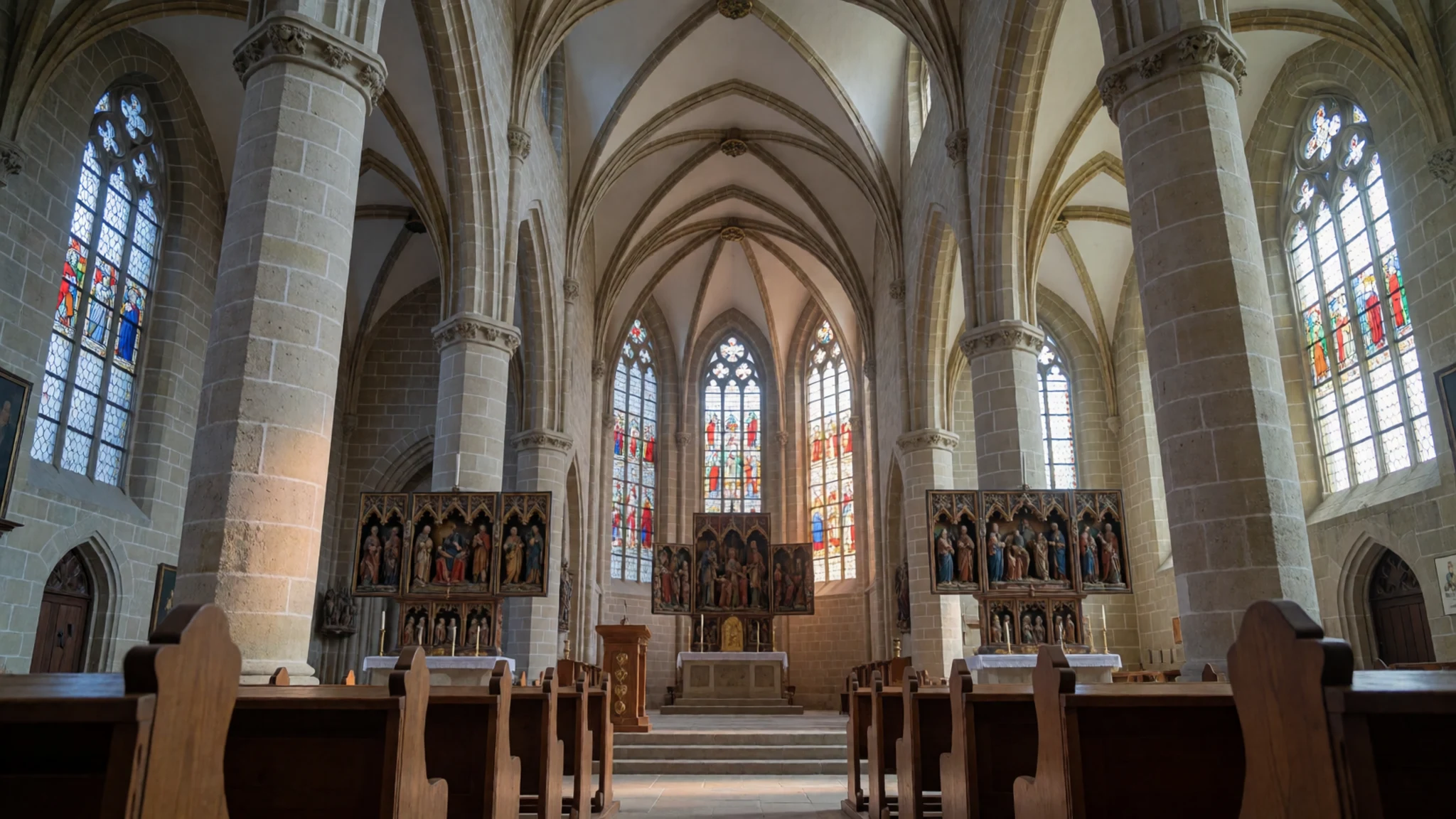
Culture
Local traditions in Franconia remain tied to agricultural cycles, wine production, and historical pageantry that celebrate the town's survival through past conflicts. Community life blends regional Bavarian customs with distinct Franconian dialects, culinary styles, and craft guilds. Festivals throughout the calendar year highlight choral music, local wines, and historical enactments involving community members in traditional dress. Residents maintain a strong sense of civic pride, evident in the meticulous care given to historic facades and public gardens.
Visitors encounter a polite, orderly atmosphere where quiet hours are respected in residential quarters. When entering local shops, bakeries, or smaller inns, a simple greeting in German is appreciated before switching to English. Always keep your voice moderate in shared spaces and respect the privacy of residents living within the historic core. Please observe all posted quiet hours in residential zones and residential alleys after evening settles.
What to wear
Traditional Franconian dress includes dirndls for women and leather trousers or embroidered waistcoats for men, worn during heritage festivals, civic celebrations, and wine fairs. These garments traditionally feature sturdy wool, linen, and leather materials crafted for durability.
For daily wear, locals and shopkeepers dress in practical, contemporary European casual clothing, favouring comfortable knitwear, denim, and layered jackets suited to variable weather. Travellers should pack sturdy walking shoes with good grip to navigate the uneven cobblestone streets, stone staircases, and steep rampart paths safely.
What to eat
- Altfränkische Weinstube — Klostergasse
A traditional tavern serving regional Franconian wines alongside hearty local dishes in a cosy, wood-panelled atmosphere.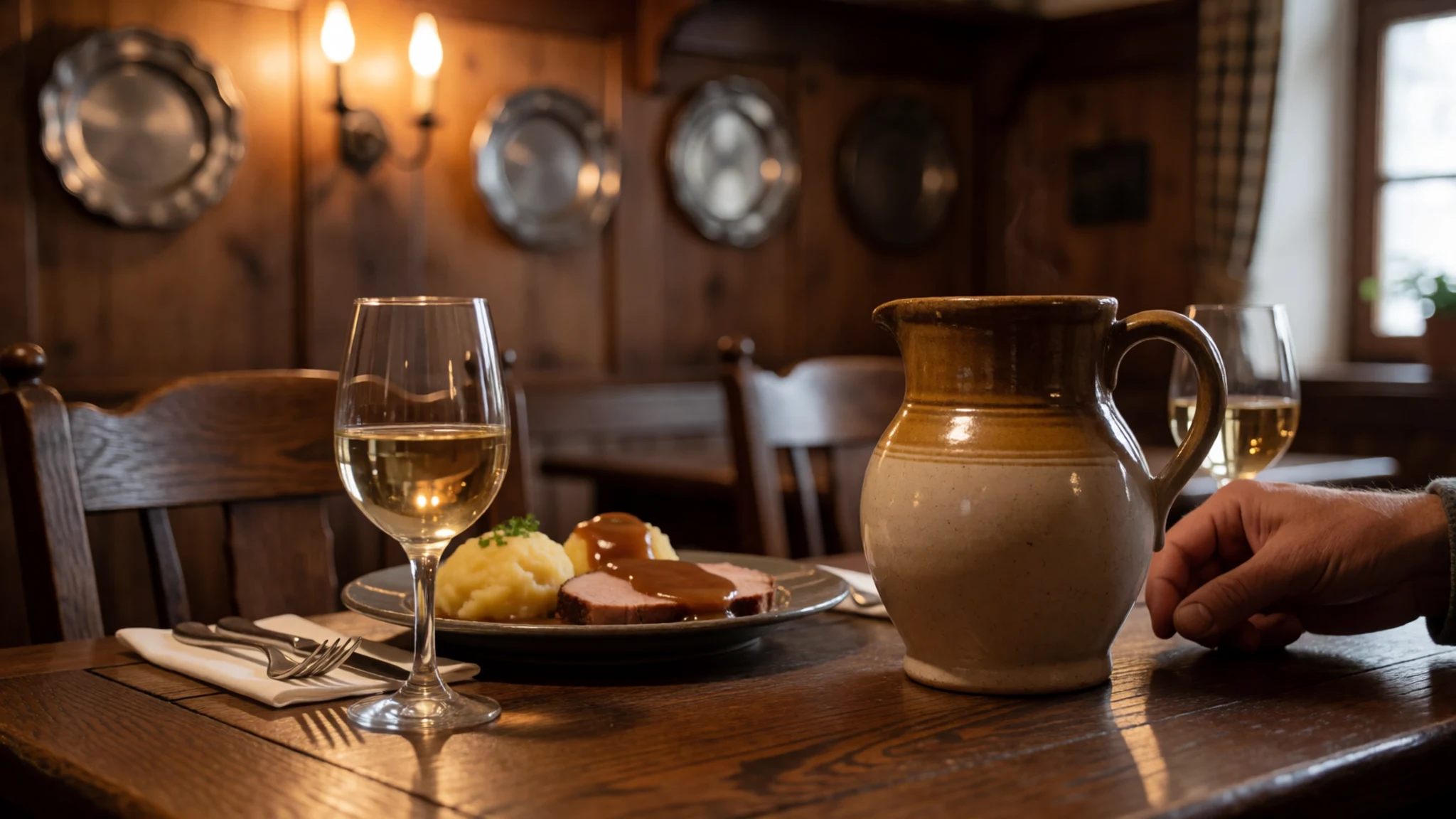
- Baumeisterhaus — Obere Schmiedgasse
An eatery set inside a historic Renaissance building featuring carved wooden pillars and traditional regional comfort food.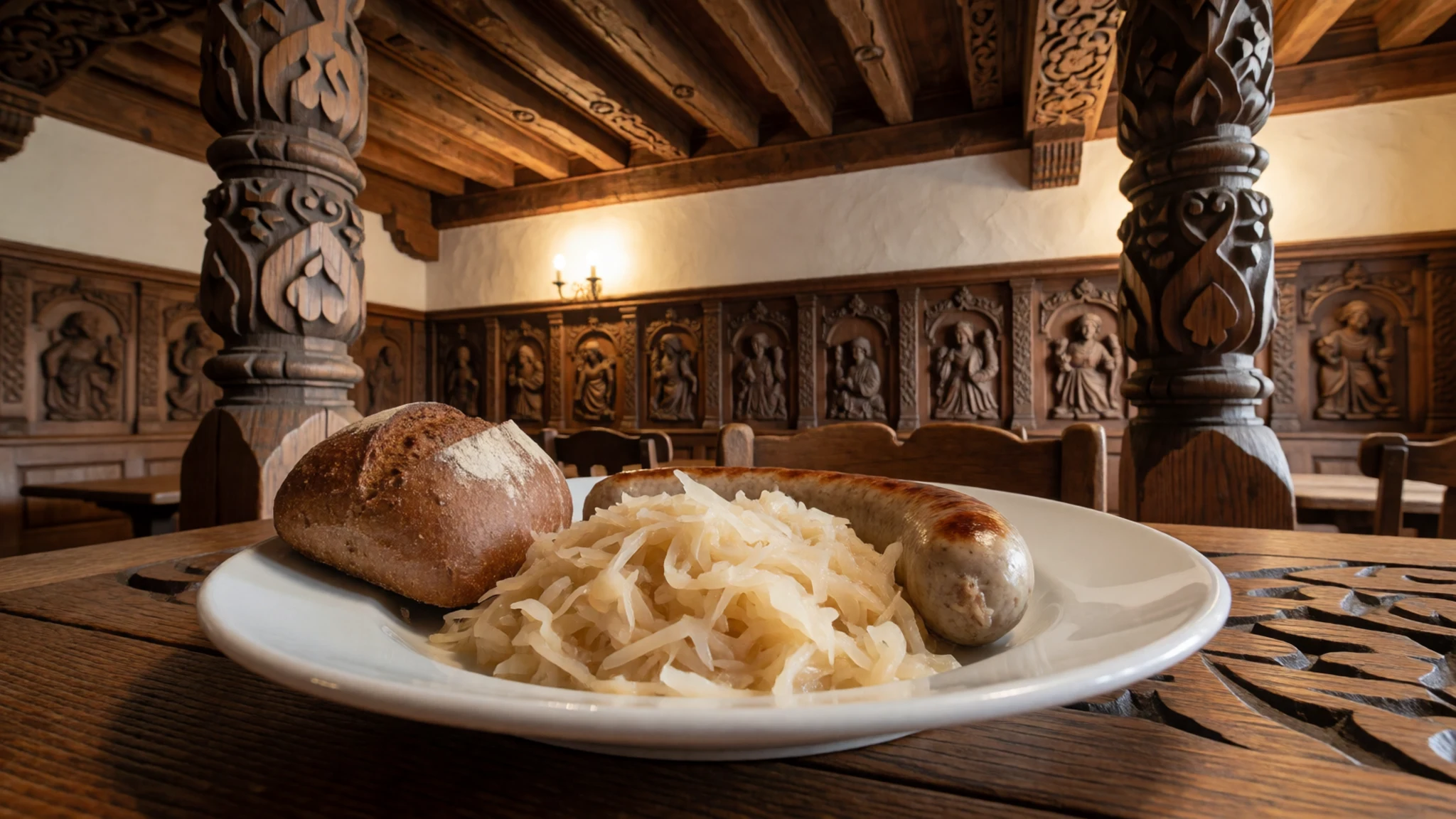
- Ratsstube — Marktplatz
A classic tavern located right on the market square, offering traditional Franconian fare and local brews. - Zur Höll — Burggasse
A snug gasthaus situated inside a very old stone building, serving traditional local dishes and drinks in a historic setting. - Cafe einzigARTig — Hafenmarkt
A cozy spot offering homemade cakes, hot drinks, and pastries amid eclectic decorative furnishings.
Plan it
Best time. May to September offers warm weather and accessible outdoor walks, while December brings traditional festive markets.
How long. 2
Getting there. Fly into Frankfurt Airport, then take an express train towards Würzburg and change to regional rail connections.
Budget. mid
Tips
- Arrive early in the morning before day-trip tour buses arrive to enjoy quiet streets.
- Wear comfortable footwear suitable for walking on uneven cobblestones and stone steps.
- Carry cash, as some traditional inns and small cafes do not accept cards.
- Book dinner tables early, as kitchens often close by late evening.
Etiquette
- Greet shopkeepers and staff politely when entering local businesses.
- Observe quiet hours in residential lanes after dark.
Nearby
Sources
- Wikidata Q153494 (CC0)
- Wikipedia (CC BY-SA 4.0)
- Wikivoyage (CC BY-SA 4.0)