Rohtas Fort
Rohtas Fort, Pakistan
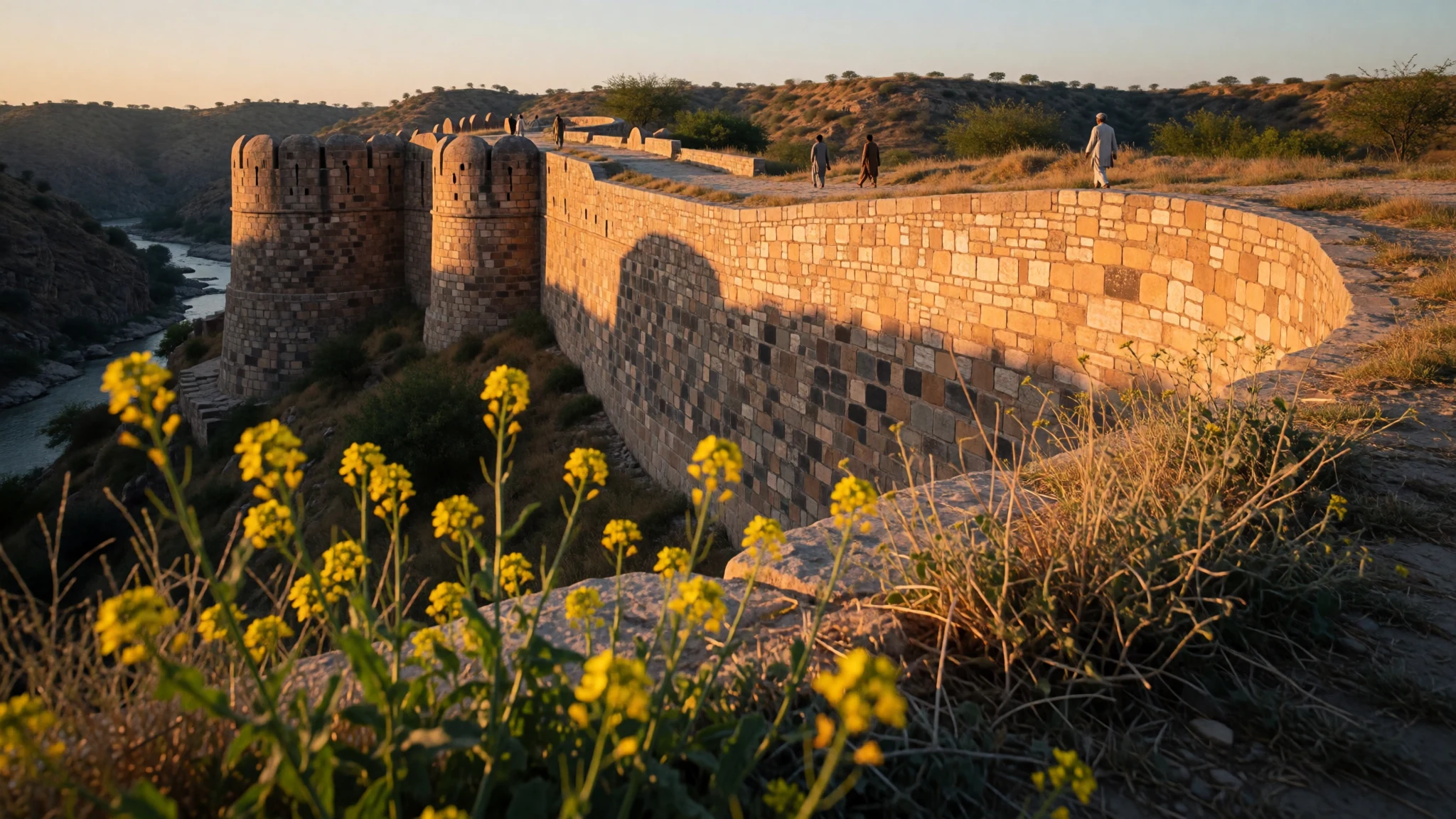
Rohtas Fort is a remarkably intact fortress of commanding Muslim military design, perched above a river gorge in Punjab.
The place
Rohtas Fort stands on a high hill within the Tilla Jogian Range, overlooking a canyon formed where the Kahan River joins an intermittent stream known as Parnal Khas. It’s close to Dina in Pakistan’s Punjab province (in the Jhelum district), and the setting is part of the point: the walls rise from the landscape rather than feeling dropped into it.
Commissioned by Sher Shah Suri during the 16th century, Rohtas Fort was built to control movement between the mountains of Pothohar and the plains of Punjab. The fortress is positioned about 91.5 metres above its surroundings, and the whole site sits at an elevation of 819 metres.
What makes Rohtas especially memorable is how “alive” it feels compared with many big forts. Rohtas village takes up over a third of the fort’s grounds.
The fort’s form is practical and fortified rather than decorative: long stretches of ramparts, gateways, and bastions, with the overall layout designed for defence. Today it’s recognised as a UNESCO World Heritage Site (declared in 1997), and visitors typically approach by the fort’s gates and then make their way along the walls to pick up views down into the gorge.
Expect a real fort visit: some uphill walking, strong sun, and a sense of scale that hits hardest once you’re standing inside the outer defences.
Its story
Rohtas Fort began as a strategic answer to rebellion. Sher Shah Suri’s advisers pushed for a stronghold near the Salt Range region to put pressure on the Gakhar tribe, who were resisting the Surs. The fort’s location mattered: it sat between mountain approaches and the plains, helping to block routes and complicate any movement back toward northern territories.
Construction is linked to Raja Todar Mal, Sher Shah’s finance minister. Work began in 1541 under Todar Mal’s supervision, but it didn’t run smoothly. The local Gakhar population refused to labour on the fort, because many male tribesmen had taken vows tied to resisting the Surs. Only after wages were raised did more workers come forward, and even then Sher Shah Suri didn’t live to see completion; he died in 1545.
After Sher Shah Suri’s death, the political map shifted. Humayun returned to regain rule in Punjab and Rohtas Fort was ceded to him in 1555. Under the Mughals, Rohtas became less central defensively, partly because its straightforward military style didn’t match Mughal tastes for fortified landscapes with gardens. Mughal visits were recorded, including Akbar staying for a night and Jahangir using the fort during travel and court business.
Rohtas Fort also appears in later episodes of imperial campaigning. By the 1700s it was still used during ongoing conflicts, and Nader Shah is recorded as camping there during his invasion of the Mughal Empire. In other words, the fort wasn’t only built to impress—its walls were repeatedly pulled into history as power shifted across Punjab.
What to see
- Rohtas Fort ramparts and bastions — Across the main fort precinct near Dina (Jhelum district)
Rohtas Fort’s defensive walls and bastions dominate the experience. Walk along sections of the ramparts to get a feel for how the fort holds the hill, with the gorge country opening up in views. The stonework reads as functional—built to last, built to defend.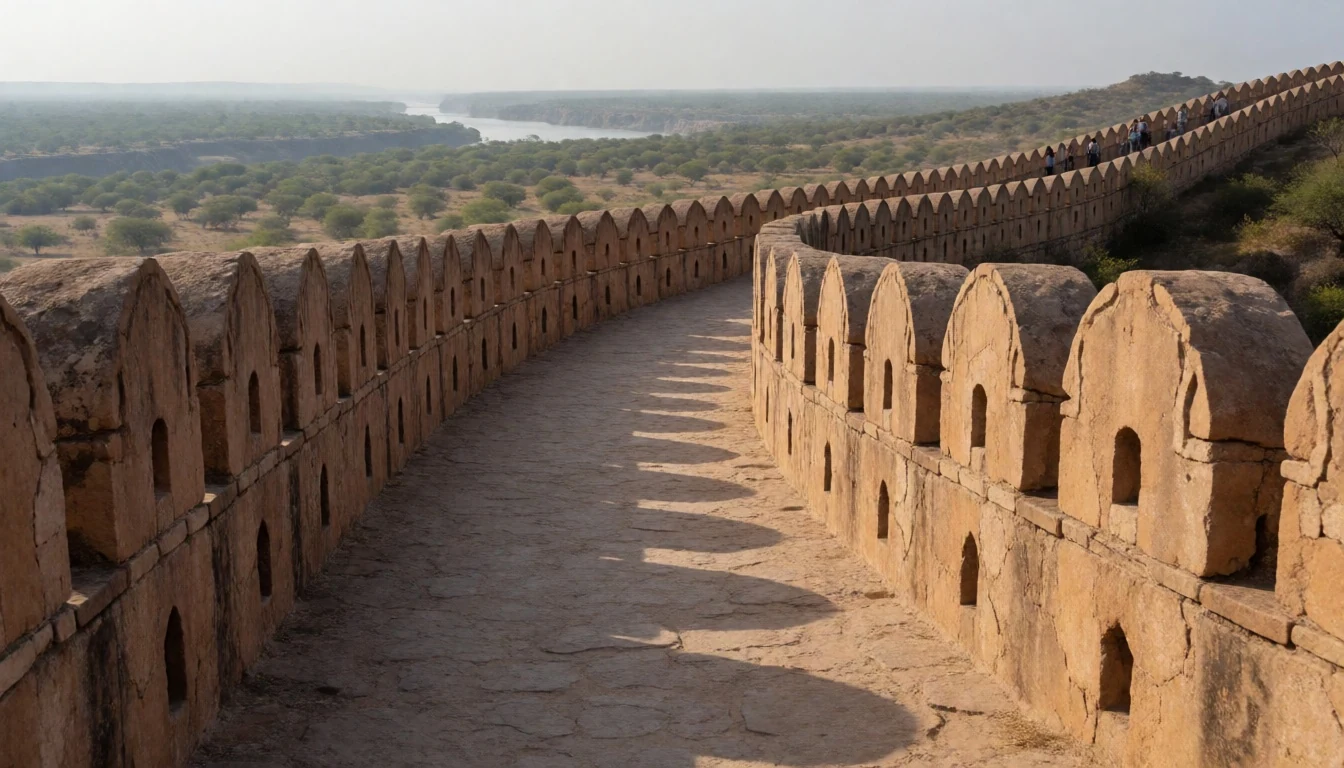
- Kabuli Gate — Northern fort area (near the main gate approaches)
The Kabuli Gate is a key entry point in the northern side of the fort’s defences. It’s the kind of gateway that instantly explains the fortress mindset: heavy, gate-like, and meant for controlled passage rather than sightseeing. Close-up angles show the gateway’s character.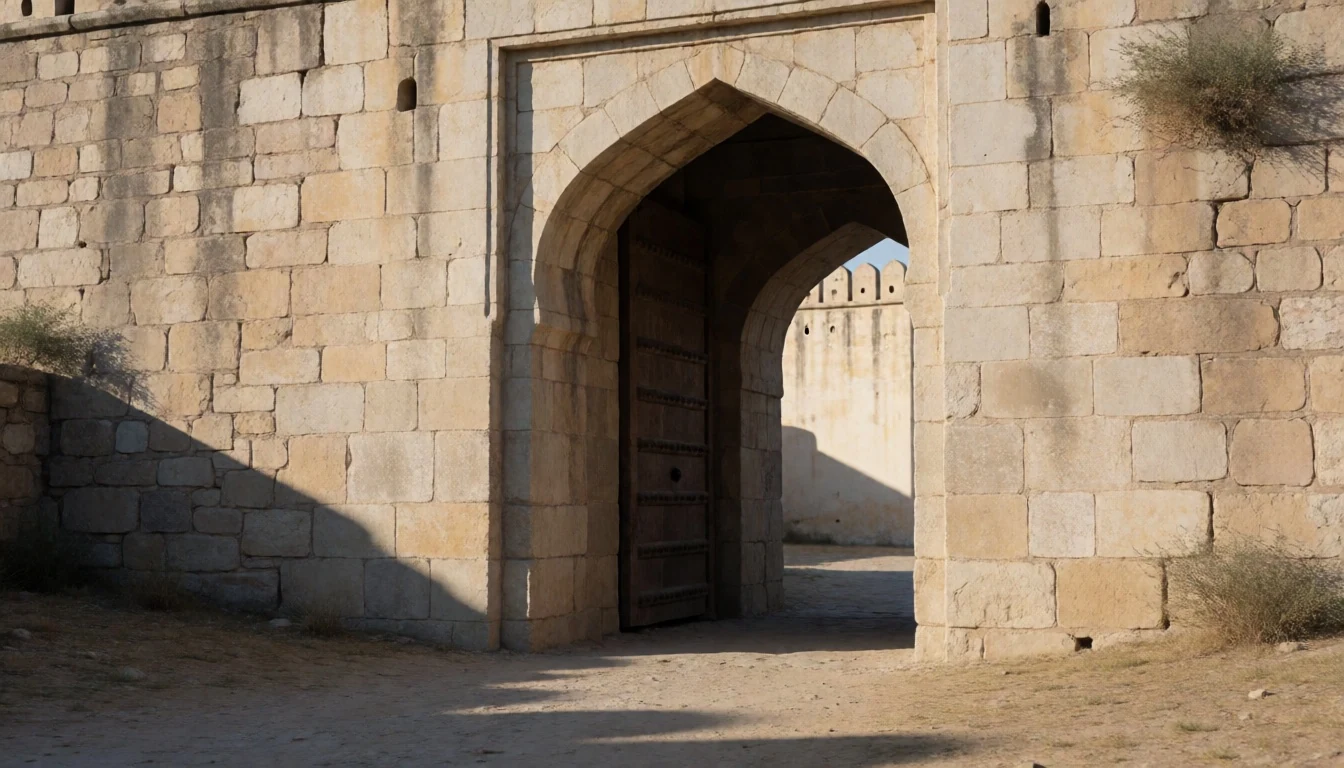
- Sohail Gate — Within the fort’s gate-and-wall ring
Sohail Gate stands out as another important fortified threshold. At closer range, the details of the gate structure and adjoining wall sections become clearer, and it’s easier to see how the fort’s designers combined passage control with defensive strength.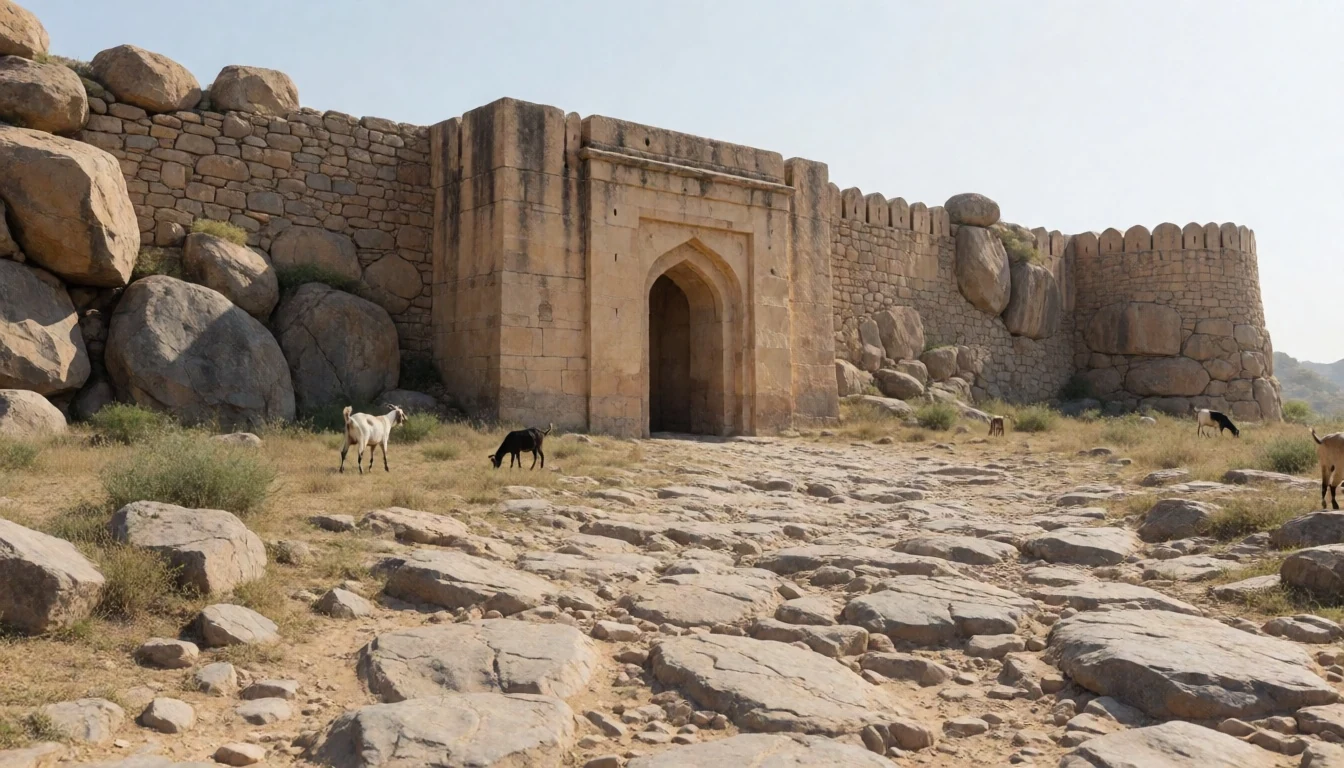
- Shahi Masjid — Inside Rohtas Fort
Shahi Masjid is a reminder that life inside the fort wasn’t purely martial. The mosque structure brings a quieter rhythm to the walk, and it’s a good stop to slow down, observe the stonework, and orient toward where worship sites sit within the fortress layout.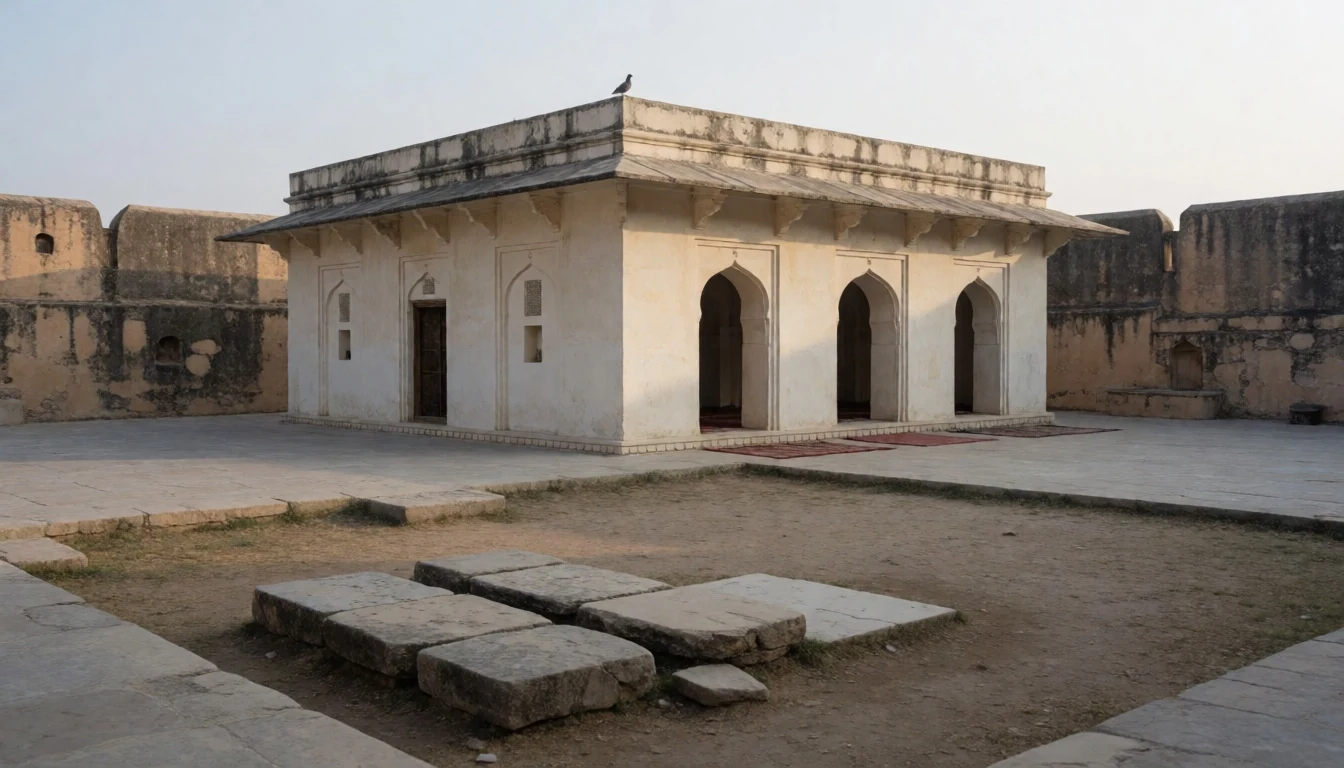
- Gurdwara Chowa Sahib (fort edge) — Northern edge of Rohtas Fort near the Talaqi gate
At the northern edge, near the fort’s Talaqi gate area, Gurdwara Chowa Sahib offers a different layer of faith connected with the living settlement around the fort. It’s a useful waypoint, especially for visitors who want to understand how people still inhabit parts of the historic space.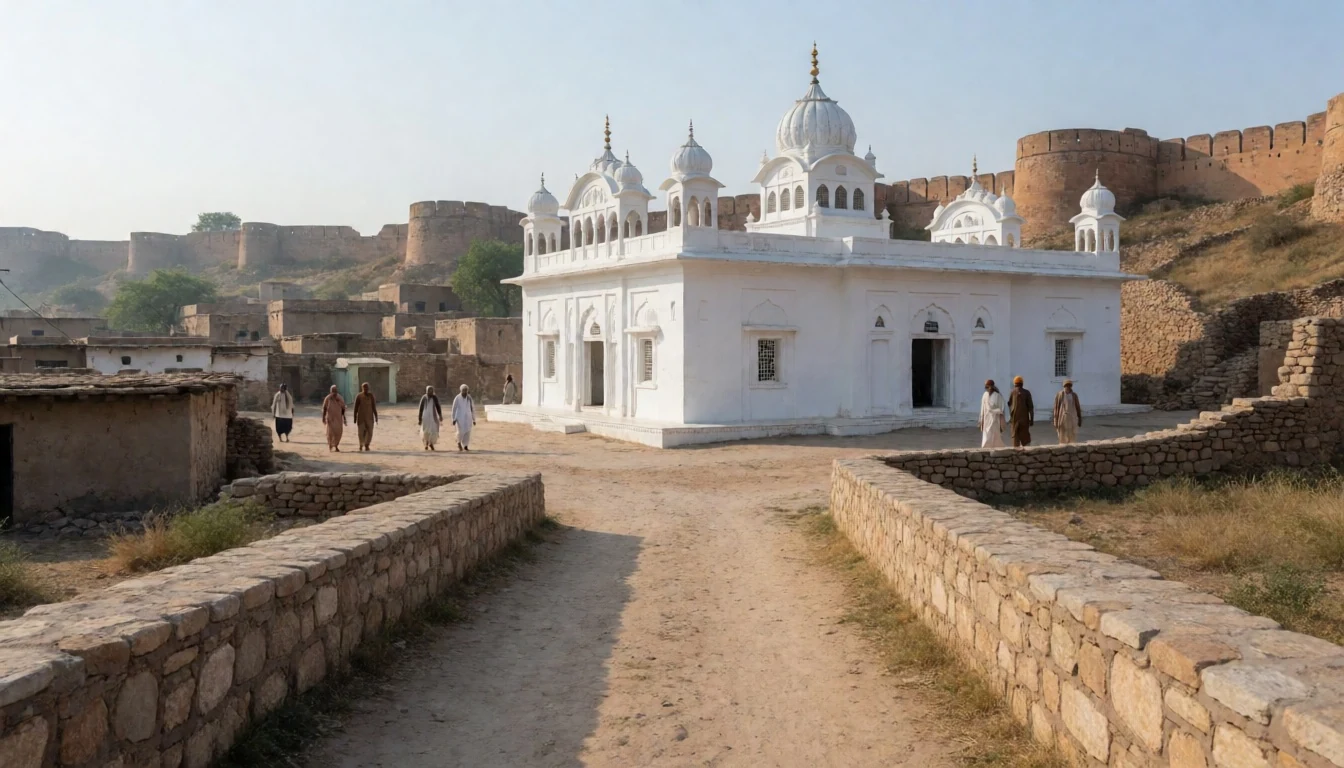
Culture
Rohtas Fort works because it’s both heritage and an active home landscape. A village sits within the fortress area, so you’ll often see everyday movement that doesn’t feel like a theme park—just real life inside old walls. That’s part of why the visit can feel more intimate than stand-alone ruins.
Religious spaces are also woven into the fort experience: Shahi Masjid is inside the complex, and Gurdwara Chowa Sahib is located near the northern edge by the Talaqi gate area. When you’re near these sites, keep your tone low and your pace unhurried. Avoid wandering into areas where people are going about prayer or routines.
Heat and dust matter in this part of Punjab, so plan around brighter afternoons and carry water. During busier travel periods, entrances to gates and viewpoints can bunch up, but queues are usually manageable—think “slow-moving crowd”, not “theme-park crush”.
Visitor etiquette: dress modestly and keep noise down near the mosque and gurdwara areas.
What to wear
At Rohtas Fort, clothing is mostly about comfort and modesty. The traditional dress in the region often draws on long, flowing garments, but on-site what matters most is what people wear now: light fabrics for the sun, long sleeves or loose layers when walking between gates, and clothing that covers shoulders and knees when approaching religious spaces.
For visitors, bring breathable trousers or a long skirt and a top that covers the upper body. Cotton or lightweight linen-style fabrics help with warm daytime temperatures, while a light layer can be useful when evenings cool down. Footwear should be practical: the fort layout means uneven stone surfaces and uphill sections, so closed shoes with grip are the safe choice.
If planning to spend time near Shahi Masjid or Gurdwara Chowa Sahib, aim for extra modesty and avoid very short or tight clothes. A head covering can be helpful around gurdwara areas, and a simple scarf makes it easy to adjust quickly.
Overall: think “sun-smart and respectful”—loose, modest layers you can walk in for several hours.
What to eat
- Street kebabs and grilled meat — Roadside food stops around Dina and the approach to Rohtas Fort
Look for local grilled kebabs from roadside stalls around the Jhelum and Dina approach roads. They’re usually cooked in front of you, and you can order with naan or simple sides while taking a break from fort walking.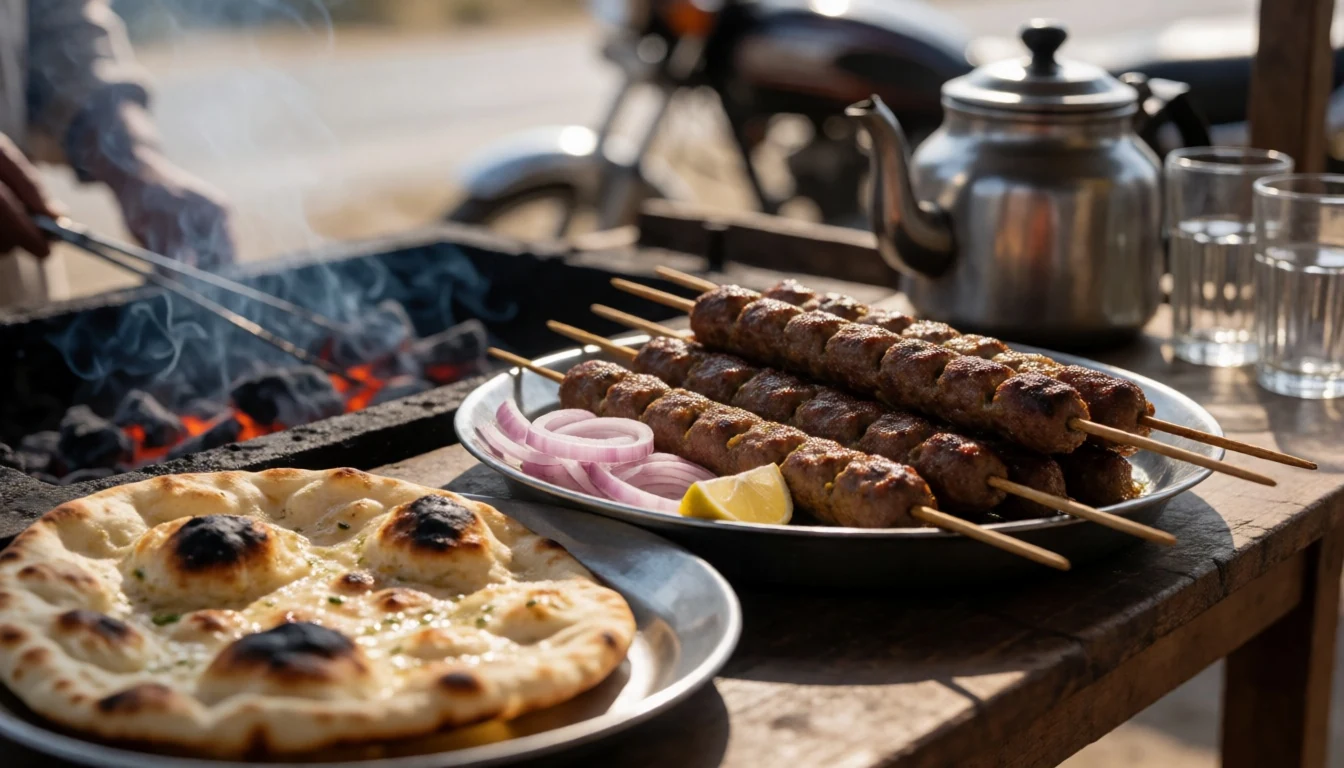
- Chapati and seasonal vegetable sabzi — Small local eateries and lunch spots in the Jhelum area
Chapati with a basic vegetable sabzi is common comfort food in Punjab-style eateries. It’s an easy, filling option when you want something warm without hunting for a specific dish name.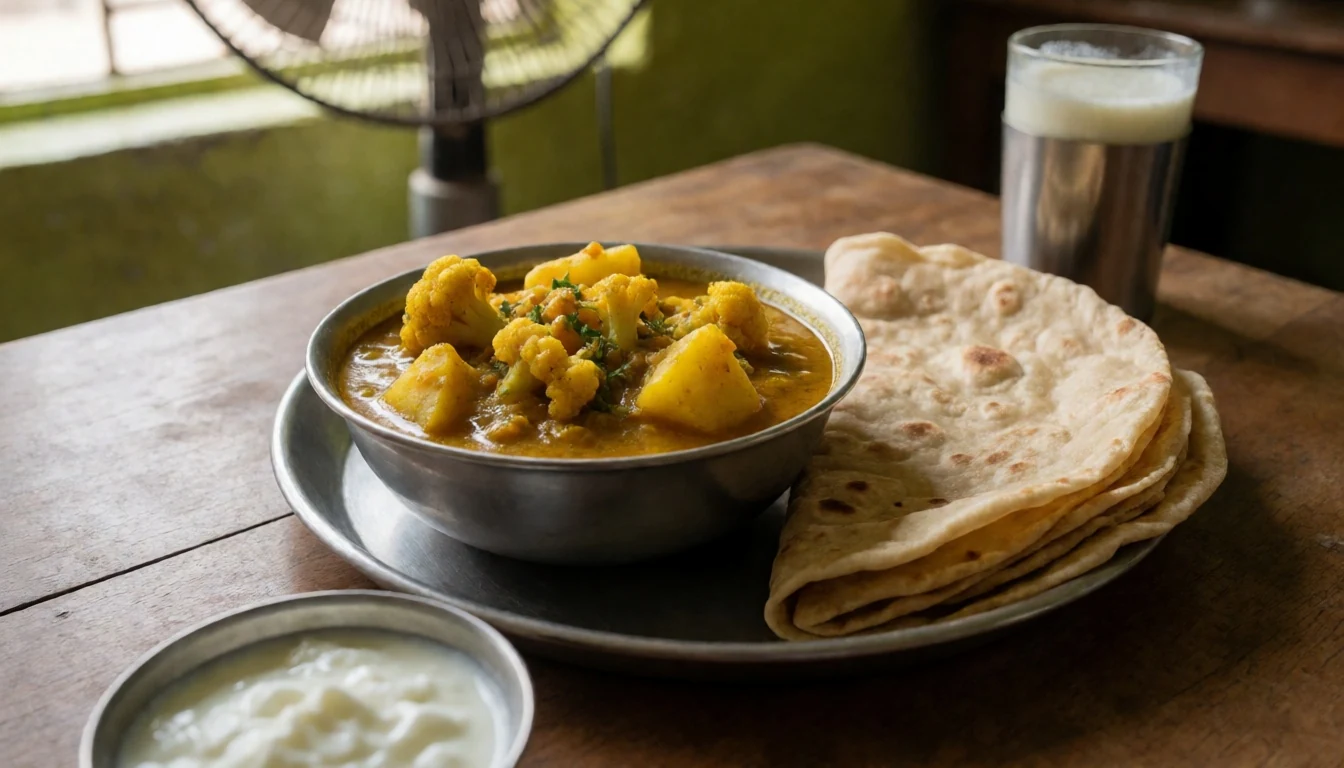
- Fresh yoghurt with simple snacks — Casual cafes and snack counters around town
Cooling yoghurt paired with light bites is a good mid-afternoon choice if the fort day runs long. It helps balance heat, and it’s often available as a quick add-on to a simple meal. - Lassi-style drinks — Markets and tea-and-snack stops in Jhelum and nearby localities
Lassi-style drinks are a go-to in hot weather, especially after walking in sun. Choose plain if it’s your first time, or ask for a fruit variation if available from local menus. - Tea with biscuits or fried snacks — Tea stalls near main bazaar areas around Jhelum
A cup of chai with biscuits or a small plate of fried snacks can work well before you head back down from the hill. It’s quick and helps refuel between gate visits and photos.
Plan it
Best time. March–April and October–November are the most comfortable months for walking and viewing, avoiding the hottest part of the year. Summer can bring strong heat, while monsoon months are wetter and can make paths dusty or slippery.
How long. 2–3
Getting there. Fly to Islamabad or Lahore, then travel by road toward Jhelum district; from there, use a local taxi or shared car for the final drive to the fort area near Dina.
Budget. mid
Tips
- Start early to make the most of softer light and cooler air on the hill
- Carry water and a hat; shaded gaps are limited along rampart walks
- Plan around gate-and-wall walking—build in time to slow down for viewpoints
- Bring some cash for small purchases around town and at roadside stops
- If visiting around religious areas, go respectfully and keep photography discreet
Etiquette
- Dress modestly near the mosque and gurdwara areas
- Avoid blocking footpaths around the living village sections
- Keep voices low and don’t photograph people in intimate moments without permission
Nearby
Sources
- Wikidata Q155188 (CC0)
- Wikipedia (Rohtas Fort, rev 1373853269) (CC BY-SA 4.0)
- Photo photos/01-rohtas-fort-jhelum-pakistan-world-heritage-site.jpg (CC BY-SA 4.0)
- Photo photos/02-kabuli-gate-rohtas-fort-by-usman-ghani.jpg (CC BY 3.0)
- Photo photos/03-oriental-scenery-fig-5.jpg (Public domain)
- Photo photos/04-another-great-bastion-of-rohtas-fort-by-usman-ghani.jpg (CC BY-SA 4.0)
- Photo photos/05-fort-rohtas.jpg (CC BY 3.0)
- Photo photos/06-sohail-gate-closeup.jpg (CC BY-SA 2.5)
- Photo photos/07-langar-khani-gate-plan.jpg (Public domain)
- Photo photos/08-shahi-masjid-rohtas-fort.jpg (CC BY-SA 4.0)
- Wikivoyage (CC BY-SA 4.0)


