Rijeka
Rijeka, Croatia
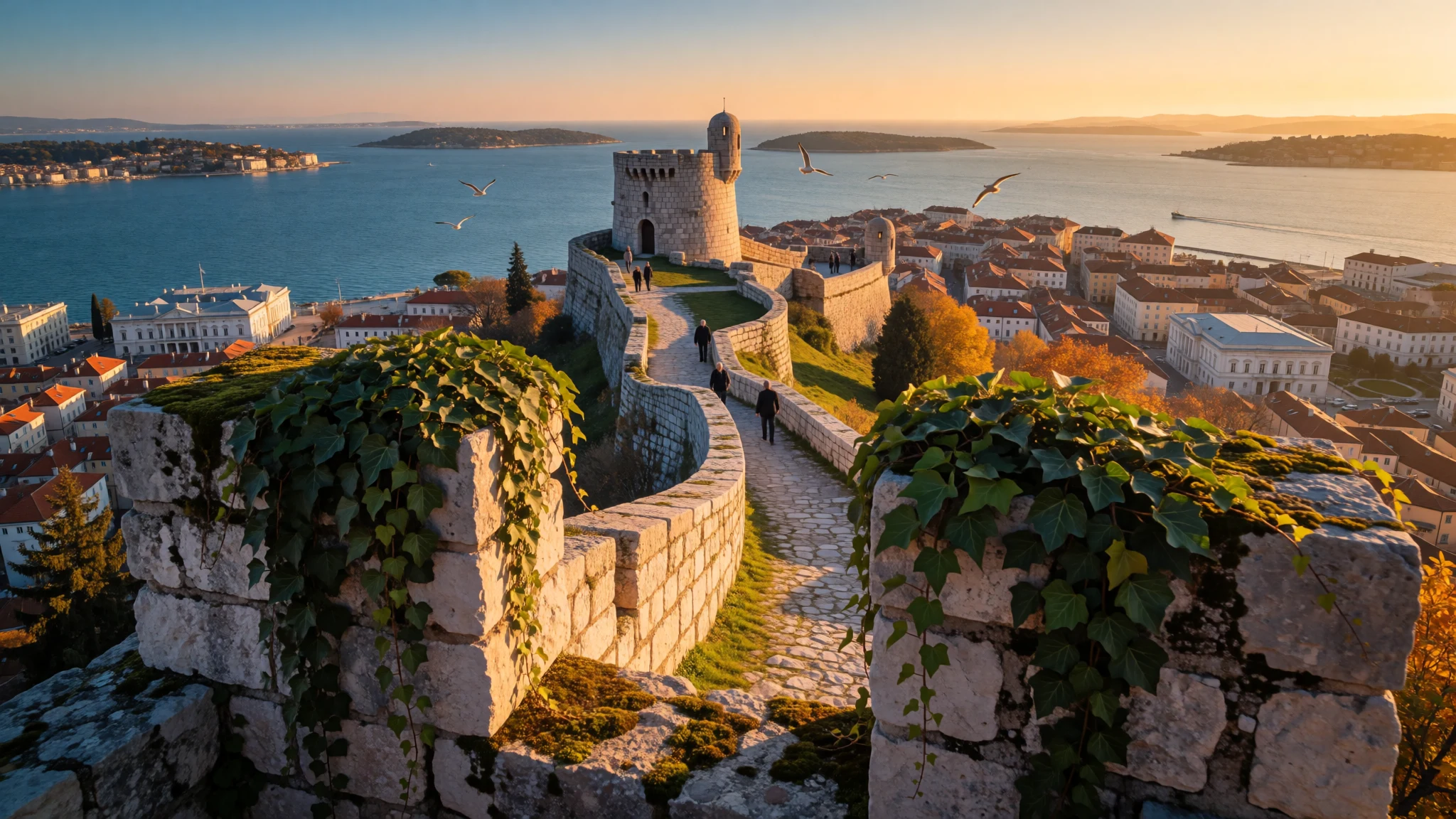
Rijeka offers a raw, maritime charm where gritty industrial heritage meets grand Austro-Hungarian architecture along the deep blue waters of Kvarner Bay.
The place
Rijeka is Croatia's third-biggest city and its main seaport, nestled on an Adriatic inlet in the Primorje-Gorski Kotar region. Home to a population of about 108,000 residents, the municipality sits where steep coastal mountains drop abruptly down to the sea, creating a dramatic landscape where winter ski slopes are visible from the marine waters. Historically shaped by its strategic value and deep-water anchorage, the city has operated under numerous flags and authorities over the centuries, developing an urban identity quite distinct from the medieval Dalmatian coast to the south. The physical layout pairs a working maritime infrastructure—including major shipyards and container terminals—with grand pedestrian promenades, neoclassical civic buildings, and subterranean wartime tunnels running right through the heart of the old town centre. As the county seat, Rijeka acts as the administrative, cultural, and educational anchor for the northern Adriatic coast, hosting the regional university alongside a robust network of theatres, galleries, and museums. While tourism gathers pace along the surrounding Kvarner riviera, Rijeka retains the authentic rhythm of a manufacturing and shipping hub rather than a curated museum city, offering travellers an unfiltered glimpse into modern coastal Croatian life.
Its story
The historical record of Rijeka stretches back across successive empires, territorial disputes, and shifting geopolitical borders that left lasting marks on its architecture, language, and civic culture. Long before modern municipal foundations, ancient settlements occupied the heights and the shoreline, featuring Celtic Tharsatica on the hill above and the seafaring Liburni tribe down in the natural harbour. Pliny the Elder provided the earliest written mention of Tarsatica in his Natural History during the first century. Throughout the medieval and modern eras, the strategic location made the port an intensely contested prize. Control passed through the hands of the Holy Roman Empire and the Habsburg monarchy, followed by short interludes under French imperial rule, Austrian administration, and dual Austro-Hungarian control. The twentieth century brought extraordinary upheaval, seeing the city function as an independent entity, an Italian regency, and a free state before shifting into Italian hands during the interwar period. Following World War II and the subsequent decades within the Socialist Federal Republic of Yugoslavia, the city expanded its heavy industry, shipbuilding, and port capacity before ultimately becoming a cornerstone of independent Croatia. Each governing administration contributed distinct layers to the urban fabric, creating a cosmopolitan patchwork visible in the grand facades lining the central avenues and the complex linguistic heritage of the local population.
What to see
- Trsat Castle — Trsat hill
Perched on a strategic hill far above the shoreline, this historic fortress dominates the city layout and offers sweeping panoramic viewpoints across Kvarner Bay and the surrounding islands. Originally noted as a parochial centre centuries ago, the elevated stone ramparts provide an essential vantage point for understanding how the steep coastal geography shapes the entire regional settlement pattern. - City Tower — Korzo
Acting as the primary architectural symbol of the urban centre, this historic round gatehouse structure marks the formal access point into the old fortified settlement. Today, the landmark anchors the central pedestrian promenade of Korzo, functioning as the most popular landmark and natural meeting place for local residents before they begin their afternoon strolls. - Our Lady of Trsat Sanctuary — Trsat
Representing the largest and most significant centre of pilgrimage in western Croatia, this sacred complex draws continuous streams of devout believers throughout the calendar year. Pilgrims gather in particularly high numbers during major religious dates, most notably for the celebrations surrounding the Assumption of Mary holiday, continuing a centuries-old spiritual tradition on the heights. - Rijeka Tunnel — Old Town
Dug directly through the rock beneath the historic old town, this subterranean passage network offers visitors a fascinating look into twentieth-century civil engineering and civil defence. The main accessible section features an entrance situated right next to the cathedral and runs underneath the urban blocks to emerge near the courtyard of a local elementary school. - Torpedo Launching Ramp — Coastal industrial zone
Standing as a stark monument to industrial history by the shoreline, this derelict structure dates back to the 1930s when the city housed an advanced maritime weapons manufacturing facility. The weathered concrete ramp serves as a tangible reminder of the heavy engineering heritage that powered the local economy through past centuries of rapid technological change.
Culture
The cultural fabric of the city reflects its complex history at the crossroads of Slavic, Italian, and Central European influences. Linguistically, alongside standard Croatian and Italian, many residents speak Fiuman, a distinctive Venetian dialect that historically functioned as the primary lingua franca among the multi-ethnic seafaring community. In several surrounding municipal suburbs, the autochthonous population continues to preserve Chakavian dialects of Croatian. The social calendar centres heavily around the internationally recognised Rijeka Carnival, established in its modern form in the early nineteen-eighties and held annually before Lent between late January and early March. This major festival draws thousands of participants and spectators into the streets for elaborate masquerades, satirical performances, and vibrant parades that transform the urban core. Throughout the year, residents maintain a relaxed café culture along the main pedestrian thoroughfares, blending Mediterranean sociability with an industrious maritime work ethic. When visiting local churches or religious sanctuaries, dress modestly with covered shoulders and knees to respect ongoing places of worship.
What to wear
Traditional attire in the coastal Kvarner region incorporates elements of both alpine wool textiles and light Mediterranean linens, reflecting the striking climate contrasts between the nearby mountains and the sea. Historic garments featured embroidered vests, heavy wool skirts, and intricate lace work passed down through generations, though these are now preserved primarily for cultural festivals, folklore exhibitions, and the annual carnival parades rather than daily wear. Today, local residents dress in a practical, contemporary European style suited to an active working port and university town. Jeans, durable footwear, layered jackets for unpredictable coastal winds, and smart-casual wear dominate the streets along the Korzo. For visitors exploring the city, comfort is paramount. Pack sturdy walking shoes to handle the steep stairways connecting upper neighbourhoods to the harbour, a windproof jacket for sudden weather shifts off Kvarner Bay, and lighter breathable clothing if you plan to explore the pebble beaches and coastal promenades during the warmer summer months.
What to eat
- Adriatic Seafood Specialties — Local seaside restaurants and fish markets
Fresh fish, white-meat catch of the day, and coastal crustaceans sourced directly from Kvarner Bay, prepared simply with local olive oil, garlic, and parsley. - Jota — Traditional city taverns and neighbourhood eateries
A hearty traditional stew combining beans, sauerkraut, potatoes, dried pork, and garlic, offering warmth during cooler winter days. - Black Risotto — Waterfront dining rooms along the Riva
A classic coastal rice dish coloured and flavoured with cuttlefish ink, garlic, red wine, and olive oil. - Fuži with Truffles — Regional inns and inland culinary taverns
Traditional quill-shaped homemade pasta served in a rich sauce featuring locally foraged truffles from the nearby forested interior. - Kvarner Scampi — Portside restaurants and fish taverns
Renowned sweet-tasting local prawns caught in the deep waters of the bay, typically prepared buzara-style in a wine, tomato, and breadcrumb broth.
Plan it
Best time. May to September offers warm weather for coastal swimming and outdoor cafes, while late January to early March brings the famous Rijeka Carnival.
How long. 2–3
Getting there. Fly into Rijeka Airport on Krk Island or Zagreb Airport, then complete the journey via direct regional bus or train connections into the central railway station.
Budget. mid
Tips
- Wear comfortable flat shoes to navigate the steep stairways and sloped streets connecting the upper hills to the harbour.
- Carry a mix of cash and cards for smaller neighbourhood taverns and market stalls.
- Check local transport timetables in advance if travelling to surrounding hill villages or island ferries.
- Book accommodation well in advance if visiting during the peak weeks of the winter carnival.
Etiquette
- Dress modestly with covered shoulders and knees when entering religious sanctuaries and pilgrimage sites.
- Greet shopkeepers and service staff politely when entering local establishments.
- Respect quiet hours in residential apartment buildings and shared residential courtyards.
Nearby
Sources
- Wikidata Q1647 (CC0)
- Wikipedia (rev 1384103341) (CC BY-SA 4.0)
- Wikivoyage (rev 5415798) (CC BY-SA 4.0)
- Photo photos/01-rijeka-view-2.jpg (Public domain)
- Photo photos/02-rijeka-riva-promenade-aerial.jpg (CC BY-SA 4.0)
- Photo photos/03-nationaltheaterrijekahnk.jpg (CC BY-SA 4.0)
- Photo photos/04-korzodayrijeka.jpg (CC BY-SA 4.0)
- Photo photos/05-rijeka081.jpg (CC BY-SA 4.0)
- Photo photos/06-trsat-seagull.jpg (CC BY-SA 4.0)
- Photo photos/07-rijekacroatiaport.png (CC BY-SA 4.0)
- Photo photos/08-rijekaopatijax.jpg (CC BY-SA 4.0)


