Rhodes
Rhodes, Greece
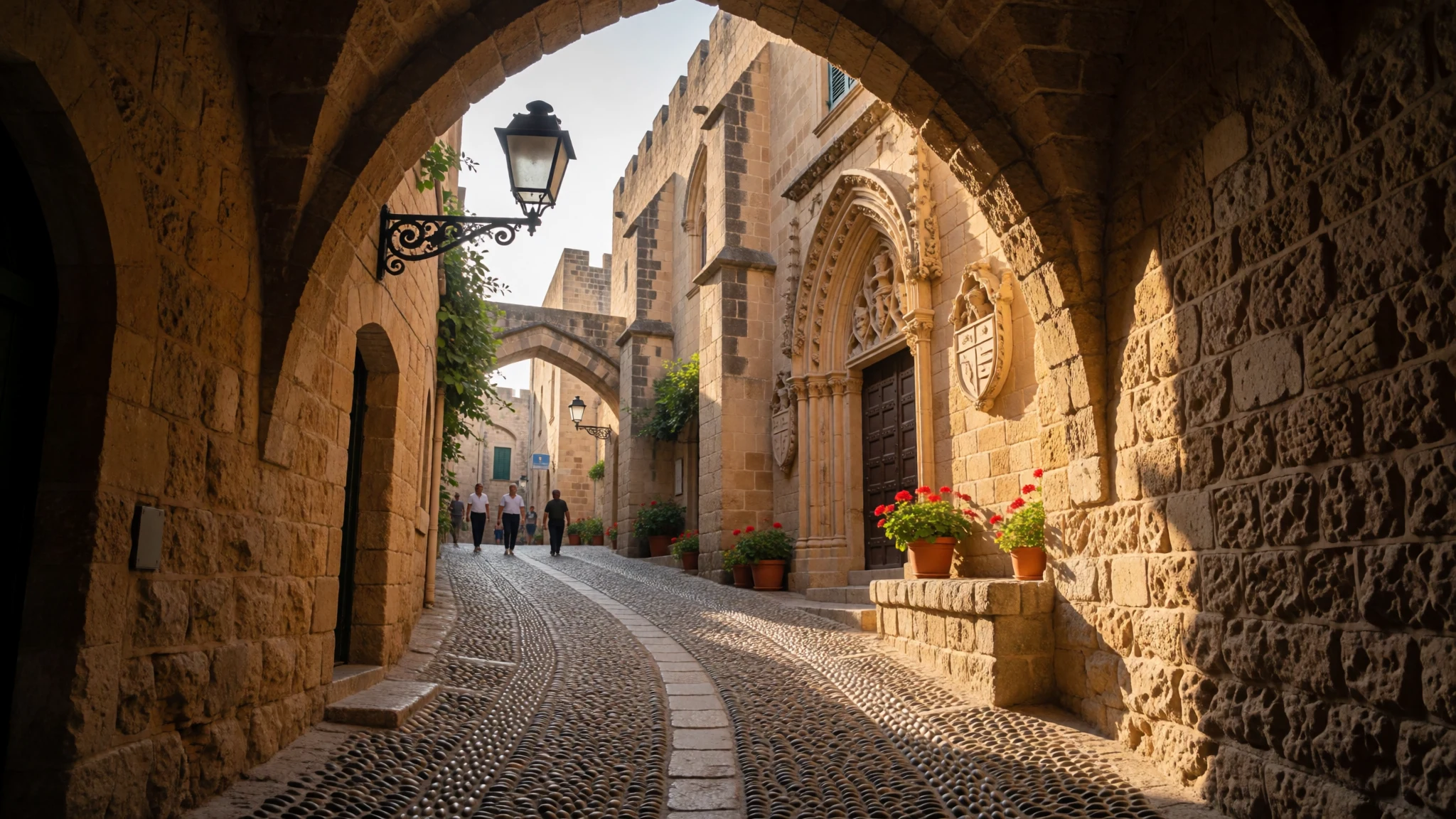
Rhodes pairs a knights' walled town and a Greek acropolis with long beaches and a loud summer coast.
The place
Rhodes (Ρόδος) lies in the south-east Aegean, south-east of Athens and north-east of Crete, and it is the island the Dodecanese has long treated as its capital. It is the largest of that group and the ninth island in the Mediterranean by area. The population is 127613. The ground rises to 1215 metres, so the interior is a ridge of pines and villages rather than a flat ribbon of sand. Pine slopes drop to bays on both coasts. The principal town, also called Rhodes, occupies the northern point: a medieval walled quarter beside a modern harbour and a resort coast that runs away to the west and east. Old nicknames still circulate. Island of the Sun recalls Helios, the patron the island claimed in antiquity. Pearl Island is the softer compliment. Island of the Knights remembers the Knights of Saint John, who governed here from 1310 until 1522 and left the walls that still define the old town. The Colossus, a great figure of Helios, has gone; the knightly streets have not. Summer bends the north of the island around visitors. Faliraki in particular is built for late nights and strong drink, and it can feel rough. Lindos, the southern castles and the sand spit at Prasonisi show a quieter Rhodes, windier and less packaged.
Its story
People have lived on Rhodes from the late Neolithic onward. The clearest early trace is a cave at Kalythies, on the north-eastern side, where those first inhabitants left their remains. Long before that, in the Late Pleistocene, a dwarf elephant species with no modern name lived on the same ground. Town life gathered toward the end of the Early Bronze Age. Asomatos is the earliest urban centre identified so far, and among its pottery are vessels shaped like ducks, evidence of ties to Cyprus and to other Aegean shores. Around 1600 BCE Minoan Crete kept an outpost at Tiranda on the north-western shore, most plausibly to serve passing trade, though the city of Rhodes was founded only in 408 BCE, when Lindos, Ialysos and Kameiros united. Mycenaean Greeks took root after that Cretan presence. Later rulers recorded for the island include the Achaemenid Empire, the Delian League, the League of Corinth, Rome and Byzantium. In the medieval age the Knights of Saint John of Jerusalem made the town a fortress-capital, and the walls they built are still the face of the old city. Ottoman government came after the knights. The Kingdom of Italy held the Dodecanese later still, which is why Italian churches and family lines remain on a Greek island. The Colossus of Rhodes, a figure of Helios that ancient writers set among the world's wonders, has not survived; the knights' masonry and the older Greek acropolis have. Rhodes today is that Greek island and that ancient polis at once.
What to see
- Old Town of Rhodes — Rhodes Town, northern tip
The walled quarter at the northern tip of Rhodes is the knights' city: medieval masonry, a clock tower over the roofs, and the Palace of the Grand Masters inside the circuit. The longer visit belongs in the back lanes and in the Archaeological Museum, which holds the island's older Greek finds. Main streets fill when a cruise ship is alongside.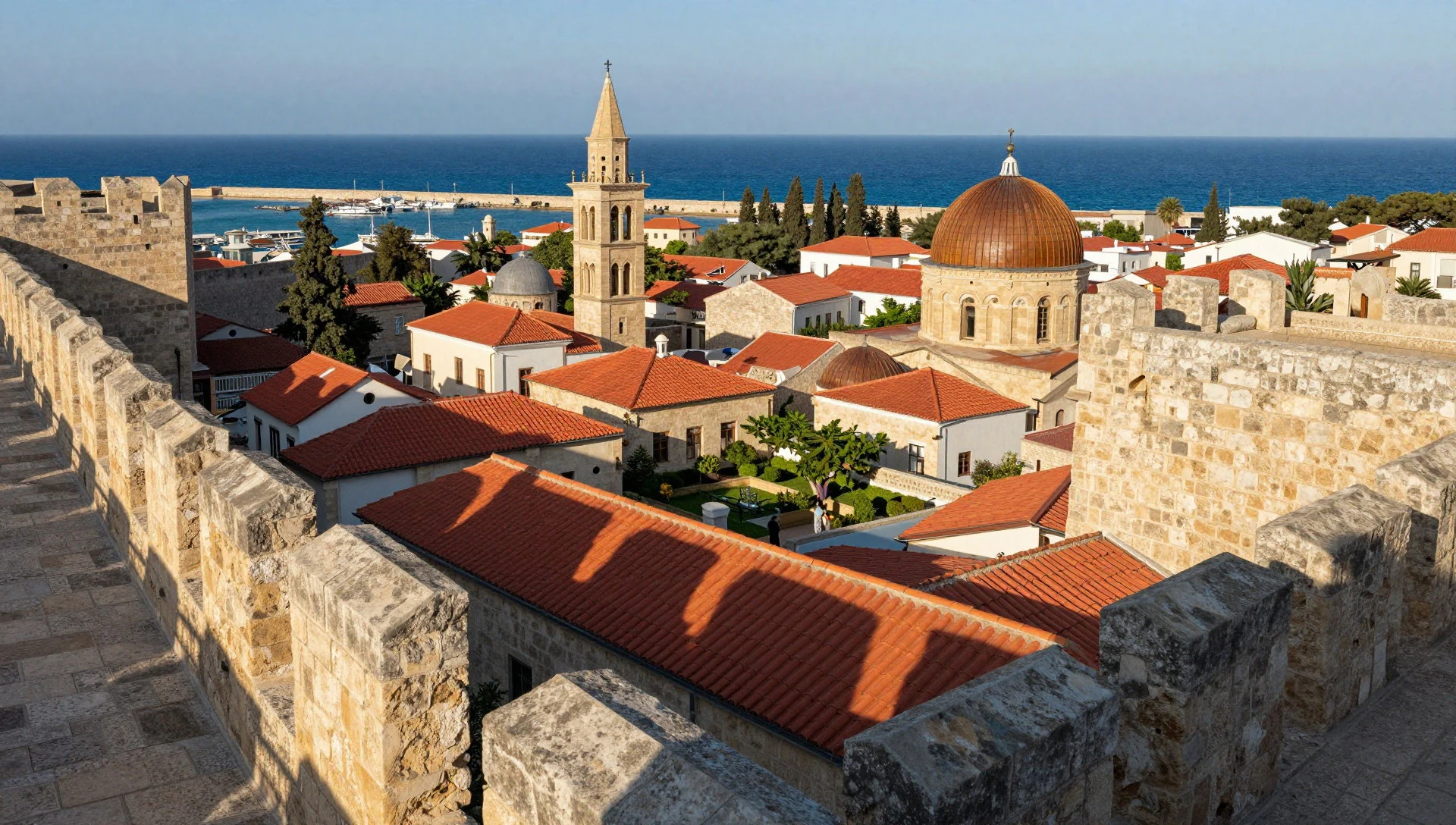
- Acropolis of Rhodes — Hill west of Rhodes Town
West of the modern town, the Acropolis of Rhodes keeps the ruins of a temple of Apollo. What stands is fragmentary: column stumps, a levelled terrace, and an open hill looking back over the city and the strait. The site is the Greek predecessor of the medieval town below, and it asks for nothing more than a slow walk.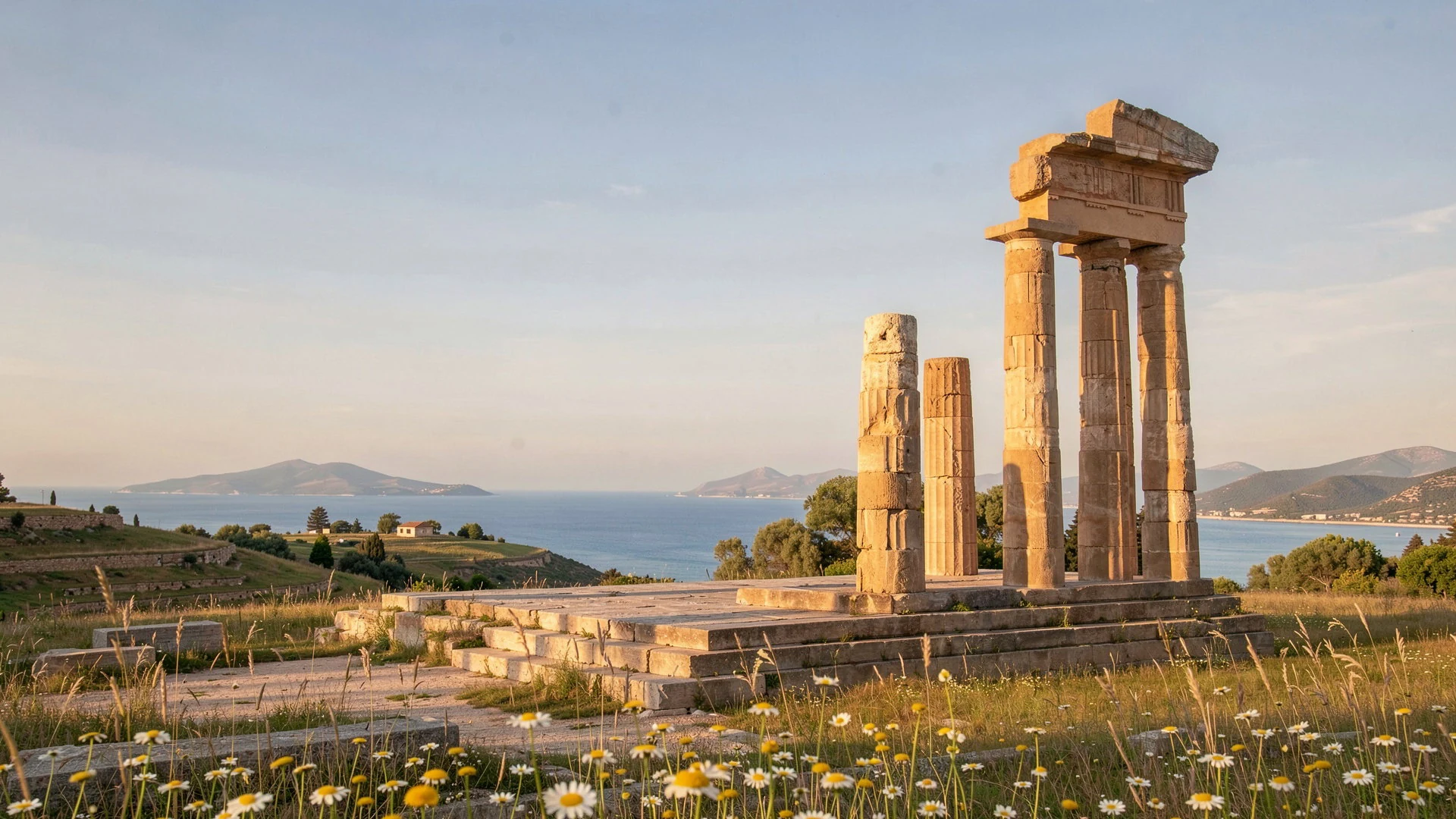
- Lindos — East coast
Lindos, on the east coast of Rhodes, is a white village piled under a rock acropolis. The Castle of the Knights occupies the summit, with small beaches under the cliff. The climb is steep, shadeless and crowded with day-trippers from mid-morning onward. Early or late in the day, once the coaches thin out, the fortress is stone and wind again.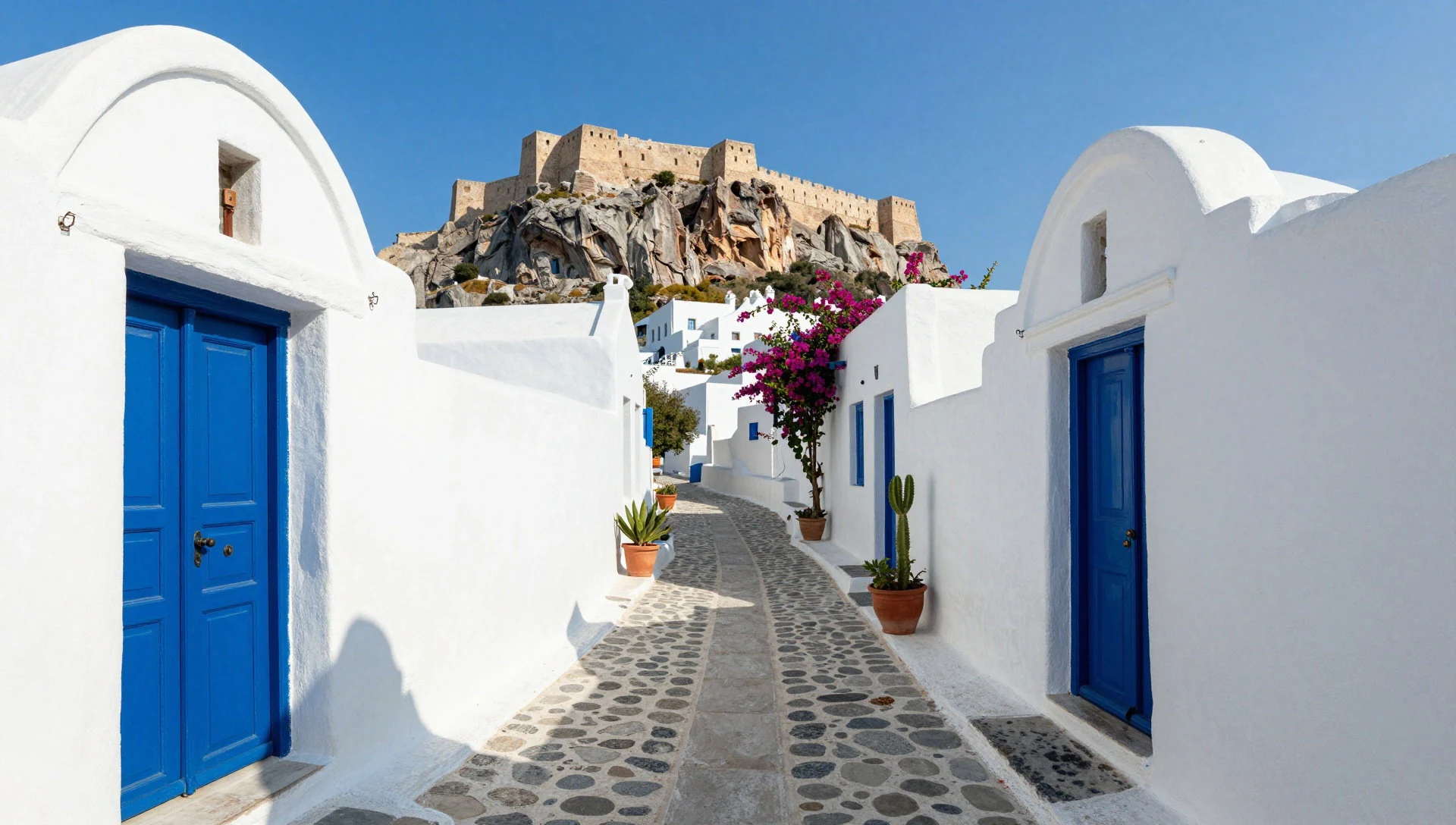
- Asklipio — Inland from Kiotari
Asklipio stands inland from Kiotari, in the south-east of Rhodes. Its small church holds images and objects that follow the local pursuit of healing, from the ancient cult of Asklepios, child of Apollo and the Greeks' patron of medicine, down to a village midwife and a nurse. Visitors who speak softly, and who leave flash photography unused, fit the place.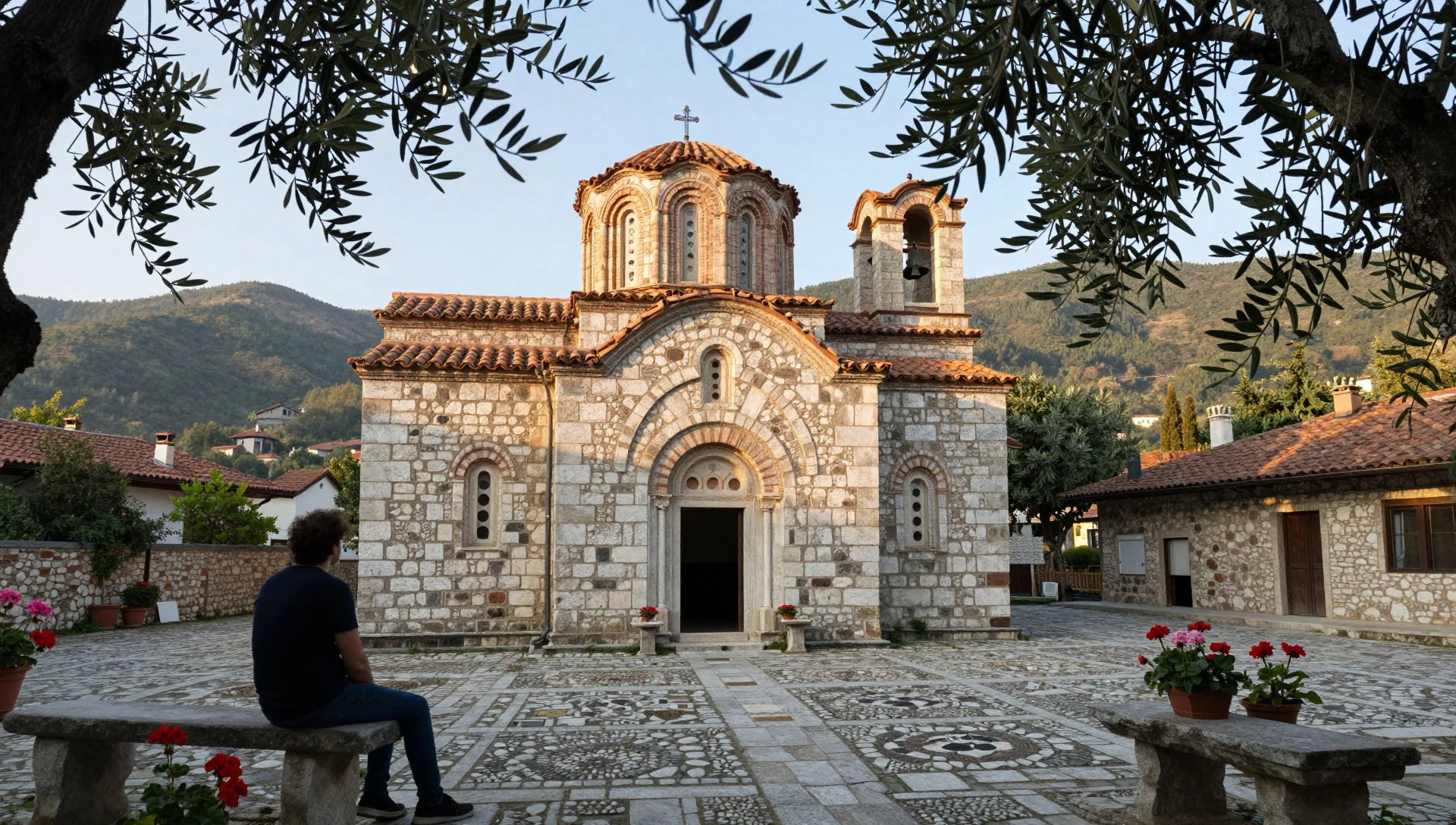
- Cape Prasonisi — Southern tip
Cape Prasonisi is the southern tip of Rhodes, a beach peninsula joined to the island by a tongue of sand, with sea on both sides. Wind sports use the breeze. The bar itself is soft: an ordinary hire car belongs on firm ground, and the crossing is for walkers or for a vehicle built to cross sand. Shade is scarce and water is worth carrying.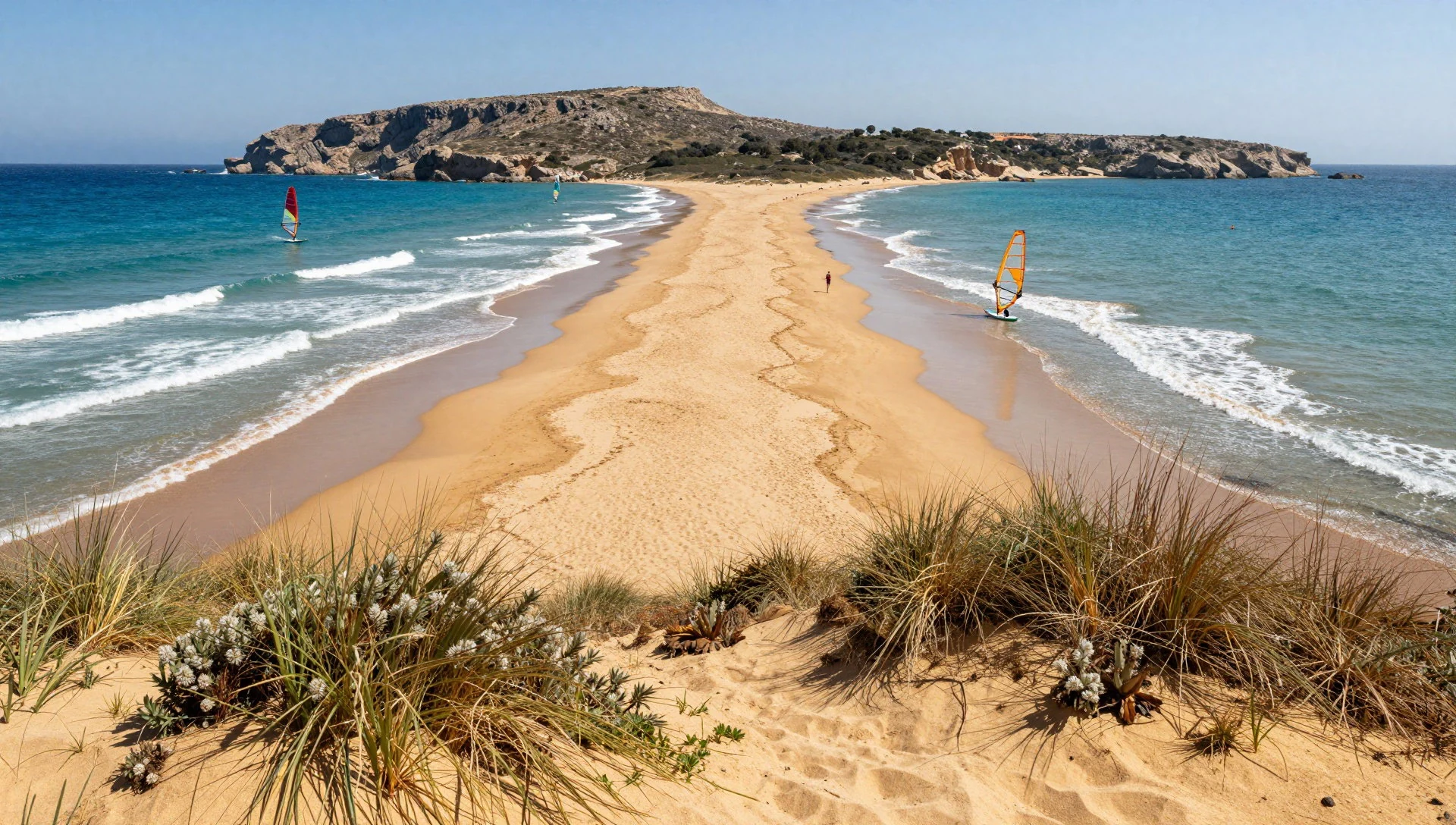
Culture
On Rhodes the leading faith is Greek Orthodox. The Metropolis of Rhodes has its cathedral seat on the island. In villages set back from the resort front, the year still turns on parish festivals, baptisms and Easter, with the church as the public room of the community. A Latin Catholic minority persists, largely families who kept Italian roots after the years of Italian rule, and the Catholic archdiocese still ministers to them. A Turkish Muslim community lives here too, among them people whose forebears in Crete and the Dodecanese turned to Islam under the Ottomans. They stayed when Muslim families in northern Greece had to leave, because Italy, not the Greek state, was then administering the Dodecanese. The result in the town is a quiet proximity: Orthodox parish, Catholic church and mosque within one set of walls. Daily manners split along the same line as the map. On the northern coast, English is the language of menus and the night is commercial. Inland, afternoons still slow down, and Sunday belongs to liturgy and a long family table. In a church or monastery on Rhodes, cover your shoulders and knees, and keep your phone lowered while a service is underway.
What to wear
Clothes on Rhodes depend on whether the day is a festival, a beach or a church. Festival dress, still worn for dance and saint's days, uses cotton, linen and, in winter, wool: embroidered shirts, waistcoats, full skirts or dark trousers, and a woman's headscarf. Woven bands and embroidery are the textile note, practical Aegean work rather than court silk. Most people, most days, dress as they do in any warm European city — jeans, light shirts, trainers — and from late spring the resort coast lives in swimwear, sarongs and sandals. Evenings in the town of Rhodes sharpen that only slightly: a pressed shirt or a simple dress, and shoes that can handle polished medieval stone. A visitor's bag should cover sun, sea and sacred buildings. Linen, a hat and swimwear belong on the beaches; a shirt and a knee-length layer are what monasteries, including Filerimos, and parish churches expect on top of beach clothes. The lanes of the old town and the acropolis path at Lindos punish thin soles, so footwear needs a grip. At Prasonisi the wind can chill a bright day, and a light layer is worth packing beside the towel.
What to eat
- Pitaroudia — Village tavernas in the south
Pitaroudia are chickpea fritters, mixed with onion and herbs and fried in small rounds, and they are the Rhodian plate to seek out before defaulting to a generic grill. Village tavernas and home-style eateries in the south of Rhodes serve them with lemon, as a first dish ahead of fish.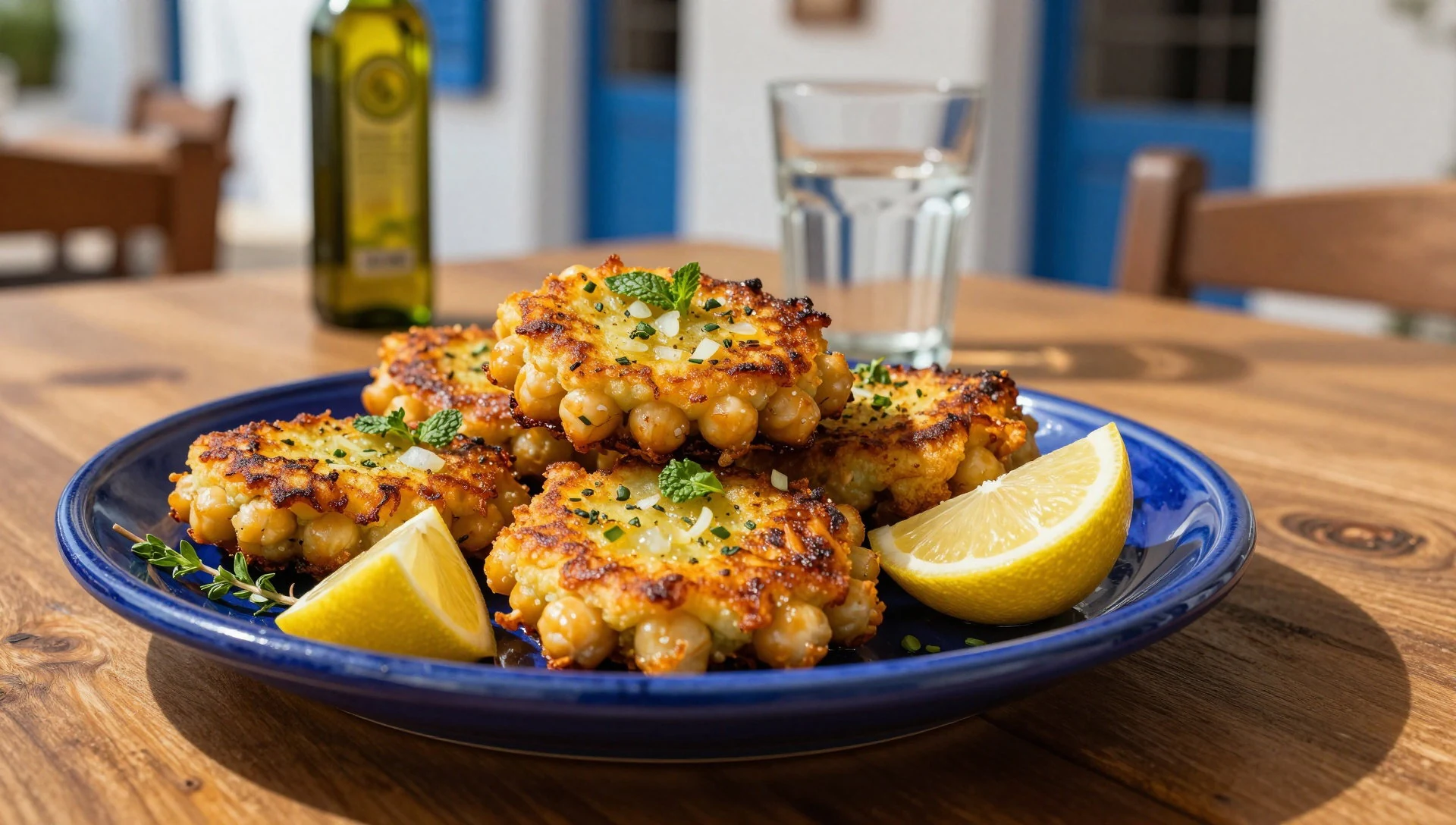
- Grilled fish and octopus — Harbour tavernas and small east-coast ports
Harbour tavernas on Rhodes grill the day's fish, squid and octopus with olive oil, oregano and lemon, especially along the town waterfront and in the small ports toward Lindos. A counter of whole fish is a better sign than a photograph on a board.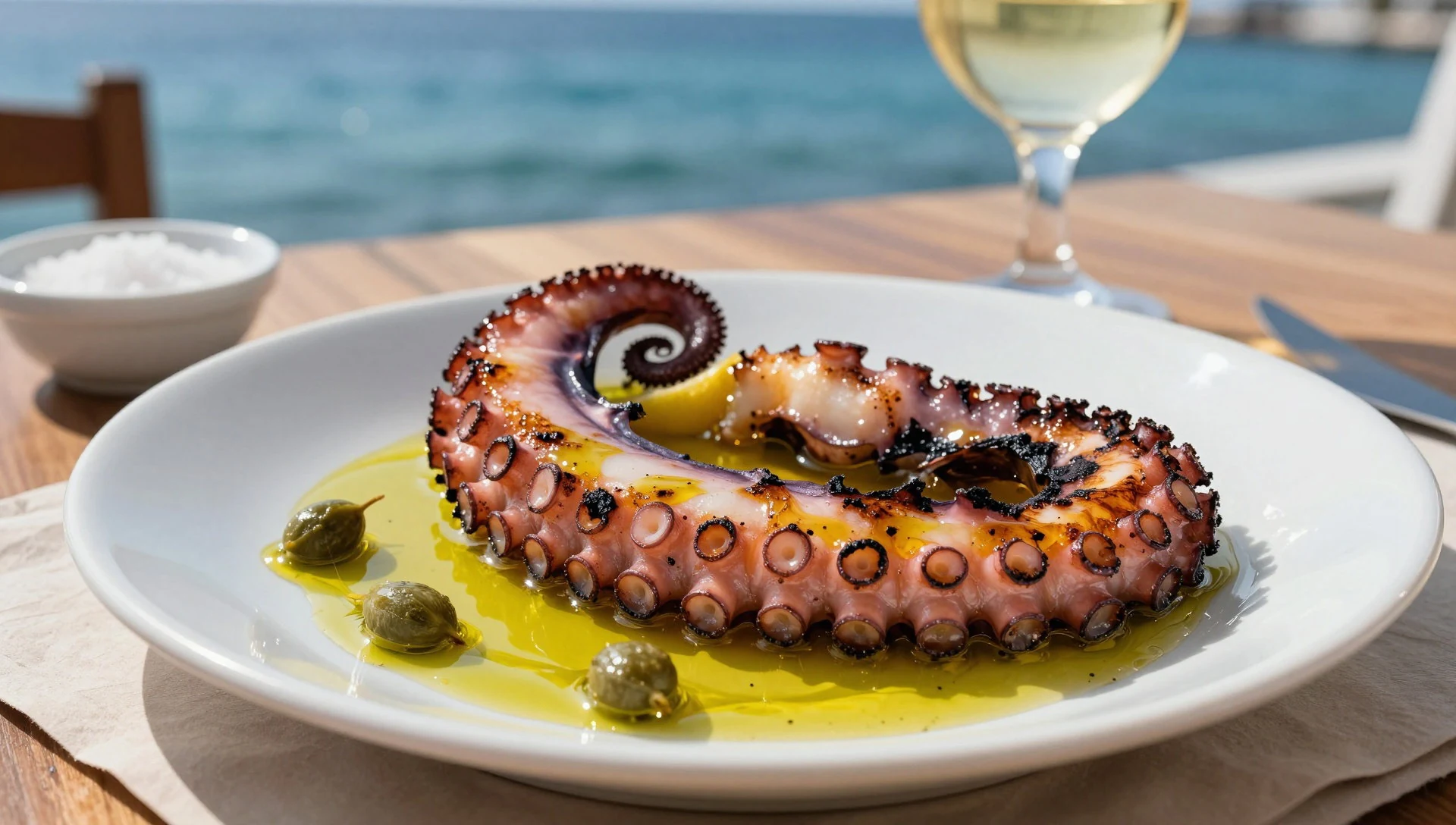
- Horiatiki — Neighbourhood eateries away from the resort strip
Horiatiki, the village salad of tomato, cucumber, onion, olives, capers and a thick piece of feta, sits on taverna tables across Rhodes from late spring into autumn. With bread it is a meal, not a side. Neighbourhood eateries off the strip serve the riper version. - Melekouni — Bakeries in the old town and village high streets
Melekouni is a compact sweet of sesame and thyme honey, pressed into squares, and it is particular to Rhodes rather than a sweet found on every Greek island. Bakeries and sweet shops in the old town, and along village high streets, sell it by the piece. - Souma and ouzo — Village bars and family-run eateries
Souma, a clear grape spirit, is drunk slowly with meze on Rhodes, and ouzo is treated the same way. Interior bars and family-run eateries offer both, with Mythos as the everyday beer. Municipal tap water is fine to drink, and a glass with food is normal. - Rhodian wine — Neighbourhood tavernas
Carafes of Rhodian white and red appear in ordinary tavernas on Rhodes, poured beside grilled fish or chickpea fritters. The house wine is the one to accept. Neighbourhood eateries in the town and in the villages are the setting for it, without any need for a formal tasting.
Plan it
Best time. April to October is when flights from across Europe serve Rhodes, and May, June, September and October fall inside that window. Winter seats are usually the Athens or Thessaloniki services inside Greece.
How long. four or five
Getting there. Most arrivals use Diagoras airport, code RHO, set along the western shore of Rhodes, with a bus or taxi completing the ride into town. Ferries tie the island to Piraeus, to Symi and Tilos, and to Marmaris, Bodrum, Fethiye and Datça. Liners berth in the working port on the old quarter's eastern side.
Budget. mid
Tips
- Be at the old-town gates early, before cruise passengers fill the main streets.
- In Faliraki after dark, stay aware of drink and company; disorder is policed firmly.
- Do not take a standard hire car onto the sand tongue at Prasonisi.
- Refill a bottle from the tap, which is safe to drink.
- Check http://www.rhodes.gr/ for official notices before trusting a forum.
Etiquette
- Cover shoulders and knees before entering a church, a monastery or the chapel at Filerimos.
- Ask before photographing people at prayer or in the Turkish and Catholic quarters.
- Keep swimwear on the beach and add a layer for the old town and for village shops.
- Speak quietly inside Asklipio and in any church where a service is going on.
Nearby
Sources
- Wikidata Q43048 (CC0)
- Wikipedia (rev 1382827141) (CC BY-SA 4.0)
- Wikivoyage (rev 5304787) (CC BY-SA 4.0)
- Photo photos/01-rhodosstadtzentrum5.jpg (CC BY-SA 2.5)
- Photo photos/02-2011-dimos-rodou.png (CC BY 3.0)
- Photo photos/03-lindos-rhodes-1.jpg (CC0 1.0)
- Photo photos/04-carnelian-necklace-as-7702.jpg (CC BY 3.0)
- Photo photos/05-warrior-head-vases-ashmolean-camirus-rhodes-590-575-bc.jpg (CC BY-SA 4.0)
- Photo photos/06-apollon-temple-acropolis-rhodes.jpg (CC0 1.0)
- Photo photos/07-colosse-de-rhodes-barclay.jpg (Public domain)
- Photo photos/08-rhodos-ritterkastell-bei-lindos.jpg (CC BY 3.0)


