Raja Ampat Islands
Raja Ampat Islands, Indonesia
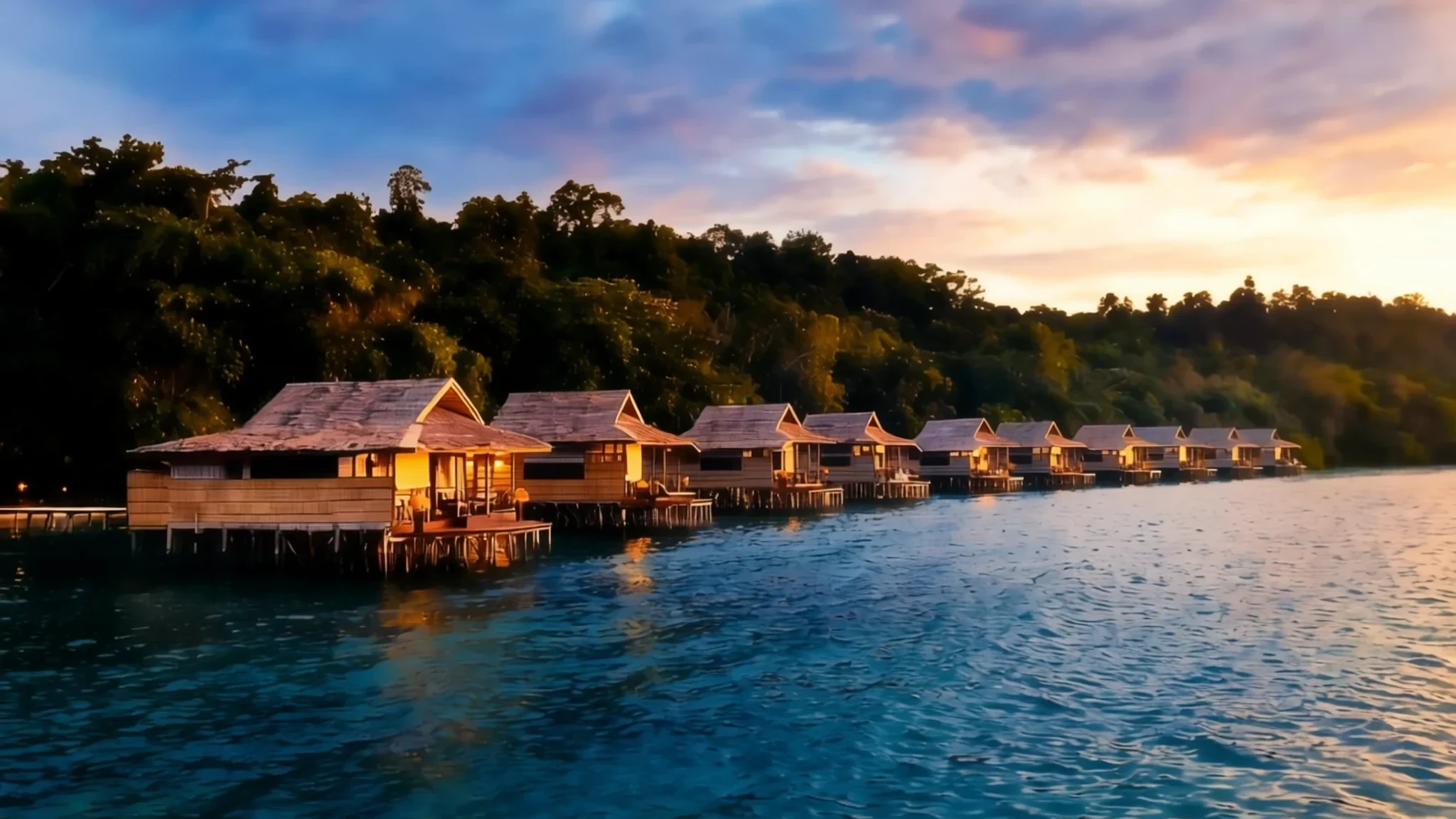
Journey to the Raja Ampat Islands for the most biodiverse marine ecosystems on earth, where towering karst islets rise above legendary coral reefs.
The place
Raja Ampat translates to the Four Kings, an expansive archipelago situated off the northwest tip of the Bird's Head Peninsula on the island of New Guinea in Indonesia's Southwest Papua province. Lying just south of the equator, the territory comprises over a thousand small islands, cays, and shoals centered around the primary islands of Misool, Salawati, Batanta, and Waigeo, alongside smaller landmasses such as Kofiau. Geographically, these waters form a vital core of the Coral Triangle, a vast marine expanse celebrated globally for possessing the richest diversity of marine life anywhere on the planet. Beneath the surface, the warm waters shelter countless marine species, ranging from microscopic cleaner shrimp and camouflaged pygmy seahorses to large cetaceans and migrating whale sharks. Most of the islands form the Raja Ampat Regency, encompassing a sprawling maritime and terrestrial domain where local communities maintain deep connections to the sea. Visitors arrive to experience remote tropical wildernesses where logistics require patience, infrastructure outside the main settlement is basic, and electricity is typically supplied by local generators during evening hours. The sheer isolation and ecological richness of the regency mean that a trip here demands careful preparation, respect for fragile marine habitats, and an adventurous spirit.
Its story
The history of the Raja Ampat Islands stretches back tens of thousands of years, anchored by early human visitation and ancient geological shifts. Archaeological excavations at sites like Mololo Cave reveal that prehistoric inhabitants hunted native forest animals and processed tree resins long before modern trade routes reached the region. During these ancient eras, Misool and Salawati were physically joined to the mainland of New Guinea, while Waigeo and Batanta formed a unified landmass called Waitanta. Several thousand years ago, pottery-making communities migrated into the archipelago, bringing Austronesian languages and new cultural traditions that shaped the coastal settlements. Local mythology preserves the origins of the archipelago's name through traditional tales of a woman who discovered seven mysterious eggs in the forest. According to legend, these eggs hatched into royal figures who established the ancient kingdoms of the islands, including Waigeo, Salawati, Sailolof, Misool, and Waigama, while others transformed into spiritual entities or sacred stones. These traditional domains maintained maritime trade links with regional sultanates such as Tidore, integrating the remote islands into wider Southeast Asian networks of commerce, tribute, and cultural exchange long before European vessels entered these remote equatorial waters.
What to see
- Pianemo — Misool District
Pianemo offers one of the most iconic viewpoints in the Raja Ampat Islands, where a wooden staircase climbs a steep cliff to reveal a stunning panorama of emerald-green karst pinnacles scattered across luminous turquoise lagoons. Visitors frequently spend hours here taking in the dramatic geological formations.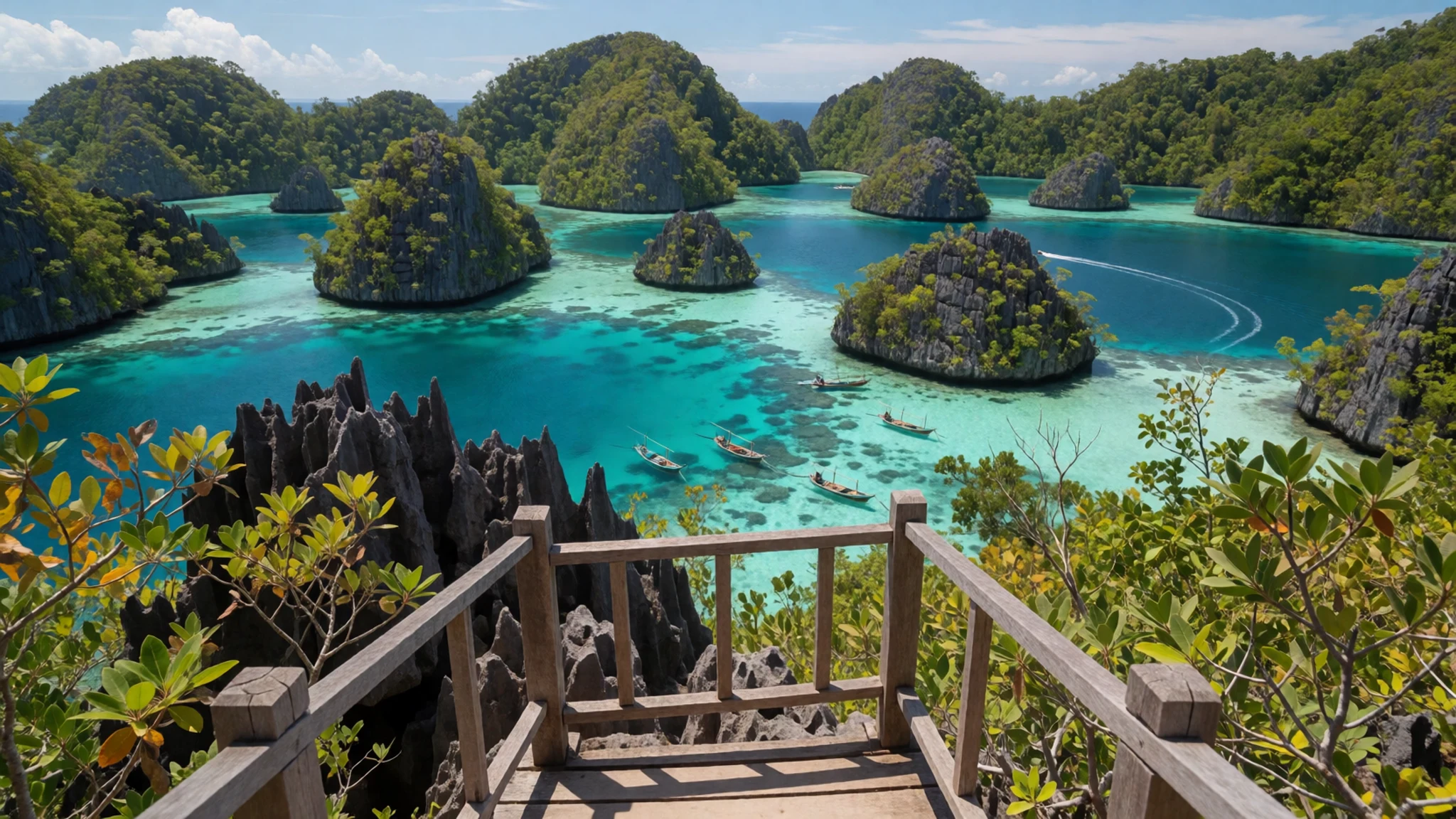
- Wayag — Northern Raja Ampat
Wayag stands as the crown jewel and most famous visual icon of the Raja Ampat Islands, featuring a labyrinth of steep, mushroom-shaped limestone islets rising directly out of crystal-clear ocean waters. Climbing the highest peak requires careful footing on sharp rock, rewarding hikers with unforgettable vistas.
- Misool — Southern Raja Ampat
Misool is located in the southern sector of the Raja Ampat Islands and is celebrated for some of the most spectacular wall diving and pristine coral gardens in the entire region. Beyond the water, travellers can explore ancient prehistoric karst caves adorned with fascinating rock art.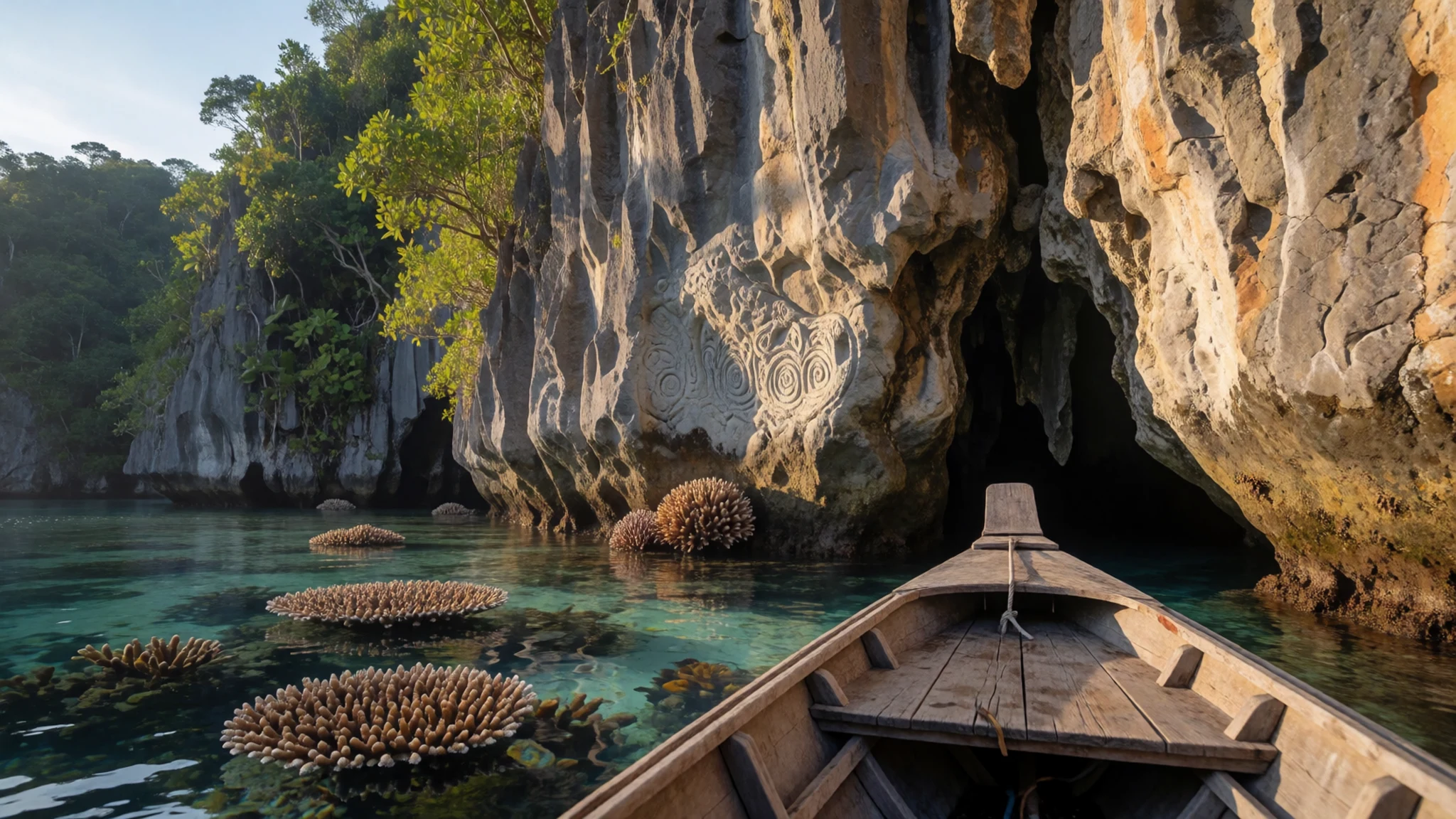
- Arborek Village — Central Islands
Arborek Village is a vibrant local community in the Raja Ampat Islands renowned for its exceptional village-led conservation efforts and fantastic near-shore snorkelling. Divers and snorkellers regularly encounter large groups of graceful manta rays gliding effortlessly through the currents just off the wooden jetties.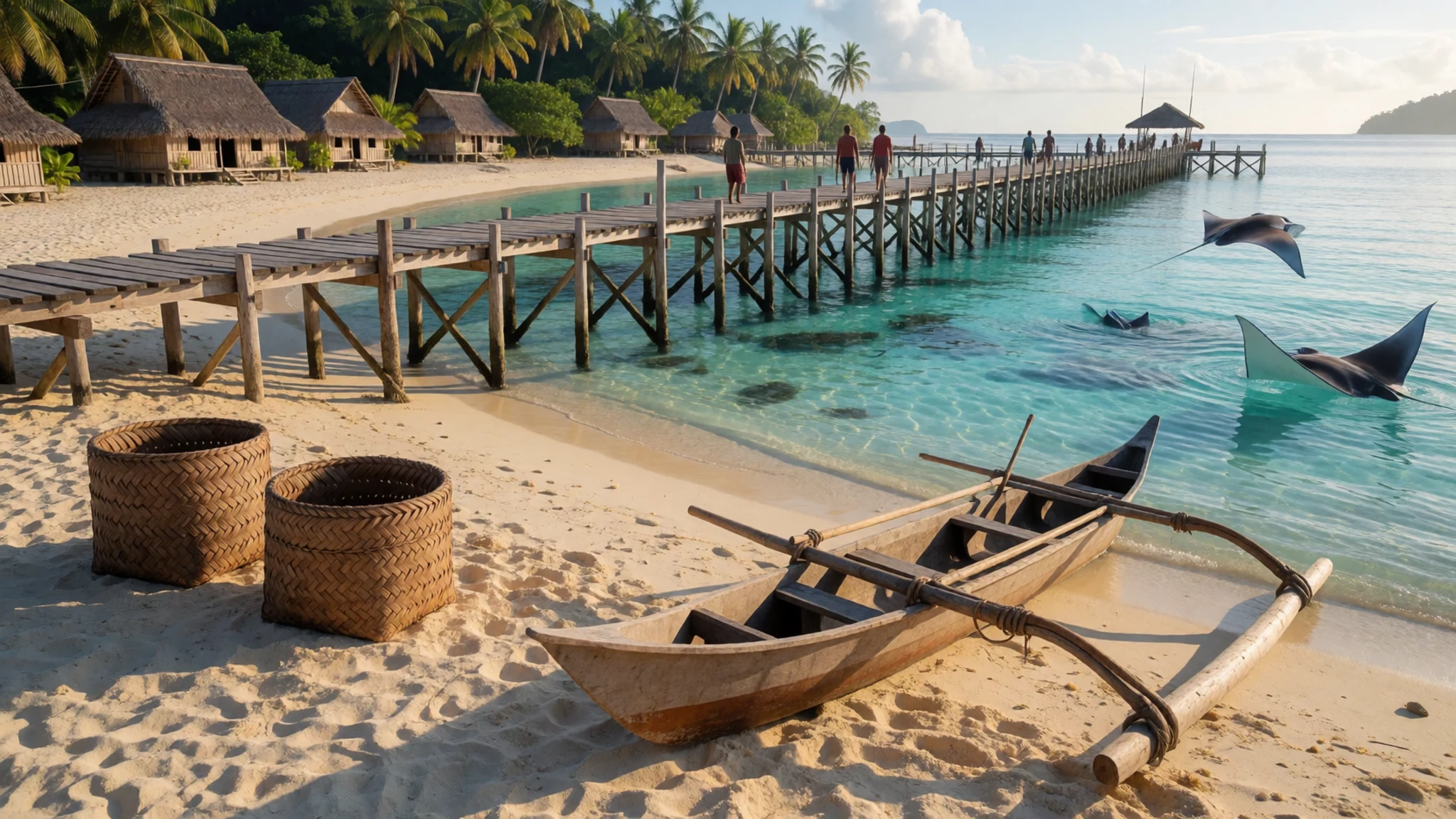
- Masjid Hidayatullah Saonek — Saonek Island
Masjid Hidayatullah Saonek is noted as the oldest mosque in Southwest Papua, having been founded on Saonek Island within the Raja Ampat Islands. The site offers a glimpse into the long history of Islamic heritage and community settlement across this remote maritime province.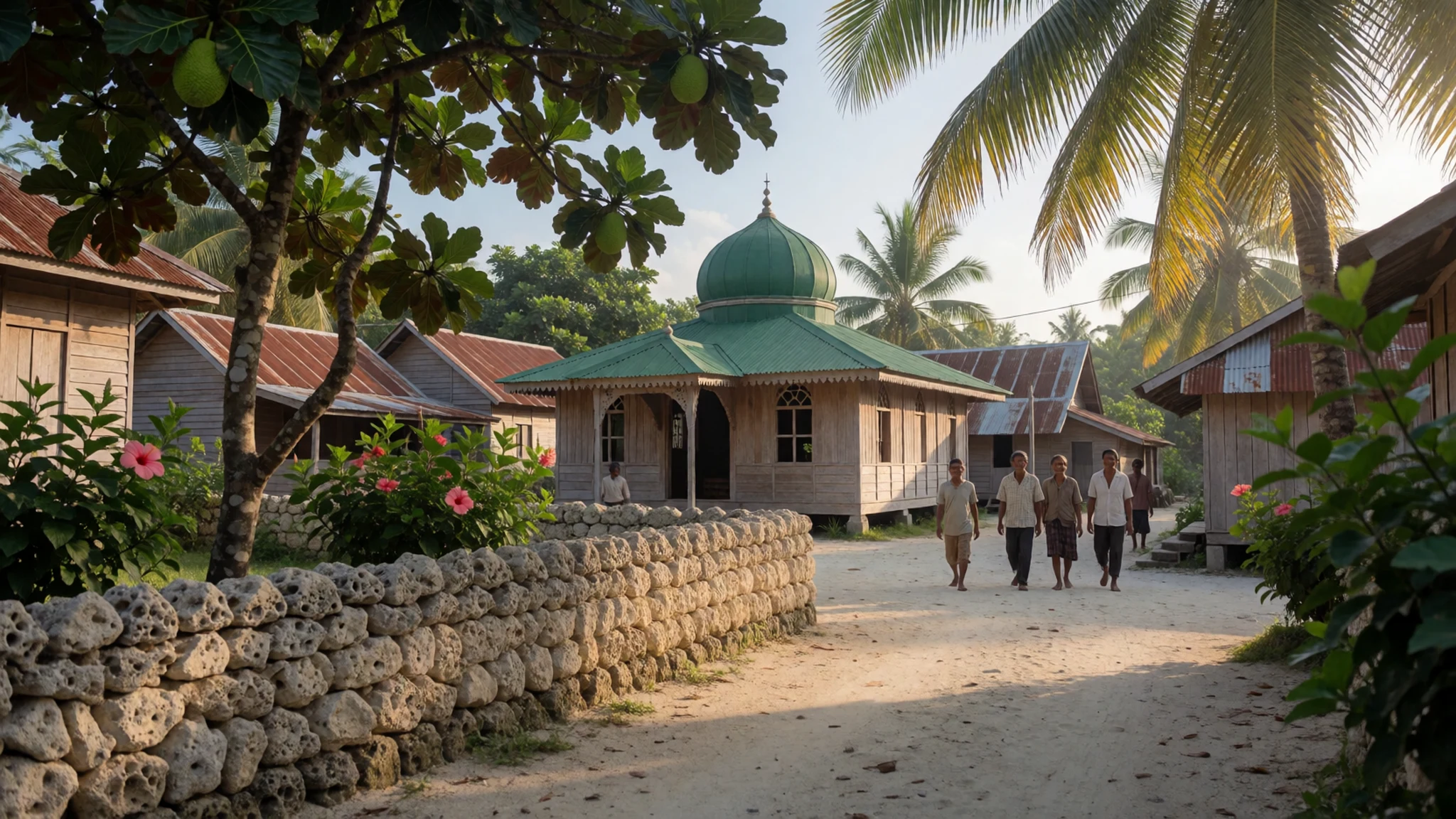
Culture
The traditional culture of the Raja Ampat Islands is deeply intertwined with the sea, reflecting generations of maritime subsistence, fishing, and clan-based governance across the scattered atolls. Local communities across the regency practice customary marine management systems, known locally as sasi, which temporarily restrict fishing in specific zones to allow fish stocks and coral reefs to regenerate naturally. Hospitality is warm and communal, often centered around village gatherings and homestays run by local families who share daily meals and stories with visitors. Traditional arts focus on woodworking, weaving, and oral histories passed down through elders regarding the mystical origins of the four royal houses. Modern daily life blends indigenous Papuan customs with influences from wider Indonesian society, while Christianity and Islam form the primary religious foundations across the island villages. Visitors should dress modestly when walking through local villages, covering shoulders and knees out of respect for traditional community norms and religious sensibilities.
What to wear
Traditional attire across the Raja Ampat Islands historically reflected practical adaptation to a hot, humid equatorial climate, utilizing plant-based fibers, beaten bark cloth, and woven natural materials suited for maritime life. While ceremonial garments incorporating shells, feathers, and traditional hand-woven textiles are preserved for special cultural gatherings and adat ceremonies, they are rarely worn in daily life today. Most residents in the villages now wear casual, lightweight modern clothing such as t-shirts, shorts, and light fabrics suitable for tropical humidity and active outdoor work. For travellers visiting the Raja Ampat Islands, practical considerations dictate the wardrobe: lightweight, quick-drying clothing, rash guards or sun-protective shirts for diving and snorkelling, sturdy reef-safe footwear or sandals for sharp limestone terrain, and a modest change of clothes including a sarong or lightweight cover-up for exploring local villages and respecting local cultural norms.
What to eat
- Ikan Kuah Kuning — Local island homestays and village kitchens across the Raja Ampat Islands
Ikan Kuah Kuning, or Yellow Fish Soup, is a signature Papuan specialty featuring fresh reef fish simmered in a fragrant broth seasoned with turmeric, ginger, lemongrass, and local aromatic spices, offering a deeply comforting and savory flavour.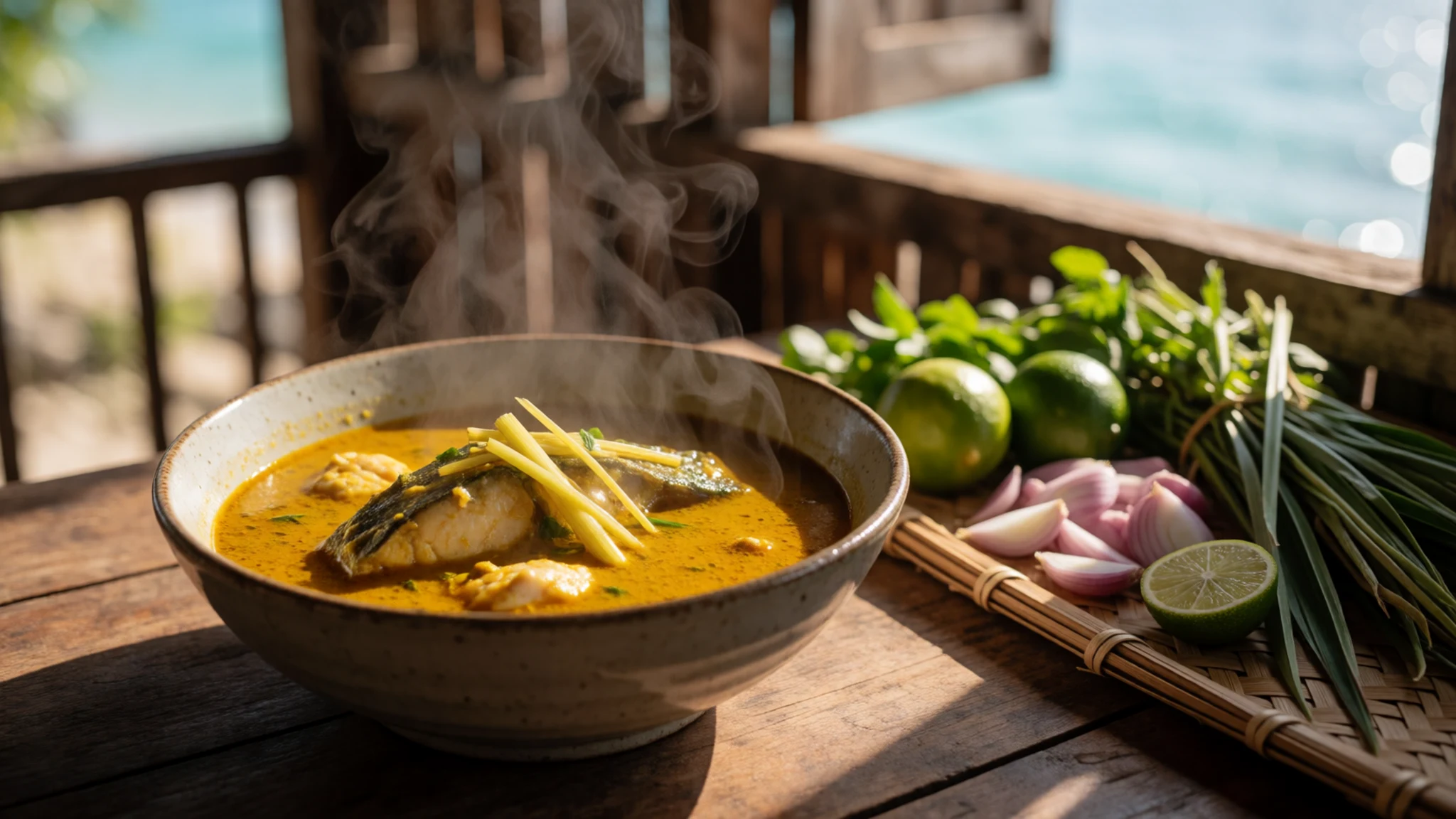
- Papeda — Traditional meals prepared by local families and island homestays
Papeda is a traditional staple dish made from processed sago starch, resulting in a gelatinous texture that is typically served alongside spiced yellow fish soup or boiled tubers as a comforting carbohydrate.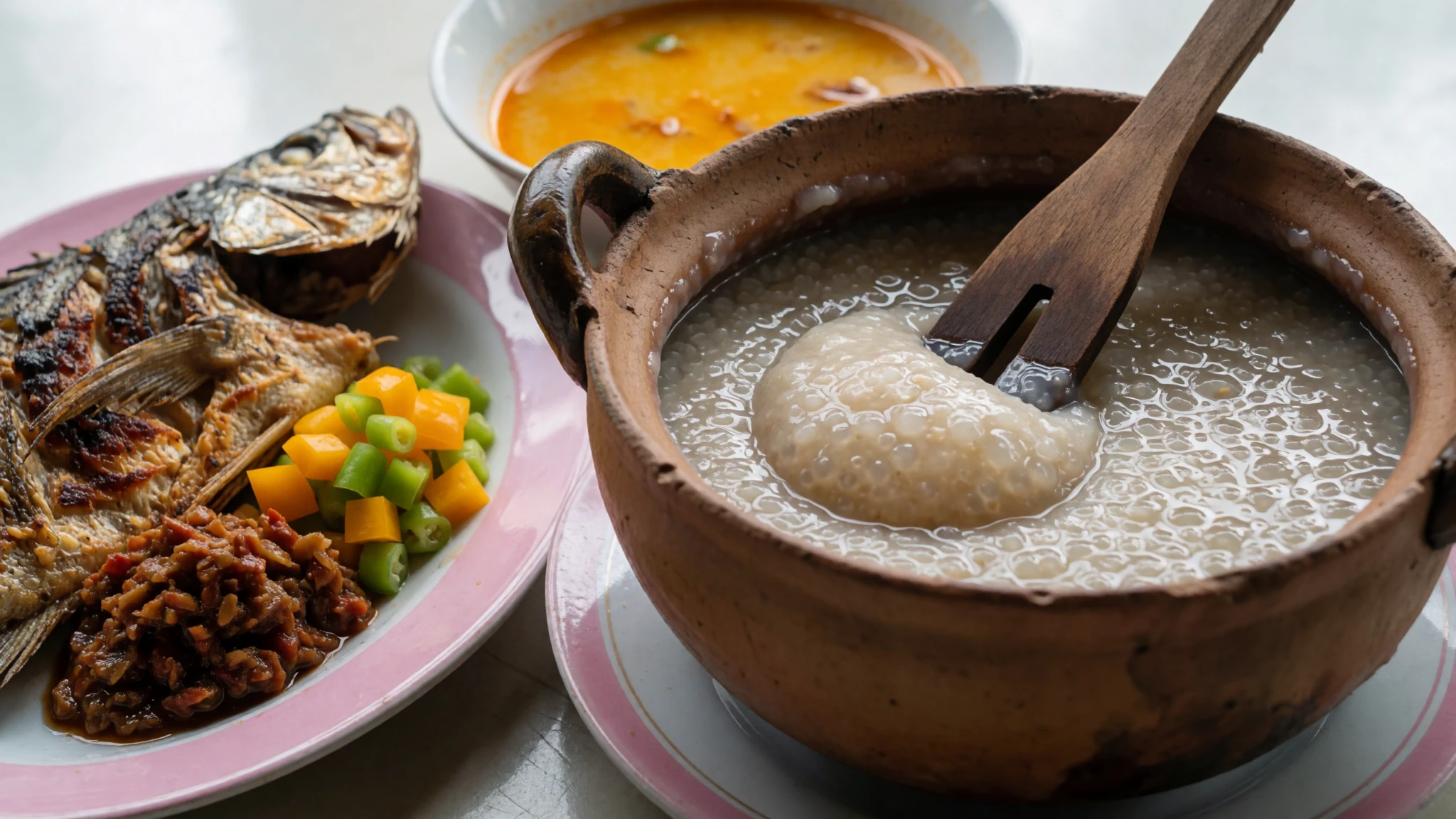
- Fresh Catch Seafood — Island homestays and diving resort dining rooms throughout the archipelago
Fresh catch seafood highlights the daily bounty of the Coral Triangle, featuring grilled or steamed reef fish, tuna, and prawns prepared simply with local chili sambal and citrus juices. - Tropical Fruit Platters — Served daily at morning and evening meals in local village homestays
Tropical fruit platters provide a refreshing sweet finish to meals, featuring locally harvested papayas, bananas, pineapples, and seasonal island fruits grown in coastal gardens.
Plan it
Best time. October to April offers the calmest sea conditions and best underwater visibility for diving and exploring the remote lagoons.
How long. 7–10
Getting there. Fly into Dominique Edward Osok Airport in Sorong from major Indonesian hubs like Jakarta, Makassar, or Manado, then take the daily express or slow ferry across to Waisai harbour in Raja Ampat.
Budget. high
Tips
- Spare at least a week to properly explore the extensive reef complexes and remote island groups.
- Carry sufficient Indonesian rupiah in cash, as automated teller machines are virtually non-existent outside Sorong.
- Prepare for limited electricity outside the main town, as island homestays rely on generators that typically run only from sunset until midnight.
- Expect patchy or slow mobile internet connectivity once you leave the mainland and main island settlements.
Etiquette
- Strictly adhere to leave-no-trace principles and dispose of all personal rubbish properly.
- Never touch, stand on, or take coral or marine life from the reefs.
- Always ask permission from village elders before photographing local residents or entering sacred sites.
Nearby
Sources
- Wikidata Q15088317 (CC0)
- Wikipedia (rev 1364194154) (CC BY-SA 4.0)
- Wikivoyage (rev 5409349) (CC BY-SA 4.0)