Qaanaaq
Qaanaaq, Kingdom of Denmark
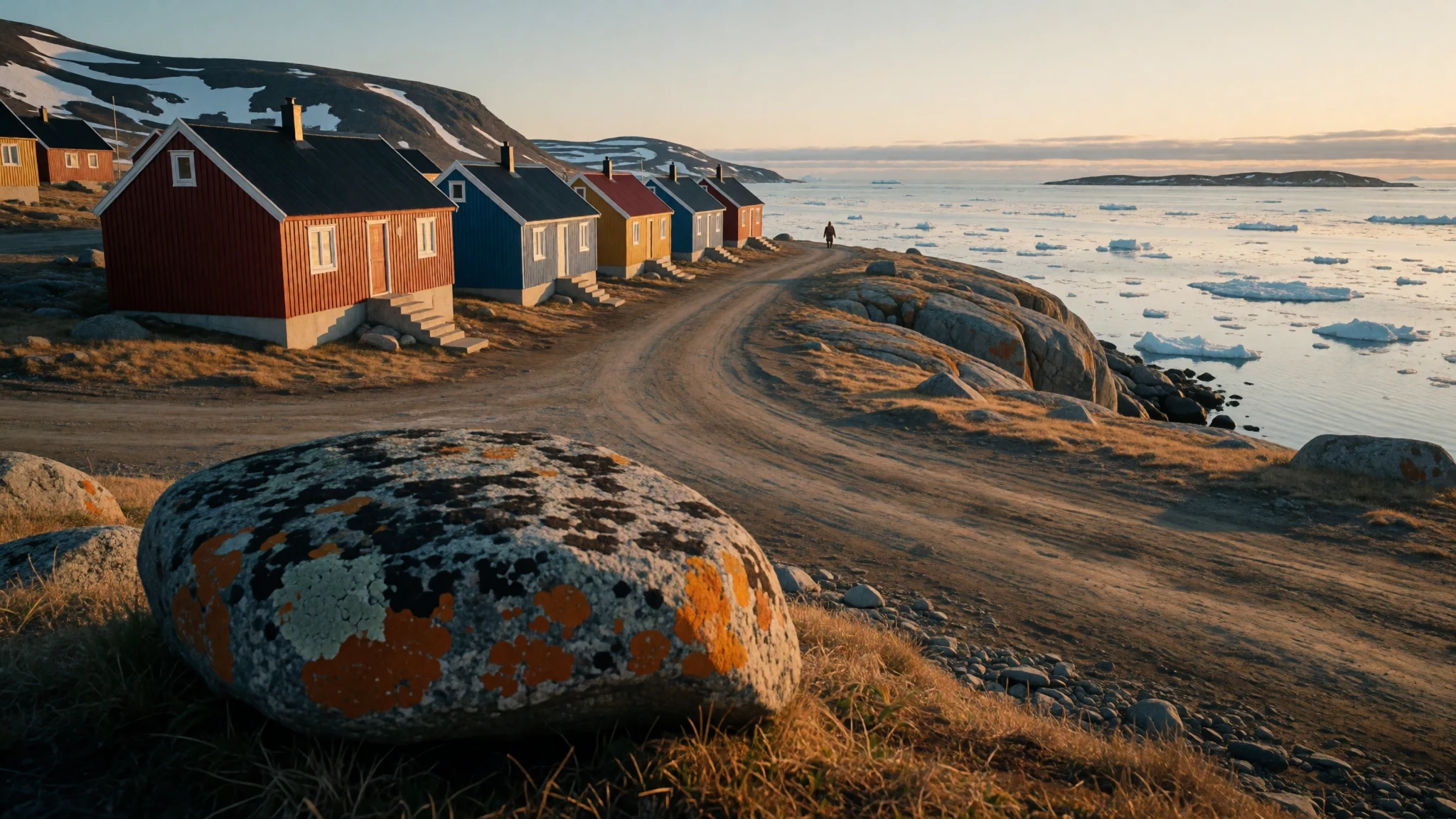
Qaanaaq is a small hunting town in far northwest Greenland, where sea ice, the midnight sun and a relocated community shape daily life.
The place
Qaanaaq sits in far northwest Greenland, at the mouth of Inglefield Fjord, within the northern reach of Avannaata municipality. The population is around 600 and the elevation is 246 m, so it is a village-sized place that still works as the regional centre, with a school, a museum and a supermarket. Greenlandic gives the name Qaanaaq. The older name New Thule still turns up in books and on maps, and Thule itself comes from a Latin phrase for the far north.
The houses are small timber boxes painted in reds, blues and yellows, set on rock above a shore with no dock. Supply ships anchor offshore and cargo is ferried in by boat, usually once the ice has cleared. Behind town the land climbs to bare rock and snow. Across the fjord lie the Harvard Islands and the smaller settlement of Qeqertat, and the even smaller Siorapaluk lies further along the coast.
The language heard most is Inuktun, the local speech of the Inughuit, with Kalaallisut and Danish widely understood. The climate is cold tundra: long, hard winters, then a short summer when the sea opens, the sun stays up through the night, and boats take over from sleds and snowmobiles.
It helps to be clear about scale. This is a place of a few streets rather than a list of sights, and a stay here is about weather, ice, hunters and conversation. Heat is never the problem. Cost, supply and distance are, because almost everything arrives by ship or plane, and opening times in shops and offices are best checked locally rather than assumed.
Its story
Qaanaaq's story begins long before the town. People crossed from the Canadian Arctic into this part of Greenland thousands of years ago, and were later displaced by the Thule culture, which came by the same route. A cooling climate then thickened the sea ice, cutting off the open water these groups depended on. Families in the northwest became isolated from the rest of Greenland and grew into the Inughuit, a people shaped by dogs, sleds, kayaks, harpoons and a close reading of the ice.
European contact came in the early nineteenth century, when a British naval expedition met the Inughuit, whom outsiders then called Polar Eskimos. In the early twentieth century the explorers Knud Rasmussen and Peter Freuchen set up a trading station at North Star Bay and borrowed the name Thule for it. Its Inughuit name, Uummannaq, refers to a heart shape, and the site is often called Dundas today.
The present town dates from 1953. A United States air base was growing on the plain near the old settlement, and the Danish authorities decided the Inughuit living close to it should be moved away. About a hundred families and individuals, the whole community of Old Thule, were sent north in the middle of winter, in a matter of days, to a new site on the fjord. That site was named New Thule, and later Qaanaaq.
People lost their homes and their nearest hunting grounds, and had no real say in where they would live. The move is remembered locally as a forced one, and it still colours how Qaanaaq thinks about Denmark and the base, which is now called Pituffik Space Base.
What to see
- Qaanaaq Museum — Town centre
The Qaanaaq Museum, near the middle of town, holds paintings, sculptures, carvings and photographs linked to the old Thule trading station. It is a sensible first stop, giving the Inughuit past some faces and objects before a walk to the shore. Opening times change, so ask locally rather than rely on a posted schedule.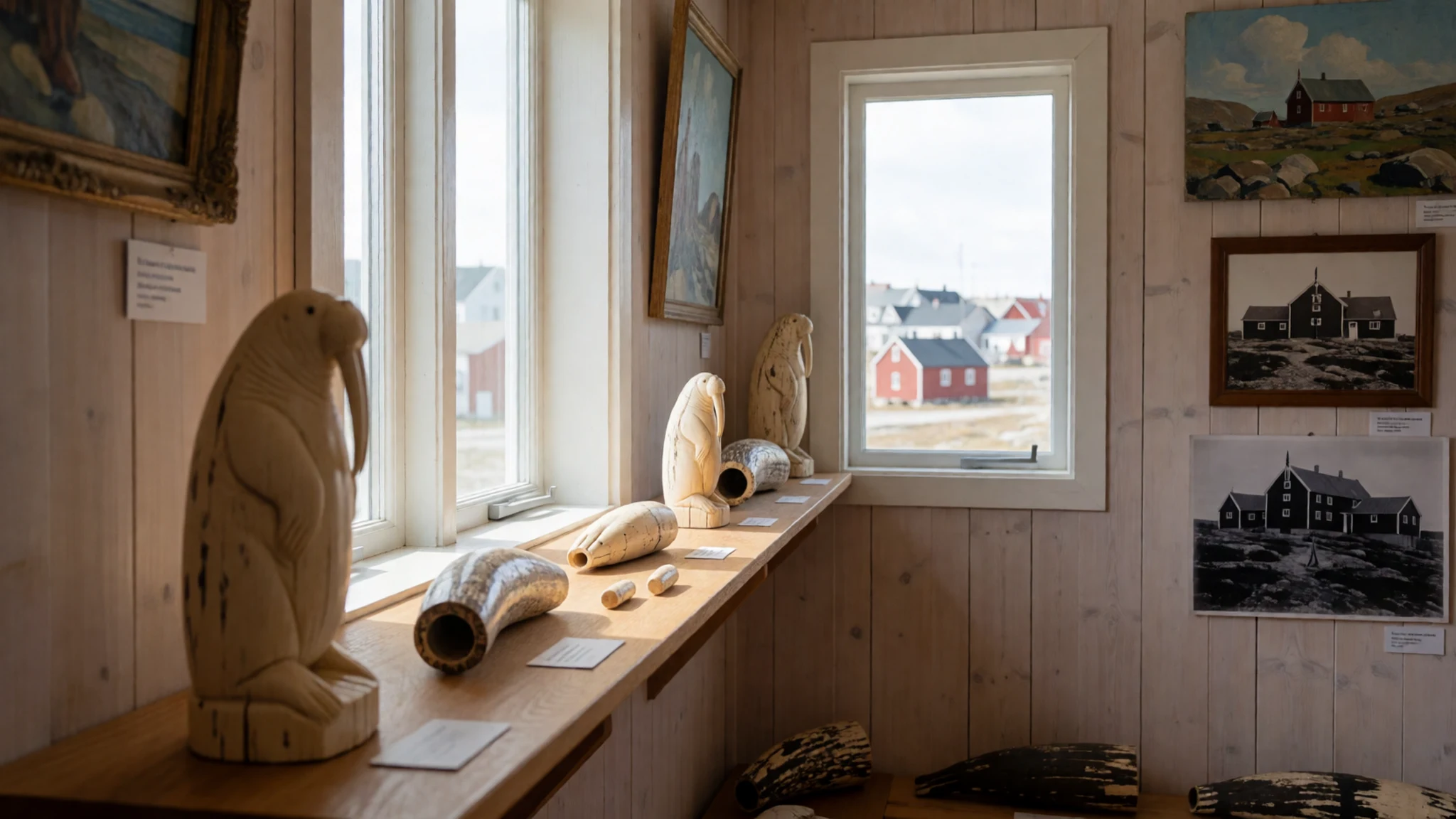
- The shoreline and roadstead — Waterfront
The shore below town has no dock, so supply ships lie out in the roadstead and cargo comes in by smaller boats. Walking along it shows the working side of Qaanaaq: boats pulled up, hunters' gear drying, dog teams in season, and either sea ice or open water. Photograph vessels, not people, unless invited.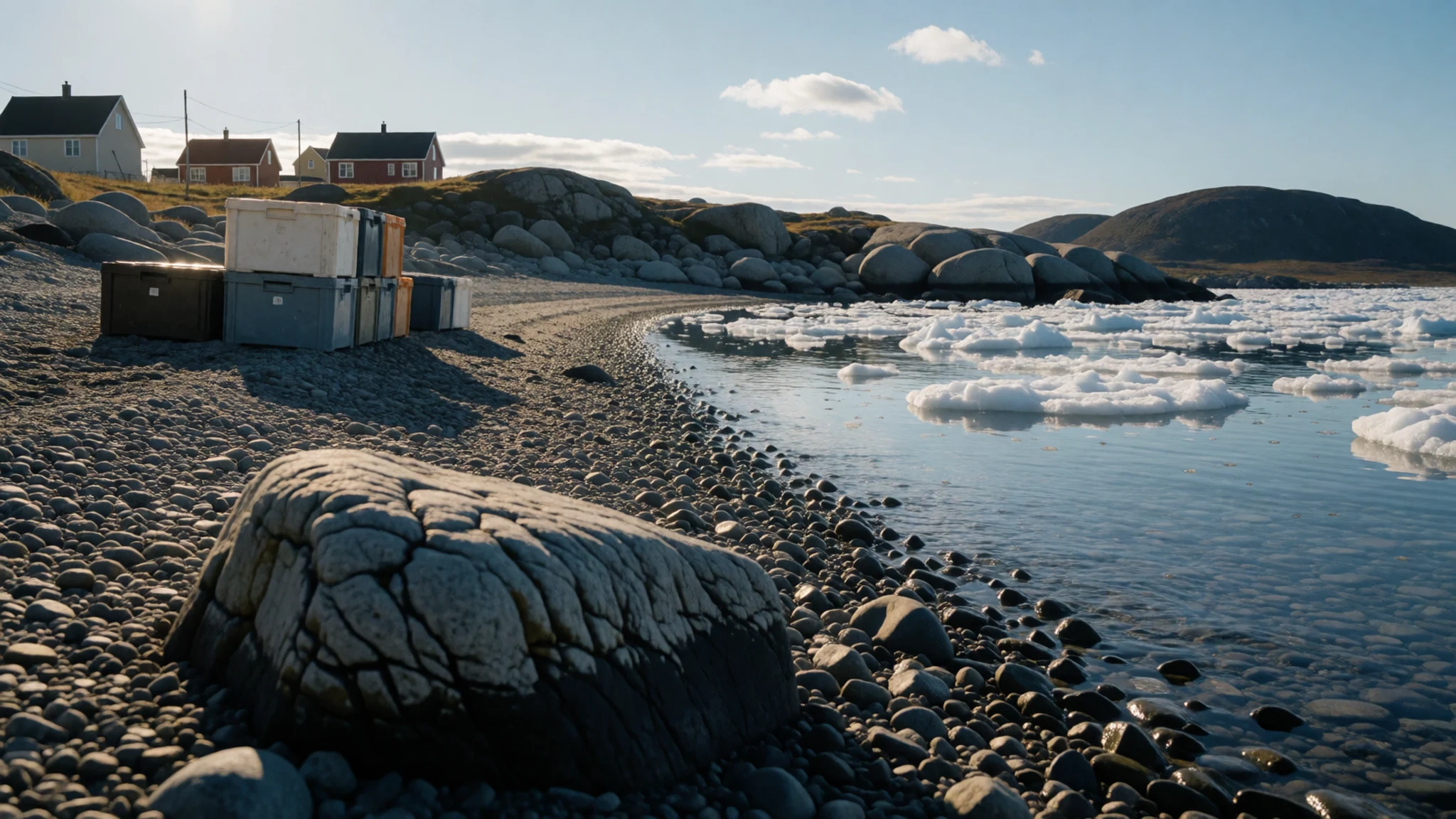
- The painted houses — Residential streets
Qaanaaq's streets are lined with small timber houses in strong colours, and the colour matters more than usual here because winter is long and grey-white. Wander the lanes in the late evening light of summer for the best views. These are family homes, so keep to the paths and keep voices low.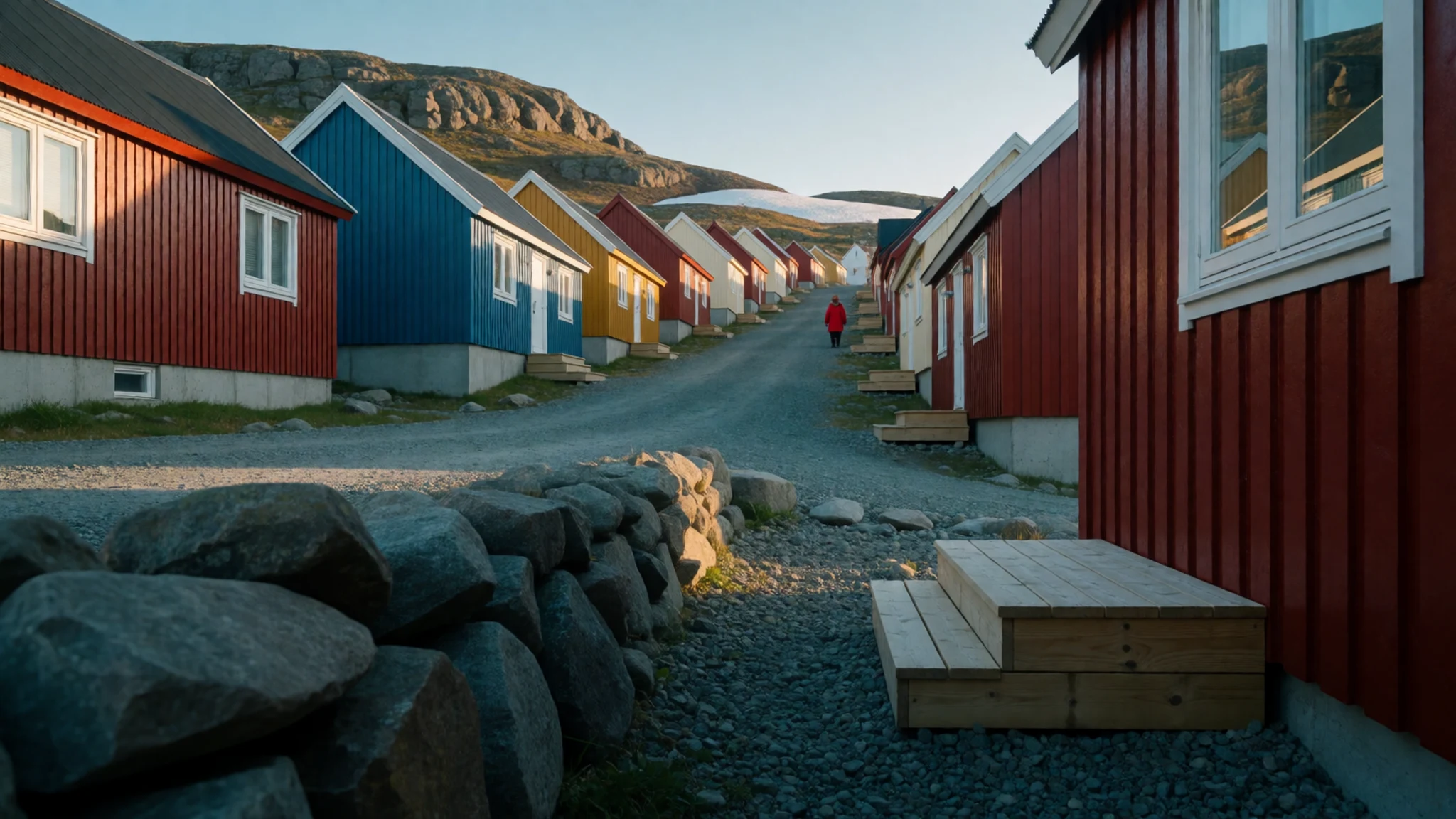
- Inglefield Fjord from the slope above town — Hillside behind town
Qaanaaq sits at the mouth of Inglefield Fjord, and a short climb on the rising ground behind the houses opens a wide view over water, floating ice and far islands. Weather and ice conditions change quickly, so go in daylight, tell someone where you are headed, and ask residents about wildlife first.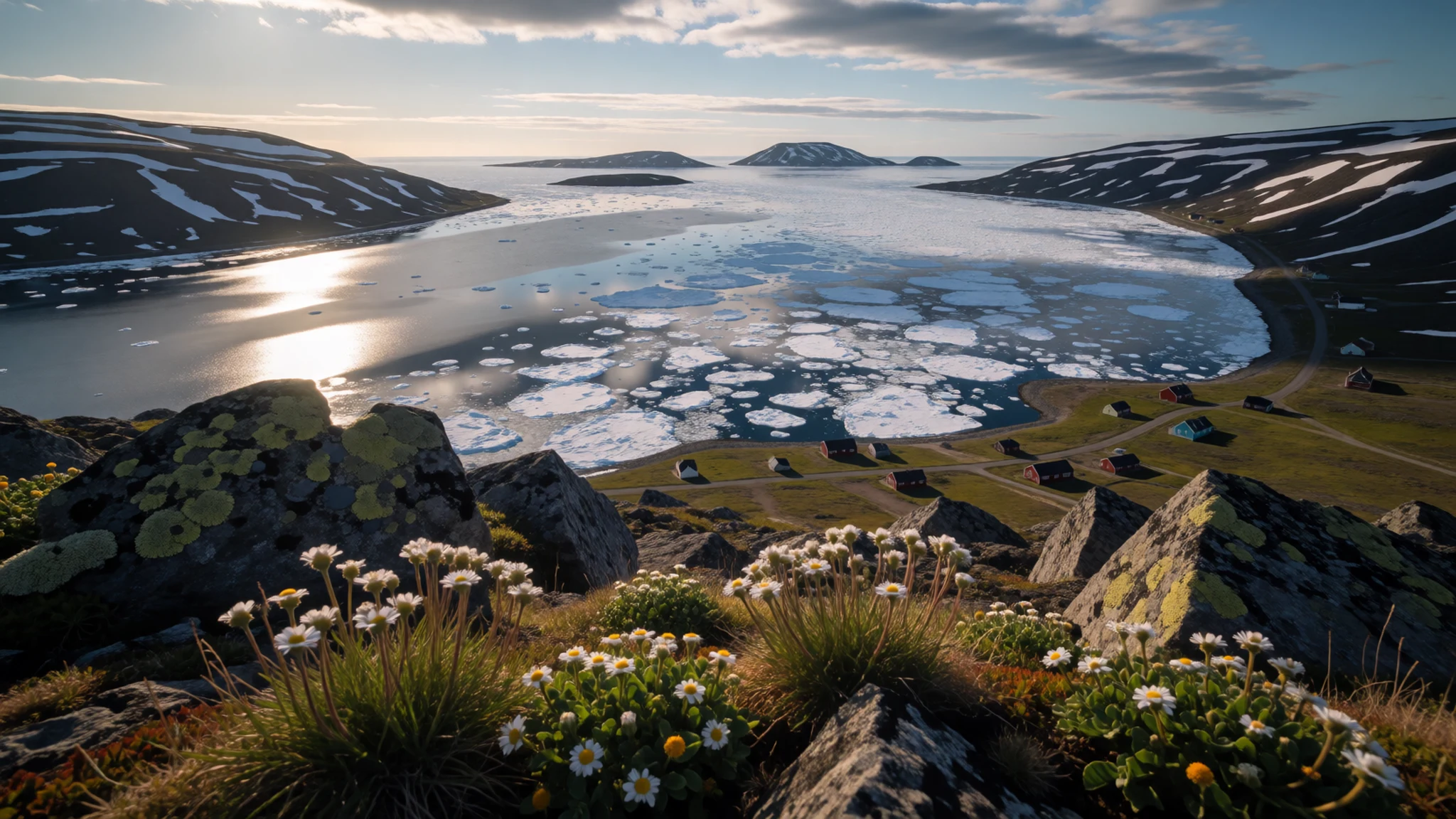
- Kayak and hunting traditions — Shore and fjord
Kayak skills for narwhal hunting are still practised and demonstrated here, and the skin-covered boat is a remarkable piece of design. If an outing or demonstration can be arranged through the community, ask politely and offer fair payment. Never follow hunters or approach a catch uninvited.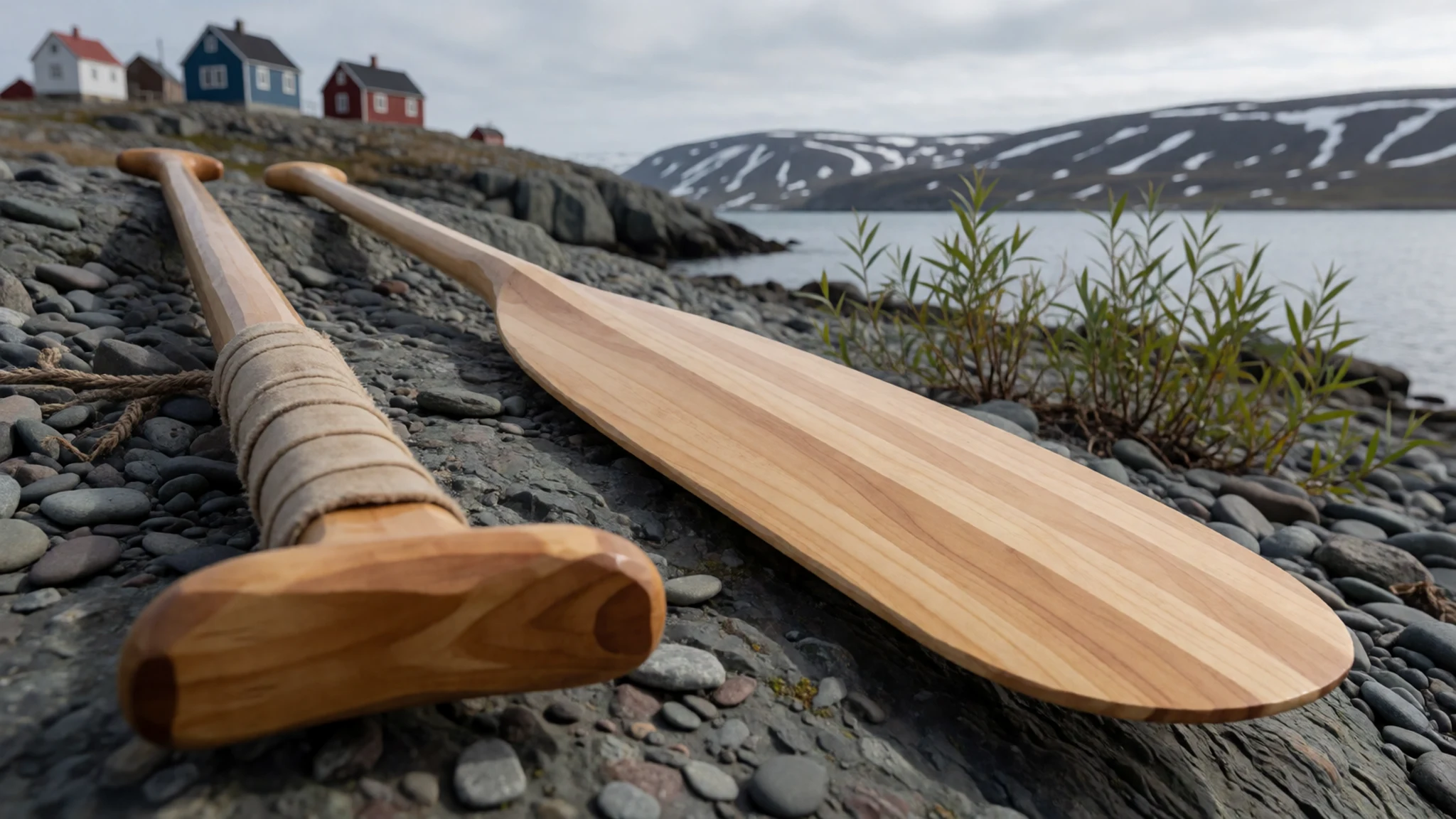
Culture
Qaanaaq is a community shaped by the demands of the Arctic, and its customs are largely the habits that make life possible this far north. Knowledge of ice, weather, dogs and animals is handed down within families, and hunting remains both livelihood and identity for many households. In summer, once the sea opens, powerful boats replace sleds for hunting trips and ordinary journeys, and daylight carries on through the night.
Resourcefulness runs through everyday life. Little of a harvested animal goes to waste: hides are sewn into clothing and stretched over kayak frames, meat feeds both people and dogs, and narwhal and walrus ivory is carved into small figures, jewellery and tool parts. Carving is a local craft, so buying directly from the maker is the fairest way to support it.
Language and history matter too. Inuktun is the everyday tongue of the Inughuit, alongside Kalaallisut and Danish. The 1953 relocation is part of family memory, and talk about the nearby base, Denmark or the United States can be sensitive, so listening works better than offering opinions.
The town is small and visitors are noticed. Hospitality is real, but so is privacy. Ask before photographing people, dogs, drying meat or hunters' catches, and never handle a kayak, sled or carving without the owner's permission.
What to wear
Qaanaaq's traditional dress comes from the animals of the ice. Sealskin boots (kamiit), sewn with sinew and kept supple by chewing and careful drying, are the best-known piece, along with hooded sealskin anoraks and trousers of fur, with polar bear fur used by the Inughuit in the past. Skins and fur are the textiles here, chosen for warmth and for how well they shed wet. Across Greenland, the beaded national costume (kalaallisuut) of sealskin, glass beads and bright collars appears at confirmations, weddings and national days.
Day to day, people now wear what works: insulated jackets, wool, fleece, wind trousers and rubber or insulated boots, with sealskin kept for the coldest hunting days and for special occasions. Style is practical and relaxed, and nobody dresses up for visitors.
A visitor should dress for wind rather than for the thermometer. Pack layers: a wool or synthetic base, a fleece, and a windproof and waterproof outer shell, plus a warm hat, gloves and insulated boots with a grippy sole for gravel, snow and wet rock. Even in July and August, which are the warmest months, the air is cold off the water. Sunglasses help with glare from ice and the all-night sun, and a head net is useful when midges are out. There is no dress code for churches or homes beyond ordinary modesty, but shoes come off indoors.
What to eat
- Mattak — Shared in family homes and community gatherings when a catch has come in
Mattak is narwhal skin with a thin layer of blubber, eaten raw in small cubes and chewed slowly. It is a prized food in Inughuit households and tastes mild and nutty. It appears when hunters have landed a catch, usually shared in homes and at community gatherings.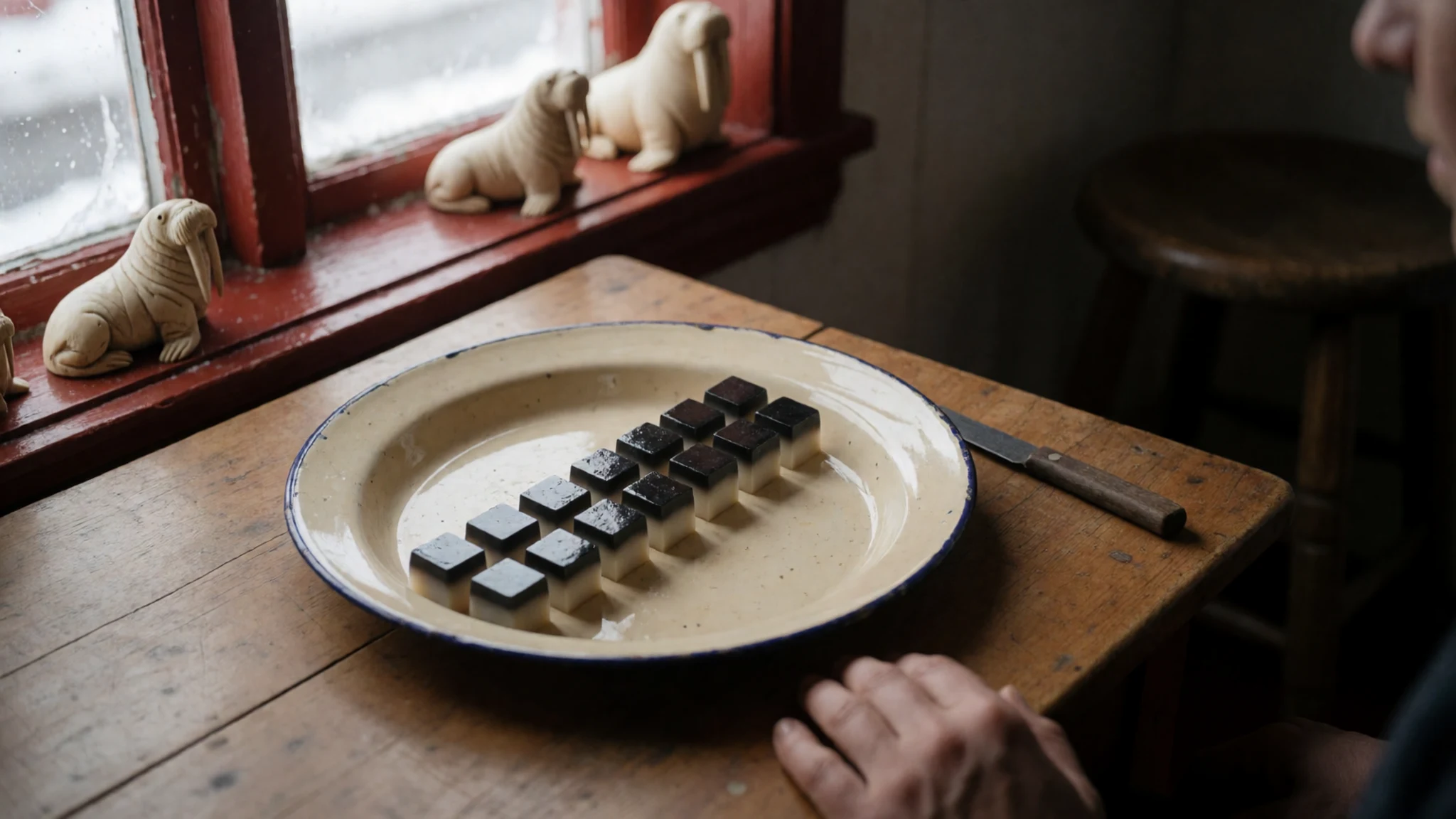
- Boiled seal meat — Home kitchens and community meals, by invitation
Seal is the everyday meat of the north, usually boiled and served in plain, dark, rich-flavoured chunks. It is eaten with broth and sometimes with potatoes or rice. Visitors are most likely to taste it as a guest of a household or at a community meal.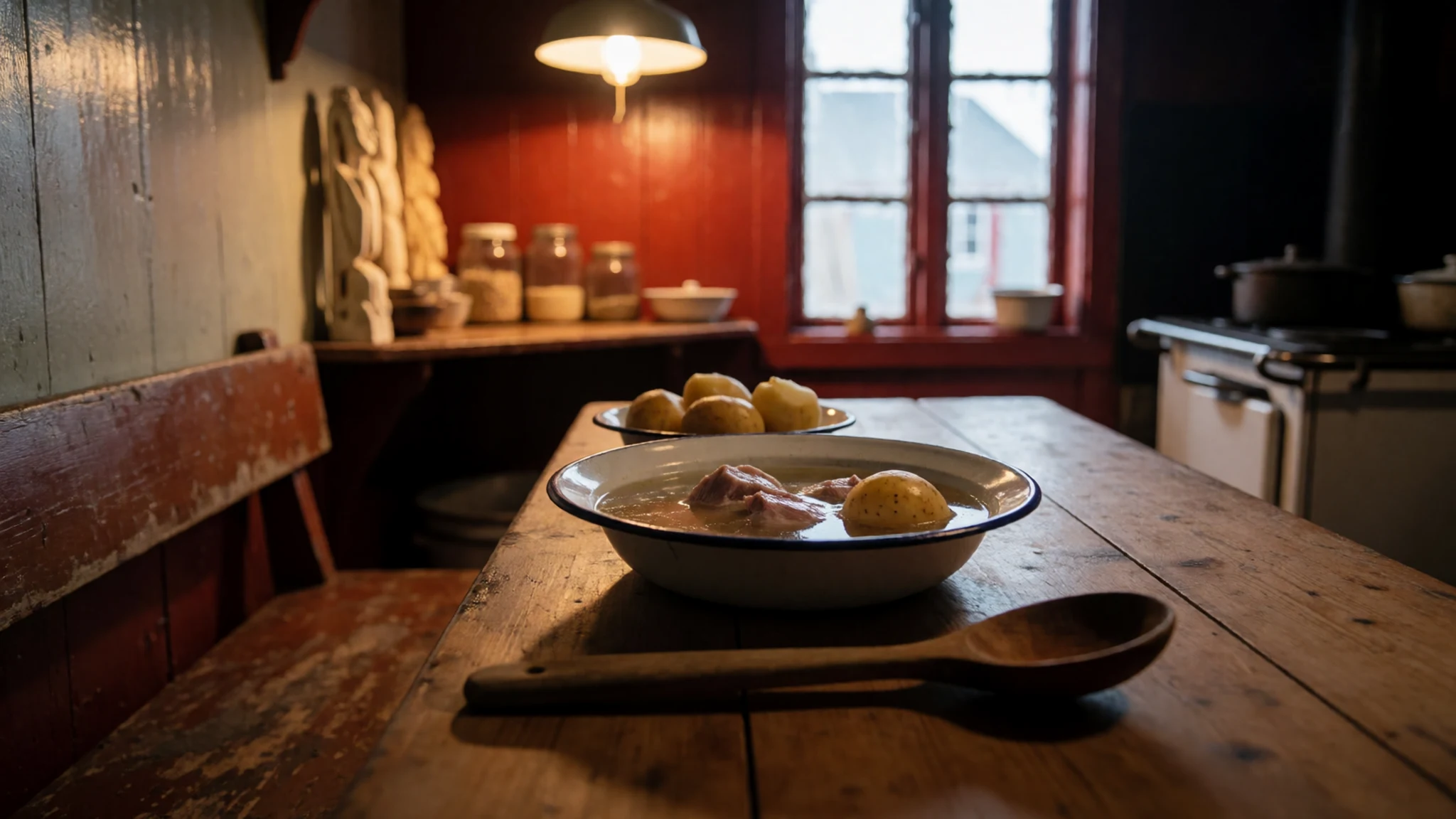
- Suaasat — Home kitchens and community gatherings
Suaasat is a thick Greenlandic soup of seal, whale or sometimes reindeer, simmered with onion, potato and rice or barley. It is warming and plain, built for cold days. Ask locally who might be cooking it; it is a home dish rather than a menu item. - Dried and fresh fish — Drying racks around town and in family homes
Fish such as Arctic char and halibut are caught from the fjord and eaten fresh, boiled, or dried on racks in the wind. Dried fish is a salty, chewy snack that keeps well. Racks are visible around the edge of town in the right season. - Everyday groceries — Qaanaaq Supermarket
Because ships and planes carry in almost everything, the supermarket is where most people shop, and it is the practical place for visitors to buy bread, tins, fruit, snacks and basics. Stock depends on the last delivery, so buy what you need rather than waiting.
Plan it
Best time. June to August is the practical window: July and August are the warmest and wettest months, the sea opens in summer, and the sun stays up through the night from spring to late summer. Spring suits experienced travellers with local guides for sea ice and sled travel. Winter is long, dark and very cold.
How long. 3–5
Getting there. Air Greenland serves Qaanaaq, usually with connections through other Greenland airports, so check the airline's site for routing and weather delays. Cruise ships also call in summer and anchor offshore, with passengers landing by small boat. Pituffik Space Base is a restricted military area, and entry needs advance permission applied for through Denmark's foreign ministry.
Budget. high
Tips
- Book flights and any beds well ahead, and allow spare days, because weather often delays or cancels flights
- Bring cash as well as cards, and buy essentials and medicines before arriving, since supplies are limited
- Ask locally about guided boat, sled or hiking trips rather than going onto ice alone
- Pack layers and windproof outerwear even in July and August
- Check opening times of the museum and shops on arrival, as they change
Etiquette
- Ask before photographing people, dogs or hunters' catches
- Buy carvings directly from makers and ask before touching kayaks, sleds or gear
- Respect the restricted zone around the base and do not wander into it
Nearby
Sources
- Wikidata Q223314 (CC0)
- Wikipedia: Qaanaaq (rev 1383751505) (CC BY-SA 4.0)
- Wikivoyage: Qaanaaq (rev 5415325) (CC BY-SA 4.0)
- Photo: Qaanaaq, Greenland (Col. Lee-Volker Cox) (Public domain)
- Photo: Inuk man demonstrates traditional kayaking technique (Brocken Inaglory) (CC BY 3.0)
- Photo: Qaanaaq houses (Helene Brochmann) (CC BY-SA 4.0)
- Photo: Qaanaaq population dynamics (Algkalv) (Public domain)
- Photo: Infrasound arrays (The Official CTBTO Photostream) (CC BY 2.5)
- Photo: Avanersuup Atuarfia, the school in Qaanaaq (Helene Brochmann) (CC BY-SA 4.0)
- Photo: Goods arriving in Qaanaaq (Helene Brochmann) (CC BY-SA 4.0)
- Photo: Houses in Qaanaaq II (Helene Brochmann) (CC BY-SA 4.0)


Wildlife
- Narwhal (animal)
The narwhal is the Arctic's unicorn whale: a stocky, toothed whale with no back fin, and in males a long spiralled tusk that is really a tooth. In Qaanaaq, the old kayak skills for hunting narwhal are still practised and shown, and the boat, covered in skin, is beautifully designed. Narwhals spend long spells deep underwater, so treat any sighting as a gift. Watch quietly from a respectful distance, ideally with a local guide, and never feed wildlife.