Kulusuk
Kulusuk, Kingdom of Denmark
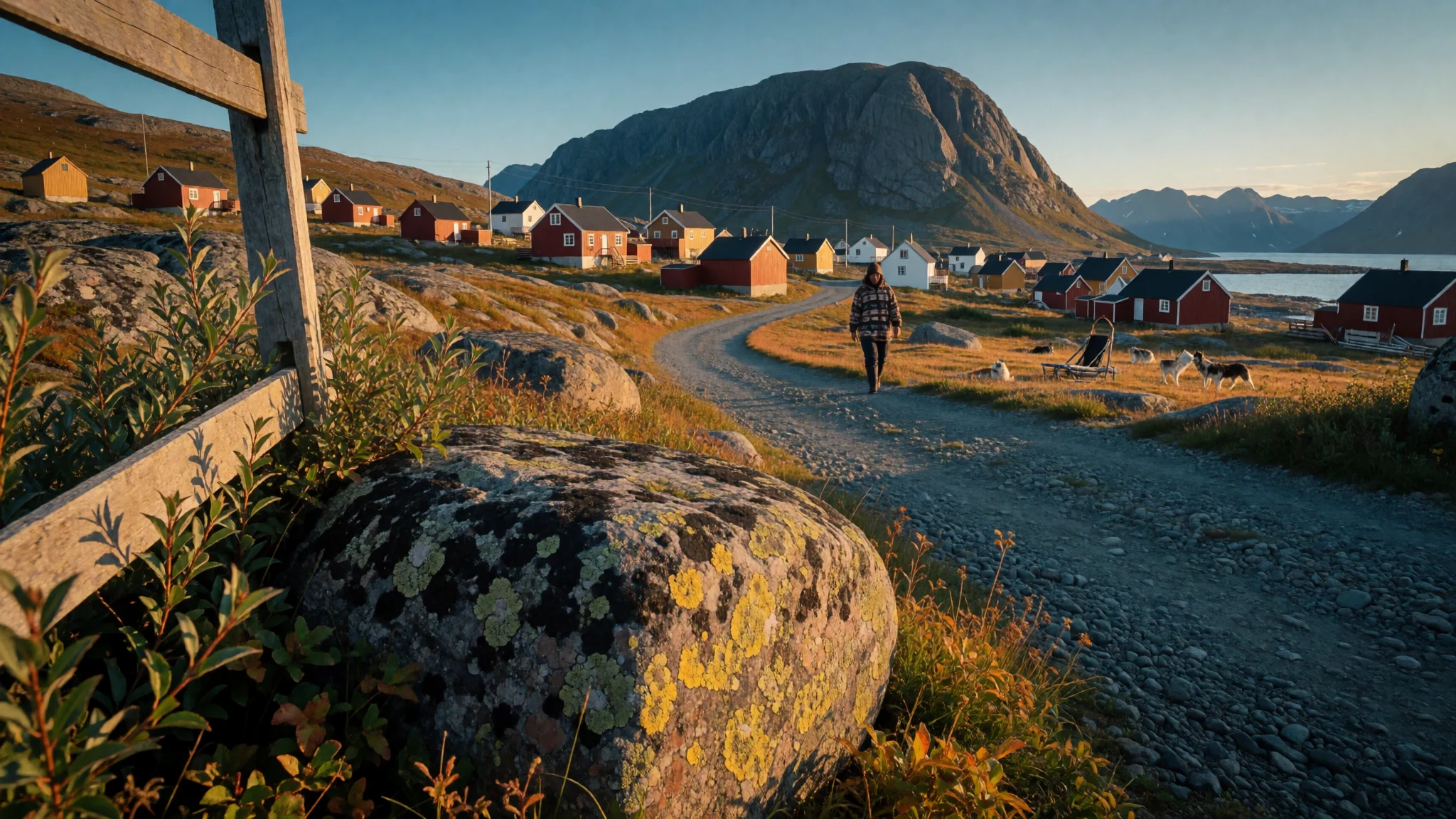
Kulusuk is a tiny Greenlandic village where Arctic hunting culture, drifting ice and Iceland's nearest flight link meet on one windswept island.
The place
Kulusuk is a settlement of 241 people on a hilly island off southeastern Greenland, within Sermersooq municipality. Its name in Kalaallisut means the chest of a black guillemot, a seabird of these cold coasts. The houses gather around a small harbour on the northwestern shore, facing the Torsuut Tunoq sound. Utility buildings are scattered around the airfield, which sits beneath the island's highest mountain, Qalorujoorneq.
The island is only a few kilometres across in either direction, but it is steep and rocky throughout, with mountains rising along the eastern and southern coasts. Its southern tip, Cape Naujaangivit, was once called Cape Dan, and that older Danish name was long applied to the village too. Some people still know the place as Kap Dan.
Kulusuk works largely as a doorway. Flights from Iceland land here, and from the airfield visitors continue by boat or helicopter to Tasiilaq, a larger settlement. Some stay in the village itself, where work is scarce and tourism tops up income from hunting and fishing. Across the water, the peaks of Apusiaajik Island make the main view, with an active glacier descending from them.
The weather rules everything. This is the most exposed island of its archipelago, taking northeasterly wind straight off the Greenland Sea, and the coastal water is shallow enough that polar cruise ships usually pass without anchoring in the harbour. Plans here are held loosely.
Its story
Kulusuk's human history is a story of arrivals and long gaps. Eastern Greenland was first reached by the Saqqaq people, who arrived from the far north via Independence Fjord and Peary Land. The Dorset culture later displaced them, and when the Thule people passed through in the fifteenth century they found the southeastern coast empty. Families then drifted back towards the more crowded west, and the southeast stood deserted for roughly two centuries.
Settlement resumed only in the late eighteenth century. For a long time Tasiilaq, then called Ammassalik, was the one permanent community, and people began spreading into several villages from the later nineteenth century. Kulusuk island itself was settled year-round only in the early twentieth century. The village was founded in 1909 and later held a centenary celebration.
The church was finished the year before, and its tale is the one locals and visitors repeat: the crew of a Danish sailing ship wrecked on the nearby coast built it from the vessel's own timbers. A model of that ship hangs above the organ, and the building was later rebuilt into the form it has now.
In the decades before the Second World War, Kulusuk grew past Tasiilaq to become the largest settlement in the region. Today it ranks behind Tasiilaq and Kuummiit, and numbers have slipped back. The airfield was built by the United States, and it still defines how the village connects to the outside world.
What to see
- The shipwreck church — Village centre
Kulusuk's church was assembled from the timbers of a wrecked Danish sailing ship, and the story is easy to believe once inside. A model of the vessel hangs above the organ, and stained glass lines the sides. It is a Lutheran church in daily use, so ask locally about opening before walking in.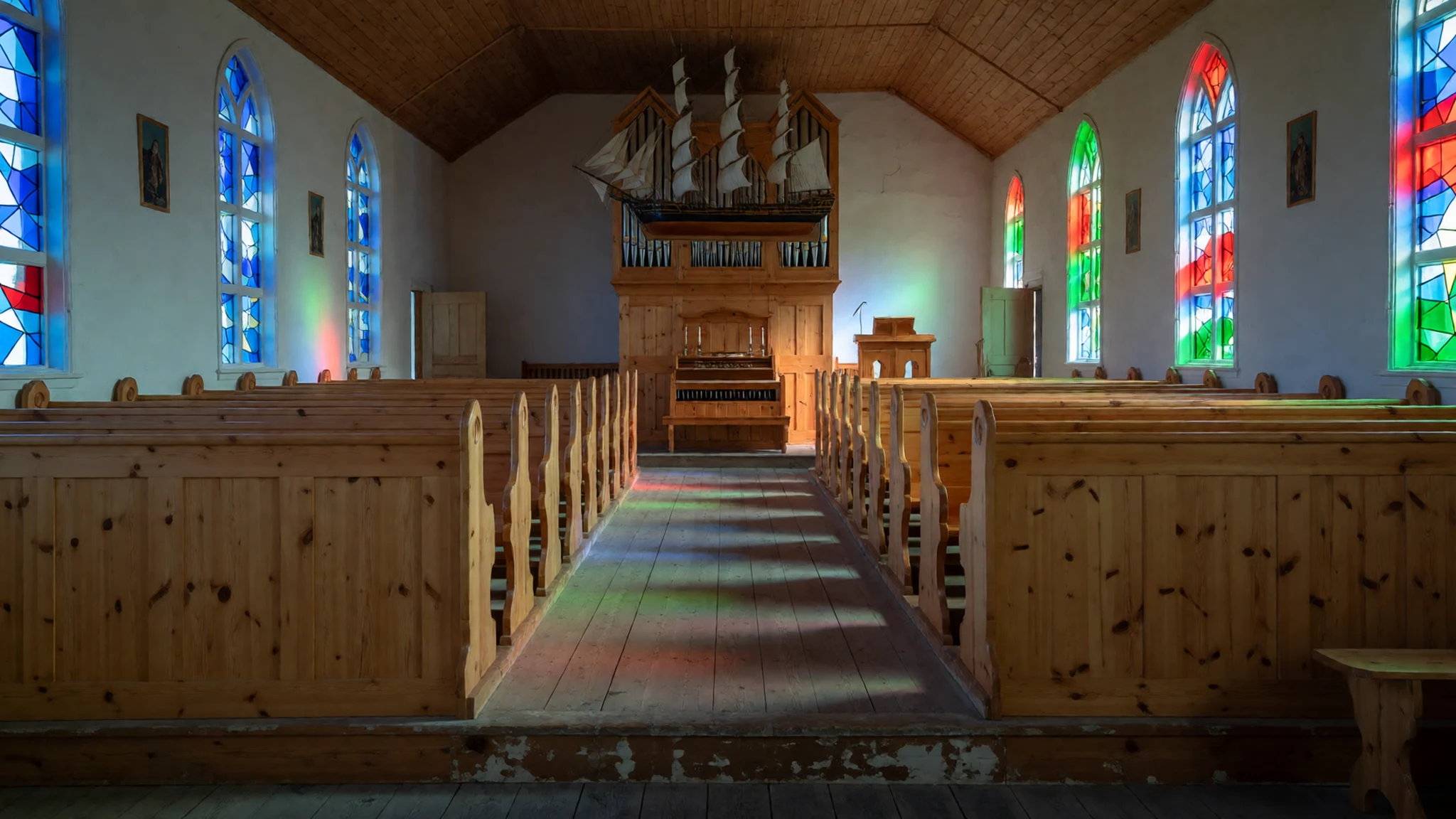
- The cemetery — Small hill south-east of the village
The village graveyard sits on permafrost, spread across the slopes of a small hill a short walk from the houses. The white crosses carry no names, following an Inuit custom that a name passes on to a newborn and so lives on. It is a quiet, moving place to stand.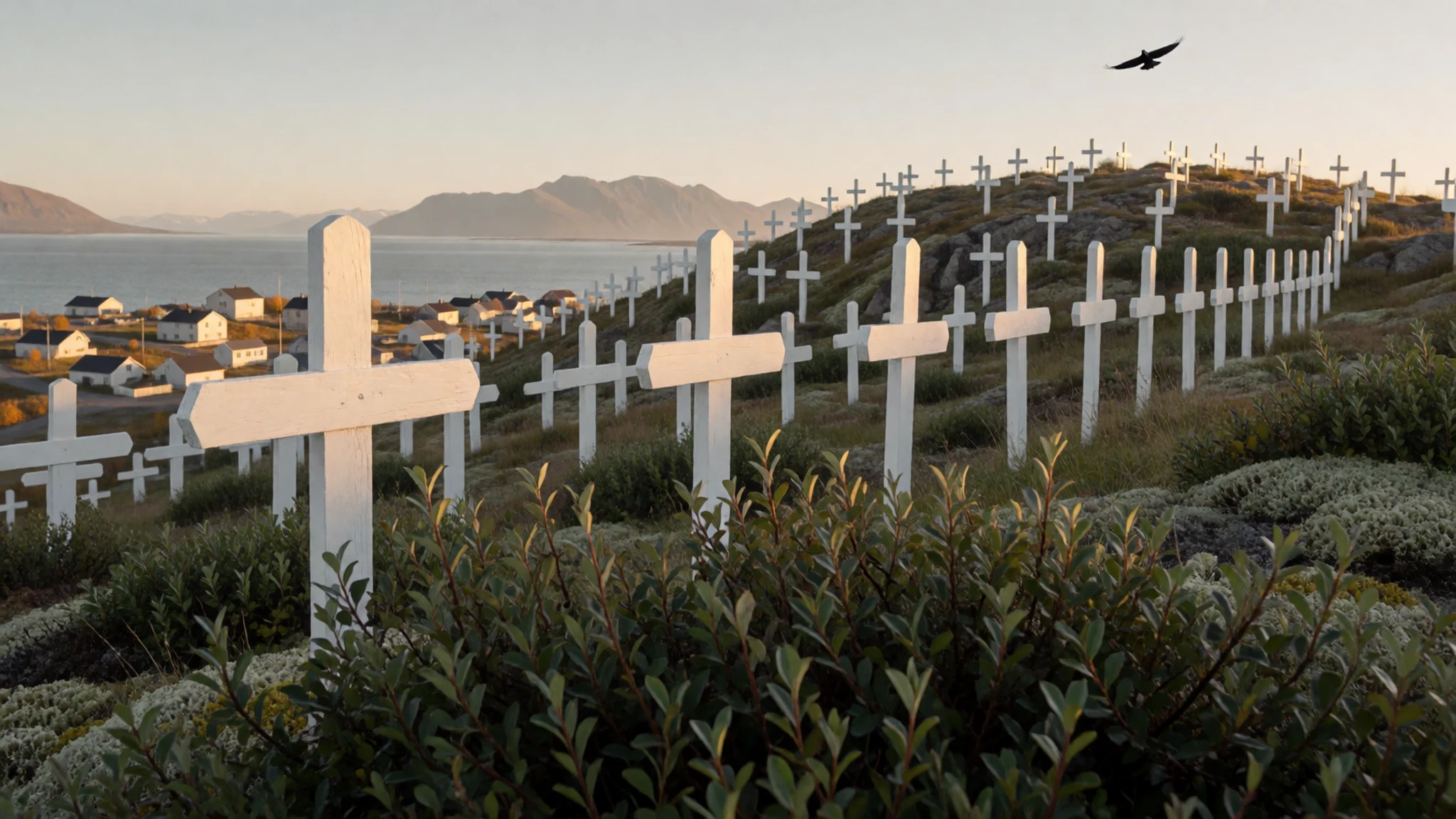
- Kayak demonstration — Harbour
Local hunters sometimes show how a kayak is handled, a skill that once meant survival on these waters. Photographs of the village show a kayak resting on a dogsled, which sums up the mix of old and new. Ask at the lodge or through your tour operator whether one is running.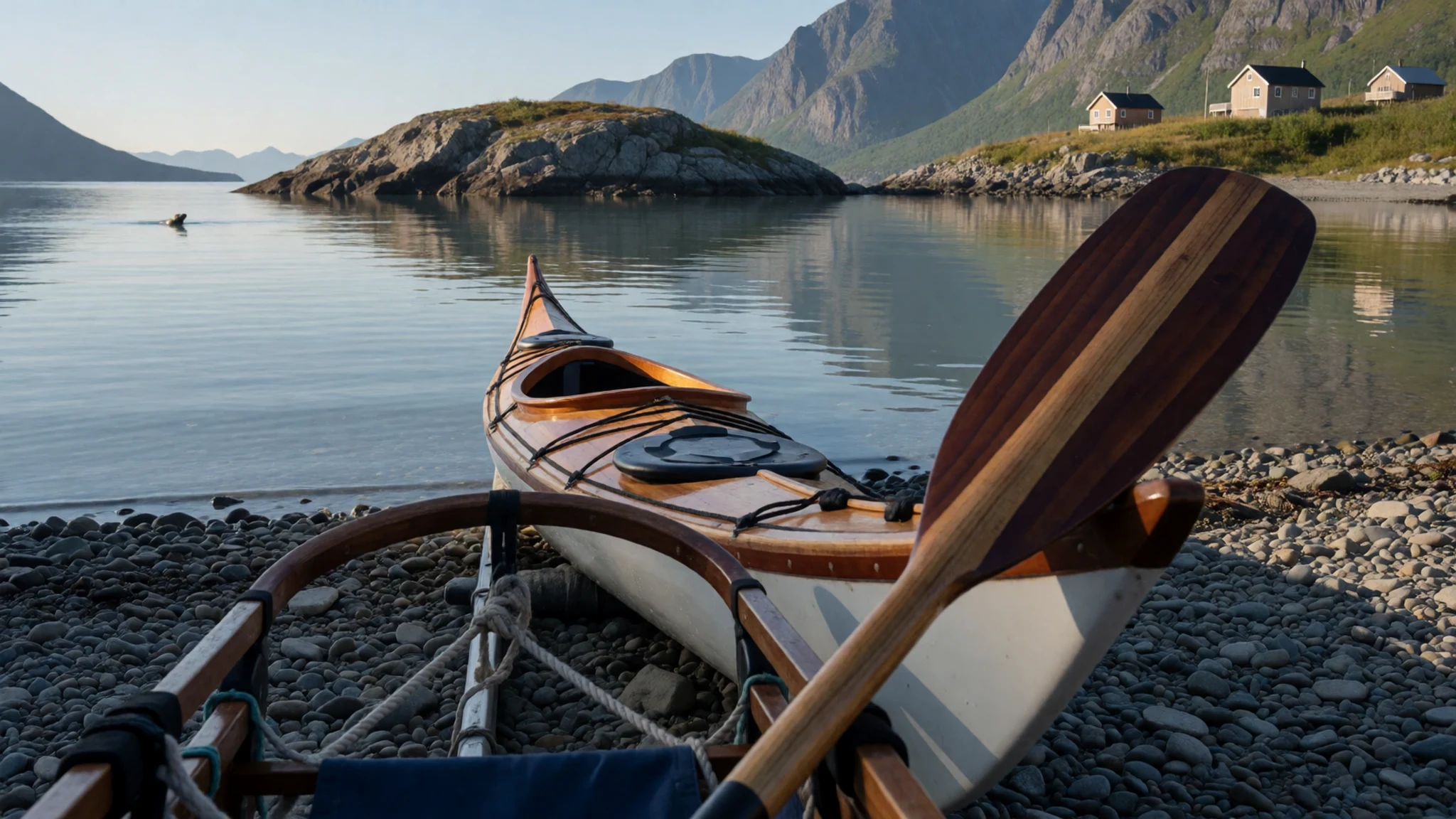
- Inuit drum dance — Arranged through the village lodge or tour operators
Drum dance is a performance tradition of East Greenland, with a frame drum, song and bodily movement telling stories or settling quarrels. Trips run by the village lodge and by Icelandic day-tour operators often include a performance. Treat it as a cultural event, not a stage show to talk over.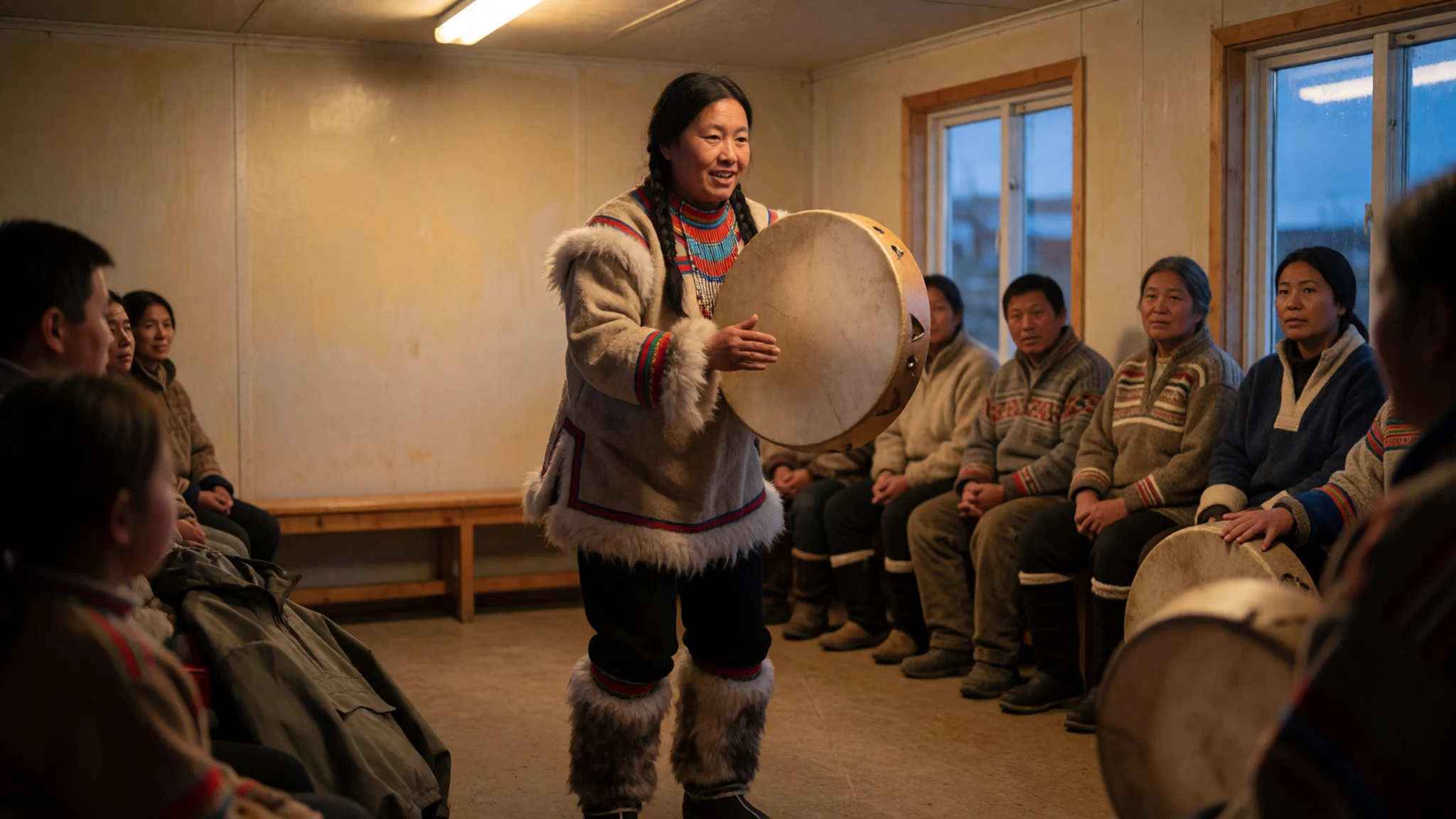
- The local museum — Village
A small museum run by a Greenlandic family in Kulusuk shows everyday life and hunting heritage through objects and family knowledge. It is modest and personal rather than grand. Opening depends on the family and on visiting groups, so ask in the village before relying on it.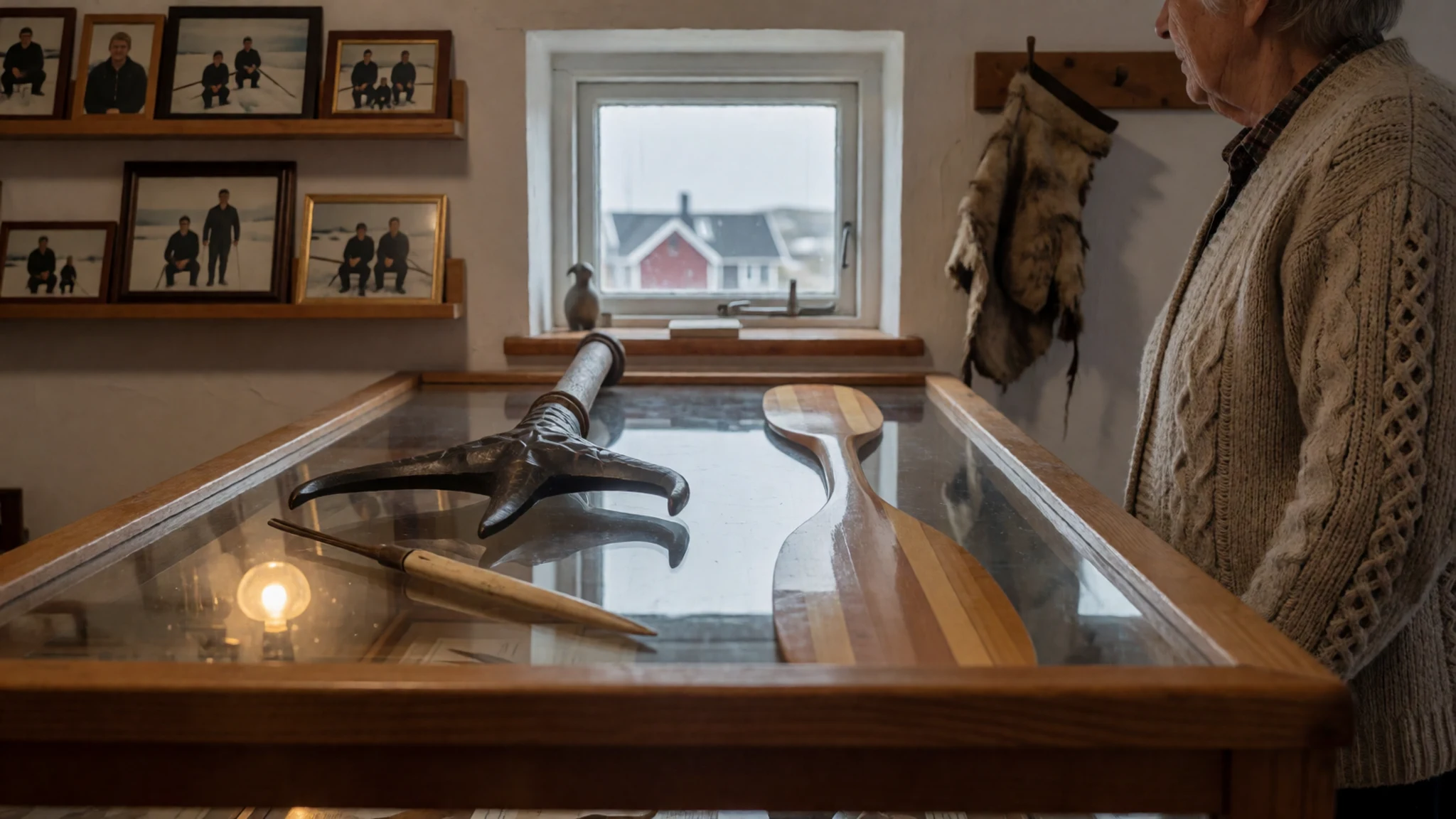
- Harbour and village walk — Harbour and village
A slow loop around the harbour and the painted wooden houses takes in sled dogs, drying racks, small boats and the Apusiaajik mountains across the sound. In winter the light on house windows can be striking. Wind and slippery rock call for proper boots even on this short walk.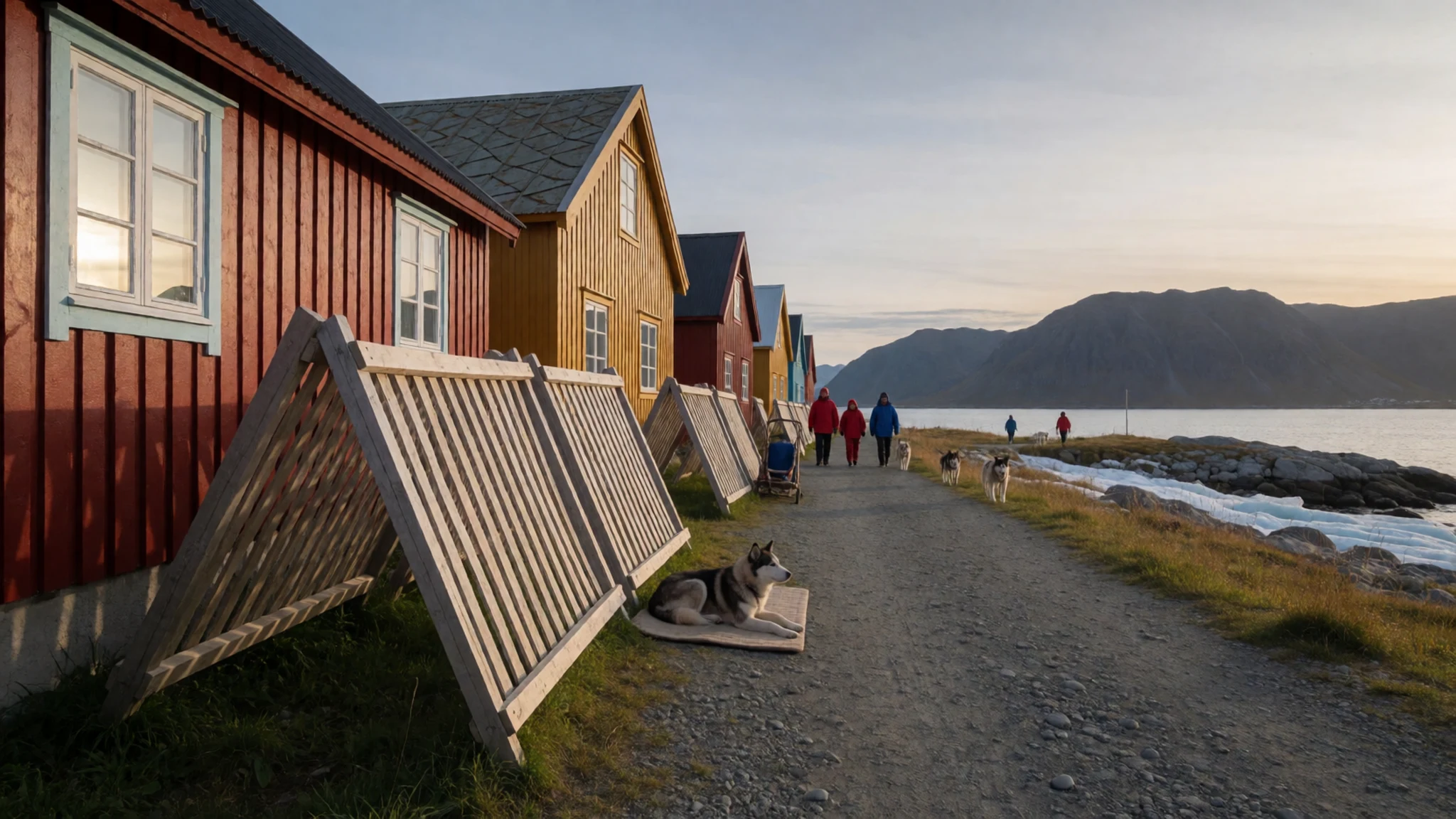
Culture
Kulusuk belongs to East Greenland, a region of Inuit communities whose way of life has long rested on hunting seals and fishing in a hard climate. The people here speak Kalaallisut, with Danish also in use, and the ties to Denmark show in the church, the shops and the Danes who live and work around the airport.
The unmarked crosses in the cemetery reflect a belief that the name of someone who has died is passed to another person, so the dead continue within the family. Names carry meaning in this way, and a baby may be named for a lost relative.
Drum dance is the tradition most visitors meet. The drum, the voice and the dancer's movements together carry stories, and in the past the form also played a part in settling disputes. Today it is performed for visitors and for the community alike.
Hunting and fishing remain important alongside tourism, because jobs are scarce and many villagers rely on more than one source of income. Sled dogs belong to working households, not to tourist displays, and kayaks and dogsleds sit side by side with snowmobiles and motor boats.
In Kulusuk, ask before photographing people, their homes, their dogs or the graves, and respect any refusal without argument.
What to wear
Kulusuk's traditional dress belongs to the wider Greenlandic Inuit tradition, built around sealskin: waterproof boots called kamiit, trousers and parkas designed for life on ice and sea. Festive outfits add beaded collars and bright colours, and families wear them on important days such as confirmations, church celebrations and national occasions. Skins are worked by hand and carry a lot of family pride.
Day to day, people in Kulusuk dress like anyone living with serious wind and cold: insulated jackets, wool, fleece, rubber boots and hats, with snowmobile suits in winter. Clothes are practical first, and colourful knitwear and sports brands are common. Younger people favour the same trainers, hoodies and jeans as elsewhere in Denmark and Iceland.
Visitors should plan for wind more than for temperature. A windproof, waterproof shell over layers of wool or fleece, a warm hat, gloves and sturdy waterproof boots with good grip on wet rock cover most of the year. Sunglasses help against glare off snow and water, and a head net is sensible in the summer insect season. There is no strict dress code, but a tidy, covered outfit is courteous at the church.
What to eat
- Suaasat — Village lodge or a family kitchen by invitation
Suaasat is Greenland's national soup, a warming stew of meat or fish with onion, potato and rice or barley. It suits the cold and wind here. Ask at the village lodge or a family kitchen whether it is being made.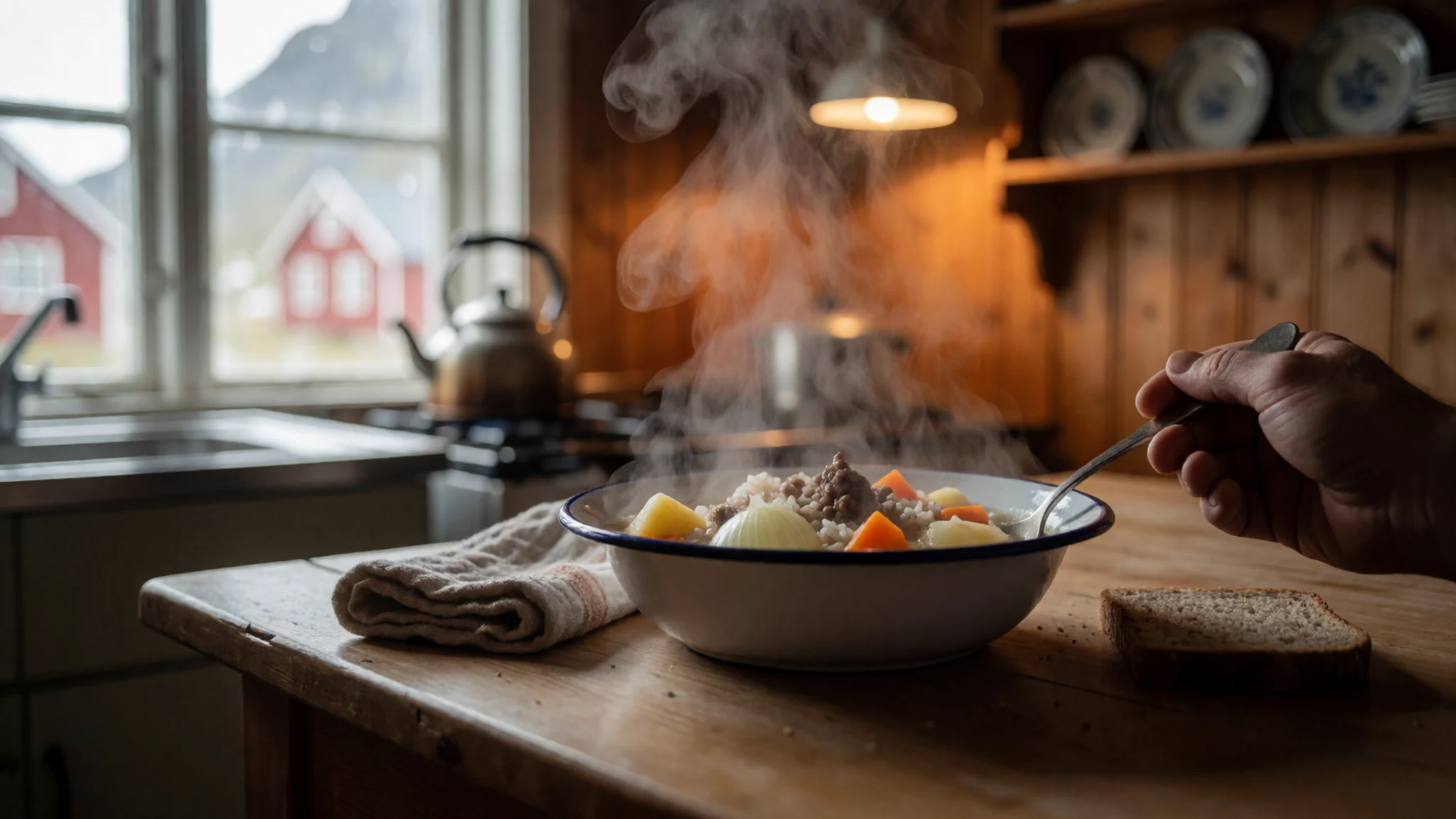
- Dried fish — Home kitchens and village gatherings
Fish dried on racks in the cold, dry air is a staple of Greenlandic eating, salty and chewy and eaten with fat or on its own. Racks are a familiar sight in the village, and a taste can often be arranged through a local host.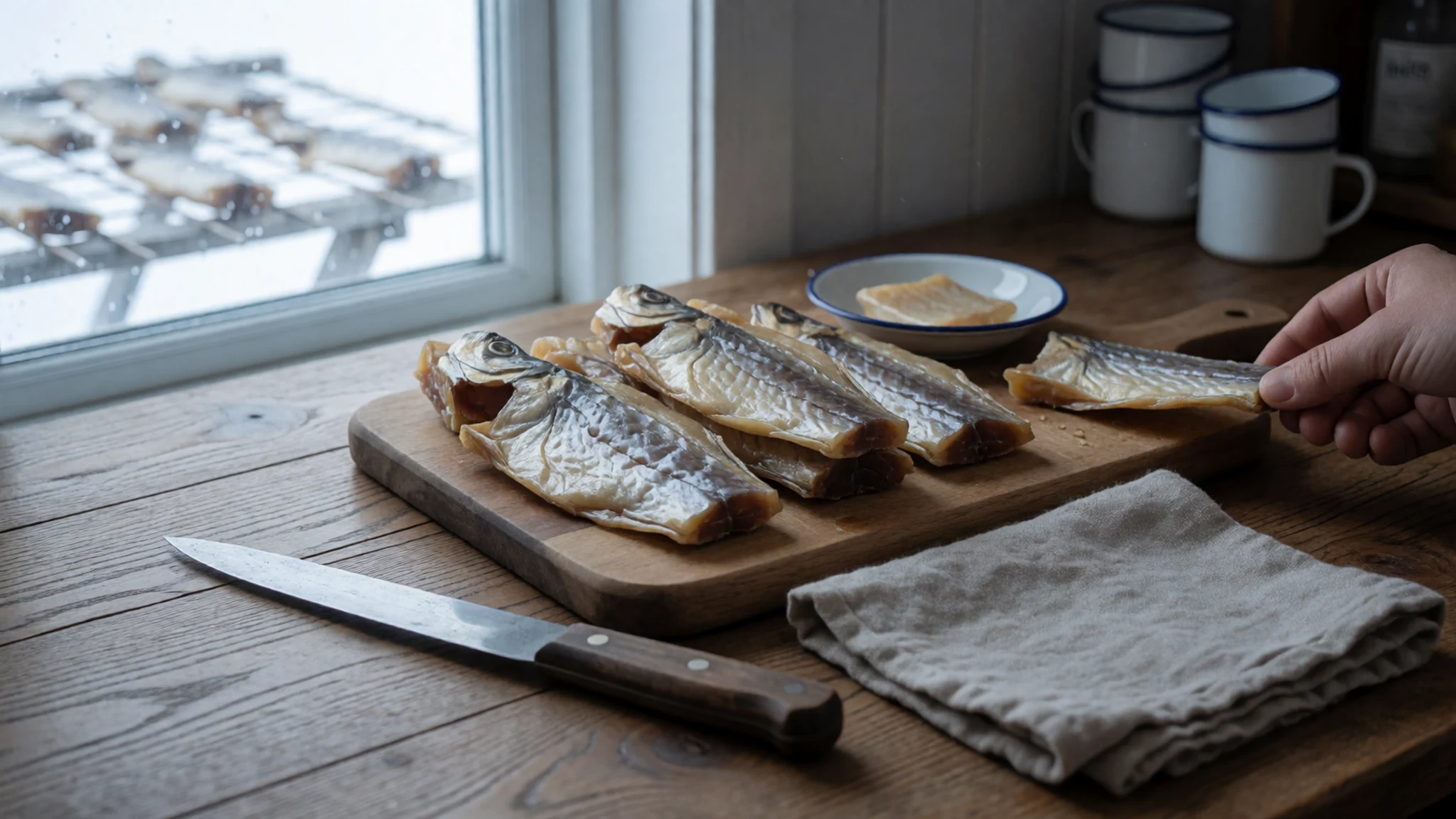
- Seal and other local meat — Local households and meals arranged through the lodge
Seal remains central to hunting households here, along with other meats and fish from the sea. Visitors are most likely to meet it boiled or in soup. It is a serious local food, not a novelty, so approach with respect and ask what is offered. - Kaffemik cake and coffee — Private homes, by invitation only
A kaffemik is a Greenlandic gathering for coffee and cakes, held at home for birthdays, confirmations and other celebrations. Visitors rarely stumble into one, but if invited, accept. Cake, bread and plenty of coffee are the usual hospitality. - Imported groceries — Pilersuisoq store in the village
Many things in Kulusuk arrive by ship or plane, so the Pilersuisoq all-purpose store is the practical place for bread, tinned food, snacks and drinks. Stock and prices reflect that journey, so bring anything you cannot do without.
Plan it
Best time. July to September for open water, the easiest walking and glacier or boat trips; March and April for frozen sounds, snowmobile and dogsled travel, with sharp cold and strong wind. Gales can strike in any month and often cancel flights.
How long. 1–3
Getting there. Icelandair flies from Reykjavik to Kulusuk Airport, and Air Greenland connects with Nuuk, so check current schedules. The village is a short way from the airfield. Tasiilaq is reached from Kulusuk only by boat or helicopter.
Budget. high
Tips
- Leave a spare day or two before onward flights, because wind regularly cancels them
- Book the lodge, helicopter or boat transfers and any guided activities well ahead through the operator or lodge
- Bring warm layers, a windproof shell and waterproof boots whatever the month
- Carry what you need, as the shop is small and supplies are limited, and check ahead about cards and cash
- The airport souvenir shop will stamp passports for free
Etiquette
- Ask before photographing people, houses, dogs or graves
- Keep to paths near the cemetery and treat the crosses with respect
- Do not approach sled dogs or hunting gear unasked
Nearby
Sources
- Wikidata Q588549 (CC0)
- Wikipedia: Kulusuk (rev 1379308661) (CC BY-SA 4.0)
- Wikivoyage: Kulusuk (rev 5362309) (CC BY-SA 4.0)
- Photo: Kulusuk winter sunset (Algkalv) (CC BY 3.0)
- Photo: Kulusuk, Greenland (Cmichel67) (CC BY-SA 4.0)
- Photo: Greenland relief location map (Uwe Dedering) (CC BY 3.0)
- Photo: Kulusuk sled and kayak (Algkalv) (CC BY 3.0)
- Photo: Kulusuk cemetery (Arian Zwegers) (CC BY 2.5)
- Photo: Kulusuk village, August 2018 (Fiske) (CC BY-SA 4.0)
- Photo: Post Greenland office in Kulusuk (Algkalv) (CC BY 3.0)
- Photo: Kulusuk church interior (Fiske) (CC BY-SA 4.0)


Wildlife
- Black guillemot (animal)
Picture a smart dark seabird that plunges beneath the waves to hunt along the sea floor. That is the black guillemot, a bird of these cold Greenlandic coasts, and the Kalaallisut name of Kulusuk points to its chest. You may spot single birds or small pairs near rocky shores, cliffs and islands. A guide can suggest the best places and times. Watch from afar, speak softly, and never offer it food.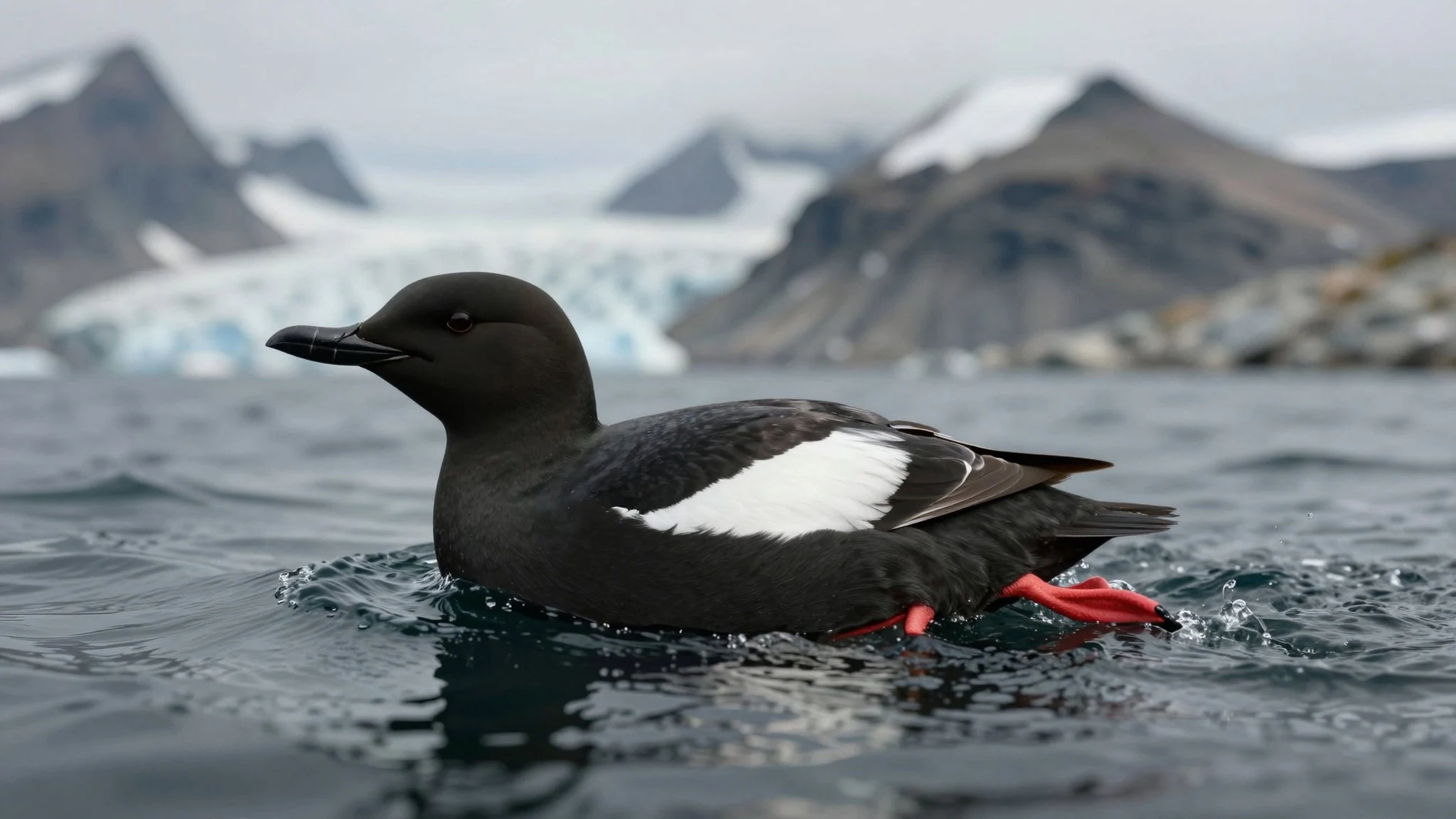
- Black guillemot (bird)
Picture a smart dark seabird that plunges beneath the waves to hunt along the sea floor. That is the black guillemot, a bird of these cold Greenlandic coasts, and the Kalaallisut name of Kulusuk points to its chest. You may spot single birds or small pairs near rocky shores, cliffs and islands. A guide can suggest the best places and times. Watch from afar, speak softly, and never offer it food.