Punta Cana
Punta Cana, Dominican Republic
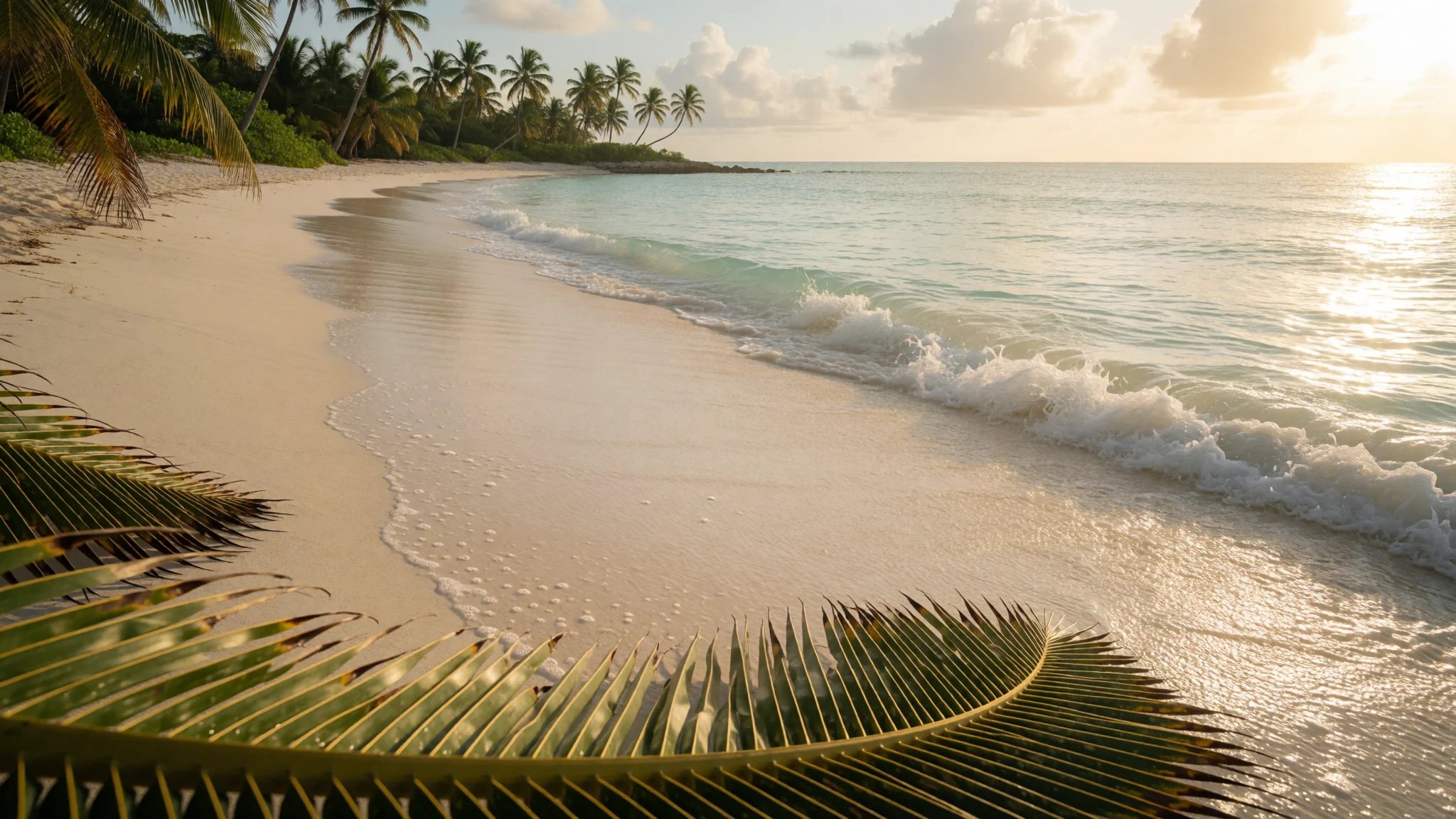
Punta Cana is a long, wind-brushed resort coast of white sand, where Atlantic and Caribbean water meet on the eastern edge of the Dominican Republic.
The place
Punta Cana sits on the far eastern coast of the Dominican Republic, the resort settlement of La Altagracia. Since 2006 it has formed the Verón–Punta Cana touristic district, under Higüey rather than as a city on its own. About 139,000 people live here, on ground only 28 metres above the sea. Beaches look out on the Atlantic to the north and the Caribbean to the south, a pale-sand shore. The provincial coastline runs about 100 kilometres and tends to stay mildly windy.
Northward the strand continues through Cabeza de Toro, Las Corales, El Cortecito and Bávaro, once separate beaches and now a single resort corridor. Higüey, the nearest city, lies about 45 kilometres inland, close to an hour by car. The airport is about 3 kilometres inland on the road linking Higüey and La Romana, so a first arrival is often a coach, not a town square. More than 50 large resorts line the destination. European firms, Spanish chains most of all, own all but two of them.
Daily life splits at the gate. Inside, the hours turn on pools, buffet lines and a guarded length of sand. Outside, Verón and the Higüey road are working towns: shared minibuses, small shops, churches and the kitchens that feed resort staff. Heat lasts most of the year and is strongest in late summer and autumn.
Its story
Punta Cana took its present name in 1970. Before that the point was known as Yauya, or Punta Borrachos, a little-developed stretch of La Altagracia with no resort coast at all. In the late 1960s a Dominican businessman, Frank Rainieri, then in his twenties, and Theodore Kheel, who practised law in New York and mediated labour disputes, joined other investors to buy a tract of 58 million square metres at the island's eastern end. Higüey, the nearest real city, was then a five-hour drive over poor roads.
Their opening project was small: the Punta Cana Club, a lodging for about 40 guests. In 1978 the Paris Mediterranean Club entered the Grupo Punta Cana venture and added a 350-room resort. In 1979 the Puntacana lodging itself went up. Barceló and the Newco group later settled at Bávaro, and that northern beach grew into its own resort town.
The airport opened in 1984, and new roads cut the old isolation. Work on a marina began in 1993. In 1996 the Dominican designer Óscar de la Renta and the Spanish singer Julio Iglesias joined the project, and the first residential communities started in 2000. Tortuga Bay, a quieter lodging inside the same estate, opened six years after that. The district gained a political form in 2006, as Verón–Punta Cana, under Higüey. Developers have spoken of environmental and social duties since the first buildings rose, a claim that now sits beside a crowded resort coast and the workforce that runs it.
What to see
- Juanillo — south of the airport
Juanillo is a beach in Punta Cana, a few miles from the airport, that was a small fishing village until resort building caught up. Pale sand and Caribbean water still define it. The scale remains easier to read than at Bávaro, where megaresorts stand shoulder to shoulder, so the older fishing shore is not entirely gone.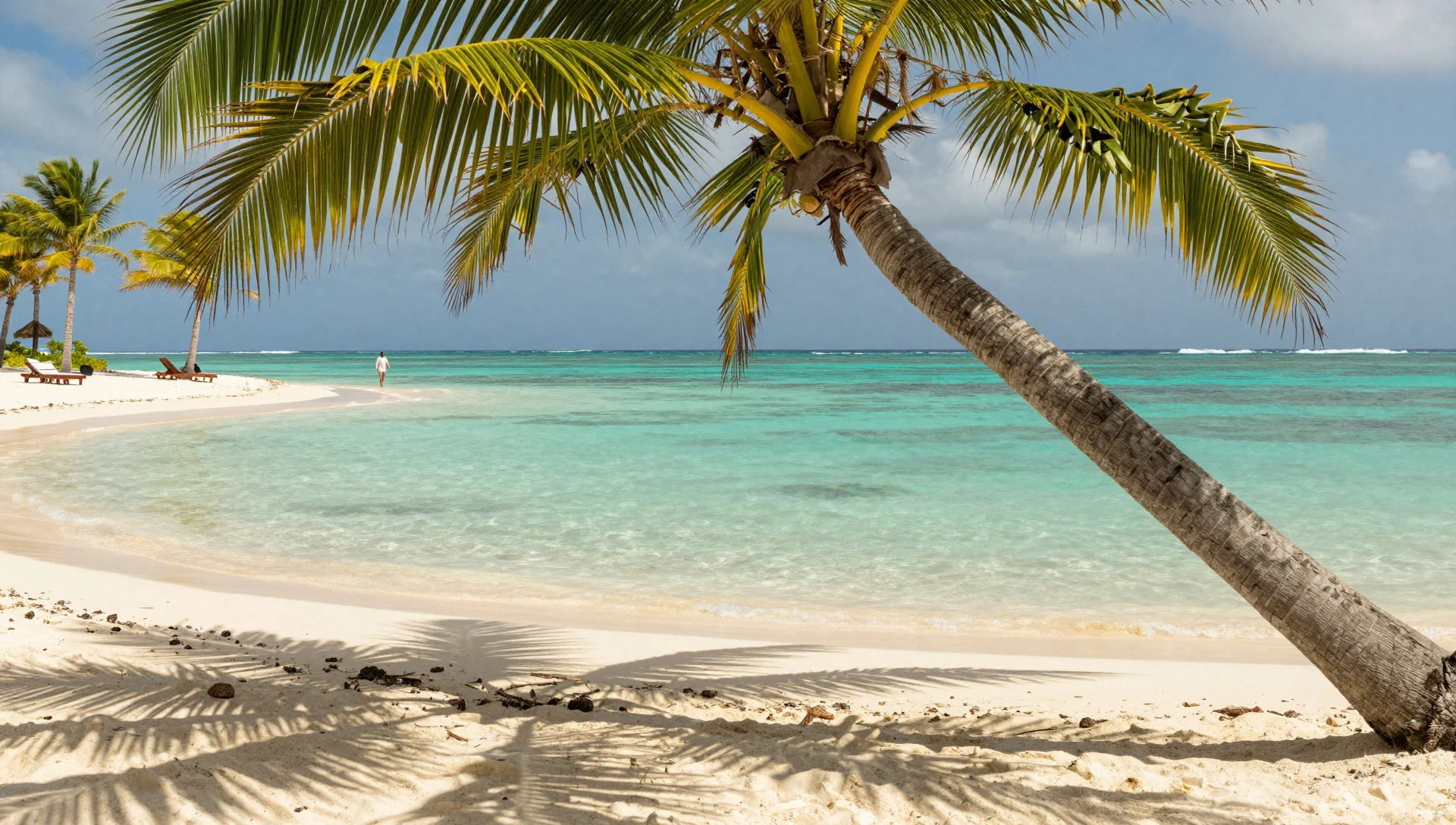
- Isla Saona — Parque Nacional del Este
Isla Saona lies off Punta Cana inside Parque Nacional del Este, and the usual visit is a day boat from the resort coast. Beaches backed by palms and a gentle surf are the whole of it: sand, shade and the boat ride, with no town behind the shore. The island sits in a protected reserve, so the outing is a park visit as much as a beach day.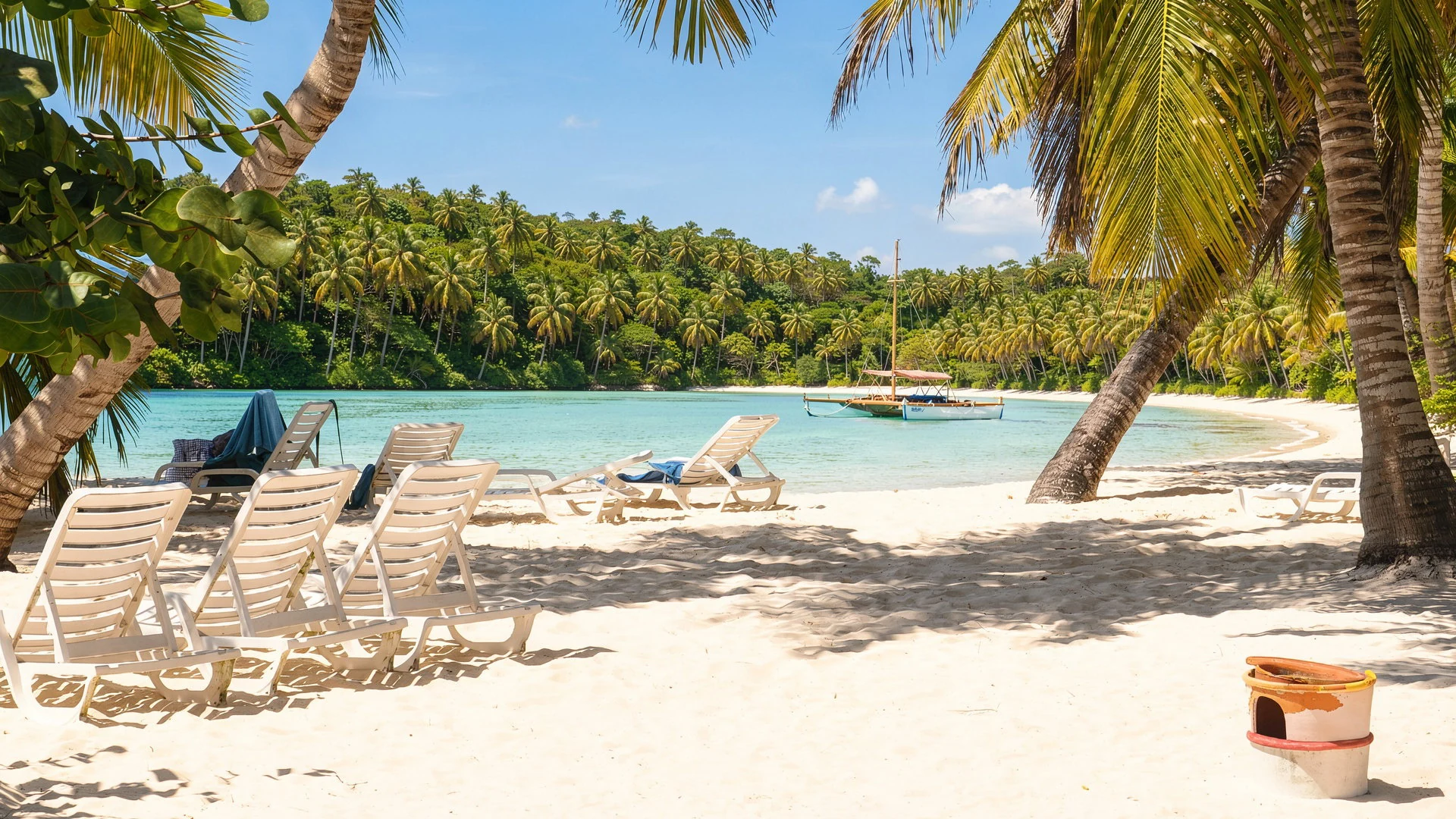
- Bávaro — north of Punta Cana
Bávaro is the long beach beyond El Cortecito, after Cabeza de Toro and Las Corales, running on toward Arena Gorda and Macao. This is the megaresort front: towers, pooled gardens and a continuous public-looking sand that is in practice stitched to lodging after lodging. The water is the Atlantic side of the point, often a little stirred by the wind that blows along this coast.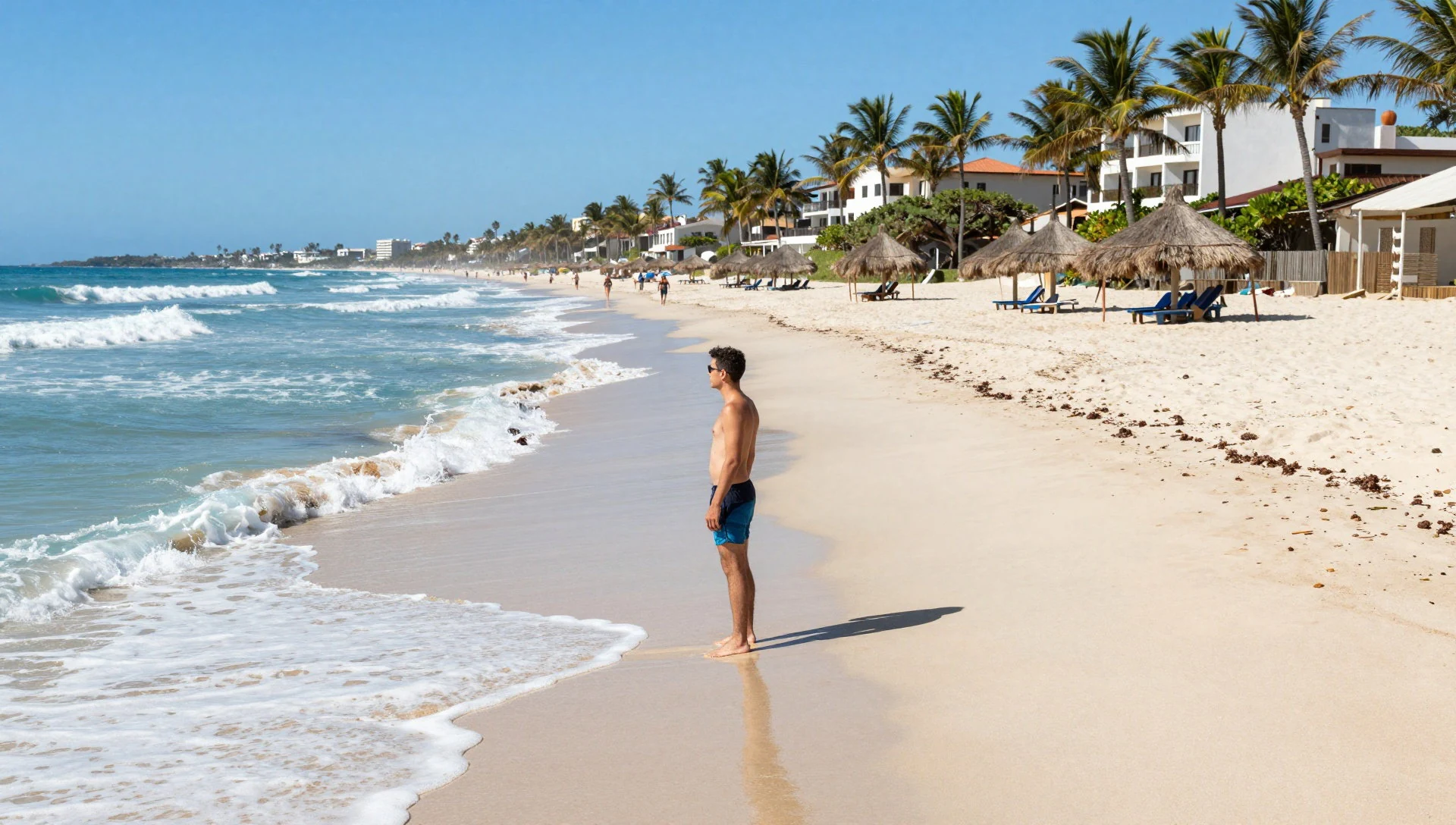
- Altos de Chavón — above the Chavón River
Altos de Chavón stands inland from Punta Cana on a cliff above a bend in the Chavón River. It is a purpose-built village for artists, laid out to recall a Mediterranean town of the sixteenth century: stone lanes and studios. Nothing here is a rescued colonial original. The interest is the craft work and the odd transplant of a hill town into the eastern Dominican countryside.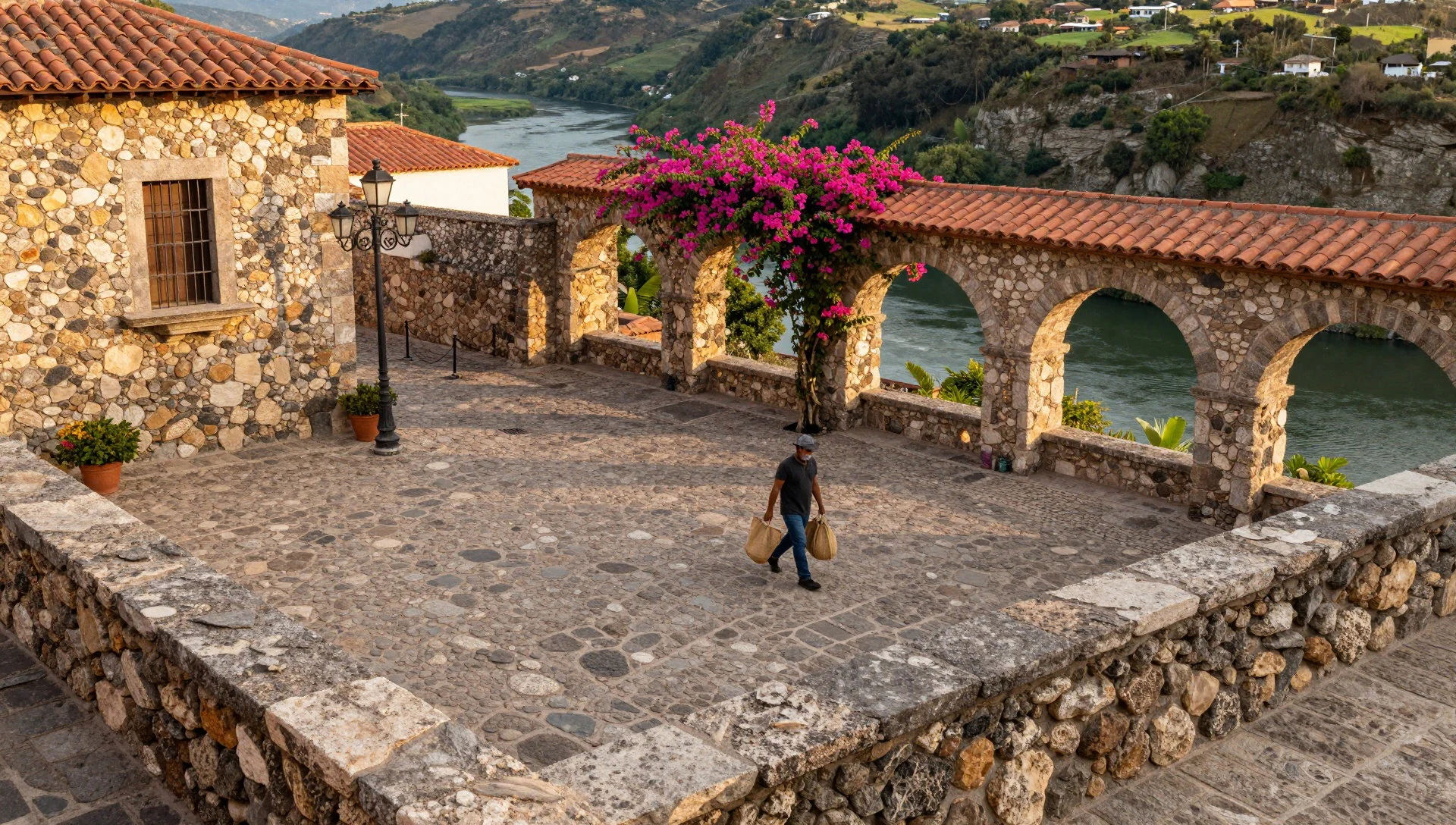
- Corales — seaside cliffs on the resort strip
Corales is a beach in Punta Cana, set between El Cortecito and Cabeza de Toro, a pale-sand shore with the same Atlantic water as the rest of this strip. Open sand runs beside the sea. The beach sits inside the resort world, a busy edge of coast along the lodging strip. For anyone walking it, the sand and the waterline show the long sweep of this shore.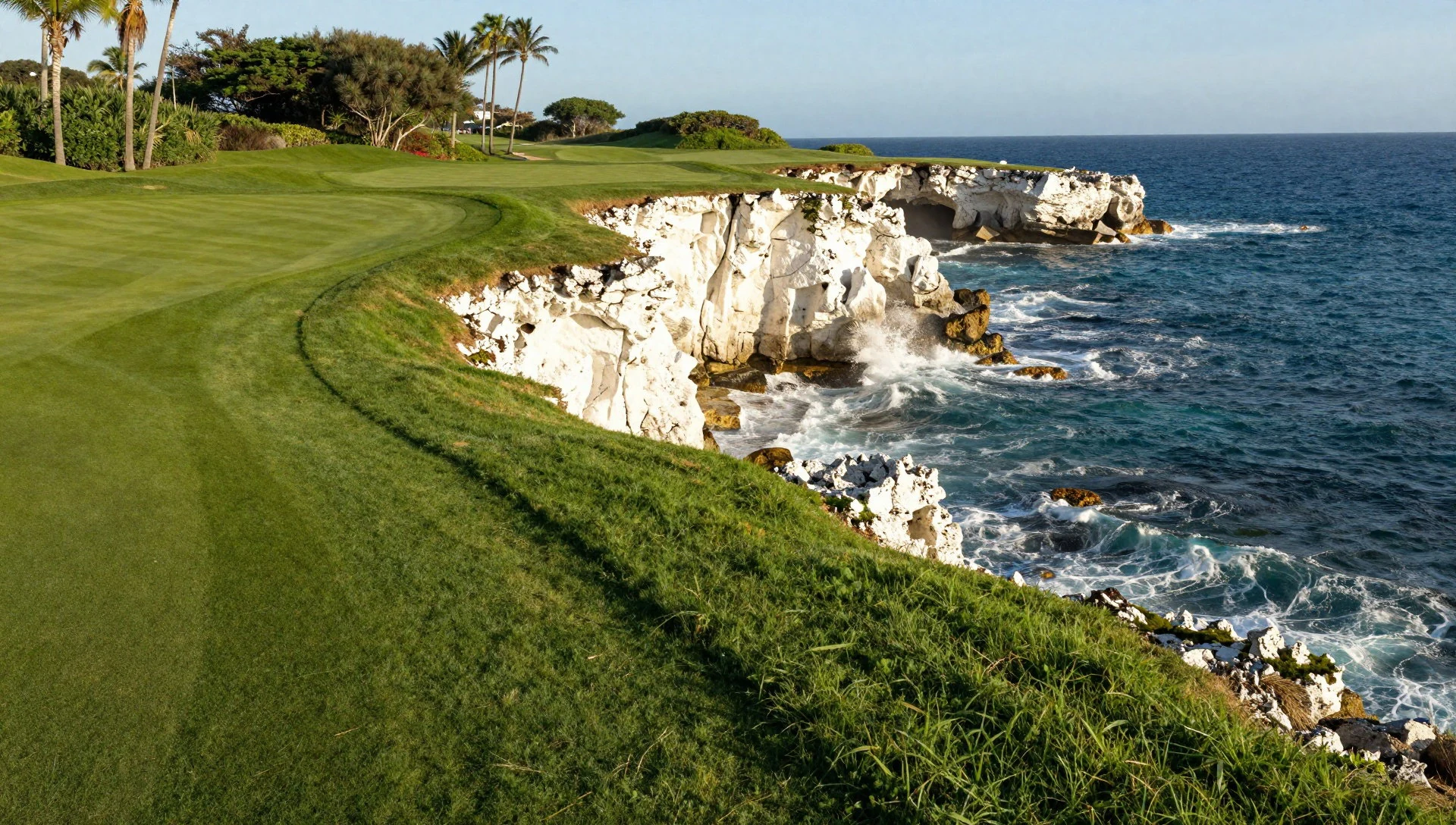
Culture
Punta Cana keeps resort time and town time. In the resorts the day is international: buffet seatings, staged merengue, and staff who switch into English because the guests do. In Verón and on the road to Higüey the culture is ordinary Dominican — Spanish first, Catholic feasts, baseball on the television, and merengue and bachata as the music that fills a room rather than only a stage. Families set the week; Sundays pull people toward a long table and, in Higüey, toward Our Lady of Altagracia, a major Marian devotion in the country. The resort strip borrows those rhythms and smooths them: a dance lesson by the pool, a crafts stall between the gates. What it cannot smooth away is the workforce, most of whom commute from towns that see little of the all-inclusive rate. Between those towns and the beach, service is warm and direct, and a little Spanish changes the tone of every exchange. Ask before you photograph people, and offer a proper buenos días before any request.
What to wear
Punta Cana's traditional dress belongs to the Dominican Republic rather than to the resort uniform. Men's older formal shirt is the guayabera or chacabana, a light cotton or linen shirt with vertical pleats, worn for weddings, patron-saint days and any occasion that is smart but too hot for a jacket. Women's festive dress runs to bright cotton, ruffles and a full skirt, the sort of clothes that appear at carnival and at a fiesta patria, not on a weekday at the beach. Larimar, the blue stone sold as a Dominican souvenir, is cut into jewellery in Higüey and in the resort arcades. On an ordinary day in Verón people wear what the heat allows: T-shirts, jeans or shorts, sandals and a cap. Inside the gates the visitor uniform is swimwear from breakfast onward, with a cover-up for the buffet. That reads as normal on the sand and out of place in town. A visitor should pack linen or cotton that breathes, a hat, and sandals that can take hot pavement, plus water shoes if a reef trip is likely. Shoulders and knees should be covered for a church in Higüey. After dark the resorts shift toward dresses and collared shirts, still in light cloth, because the heat does not really leave.
What to eat
- La bandera — comedores in Verón and on the road to Higüey
La bandera is rice, beans, stewed meat and salad, the ordinary midday plate around Punta Cana. It shows up in comedores along the road through Verón and toward Higüey. Resort buffets serve the same ingredients as a themed station, softer and less garlicky than the town version.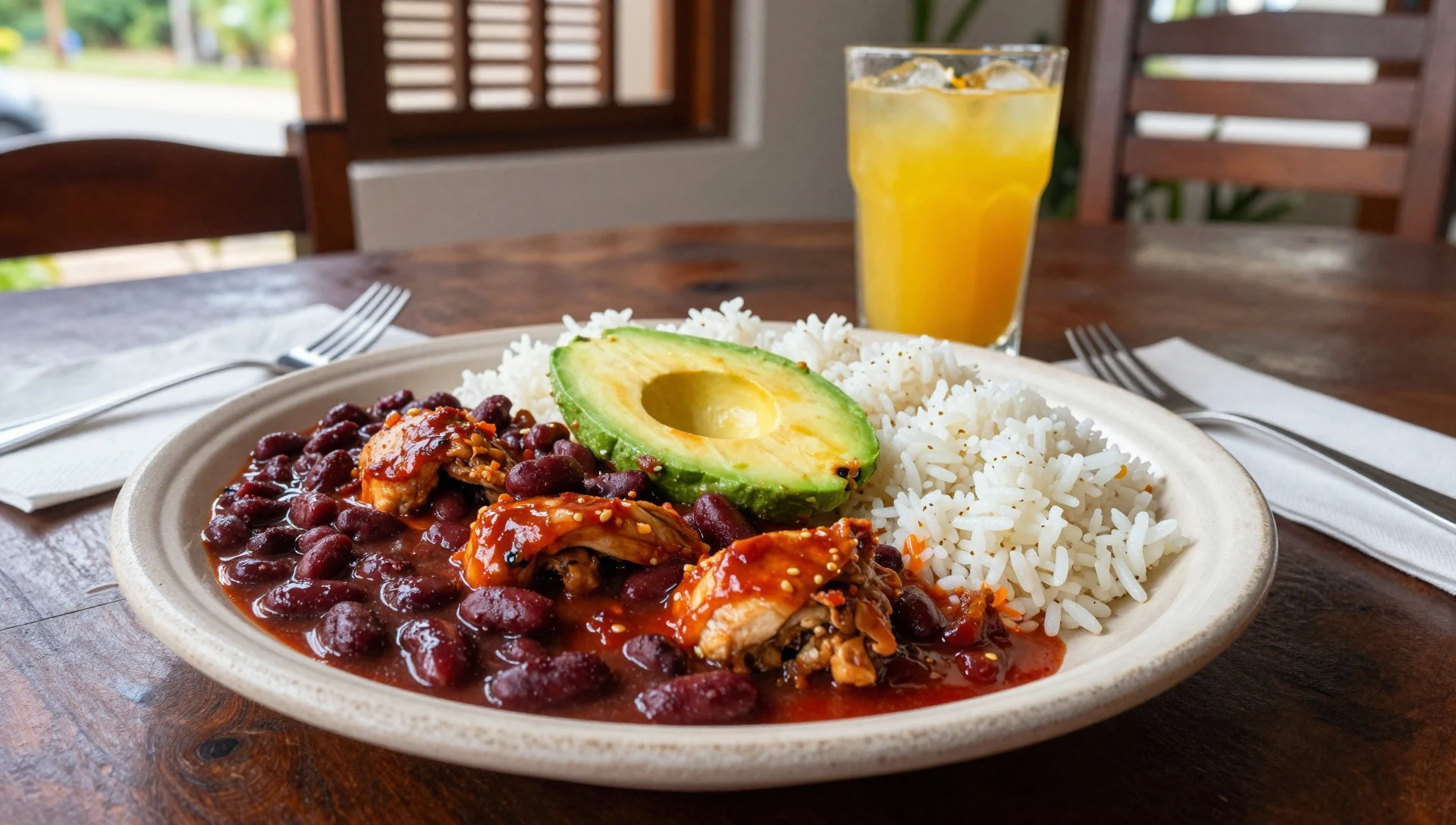
- Mangú — early street carts and small eateries in Verón
Mangú is mashed green plantain, usually with fried eggs, fried salami or cheese, and it is the breakfast that workers around Punta Cana actually eat. Street carts and small eateries in Verón serve it early, long before the resort brunch opens its fruit displays.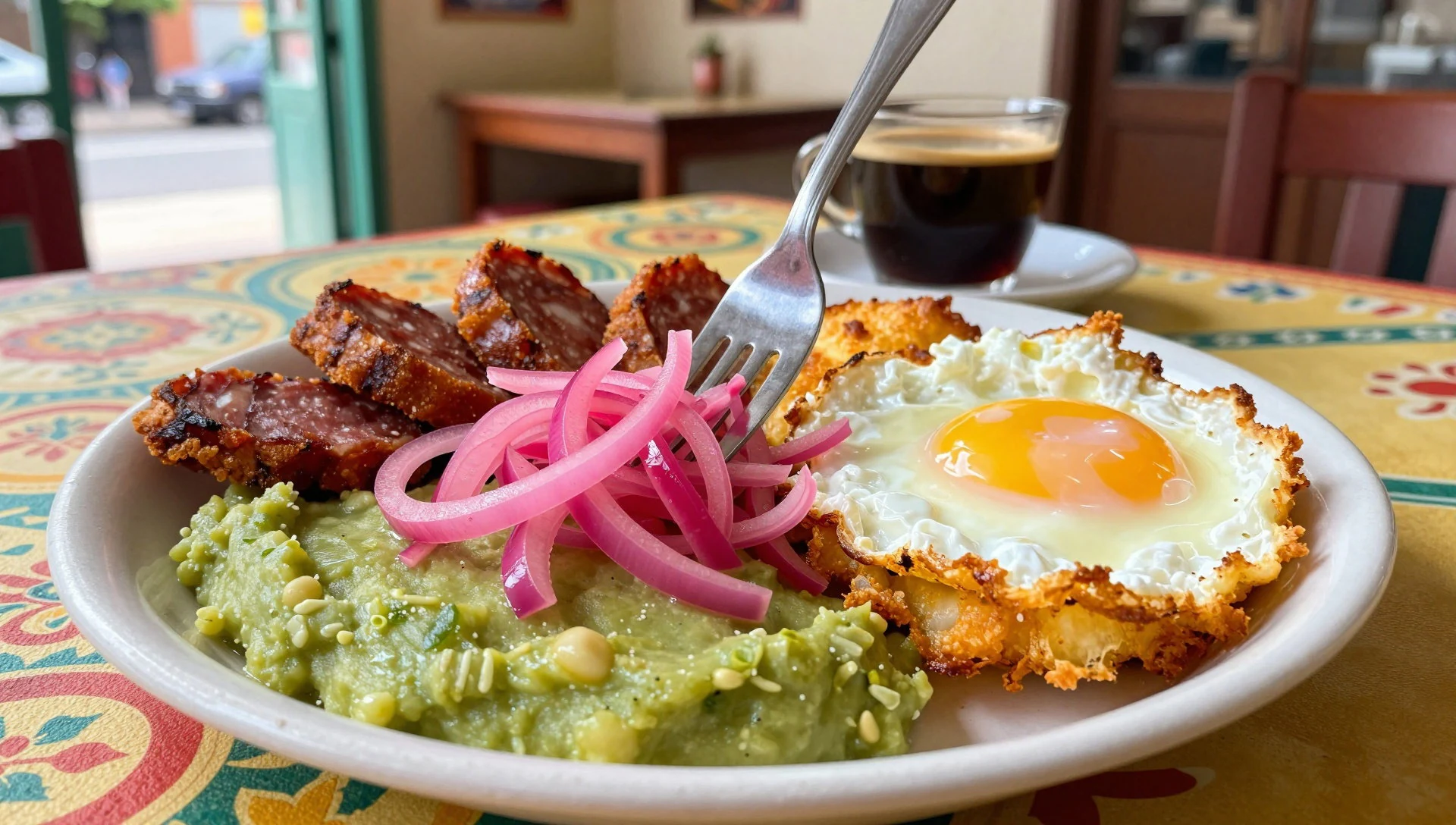
- Grilled lobster and fried fish — beach kitchens around Bávaro and El Cortecito
Grilled lobster and fried whole fish are the celebration foods of the Punta Cana coast, served from beach kitchens around Bávaro and El Cortecito. The lobster is split over the coals; the fish arrives with tostones or a sharp salad. Garlic and lime do more work than any sauce. - Sancocho — local kitchens toward Higüey
Sancocho is a long-simmered stew of meats, plantain, yuca and pumpkin, the dish Dominican families around Punta Cana build on a weekend or for a gathering. It is uncommon on a resort lunch buffet and common in local kitchens toward Higüey, often in a pot large enough for several people. - Pastelitos — bakeries and bus-side counters between Punta Cana and Higüey
Pastelitos are small fried pastries filled with beef, cheese or chicken, the snack sold at bakeries and bus-side counters between Punta Cana and Higüey. They are eaten standing up, with coffee, and they bridge a gap between resort breakfast and a town errand. - Morir soñando — street juice stands and cafés toward Verón
Morir soñando is orange juice beaten with milk and cane sugar, a cold drink that answers Punta Cana's hard sun. Street juice stands and town cafés toward Verón blend it to order. Resort bars lean on rum and imported liquor, which is a poor swap in this heat.
Plan it
Best time. Punta Cana is hot for most of the year, especially from late summer into autumn. The coast stays mildly windy, which makes the beach more bearable than the inland road. Travellers who wilt should avoid that late-summer peak and treat every month as a sun-and-water trip.
How long. 4–5
Getting there. Fly into Punta Cana International Airport, about 3 kilometres inland on the highway between Higüey and La Romana. Resort packages usually include a coach waiting after customs, with the lodging's name on a sign to the right as you leave the hall; check in at that desk before looking for a bus. Private taxis are there at agreed fares. Santo Domingo is the other gateway, then a drive of about three hours.
Budget. mid
Tips
- Arrange the airport transfer with your lodging, or agree the taxi fare before you ride.
- Do not drink tap water. Use bottled water, and assume ice is safe only where you trust the kitchen.
- Strong sun and an open bar dehydrate you fast. Alternate alcoholic drinks with water.
- Leave the resort at least once for Verón, the town on the old road, or for Higüey, about an hour inland.
- Be careful booking a rideshare from inside a resort. Arrange the car at the gate or through the desk.
- Carry cash for town eateries and small stalls. Cards are the resort default.
Etiquette
- Greet people with buenos días or buenas tardes before you ask for anything.
- Ask before you photograph staff, vendors or other beachgoers.
- Cover shoulders and knees in churches, above all in Higüey.
- After customs, check in at the transfer desk before you go looking for your coach.
- A tip for housekeeping and drivers is appreciated even on an all-inclusive stay; ask whether a service charge is already included.
Nearby
Sources
- Wikidata Q1568095 (CC0)
- Wikipedia (rev 1381511597) (CC BY-SA 4.0)
- Wikivoyage (rev 5360512) (CC BY-SA 4.0)
- Photo photos/01-isla-saona-panoramio.jpg (CC BY 3.0)
- Photo photos/02-club-med-punta-cana.jpg (CC BY-SA 4.0)
- Photo photos/03-punta-cana.jpg (CC BY 2.5)
- Photo photos/04-dominicana-punta-cana.jpg (CC BY-SA 1.0)
- Photo photos/05-sunrise-over-punta-cana-8725196053.jpg (CC0 1.0)
- Photo photos/06-familia-rainieri.jpg (CC BY-SA 4.0)
- Photo photos/07-b-varo-23000-dominican-republic-panoramio-398.jpg (CC BY 3.0)
- Photo photos/08-gorgonia-ventalina-purple-sea-fan-ocyurus-chrysurus-yellowta.jpg (CC BY 4.0)


