Pagsanjan Falls
Pagsanjan Falls, Philippines
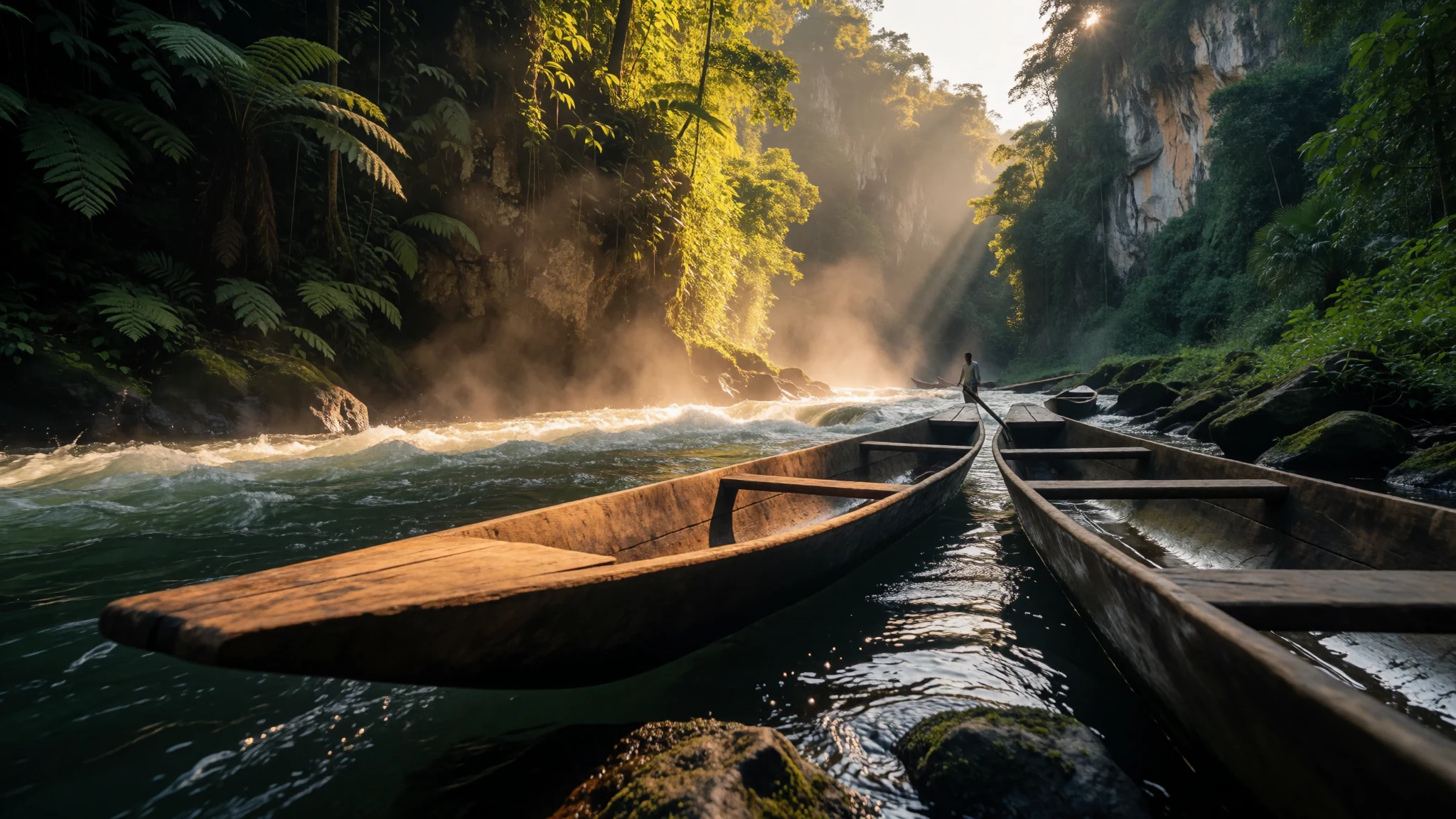
Pagsanjan Falls offers a classic Philippine river journey through steep tropical gorges to a three-drop cascading waterfall.
The place
Pagsanjan Falls, known locally as Magdapio Falls, sits within the province of Laguna in the Philippines. Although the cascading three-drop waterfall is physically situated inside the municipality of Cavinti, the traditional and most popular way to reach it begins upstream from the neighbouring town of Pagsanjan. The town itself lies quietly at the confluence of two waterways, the Balanac River and the Bumbungan River, which is also commonly referred to as the Pagsanjan River. Travellers approach the roaring waters by boarding narrow wooden dugout canoes. Skilled boatmen pole, pull, and steer these crafts against fast-flowing currents through a dramatic, steep-sided gorge draped in dense tropical vegetation. The journey requires navigating narrow rocky passages where the sheer canyon walls rise closely on both sides. Alternatively, visitors can reach the upper areas of the falls via a short walking path from Cavinti on the plateau above. The surrounding landscape is shaped by the rugged terrain of the Sierra Madre mountains, creating an environment where deep river valleys meet rolling forested uplands. The climate here is tropical, bringing warm temperatures and significant humidity year-round, alongside distinct seasonal rains that swell the rivers and cascade heavily over the rock faces.
Its story
The history of Pagsanjan Falls is tied closely to the colonial exploration of Laguna province and the dramatic topography of the Sierra Madre. While indigenous communities and local residents long knew the waters, the route through the gorge gained wider attention during the Spanish colonial era. Written records confirm that adventurous visitors have been taking the canoe trip up the river since at least the late nineteenth century. Meanwhile, the upland settlement of Cavinti was established centuries ago. Because of its isolated position on a high plateau, Cavinti repeatedly shifted between operating as an independent town and serving as a barrio of neighbouring municipalities during the Spanish period. This same seclusion made the area vulnerable over the decades to bandit groups, guerrilla fighters during the Second World War, and later insurgencies. In the twentieth century, the landscape underwent a major transformation with the construction of hydroelectric infrastructure, including the Caliraya and Lumot dams. These engineering projects flooded parts of the plateau to form large man-made reservoirs, altering local waterways and eventually opening up the upland areas around the lakes for camping, fishing, and outdoor recreation. Tensions over administrative boundaries have occasionally surfaced between local governments, particularly regarding whether the famous waterfall should officially bear the name of Cavinti, where it geographically rests, or retain its famous historical moniker linked to Pagsanjan.
What to see
- Pagsanjan Falls
The iconic three-drop waterfall hidden at the end of a dramatic river gorge. Visitors arrive via traditional wooden canoes steered by local boatmen through rushing rapids, or alternatively approach via a short pathway from the upper plateau.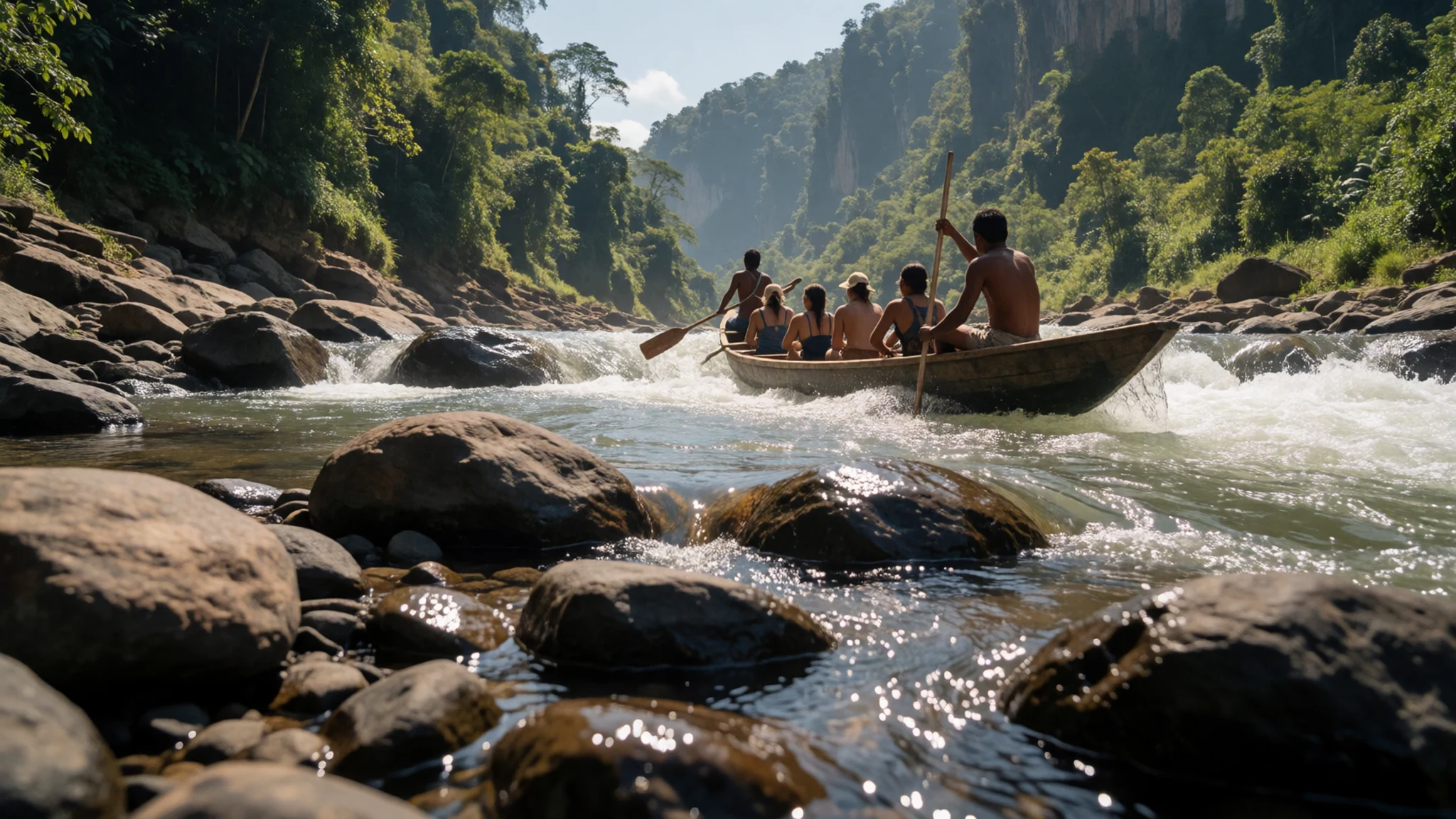
- Bumbungan Ecopark
A scenic park created by an engineering mishap when a planned dam spillway continuously overtopped, forming a wide, rushing mini-waterfall. It serves as a popular riverside spot for picnics, strolls, and relaxing by the flowing water.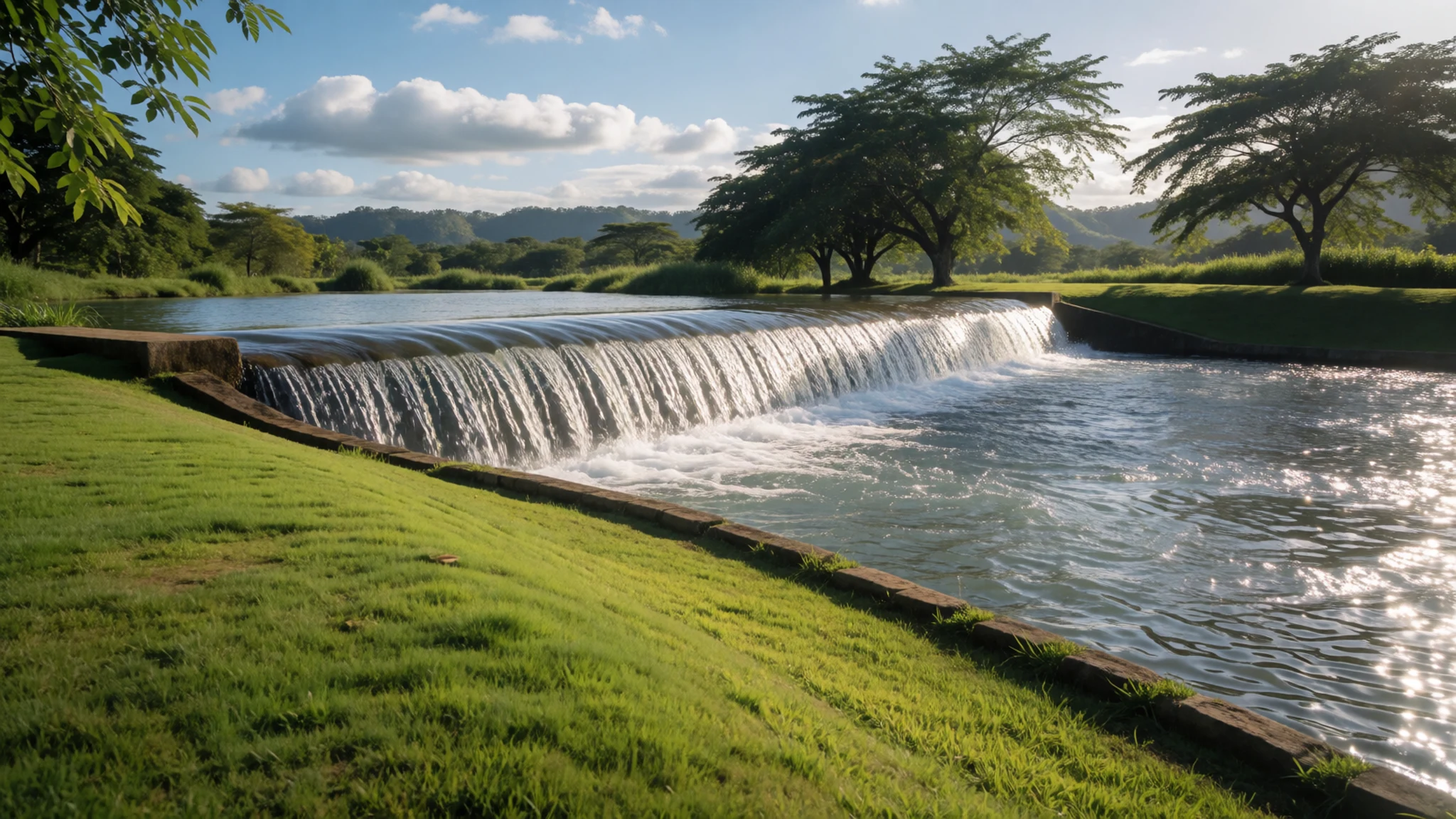
- Transfiguration of Our Lord Parish Church
Cavinti's historic Roman Catholic church, constructed on the traditional site where the community's revered image of Jesus Christ was reportedly discovered during the Spanish colonial period.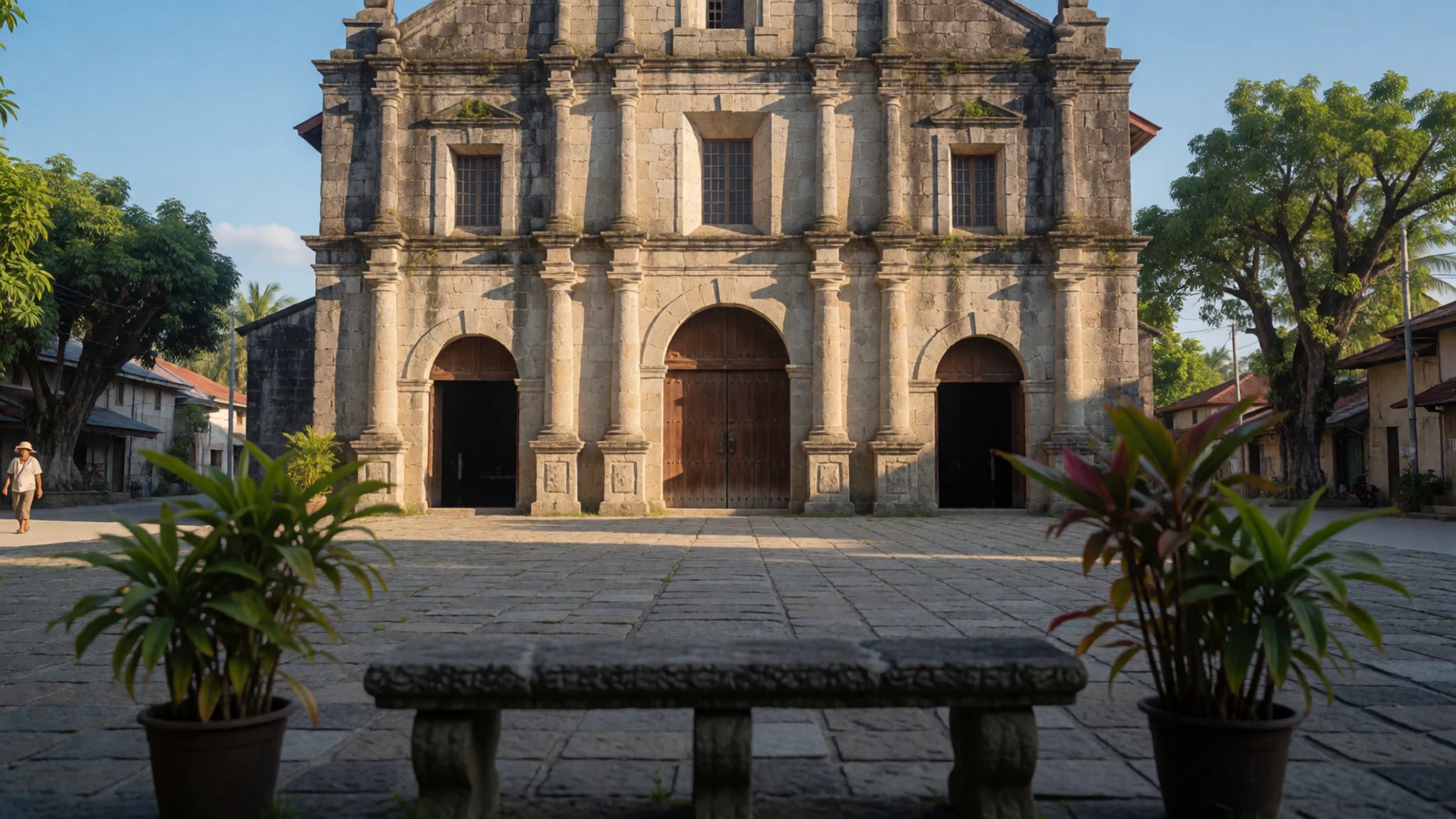
- Japanese Garden
A peaceful war memorial constructed in the uplands to commemorate soldiers who died during the Second World War. A climb of one hundred steps leads to a high viewpoint offering sweeping vistas over the waters of Caliraya Lake.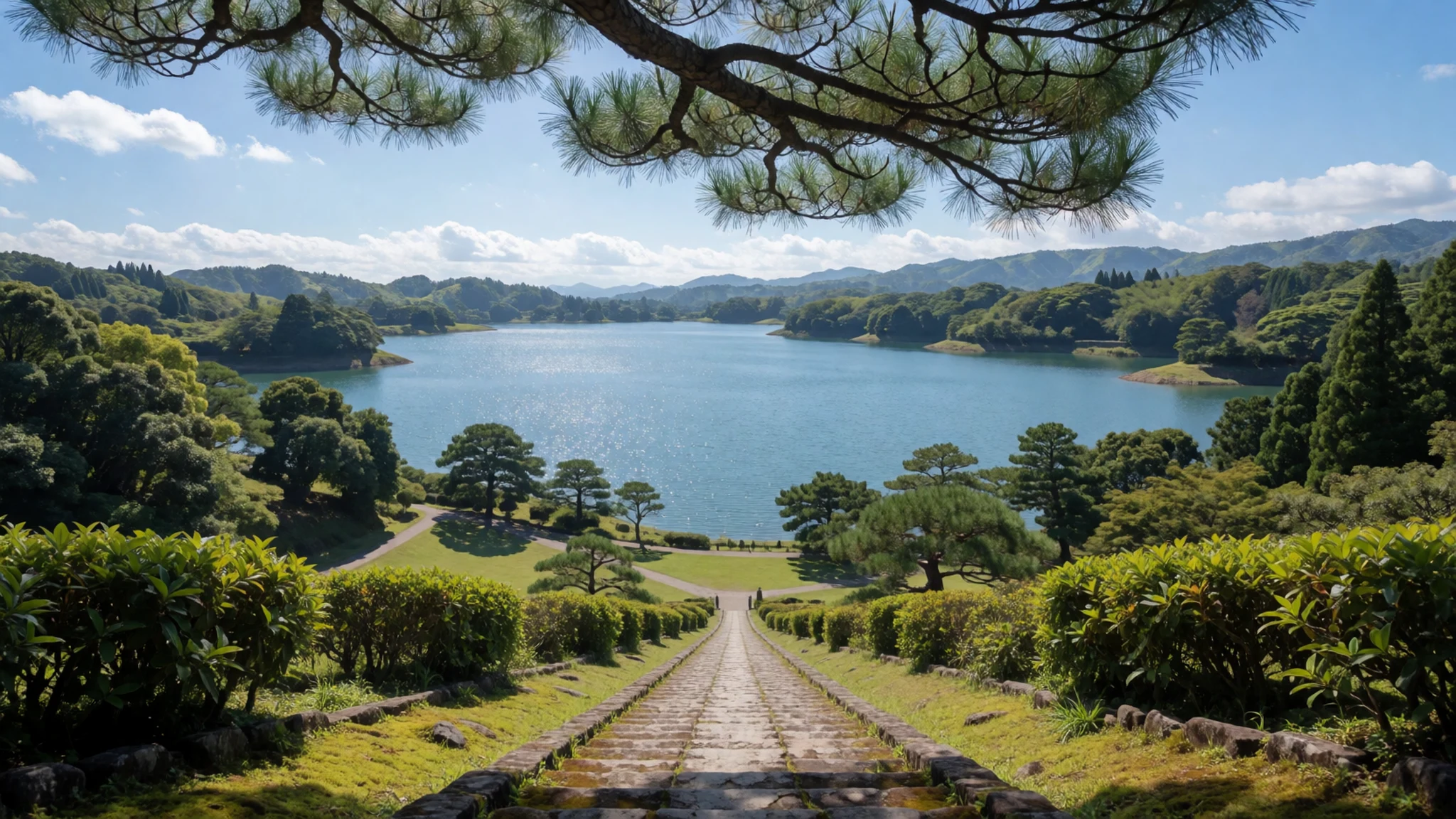
- Cavinti Underground River and Cave Complex
An extensive and rugged subterranean cave network winding through the dense limestone hills of the Sierra Madre mountains, suited for adventurous explorers seeking deep caverns and rock formations.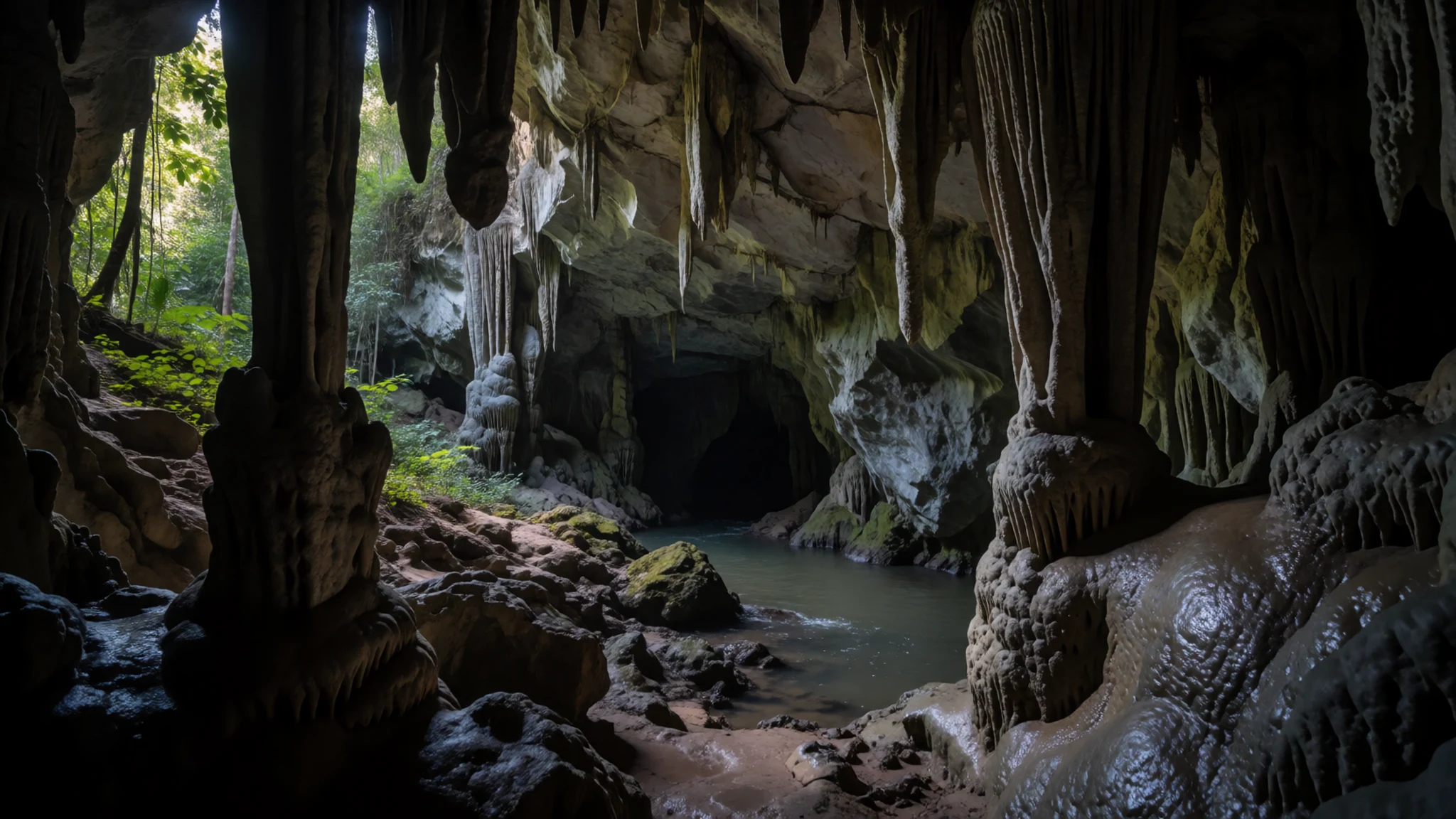
Culture
The communities around Pagsanjan and Cavinti reflect the warm, community-oriented spirit typical of rural Laguna province, deeply rooted in a blend of traditional Filipino values and historical colonial influences. Local life revolves around family, neighbourhood ties, and the rhythms of the surrounding rivers and agricultural lands. Festivals, religious observances, and parish events remain central to social gatherings, bringing residents together around historic churches and community halls. Visitors will encounter polite hospitality, respectful greetings, and a gentle pace outside the busier tourist corridors. When interacting with local boatmen, guides, and market vendors, patience and courtesy are always appreciated. Always ask for permission before taking photographs of local residents, particularly in residential neighbourhoods and during private religious ceremonies.
What to wear
Traditional attire in the rural Philippines historically featured lightweight, breathable fabrics suited to the tropical climate, such as woven plant fibres and cottons that kept wearers cool in high humidity. For formal occasions, traditional garments like the barong tagalog for men and intricate Filipiniana dresses for women remain symbols of national heritage. Today, everyday wear in Pagsanjan and Cavinti is casual and practical. Residents typically dress in comfortable t-shirts, lightweight trousers, shorts, and sturdy sandals or trainers suitable for warm weather and damp ground. Travellers exploring the waterfalls and surrounding upland nature spots should wear quick-drying clothes, swimwear, and secure water shoes or sandals with good grip, as the canoe trip and river rocks involve getting thoroughly wet. When visiting churches or attending local village events, dress modestly by covering shoulders and knees out of respect for local religious customs.
What to eat
- Local Coffee at Roa Coffee — Roa Coffee
A cosy neighbourhood stop located along the local routes, ideal for sampling regional Philippine coffee blends and simple refreshments before heading out towards the mountain lakes and waterfalls.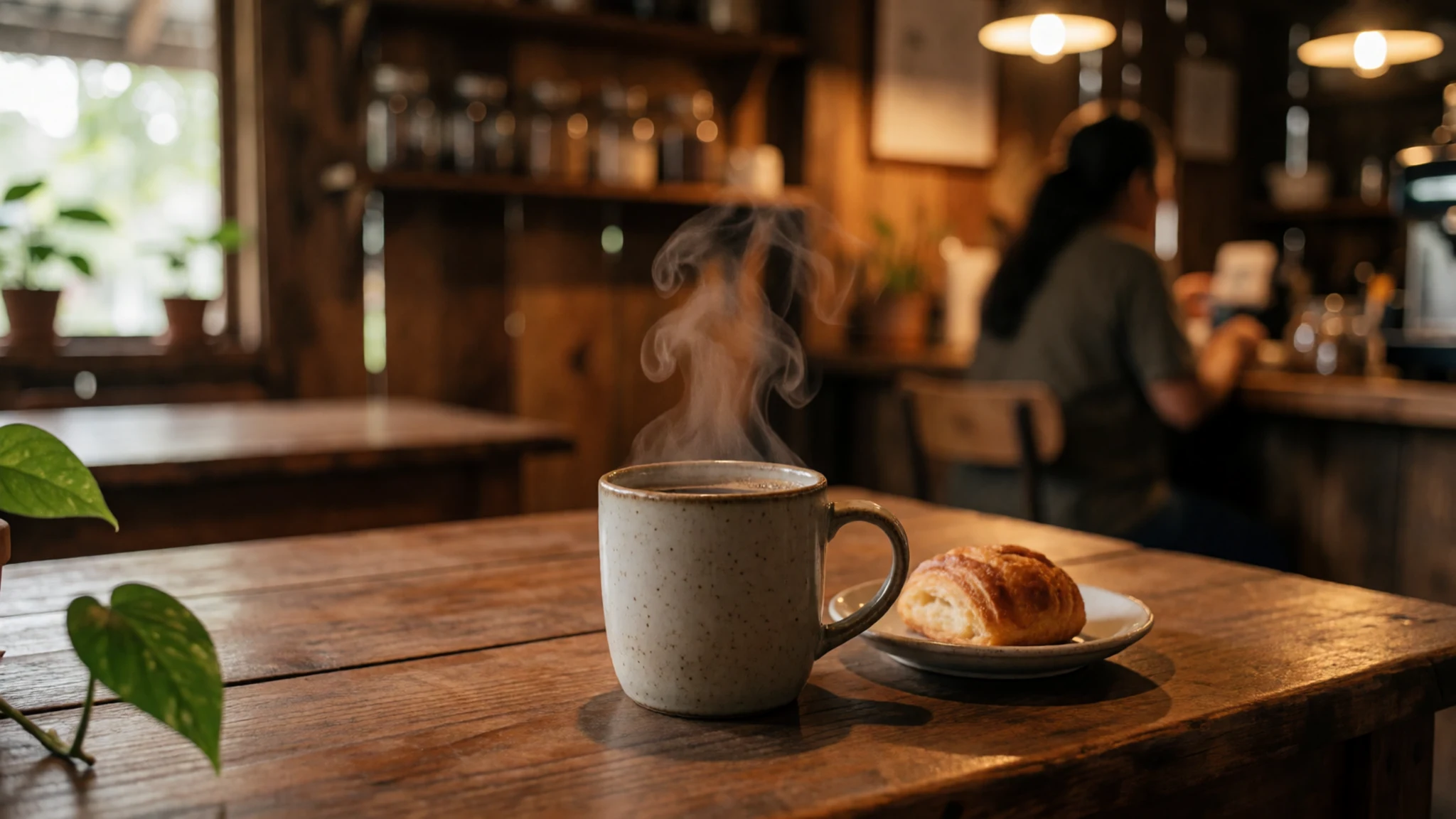
Plan it
Best time. The drier months provide the most reliable weather for the outdoor river canoe trip and exploring the upland lakes.
How long. 2
Getting there. Most travellers head from Metro Manila by bus to Santa Cruz, then transfer to a local jeepney heading toward Cavinti or Pagsanjan before taking a short tricycle ride to the town proper.
Budget. mid
Tips
- Wear quick-drying clothing and secure footwear since you will get wet in the canoe
- Protect electronic devices and cameras in waterproof bags during the rapids trip
- Carry cash in small denominations for local transport fares and canoe fees
- Start your journey early in the morning to enjoy cooler temperatures and smaller crowds
Etiquette
- Always ask permission before photographing local boatmen and residents
- Dress modestly with covered shoulders and knees when visiting churches
Nearby
Sources
- Wikidata Q38832 (CC0)
- Wikipedia (rev 1376741577) (CC BY-SA 4.0)
- Wikivoyage (rev 5404756) (CC BY-SA 4.0)