Oslo
Oslo, Norway
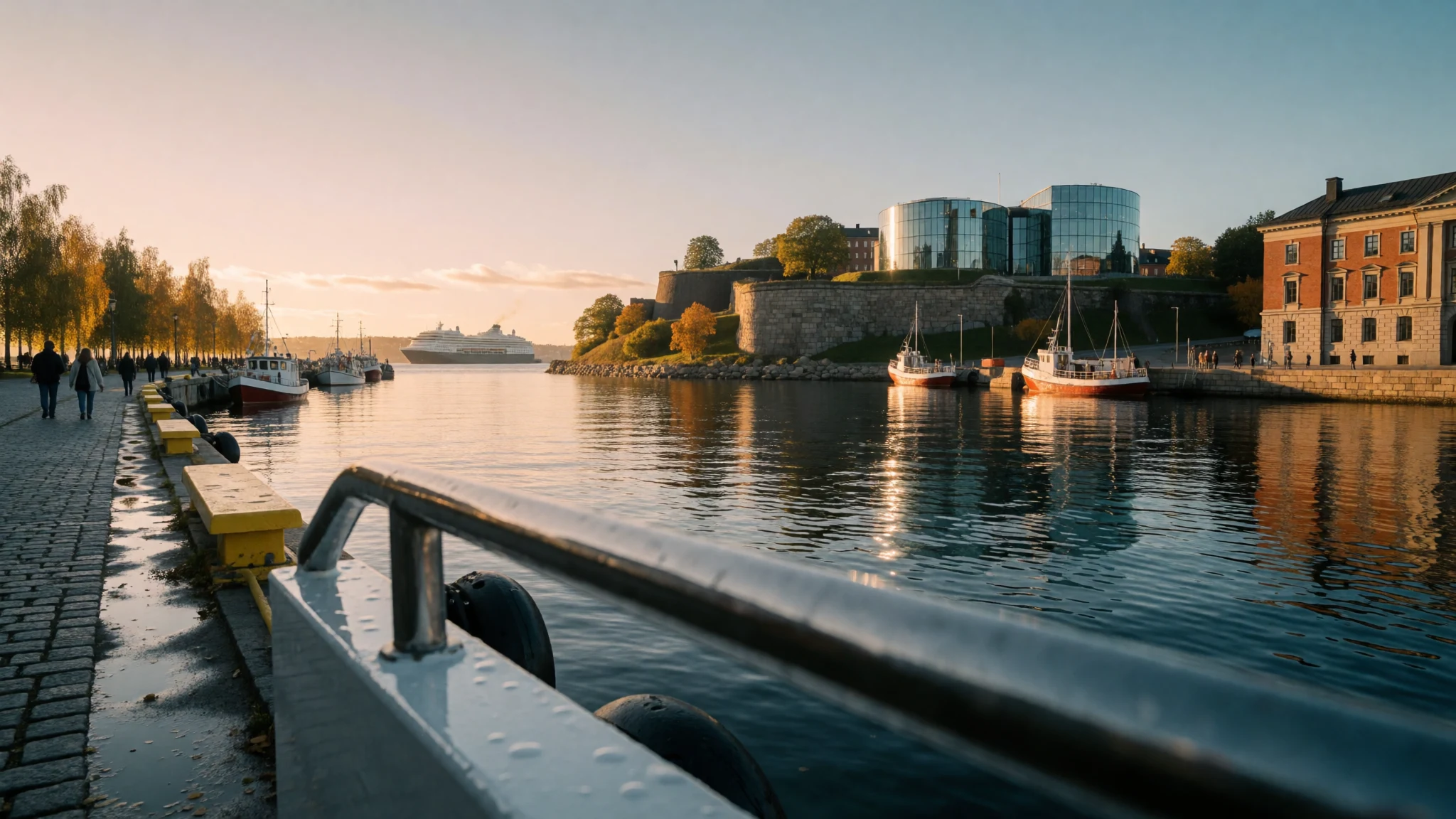
Oslo pairs a fjord harbour and maritime museums with a compact, walkable capital that rewards cool-weather planning.
The place
Norway is governed from Oslo, and the city is the largest in the country, with the municipal boundary and the county boundary drawn on the same line. Oslo's population is 724290, and the centre stands only 23 metres above the sea, which is why the fjord feels present on almost every downhill street. Harald Hardrada marked out a kaupstad, a trading place, here in 1048, under the older name Ánslo, as Viking-age power on this coast was fading; the district then was Viken. The harbour still sets the pace. Bjørvika, once working docks, is now a line of public buildings and glass facing the water, while the Akerselva drops through the eastern neighbourhoods towards that same shore. Frogner, to the west, opens into parkland. Thorvald Meyers gate, to the east, keeps a lower, tighter street scale. Ferries cross to the Bygdøy peninsula, cruise ships pass the fortress, and commuters pour through the station beside the National Theatre. Days in winter are short and the pavements ice over; in summer the light lasts deep into the evening. Meals and rooms sit at the costly end of northern Europe, so a well-planned day is a museum, a park and one serious dinner, not a chain of cheap stops. Both a national capital and a working harbour fit inside a centre that is easy to cross on foot or by tram. The municipality publishes practical pages at https://www.oslo.kommune.no/.
Its story
Oslo began as a shore settlement in Viken, where Danish and Norwegian kings took turns holding the coast. The trading town itself is dated to 1048, when Harald Hardrada set it out under the name Ánslo. Burials of Christians in the soil are older than that foundation, so people were already living on this beach before the formal town. In Olaf III's time the east of Norway looked to this harbour for crafts, churches and courtly life. The city's seal still carries Hallvard Vebjørnsson, the saint it chose as protector. On the island of Hovedøya an abbey rose, and together with the town churches it controlled wide farmland; those rents carried the economy until plague years emptied streets. Traders out of Rostock, tied to the Hanse, then took a dominant share of the market. King Sverre used that same island as a base and fell on the town from the sea. Medieval Oslo was at its strongest under Haakon V, the king who kept a capital here. Ties that bound Norway to Denmark, and later a union with Sweden, left the town less free to steer itself. Fire cleared the wooden city in 1624. Christian IV shifted the new streets towards Akershus Fortress and called the place Christiania, after himself. The spelling later drifted to Kristiania in official use, and the council took up that form as well. The older name came back in 1925, when the whole city took the name of a suburb that had never stopped saying Oslo, and that suburb was renamed Gamlebyen.
What to see
- Akershus Fortress — Sentrum harbour
Akershus Fortress stands on Oslo's harbour, where Christiania was laid out beside the old walls. From a ferry or a cruise deck the ramparts read as a low stone mass above the channel, which is how many people first see them. The grounds are a public walk with views back across Bjørvika. What is open inside varies, so confirm on the city's official site before counting on museum rooms.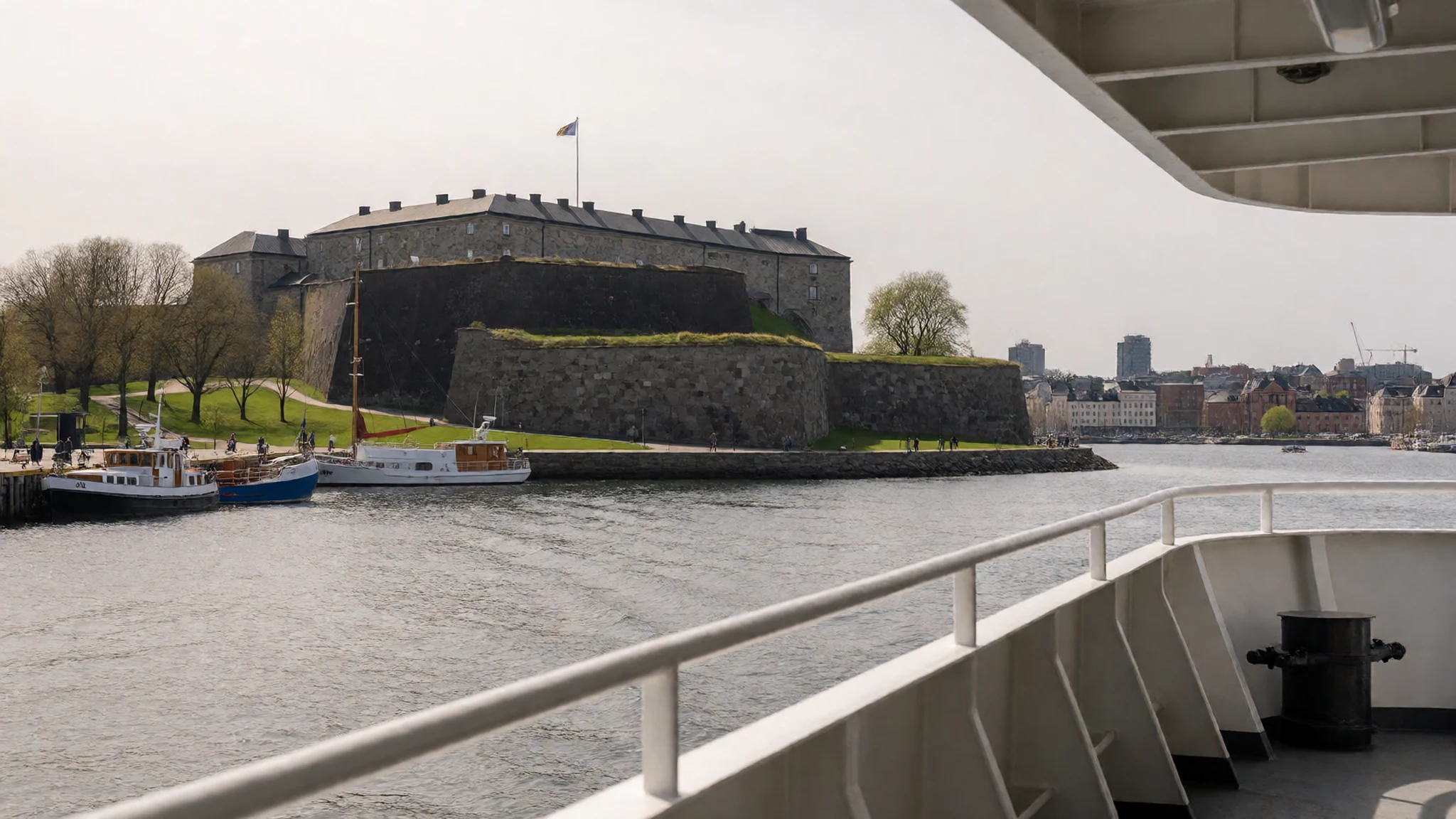
- Munch Museum — Bjørvika
The Munch Museum in Bjørvika holds Oslo's public collection of Edvard Munch, in a tall waterfront building beside the mouth of the Akerselva. Oda's bridge crosses the river in front of the complex, so the approach is part of a harbour walk rather than a closed gallery street. The collection runs well beyond the one picture most people can name, into prints, studies and later canvases.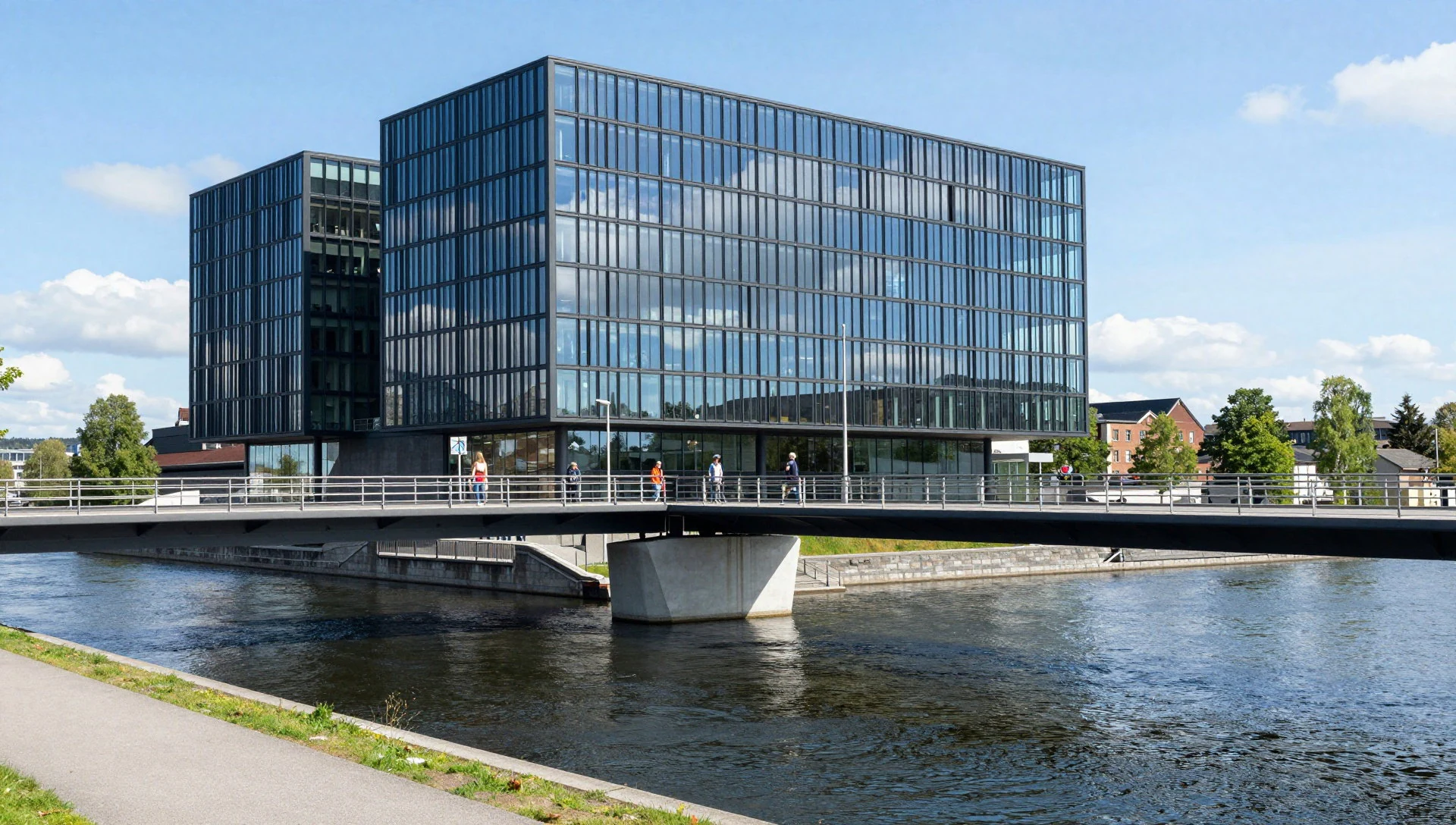
- Frognerparken — Frogner
Frognerparken is the large green park west of central Oslo, and Frogner plass is the square you meet if you look back out of the park toward the neighbourhood. The grounds are big enough for a slow afternoon: lawns, avenues and, in season, people out with pushchairs and skates. The sculpture garden associated with Gustav Vigeland fills a long axis of the park with stone and bronze figures.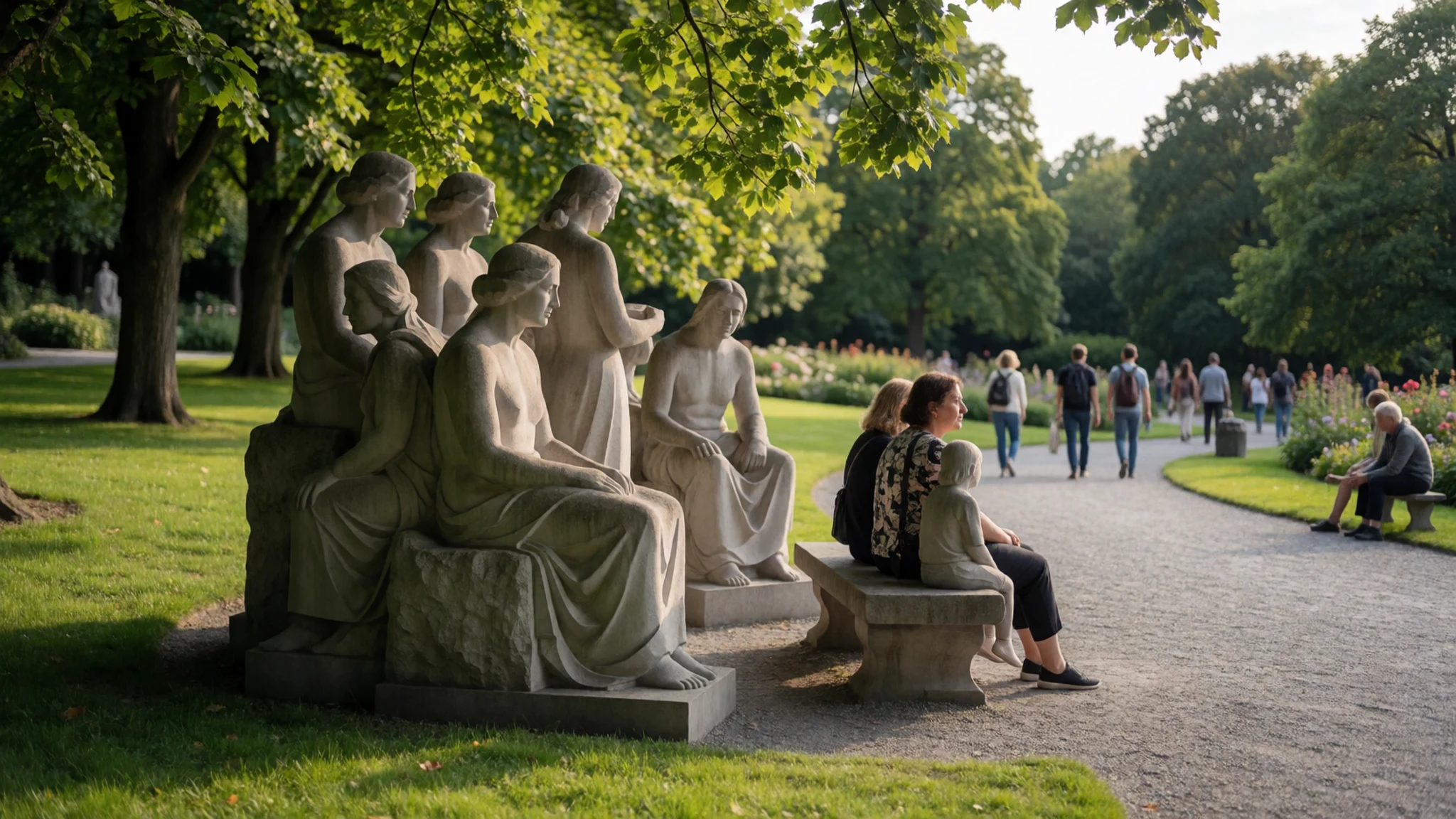
- Viking Ship Museum — Bygdøy
The Viking Ship Museum on Oslo's Bygdøy peninsula displays the Tune, Oseberg and Gokstad ships recovered from burial mounds. The halls, often called Vikingskipshuset, share the peninsula with Oslo's other maritime museums, a ferry or bus ride from the centre. The building is closed until 2027 for renovation, so a visit meanwhile means planning around that shut door and using the neighbouring collections instead.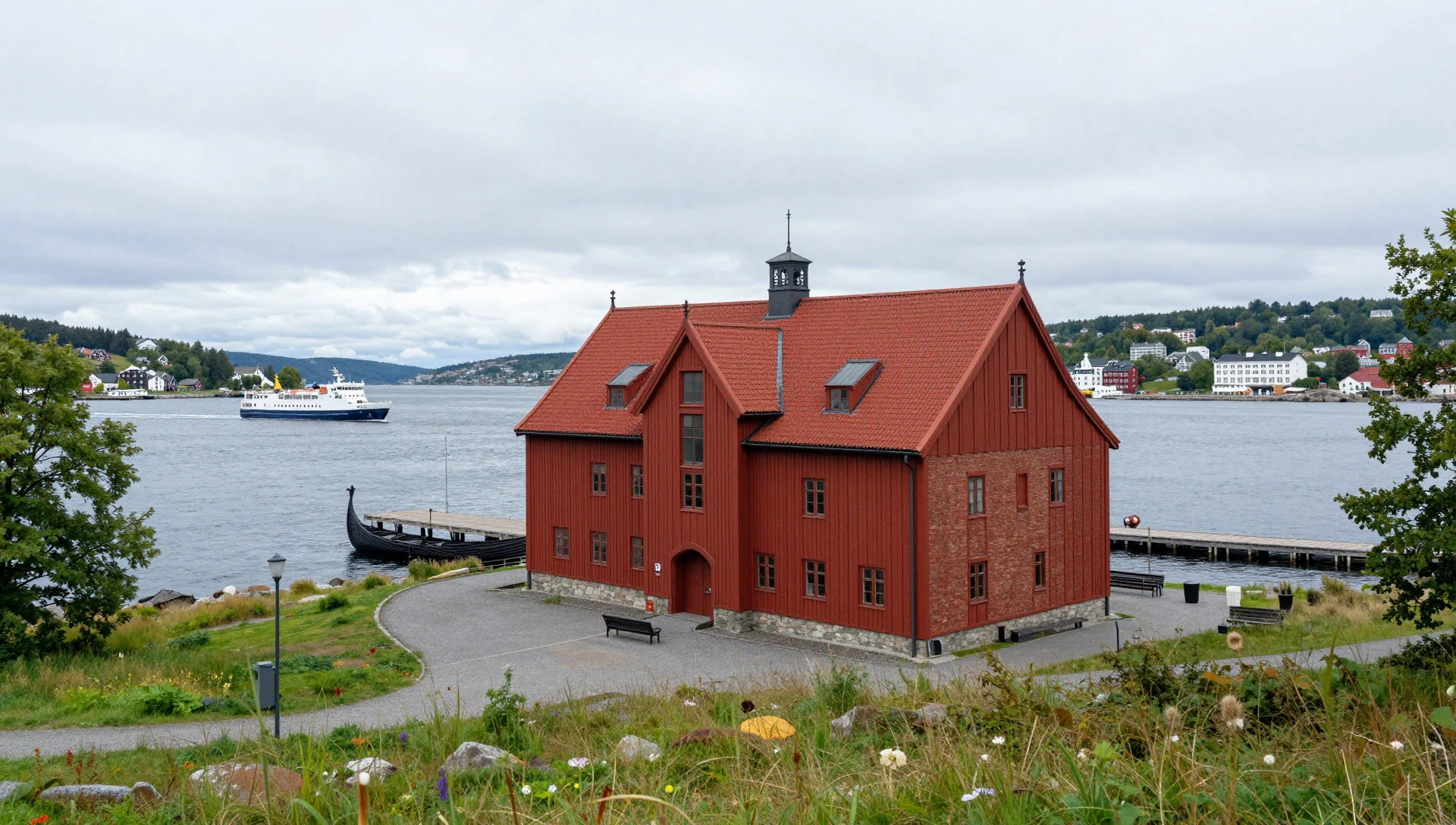
- Karl Johans gate — Sentrum
Karl Johans gate is Oslo's central walking and tram street, running through the middle of the city past the National Theatre and the station named for it. By day it is shopfronts, buskers and people cutting between the station and the park end of the centre; after dark the theatre façade is lit. Around Nationaltheatret station, older civic blocks stand against newer glass in one view.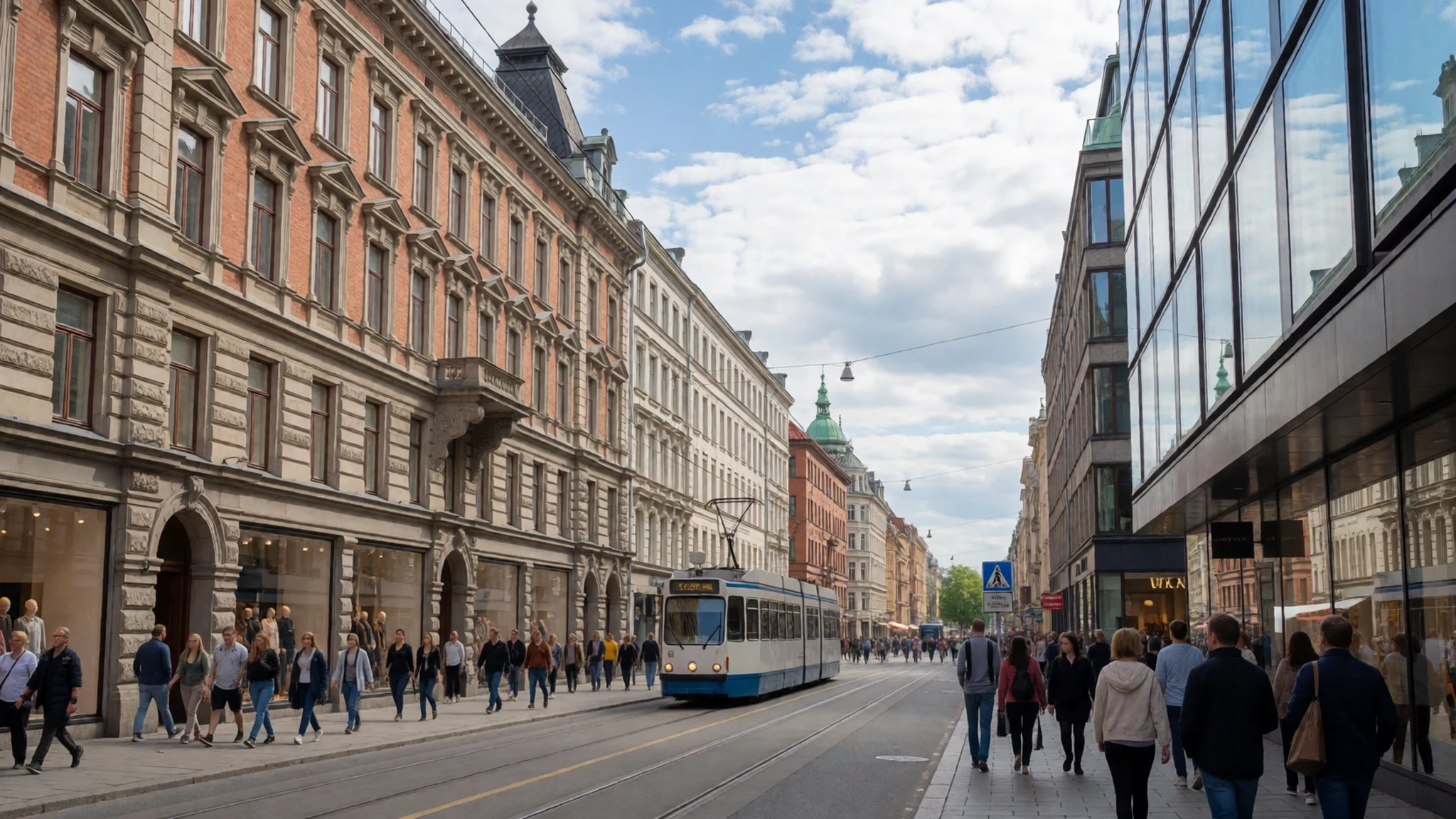
Culture
Oslo spends its cultural energy on the waterfront as much as on formal stages. Public money has gone into new halls, festival grounds and museum buildings, and a visitor can move from pictures to ships to live music without leaving the inner districts for long. Munch's work has a whole museum in Bjørvika, while other Norwegian and international painters are spread through smaller galleries. Ibsen's plays and Hamsun's novels came from lives tied to this city, and both are still staged and sold here. The musical calendar is wide: Inferno brings metal downtown late in March, by:Larm fills small rooms in February, Øyafestivalen takes over Tøyenparken at the start of August, and jazz and chamber series follow in the same high summer. A ferry to Bygdøy lines up the seafaring collections side by side, halls for the Viking ships, the polar ship Fram, and the Kon-Tiki raft, with grass and shoreline around them rather than a single city-centre block. Parks, the river path and the fjord edge belong to the same cultural round, not only the ticketed buildings. On Oslo's trams and trains, speak quietly, keep bags off empty seats, and let passengers step off before you board.
What to wear
Oslo dresses for weather first and for ceremony second. The bunad, Norway's regional folk costume, is wool and often linen, cut and embroidered differently in each district, with silver brooches and chains that fasten the bodice or the shirt. People wear it for Constitution Day, weddings, confirmations and some official gatherings, not for the commute. In ordinary life the city favours dark, practical clothes: wool jumpers, technical shells, slim coats, trainers while it is dry and boots once ice arrives. Denim and black outerwear fill Karl Johans gate and the streets around Thorvald Meyers gate; a fleece is weekday wear, because forest trails start close to town. A visitor should pack layers, a waterproof, and shoes for wet cobbles, tram steps and, from late autumn into spring, frozen pavements. Indoor heating runs warm, so a layer you can remove matters as much as a heavy coat. Homes expect shoes off at the door; churches are quieter about dress than in many other capitals, and smart-casual is enough for restaurants unless an invitation says otherwise.
What to eat
- Reker — Harbour kiosks and the quays around Aker Brygge
Oslo's harbour still sells cold-water shrimp, peeled and eaten as they are, often with white bread, mayonnaise and lemon. Harbour kiosks and the quays around Aker Brygge are the places to look, especially when it is warm enough to eat outside.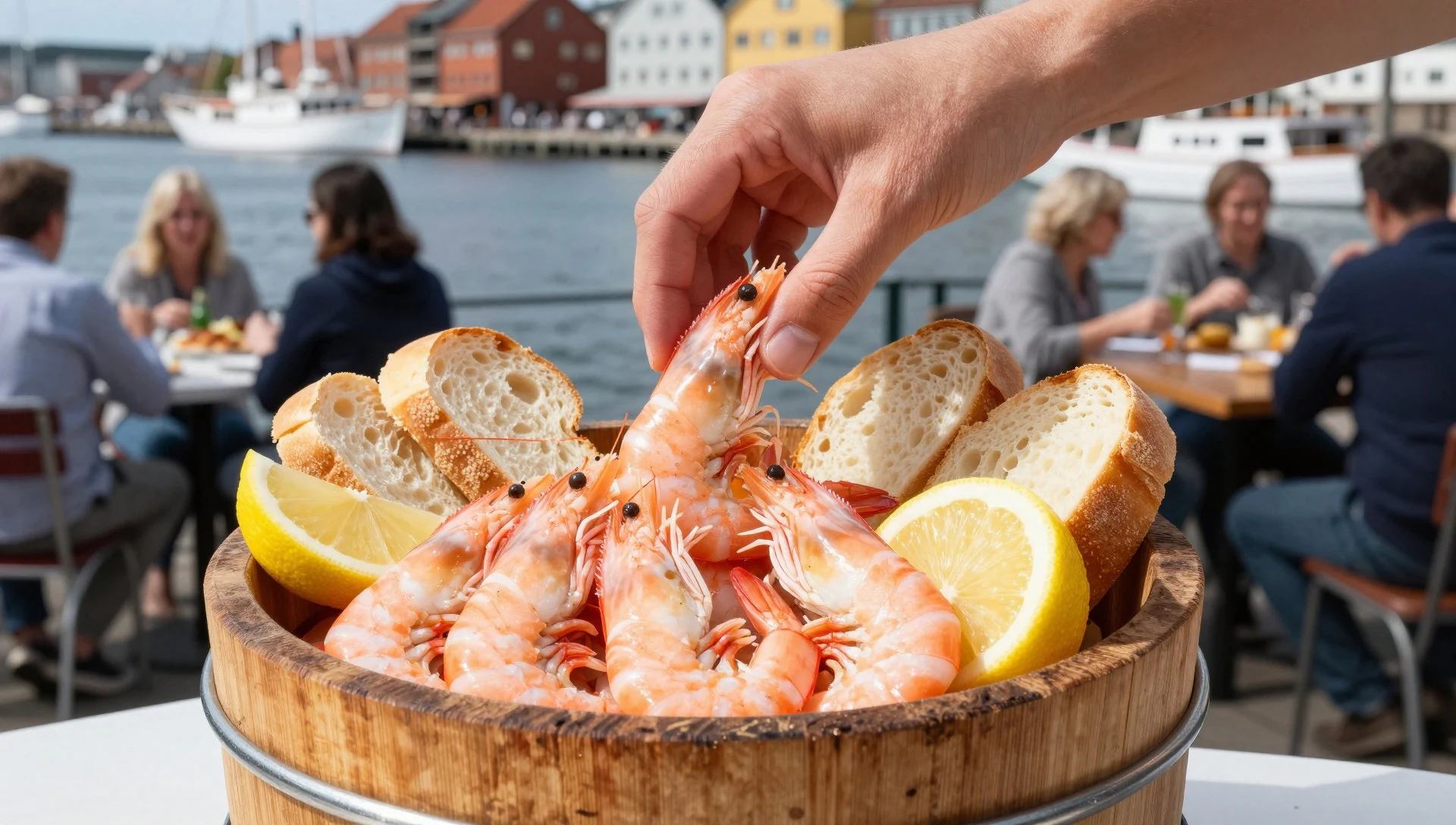
- Fiskesuppe — Neighbourhood eateries and waterfront cafés
Oslo's winter menus lean on a creamy fish soup of root vegetables and white fish. Neighbourhood eateries and waterfront cafés across the centre ladle it out when the wind comes off the fjord.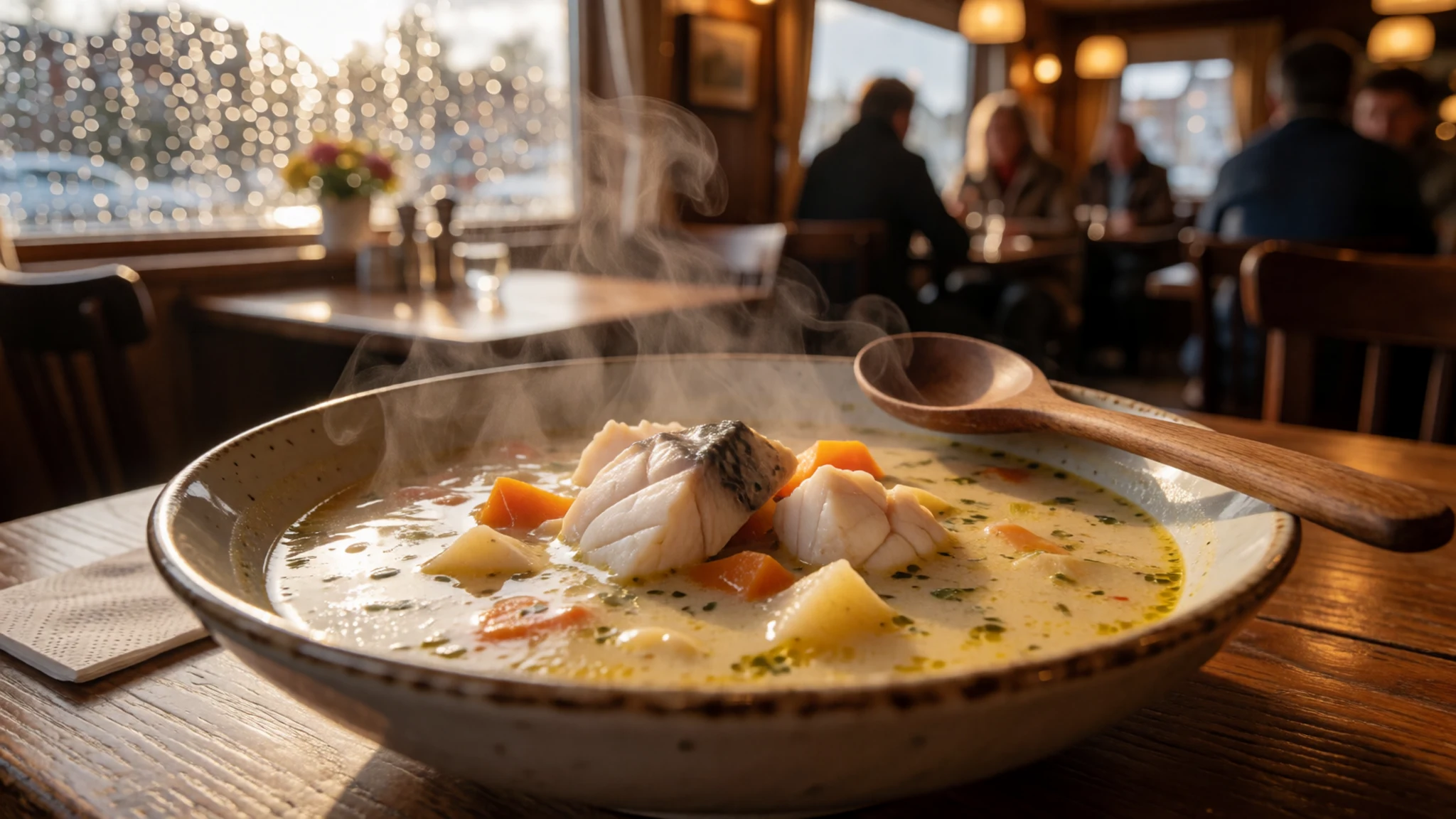
- Fårikål — Traditional Norwegian eateries in autumn
Fårikål, which Oslo treats as an autumn dish, is lamb or mutton layered with cabbage and black pepper and cooked until it falls apart. Traditional Norwegian eateries put it on the menu once the weather cools, not as a year-round street snack. - Brunost — Bakeries, breakfast buffets and cabin-style cafés
Brunost, the sweet brown whey cheese, turns up on Oslo breakfast tables, sliced thin onto bread or waffles. Bakeries, breakfast buffets and cabin-style cafés are where to try it, rather than a late-night stall. - Kanelbolle — Bakeries on Karl Johans gate, near Youngstorget, and neighbourhood shopping streets
The kanelbolle is Oslo's everyday cinnamon bun, scented with cardamom and eaten with filter coffee at mid-morning. Bakeries on Karl Johans gate, near Youngstorget and on neighbourhood shopping streets usually have a warm tray.
Plan it
Best time. June is the most comfortable month for walking, ferries and parks, July the hottest and August the wettest, with long days that favour being outside. June can be bright yet unsettled. From November through March the city is cold, dark and often icy, which suits snow and indoor collections better than long outdoor days. Late spring and early autumn dodge the busiest festival weeks.
How long. three to four
Getting there. Oslo Airport, Gardermoen, code OSL, lies about 37 km north-northeast of the city and is the practical international gateway, with trains from the terminal into the central station. Sandefjord Airport Torp, code TRF, also shows up in flight searches, yet it sits far from town and the onward ride is a long one, so confirm the code before booking. SAS and Norwegian both run wide domestic and foreign networks from Gardermoen.
Budget. high
Tips
- Prefer Gardermoen over Torp unless a fare gives you a clear reason, and check the airport code.
- In summer, book Bygdøy museums ahead and keep another plan ready while the Viking ship halls are shut.
- Begin Frognerparken and the Bjørvika walk early on sunny days.
- Expect costly meals, so pair one restaurant dinner with bakeries and supermarket lunches, and carry a card.
- From late autumn to early spring, watch for ice and leave outdoor plans for the daylight hours.
Etiquette
- Speak quietly on trams, trains and the metro, and do not play music without headphones.
- Remove your shoes when you enter someone's home.
- Let people leave the tram before you step on, and keep doorways clear.
Nearby
Sources
- Wikidata Q585 (CC0)
- Wikipedia (rev 1383728487) (CC BY-SA 4.0)
- Wikivoyage (rev 5413481) (CC BY-SA 4.0)
- Photo photos/01-bj-rvika-oslo-norway-2020-12-23.jpg — Ryan Hodnett (CC BY-SA 4.0)
- Photo photos/02-nationaltheatret-evening.jpg — Orjanarvola (CC BY-SA 4.0)
- Photo photos/03-frogner-plass-sett-fra-parken.jpg — Helge Høifødt (CC BY-SA 4.0)
- Photo photos/04-img-0911-nationalteateret-stasjon-i-oslo.jpg — Øyvind Holmstad (CC BY-SA 4.0)
- Photo photos/05-no-oslo-akershus-blick-von-schiff.jpg — Balou46 (CC BY-SA 4.0)
- Photo photos/06-munch-munch-museum-oslo-opened-22-october-2021.jpg — Helge Høifødt (CC BY-SA 4.0)
- Photo photos/07-thorvald-meyers-gate-oslo-2022-08-17-01.jpg — Leonhard Lenz (CC0 1.0)
- Photo photos/08-karl-johans-gate-oslo-2022-08-17-04.jpg — Leonhard Lenz (CC0 1.0)


