Ninh Bình
Ninh Bình, Vietnam

Ninh Bình offers towering limestone karsts, serene river boat journeys, ancient capitals and dramatic cave networks across the Red River Delta.
The place
Ninh Bình sits in the southern reaches of northern Vietnam's Red River Delta, wedged between the Red and Ma rivers with a narrow coastline touching the Gulf of Tonkin. Often called the inland equivalent of Ha Long Bay, the landscape here is defined by sheer limestone tower karsts that erupt abruptly from flat, emerald-green rice paddies. Rivers carve quiet channels directly through the rock, feeding network systems of flooded caves, hidden grottoes and shallow wetlands that shelter rich biodiversity. The region includes protected zones such as Cúc Phương National Park and the wetland sanctuary of Vân Long, where ancient forests climb steep mountain slopes. Towns and rural settlements nestle quietly in the valleys, connected by cycling paths and waterways that see daily local traffic. The provincial terrain transitions from alluvial farming flats to rugged karst highlands, creating microclimates that shift noticeably between seasons. Water levels in the river valleys fluctuate through the year, shaping how farmers work the paddies and how travellers navigate the flooded cave passages by small wooden rowboats steered expertly by local oarsmen using their feet.
Its story
The history of Ninh Bình is deeply tied to the foundational struggles of the Vietnamese state against northern expansion and shifting dynasties. Long before it became a quiet agricultural and tourism hub, the region served as the political and military heart of the country during the 10th century. The ancient capital of Hoa Lư was established here under the Đinh and Early Lê dynasties, chosen for its natural fortress of impenetrable mountain walls that protected the royal court from invaders. Vietnam's broader history is marked by repeated conflicts, foreign occupations and fierce rebellions, yet the nation repeatedly reclaimed its independence. Over subsequent centuries, the territory functioned as a strategic transit corridor and religious centre, accumulating Buddhist pagodas, communal houses and later, unique stone architecture left by European missionary influences. Modern administrative boundaries were reshaped over time, culminating in the recent integration of surrounding territories. Today, the rural communities inhabiting these valleys maintain traditions of rice cultivation, artisan crafts and quiet village life that have persisted for generations against a backdrop of ancient stone monuments and towering peaks.
What to see
- Tam Cốc - Bích Động — Tam Cốc village
Often called the terrestrial Ha Long Bay, Tam Cốc features three natural limestone caves carved by the Ngô Đồng River. Visitors board small sampan boats rowed by local women who deftly navigate the emerald waterways beneath low stalactite arches and past ripening rice fields.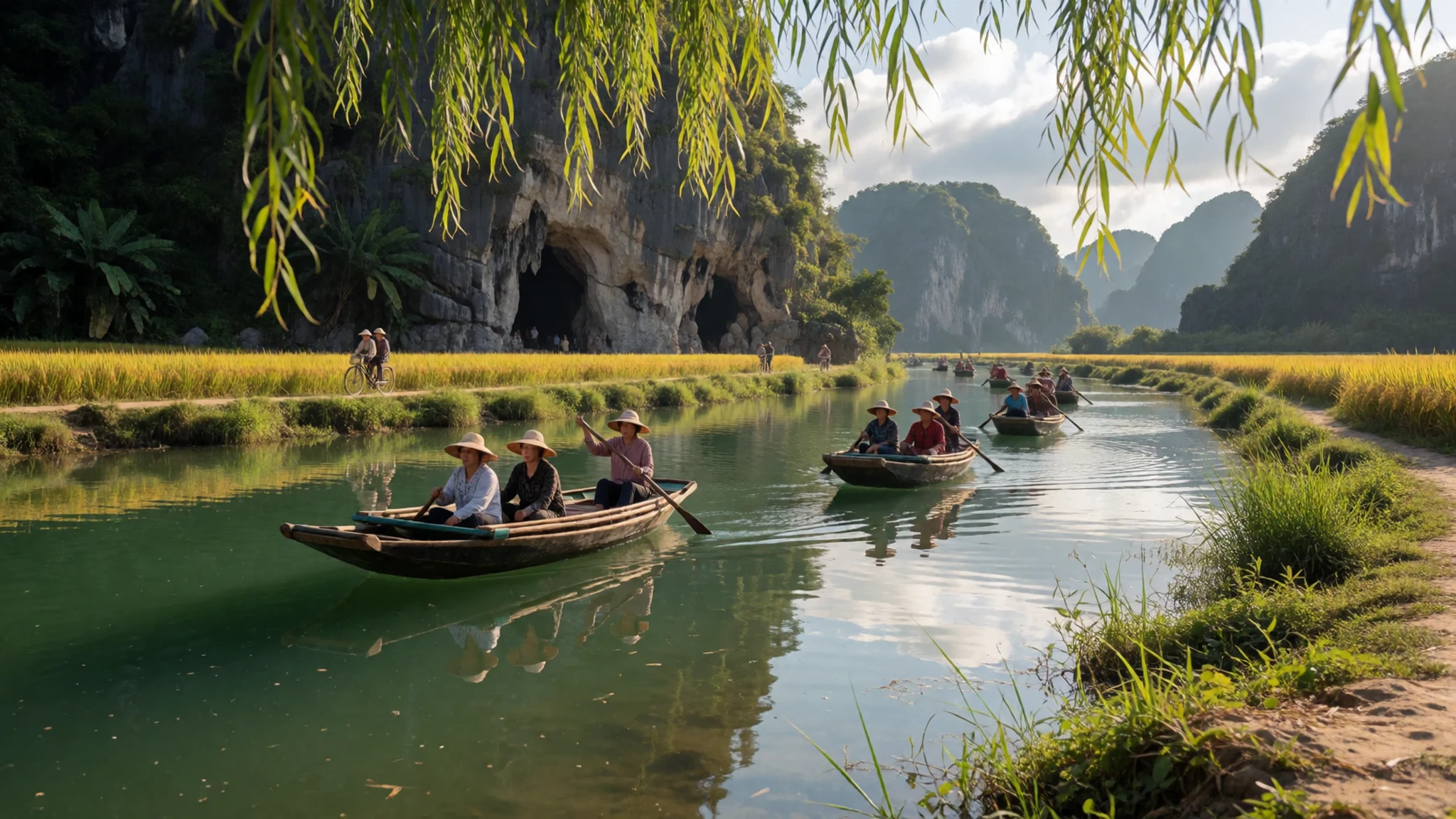
- Tràng An Scenic Landscape Complex — Tràng An valley
This spectacular UNESCO-listed complex presents a labyrinth of crystal-clear rivers winding through dramatic tower karsts, archaeological caves and ornate temples. Boat tours glide through dozens of subterranean water tunnels where sunlight illuminates ancient mineral formations hanging low overhead.
- Phát Diệm Cathedral — Kim Sơn district
Constructed entirely from stone and ironwood over two decades in the late nineteenth century, this remarkable architectural complex blends traditional Vietnamese imperial temple design with European Gothic cathedral elements, featuring arched stone bridges, curved roofs and intricate column carvings.
- Hoa Lư Ancient Capital — Hoa Lư district
Serving as Vietnam's royal capital in the tenth century, the remnants of Hoa Lư include moss-covered gate structures, defensive earthen walls and restored dynastic shrines dedicated to the Đinh and Lê emperors who once ruled the nascent northern state from this protected valley.
- Múa Caves Viewpoint — Ninh Hải commune
Climbing the stone stairway carved into the ridge of Hang Múa rewards visitors with a sweeping panoramic view over the patchwork rice fields, meandering rivers and limestone mountains of the Tam Cốc valley below, making it an essential vantage point for landscape photography.
Culture
In Ninh Bình, traditional social structures place a strong emphasis on community ties, familial duty and deep deference towards elders. While urban centres adopt modern rhythms quickly, rural villages and temple communities preserve traditional etiquette closely. Travellers exploring the region will find that local residents in rural northern districts are often curious about visitors, sometimes staring openly or asking direct personal questions regarding age, marital status or family background. Rather than being intrusive, these inquiries reflect a genuine communal warmth and a desire to establish social context before addressing someone properly. Hospitality is offered freely over hot tea, and sharing small kindnesses goes a long way in village shops and family-run guesthouses. When visiting sacred spaces, pagodas, or historic shrines across Ninh Bình, maintain a quiet demeanour, speak softly, and dress modestly with shoulders and knees covered. Always remove your shoes before stepping across the threshold into temple halls or traditional ancestral houses where sacred altars are maintained.
What to wear
Traditional dress across Ninh Bình historically reflected the practical needs of agrarian life in the northern wetlands, featuring loose-fitting cotton tunics, conical palm-leaf hats known as nón lá to ward off the tropical sun and monsoon rains, and simple trousers suited for working in muddy rice paddies. For formal ceremonies and festivals, older generations still occasionally don traditional garments like the long tunic. Today, locals in towns and villages wear contemporary casual clothing such as t-shirts, jeans and light jackets, while farmers and agricultural workers continue to wear protective long-sleeved shirts, fabric face coverings and conical hats for outdoor labour. For visitors exploring Ninh Bình, practical and breathable attire is essential. Lightweight cotton or linen fabrics work best to manage the humid climate. When visiting pagodas, temples or sacred historical sites, choose modest clothing that covers your shoulders and knees. Sturdy walking shoes or sandals with good grip are necessary for climbing steep stone stairways at viewpoints like Múa Caves or walking uneven paths through national parks.
What to eat
- Cơm cháy — Local markets and family eateries across Ninh Bình
A famous regional speciality consisting of crispy, golden-brown fried rice crusts served with a rich pork, beef or mushroom dipping sauce seasoned with local herbs and fish sauce. Found at traditional street stalls and family eateries throughout the town.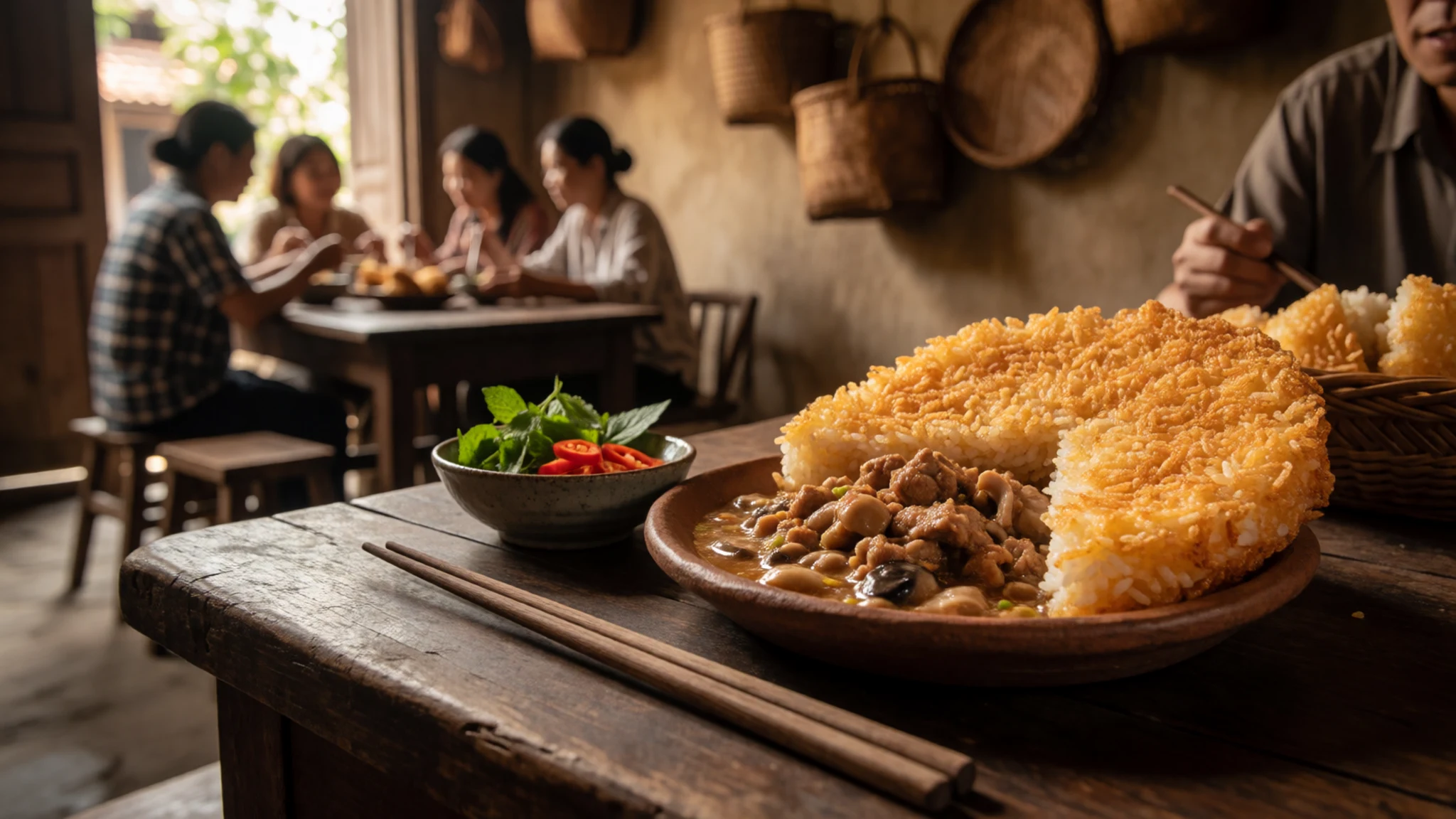
- Thịt dê núi — Specialist goat restaurants near Tràng An and Tam Cốc
Mountain goat meat is tender and lean due to the animals grazing on steep limestone cliffs. It is prepared in numerous styles, including rare goat salad with lemon and sesame, stir-fried with lemongrass, or simmered in medicinal herb broths.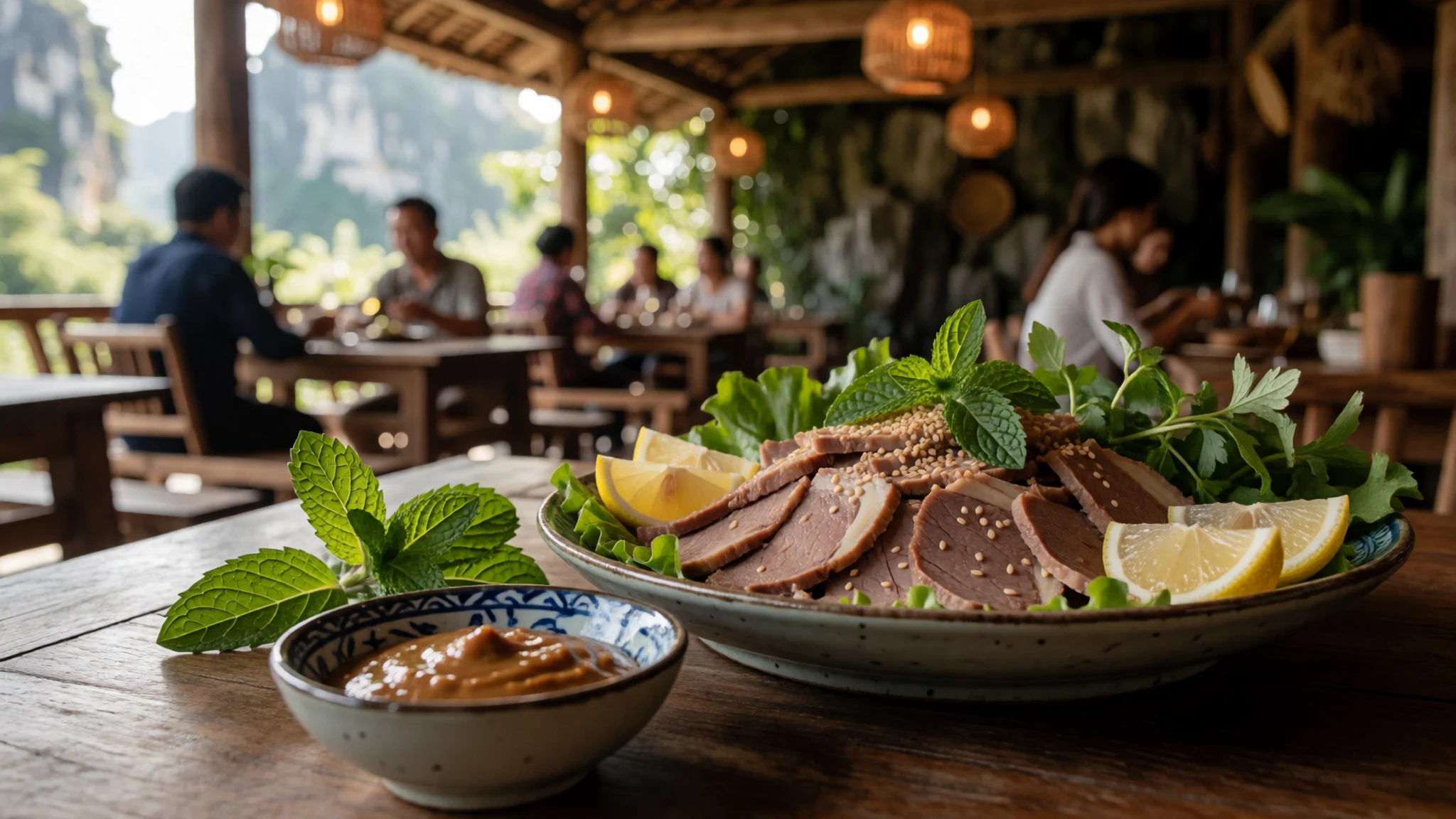
- Ốc núi — Evening food stalls and rural night markets
Sourced directly from the rocky crevices of the limestone mountains during the rainy season, these mountain snails feed on wild medicinal leaves, giving their meat a distinctive earthy flavour. They are typically steamed with ginger and lemongrass. - Vietnamese iced coffee — Pavement cafes and village tea stalls
Strong drip-filtered dark roast coffee served over ice with a generous layer of sweet condensed milk. It is enjoyed at roadside cafes and riverbanks across the province as a refreshing daily ritual.
Plan it
Best time. October to January offers cooler temperatures and drier weather ideal for boat trips and cycling; spring and summer months bring rising heat and heavier rains.
How long. 2–3
Getting there. Arrive at Hanoi's international airport, then take a direct train or express bus south to Ninh Bình station, a journey of roughly two hours.
Budget. mid
Tips
- Book boat tours early in the morning to beat the midday tour groups and heat
- Carry cash in local currency for small village shops, bicycle rentals and boat tips
- Rent a bicycle to explore quiet rural paths between the limestone karsts
- Wear sunscreen and a wide-brimmed hat when taking open boat excursions
- Pack a light waterproof jacket if travelling during the damper transition months
Etiquette
- Remove footwear before entering temple inner sanctuaries or local homes
- Cover shoulders and knees when visiting pagodas and historic shrines
- Ask permission before photographing local farmers or village residents closely
Nearby
Sources
- Wikidata Q36900 (CC0)
- Wikipedia (rev 1380049891) (CC BY-SA 4.0)
- Wikivoyage (rev 5410523) (CC BY-SA 4.0)